
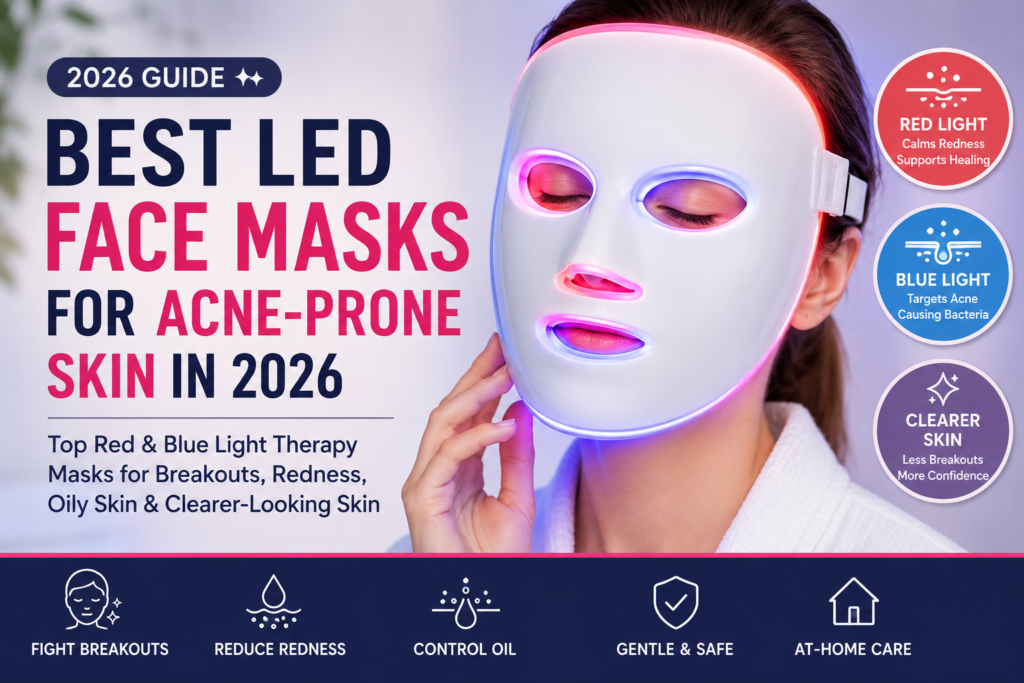
If your skincare routine already includes a cleanser, a spot treatment, and maybe a retinoid, you’ve probably noticed the newest addition showing up in everyone’s “get ready with me” videos: a glowing, slightly sci-fi looking mask strapped to their face. LED face masks have moved from dermatology offices into bathroom cabinets, and a lot of that shift is being driven by people dealing with breakouts, oiliness, and lingering redness who want an at-home option that doesn’t involve harsh actives.
This guide breaks down the best LED face masks for acne-prone skin, how the technology actually works, what the research does and doesn’t support, and what to realistically expect if you add one to your routine. We’re not going to promise clear skin overnight — that’s not how any of this works — but we will walk you through what separates a genuinely useful device from a gimmick.
What Is an LED Face Mask?
An LED face mask is a wearable device lined with small light-emitting diodes (LEDs) that sit close to your skin and deliver specific wavelengths of light, usually for somewhere between three and twenty minutes at a time. Unlike lasers, LEDs are low-heat and non-invasive, which is why this category of device has been cleared for home use rather than restricted to professional settings.
The two wavelengths you’ll see most often marketed for acne are blue light and red light, sometimes offered separately and sometimes combined in the same mask. Manufacturers describe this as “photobiomodulation” — using light to influence activity inside skin cells rather than cutting, injecting, or chemically exfoliating anything.
Do LED Face Masks Really Help Acne-Prone Skin?
This is the question most people actually want answered, and the honest response is: it depends on the wavelength, the device, and your expectations.
Blue light therapy has a reasonable amount of research behind it for acne specifically. It’s believed to work by targeting Cutibacterium acnes (formerly known as P. acnes), the bacteria strain associated with inflammatory breakouts. Reducing this bacteria on the skin’s surface may help calm active blemishes over time.
Red light therapy is studied more for its anti-inflammatory and skin-supportive effects — think calming redness and supporting the skin’s natural repair process — rather than as a direct anti-bacterial treatment. That’s part of why so many devices pair it with blue light instead of using it alone for acne.
The American Academy of Dermatology notes that light-based therapies can be a helpful part of an acne treatment plan for some people, particularly milder cases, but they’re generally not positioned as a standalone cure, and results vary significantly from person to person. If you’re dealing with moderate to severe or cystic acne, a board-certified dermatologist is still the right first call — LED therapy is better understood as a supportive tool than a replacement for medical treatment.
Blue Light vs. Red Light for Acne
It helps to think of blue and red light as doing two different jobs:
- Blue light (typically around 405–420nm) is the wavelength most associated with targeting acne-causing bacteria on the skin’s surface and is often marketed toward oily, breakout-prone skin.
- Red light (typically around 630–660nm) is associated with calming inflammation, supporting the skin’s healing process, and may help reduce the look of post-acne redness.
This is exactly why so many of the top-rated devices right now are red and blue light therapy masks rather than single-wavelength tools. Using both together is meant to address active breakouts and the redness or irritation that tends to come along with them, in one session instead of two separate devices.
What to Look for in an LED Face Mask for Acne-Prone Skin
Not every glowing mask on the internet is built the same way. Here’s what actually matters when you’re comparing options.
Wavelengths
Look for masks that clearly state their blue and red light wavelengths rather than vaguely advertising “light therapy.” Reputable brands are typically upfront about the specific nanometer (nm) range they use.
Treatment Time
Sessions range from as short as three minutes to closer to twenty. Shorter sessions can be easier to stick with consistently, which matters more than the number itself, since consistency tends to drive results with this kind of device.
Coverage and Fit
A mask that doesn’t sit flush against your skin won’t deliver light as evenly. Rigid shell masks and flexible silicone masks both have loyal fans — it often comes down to your face shape and personal comfort.
Eye Protection
Because these devices sit close to the eyes, built-in eye protection or opaque eye areas are a meaningful safety feature, not just a nice-to-have.
Skin Sensitivity
If you have very reactive or sensitive skin, look for a LED mask for sensitive skin with shorter recommended sessions and clear guidance on how often to use it, and consider patch-testing or starting with shorter sessions than recommended.
Irritation and Dryness
Some people notice mild, temporary warmth, tightness, or dryness after use. This is worth monitoring, especially in the first few sessions.
Ease of Use
Auto shut-off timers, cordless designs, and pre-programmed cycles make a mask easier to actually incorporate into a routine rather than something that collects dust after week two.
FDA Clearance
In the U.S., some LED devices have received FDA clearance for treating mild to moderate acne. That clearance process, which you can read more about on the FDA’s medical device database, is a meaningful signal of safety and manufacturing standards — though it’s not the same thing as a guarantee of results for every user.
Manufacturer Instructions
Every device has its own recommended frequency, session length, and skin-prep steps. Always defer to what’s in the box over generic internet advice.
Warranty and Build Quality
Given the price point of most of these devices, a solid warranty and responsive customer service are worth factoring into your decision.
If you’re also building out the rest of your acne-safe routine, it’s worth revisiting your gentle cleanser recommendations for acne-prone skin before adding a new device on top, since LED therapy tends to work best alongside — not instead of — the basics.
Best LED Face Masks for Acne-Prone Skin in 2026
Here’s how some of the most talked-about red and blue light therapy masks stack up. Specifications below reflect what each brand publishes; we’re not estimating pricing or clinical claims we can’t verify, so if a detail isn’t listed, it means we couldn’t confirm it.
1. Omnilux Clear
Best for: Targeted acne treatment

- RED LIGHT THERAPY MASK: CryoGlow is an at-home LED face mask combining red, blue & deep infrared light with under-eye co…
- MOST AWARDED LED MASK IN THE U.S.*: Real people. Real results. Clinically tested on 119 participants by an independent t…
- EXPERTLY DEVELOPED: Developed by Shark Beauty alongside optical light experts and engineers, bringing MedSpa-inspired re…
Omnilux Clear is one of the most established names in this category, built on Omnilux’s long-running LED technology platform. It’s FDA-cleared specifically for mild to moderate acne vulgaris and uses a combined blue (415nm) and red (633nm) light protocol.
Light modes/wavelengths: Blue 415nm and red 633nm, used together Key features: Flexible, form-fitting mask design; FDA clearance for acne; brand reports over two decades of clinical research behind its light therapy platform
Pros:
- FDA-cleared specifically for acne, not just general skin health
- Simple two-wavelength design focused on breakouts rather than trying to do everything at once
- Backed by more published research than many newer competitors
Cons:
- Doesn’t include near-infrared light for anti-aging support
- Final sale policy at some retailers, so there’s little room to return it if it’s not a fit
Who should consider it: Anyone whose main concern is active breakouts rather than combined aging and acne needs. Who may want to skip it: Shoppers who also want anti-aging benefits from the same device. Overall verdict: A strong, focused pick when acne is your primary concern and you want a device with a longer research track record behind its specific wavelengths.
2. CurrentBody Skin LED Anti-Blemish Mask: Series 2
Best for: Everyday ease of use

- Enhanced collagen production capability significantly reduces fine lines, wrinkles and redness, for younger-looking skin…
- Upgraded light coverage provides our famous instant glow, for a healthier, brighter and smoother complexion.
- An all-new, exclusive layout of 236 LED bulbs emits three clinically recognised wavelengths: red (633nm), near-infrared …
This is CurrentBody’s dedicated acne mask (distinct from the brand’s separate anti-aging mask), combining blue and red light in a cordless, flexible silicone design.
Light modes/wavelengths: Blue 415nm and red 633nm Key features: Cordless operation, auto shut-off, flexible silicone construction for a closer fit
Pros:
- FDA-cleared for acne treatment
- Cordless design makes it easy to move around while wearing it
- Manufacturer reports visible improvement can begin within a few weeks of consistent use, though individual results vary
Cons:
- Manufacturer guidance suggests taking breaks between treatment cycles, which some users may find less straightforward than a simple daily routine
- Blue light can cause temporary hyperpigmentation on darker skin tones per the manufacturer’s own disclaimer, so patch-testing matters
Who should consider it: People who want a well-known, FDA-cleared option built specifically around breakouts. Who may want to skip it: Anyone with deeper skin tones should read the manufacturer’s hyperpigmentation disclaimer closely and consider discussing it with a dermatologist first. Overall verdict: A reliable, purpose-built acne mask from a brand with a strong reputation in the LED space.
3. Dr. Dennis Gross DRx SpectraLite FaceWare Pro
Best for: Fast sessions and combined acne-plus-aging concerns
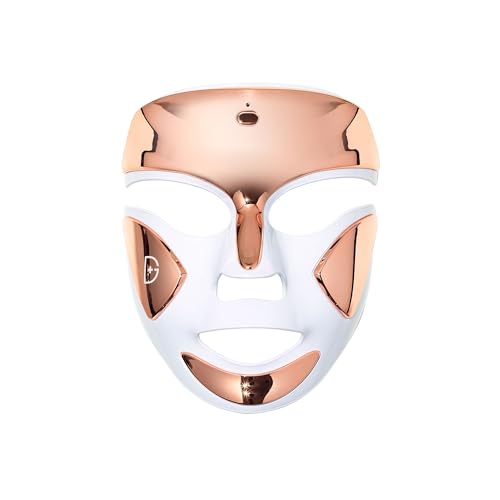
- WHAT IT IS: This LED device for the face targets wrinkles and acne for visibly smoother, clearer skin in just 3 minutes….
- HOW IT WORKS: Treat acne and breakouts with blue light, smooth wrinkles and build collagen with red light, or address bo…
- HOW TO USE: After cleansing, place the mask over your face, securing the strap around your head. Press & hold the power …
This derm-brand staple stands out for its notably short, three-minute treatment time and its combined red-and-blue mode, which lets you target both breakouts and early signs of aging in one sitting.
Light modes/wavelengths: Red (reported around 630nm) and blue (reported around 415nm), available separately or combined Key features: Rigid full-face shell, adjustable strap, three-minute auto shut-off, FDA-cleared
Pros:
- One of the shortest treatment times in this category
- Lets you switch between red, blue, or combined modes depending on what your skin needs that day
- FDA cleared with an established presence in dermatologist-recommended skincare lines
Cons:
- Rigid shell fit isn’t ideal for every face shape
- No near-infrared wavelength, so it’s not built for deeper anti-aging concerns the way some competitors are
Who should consider it: Anyone managing both breakouts and fine lines who wants a quick, no-fuss routine. Who may want to skip it: People who find rigid mask shells uncomfortable, or who specifically want near-infrared light. Overall verdict: A well-rounded, time-efficient option for combination concerns, from a brand with strong dermatology credibility.
4. Therabody TheraFace Mask
Best for: A more full-featured, spa-like experience

- Love Your Face: TheraFace PRO facial massage kit unlocks so many new ways to love your face. Save time and counter space…
- Healthier-looking, glowing skin in as little as 12 weeks: Clinically proven to lift, firm, reduce fine lines and wrinkle…
- Personalize your skincare routine with easy snap-on magnetic treatment rings: Seamlessly switch between, and even combin…
Therabody’s entry into this category is on the larger, more premium end, offering red, blue, and combined red-and-infrared modes along with a notably high LED count.
Light modes/wavelengths: Red, blue, and red-plus-infrared modes Key features: High LED count, roughly nine-minute programmed cycle, wireless design; some versions include added vibration/massage functionality
Pros:
- Versatile mode selection covers acne, general skin tone, and texture concerns
- Wireless design offers some freedom of movement during treatment
- Well-suited to people who want their LED session to feel like a broader self-care ritual
Cons:
- On the heavier side, which some testers report feels less comfortable lying down or on smaller faces
- Rigid shell design limits multitasking during sessions
- Premium pricing paired with a fairly standard one-year warranty
Who should consider it: Someone who wants a more feature-rich device and doesn’t mind a higher price point. Who may want to skip it: Anyone prioritizing a lightweight, minimal device or working with a tighter budget. Overall verdict: A strong choice if you want more than just acne-focused light therapy and are comfortable investing in a premium multi-mode device.
5. Omnilux Blemish Eraser (Mini)
Best for: Budget-conscious or targeted spot treatment

- Dual-Wavelength Revitalization: The INIA Red Light Mask combines 630nm red light for surface renewal with 850nm near-inf…
- 4 Light Modes, Fully Customizable Routines: Personalize your skincare journey with INIA Red Light Therapy Mask for Face …
- Visible Results with 220 High-Energy LED Chips: Step into the next level of skin renewal with LED Face Mask Light Therap…
Part of Omnilux’s smaller “Mini” line, this uses hydrocolloid patches embedded with the brand’s blue and red LED technology, designed for spot-treating individual blemishes rather than full-face coverage.
Light modes/wavelengths: Blue 415nm and red 633nm, in patch form Key features: Adhesive hydrocolloid patches, portable, FDA-cleared, part of a lower-cost entry point into the Omnilux ecosystem
Pros:
- More accessible price point than full-face masks
- Useful for spot-treating individual breakouts rather than committing to a full facial session
- Easy to travel with
Cons:
- Not a substitute for full-face treatment if breakouts are widespread
- Limited number of treatments per charge, since it’s designed as a smaller device
Who should consider it: Anyone who wants to try LED therapy on a smaller scale, or who mostly deals with occasional, localized breakouts. Who may want to skip it: Anyone with widespread or frequent breakouts across the full face, who would be better served by a full-coverage mask. Overall verdict: A low-commitment way to test whether LED therapy fits into your routine before investing in a full mask.
Comparison Table
| Mask | Best For | Wavelengths | FDA-Cleared | Session Length |
|---|---|---|---|---|
| Omnilux Clear | Targeted acne treatment | Blue 415nm + Red 633nm | Yes | ~10 minutes |
| CurrentBody Anti-Blemish Mask: Series 2 | Everyday ease of use | Blue 415nm + Red 633nm | Yes | Per manufacturer instructions |
| Dr. Dennis Gross SpectraLite FaceWare Pro | Fast sessions, acne + aging | Red ~630nm, Blue ~415nm | Yes | ~3 minutes |
| Therabody TheraFace Mask | Full-featured, multi-mode | Red, Blue, Red + Infrared | Not independently confirmed | ~9 minutes |
| Omnilux Blemish Eraser (Mini) | Budget/spot treatment | Blue 415nm + Red 633nm | Yes | Per manufacturer instructions |
How to Use an LED Face Mask for Acne-Prone Skin
- Start with clean, dry, makeup-free skin. Light needs direct contact with your skin to work as intended.
- Do a patch test first, especially if you have sensitive or reactive skin, or a deeper skin tone where blue light hyperpigmentation is a documented concern with some devices.
- Follow your device’s specific session length and frequency. Don’t assume “more is better” — many manufacturers actually recommend built-in breaks between treatment cycles.
- Keep your eyes closed or protected according to the manufacturer’s guidance.
- Apply the rest of your routine afterward, unless your device’s instructions say otherwise, since some brands recommend treating on bare skin.
- Track your skin over several weeks, not days. This is a cumulative therapy, not a spot-fix.
Always defer to the manufacturer’s manual over generic advice, including this article, since devices vary in their specific protocols.
How Long Does It Take to See Results?
This varies a lot by device, wavelength, and individual skin. Some brands report visible changes in inflammation or breakout frequency within a couple of weeks of consistent use, while others suggest a six-to-ten-week course before evaluating results. There’s no universal timeline, and LED therapy is not a fast fix — it’s a cumulative, consistency-driven treatment. If you’re not seeing any change after a full recommended treatment course, it’s worth checking in with a dermatologist rather than assuming the device is simply “not working yet.”
Possible Side Effects and Safety
Most people tolerate LED face masks well, but it’s not risk-free for everyone. Reported issues include:
- Temporary redness or warmth immediately after use
- Mild dryness or tightness
- Rare reports of temporary hyperpigmentation, particularly with blue light on deeper skin tones
- General discomfort from an ill-fitting mask
Stop use and check in with a dermatologist if you notice persistent irritation, worsening breakouts, unusual pigmentation changes, or any reaction that doesn’t resolve within a day or two.
Who Should Avoid or Ask a Professional Before Using an LED Mask?
LED masks aren’t automatically appropriate for everyone. It’s worth talking to a healthcare provider first if you:
- Are taking medications known to cause photosensitivity
- Have a history of skin cancer or a diagnosed light-sensitive skin condition
- Are pregnant, since most manufacturers haven’t specifically studied this population
- Have an active skin infection or open wounds in the treatment area
- Have a seizure disorder triggered by flashing or bright light
When in doubt, a quick conversation with a board-certified dermatologist is the safest move before starting any new device.
LED Face Masks vs. Traditional Acne Skincare
It’s worth being clear-eyed here: an LED mask is not designed to replace proven acne treatments like benzoyl peroxide, salicylic acid, topical retinoids, or prescription medications. Peer-reviewed research on these ingredients, much of which you can find summarized on PubMed, remains far more extensive than the research behind most consumer LED devices.
Think of LED therapy as a potential addition to a routine that already includes the basics — a proper oil-free moisturizer for acne-prone skin and consistent, dermatologist-recommended actives — rather than a swap for them. For persistent, painful, or cystic acne, professional treatment should still be your first stop; you can also read more in our guide to understanding different types of acne and what actually treats them.
Final Verdict
If you’re dealing with mild to moderate breakouts and want a low-irritation option to add alongside your existing routine, an FDA-cleared red and blue light therapy mask is a reasonable thing to try, with realistic expectations in place. Prioritize devices that are transparent about their wavelengths, offer clear usage instructions, and — ideally — carry FDA clearance for acne specifically rather than a general wellness claim. If your acne is more than mild, or existing treatments aren’t working, loop in a dermatologist before spending money here. For an at-home addition to a broader routine, though, this remains one of the more promising and lower-risk categories of device on the market. You can also compare LED therapy against other approaches in our breakdown of popular at-home acne treatment devices if you’re still weighing your options.
Frequently Asked Questions
Are LED face masks good for acne-prone skin? They can be a helpful addition for some people with mild to moderate acne, particularly devices using blue and red light together. They’re not a guaranteed fix and work best alongside, not instead of, a solid skincare routine.
Is blue or red light better for acne? Blue light is more associated with targeting acne-causing bacteria, while red light is more associated with calming inflammation and supporting healing. Many of the best-reviewed devices combine both.
Can I use an LED mask every day? It depends entirely on the device. Some brands recommend several sessions per week with built-in rest periods, rather than daily use. Always follow your specific manufacturer’s guidance.
How long does an LED mask take to work? Timelines vary by brand and individual skin, ranging from a couple of weeks to a couple of months of consistent use. There’s no universal guarantee.
Can LED masks help with acne scars? Some brands suggest red light may support the appearance of post-acne marks over time by supporting the skin’s healing process, but this is different from treating textured or pitted scarring, which typically requires professional treatment.
Are LED face masks safe for sensitive skin? Many are marketed as gentle, but sensitive skin can still react. Patch-testing and starting with shorter sessions is a reasonable precaution, and a dermatologist can advise on your specific skin.
Should I use skincare before or after an LED mask? This depends on the device’s instructions. Many recommend treating clean, bare skin and applying products afterward, but always check your specific manual.
What should I look for when buying an LED mask for acne? Clear wavelength information, FDA clearance where applicable, a comfortable fit, built-in eye protection, and transparent manufacturer instructions.
Can LED masks replace acne medication? No. They’re generally positioned as a complementary option, not a replacement for proven topical or prescription acne treatments, especially for moderate to severe acne.
Are expensive LED masks better than cheaper ones? Not necessarily. Price often reflects added features like multiple wavelength modes or premium build quality, but the most important factors are documented wavelengths, FDA clearance where relevant, and consistent use, not the price tag alone.
This article is for informational purposes and shouldn’t replace personalized advice from a board-certified dermatologist, especially if you’re dealing with persistent or severe acne.;https://sylomaskincare.com/