
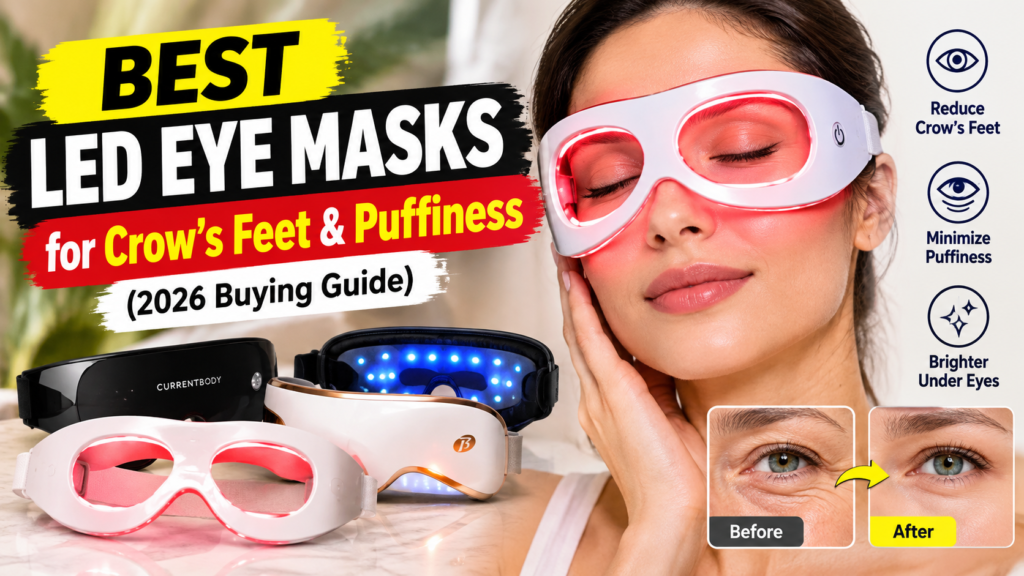
If you’ve noticed crow’s feet deepening at the corners of your eyes, or you wake up with puffiness that takes an hour (and two cups of coffee) to settle down, you’ve probably already tried the usual fixes — eye creams, cold spoons, caffeine patches, maybe a jade roller. Some of it helps a little. None of it really moves the needle on lines that are becoming permanent.
That’s why so many people are turning to LED eye masks instead of another jar of cream. Unlike topical products, which sit on the surface of the skin, red and near-infrared light is designed to reach into the layers of skin where collagen and elastin are actually made. The eye area is also the thinnest, most delicate skin on the face and the first place fine lines, crow’s feet, and puffiness tend to show up — which is exactly why brands have built dedicated eye-shaped devices instead of asking you to rely on a full-face mask that wasn’t built for this specific area.
This guide is built differently from most “top 5” roundups you’ll find on Google right now. We’re not just ranking products — we’re explaining the wavelengths, the realistic timelines, the difference between temporary de-puffing and structural under-eye bags, and exactly what to check on a spec sheet before you spend $100–$500 on a device. Every specification below comes from manufacturer pages, retailer listings, or independent product testing — and where a number wasn’t publicly confirmed, we say so rather than guess.
A quick, honest note before we start: No LED eye mask will permanently erase crow’s feet, remove under-eye bags, or replace injectables. What the better devices may realistically help with is the appearance of fine lines, mild puffiness, and dullness with consistent use over several weeks. Keep that framing in mind as you shop.
Quick Overview
| Product | Best For | Key Feature | Approx. Price | Treatment Time |
|---|---|---|---|---|
| CurrentBody Skin LED Eye Perfector | Best Overall | 4 wavelengths, 61.59 mW/cm² disclosed irradiance | ~$250 | 3 minutes |
| iRestore Illumina LED Eye Mask | Best for Crow’s Feet (Most LEDs) | 180 medical-grade LEDs, 3 treatment modes | $249–$349 | 5 minutes |
| Dr. Dennis Gross DRx SpectraLite EyeCare Max Pro | Best Premium / Most Clinically Documented | FDA-cleared, 96 red LEDs, in-house clinical study | ~$199 | 3 minutes |
| Solawave Eye Recovery Pro | Best for Comfortable, Hands-Free Wear | FDA-cleared, flexible medical-grade silicone | ~$249 | 3 minutes |
| Omnilux Mini Eye Brightener | Best for Puffiness / Best Quick-Treatment Patch Option | Hydrocolloid patches + LED, hands-free | $85–$170 | 10 minutes |
Product Comparison Table
| Product | Best For | Wavelengths | Treatment Time | Design | Price | Key Feature |
|---|---|---|---|---|---|---|
| CurrentBody Skin LED Eye Perfector | Overall pick | Amber (605nm), Red (633nm), Deep Red (660nm), NIR (830nm) | 3 min | Rigid, wearable goggle-style | ~$250 | 80 LEDs, disclosed irradiance of 61.59 mW/cm² |
| iRestore Illumina LED Eye Mask | Crow’s feet, coverage | Red (633nm), Infrared (830nm) | 5 min | Rigid, hard-shell, hands-free | $249–$349 | 180 LEDs, 3 selectable treatment modes |
| Dr. Dennis Gross EyeCare Max Pro | Premium, clinical backing | Red light (multiple red wavelengths per brand) | 3 min | Rigid, strap-secured goggle | ~$199 | FDA-cleared Class II device; 96 LEDs |
| Solawave Eye Recovery Pro | Comfort, all-day wear | Amber (605nm), Red (630nm), Deep Red (660nm), NIR (880nm) | 3 min | Flexible medical-grade silicone | ~$249 | FDA-cleared; hands-free strap design |
| Omnilux Mini Eye Brightener | Puffiness, targeted patches | Red (633nm), NIR (830nm) | 10 min | Small silicone device + hydrocolloid patches | $85–$170 | FDA-cleared; patches adhere to skin for true hands-free use |
Prices fluctuate by retailer and promotion. Always confirm current pricing on the manufacturer’s site or Amazon before buying.
Our Top LED Eye Mask Picks
1. CurrentBody Skin LED Eye Perfector — Best Overall
Who it’s for: Shoppers who want a well-documented, multi-wavelength device with disclosed irradiance data, from a brand with an established track record in LED skincare (CurrentBody’s full-face masks are frequently featured by Forbes Vetted and other major reviewers).

- Anti-aging LED eye treatment to treat fine lines and wrinkles
- 4 powerful LED wavelengths target collagen and elastin production. 80 LEDs deliver 61.59 mW/cm² for a powerful 3-minute …
- Use 6 times a week for 8 weeks to see a fresher, more youthful eye area
Why we selected it: Most eye masks on the market publish wavelengths but not power output. CurrentBody is one of the few brands that discloses irradiance — 80 LEDs delivering 61.59 mW/cm² — which lets you actually compare it to other devices on real numbers rather than marketing language alone. It also uses four distinct wavelengths (amber, red, deep red, and near-infrared) rather than just one or two, targeting a broader range of concerns in a single session.
Key specifications:
- Wavelengths: Amber (605nm), Red (633nm), Deep Red (660nm), Near-Infrared (830nm)
- LEDs: 80 professional-strength LEDs
- Irradiance: 61.59 mW/cm² (manufacturer-disclosed)
- Treatment time: 3 minutes
- Recommended use: 5–6 times per week for 8 weeks, per manufacturer guidance
- Design: Rigid, contoured, wearable with a controller
Pros:
- Rare transparency around irradiance, a spec most competitors omit
- Four wavelengths in one short session
- Backed by CurrentBody’s published in-house clinical studies
- Comes with a companion Green Tea Eye Cream in some bundles
Cons:
- Rigid design won’t suit everyone; some testers of CurrentBody’s face masks note a firmer fit than fully flexible silicone options
- Premium price point relative to patch-based alternatives
- Independent (non-brand) clinical validation specific to the eye mask is limited — most published data comes from the manufacturer
What makes it different: The disclosed irradiance number is the standout detail — it’s the kind of spec that lets you make an apples-to-apples comparison instead of trusting “clinically proven” claims at face value.
Who should buy it: Anyone who wants the most data-backed option on this list and is comfortable with a 3-minute daily commitment.
Who may want another option: If you specifically want a soft, moldable silicone fit for extended wear, look at the Solawave pick below instead.
2. iRestore Illumina LED Eye Mask — Best for Crow’s Feet (Highest LED Count)
Who it’s for: People whose main concern is crow’s feet specifically, or who want the most LED coverage available in a dedicated eye device.

- 180 LEDs – Highest Density in an Eye Mask : Targeted red and infrared light surrounds your eyes with concentrated power—…
- Visibly Targets Key Aging Areas Around the Eyes : Engineered to support smoother-looking skin under the eyes, between th…
- Complements Eye Creams, Lash & Brow Serums : Designed to layer effortlessly into your existing beauty routine. Boosts th…
Why we selected it: At 180 medical-grade LEDs, this is the highest LED count of any dedicated eye mask we found — roughly double what most competitors pack into the eye area. The mask also offers three selectable treatment modes (full eye area, lower eye/sides only, or upper eye/browline only), which is useful if crow’s feet at the outer corners are your main concern and you don’t need to treat the entire orbital area every session.
Key specifications:
- Wavelengths: Red (633nm), Near-Infrared (830nm)
- LEDs: 180 medical-grade LEDs
- Treatment time: 5 minutes
- Modes: 3 (full eye area, lower/sides, upper/browline)
- Regulatory status: FDA-cleared
- Design: Rigid, hard-shell with anti-gravity straps, built-in eye shielding intended to allow eyes to remain open during use
Pros:
- Highest LED count of the eye masks reviewed here
- Three treatment modes for targeted sessions
- Eye shielding designed to let you keep your eyes open, which may make multitasking easier
- FDA-cleared
Cons:
- Brand recommends daily use, which is a bigger time commitment than some competitors’ 3–5x weekly protocols
- Two-wavelength system (red + NIR) versus the four wavelengths found on CurrentBody and Solawave
- Price discrepancy noted in our research: we found this device listed between $249 and $349 across different retailers and promotional periods, so confirm the current price before buying
What makes it different: Sheer LED density and the ability to customize which part of the eye area you’re treating in a given session — useful if you want to spend extra time specifically on crow’s feet rather than the full orbital area every day.
Who should buy it: Anyone prioritizing coverage and treatment-mode flexibility over a minimalist wavelength lineup.
Who may want another option: If a daily 5-minute commitment feels unrealistic, a 3-minute mask used fewer times per week (like CurrentBody or Dr. Dennis Gross) may fit your routine better.
3. Dr. Dennis Gross DRx SpectraLite EyeCare Max Pro — Best Premium / Most Clinically Documented
Who it’s for: Buyers who prioritize regulatory clearance and a brand with a long history in dermatologist-developed skincare technology.
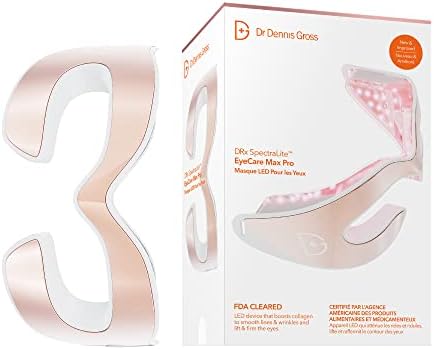
- WHAT IT IS: Dermatologist-developed and FDA-cleared, this LED eye device builds natural elasticity to firm skin, reduce …
- HOW IT WORKS: Four wavelengths of red light stimulate collagen production to treat wrinkles, firm skin & even tone aroun…
- HOW TO USE: On clean, dry skin, place device comfortably over eye area. (Strap included for comfort & hands-free use.) P…
Why we selected it: Dr. Dennis Gross was one of the earliest brands to bring FDA-cleared LED technology to the mass market with its face masks, and the eye-specific version carries the same clearance. The brand has also published an in-house 10-week study reporting visible improvement in fine lines, wrinkles, and skin tone among the vast majority of participants — a number worth noting as brand-reported rather than independently peer-reviewed, but still one of the more detailed disclosures in this category.
Key specifications:
- LEDs: 96 red LEDs
- Treatment time: 3 minutes
- Regulatory status: FDA-cleared, Class II medical device
- Design: Rigid goggle-style with optional strap for hands-free use
- Manufacturer claim: 97% of participants showed a visible improvement in fine lines, wrinkles, and skin tone in a 10-week in-house study (brand-reported, not independently verified)
Pros:
- FDA clearance specifically for this device
- Established brand with a long track record in LED skincare
- Short 3-minute daily session
- Frequently discounted through Sephora and Ulta promotions
Cons:
- Single-wavelength (red light) system rather than a multi-wavelength approach
- The headline clinical statistic comes from the manufacturer’s own study, not an independent third party
- Rigid design; not as moldable as flexible silicone alternatives
What makes it different: It leans on regulatory clearance and brand pedigree rather than a long spec sheet of multiple wavelengths — a more “clinical device” feel versus a “beauty gadget” feel.
Who should buy it: Shoppers who specifically want FDA clearance and don’t mind a single-wavelength (red-light-only) protocol.
Who may want another option: If you want multiple wavelengths working together (amber, deep red, near-infrared), CurrentBody or Solawave cover more ground per session.
4. Solawave Eye Recovery Pro — Best for Comfortable, Hands-Free Wear
Who it’s for: People who want to wear the mask while doing other things — folding laundry, answering email, watching TV — without a rigid device pressing on the face.
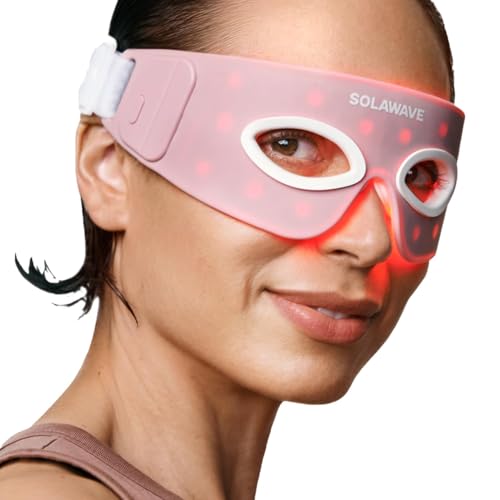
- FOUR LED WAVELENGTHS: Features Amber (605nm), Red (630nm), Deep Red (660nm), and Near-Infrared (880nm) light in a single…
- SHORT, CONVENIENT SESSIONS: Designed for quick, 3-minute use, making it easy to incorporate into daily beauty routines.
- FLEXIBLE SILICONE DESIGN: Made with soft, medical-grade silicone that contours comfortably around the eye area.
Why we selected it: Solawave built this device from flexible, medical-grade silicone specifically so it molds to the orbital area rather than sitting rigidly over it. It’s also one of the few eye masks with four distinct wavelengths, and it’s FDA-cleared.
Key specifications:
- Wavelengths: Amber (605nm), Red (630nm), Deep Red (660nm), Near-Infrared (880nm)
- LEDs: 80 LEDs (40 dual-core chips)
- Treatment time: 3 minutes
- Regulatory status: FDA-cleared
- Battery: Rechargeable, roughly 10 treatments per charge per manufacturer specs
- Design: Flexible, medical-grade silicone with adjustable strap
Pros:
- Genuinely flexible design, unlike most rigid competitors in this category
- Four wavelengths, matching CurrentBody’s breadth
- FDA-cleared
- Manufacturer backs it with a stated money-back guarantee window (confirm current terms before buying)
Cons:
- Manufacturer’s efficacy claims are based on an 8-week independent consumer study with a relatively small sample (34 participants per brand materials), not a large peer-reviewed trial
- Not recommended by the brand for people under 22, pregnant or breastfeeding individuals, or those with certain skin sensitivities — check the full contraindication list before use
- Frequently sells out during promotional periods, according to multiple retailer listings
What makes it different: Comfort. If a rigid, goggle-style mask has ever felt too tight or awkward around your eye socket, this is the pick built specifically to solve that.
Who should buy it: Anyone who has tried a rigid LED eye device and found it uncomfortable, or who wants to wear the mask for longer stretches around the house.
Who may want another option: If you fall into any of the brand’s listed contraindication categories, check with a healthcare provider before use, or consider a different device after that conversation.
5. Omnilux Mini Eye Brightener — Best for Puffiness / Best Quick-Treatment Patch Option
Who it’s for: People whose primary concern is morning puffiness and dark circles rather than deep-set crow’s feet, and who want a compact, patch-based device rather than a full mask.

- Omnilux Mini Eye Brightener
- Item form : Plastic
- Product benefit : De-puff, brighten, and firm the under eye area with Mini device.
Why we selected it: This is a genuinely different form factor — a small LED device that adheres to the skin using single-use hydrocolloid patches infused with niacinamide and peptides, rather than a full mask strapped around the head. Omnilux is also one of the more established names in medical-grade LED technology (its Contour Face mask is a frequent pick from Forbes Vetted and other major publishers), and the Mini Eye Brightener is FDA-cleared.
Key specifications:
- Wavelengths: Red (633nm), Near-Infrared (830nm)
- LEDs: 12 individual LEDs (6 dual-chip bulbs) — smaller LED count reflects its compact, targeted design compared to full eye masks
- Treatment time: 10 minutes
- Recommended use: 3–5 times per week for 4–6 weeks, then maintenance as desired
- Regulatory status: FDA-cleared
- Design: Small silicone device secured with single-use hydrocolloid patches (sold in refill packs)
Pros:
- Patches include niacinamide and peptides for an added hydrating/brightening layer beyond the light itself
- Truly hands-free — the patch, not a strap, holds it in place
- Compact and travel-friendly
- FDA-cleared
- Manufacturer reports 89% of users in a perception study saw improvement in eye bags and puffiness specifically (brand-reported, not independently verified)
Cons:
- Ongoing cost: hydrocolloid patches are single-use and must be repurchased
- Far fewer LEDs than full eye masks, since it’s designed as a spot-treatment device rather than full orbital coverage
- 10-minute session is longer than the 3-minute masks on this list
- Price varies significantly by retailer, from roughly $85 to $170 for the device alone
What makes it different: It’s the only pick on this list built around patches rather than a mask or goggle shape, which makes it a genuinely hands-free option without any strap around your head.
Who should buy it: Anyone whose main goal is addressing morning puffiness and dark circles rather than deep crow’s feet, or who wants the most compact, travel-friendly option.
Who may want another option: If crow’s feet at the outer eye corners are your primary concern, the broader coverage of iRestore or CurrentBody will likely serve that goal better.
How LED Eye Masks Work
LED eye masks use light-emitting diodes to deliver specific wavelengths of red and near-infrared light directly to the skin around the eyes. This is a form of photobiomodulation — a process where light energy is absorbed by structures inside skin cells (particularly the mitochondria) and converted into a trigger for cellular activity.
According to dermatologists interviewed by outlets like Henry Ford Health, red light penetrates deeper into skin than other visible wavelengths, which is why it’s the wavelength most associated with anti-aging use. The light is thought to stimulate fibroblasts — the cells responsible for producing collagen and elastin, the proteins that keep skin firm and elastic. As those cells become more active, the theory (supported by several published studies) is that skin gradually looks smoother, firmer, and less lined over time.
Near-infrared light works similarly but penetrates even deeper into the dermis, while amber light is generally associated with calming inflammation and supporting tone and brightness rather than collagen stimulation specifically. None of this happens instantly — it’s a cumulative, cellular-level process that unfolds over repeated sessions, not a single “reset” you’ll see in the mirror after one use.
Can LED Eye Masks Really Help Crow’s Feet?
The honest answer is: they may help improve the appearance of crow’s feet, but they won’t eliminate them, and results vary by person.
Several controlled studies on red and near-infrared LED therapy — including split-face trials — have found measurable increases in dermal collagen and elastic fibers after consistent treatment, alongside visible improvements in wrinkle depth and skin smoothness. A commonly cited protocol in the research is roughly 630–660nm red light combined with 830nm near-infrared light, used 4–5 times per week for 8–12 weeks, which lines up closely with what most of the devices above recommend.
Crow’s feet form from a combination of repeated facial movement (smiling, squinting) and the natural decline in collagen that comes with age and sun exposure. LED therapy is designed to support the collagen side of that equation — it doesn’t stop the muscle movement that also contributes to these lines, which is part of why results are described as an “appearance improvement” rather than a cure.
Can LED Eye Masks Reduce Under-Eye Puffiness?
This is where it’s important to separate two very different things:
- Temporary puffiness — the kind caused by fluid retention, poor sleep, allergies, or sodium intake — can respond well to the combination of gentle warmth, light massage from the device’s fit, and improved local circulation that LED therapy is designed to support. Several eye masks in this guide, particularly the Omnilux Mini Eye Brightener, are specifically marketed around this kind of temporary de-puffing.
- Structural under-eye bags, caused by fat pad herniation, loss of skin elasticity, or genetics, are a different issue entirely. These are unlikely to be meaningfully changed by any at-home LED device and are typically addressed medically, through options like dermal fillers or surgical procedures, if a person chooses to pursue them.
If your puffiness fluctuates day to day, an LED eye mask may help support the appearance of a fresher, less puffy look. If your under-eye bags look essentially the same every morning regardless of sleep or diet, temper expectations accordingly — and consider discussing options with a dermatologist.
Which LED Wavelength Is Best for Crow’s Feet?
Most of the devices in this guide use some combination of the following:
- Red light (approximately 630–660nm): Considered the primary anti-aging wavelength; associated with stimulating collagen production and improving fine lines and skin tone.
- Near-infrared light (approximately 830–880nm): Penetrates deeper than visible red light; associated with supporting firmness, elasticity, and cellular repair at a deeper tissue level.
- Amber light (approximately 605nm): Generally positioned by brands as supporting skin tone, brightness, and calming redness or inflammation, rather than collagen stimulation specifically.
For crow’s feet specifically, a combination of red and near-infrared light — the approach used by CurrentBody, Solawave, and Omnilux above — has the broadest research base behind it. A single-wavelength red-light device, like the Dr. Dennis Gross mask, still falls within the well-studied range but treats a narrower slice of the light spectrum per session.
Red Light vs. Near-Infrared vs. Amber Light
| Light Type | Approx. Wavelength | Penetration Depth | Primarily Associated With |
|---|---|---|---|
| Amber | ~605nm | Shallow (surface/epidermis) | Tone, brightness, calming redness |
| Red | ~630–660nm | Moderate (into the dermis) | Collagen support, fine lines, overall firmness |
| Near-Infrared | ~830–880nm | Deepest of the three | Deeper cellular repair, elasticity, circulation |
How Often Should You Use an LED Eye Mask?
Frequency varies meaningfully by device, so always follow the specific manufacturer’s instructions rather than assuming one protocol applies universally. Based on the products reviewed here:
- CurrentBody and Solawave: roughly 5–6 times per week
- iRestore: daily use recommended by the brand
- Dr. Dennis Gross: designed for daily 3-minute use
- Omnilux Mini: 3–5 times per week
Using a device more often than recommended does not necessarily speed up results and may increase the risk of skin irritation for sensitive users, so it’s worth sticking to the published protocol rather than overdoing it.
How Long Does It Take to See Results?
Across the brands and independent reviews referenced in this guide, most manufacturers point to 4 to 8 weeks of consistent use before visible changes are typically reported, with some studies extending to 10–12 weeks for more pronounced results. There is no verified evidence that any at-home LED eye mask produces meaningful visible change after only a few sessions. If a listing promises overnight or one-week results, treat that claim with skepticism.
Consistency appears to matter more than intensity — skipping sessions and then doing several in a row is unlikely to replicate the benefit of a steady, several-times-weekly routine.
How to Use an LED Eye Mask Correctly
- Cleanse your face first. Light needs direct contact with clean skin to be effective; makeup, sunscreen, and skincare products can block penetration.
- Do a patch test before your first full session, especially with masks that use adhesive patches or sit close to sensitive under-eye skin, as several manufacturers explicitly recommend this step.
- Position the device according to the manufacturer’s instructions, making sure LEDs are centered over the treatment area rather than shifted toward the brow or cheek.
- Run the full programmed cycle — most devices auto-shut-off at 3, 5, or 10 minutes. Don’t cut sessions short.
- Follow with your regular skincare, such as a hydrating eye cream, once the session ends.
- Stick to the recommended weekly frequency rather than skipping days and then doubling up.
- Track progress with photos taken in consistent lighting every couple of weeks, since day-to-day changes are subtle and easy to miss without a reference point.
Common Mistakes People Make When Using LED Eye Masks
- Expecting results within days. Photobiomodulation is a cumulative process; most protocols are built around 4–12 weeks.
- Using the device over makeup or heavy skincare, which can reduce how much light actually reaches the skin.
- Skipping the recommended frequency, then trying to “catch up” with longer or more frequent sessions than the manufacturer specifies.
- Ignoring contraindications — several brands explicitly advise against use during pregnancy, for people with certain light sensitivities, active skin infections, or those taking photosensitizing medications.
- Not removing the device promptly if skin becomes uncomfortably warm, red, or irritated — most manufacturers explicitly instruct users to stop immediately if this happens.
LED Eye Mask vs. Full-Face LED Mask
| Factor | Dedicated LED Eye Mask | Full-Face LED Mask |
|---|---|---|
| Coverage | Eye area only (crow’s feet, under-eyes, sometimes brow) | Entire face |
| Treatment time | Typically 3–5 minutes | Typically 10 minutes |
| Price range | ~$85–$350 | ~$200–$1,900+ |
| Best for | Targeted crow’s feet, puffiness, dark circles | General fine lines, tone, texture across the whole face |
| Portability | Generally smaller and more travel-friendly | Bulkier; less practical for travel |
If your main concern is genuinely the eye area, a dedicated eye mask delivers more concentrated light to that specific zone in a much shorter session than a full-face mask would. If you’re also concerned about the rest of your face — texture, tone, forehead lines — a full-face mask may be the more efficient single purchase, though it will cost more and take longer per session.
LED Eye Mask vs. Ordinary Hydrogel Under-Eye Patches
Hydrogel and gel patches work primarily through hydration, cooling, and topical ingredients (caffeine, peptides, hyaluronic acid) that sit on the surface of the skin. They can provide a fast, visible de-puffing effect, largely due to the cooling and compression effect, and are inexpensive and disposable.
LED eye masks work through light-based stimulation intended to affect skin at a cellular level over time, rather than relying on surface hydration or temperature alone. Several brands, including CurrentBody and Solawave, actually recommend pairing a hydrogel patch with LED treatment — using the patch either before or after the light session — rather than treating them as competing categories. In short: patches are a fast, temporary fix; LED masks are a slower, cumulative approach aimed at the appearance of the skin itself.
What to Look for Before Buying
- Wavelength(s): Look for red (630–660nm) and/or near-infrared (830nm+) at minimum; amber is a useful addition but not a substitute for these two.
- Irradiance (if disclosed): Few brands publish this, but when they do (like CurrentBody), it gives you a genuine way to compare power output rather than relying on LED count alone.
- Treatment time: Shorter sessions (3 minutes) are easier to fit into a daily routine than longer ones (10 minutes).
- Eye coverage: Decide whether you want full orbital coverage or a more targeted, patch-based approach.
- Fit and comfort: Rigid designs vs. flexible silicone is a real difference in day-to-day comfort, not just aesthetics.
- Eye protection: Confirm how the device is designed to prevent direct light exposure to the eyes themselves, and always follow the manufacturer’s safety instructions.
- Battery and charging: Cordless, rechargeable designs are more practical for hands-free, multitasking use than corded devices.
- Warranty: Check the manufacturer’s specific warranty terms before buying, as these vary and change over time.
- Return policy: Especially relevant for a device you’re trying for the first time — confirm the current policy directly with the retailer.
- Regulatory status: FDA clearance (where applicable) indicates the device has gone through a specific regulatory pathway for safety and marketing claims — it does not guarantee a specific cosmetic outcome.
- Price/value: Consider ongoing costs too, such as replacement patches for devices like the Omnilux Mini.
Who Should Consider an LED Eye Mask?
- Adults noticing early fine lines or crow’s feet who want a non-invasive addition to their routine
- People with occasional morning puffiness or dullness around the eyes
- Anyone looking for an at-home complement to (not a replacement for) a broader skincare routine
- People who want a consistent, low-effort routine they can maintain several times a week
Who Should Skip It or Ask a Professional First?
- Pregnant or breastfeeding individuals — several brands explicitly list this as a contraindication
- People with a history of photosensitivity, certain eye conditions, epilepsy, or those taking photosensitizing medications
- Anyone who has had recent eye-area surgery or an active skin infection near the treatment site
- People expecting dramatic, fast, or permanent results — an LED eye mask is a supportive tool, not a substitute for professional treatments like injectables or laser procedures
If you fall into any of these categories, or you’re simply unsure, a conversation with a dermatologist or your physician before starting is a reasonable and responsible step.
Frequently Asked Questions
Do LED eye masks help crow’s feet? LED eye masks may help improve the appearance of crow’s feet by supporting collagen production in the skin, based on research into red and near-infrared light therapy. They won’t eliminate crow’s feet entirely, and results depend on consistent use over several weeks, not a single session.
Can LED eye masks reduce puffiness? They may help with temporary, fluid-related puffiness by supporting circulation in the treated area. Structural under-eye bags, caused by fat pad changes or genetics, are unlikely to be meaningfully affected by an LED device and are typically addressed through other options.
How often should you use an LED eye mask? This depends on the specific device — most manufacturers recommend somewhere between 3 and 7 times per week. Always follow the instructions that came with your specific mask rather than a general rule.
How long does an LED eye mask take to work? Most brands and studies referenced in this guide point to roughly 4 to 8 weeks of consistent use before visible changes are typically reported, with some extending to 10–12 weeks.
What wavelength is best for wrinkles? Red light (approximately 630–660nm) is the most consistently studied wavelength for supporting collagen and reducing the appearance of fine lines, often paired with near-infrared light (830nm+) for deeper penetration.
Are LED eye masks safe for the eyes? When used as directed, including any included eye protection or shielding, LED eye masks are generally considered safe for most healthy adults. That said, you should always follow the manufacturer’s specific safety instructions and stop use immediately if you experience discomfort, redness, or irritation.
Can I use an LED eye mask every day? Some devices are designed for daily use (like iRestore and Dr. Dennis Gross), while others recommend 3–6 times per week (like CurrentBody, Solawave, and Omnilux). Check your specific device’s instructions rather than assuming daily use is appropriate.
Is an LED eye mask better than an LED face mask? Neither is objectively “better” — it depends on your goals. A dedicated eye mask concentrates light on the eye area in a shorter session, while a full-face mask treats a broader area but usually takes longer and costs more.
Can LED eye masks help dark circles? Some manufacturers report improvement in the appearance of dark circles, particularly devices combining LED light with hydrating or brightening ingredients (such as niacinamide-infused patches). Results vary, and dark circles caused by genetics or pigmentation may respond differently than those caused by fatigue or fluid.
What should I look for when buying an LED eye mask? Prioritize disclosed wavelengths (ideally red and near-infrared), any available irradiance data, treatment time that fits your routine, comfort and fit, eye protection, battery/charging convenience, warranty, return policy, and — where relevant — FDA clearance status.
FAQPage Schema (JSON-LD)
{
  "@context": "https://schema.org",
  "@type": "FAQPage",
  "mainEntity": [
    {
      "@type": "Question",
      "name": "Do LED eye masks help crow's feet?",
      "acceptedAnswer": {
        "@type": "Answer",
        "text": "LED eye masks may help improve the appearance of crow's feet by supporting collagen production in the skin, based on research into red and near-infrared light therapy. They won't eliminate crow's feet entirely, and results depend on consistent use over several weeks, not a single session."
      }
    },
    {
      "@type": "Question",
      "name": "Can LED eye masks reduce puffiness?",
      "acceptedAnswer": {
        "@type": "Answer",
        "text": "They may help with temporary, fluid-related puffiness by supporting circulation in the treated area. Structural under-eye bags, caused by fat pad changes or genetics, are unlikely to be meaningfully affected by an LED device and are typically addressed through other options."
      }
    },
    {
      "@type": "Question",
      "name": "How often should you use an LED eye mask?",
      "acceptedAnswer": {
        "@type": "Answer",
        "text": "This depends on the specific device — most manufacturers recommend somewhere between 3 and 7 times per week. Always follow the instructions that came with your specific mask rather than a general rule."
      }
    },
    {
      "@type": "Question",
      "name": "How long does an LED eye mask take to work?",
      "acceptedAnswer": {
        "@type": "Answer",
        "text": "Most brands and studies referenced in this guide point to roughly 4 to 8 weeks of consistent use before visible changes are typically reported, with some extending to 10–12 weeks."
      }
    },
    {
      "@type": "Question",
      "name": "What wavelength is best for wrinkles?",
      "acceptedAnswer": {
        "@type": "Answer",
        "text": "Red light (approximately 630–660nm) is the most consistently studied wavelength for supporting collagen and reducing the appearance of fine lines, often paired with near-infrared light (830nm+) for deeper penetration."
      }
    },
    {
      "@type": "Question",
      "name": "Are LED eye masks safe for the eyes?",
      "acceptedAnswer": {
        "@type": "Answer",
        "text": "When used as directed, including any included eye protection or shielding, LED eye masks are generally considered safe for most healthy adults. That said, you should always follow the manufacturer's specific safety instructions and stop use immediately if you experience discomfort, redness, or irritation."
      }
    },
    {
      "@type": "Question",
      "name": "Can I use an LED eye mask every day?",
      "acceptedAnswer": {
        "@type": "Answer",
        "text": "Some devices are designed for daily use, while others recommend 3–6 times per week. Check your specific device's instructions rather than assuming daily use is appropriate."
      }
    },
    {
      "@type": "Question",
      "name": "Is an LED eye mask better than an LED face mask?",
      "acceptedAnswer": {
        "@type": "Answer",
        "text": "Neither is objectively better — it depends on your goals. A dedicated eye mask concentrates light on the eye area in a shorter session, while a full-face mask treats a broader area but usually takes longer and costs more."
      }
    },
    {
      "@type": "Question",
      "name": "Can LED eye masks help dark circles?",
      "acceptedAnswer": {
        "@type": "Answer",
        "text": "Some manufacturers report improvement in the appearance of dark circles, particularly devices combining LED light with hydrating or brightening ingredients such as niacinamide-infused patches. Results vary, and dark circles caused by genetics or pigmentation may respond differently than those caused by fatigue or fluid."
      }
    },
    {
      "@type": "Question",
      "name": "What should I look for when buying an LED eye mask?",
      "acceptedAnswer": {
        "@type": "Answer",
        "text": "Prioritize disclosed wavelengths (ideally red and near-infrared), any available irradiance data, treatment time that fits your routine, comfort and fit, eye protection, battery and charging convenience, warranty, return policy, and FDA clearance status where relevant."
      }
    }
  ]
}
A Note on Our Research Process
This guide was compiled through research into manufacturer specifications, retailer listings, and independently published product reviews and testing coverage. Where a specification (such as irradiance or exact LED placement) was not publicly disclosed by a manufacturer, we’ve noted that rather than estimating a number. Manufacturer performance claims (such as percentage-based study results) are identified as brand-reported throughout this guide, distinct from independent, peer-reviewed research. This is not a substitute for medical advice — consult a dermatologist or physician with specific skin or health concerns before starting any new device.
This article contains affiliate links. If you purchase through these links, KitchenLabZone may earn a commission at no additional cost to you.
Final On-Page SEO Package
SEO Title (57 characters): Best LED Eye Masks for Crow’s Feet & Puffiness (2026)
Meta Description (155 characters): We researched 2026’s top LED eye masks for crow’s feet, fine lines & puffiness — verified specs, real prices, and honest pros/cons before you buy.
Suggested URL Slug: /best-led-eye-masks-crows-feet-puffiness/
Suggested Featured Image/Thumbnail Concept: A clean, bright, editorial-style product flat-lay on a soft neutral (light gray or blush) background: a wearable LED eye mask device (goggle-style, glowing subtly red/amber) placed at a slight angle next to a small skincare bottle and a folded white towel, shot from a 45-degree overhead angle with soft, diffused studio lighting. Minimal shadows, high clarity, no visible text or logos on the product itself, with generous negative space in the upper-left third of the frame for a title overlay. Color palette: soft white, warm skin tones, and a glowing red/amber accent from the LED lights to draw the eye. Should feel like a premium beauty-tech product photo, not a clinical medical image.
Suggested Image Alt Text: “Wearable LED eye mask emitting red light therapy, used to target crow’s feet and under-eye puffiness”
Suggested Social Headline: We Tested the Claims: The LED Eye Masks Actually Worth Buying for Crow’s Feet and Puffy Eyes in 2026
Internal Linking Note
We searched KitchenLabZone’s existing content for a genuinely relevant skincare or beauty article to link to from this piece. KitchenLabZone’s current catalog is centered on kitchen and home products (blenders, espresso machines, stand mixers, refrigerator organizers, and similar categories), and no existing article was found that fits naturally into this LED eye mask guide. Per your instructions, we have not manufactured or forced an internal link. If you publish a relevant skincare/beauty guide on KitchenLabZone in the future, this article would be a natural place to link back to it (and vice versa).