
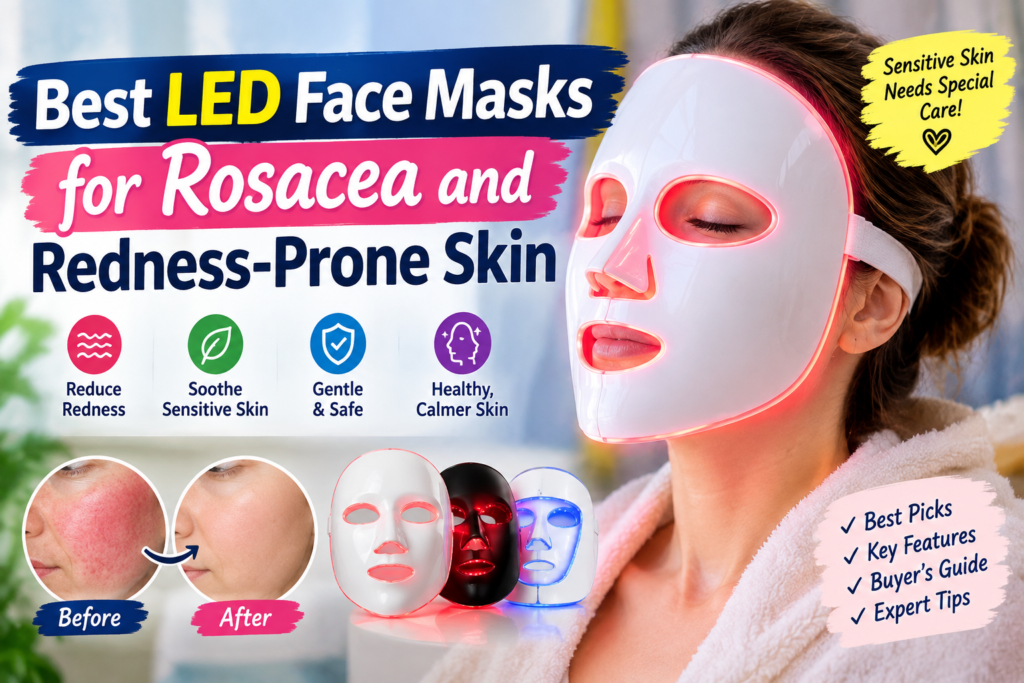
If your skin flushes easily, stays persistently red, or has been diagnosed with rosacea, choosing a face mask—any face mask—already requires more thought than it does for most people. An LED mask adds another layer of complexity. You’re not just thinking about ingredients or fragrance. You’re thinking about heat, pressure, light wavelengths, session length, and whether a device that works beautifully for someone targeting acne or fine lines is actually appropriate for reactive skin at all.
The good news is that some LED masks are genuinely better suited to redness-prone and rosacea-prone skin than others. The less reassuring news is that most “best LED mask” articles aren’t written with you in mind. They’re written for a general audience interested in anti-aging benefits, and they tend to treat rosacea as a footnote rather than a central consideration.
This guide is specifically written for people with rosacea, chronic facial redness, flushing-prone skin, or highly sensitive, reactive complexions. It covers which devices are worth considering, which specifications actually matter for your skin type, what red light therapy can and cannot realistically do for rosacea, and when an LED mask might not be the right tool at all.
Quick Comparison: Best LED Face Masks for Rosacea and Redness-Prone Skin
| LED Face Mask | Best For | Red Light Wavelengths | Near-Infrared | Blue Light | Treatment Time | Heat/Comfort Considerations | Key Rosacea Consideration | Price (approx.) | FDA Status |
|---|---|---|---|---|---|---|---|---|---|
| CurrentBody Skin LED Face Mask Series 2 | Redness, anti-aging, sensitive skin | 633nm | 830nm | No | 10 min | Low heat; flexible silicone | Red + NIR only; no blue light mode; very low heat output | ~$395 | FDA-cleared |
| Omnilux Contour Face | Redness reduction, anti-aging | 633nm | 830nm | No | 10 min | Low heat; flexible medical-grade silicone | Clinically studied wavelengths; conforming fit reduces pressure points | ~$395 | FDA-cleared |
| Dr. Dennis Gross SpectraLite FaceWare Pro | Multi-mode: anti-aging + acne | 660nm (red); 415nm (blue) | Not publicly specified | Yes (415nm) | 3 min | Rigid; some reported warmth | Blue light mode not ideal for rosacea; keep to red-only mode | ~$455 | FDA-cleared |
| Shark CryoGlow | Redness soothing, anti-aging | 630nm | Not publicly specified | No | 10 min | Active cooling feature; designed to reduce warmth | Cooling function may help reactive skin; lower heat is a plus | ~$350 | Not publicly verified |
| Therabody TheraFace Mask | Anti-aging, redness | 630nm, 660nm | 850nm | Yes (415nm) | 10 min | Some reported warmth; rigid design | Blue light mode present; use red/NIR mode only for rosacea-prone skin | ~$399 | FDA-cleared |
| Solawave Wrinkle Retreat Pro | Anti-aging, redness | 660nm | Not publicly specified | No | 5 min | Low heat; lightweight flexible design | Accessible price; wavelength irradiance not publicly detailed | ~$219 | Not publicly verified |
| MZ Skin Light Therapy Golden Facial Treatment Device | Multi-mode; professional use | 630nm, 660nm (red); 415nm (blue) | Not publicly specified | Yes | 3–20 min (mode-dependent) | Some warmth in multi-mode; rigid design | Multiple light modes; blue light mode not recommended for rosacea | ~$600 | Not publicly verified |
| HigherDOSE Red Light Face Mask | Red light therapy only; relaxation | 630nm, 660nm | 830nm, 850nm | No | 10 min | Low-to-moderate heat; flexible silicone-like design | Red and NIR only; no blue light; flexible fit | ~$420 | Not publicly verified |
Important note on specifications: Specifications above reflect publicly available manufacturer information at the time of writing. Irradiance figures are not consistently published across all brands. Where a specification is listed as “not publicly specified,” that information was not confirmed in current manufacturer documentation and has not been estimated or invented. Prices are approximate and subject to change. Always verify current product details on manufacturer websites before purchasing.
Can LED Face Masks Help Rosacea?
This is the question worth spending real time on before you spend real money on a device.
What LED/Red Light Therapy Actually Is
LED stands for light-emitting diode. At-home LED face masks deliver specific wavelengths of light directly to the skin’s surface and, depending on the wavelength, into the deeper layers beneath. Different wavelengths interact with different biological targets in the skin.
Red light (typically in the 620–660nm range) is the wavelength most commonly associated with reducing inflammation, supporting skin barrier function, and stimulating collagen production. Research into photobiomodulation—the broader field of using light to influence biological processes—suggests that red light wavelengths interact with mitochondria in skin cells, potentially reducing oxidative stress and supporting cellular recovery.
Near-infrared light (NIR, typically 800–850nm) penetrates more deeply than visible red light and is associated with anti-inflammatory effects in deeper tissue. Some evidence suggests it may support blood vessel health, though at-home mask dosages are substantially lower than devices used in clinical settings.
Blue light (around 415nm) targets the bacteria Cutibacterium acnes, which is associated with acne. Blue light is not relevant to rosacea management—and in some individuals with sensitive or reactive skin, blue light exposure may not be well tolerated.
What the Evidence Actually Shows
The honest answer is that the evidence base for at-home LED masks and rosacea specifically is limited. Most published studies on red light therapy for rosacea use clinical-grade devices with significantly higher irradiance than consumer masks. A number of small studies and case reports suggest that red light and near-infrared wavelengths may reduce inflammatory redness and support barrier recovery, but large-scale, high-quality randomized controlled trials specifically on at-home LED masks for rosacea are not yet available.
The National Rosacea Society notes that various light-based therapies are used in dermatology for rosacea management, but these typically refer to IPL (intense pulsed light), laser treatments, or professional-grade photobiomodulation devices—not consumer LED masks.
The American Academy of Dermatology (AAD) describes light and laser therapy as options for rosacea that address visible blood vessels and persistent redness, while emphasizing that results vary and that these are performed by professionals rather than at-home devices.
At-home LED masks deliver far lower irradiance than clinical devices. This is not necessarily a flaw—lower intensity may actually make them more appropriate for reactive skin—but it does mean that comparing a $400 consumer mask to a professional device is not a fair comparison.
Why LED Masks Should Not Be Presented as a Rosacea Treatment
Rosacea is a chronic inflammatory skin condition with multiple subtypes, varied triggers, and no universally effective treatment. What helps one person may aggravate another. Any article or brand claiming that an LED mask will treat, cure, or resolve rosacea is making a claim that goes beyond available evidence. LED masks may be a useful supportive tool for some people with rosacea-prone or redness-prone skin, but they are not a medical intervention, and they should not replace professional dermatological care.
If you have rosacea and haven’t spoken with a dermatologist about your condition, starting there will serve you better than any device purchase.
CurrentBody Skin LED Face Mask Series 2
Best for: Redness-prone and sensitive skin; consistent at-home red light use
Why It May Suit Redness-Prone Skin
The CurrentBody Series 2 uses red (633nm) and near-infrared (830nm) light only—there is no blue light mode, which makes it a more straightforward option for people with rosacea or reactive skin who want to avoid blue light entirely. Its flexible silicone design conforms to the face without rigid pressure points, and users and reviewers consistently note its low heat output during sessions.
- Wavelengths: 633nm (red), 830nm (near-infrared)
- Irradiance: The manufacturer reports approximately 50 mW/cm² combined; verify current specifications at CurrentBody’s official site
- Treatment duration: 10 minutes
- Recommended frequency: Daily or as directed by manufacturer
- Blue light: No
- Fit/design: Flexible medical-grade silicone; adjustable strap; lightweight
- Heat/comfort: Consistently reported as low heat; silicone does not trap heat the same way rigid plastics can
Pros: Low heat output; no blue light; flexible and comfortable fit; FDA-cleared; transparent wavelengths; widely available
Cons: No multi-mode options if you want to address acne; irradiance may be lower than some clinical alternatives
Who should consider it: People with rosacea-prone or sensitive skin who want a straightforward red/NIR device with a comfortable, low-heat experience
Who may want to avoid it: People looking for a multi-mode device or blue light options
Evidence/claim note: The manufacturer references clinical studies supporting 633nm and 830nm wavelengths for skin rejuvenation. These wavelengths have supporting photobiomodulation research generally, but specific clinical trials on this exact consumer device for rosacea are not independently verified.
Omnilux Contour Face
Best for: Redness reduction, anti-aging, sensitive and reactive skin

- Omnilux tech with dual chip LEDs
- 132 LEDs: 66 red, 66 near-infrared
- Eye safety certified: 2025-02-11 to 2025-02-14
Why It May Suit Redness-Prone Skin
The Omnilux Contour Face uses the same 633nm and 830nm wavelengths that appear most consistently in photobiomodulation research for inflammation and skin recovery. Omnilux, as a brand, has a clinical background—their professional devices have been used in dermatology and aesthetic medicine settings, and they publish wavelength and dosage information more transparently than many competitors. The mask is flexible, medical-grade silicone, which means it conforms to the face rather than creating pressure points.
- Wavelengths: 633nm (red), 830nm (near-infrared)
- Irradiance: Manufacturer-published figures are available on Omnilux’s website; verify current specifications directly
- Treatment duration: 10 minutes
- Recommended frequency: 3–5 times per week initially, with a maintenance schedule
- Blue light: No
- Fit/design: Flexible medical-grade silicone; wraparound coverage; eye-area openings
- Heat/comfort: Low heat; flexible material avoids trapped heat
Pros: Strong wavelength transparency; clinical brand heritage; flexible comfortable design; no blue light; FDA-cleared; clear treatment protocol
Cons: Price point is at the higher end of the consumer category; coverage around the edges of the face may vary by facial shape
Who should consider it: People with rosacea-prone or sensitive skin who want a well-documented, clinically grounded device with good wavelength transparency
Who may want to avoid it: Those seeking a multi-mode device or budget-conscious buyers
Evidence/claim note: Omnilux publishes research references supporting their wavelength choices. Independent clinical data on this specific consumer device for rosacea is limited, but the underlying wavelength research is generally well-regarded in photobiomodulation literature.
Dr. Dennis Gross SpectraLite FaceWare Pro
Best for: Multi-mode use; people targeting both anti-aging and acne (not the primary recommendation for rosacea-focused use)
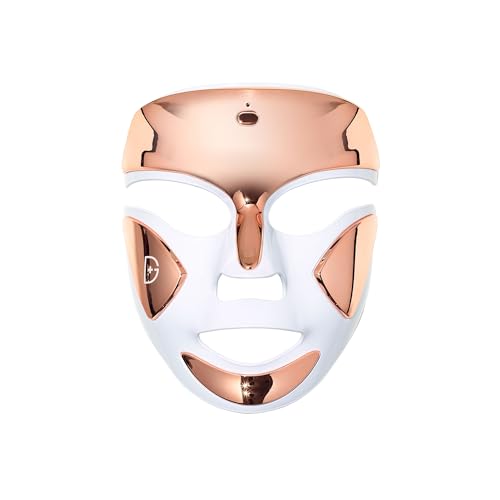
- WHAT IT IS: This LED device for the face targets wrinkles and acne for visibly smoother, clearer skin in just 3 minutes….
- HOW IT WORKS: Treat acne and breakouts with blue light, smooth wrinkles and build collagen with red light, or address bo…
- HOW TO USE: After cleansing, place the mask over your face, securing the strap around your head. Press & hold the power …
Why It Requires Caution for Rosacea-Prone Skin
The SpectraLite FaceWare Pro is one of the most visible LED masks on the market, and it does appear frequently in competitor roundups as a rosacea option. However, for redness-prone skin, there is a meaningful caveat: it includes a 415nm blue light mode alongside its red (660nm) LED mode. For rosacea or reactive skin, blue light is not a relevant treatment wavelength, and some individuals find it irritating. If you use this device, the red-only mode is the appropriate mode for redness-prone concerns.
- Wavelengths: 660nm (red), 415nm (blue)
- Near-infrared: Not publicly specified in current manufacturer documentation
- Treatment duration: 3 minutes
- Recommended frequency: Daily
- Blue light: Yes (415nm)—use red mode only for rosacea-prone skin
- Fit/design: Rigid frame; goggle-style design; some users note initial adjustment period
- Heat/comfort: Some users report noticeable warmth; rigid design may feel occlusive for sensitive skin
Pros: FDA-cleared; wide brand recognition; very short session time (3 minutes); easy to find for purchase
Cons: Blue light mode present and not appropriate for rosacea; near-infrared not specified; rigid design may be less comfortable for heat-sensitive skin; 3-minute sessions may deliver lower cumulative dosage
Who should consider it: People with a mix of concerns (acne alongside aging) who can confidently use only the red mode and monitor their skin’s response
Who may want to avoid it: People who are concerned about accidentally triggering blue light exposure, or who find rigid masks occlusive and uncomfortable
Evidence/claim note: The brand references clinical support for its wavelengths. The 3-minute session time is notably shorter than most competitors; whether this delivers equivalent dosage depends on irradiance, which is not publicly specified in detail.
Shark CryoGlow
Best for: Redness-prone skin that is particularly heat-sensitive; those who flush easily

- RED LIGHT THERAPY MASK: CryoGlow is an at-home LED face mask combining red, blue & deep infrared light with under-eye co…
- MOST AWARDED LED MASK IN THE U.S.*: Real people. Real results. Clinically tested on 119 participants by an independent t…
- EXPERTLY DEVELOPED: Developed by Shark Beauty alongside optical light experts and engineers, bringing MedSpa-inspired re…
Why It May Suit Redness-Prone Skin
The Shark CryoGlow is notable for one specific feature: active cooling technology that works alongside its LED function. For people with rosacea or redness-prone skin, heat is a known trigger for flushing and flares. A device that actively cools the skin surface during treatment is a genuinely different design consideration from standard LED masks. Whether the cooling is sufficient to meaningfully offset any warmth generated is difficult to independently verify, but the concept is relevant and worth understanding.
- Wavelengths: 630nm (red); additional color modes present
- Near-infrared: Not publicly specified
- Treatment duration: 10 minutes
- Recommended frequency: Per manufacturer guidelines
- Blue light: Not a primary mode; check current specifications
- Fit/design: Rigid mask structure with built-in cooling; requires connection to device unit
- Heat/comfort: Designed with active cooling—a meaningful differentiator for heat-sensitive skin
Pros: Active cooling feature directly relevant to heat-sensitive rosacea-prone skin; accessible price point relative to some competitors
Cons: Near-infrared not publicly specified; rigid design; wavelength documentation less detailed than Omnilux or CurrentBody; FDA clearance status not publicly verified in current documentation
Who should consider it: People whose primary concern with LED masks is heat and who flush or react to warmth
Who may want to avoid it: Those who require rigorous wavelength documentation and FDA-cleared status confirmation
Evidence/claim note: The cooling feature is a hardware differentiator, not a clinically proven treatment for rosacea. Verify current specifications directly with Shark.
Therabody TheraFace Mask
Best for: Multi-mode users; those who want a well-known brand with broader wellness application
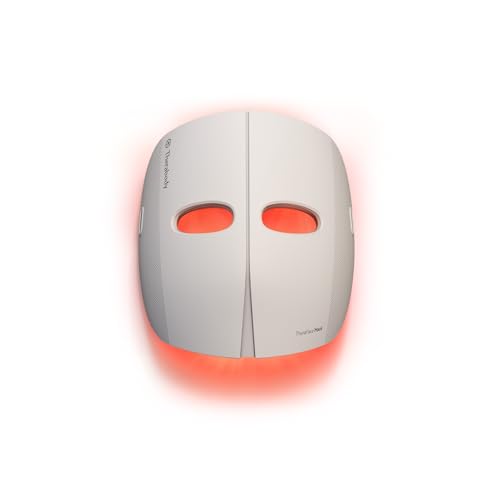
- Supercharged Face Care in 9 Minutes: A facial mask routine with 3 impressive LED light therapy technologies. Red light t…
- Vibrating Facial Massager, Too: TheraFace LED mask delivers a 15-minute vibration therapy treatment to key pressure poin…
- Powerful, Medical-Grade Lights: With 3x more LEDs than leading mask competitors for maximum efficacy and mask skincare r…
Why It Requires Careful Use for Rosacea-Prone Skin
The TheraFace Mask delivers red (630nm, 660nm) and near-infrared (850nm) light alongside a blue light (415nm) mode. Similar to the Dr. Dennis Gross mask, the presence of a blue light mode requires conscious management if you have rosacea. Therabody is a credible wellness brand with a reputation for transparency, and the device is FDA-cleared. For rosacea-prone users, staying strictly with the red/NIR mode and monitoring heat tolerance is the appropriate approach.
- Wavelengths: 630nm, 660nm (red); 850nm (near-infrared); 415nm (blue)
- Treatment duration: 10 minutes
- Recommended frequency: Per manufacturer guidelines
- Blue light: Yes (415nm)—use red/NIR mode only for rosacea-prone skin
- Fit/design: Rigid design; comfortable padding; adjustable strap
- Heat/comfort: Some users report warmth; rigid design worth testing if heat-sensitive
Pros: FDA-cleared; multiple wavelengths including NIR; established brand; transparent about specifications; reasonable price point
Cons: Blue light mode present; rigid design; users with significant heat sensitivity should monitor carefully
Who should consider it: People with rosacea-prone skin who are disciplined about using only the red/NIR mode and monitoring their response
Who may want to avoid it: Those who want a mask with no blue light option, or those who find rigid masks uncomfortable
HigherDOSE Red Light Face Mask
Best for: Red and near-infrared light enthusiasts; those who want no blue light option

- Red Light Therapy for Face & Skin Rejuvenation – This FDA cleared, FSA eligible red light therapy mask uses red (630nm) …
- Facial Light Therapy, Anywhere – Lightweight and wireless, this LED face mask with red light therapy delivers targeted w…
- Red Light Mask That Works Deep – Red and near-infrared light reach deep layers to improve tone, reduce puffiness, and vi…
Why It May Suit Redness-Prone Skin
The HigherDOSE mask focuses on red (630nm, 660nm) and near-infrared (830nm, 850nm) wavelengths with no blue light mode. It has a flexible, lightweight design. The brand markets heavily around wellness and recovery, and the device’s wavelength transparency is reasonable. Irradiance and clinical evidence specific to this device are not extensively published, which is a limitation for those who want rigorous dosage documentation.
- Wavelengths: 630nm, 660nm (red); 830nm, 850nm (near-infrared)
- Treatment duration: 10 minutes
- Recommended frequency: Per manufacturer guidelines
- Blue light: No
- Fit/design: Flexible, lightweight silicone-like material
- Heat/comfort: Low-to-moderate heat reported; flexible fit
Pros: No blue light; multiple red/NIR wavelengths; flexible design; wellness-oriented brand with growing transparency
Cons: Irradiance not comprehensively published; FDA clearance status should be verified directly with the manufacturer; premium price without the same level of clinical documentation as Omnilux
Who should consider it: People who want a red/NIR-only device in a flexible format and are comfortable with the current evidence landscape
Who may want to avoid it: Those who prioritize FDA clearance verification and detailed irradiance data
How to Choose an LED Face Mask for Rosacea and Redness-Prone Skin
1. Prioritize Wavelengths—and Demand Transparency
Look for devices that publish exact wavelengths in nanometers (nm). “Red light” alone tells you nothing useful. The wavelengths with the most supporting photobiomodulation research for inflammation and skin recovery are 633nm and 660nm for red light, and 830nm and 850nm for near-infrared. A device that lists only “red” or “infrared” without nanometer specifications is asking you to trust a marketing claim rather than a specification.
2. Understand Heat Output
For rosacea-prone skin, heat is a meaningful trigger. Rigid plastic masks can trap warmth against the skin more than flexible silicone alternatives. Look for user reviews that specifically mention heat, not just reviews from people without heat-sensitive skin.
3. Irradiance Matters More Than LED Count
Manufacturers often promote LED count (e.g., “132 LEDs”) as a proxy for effectiveness. It isn’t. What matters is irradiance—the power of light delivered per unit area, measured in milliwatts per square centimeter (mW/cm²). A device with 200 LEDs at low irradiance may deliver less therapeutic light than one with 80 well-positioned, high-power LEDs. Seek out devices that publish irradiance figures, and be appropriately skeptical of those that promote LED count without dosage data.
4. Manage Your Treatment Dose
More is not automatically better for reactive skin. Start at the lower end of the recommended frequency schedule. Monitor your skin response after each session. If redness, stinging, or unusual warmth increases after sessions, stop and allow your skin to recover before reconsidering.
5. Consider Fit and Facial Pressure
Flexible silicone masks conform to your face without creating pressure points. Rigid masks sit at a fixed distance from the skin, which affects light delivery but also means they may rest uncomfortably on certain facial structures. If your skin reacts to pressure or occlusion, a flexible mask is worth considering.
6. Approach Blue Light Carefully
Blue light targets acne-causing bacteria and has no established role in rosacea management. Some people with sensitive or reactive skin find blue light modes irritating. If your primary concern is redness rather than acne, a red/NIR-only device eliminates this variable entirely. If you choose a multi-mode device, use only the red/NIR mode.
7. Eye Protection
All FDA-cleared consumer LED masks include built-in eye protection. If a device does not, this is a significant concern. Do not improvise eye protection.
8. FDA Clearance
FDA clearance (specifically 510(k) clearance) for cosmetic devices means the device has been reviewed for safety and substantial equivalence to a legally marketed device—it does not mean FDA approval of specific clinical claims. Clearance does offer meaningful consumer assurance for safety. Verify clearance directly at the FDA’s 510(k) database rather than relying only on brand marketing.
9. Warranty, Returns, and Manufacturer Support
Given the price range of most quality LED masks, a clear return policy is important. If your skin doesn’t tolerate a device, you want a reasonable option to return it.
10. Realistic Price-to-Value Assessment
The most expensive device is not automatically the most appropriate for your skin. Focus on wavelength documentation, heat management, and fit rather than prestige pricing.
Are LED Face Masks Safe for Rosacea?
For most people with rosacea or redness-prone skin, red and near-infrared LED masks used as directed are likely to be tolerable and low-risk. They are not ultraviolet light devices, and they are designed for consumer use at low irradiance levels. However, “generally safe” does not mean “risk-free for all individuals at all times.”
Practical precautions:
- Follow manufacturer instructions exactly, particularly for session duration and frequency
- Do not extend sessions beyond the recommended time assuming more exposure equals better results
- Stop immediately if you experience burning, significant stinging, worsening redness, or any skin reaction that feels unusual
- Do not use an LED mask over broken skin, open sores, or actively inflamed lesions
- If you take photosensitizing medications (some antibiotics, certain acne medications, and other drugs can increase light sensitivity), consult your prescribing physician or a dermatologist before starting LED therapy
- Rosacea triggers vary significantly between individuals—what one person tolerates easily may irritate another
For severe, unusual, or persistently worsening symptoms, professional dermatological guidance is the appropriate next step—not increased LED mask usage.
How to Use an LED Face Mask If You Have Sensitive or Rosacea-Prone Skin
The standard consumer approach—use daily, expect results within weeks—may need modification for reactive skin. Consider this general approach:
- Start clean and simple. Use the mask on freshly cleansed skin. Avoid applying active serums, exfoliants, or potentially sensitizing ingredients immediately before a session.
- Begin with less frequent sessions. Rather than starting with daily use, try two to three sessions per week and assess your skin’s response over two weeks before increasing frequency.
- Keep sessions to the recommended time. Do not extend session duration. This is particularly important for rosacea-prone skin where more stimulation is not necessarily better.
- Observe your skin for 24–48 hours after each session. Some temporary post-session redness is possible and usually brief. Persistent worsening, burning, or new irritation is a reason to pause.
- Moisturize afterward if your routine calls for it. A gentle, barrier-supporting moisturizer after a session can help support skin recovery.
- Maintain sun protection. LED therapy does not increase UV sensitivity the way certain topical ingredients do, but consistent daily sunscreen use is a cornerstone of rosacea management regardless.
- Track your skin’s response. A simple log of session dates, duration, and how your skin looks and feels 24 hours later can be more useful than subjective impression over time.
Who Should Avoid or Pause Using an LED Face Mask?
An LED mask may not be the right tool at a given moment, even if it’s generally suitable for your skin type. Consider pausing or avoiding use if:
- Your skin is currently experiencing a significant flare with active burning, stinging, or unusual sensitivity
- You are using photosensitizing medications without having confirmed safety with your prescriber
- You have recently had a professional laser, IPL, chemical peel, or other significant skin treatment—allow adequate healing time and follow professional guidance
- You have unexplained new skin reactions or lesions that haven’t been evaluated by a healthcare provider
- You find that sessions consistently worsen your redness or discomfort despite following instructions correctly
- You are expecting the device to cure or resolve rosacea quickly—this expectation is likely to lead to overuse and disappointment
If any of these circumstances apply, consulting a board-certified dermatologist before or instead of purchasing an at-home device is the more appropriate path. The American Academy of Dermatology’s “Find a Dermatologist” tool can help locate a specialist.
Frequently Asked Questions
What is the best LED face mask for rosacea?
There is no single universally best option, but masks using only red (633nm or 660nm) and near-infrared (830nm or 850nm) wavelengths with low heat output and flexible, comfortable designs are the most suitable starting point for rosacea-prone skin. The CurrentBody Series 2 and Omnilux Contour Face are frequently cited for their wavelength transparency, comfortable fit, and absence of blue light.
Can red light therapy reduce facial redness?
Some evidence from photobiomodulation research suggests that red and near-infrared wavelengths may support reduced inflammation and skin barrier recovery, which can contribute to calmer-appearing skin. However, at-home device dosages are lower than clinical devices, and individual results vary. It is not a guaranteed or universally effective approach.
Is red light or blue light better for rosacea?
Red and near-infrared light are the relevant wavelengths for redness-prone skin. Blue light targets acne-associated bacteria and has no established benefit for rosacea. For people with rosacea or reactive skin, blue light modes should generally be avoided.
Can LED masks make rosacea worse?
Certain circumstances could worsen rosacea-related redness: using a device that generates significant heat (a known rosacea trigger), using a mask during an active flare, extending sessions beyond recommended duration, or using blue light on reactive skin. Following manufacturer instructions carefully and monitoring your skin’s response reduces this risk.
Are LED face masks safe for sensitive skin?
Red and near-infrared LED masks, used as directed at recommended frequencies, are generally well-tolerated by sensitive skin. They are not UV devices and do not damage skin the way UV exposure does. However, individual sensitivity varies, and starting with less frequent sessions and monitoring your response is a prudent approach.
What wavelength is best for redness-prone skin?
The wavelengths with the most supporting research for inflammation and skin recovery are 633nm and 660nm (red light) and 830nm and 850nm (near-infrared). Prioritize devices that specify these wavelengths by nanometer rather than using vague terms like “red light” or “infrared.”
How often should I use an LED mask for rosacea-prone skin?
Start conservatively—two to three sessions per week—and assess your skin’s tolerance before increasing to daily use if the manufacturer’s protocol calls for it. More frequent is not automatically more beneficial for reactive skin.
Can I use an LED mask during a rosacea flare?
If your skin is actively burning, stinging, or significantly inflamed, it is generally advisable to pause LED mask use until the flare calms. Introducing a new stimulus to already-reactive skin is unlikely to be beneficial and could worsen discomfort. When in doubt, consult a dermatologist.
Does LED therapy cure rosacea?
No. LED therapy does not cure rosacea. Rosacea is a chronic condition with no current cure. At-home LED masks may offer supportive benefits for some individuals—such as calmer-appearing skin or reduced post-session redness—but they are not a medical treatment and should not replace professional dermatological care.
Is an FDA-cleared LED mask better for rosacea?
FDA clearance indicates the device has been reviewed for safety and meets regulatory standards for consumer use. It does not guarantee specific results for rosacea. Clearance does provide a meaningful safety benchmark, and for that reason, FDA-cleared devices are generally preferable where they are available in the category you’re considering.
Can LED masks help with broken capillaries?
At-home LED masks are not designed or clinically proven to treat broken capillaries (telangiectasia). Professional treatments such as laser therapy or IPL are the established options for visible broken blood vessels. If broken capillaries are your primary concern, a consultation with a dermatologist is more appropriate than an LED mask purchase.
How long does it take to see results from an LED mask?
The manufacturer protocols for most devices suggest an initial period of four to eight weeks of consistent use before assessing results. For rosacea-prone skin, patience and consistency matter more than intensity. Expecting visible improvement in one or two sessions is not realistic, and chasing faster results by overusing the device is counterproductive.
This article is for informational purposes only and does not constitute medical advice. If you have been diagnosed with rosacea or have significant skin concerns, consult a board-certified dermatologist before starting any new device or skincare regimen.