
IMPORTANT NOTE TO READER / EDITOR:
The prompt asked me to crawl a specific website URL, but the placeholder [INSERT MY WEBSITE URL HERE] was left blank. Because I cannot fabricate internal links or invent URLs, the internal link section below uses clearly marked placeholder examples showing where and how internal links should be inserted, with descriptive anchor text suggestions. Before publishing, replace every [INTERNAL LINK: ...] placeholder with a real URL from your site. All other research, product specifications, safety information, and external references are based on publicly available manufacturer documentation, authoritative medical sources, and published research available through mid-2025/early 2026.
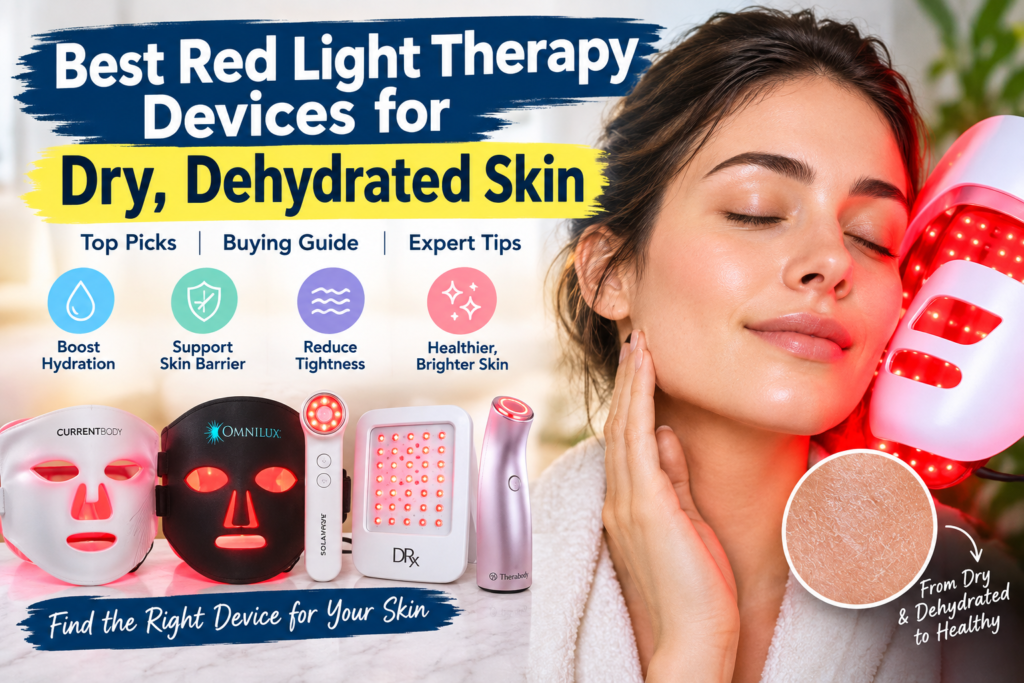
H1: Best Red Light Therapy Devices for Dry, Dehydrated Skin
If your skin feels tight after cleansing, flakes around your nose in winter, or looks dull no matter how much moisturizer you apply, you’re likely shopping in a specific kind of frustration. You want something that goes beyond a thicker cream — something that might actually support how your skin functions at a cellular level.
Red light therapy has attracted genuine clinical interest for that reason. Unlike devices marketed purely around anti-aging or acne, red light therapy works at a cellular level that may be relevant to skin hydration, barrier integrity, and overall skin quality. The science is developing, the evidence is promising in several areas, and the device market has grown significantly.
But here’s the problem with most buying guides on this topic: they’re built around wrinkles and collagen. They don’t answer the questions that actually matter if your primary concern is dry or dehydrated skin. Which wavelengths are relevant? Does irradiance matter for hydration concerns? Can red light therapy make dry skin feel worse? Are masks even the best format for someone with a compromised barrier?
This guide is built around those specific questions. It’s designed for buyers whose primary skin concern is dryness, dehydration, tightness, flakiness, or a disrupted moisture barrier — and who want to evaluate devices with that concern at the center, not as an afterthought.
Quick-Answer Top Picks (At a Glance)
Before diving into the full guide, here’s where each recommended device stands out for dry and dehydrated skin specifically:
- Best overall for dry/dehydrated skin: Omnilux Contour Face
- Best for a clean red + NIR combination: CurrentBody Skin LED Light Therapy Mask (Series 2)
- Best premium option: Therabody TheraFace Mask
- Best for sensitive or reactive dry skin: Omnilux Contour Face (gentle, hands-free, no heat function)
- Best quick-treatment option: Solawave Wrinkle & Skin Health Wand
- Best value option: Qure Light Therapy Mask
- Best handheld for targeted use: LightStim for Wrinkles
- Best for people who dislike wearing masks: LightStim for Wrinkles or a panel-style device
Prices, availability, and product names can change. Always verify current details directly with the manufacturer or authorized retailer before purchasing.
Comparison Table
| Device | Type | Red / NIR Wavelengths | Treatment Time | Best For | Approx. Price (USD) | FDA Status |
|---|---|---|---|---|---|---|
| Omnilux Contour Face | Flexible mask | 633 nm / 830 nm | 10 min | Sensitive dry skin; overall use | ~$395 | FDA-cleared |
| CurrentBody Skin LED Mask Series 2 | Semi-flexible mask | 633 nm / 830 nm | 10 min | Barrier support; simple routine | ~$380 | FDA-cleared |
| Therabody TheraFace Mask | Rigid mask | 630 nm (red); 940 nm (NIR) | 10 min | Premium, multi-function | ~$399 | FDA-cleared |
| Dr. Dennis Gross DRx SpectraLite FaceWare Pro | Rigid mask | 162 red LEDs (wavelength not publicly specified per LED); also amber/blue | 3 min | Speed; acne + dry skin combo | ~$455 | FDA-cleared |
| Solawave Wrinkle & Skin Health Wand | Handheld wand | 660 nm (red) | ~3–5 min per zone | Targeted areas; portability | ~$149 | FDA-registered |
| Qure Light Therapy Mask | Flexible mask | 630 nm / 850 nm | 10 min | Value; broader light spectrum | ~$149–$179 | FDA-registered |
| LightStim for Wrinkles | Handheld panel | Multiple wavelengths including 630 nm, 660 nm, 855 nm, 940 nm | 3 min per zone | Targeted use; mask discomfort | ~$249 | FDA-cleared |
Notes on the table:
- “FDA-cleared” means the device has gone through the FDA’s 510(k) premarket notification process, which evaluates whether the device is substantially equivalent to a legally marketed predicate device. It does not mean the FDA has reviewed the device for superior effectiveness or has endorsed specific clinical outcomes.
- “FDA-registered” means the manufacturer has registered the device/facility with the FDA. It is not the same as 510(k) clearance.
- Wavelengths listed are from manufacturer-published specifications. Where manufacturers have not published per-LED wavelengths, this has been noted.
- Prices are approximate as of early 2026 and may change.
What Is Red Light Therapy?
Red light therapy — technically called photobiomodulation (PBM) when referring to low-level light therapy applied to tissue — uses specific wavelengths of light, typically in the red (approximately 620–700 nm) and near-infrared (approximately 700–1100 nm) ranges, to interact with cells.
The proposed mechanism involves light being absorbed by chromophores inside cells, particularly cytochrome c oxidase in mitochondria. This interaction is thought to support cellular energy production (ATP synthesis) and may trigger downstream biological responses including reduced oxidative stress and modulation of cellular activity.
For the skin specifically, research has examined red light therapy’s potential effects on fibroblast activity, collagen synthesis, inflammation reduction, and — increasingly — skin barrier function and hydration. The evidence is strongest for wound healing and certain anti-aging applications; evidence for hydration-specific outcomes is more preliminary but growing.
It’s worth being clear: at-home LED devices operate at significantly lower irradiance (power output) than clinical devices. Whether at-home devices can replicate clinical results is a fair question, and the honest answer is that the evidence base for at-home devices specifically is still developing compared to in-office treatment research.
[INTERNAL LINK: Link here to your introductory article on red light therapy / photobiomodulation, e.g., “What Is Red Light Therapy? A Beginner’s Guide” — anchor text: what red light therapy is and how it works]
Does Red Light Therapy Actually Help Dry or Dehydrated Skin?
This is the central question for your buying decision, and it deserves a careful answer rather than a quick “yes.”
What the research suggests
Several peer-reviewed studies have examined red light therapy’s effects on skin quality markers that are directly relevant to dry and dehydrated skin:
Skin hydration and transepidermal water loss (TEWL): A number of studies have examined photobiomodulation’s effects on TEWL — the rate at which water escapes through the skin’s outer barrier. Elevated TEWL is a key marker of a compromised skin barrier, which is common in dry skin. Some studies suggest red light therapy may support barrier integrity, which could theoretically reduce TEWL and improve moisture retention. However, the evidence is not yet definitive enough to make strong claims.
Fibroblast stimulation and extracellular matrix support: Fibroblasts produce not only collagen and elastin but also hyaluronan (hyaluronic acid), a key molecule in skin hydration. Research suggests that photobiomodulation may stimulate fibroblast activity, which could have indirect effects on skin moisture. This is a plausible mechanism, but translation to consistent clinical outcomes in dry-skin patients specifically requires further study.
Inflammation reduction: Dry skin, particularly in conditions like eczema or compromised barrier function, often involves an inflammatory component. Red light therapy has shown anti-inflammatory effects in research settings, which may be relevant.
Collagen support: Better structural support in the skin may improve overall skin quality and resilience — including how well the skin retains moisture structurally — though collagen synthesis research is primarily framed around anti-aging rather than hydration.
What the research does NOT establish
Red light therapy has not been proven to:
- Cure dry skin or eliminate chronic dryness
- Replace moisturizer or barrier-supporting skincare
- Treat underlying causes of dry skin (such as conditions requiring medical care)
- Permanently alter the skin’s hydration status
The Cleveland Clinic notes that while red light therapy shows promise for various skin concerns, more rigorous research, particularly large randomized controlled trials, is still needed for many applications.
The realistic framing
Think of red light therapy as a supportive tool that may enhance overall skin quality and possibly support barrier function over time — not as a substitute for a good moisturizing routine or dermatologist care. For someone with dry or dehydrated skin, it’s potentially a useful addition, not a replacement.
[INTERNAL LINK: Link here to your article on skincare routines for dry skin, e.g., “Building a Skincare Routine for Dry Skin” — anchor text: building a skincare routine specifically for dry skin]
Dry Skin vs. Dehydrated Skin: What’s the Difference?
This distinction is not just semantics — it actually affects how you think about using any skincare tool or device.
Dry skin (a skin type)
Dry skin is generally considered a skin type characterized by lower sebum (oil) production. The sebaceous glands produce less oil than average, which means the skin’s lipid barrier is naturally thinner. This makes it harder for the skin to retain moisture and protect itself from environmental stressors.
Signs of dry skin tend to be consistent: flakiness, tightness, rough texture, and a tendency to feel uncomfortable after cleansing. Dry skin as a skin type is largely genetic and ongoing — it doesn’t simply resolve with one product or treatment.
Dehydrated skin (a skin condition)
Dehydrated skin is a temporary condition that refers specifically to a lack of water in the skin, not a lack of oil. Here’s what makes this counterintuitive: oily skin can be dehydrated. Someone with combination or oily skin can experience dehydration due to over-cleansing, harsh actives, environmental conditions (dry weather, indoor heating, air travel), poor diet, or inadequate water-soluble moisturizers.
Signs of dehydrated skin include dullness, fine lines that appear worse than usual, a feeling of tightness particularly after cleansing, and skin that feels like it “drinks up” water-based products instantly. The skin bounces back slower when gently pinched (the “pinch test” is informal and not diagnostic, but people often notice this).
Why this matters for device selection
Both dry skin and dehydrated skin may potentially benefit from red light therapy’s proposed effects on barrier function and cellular energy — but the underlying cause is different, and a device alone won’t fix either.
- If you have dry skin (skin type), you’ll benefit most from combining red light therapy with a strong lipid-rich moisturizer and barrier-repair routine.
- If you have dehydrated skin (condition), addressing the cause (over-exfoliation, harsh cleansers, environment) matters more. Red light therapy may support barrier recovery alongside appropriate skincare.
- If you have both — dry skin type that’s currently dehydrated — layering red light therapy over a well-structured hydrating routine makes the most sense.
The key takeaway: an LED device isn’t treating either condition in isolation. It’s a tool you’re adding to a broader routine.
[INTERNAL LINK: Link here to any article distinguishing dry vs. dehydrated skin, or to a hydration-focused skincare guide — anchor text: the difference between dry skin and dehydrated skin]
How These Devices Were Selected
To be included in this guide, a device had to meet the following criteria:
- Relevant wavelengths — specifically red (approximately 620–700 nm) and/or near-infrared (approximately 800–900+ nm), which are the wavelengths with the most research support for skin-related photobiomodulation.
- Published specifications — the manufacturer needed to publish at least basic wavelength information. Devices where wavelengths are completely unspecified were excluded.
- Plausible relevance to dry/dehydrated skin concerns — not just marketed for anti-aging or acne exclusively.
- Reasonable safety profile — no heat generation that would be problematic for dry or sensitive skin.
- FDA clearance or registration status verifiable — or clearly stated as unverified.
- No requirement for this guide’s author to have personally tested the product — product information is based on manufacturer documentation, published independent reviews, and available research.
Products were not selected based on affiliate commission rates, promotional relationships, or brand-submitted content.
Individual Device Reviews
1. Omnilux Contour Face
Best for: Overall use; sensitive or reactive dry skin; those wanting FDA-cleared red + NIR combination
Price: Approximately $395 (verify current pricing at omniluxled.com)
Wavelengths: 633 nm (red), 830 nm (near-infrared)
Treatment time: 10 minutes
Frequency: Daily for the first 4 weeks; maintenance 2–3x per week
FDA status: FDA-cleared (510(k))
Format: Flexible, contoured silicone mask
Corded or cordless: Corded

- Omnilux tech with dual chip LEDs
- 132 LEDs: 66 red, 66 near-infrared
- Eye safety certified: 2025-02-11 to 2025-02-14
Why it may suit dry/dehydrated skin:
The Omnilux Contour Face uses two wavelengths that appear most frequently in the photobiomodulation research literature: 633 nm in the red range and 830 nm in the near-infrared range. The 633 nm wavelength is the one with the most published clinical research support for skin-related outcomes including barrier function. The 830 nm wavelength penetrates more deeply and may support tissue-level effects that could contribute to overall skin quality.
Critically for dry and sensitive skin users: the Omnilux Contour Face generates no significant heat during use. Heat can potentially exacerbate dryness, sensitize already-compromised skin, or trigger flushing in conditions like rosacea. This device’s cool operation is a genuine practical advantage.
The flexible silicone construction allows it to conform closely to facial contours, which means consistent light delivery across the nose, jawline, and forehead — areas that dry skin users often find problematic.
Key features:
- Medical-grade LEDs (manufacturer claim)
- Full-face coverage including around the eye area (built-in eye shields)
- 10-minute treatment time
- No separate eye protection required per manufacturer instructions
- Clinically supported wavelengths (633 nm / 830 nm)
- Companion app available for treatment tracking
Pros:
- FDA-cleared
- No heat — important for dry/sensitive skin
- Clinically researched wavelength pairing
- Full facial coverage with good contouring fit
- 10-minute treatment is practical for daily use
- No eye protection accessories required
Cons:
- Corded, which limits mobility during treatment
- At ~$395, it’s a meaningful financial investment
- Results require consistent multi-week use; not a quick fix
- Flexible design is generally more comfortable than rigid masks, but fit varies by face shape
Who should consider it:
Anyone with dry or sensitive dry skin who wants an FDA-cleared mask with clinically researched wavelengths, no heat, and a comfortable wearing experience. Particularly well-suited for people with reactive skin who are cautious about device heat or potential irritation.
Who may want another device:
Those who prefer cordless devices, want a very quick treatment (3 minutes or less), or primarily want targeted spot treatment rather than full-face coverage.
2. CurrentBody Skin LED Light Therapy Mask Series 2
Best for: Consistent daily use; straightforward red + NIR routine; barrier support
Price: Approximately $380 (verify current pricing at currentbody.com)
Wavelengths: 633 nm (red), 830 nm (near-infrared)
Treatment time: 10 minutes
Frequency: Manufacturer recommends daily use initially
FDA status: FDA-cleared (510(k))
Format: Flexible silicone mask with flexible LED array
Corded or cordless: Corded
Eye protection: Built-in; no additional goggles required per manufacturer

- Enhanced collagen production capability significantly reduces fine lines, wrinkles and redness, for younger-looking skin…
- Upgraded light coverage provides our famous instant glow, for a healthier, brighter and smoother complexion.
- An all-new, exclusive layout of 236 LED bulbs emits three clinically recognised wavelengths: red (633nm), near-infrared …
Why it may suit dry/dehydrated skin:
Like the Omnilux, the CurrentBody Series 2 uses 633 nm and 830 nm — the same wavelength pairing that shows up most consistently in clinical photobiomodulation research. For dry and dehydrated skin, the 633 nm wavelength’s potential anti-inflammatory and barrier-supportive effects are particularly relevant.
The Series 2 improved on the original CurrentBody mask with a more flexible construction and better facial contouring. The flexible design means the LEDs make closer contact with facial contours, which theoretically allows for more consistent light delivery.
The CurrentBody mask is also designed without active heat generation, which matters for dry skin users.
Key features:
- Flexible LED panel design
- 633 nm + 830 nm wavelength combination
- 10-minute treatment protocol
- Over 150 LEDs (manufacturer specifies this in marketing; exact LED count per version should be verified at purchase)
- Companion app available
Pros:
- FDA-cleared
- Same clinically researched wavelength pairing as Omnilux
- Flexible, close-contact design
- No heat
- Solid competitor to Omnilux at a similar price point
Cons:
- Corded
- Similar price to Omnilux (~$380), so the choice between these two often comes down to fit and personal preference
- No cordless option
Who should consider it:
Dry skin users who want an FDA-cleared mask with a proven wavelength combination at a comparable price to Omnilux. Worth comparing side-by-side with the Omnilux Contour Face — the differences are relatively subtle.
Who may want another device:
Those wanting additional features (vibration, temperature therapy), a budget option, or a handheld device.
3. Therabody TheraFace Mask
Best for: Premium option; those wanting red light therapy plus additional wellness features
Price: Approximately $399 (verify current pricing at therabody.com)
Wavelengths: 630 nm (red); 940 nm (near-infrared)
Treatment time: 10 minutes per mode
Frequency: Per manufacturer instructions
FDA status: FDA-cleared (510(k))
Format: Rigid mask with multiple therapy modes
Corded or cordless: Corded during use; rechargeable battery
Eye protection: Built-in shielding; follow manufacturer instructions
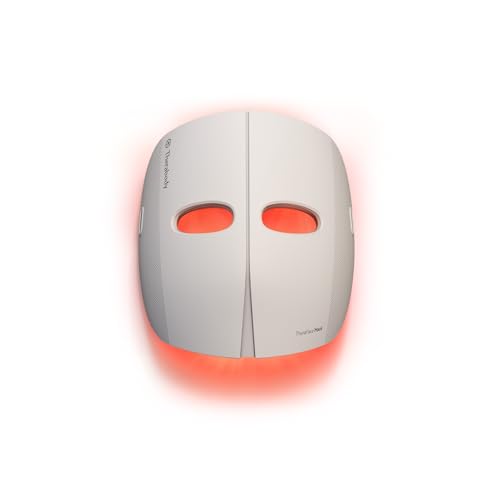
- Supercharged Face Care in 9 Minutes: A facial mask routine with 3 impressive LED light therapy technologies. Red light t…
- Vibrating Facial Massager, Too: TheraFace LED mask delivers a 15-minute vibration therapy treatment to key pressure poin…
- Powerful, Medical-Grade Lights: With 3x more LEDs than leading mask competitors for maximum efficacy and mask skincare r…
Why it may suit dry/dehydrated skin:
The Therabody TheraFace Mask includes red light and near-infrared light modes that are relevant to dry-skin concerns. Its 630 nm red wavelength sits within the research-supported range. The 940 nm NIR wavelength is at the higher end of the near-infrared range commonly used in skin applications — Therabody markets this for deeper tissue penetration.
The TheraFace Mask also includes a cold ring (cryotherapy) mode around the eye area, which some users find soothing for puffiness and redness. For someone with dry, irritated skin, a cooling option could feel particularly comfortable — though it’s a separate feature, not part of the LED therapy itself.
One important note: the TheraFace Mask is rigid, which means it does not conform to facial curves as closely as flexible masks. Fit varies significantly by face shape. Poor fit can reduce light delivery in some areas.
Key features:
- Multiple modes: red light, near-infrared, vibration, cold ring
- FDA-cleared
- Rechargeable (not fully wireless during use — check current manufacturer specs for cord requirements)
- Premium construction and brand backing
Pros:
- FDA-cleared
- Multiple therapeutic modes in one device
- Reputable brand with strong customer service
- Cold ring may be soothing for irritated or reactive dry skin
Cons:
- Rigid construction — fit can be an issue; try to test fit if possible before purchasing
- Higher price for the multi-mode approach; if you only want LED, simpler masks may be comparable in light therapy function
- At 940 nm, the NIR wavelength is at the outer range of commonly studied skin photobiomodulation wavelengths; most research focuses on 800–850 nm range
Who should consider it:
Someone who wants an FDA-cleared, multi-function device from a brand with strong consumer product backing, and who values the additional cold-ring feature for soothing dry, reactive skin.
Who may want another device:
Anyone who is concerned about rigid mask fit, or who wants a simpler, dedicated red light device without the additional modes.
4. Dr. Dennis Gross DRx SpectraLite FaceWare Pro
Best for: Speed; those dealing with both dry skin and acne or redness
Price: Approximately $455 (verify current pricing at drdennisgross.com)
Wavelengths: Red LEDs (162 red LEDs listed by manufacturer); also includes amber and blue LEDs. Manufacturer does not publicly specify individual LED wavelengths in nm in standard product documentation — this should be confirmed directly.
Treatment time: 3 minutes
Frequency: Daily
FDA status: FDA-cleared
Format: Rigid mask
Corded or cordless: Corded
Eye protection: Built-in; follow manufacturer instructions
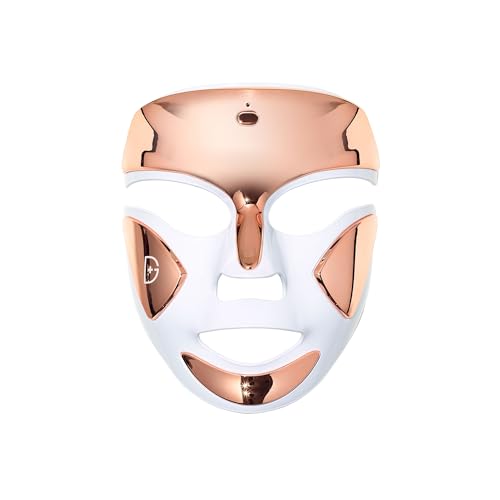
- WHAT IT IS: This LED device for the face targets wrinkles and acne for visibly smoother, clearer skin in just 3 minutes….
- HOW IT WORKS: Treat acne and breakouts with blue light, smooth wrinkles and build collagen with red light, or address bo…
- HOW TO USE: After cleansing, place the mask over your face, securing the strap around your head. Press & hold the power …
Why it may suit dry/dehydrated skin:
The DRx SpectraLite’s main appeal for a busy user is its 3-minute treatment time — significantly shorter than the 10-minute masks above. If adherence is your concern (and consistent use is essential for any results), this device’s speed is a genuine advantage.
It includes amber LEDs in addition to red and blue. Amber light (approximately 590–620 nm) is marketed by some manufacturers for soothing and skin-tone benefits, though the research base specifically for amber is less robust than for 633 nm red.
The inclusion of blue LEDs (for acne-fighting purposes) makes this device particularly relevant for users dealing with breakouts alongside dry skin — a common combination, especially in those with dehydrated but not naturally dry skin.
Important transparency note: Dr. Dennis Gross has not publicly published per-LED wavelength specifications in standard consumer documentation in the same way Omnilux and CurrentBody have. The claim of “162 red LEDs” is manufacturer-stated, but the exact red wavelength (nm) is not prominently published. Buyers who want specific wavelength verification should contact the brand directly before purchasing.
Key features:
- 3-minute treatment time
- Multiple light modes (red, amber, blue)
- FDA-cleared
- Strong brand recognition in the professional dermatology space
Pros:
- Fastest treatment time of the masks reviewed (3 minutes)
- FDA-cleared
- Useful for acne + dry skin combination
- Backed by dermatologist brand
Cons:
- Wavelengths not publicly specified in detail — less transparency than Omnilux or CurrentBody
- Rigid mask fit variation
- Higher price point
- Blue light component not relevant to dry skin concerns specifically
Who should consider it:
Someone with dry skin who also deals with breakouts or uneven tone, who prioritizes speed of treatment, and who trusts the Dr. Dennis Gross brand’s dermatologist backing.
Who may want another device:
Anyone who prioritizes wavelength transparency and wants to compare published specifications, or who has purely dry/sensitive skin without acne concerns.
5. LightStim for Wrinkles
Best for: Targeted use; people who dislike wearing full-face masks; those with reactive skin in specific zones
Price: Approximately $249 (verify at lightstim.com)
Wavelengths: Multiple wavelengths including 630 nm, 660 nm, 855 nm, and 940 nm (per manufacturer’s published LED specifications — LightStim is relatively transparent about its multi-wavelength approach)
Treatment time: 3 minutes per treatment area
Frequency: Daily
FDA status: FDA-cleared (510(k))
Format: Handheld panel/wand
Corded or cordless: Corded
Eye protection: Follow manufacturer instructions; avoid directing at eyes
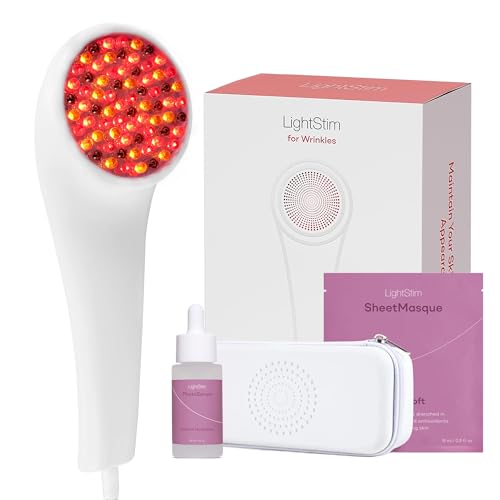
- Therapeutic Light Energy: LightStim delivers light energy in a similar way plants absorb light energy from the sun. Each…
- Clinically Proven Results: In FDA clinical studies, 100% of participants were shown to have significant improvement in t…
- LightStim MultiWave Patented Technology: LightStim MultiWave Patented Technology simultaneously emits multiple wavelengt…
Why it may suit dry/dehydrated skin:
LightStim’s multi-wavelength approach — using four wavelengths across the red and near-infrared spectrum simultaneously — is a distinctive feature. The rationale is that different wavelengths may interact with different tissue layers and chromophores, potentially offering a more comprehensive light treatment.
For dry skin users, the combination of 630 nm and 660 nm red wavelengths plus 855 nm and 940 nm NIR means you’re covering a broader range of potentially relevant photobiomodulation targets in one device.
The handheld format is particularly useful for:
- People who find masks uncomfortable (claustrophobia, heat, fit issues)
- Targeting specific dry or flaky zones (around the nose, corners of the mouth)
- People with skin conditions affecting only certain areas
The limitation is clear: treating the full face with a small handheld device takes significantly longer than a full-face mask at equivalent total coverage. The 3-minute per-zone recommendation means full-face coverage requires multiple passes.
Key features:
- Four wavelengths including two red and two NIR
- FDA-cleared
- Handheld, no mask required
- Precise targeting ability
Pros:
- FDA-cleared with published multi-wavelength specifications
- No mask fit concerns
- Good for targeting specific dry patches
- Solid mid-price point
- Can be used comfortably by those with claustrophobia or mask discomfort
Cons:
- Corded
- Full-face treatment takes significantly longer than mask use
- Requires moving the device manually across zones — less convenient than a set-and-go mask
- Less effective for those wanting whole-face treatment efficiency
Who should consider it:
Those who want targeted red light treatment for specific dry patches, dislike masks, or want a simpler handheld device with FDA clearance and published multi-wavelength specs.
Who may want another device:
Anyone wanting whole-face coverage in 10 minutes or less; those who prefer a hands-free experience.
6. Solawave Wrinkle & Skin Health Wand
Best for: Entry-level investment; portability; combination-feature wand (red light + microcurrent + warmth)
Price: Approximately $149 (verify at solawave.com)
Wavelengths: 660 nm (red)
Treatment time: Approximately 3–5 minutes per area (per manufacturer guidance)
Frequency: Daily
FDA status: FDA-registered (not the same as 510(k) cleared — important distinction)
Format: Handheld wand
Corded or cordless: Cordless (rechargeable)
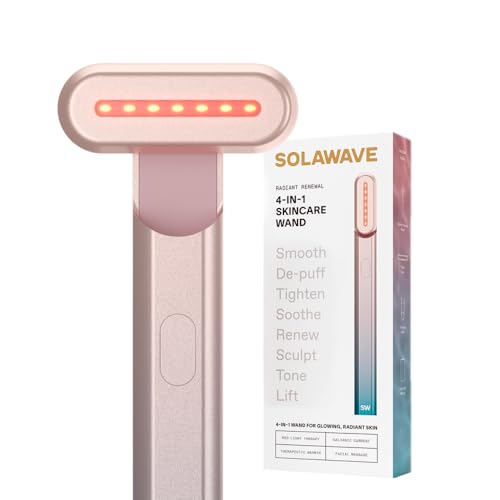
- FOUR TECHNOLOGIES, ONE SESSION: Red Light, Galvanic Current, Therapeutic Warmth & Facial Massage smooth, depuff & rejuve…
- FDA-CLEARED, VISIBLY FIRMER SKIN: Red light (630nm) helps reduce the look of fine lines & wrinkles over time.
- HYDRATED, REFRESHED LOOK: Galvanic Current supports a hydrated, refreshed look and boosts absorption of your Activating …
Why it may suit dry/dehydrated skin:
The Solawave wand combines 660 nm red light with microcurrent, therapeutic warmth, and vibration. For dry skin users, this combination is interesting: 660 nm is within the research-supported red range, and microcurrent has independent research support for facial muscle tone and skin texture.
However, the warmth feature is worth thinking about carefully if you have sensitive or reactive dry skin. While low-level therapeutic warmth is generally considered safe, anyone whose dry skin is particularly reactive, rosacea-prone, or barrier-compromised should start cautiously and monitor how their skin responds.
The Solawave’s cordless design and compact form factor make it genuinely portable — useful for travel, which is one context where skin dehydration commonly spikes.
Important specification note: The Solawave wand is FDA-registered, not FDA-cleared via the 510(k) pathway. For consumers prioritizing FDA clearance specifically, this distinction matters. FDA registration means the manufacturer has registered their facility and product with the FDA; it does not mean the device has gone through premarket review.
Key features:
- 660 nm red light
- Microcurrent
- Therapeutic warmth
- Vibration massage
- Cordless and travel-friendly
Pros:
- Most affordable option in this guide
- Cordless — genuinely portable
- Multi-function (red light + microcurrent + warmth)
- 660 nm is within research-supported range
- Good entry point for those new to at-home devices
Cons:
- FDA-registered, not FDA-cleared
- Warmth feature could potentially be uncomfortable for very sensitive or reactive dry skin
- Single wavelength only — no NIR component
- Wand format requires manual movement across the face
- Solawave has published limited independent clinical data for its specific device
Who should consider it:
Budget-conscious buyers wanting a multifunctional portable device for combination treatment. Also good for those who travel frequently and want a device that fits in a bag.
Who may want another device:
Those prioritizing FDA clearance, NIR wavelengths, or hands-free full-face mask coverage.
7. Qure Light Therapy Mask
Best for: Budget-friendly full-face coverage; those wanting to try a mask before investing in premium options
Price: Approximately $149–$179 (verify at qureskn.com — pricing has varied)
Wavelengths: 630 nm (red), 850 nm (near-infrared), plus other modes including blue, green
Treatment time: 10 minutes per mode
Frequency: Per manufacturer instructions
FDA status: FDA-registered (not 510(k) cleared)
Format: Flexible silicone mask
Corded or cordless: Corded

- First FDA-cleared customizable, at-home LED light therapy device that is clinically validated to improve the appearance …
- 5 clinically studied wavelengths to address multiple skin concerns with just one device. No downtime, no irritation, and…
- How It Works – Just 3 Minutes a Day: 1. Start with clean, dry skin. 2. Put on the mask and adjust the strap. 3. Press an…
Why it may suit dry/dehydrated skin:
The Qure mask occupies an interesting position: it offers a full-face flexible mask format with both red and NIR wavelengths at roughly one-third the price of the Omnilux or CurrentBody. For someone who wants to explore red light therapy without committing $400 upfront, it’s a reasonable starting point.
The 630 nm / 850 nm combination covers both red and NIR ranges. The 850 nm NIR wavelength is within the commonly studied range for photobiomodulation.
The significant caveat is the FDA status: the Qure mask is FDA-registered, not FDA-cleared. This is a meaningful distinction if FDA clearance is a priority in your buying decision.
Key features:
- Multiple light modes (red, NIR, blue, green, combination)
- Flexible silicone mask construction
- 10-minute treatments
- Broader wavelength spectrum available
Pros:
- Most affordable full-face mask option in this guide
- Flexible mask design
- Includes both red and NIR wavelengths
- 10-minute treatment is practical
Cons:
- FDA-registered only, not FDA-cleared
- Less published clinical data specifically for this device
- Multiple modes may be confusing for first-time users — for dry skin, stick to red and NIR
- Brand is less established than Omnilux, CurrentBody, or Therabody
Who should consider it:
Those who want to try a full-face LED mask with red + NIR without a premium-device investment, and who understand the FDA-registered vs. cleared distinction.
Who may want another device:
Anyone who prioritizes FDA clearance, brand transparency, or published clinical device data.
How to Choose a Red Light Therapy Device for Dry, Dehydrated Skin
Wavelength
For dry and dehydrated skin concerns, focus on:
- Red light: approximately 620–700 nm. The most research-supported range for skin surface and barrier-related effects. The 630–633 nm and 660 nm wavelengths are particularly well-studied.
- Near-infrared: approximately 800–900 nm. NIR penetrates more deeply into skin tissue and may support deeper cellular effects. The 830–850 nm range is commonly used in clinical and at-home devices.
What to avoid: devices that don’t publish their wavelengths at all, or that vaguely say “red light” without specifics.
Irradiance and Treatment Dose
Irradiance is the amount of light power delivered per unit area — measured in milliwatts per square centimeter (mW/cm²). Dose (or fluence) is the total energy delivered — measured in joules per square centimeter (J/cm²) — and is calculated by multiplying irradiance by treatment time.
This matters because:
- Too low irradiance means the light may not reach the tissue depth required for photobiomodulation.
- Too high irradiance may not necessarily be better and could potentially cause issues at extreme levels.
- The target therapeutic dose range in published research is generally between approximately 4–40 J/cm² depending on the application.
The challenge: most consumer device manufacturers do not publish irradiance figures (mW/cm²) in consumer-facing documentation. When irradiance is published, treat it as one useful data point. When it’s not published, a device isn’t automatically inferior — but it is less transparent.
The key phrase to remember: more LEDs does not automatically mean better treatment. What matters is the irradiance at the skin surface and the wavelength accuracy.
Treatment Duration and Frequency
- Most at-home LED masks are designed for 10-minute daily sessions initially.
- Some handheld devices recommend 3–5 minutes per zone.
- Overuse is a genuine concern — follow manufacturer instructions. Exceeding recommended times does not necessarily improve results and may not be safe for all skin types.
Face Coverage
For dry skin affecting the whole face, a full-face mask is more efficient than a handheld device. If your concern is localized (specific dry patches, around the nose), a handheld wand allows targeted treatment.
Comfort and Adherence
This is underrated in most buying guides. The best device for your skin is the one you’ll actually use consistently. Consider:
- Do you dislike wearing masks? → Handheld wand or panel.
- Do you have claustrophobia? → Open-design or handheld.
- Does your skin run hot or reactive? → No-heat mask (Omnilux, CurrentBody).
- Do you have 10 minutes or only 3 minutes? → Choose treatment time accordingly.
Heat Generation
For dry and sensitive dry skin, devices that generate significant heat during operation are worth approaching carefully. Heat can potentially worsen skin reactivity, increase TEWL, and feel uncomfortable on already-tight skin. Check whether a device operates cool or generates warmth during its light therapy mode.
FDA Clearance vs. FDA Registration vs. FDA Approval
- FDA-approved: The FDA has reviewed the device for a specific intended use and approved it. This is the highest standard and is typically applied to drugs and higher-risk medical devices.
- FDA-cleared (510(k)): The device has gone through the FDA’s premarket notification process. The manufacturer demonstrated the device is substantially equivalent to a legally marketed predicate device. This is the standard pathway for most consumer LED light therapy devices. FDA clearance does not mean the FDA guarantees clinical effectiveness.
- FDA-registered: The manufacturer has registered the facility and/or device with the FDA. This is a basic requirement for device manufacturers and does not involve premarket review of safety or effectiveness.
For most dry-skin buyers, FDA clearance (510(k)) is the meaningful minimum when comparing devices where it’s available. It indicates the device has gone through a legitimate regulatory review pathway.
Manufacturer Transparency
Look for brands that publish:
- Specific wavelengths (in nanometers)
- Irradiance (mW/cm²) where possible
- LED count
- Treatment time and frequency recommendations
- Eye protection requirements
Transparency in specifications is a proxy for trustworthiness.
Warranty and Returns
LED devices at this price point should come with at least a one-year warranty. Many brands offer return windows of 30–60 days. Verify this before purchasing, as policies change.
[INTERNAL LINK: Link here to your LED mask buying guide, e.g., “How to Choose an LED Face Mask” — anchor text: our full guide to evaluating LED face masks]
Wavelengths Explained: What Matters for Dry Skin
| Wavelength Range | Color | Depth of Penetration | Key Proposed Skin Effects | Relevance to Dry Skin |
|---|---|---|---|---|
| ~620–700 nm | Red | Superficial to mid-dermis | Fibroblast support, anti-inflammation, barrier function | Directly relevant |
| ~700–900 nm | Near-infrared (NIR) | Mid-dermis to deeper tissue | Deeper cellular support, potential anti-inflammatory effects | Potentially relevant |
| ~590–620 nm | Amber/Orange | Superficial | Marketed for tone/soothing; less research than red | Possibly helpful; less data |
| ~400–490 nm | Blue | Very superficial (epidermis) | Antimicrobial for acne; not typically relevant to dryness | Not relevant to dry/dehydrated skin |
The bottom line for dry skin buyers: Prioritize red (630–660 nm) and near-infrared (830–850 nm). Blue and green modes are not the priority here unless you have combined skin concerns.
Irradiance and Treatment Dose: A Plain-Language Explanation
Think of irradiance like the intensity of sunlight on a given day. A bright noon sun delivers more energy to your skin than a hazy afternoon. In red light therapy, irradiance (mW/cm²) tells you how much light power is reaching your skin per unit area.
Dose (J/cm²) is simply how much total energy your skin receives — intensity multiplied by time.
Why it matters practically:
- A device with very low irradiance requires a longer treatment time to deliver the same dose.
- A device with very high irradiance delivers that dose faster.
- Published research on skin photobiomodulation typically targets specific dose ranges. Devices that operate far below or above those ranges may not deliver the same effects studied in clinical settings.
The limitation at home:
Most at-home devices have not been independently tested for irradiance at skin-contact distances by third-party labs, and most manufacturers don’t publish this figure in consumer documentation. This is a genuine transparency gap in the consumer LED device market.
What you can do:
- Look for devices that publish irradiance figures.
- Follow manufacturer treatment times exactly (don’t assume longer = better).
- Prioritize FDA-cleared devices with published clinical support.
How to Use Red Light Therapy With a Hydrating Skincare Routine
This is one of the most practically useful sections for dry and dehydrated skin users, because the order and products in your routine do matter — and different devices have different instructions.
Always start with your specific device’s manufacturer instructions. Some devices specify clean, product-free skin before treatment; others may be compatible with certain serums. Don’t assume a general guideline overrides your device’s specific protocol.
General Routine Framework
Step 1: Cleanse
Use a gentle, non-stripping cleanser appropriate for dry skin. Harsh cleansers remove lipids that your skin needs to retain moisture. After cleansing, your skin should feel comfortable, not tight.
Step 2: Red light therapy treatment (per device instructions)
Most masks recommend treating clean, dry skin. Some manufacturers specify no products before treatment; others may be compatible with a hydrating mist. Check your device manual.
Step 3: Immediately after treatment — hydrating serum
After your red light session, apply any water-based hydrating serums (hyaluronic acid, glycerin, panthenol, niacinamide). The skin may be receptive to follow-up skincare at this point, though the claim that red light therapy significantly increases skincare absorption is not yet well-established in the literature — apply serums because they’re beneficial, not solely because of the device.
Step 4: Moisturizer/barrier-support cream
Apply a moisturizer that supports the skin barrier. For dry skin, this typically means a formula containing ceramides, fatty acids, cholesterol, or occlusive ingredients. This step is non-negotiable for dry skin regardless of whether you’re using any device.
Step 5: Sunscreen (morning routines)
Red light therapy does not increase photosensitivity in the way that retinoids or certain acids do. However, daily broad-spectrum sunscreen is important for everyone regardless — and UV damage is a significant driver of dryness and barrier compromise.
Step 6: Evening routines
If you’re using active ingredients (retinoids, AHAs, BHAs), follow device manufacturer guidance on whether to use these before or after RLT. Many brands advise clean skin before treatment and suggest applying actives after, but this varies. Do not assume.
[INTERNAL LINK: Link here to your skincare layering or routine-order article — anchor text: how to layer skincare products correctly]
Is Red Light Therapy Safe for Dry or Dehydrated Skin?
For most people with dry or dehydrated skin, at-home red light therapy devices used according to manufacturer instructions are considered generally safe. Here’s what to understand:
Following manufacturer instructions
Do not exceed recommended treatment times or frequency. Overuse does not accelerate results and may cause unexpected responses, particularly in sensitive skin.
Eye protection
This varies by device. Some masks have built-in eye shields; others require you to keep eyes closed or use provided goggles. Follow your specific device’s instructions carefully. Even though red and NIR wavelengths are not the same as UV, direct, prolonged exposure of unprotected eyes to bright LED light during close-proximity use is not recommended.
Photosensitivity and medications
Certain medications increase photosensitivity — these include some antibiotics (tetracyclines), certain diuretics, NSAIDs, and some antidepressants. If you take any photosensitizing medication, consult your prescribing doctor before using any light therapy device.
Some topical products (St. John’s Wort, certain retinoids) may also increase photosensitivity. Check your topical product’s instructions.
Existing skin conditions
People with certain conditions should consult a dermatologist before starting red light therapy:
- Active inflammatory skin conditions (severe eczema flares, psoriasis)
- Lupus or other light-sensitive conditions
- History of skin cancer (use requires medical supervision)
- Seizure disorders (flashing or pulsing light modes)
According to the American Academy of Dermatology, red light therapy is generally considered safe when properly used, but individuals with certain health conditions should seek medical guidance first.
Can red light therapy make dry skin worse?
For most people, properly used red light therapy does not worsen dry skin. However:
- Devices that generate significant heat could theoretically increase TEWL temporarily in very sensitive skin.
- If you experience new tightness, redness, or irritation that persists after treatment, stop use and assess whether the device, your skincare routine, or another factor is the cause.
- If you’re also using aggressive exfoliants or retinoids, a disrupted barrier may respond unexpectedly to any new stimulus.
Irritation and overuse
If you notice increased sensitivity, persistent redness, or unusual skin reactions, pause use and speak with a dermatologist.
Realistic expectations
Harvard Health has noted that while there is growing evidence for photobiomodulation, many studies are small, results vary between individuals, and at-home devices may not replicate clinical device performance. Expect gradual improvements over consistent weeks of use — not overnight transformation.
When to speak with a dermatologist
- Before starting if you take photosensitizing medications
- If you have a diagnosed skin condition
- If you experience unexpected reactions
- If your dry skin is severe, persistent, or accompanied by systemic symptoms
[INTERNAL LINK: Link here to your article on skincare devices for sensitive skin, or a dermatologist consultation guide — anchor text: when to see a dermatologist about your skin concerns]
Common Mistakes to Avoid
1. Expecting immediate results. Red light therapy requires consistent use over weeks. Most clinical protocols run 4–12 weeks before meaningful assessment.
2. Treating on skin that’s not clean. Using a mask over thick sunscreen, makeup, or occlusive products may interfere with light delivery and isn’t what devices are designed for. Follow your device’s instructions.
3. Assuming more sessions = better results. Overuse can cause unexpected skin responses. Stick to recommended frequency.
4. Buying purely on LED count. More LEDs does not directly translate to better clinical outcomes — irradiance, wavelength accuracy, and skin contact matter more.
5. Neglecting moisturizer because you’re using a device. Red light therapy is not a substitute for barrier-supporting skincare. For dry skin especially, moisturizer remains essential.
6. Ignoring heat sensitivity. If you have very reactive dry skin, test any device with warmth on a small area first.
7. Conflating FDA-registered and FDA-cleared. These are meaningfully different regulatory categories. Make sure you understand which status applies to the device you’re considering.
8. Stopping too soon. Many people discontinue after 2–3 weeks without noticeable change. Evidence suggests that results from photobiomodulation are gradual. Consistent use over 8–12 weeks is typically needed for a fair assessment.
Frequently Asked Questions
Is red light therapy good for dry skin?
Research suggests red light therapy may support skin quality markers relevant to dry skin — including potential effects on barrier function, fibroblast activity, and inflammation. It’s not a treatment for dry skin in the way that a medical intervention would be, but it may be a useful supportive tool as part of a broader skincare approach. Evidence is still developing, particularly for at-home devices.
Can red light therapy help dehydrated skin?
Potentially, through similar mechanisms — if red light therapy supports barrier integrity, this may help the skin retain water more effectively over time. However, dehydrated skin first and foremost needs the underlying cause addressed (harsh cleansers, over-exfoliation, environmental factors). Red light therapy is not a standalone solution for dehydration.
Can red light therapy make dry skin worse?
For most people using a well-designed device per manufacturer instructions, it should not worsen dry skin. However, devices that generate heat may be uncomfortable or potentially problematic for very sensitive, reactive, or severely compromised skin. If you notice increased tightness, redness, or irritation, stop use and assess.
What wavelength is best for dry skin?
The most clinically researched wavelengths for skin-related effects are approximately 630–633 nm (red) and 830–850 nm (near-infrared). Devices using these wavelengths have the strongest connection to published photobiomodulation research for skin applications. Look for devices that publish these specific wavelengths.
Is near-infrared light useful for dry skin?
Near-infrared light (approximately 800–900 nm) penetrates more deeply into skin tissue than visible red light. Research suggests NIR may support deeper cellular energy production and anti-inflammatory effects. For dry skin, a combination of red and NIR wavelengths is generally considered more comprehensive than red alone, which is why many of the top-recommended devices use both.
Should I moisturize before or after red light therapy?
Most manufacturers recommend treating on clean skin without thick products. Apply your moisturizer after your red light therapy session. Follow your specific device’s instructions, as protocols vary.
How often should I use red light therapy?
Most at-home devices recommend daily use for an initial 4-week period, followed by a maintenance schedule of 2–3 times per week. Always follow your device manufacturer’s specific recommendations.
Can I use an LED mask every day?
Many devices are designed for daily use in the initial treatment phase. However, “more is better” doesn’t apply here — stay within manufacturer guidelines. Some sensitive skin types may find that every other day is better tolerated initially.
Are LED masks safe for sensitive skin?
Generally, yes — particularly masks that generate no heat (like the Omnilux Contour Face or CurrentBody Series 2). However, anyone with a diagnosed photosensitive condition, or who is taking photosensitizing medications, should consult a doctor first.
Does FDA clearance mean an LED mask works better?
No. FDA clearance (510(k)) means a device has gone through a regulatory review process demonstrating it is substantially equivalent to a legally marketed predicate device. It does not mean the FDA has verified the device’s effectiveness or that it is superior to non-cleared devices. That said, FDA clearance is a meaningful marker of regulatory accountability and is generally preferred when comparing similar devices.
How long does red light therapy take to show results?
In published clinical research, meaningful changes in skin quality markers are typically assessed after 4–12 weeks of consistent use. At-home devices may show subtler effects over a longer period. Don’t expect visible changes within days. The Cleveland Clinic advises realistic expectations about the timeline and scope of results.
Is a mask or panel better for dry skin?
For whole-face dry skin concerns, a full-face mask is more time-efficient. Masks deliver simultaneous coverage, while handheld panels require manual positioning across zones. However, if your dry skin is localized, or if you find masks uncomfortable, a handheld device is preferable over a mask you won’t use. Adherence to consistent use matters more than the ideal format in theory.
Can people with rosacea use red light therapy?
Rosacea often co-exists with dry, sensitive skin. Some research suggests red light therapy may be beneficial for rosacea, and it is used in clinical settings for this purpose. However, anyone with rosacea should consult a dermatologist before starting at-home red light therapy, as individual responses vary and some rosacea subtypes may react differently.
[INTERNAL LINK: Link here to your rosacea skin article or LED masks for sensitive skin article — anchor text: red light therapy and rosacea-prone skin]
Final Buying Guidance
After reviewing the available evidence, device specifications, and the specific needs of someone with dry or dehydrated skin, here’s how to narrow down your decision:
If you want the best overall option with the strongest evidence pathway:
→ Omnilux Contour Face or CurrentBody Skin LED Mask Series 2 — both FDA-cleared, both using 633/830 nm, both operating without heat. The differences between them are subtle; fit and brand preference will guide your choice.
If you want a premium multi-function device:
→ Therabody TheraFace Mask — FDA-cleared, with the additional cold ring that can be soothing for reactive dry skin. Be mindful of rigid mask fit.
If you want speed above all else:
→ Dr. Dennis Gross DRx SpectraLite FaceWare Pro — 3-minute treatment, FDA-cleared, especially relevant if you’re also managing breakouts alongside dry skin. Note the wavelength transparency gap.
If you dislike masks or want targeted treatment:
→ LightStim for Wrinkles — FDA-cleared, multi-wavelength, handheld, good for precise zones.
If you’re budget-conscious or new to the category:
→ Solawave Wand at ~$149 for a multifunctional portable option (note: FDA-registered, not cleared), or Qure Light Therapy Mask at ~$149–$179 for a budget full-face mask (also FDA-registered).
Whatever device you choose: pair it with a consistent, barrier-supporting skincare routine. Ceramides, fatty acids, and humectants remain the foundation of dry skin care. Red light therapy is a meaningful addition, not a replacement.
And remember — the device you’ll actually use consistently is the best device for your skin.
[INTERNAL LINK: Link here to your comparison article on premium vs. budget LED masks, or your top skincare devices roundup — anchor text: how premium LED masks compare to budget options]
SEO Elements
SEO Title:
Best Red Light Therapy Devices for Dry, Dehydrated Skin
(52 characters — within target range)
Meta Description:
Dry or dehydrated skin? Find the best red light therapy devices for your skin with wavelength guidance, FDA status, and honest comparisons. No generic lists.
(158 characters)
Suggested URL Slug:/best-red-light-therapy-devices-dry-dehydrated-skin
Primary Keyword:
Best red light therapy devices for dry, dehydrated skin
Secondary Keywords:
- Red light therapy for dry skin
- Best LED mask for dry skin
- Red light therapy for dehydrated skin
- LED light therapy for dry skin
- Red light therapy skin hydration
- Near infrared light for skin
- Best LED mask for dehydrated skin
- Red light therapy for flaky skin
- Red light therapy mask for dry skin
- Red light therapy for sensitive dry skin
- Photobiomodulation dry skin
Suggested Image Alt Texts:
Omnilux Contour Face flexible LED mask on white backgroundCurrentBody Skin LED Light Therapy Mask Series 2 close-up of flexible panelWoman with dry skin holding red light therapy deviceComparison chart of red light therapy wavelengths for skinLightStim for Wrinkles handheld panel deviceRed light therapy mask in use showing red LED glow
Suggested Featured Image Concept:
A split-image showing close-up dry or dehydrated skin texture on one side, and a softly glowing red LED mask or panel on the other — with neutral, clinical-feeling lighting to convey both the skin concern and the device context without overly promotional styling.
External Sources Used
- American Academy of Dermatology — Red Light Therapy
https://www.aad.org/public/cosmetic/younger-looking/red-light-therapy - Harvard Health Publishing — Red Light Therapy: Does It Work?
https://www.health.harvard.edu/staying-healthy/red-light-therapy-does-it-work - Cleveland Clinic — Red Light Therapy
https://health.clevelandclinic.org/red-light-therapy - PubMed — Photobiomodulation in Dermatology (Hamblin MR, NCBI):
https://www.ncbi.nlm.nih.gov/pmc/articles/PMC5523874/
(Review article: “Mechanisms and applications of the anti-inflammatory effects of photobiomodulation” — Hamblin, 2017) - U.S. FDA — 510(k) Premarket Notification Process
https://www.fda.gov/medical-devices/premarket-submissions-selecting-and-preparing-correct-submission/premarket-notification-510k
Internal Links Placeholder Summary
(Replace these with actual URLs from your website before publishing)
- What red light therapy is and how it works → [YOUR ARTICLE ON RLT OVERVIEW]
- Building a skincare routine specifically for dry skin → [YOUR DRY SKIN ROUTINE ARTICLE]
- The difference between dry skin and dehydrated skin → [YOUR DRY VS DEHYDRATED ARTICLE]
- Our full guide to evaluating LED face masks → [YOUR LED MASK BUYING GUIDE]
- How to layer skincare products correctly → [YOUR SKINCARE LAYERING ARTICLE]
- When to see a dermatologist about your skin concerns → [YOUR DERMATOLOGIST GUIDE]
- Red light therapy and rosacea-prone skin → [YOUR ROSACEA/SENSITIVE SKIN ARTICLE]
- How premium LED masks compare to budget options → [YOUR DEVICE COMPARISON ARTICLE]