
Natural Skin Studio is a reader-supported website. If readers purchase through qualifying links, we may earn a commission at no additional cost to them.
Somewhere after 40, the mirror starts telling a slightly different story. Fine lines around the eyes stay visible after you stop smiling. Cheeks look a little less lifted. Skin seems duller by mid-afternoon, and a breakout or a patch of dryness takes longer to settle than it used to. An LED mask is an appealing answer because it asks for a few minutes a day, with no needles, no downtime, and nothing to recover from.
But the market is crowded, and the prices run from about $300 to nearly $900. If you are searching for the best LED face masks for beginners over 40, the smartest move is to ignore the hype and focus on the basics: wavelengths with research behind them, a comfortable fit, a session short enough to repeat, clear safety instructions, and a price you can justify. Consistency does more than any spec sheet, so the mask you will actually wear is the one worth buying.
This guide narrows the field to six masks, explains the jargon in plain English, and tells you what realistic results look like. Prices, wavelengths, and session times below come from manufacturer pages or current retailer listings checked in 2026. Where sources disagreed or a number was not published, I left it out rather than guess. We have not personally tested these devices, so the picks reflect specifications, published clinical information, and editorial judgment about what suits a first-time buyer.
Quick Answer: Best LED Face Masks for Beginners Over 40 at a Glance
If you want the short version: the Omnilux Contour Face is our pick for most first-time buyers over 40 because it keeps things simple, with red and near-infrared light, one 10-minute routine, and a flexible silicone fit. Choose the CurrentBody Series 2 if you want the most coverage and don’t mind spending more, or the Dr. Dennis Gross FaceWare Pro if a 3-minute session is the only way you’ll stick with it.
| Mask | Approx. US price* | Key wavelengths | Session | Major strength | Major drawback | Beginner / mature-skin fit |
|---|---|---|---|---|---|---|
| Omnilux Contour Face Best overall for beginners | $395 | 633 nm red, 830 nm near-infrared | 10 min | Simple, flexible, focused on wrinkles | Face only; 10 minutes, 3–5 times a week | Excellent / Excellent |
| CurrentBody Skin LED Mask Series 2 Best for coverage | $469.99 | 633 nm red, 830 nm near-infrared, 1072 nm deep near-infrared | 10 min | Full-face and chin coverage, three wavelengths | Highest price of the group’s flexible masks; near-infrared can’t be switched off separately | Very good / Excellent |
| Dr. Dennis Gross DRx SpectraLite FaceWare Pro Best for quick sessions | $455 | Red and blue LEDs (exact nm not disclosed in sources I could verify) | 3 min | Shortest routine; automatic shutoff | Wavelengths not clearly published; no near-infrared listed | Excellent / Good |
| Shark CryoGlow Best for aging + breakouts | About $350 | Red (630 nm) and infrared (830 nm); blue mode included | 4–8 min by mode | Multiple modes plus under-eye cooling | Rigid shell; more settings to learn | Good / Good |
| Therabody TheraFace Mask Best premium option | Roughly $650–$900, varies by seller | Red, red + near-infrared, blue (exact nm not disclosed) | 9 min preset | Cordless, eye shields, vibration | Highest price; vibration is a feature you may not want | Good / Good |
| Skin Gym LED Pro Light Therapy Mask Best value in this group | About $300 | 630 nm red, 465 nm blue, 830 nm near-infrared | 10 min | Lowest price here with three modes | Newer brand with less published research | Good / Good |
*Prices are approximate US figures from manufacturer or major retailer listings in 2026. Sales, bundles, and retailer differences are common, so check current price and availability before you buy. All six are described by their makers as FDA-cleared for wrinkles; confirm the exact indication on the manufacturer’s page.
How We Chose These Masks
I started with a longer list and kept only masks that met four tests: they are FDA-cleared according to the manufacturer, they publish enough detail to judge them, they are practical for a first-time user, and they address wrinkles and firmness, which are the main reasons most people over 40 shop for one. I dropped one candidate, the Qure Q-Rejuvalight Pro, because I couldn’t verify a current US price and several buyer reviews on a retailer page described battery failures after the warranty period. I also couldn’t verify the Skin Gym Wrinklit, so I included Skin Gym’s LED Pro mask instead, whose specifications I could confirm.
A note on sources: manufacturer claims, independent medical guidance, and my own editorial judgment are labeled as such throughout. Brand-funded studies are useful but not the same as independent trials.
Our Picks by Category
- Best overall for beginners over 40: Omnilux Contour Face
- Best for fine lines and wrinkles (coverage and wavelength range): CurrentBody Series 2
- Best for quick sessions: Dr. Dennis Gross FaceWare Pro
- Best for acne plus aging concerns: Shark CryoGlow
- Best premium option: Therabody TheraFace Mask
- Best value in this group: Skin Gym LED Pro
I did not name a “best for sensitive mature skin” winner. No manufacturer I reviewed publishes evidence that its mask is better for sensitive skin, so claiming one would be guesswork. If your skin is reactive, start with the shortest session, follow the patch-test advice in your manual (CurrentBody’s instructions, for example, begin with a sensitivity test), and check with a dermatologist.
Detailed Reviews of the Best LED Face Masks for Beginners Over 40
1. Omnilux Contour Face: Best Overall for Beginners
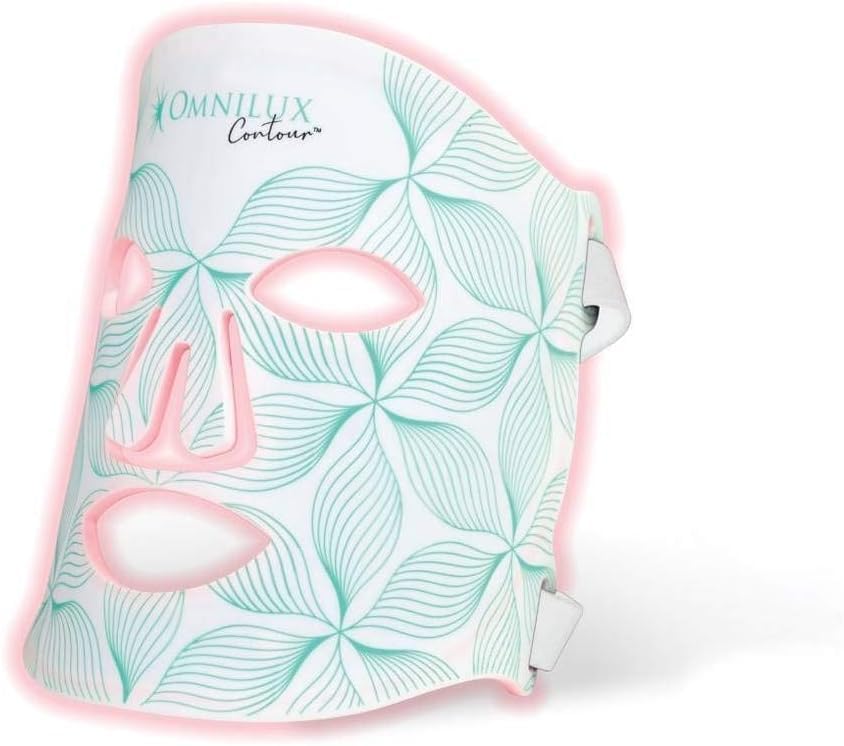
The Omnilux Contour Face uses two wavelengths, 633 nm red and 830 nm near-infrared, and the brand recommends three to five 10-minute treatments per week for four to six weeks, followed by maintenance. It is FDA-cleared for full-face wrinkles according to retailer listings of the brand’s information. The mask is flexible medical-grade silicone with a rechargeable controller. A 2026 review from Wareable priced it at $395 and noted that the controller keeps sessions to the recommended 10 minutes.
- Why it suits beginners: There are no modes to choose. You put it on, press start, and it stops.
- Fit and comfort: Flexible silicone that contours to the face rather than a rigid shell. It covers the face but not as far down the chin as CurrentBody’s design.
- Best mature-skin concerns: Fine lines, loss of firmness, uneven tone.
- Pros: Simple routine; two well-studied wavelengths; lower price than several rivals.
- Cons: Not a multitasking device (no blue light for breakouts); the brand advises against use during pregnancy or breastfeeding.
- Buy it if you want the least complicated route to a regular routine. Skip it if you also want to treat breakouts with the same device.
2. CurrentBody Skin LED Light Therapy Mask Series 2: Best for Coverage

- Enhanced collagen production capability significantly reduces fine lines, wrinkles and redness, for younger-looking skin…
- Upgraded light coverage provides our famous instant glow, for a healthier, brighter and smoother complexion.
- An all-new, exclusive layout of 236 LED bulbs emits three clinically recognised wavelengths: red (633nm), near-infrared …
The CurrentBody Series 2 is listed at $469.99 and emits 633 nm red, 830 nm near-infrared, and 1072 nm deep near-infrared light, with 236 LEDs. CurrentBody recommends a 10-minute session at least three to five times a week. Coverage is its calling card: the silicone design adds a nose flap and chin flap. Independent reviewers have reported different irradiance figures for this mask, so I haven’t printed a power number, a good reminder to treat any single reading with caution.
- Why it suits beginners: One program, one length, and an FDA clearance for full-face wrinkles.
- Fit and comfort: Flexible, with a multiway strap. Reviewers noted you can’t turn the near-infrared off separately, which matters if you prefer red only.
- Best mature-skin concerns: Fine lines, texture, and firmness across the whole face, including the jawline.
- Pros: Broadest coverage; three wavelengths; brand-cited 56-day study (a manufacturer-linked source, so weigh accordingly).
- Cons: Higher cost than Omnilux; the extra 1072 nm wavelength has less published skin research behind it than red and 830 nm.
- Buy it if you want maximum coverage. Skip it if your budget is under $400.
3. Dr. Dennis Gross DRx SpectraLite FaceWare Pro: Best for Quick Sessions
The FaceWare Pro lists at $455 and is the shortest routine here: three minutes, with automatic shutoff. It pairs red LEDs for wrinkles with blue LEDs for acne, and the brand states optimal results come after a 10-week course. It is cordless. The catch is transparency: I couldn’t confirm exact wavelengths from sources I could verify, and there is no near-infrared option listed.
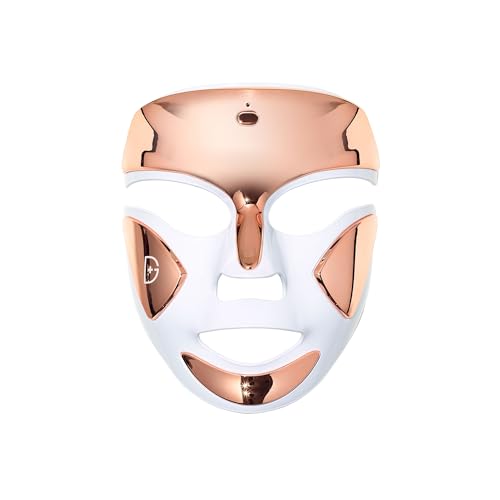
- WHAT IT IS: This LED device for the face targets wrinkles and acne for visibly smoother, clearer skin in just 3 minutes….
- HOW IT WORKS: Treat acne and breakouts with blue light, smooth wrinkles and build collagen with red light, or address bo…
- HOW TO USE: After cleansing, place the mask over your face, securing the strap around your head. Press & hold the power …
- Why it suits beginners: Three minutes is hard to skip, and the device shuts itself off.
- Fit and comfort: Adjustable silicone head strap; hands-free and untethered.
- Best mature-skin concerns: Wrinkles with occasional adult breakouts.
- Pros: Fastest routine; dermatologist-founded brand; three light settings.
- Cons: Wavelength details are not clearly published; a shorter session means a different dose than 10-minute masks, so follow the manual strictly.
- Buy it if time is your barrier. Skip it if you want near-infrared light.
4. Shark CryoGlow LED Face Mask: Best for Acne and Aging
The Shark CryoGlow comes in at about $350 and offers four modes: Better Aging (6 minutes, red and infrared), Skin Clearing (8 minutes), Skin Sustain (4 minutes), and a separate 5- to 15-minute under-eye cooling mode. Shark says the mask is FDA-cleared for fine lines and acne and lists 630 nm red and 830 nm infrared. Its blue-light wavelength is listed inconsistently on the product page, so I left it out.
- Why it suits beginners: Presets remove the guesswork. The brand says the programs are designed for one session a day.
- Fit and comfort: A retailer description mentions a hard-shell design, so it is less flexible than silicone masks.
- Best mature-skin concerns: Fine lines, under-eye puffiness, and occasional breakouts.
- Pros: Short sessions; useful cooling feature; mid-range price.
- Cons: More settings than a true beginner needs; a rigid fit may feel less forgiving.
- Buy it if you want one device for lines and breakouts. Skip it if you prefer a soft, flexible mask.
5. Therabody TheraFace Mask: Best Premium Option
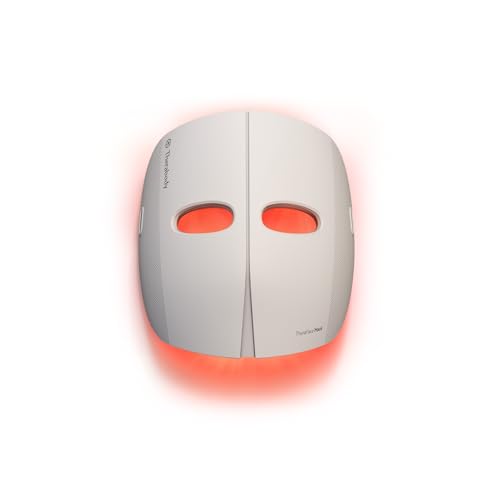
- Supercharged Face Care in 9 Minutes: A facial mask routine with 3 impressive LED light therapy technologies. Red light t…
- Vibrating Facial Massager, Too: TheraFace LED mask delivers a 15-minute vibration therapy treatment to key pressure poin…
- Powerful, Medical-Grade Lights: With 3x more LEDs than leading mask competitors for maximum efficacy and mask skincare r…
The TheraFace Mask (Therabody) packs 648 LEDs and cycles through red, red plus near-infrared, and blue light in a 9-minute preset, three minutes each. It is cordless, includes removable eye shields so you can use it with eyes open, and adds vibration around the eyes, brow, and scalp. Retail prices vary widely, from about $650 to $899 depending on seller. Therabody describes the mask as FDA-cleared and cites a 12-week study of 31 people, which is brand-run and small.
- Why it suits beginners: A guided preset and eye shields reduce the learning curve.
- Fit and comfort: Contoured, with adjustable straps. One retailer lists about 1.5 kg, which may be shipping weight, so confirm the device weight before buying if neck comfort matters to you.
- Best mature-skin concerns: Wrinkles, tone, and tension around the eyes.
- Pros: Cordless; many LEDs; comfort extras.
- Cons: Highest price; exact wavelengths not published in sources I could verify.
- Buy it if comfort features matter to you. Skip it if you want the simplest, cheapest start.
6. Skin Gym LED Pro Light Therapy Mask: Best Value in This Group
The Skin Gym LED Pro is about $300 and uses 630 nm red, 465 nm blue, and 830 nm near-infrared light from 198 LEDs. Retailer listings state a 10-minute session and an FDA clearance for full-face wrinkles and mild to moderate acne. The mask is flexible silicone, and you cycle through modes with a short press.

- Cleared by FDA: Safe and effective
- Medical Grade: High-quality materials
- Triple Action Therapy: Red, Blue, and Near-Infrared LED lights
- Why it suits beginners: The lowest price among verified options, with red and near-infrared wavelengths in a flexible mask.
- Fit and comfort: Flexible silicone that contours to the face.
- Best mature-skin concerns: Fine lines and general firmness; occasional blemishes.
- Pros: Price; three modes; clear specifications.
- Cons: Less published research and track record than Omnilux; I couldn’t confirm warranty terms.
- Buy it if you want a lower entry cost. Skip it if you prefer a brand with a long clinical history.
What LED Light Therapy Actually Does
LED therapy, also called photobiomodulation, uses low-level light to nudge skin cells without heat or UV. Cleveland Clinic explains that different colors reach different depths: blue light affects the top layer, red light travels further, and near-infrared penetrates deepest. It adds that red light may reduce inflammation and stimulate collagen, while blue light may target acne-causing bacteria. A 2023 systematic review in Aesthetic Surgery Journal found that, within established parameters, red and near-infrared light mainly encouraged healthy skin-cell activity and raised no clear safety concern in the skin-rejuvenation studies it covered.
Wavelength is only the start. Three other factors decide whether a device is doing anything meaningful:
- Irradiance is how intense the light is at the skin’s surface.
- Dose is intensity multiplied by time. Too little may do nothing, and the right amount depends on the device’s design.
- Coverage and fit matter because a mask that sits away from your skin delivers less light.
Brands rarely publish irradiance in a consistent way, and the Harvard Health Publishing piece on red light therapy notes that home devices vary in strength, making it hard to know how much exposure you are getting. That’s why I favor masks whose maker specifies a session and frequency, then stick to it.
Why Skin Over 40 May Benefit
After 40, collagen production slows, and years of sun exposure show up as fine lines, uneven tone, and a flatter glow. Skin may also feel drier, and many women notice occasional adult breakouts around hormonal shifts. Red and near-infrared light may support collagen activity and the appearance of texture over time, though results vary and the strongest evidence comes from modest-sized studies.
LED is a supportive technology, not a replacement for sunscreen, moisturizer, retinoids, or dermatologist care. If you are building from scratch, our complete skincare routine guide covers the foundation, and our look at natural anti-aging skincare ingredients shows what to layer around your device.
How to Choose an LED Face Mask If You Are a Beginner
1. Wavelengths
Look for red light in the 630–660 nm range and near-infrared around 810–850 nm, the ranges most often studied for skin. Both Omnilux (633 and 830 nm) and CurrentBody (633 and 830 nm, plus 1072 nm) fit the pattern. Blue light (about 415–465 nm) is for acne, not wrinkles. If a brand won’t state its wavelengths, treat that as a warning sign.
2. Irradiance and treatment dose
You don’t need to calculate anything. Choose a brand that publishes a session length and weekly frequency, and follow them. If you see wildly different numbers across reviews for the same mask, don’t rely on any of them.
3. FDA clearance and status
For devices like these, the FDA clears rather than approves through the 510(k) pathway, which compares a product to an existing device. Clearance is a meaningful check on safety and intended use, but it isn’t proof that a mask works better than another. “FDA registered” is weaker still; it can simply mean the manufacturer is listed. Look for the specific indication, such as full-face wrinkles, and check that it matches the model you are buying.
4. Comfort and fit
Think about weight, strap design, nose fit, how it sits around the eyes, how flexible it is, whether you can see out of it, and whether you can move around. A flexible silicone mask tends to feel more forgiving than a rigid shell.
5. Treatment time
A 3-minute session is easier to repeat than a 10-minute one for some people, but don’t assume shorter means weaker. Pick the length you’ll keep up and follow the manufacturer’s weekly frequency.
6. Automatic shutoff
Beginners benefit because the device stops on its own, preventing accidental over-use. Omnilux, Dr. Dennis Gross, and others build this in.
7. Battery and cord design
Cordless masks like the FaceWare Pro and TheraFace let you move around. Others use a rechargeable controller or a USB connection. Decide how you’ll actually use it: on the couch, or while folding laundry.
8. Warranty
For a several-hundred-dollar device, a clear warranty and responsive customer service matter. I couldn’t verify US warranty terms for every mask, so read the policy before you buy.
9. Price
The most expensive mask isn’t automatically the best. Extra LEDs, vibration, and cooling are features, not guarantees. Spend where it affects your routine: fit, coverage, and reliability.
Best LED Light Colors for Skin Over 40
| Light | Common wavelength range | Main purpose | Beginner relevance |
|---|---|---|---|
| Red | About 630–660 nm | Fine lines, texture, tone; may support collagen | High. The core wavelength for aging concerns. |
| Near-infrared | About 810–850 nm (some masks add ~1072 nm) | Penetrates deeper; paired with red for firmness | High. Often built in with red. |
| Blue | About 415–465 nm | Targets acne-causing bacteria | Optional. Useful only if you have breakouts. |
Cleveland Clinic also notes that some research suggests blue light may contribute to aging through free radical damage, one more reason not to add blue light unless acne is a real concern.
How to Use an LED Face Mask for the First Time
- Cleanse your face so makeup, sunscreen, and oil aren’t blocking the light.
- Dry your skin fully.
- Put on the mask following the manufacturer’s directions, including any eye protection.
- Complete the recommended session. Let the timer or auto-shutoff end it.
- Apply your normal skincare afterward if your manual allows.
- Follow the recommended frequency. Many brands suggest three to five sessions a week.
- Be consistent.
Follow the instructions that came with your specific device. Using it longer or more often than recommended won’t speed anything up.
Beginner Mistakes to Avoid
- Buying because an influencer loved it.
- Ignoring wavelength specs.
- Assuming more LEDs automatically means better.
- Using the device more often than recommended.
- Expecting overnight results.
- Ignoring eye-protection and safety instructions.
- Buying counterfeits; purchase from authorized sellers.
- Skipping sunscreen.
- Using a mask despite contraindications.
- Choosing an uncomfortable mask you’ll stop wearing.
How Long Does It Take to See Results?
Brands give timelines, and they’re worth treating as manufacturer claims rather than promises. Omnilux suggests four to six weeks of regular use before maintenance; Dr. Dennis Gross cites about 10 weeks for optimal results; Therabody references improvements in 8 to 12 weeks of use. Here’s a realistic way to think about it:
- 1–2 weeks: Skin may look slightly more rested or look a little brighter. These can be temporary changes.
- 3–4 weeks: Some people notice softer-looking texture or tone. Subtle is normal.
- 6–8 weeks: This is when gradual changes in the appearance of fine lines may start to show, for some users.
- Longer term: Maintenance matters. Benefits may fade if you stop.
Results vary, and nobody can promise them. Take a photo in the same light before you start so you can judge for yourself.
LED Masks and Your Existing Skincare Routine
Morning: Cleanser, antioxidant serum, moisturizer, SPF.
LED session: Follow your device’s instructions on clean, dry skin.
Night: Cleanser, treatment serum or retinoid if appropriate, moisturizer.
The exact order depends on your device’s manual and your products. If you use a growth-factor serum, our SkinMedica TNS Advanced Serum review explains how it fits in. For moisturizer, a lightweight daily moisturizer works well after a session.
Safety for People Over 40
This is the section to read twice. LED masks are generally considered low-risk, but Cleveland Clinic notes that LED therapy isn’t appropriate for everyone and that less is known about long-term safety. In general:
- Photosensitivity and medications: Some medications and conditions increase light sensitivity. Ask your prescriber or pharmacist if yours do.
- Eye safety: Use the eye protection your manufacturer supplies. Don’t look directly into the LEDs.
- Existing skin conditions: Check with a dermatologist if you have rosacea, eczema, or a history of skin cancer.
- Recent procedures: Peels, lasers, and injectables can leave skin reactive. Ask your provider when it’s okay to resume.
- Active irritation: Wait until irritated or broken skin calms down.
- Melasma or pigmentation concerns: Harvard Health advises that people with darker skin check with a dermatologist first, since visible light may cause dark spots in some people. If you deal with melasma, talk to a dermatologist before starting.
- Pregnancy: Some manufacturers, including Omnilux, advise against use while pregnant or breastfeeding.
This article isn’t individualized medical advice. Follow the manufacturer’s safety instructions and consult a dermatologist or healthcare professional when you’re unsure.
LED Mask vs. Professional LED Treatment
| At-home LED mask | Professional LED treatment | |
|---|---|---|
| Convenience | On your schedule | Appointments required |
| Cost | One-time purchase, roughly $300–$900 | Pay per session; varies by provider |
| Treatment intensity | Generally lower-powered | Often more powerful devices |
| Supervision | You follow the manual | Trained provider |
| Consistency | Easier to repeat often | Harder to do frequently |
| Results expectations | Gradual, maintenance-oriented | May be more noticeable, still variable |
Neither is universally better. Many people use professional treatment for a boost and an at-home mask for upkeep.
LED Masks vs. Other Anti-Aging Options
- Sunscreen protects against the main driver of visible aging. Nothing replaces it.
- Retinoids have the deepest evidence for fine lines, but can irritate. LED is non-irritating for most people and works differently.
- Vitamin C adds antioxidant support during the day.
- Professional treatments such as lasers, peels, and injectables act faster and more strongly, with more cost and downtime.
These approaches do different jobs, and they can work together. For ingredient ideas that complement a mask, see our guide to natural anti-aging skincare ingredients.
Frequently Asked Questions
Are LED face masks good for beginners over 40?
They can be. Their appeal is that they’re non-invasive and easy to use, but results are gradual and vary.
What is the best LED face mask for someone over 40?
For most first-timers, the Omnilux Contour Face is our top pick for its simplicity. CurrentBody Series 2 is better for coverage, and Dr. Dennis Gross suits very short sessions.
Is red light therapy safe for mature skin?
Red light does not use UV and is generally considered low-risk when used as directed. Long-term data is limited, so follow instructions and ask a dermatologist if you have a health concern.
How often should beginners use an LED face mask?
Follow your device’s manual. Omnilux and CurrentBody both suggest three to five 10-minute sessions per week; others, like Dr. Dennis Gross, are built around a short daily session.
Does LED light therapy reduce wrinkles?
It may help reduce the appearance of fine lines and wrinkles over time, particularly with consistent use. It won’t erase them.
Is red light or near-infrared better for aging skin?
Neither is better on its own. Many masks combine them: red for surface concerns, near-infrared for deeper effects.
Can I use an LED mask with my skincare routine?
Yes. Use it on clean, dry skin and apply products afterward, unless your manual says otherwise.
How long does it take to see results from an LED mask?
Subtle changes may appear in a few weeks; gradual improvements in the look of fine lines typically take longer, often six to ten weeks, and are not guaranteed.
Are expensive LED masks worth it?
Not automatically. Fit, coverage, and reliability matter more than price tags.
What should I look for when buying my first LED face mask?
Clear wavelengths, an FDA clearance for the indication you want, a comfortable fit, a session length you’ll keep up, and a warranty.
Final Recommendation
The best LED face masks for beginners over 40 aren’t the priciest. They are the ones with sensible wavelengths, a comfortable fit, and a routine you’ll repeat. For most first-time buyers, start with the Omnilux Contour Face. Choose CurrentBody Series 2 for full coverage, Dr. Dennis Gross if three minutes is all you can commit to, or Skin Gym LED Pro if you want the lowest price. Whichever you choose, check current price and availability, wear sunscreen, and give it at least eight weeks before you judge it https://sylomaskincare.com/ .
This article is for general information and isn’t medical advice. Product details were drawn from manufacturer and retailer listings in 2026 and may change