
As an Amazon Associate, Syloma Skincare earns from qualifying purchases.
You’ve faded one post-acne mark, and two more show up. Or you’ve bought a serum that stung, did nothing, or turned orange in the bottle. That’s common, and it usually comes down to formulation rather than effort.
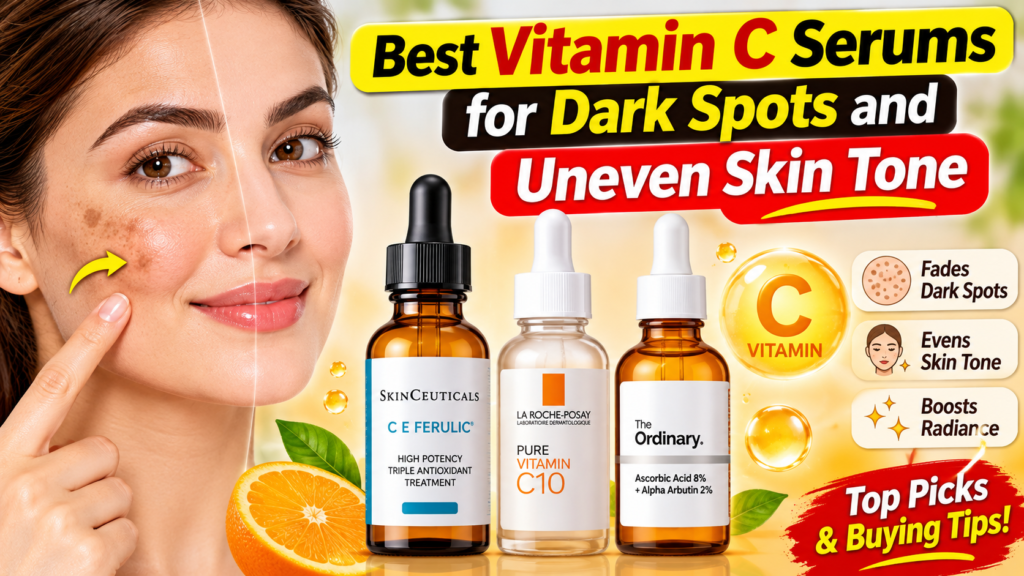
Vitamin C is one of the most widely used ingredients for dark spots, but “vitamin C” on a label can mean very different things. The form, strength, pH, and packaging all affect whether a serum is effective, gentle, or a waste of money. Below you’ll find our top picks, plus the information you need to choose one yourself. If you want a broader roundup, see our dermatologist-recommended vitamin C serums guide.
Quick Picks – Best Vitamin C Serums at a Glance
| Product | Best For | Vitamin C Type | Key Supporting Ingredients | Price Category |
|---|---|---|---|---|
| Paula’s Choice C15 Super Booster | Best overall | L-ascorbic acid (15%) | Vitamin E, ferulic acid | $$ |
| SkinCeuticals C E Ferulic | Best luxury; sun spots | L-ascorbic acid (15%) | Vitamin E (1%), ferulic acid (0.5%) | $$$$ |
| CeraVe Skin Renewing Vitamin C Serum | Best budget; beginners | L-ascorbic acid (10%) | Ceramides, hyaluronic acid | $ |
| La Roche-Posay Pure Vitamin C12 Serum | Acne marks | L-ascorbic acid (12%) | Salicylic acid, vitamin E | $$ |
| The Ordinary Vitamin C Suspension 23% + HA | Stubborn spots (experienced users) | L-ascorbic acid (23%) | Hyaluronic acid spheres | $ |
| Medik8 C-Tetra Advanced | Sensitive skin | Tetrahexyldecyl ascorbate | Oil-based, vitamin E | $$$ |
| Sunday Riley C.E.O. 15% Vitamin C Brightening Serum | Dry skin | THD ascorbate-based complex | Emollient, brightening botanicals | $$$ |
7 Best Vitamin C Serums for Dark Spots and Uneven Skin Tone
1. Paula’s Choice C15 Super Booster – Best Overall

- 15% PURE L-ASCORBIC ACID: 15% vitamin C gently brightens skin, improves the appearance of wrinkles & boosts glow in 15 m…
- FERULIC ACID: This antioxidant-rich face serum with ferulic acid helps defend against visible signs of aging, protects s…
- ERGOTHIONEINE: This powerful antioxidant supports skin by protecting against oxidative stress, enhancing the effectivene…
A booster you add to your moisturizer or serum, so you can control how much you use. It contains 15% vitamin C with vitamin E and ferulic acid.
- Pros: Adjustable strength, mid-range price, an antioxidant combination similar to premium formulas.
- Cons: Extra step; some users find it tingly at first.
- Skin type: Normal, combination, oily, most mature skin.
- Consider it if: You want flexibility and a fair price.
- Skip it if: You want a standalone serum or have very reactive skin.
- Price: $$ — [Check price on Amazon]
2. SkinCeuticals C E Ferulic – Best Luxury Option

- TRIPLE ANTIOXIDANT COMPLEX – Powered by a balanced ratio of 15% Pure Vitamin C (L-Ascorbic Acid), 1% Vitamin E, and 0.5%…
- REFRESH DULL-LOOKING SKIN – Formulated for tired-looking skin and uneven skin tone. This gentle facial serum helps enhan…
- SUPPORT SMOOTH TEXTURE – This non-greasy formula helps soften the appearance of fine lines, wrinkles, and surface textur…
The benchmark formula: 15% L-ascorbic acid, 1% vitamin E, and 0.5% ferulic acid in a dark glass dropper bottle. It’s a strong choice for sun spots and general photoaging.
- Pros: Well-known, stable formula; extensive brand-sponsored research.
- Cons: Expensive; strong scent for some users.
- Skin type: Normal to oily, resilient skin.
- Consider it if: Sun damage is your main concern and the price fits your budget.
- Skip it if: You’re sensitive or price-conscious.
- Price: $$$$ — [Check price on Amazon, if sold by an authorized seller]
3. CeraVe Skin Renewing Vitamin C Serum – Best Budget and Best for Beginners

- [ ANTIOXIDANT BENEFITS ] Antioxidant serum for face formulated with 10% t l-ascorbic acid, the purest form of vitamin C,…
- [ HYDRATING SERUM ] Facial serum formulated with Hyaluronic Acid to help improve skin tone, texture, and hydration for a…
- [ LIGHTWEIGHT TEXTURE ] This vitamin c serum for face has a gel texture with a non-greasy feel. If layering with an eye …
A 10% L-ascorbic acid serum with ceramides and hyaluronic acid. It’s a sensible starting strength.
- Pros: Affordable, widely available, barrier-supportive.
- Cons: Less potent than higher-strength formulas.
- Skin type: Normal, dry, combination.
- Consider it if: This is your first vitamin C serum.
- Skip it if: You want maximum strength.
- Price: $ — [Check price on Amazon]
4. La Roche-Posay Pure Vitamin C12 Serum – Best for Acne Marks

- This facial serum hydrates and enhances radiance, making it an ideal self care gift for women & men. It tackles wrinkles…
- Anti Aging Serum: Concentrated with pure vitamin C and hyaluronic acid, this serum visibly reduces wrinkles and refines …
- Skin Brightening Serum: Enriched with vitamin C and salicylic acid, this serum boosts skin brightness and clarity, ideal…
Combines 12% vitamin C with salicylic acid, which adds gentle exfoliation for acne-prone skin.
- Pros: Suits texture and post-acne marks; brand is well-known for sensitive-skin lines.
- Cons: Salicylic acid can irritate dry or compromised skin.
- Skin type: Oily, acne-prone, combination.
- Consider it if: You have both breakouts and leftover marks.
- Skip it if: Your skin is dry, or you already use exfoliating acids.
- Price: $$ — [Check price on Amazon]
5. The Ordinary Vitamin C Suspension 23% + HA – Best for Stubborn-Looking Spots (Experienced Users)
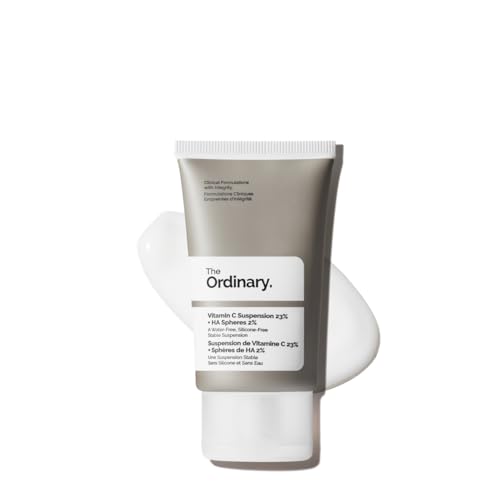
- BRIGHTENS & BALANCES SKIN TONE: Vitamin C Suspension 23% + HA Spheres 2% helps visibly reduce signs of aging by brighten…
- PURE L-ASCORBIC ACID: This water-free formula contains 23% pure L-Ascorbic Acid, which remains stable and effective in r…
- HYALURONIC ACID SPHERES: Infused with 2% hyaluronic acid spheres for added hydration, leaving skin feeling smooth and mo…
It has the highest strength here: 23% L-ascorbic acid in a silicone-based suspension with hyaluronic acid spheres.
- Pros: Very inexpensive, potent.
- Cons: Gritty texture; higher irritation risk, and irritation can worsen post-inflammatory marks.
- Skin type: Oily, resilient skin already used to vitamin C.
- Consider it if: You’ve tolerated 10–15% without trouble.
- Skip it if: You’re new to vitamin C, sensitive, or prone to PIH.
- Price: $ — [Check price on Amazon]
6. Medik8 C-Tetra Advanced – Best for Sensitive Skin
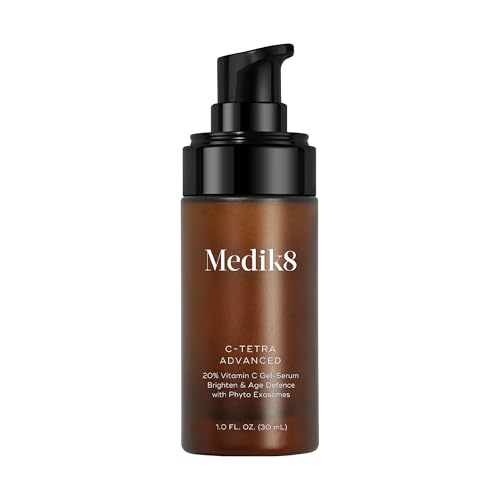
- VITAMIN C FACE SERUM. Lightweight facial serum formulated with stabilized vitamin C and hyaluronic acid to help skin loo…
- SUPPORTS SKIN HYDRATION. Advanced skincare formula with phyto exosomes and antioxidants helps support healthier-looking …
- DAILY ANTIOXIDANT SKINCARE. Vitamin C facial serum helps support smoother looking skin.
Built around tetrahexyldecyl ascorbate (THD), an oil-soluble derivative that’s generally gentler and more stable than L-ascorbic acid.
- Pros: Lower irritation; stable.
- Cons: Pricey; less direct evidence for fading spots than L-ascorbic acid.
- Skin type: Sensitive, dry, reactive.
- Consider it if: Acid-based serums sting.
- Skip it if: You want the most-studied vitamin C form.
- Price: $$$ — [Check price on Amazon]
7. Sunday Riley C.E.O. 15% Vitamin C Brightening Serum – Best for Dry Skin
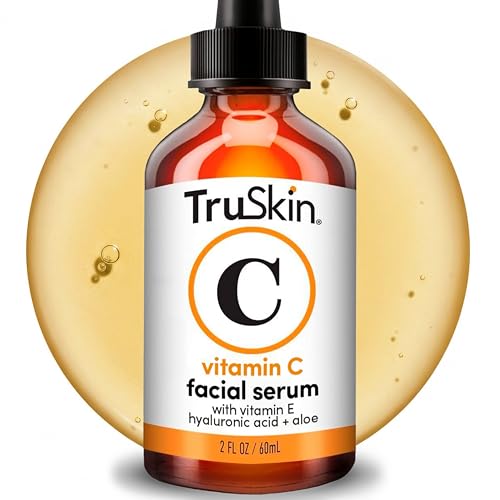
- ADVANCED BRIGHTENING FORMULA: Vitamin C helps fight free radical damage and support natural collagen while improving the…
- HYDRATION-BOOSTED FORMULA: Layers vitamin C with Hyaluronic Acid, Vitamin E, Aloe Vera, and Jojoba Oil to help balance m…
- SUPERIOR FORM OF VITAMIN C: Uses highly stable Sodium Ascorbyl Phosphate to maintain potency over time while helping min…
A creamy THD-ascorbate-based formula marketed at 15% vitamin C. Note that this is a derivative complex, not 15% L-ascorbic acid.
- Pros: Cushioning texture; good for dryness.
- Cons: Expensive; contains fragrance-type botanicals that may bother sensitive skin.
- Skin type: Dry, normal, mature.
- Consider it if: You want brightening without a watery acid feel.
- Skip it if: You’re fragrance-sensitive or on a tight budget.
- Price: $$$ — [Check price on Amazon]
How Vitamin C Helps Improve Dark Spots
Vitamin C is an antioxidant that can interfere with melanin production and help protect skin from UV-related oxidative stress. DermNet’s overview of topical vitamin C notes that L-ascorbic acid is the most studied form. Research is still developing, and a review of vitamin C’s clinical applications in dermatology is a good place to see where evidence is stronger and where it’s more preliminary.
Know what you’re treating:
- Sun spots (solar lentigines): Flat brown spots from cumulative UV exposure. Vitamin C plus sunscreen is a reasonable approach.
- Post-inflammatory hyperpigmentation (PIH): Marks left after acne, bites, or irritation. Often fades gradually, but can be more persistent in deeper skin tones.
- Melasma: Hormonally and sun-influenced patches that often return. Vitamin C may be one supporting step, but it isn’t a reliable standalone fix.
The American Academy of Dermatology’s advice on fading dark spots stresses sun protection and seeing a dermatologist when spots are persistent or unexplained. No serum permanently removes dark spots.
Different Types of Vitamin C Explained
Derivatives aren’t interchangeable.
- L-ascorbic acid: The most researched form and usually the most effective, but it’s unstable and more irritating. It works best at a low pH (around 3.5 or below).
- Sodium ascorbyl phosphate (SAP): Water-soluble and gentler, with some evidence for acne-prone skin. It’s usually less potent for pigmentation.
- Ascorbyl glucoside: Stable and mild, but must convert to active vitamin C in skin, so results may be slower.
- Tetrahexyldecyl ascorbate (THD): Oil-soluble, stable, and gentle, but with less direct evidence for fading spots.
How to Choose the Right Vitamin C Serum for Your Skin Type
- Oily: Lightweight L-ascorbic acid serums, such as Paula’s Choice or La Roche-Posay.
- Dry: Creamier formulas with ceramides or emollients, such as CeraVe or Sunday Riley.
- Sensitive: THD or gentler derivatives, starting a few times a week.
- Acne-prone: Non-greasy formulas; salicylic acid can help, but don’t stack too many actives.
- Mature: Vitamin C with vitamin E and ferulic acid. For more on supporting mature skin, see our guide to LED face masks for fine lines.
Darker skin tones: PIH is more common and can last longer, and irritation can cause more marks. Start with lower strengths, avoid layering harsh actives, and wear sunscreen daily.
What Vitamin C Concentration Is Best for Dark Spots?
For L-ascorbic acid, 10–20% is the typical range. Higher isn’t automatically better: very strong formulas raise irritation risk without clear added benefit, and irritation can worsen pigmentation. Start around 10–15%. Formulation matters as much as the number, including pH, stabilizers like vitamin E and ferulic acid, and airtight, opaque packaging.
How to Use Vitamin C Serum for Best Results
A simple morning routine:
- Gentle cleanser.
- Vitamin C serum on dry skin.
- Moisturizer.
- Broad-spectrum SPF 30+ sunscreen.
Patch test behind the ear or on the jawline for a few days first. Begin 2–3 times a week and build up as tolerated. Vitamin E and niacinamide generally pair well. If you use retinol or exfoliating acids, separate them (for example, vitamin C in the morning, retinol at night). Sunscreen matters most, since UV can darken existing spots. The AAD’s sunscreen FAQs cover SPF 30+, broad-spectrum, and water-resistant protection. For summer routines, see our summer skin glow tips, and for antioxidant pairing, our best vitamin E serums.
How Long Does Vitamin C Take to Improve Dark Spots?
Expect gradual change. Many people notice a brighter look in about 8–12 weeks, but deeper or older spots can take longer and may not fully fade. Results vary with spot type, skin tone, consistency, and sun exposure.
Common Vitamin C Serum Mistakes to Avoid
- Starting with too high a concentration.
- Skipping sunscreen.
- Using an oxidized serum.
- Combining too many strong actives at once.
- Expecting overnight results.
- Buying clear bottles or jars that expose the formula to air and light.
Frequently Asked Questions
1. Which vitamin C serum is best for dark spots?
Paula’s Choice C15 Super Booster is our best overall pick. SkinCeuticals C E Ferulic is the premium option, and CeraVe is the best starter choice.
2. Does vitamin C help fade acne marks?
It may help post-acne discoloration over time, especially with daily sunscreen. It doesn’t treat active acne on its own.
3. Is 10% or 20% vitamin C better?
Not necessarily. Ten to 15% is often a better balance of effectiveness and tolerability. Choose the strongest concentration your skin handles comfortably.
4. Can sensitive skin use vitamin C?
Often yes, with gentler derivatives like THD ascorbate, a patch test, and a slow introduction.
5. Should vitamin C serum be used every day?
Daily use is fine if tolerated. Start with a few days a week.
6. Can I use vitamin C with niacinamide?
Generally yes. If skin gets irritated, use them at different times of day.
7. Should I apply vitamin C before sunscreen?
Yes. Serum first, then moisturizer, then sunscreen.
8. Can vitamin C help with melasma?
It may be a supporting step, but melasma is complex and often needs a dermatologist’s plan. See the AAD’s melasma self-care guidance.
9. How do I know if my vitamin C serum has oxidized?
It turns deep orange or brown and may smell metallic or off. Discard it.
10. How long does it take to see results?
Often around 8–12 weeks, sometimes longer, and results aren’t guaranteed.
Conclusion
For most people, Paula’s Choice C15 Super Booster is the best all-around value. Choose CeraVe if you’re new or on a budget, La Roche-Posay for acne marks, Medik8 for sensitive skin, Sunday Riley for dry skin, and SkinCeuticals if you want the premium benchmark. Reserve The Ordinary 23% for experienced users.
Whichever you pick, patch test, wear SPF 30+ every day, and give it a couple of months. If dark spots are persistent, worsening, changing in shape or color, or unexplained, see a board-certified dermatologist.