
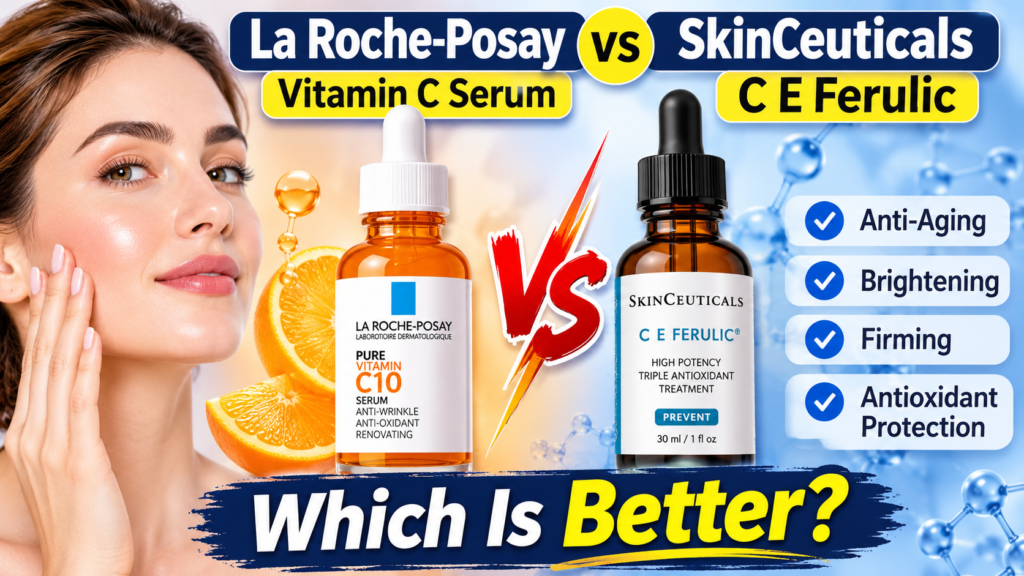
Choosing between La Roche-Posay Vitamin C Serum and SkinCeuticals C E Ferulic is one of the most common dilemmas in skincare shopping. One costs roughly four times more than the other, yet both promise brighter, firmer, more even-toned skin. The real question isn’t which brand is more famous—it’s whether the premium formula delivers enough additional benefit to justify the steep price difference. This comparison breaks down ingredients, performance, skin-type compatibility, and real value so you can make a confident purchase.

Quick Comparison Table
| Feature | La Roche-Posay Vitamin C10 | SkinCeuticals C E Ferulic |
|---|---|---|
| Vitamin C Concentration | 10% | 15% |
| Type of Vitamin C | L-ascorbic acid | L-ascorbic acid |
| Supporting Antioxidants | Neurosensine | 1% Vitamin E, 0.5% Ferulic Acid |
| Additional Actives | Salicylic acid, hyaluronic acid | Hyaluronic acid (enhanced formula) |
| Best Skin Types | Normal, oily, combination | Normal, dry, mature |
| Texture | Lightweight, slightly tacky | Watery, fast-absorbing |
| Fragrance | Yes (added fragrance) | No (natural formula odor) |
| Potential Irritation | Moderate (fragrance, alcohol) | Low–moderate (low pH) |
| Bottle Size | 1 fl oz / 30 ml | 1 fl oz / 30 ml |
| Current US Price | ~$43 | ~$182 |
| Price Per ml | ~$1.43 | ~$6.07 |
| Overall Value | ★★★★☆ | ★★★☆☆ |
Product Overview: La Roche-Posay Vitamin C10 Serum
The La Roche-Posay Vitamin C10 Serum uses 10% pure L-ascorbic acid alongside salicylic acid, hyaluronic acid, and Neurosensine—a soothing dipeptide designed to reduce visible redness. The salicylic acid provides gentle surface exfoliation, which can help improve texture and clarity over time.
Pros:
- Affordable entry point into pure vitamin C
- Salicylic acid benefits oily and acne-prone skin
- Hyaluronic acid adds lightweight hydration
- Neurosensine helps counteract potential irritation
Cons:
- Contains added fragrance and alcohol denat., which may trigger sensitivity
- 10% concentration may produce slower visible results for stubborn dark spots
- Tackier finish than some competing serums
Product Overview: SkinCeuticals C E Ferulic
SkinCeuticals C E Ferulic is built on a patented antioxidant combination of 15% L-ascorbic acid, 1% vitamin E (alpha tocopherol), and 0.5% ferulic acid at a pH between 2.5 and 3.0. The enhanced formula now includes hyaluronic acid for improved hydration and skin feel, though the core antioxidant trio remains unchanged. This specific ratio has been studied for its ability to neutralize free radicals and provide environmental protection when used under sunscreen.
Pros:
- Clinically studied antioxidant trio with published research
- Fragrance-free formulation
- Strong photoprotection support alongside SPF
- Watery texture layers easily under makeup
Cons:
- Very high price point
- Distinctive metallic odor that some users find unpleasant
- Low pH can cause stinging on compromised skin barriers
- Oxidizes relatively quickly once opened
For a broader look at how these compare with other options, see our guide to dermatologist-recommended vitamin C serums.
Ingredients: Which Formula Is Better?
The most important difference is the antioxidant architecture. SkinCeuticals pairs vitamin C with vitamin E and ferulic acid—a combination that clinical research on topical vitamin C has shown can significantly boost photoprotection compared to vitamin C alone. If you’re interested in the supporting role of tocopherol, our roundup of vitamin E serums explains how this antioxidant works independently.
La Roche-Posay takes a different approach. Instead of stacking antioxidants, it adds salicylic acid for exfoliation and Neurosensine for calming—a formula designed more for texture refinement and tolerability than maximum free-radical defense.
A higher vitamin C percentage does not automatically mean better results. Research suggests that L-ascorbic acid absorption plateaus around 20%, and concentrations above 15% can increase irritation without proportionally increasing benefits. The jump from 10% to 15% is meaningful but not dramatic for most users.
Head-to-Head Comparison
| Category | La Roche-Posay C10 | SkinCeuticals C E Ferulic |
|---|---|---|
| Vitamin C Strength | 10% — effective for maintenance | 15% — stronger for visible correction |
| Antioxidant Protection | Moderate | Superior (C + E + Ferulic synergy) |
| Dark Spots | Gradual improvement | Faster visible fading |
| Fine Lines & Aging | Mild benefit | Stronger collagen-support evidence |
| Hydration | Good (HA + soothing base) | Improved in enhanced formula |
| Sensitive Skin | Risky (fragrance, alcohol) | Better tolerated if barrier is intact |
| Acne-Prone Skin | Better (salicylic acid) | Neutral |
| Stability | Moderate shelf life | Oxidizes faster; store cool and dark |
| Everyday Usability | Slight tackiness | Layers well under SPF and makeup |
| Price & Value | Excellent value | Premium investment |
Which Serum Is Best for Your Skin Type?
- Oily skin: La Roche-Posay. The salicylic acid helps manage excess oil and congestion.
- Dry skin: SkinCeuticals. The enhanced formula with hyaluronic acid and lack of drying fragrance suits drier complexions better.
- Sensitive skin: Proceed cautiously with both. SkinCeuticals avoids fragrance, but its low pH can sting. La Roche-Posay contains fragrance and alcohol. Consider exploring vitamin C serums formulated for sensitive skin for gentler alternatives.
- Mature skin: SkinCeuticals. The stronger antioxidant trio offers more robust environmental defense and collagen support.
- Acne-prone skin: La Roche-Posay. Salicylic acid provides a dual benefit that SkinCeuticals does not.
- Dull, uneven tone: Both can help. SkinCeuticals may work faster for stubborn hyperpigmentation. See our picks for the best vitamin C serums for brightening for additional options.
Side Effects and Safety
Both serums can cause stinging, redness, or dryness, especially during the first two weeks. La Roche-Posay’s added fragrance is a known trigger for reactive skin. SkinCeuticals’ low pH (2.5–3.0) can sting on compromised barriers. Always patch-test behind the ear or on the inner arm for 48 hours before applying to your face. Start with every-other-day use and increase gradually. If persistent irritation occurs, discontinue use.
How to Use Both Serums
Apply in the morning after cleansing on dry skin. Use 3–5 drops, press gently into the face and neck, and follow with moisturizer and broad-spectrum SPF 30 or higher. Vitamin C enhances sun protection but does not replace sunscreen. Introduce the serum slowly—two to three times per week for the first two weeks—before moving to daily use.
Is SkinCeuticals Worth the Extra Money?
At approximately $182 per 30 ml versus $43 per 30 ml, SkinCeuticals costs roughly 4.2 times more per milliliter. You are paying for the patented antioxidant combination, published clinical data, and a fragrance-free formula. For users focused on anti-aging and photoprotection, the investment can be justified. For those primarily seeking brighter skin and mild texture improvement, La Roche-Posay delivers strong results at a fraction of the cost. Many top-rated vitamin C serums fall between these two price points and may offer a middle ground.
Final Verdict: Which One Should You Buy?
- Best premium choice: SkinCeuticals C E Ferulic — superior antioxidant protection with clinical backing.
- Best budget-conscious choice: La Roche-Posay Vitamin C10 — effective brightening at an accessible price.
- Best for oily or acne-prone skin: La Roche-Posay — salicylic acid gives it a clear edge.
- Best for stronger antioxidant defense: SkinCeuticals — the C + E + Ferulic trio is difficult to match.
Neither serum is universally superior. Your skin type, sensitivity level, and budget should drive the decision.
Frequently Asked Questions
1. Is La Roche-Posay Vitamin C Serum as good as SkinCeuticals?
For general brightening and texture improvement, La Roche-Posay performs well at a much lower price. SkinCeuticals offers stronger antioxidant protection and faster results for dark spots and aging, backed by clinical research.
2. Is SkinCeuticals C E Ferulic worth the extra money?
If your primary goals are anti-aging and environmental protection, the patented formula justifies the cost. If you mainly want a brighter complexion, less expensive alternatives like La Roche-Posay can deliver comparable results.
3. Which vitamin C serum is better for sensitive skin?
Neither is ideal for highly reactive skin. SkinCeuticals avoids fragrance but has a very low pH. La Roche-Posay contains fragrance and alcohol. Patch-test either product carefully and consider gentler alternatives.
4. Can La Roche-Posay Vitamin C Serum help with dark spots?
Yes, though results may take longer than with a 15% formula. Consistent daily use alongside sunscreen typically shows visible improvement in 8–12 weeks.
5. Is 15% vitamin C better than 10%?
Not automatically. A 15% concentration can produce faster results for pigmentation and aging, but it also carries a higher irritation risk. Many users see excellent results with 10%, especially when the formula includes supporting ingredients.
6. Can you use vitamin C serum every day?
Yes, once your skin has adjusted. Start with every other day for the first two weeks, then increase to daily morning use. Always follow with sunscreen.
7. Which serum is better for mature skin?
SkinCeuticals C E Ferulic is generally the stronger choice for mature skin due to its higher vitamin C concentration and the synergistic antioxidant protection of vitamin E and ferulic acid.
8. Can you use vitamin C serum with retinol?
Yes, but apply them at different times of day. Use vitamin C in the morning and retinol at night to minimize irritation and maximize the benefits of each active.
Disclosure: This article may contain affiliate links. If you purchase through these links, we may earn a small commission at no additional cost to you. Prices reflect current US retail listings and may vary. We only recommend products we genuinely believe offer value to our readers.