
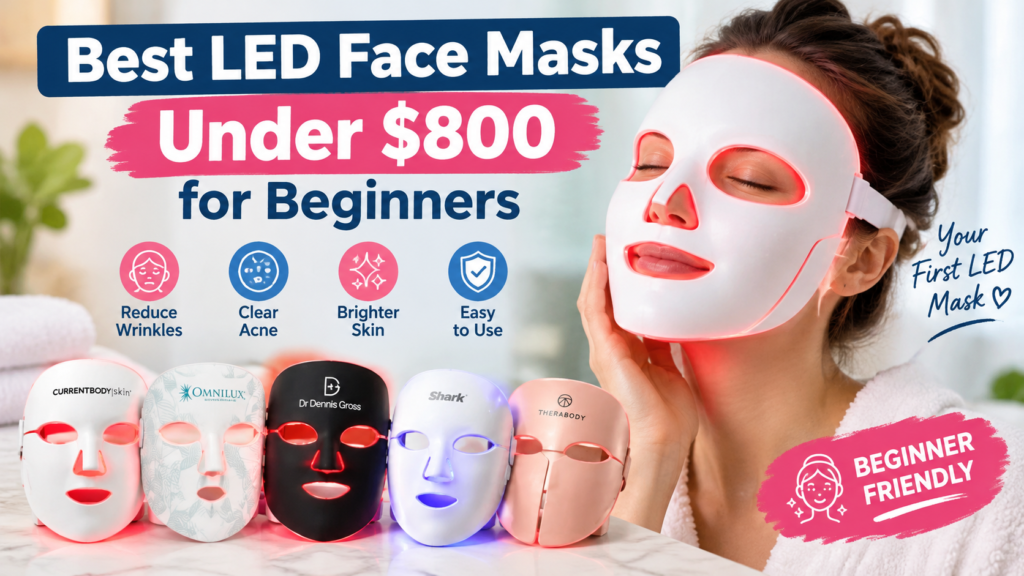
If you have never used an LED face mask before, the sheer number of options, price points, and conflicting advice can feel overwhelming. One brand tells you red light is all you need. Another insists blue light is essential. Prices range from under $100 to well over $1,000, and it is not always obvious what you are actually paying for.
This guide cuts through the noise. We focus specifically on the best LED face masks under $800 for beginners — devices that are easy to use, backed by reasonable evidence, and unlikely to end up gathering dust in your bathroom cabinet after two weeks.
You do not need a medical degree to pick a good first mask. You just need to know what matters and what does not.
Quick Answer: Best LED Face Masks Under $800 for Beginners
- Best Overall for Beginners: CurrentBody Skin LED Light Therapy Mask (~$399)
- Best for Acne + Anti-Aging: Shark CryoGlow LED Mask (~$299)
- Best for Simple Anti-Aging: Omnilux Contour Face (~$395)
- Best for Quick Treatments: Dr. Dennis Gross DRx SpectraLite FaceWare Pro (~$455)
- Best for Sensitive Skin: HigherDOSE Red Light Face Mask (~$349)
- Best Premium Option Under $800: Therabody TheraFace Mask (~$599)
Comparison Table
| Product | Approx. Price | Best For | Main Wavelengths | Treatment Time | Beginner Friendly | FDA Status | Key Advantage | Main Drawback |
|---|---|---|---|---|---|---|---|---|
| CurrentBody Skin LED Mask | ~$399 | All-around first purchase | Red 633nm, NIR 830nm | 10 min | ★★★★★ | FDA-cleared | Extremely easy, comfortable silicone | No blue light option |
| Omnilux Contour Face | ~$395 | Anti-aging focus | Red 633nm, NIR 830nm | 10 min | ★★★★★ | FDA-cleared | Clinical-grade diodes, lightweight | Single light mode |
| Dr. Dennis Gross FaceWare Pro | ~$455 | Fast daily sessions | Red, Blue | 3 min | ★★★★☆ | FDA-cleared | Shortest treatment time | Rigid fit, not ideal for all face shapes |
| Shark CryoGlow LED Mask | ~$299 | Acne + anti-aging combo | Red, Blue, NIR | 6–12 min | ★★★★☆ | FDA-cleared | Multiple modes, cooling feature | Newer brand, less long-term user data |
| HigherDOSE Red Light Mask | ~$349 | Sensitive or reactive skin | Red 630nm, NIR 830nm | 10 min | ★★★★★ | FDA-cleared | Gentle, simple interface | Limited to red/NIR only |
| Therabody TheraFace Mask | ~$599 | Premium all-in-one | Red, Blue, NIR | 3–9 min | ★★★★☆ | FDA-cleared | Vibration + LED, multiple modes | Heavier, higher price point |
Prices fluctuate frequently. Verify current pricing on each brand’s official site before purchasing.
How We Chose the Best Beginner LED Masks
We evaluated masks based on criteria that actually matter to someone buying their first device:
- Ease of use: Can you put it on, press one button, and walk away?
- Comfort and fit: Will you actually wear it for the full session without adjusting it constantly?
- Treatment time: Is it short enough to fit into a real daily routine?
- Wavelength accuracy: Does the device emit wavelengths that align with published research?
- Price-to-value ratio: Are you paying for performance or just branding?
- FDA clearance status: Has the device gone through the FDA’s 510(k) review process?
- Honest marketing: Does the brand overpromise results?
We excluded masks above $800, masks with overwhelmingly negative comfort reviews, and devices that lack basic regulatory clearance.
What Beginners Should Look for Before Buying
Your first LED mask purchase comes down to a few practical decisions. If you want a deeper breakdown of the technical specifications that separate a quality device from a cheap knockoff, our guide on what to look for in an LED face mask covers the details in depth.
For now, focus on these essentials:
Wavelengths. Red light (around 630–660nm) and near-infrared light (around 810–850nm) have the strongest body of evidence for collagen support and skin recovery. Blue light (around 415nm) targets acne-causing bacteria. Most beginners do well starting with red and near-infrared.
Treatment duration. Sessions range from 3 to 25 minutes depending on the device. Shorter sessions are easier to stick with, but they may deliver less total energy per treatment.
Fit and weight. A mask that slides down your nose or presses uncomfortably on your cheekbones will not get used. Flexible silicone masks tend to conform better than rigid plastic shells.
Eye protection. Some masks include built-in eye shields. Others require separate goggles. This matters more than most beginners realize, especially with blue light modes.
FDA clearance. This means the device has been reviewed by the FDA and found substantially equivalent to an already-cleared device. It is not the same as FDA approval, which is a more rigorous process reserved for higher-risk medical devices. You can search the FDA’s device database to verify a specific product’s clearance status.
Detailed Product Reviews
CurrentBody Skin LED Light Therapy Mask (~$399)

- Enhanced collagen production capability significantly reduces fine lines, wrinkles and redness, for younger-looking skin…
- Upgraded light coverage provides our famous instant glow, for a healthier, brighter and smoother complexion.
- An all-new, exclusive layout of 236 LED bulbs emits three clinically recognised wavelengths: red (633nm), near-infrared …
This is the mask that made LED therapy mainstream, and there is a reason it remains one of the most popular choices for first-time buyers. The CurrentBody Skin LED Light Therapy Mask uses medical-grade silicone that molds to your face, making it one of the most comfortable options available.
Wavelengths: Red 633nm and near-infrared 830nm.
Treatment time: 10 minutes per session.
Ease of use: One-button operation. Charge it, strap it on, press the button.
Fit: Excellent. The flexible silicone conforms to most face shapes without pressure points.
Targets: Fine lines, overall skin tone, post-procedure recovery.
Advantages: Incredibly simple, lightweight, and well-tolerated by sensitive skin.
Limitations: No blue light mode, so it is not ideal if active breakouts are your primary concern.
Who should buy it: Anyone who wants the simplest possible introduction to LED therapy.
Who may prefer another option: Acne-prone users who need blue light.
Omnilux Contour Face (~$395)
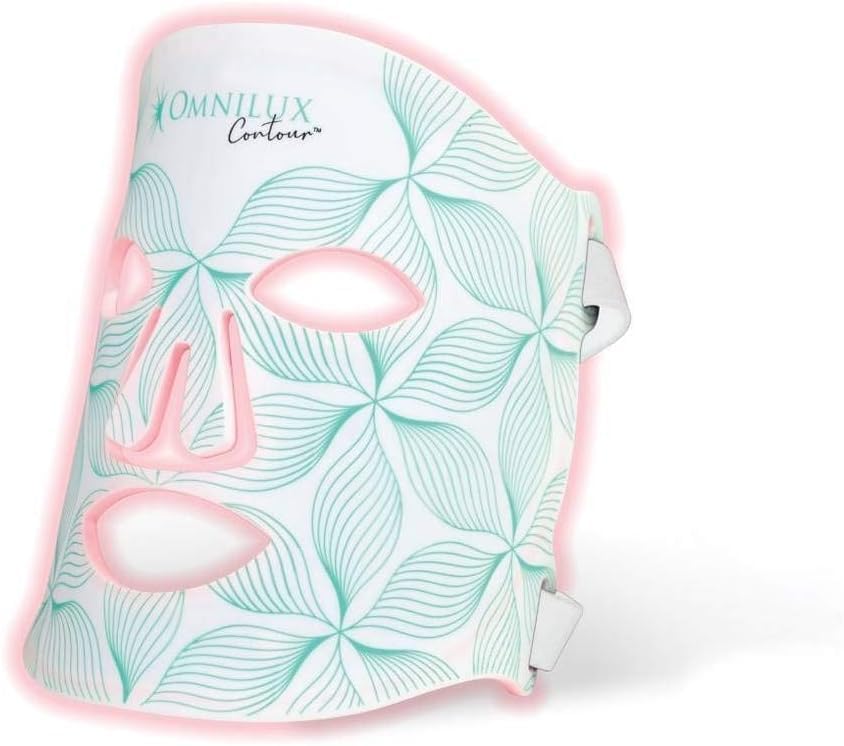
Omnilux has been manufacturing professional LED devices for clinics for over two decades, and the Omnilux Contour Face brings that clinical heritage into a home-friendly format. It is nearly identical in concept to the CurrentBody mask but uses Omnilux’s proprietary diode technology.
Wavelengths: Red 633nm and near-infrared 830nm.
Treatment time: 10 minutes.
Ease of use: Single-button, pre-programmed cycle.
Fit: Very good. Flexible silicone with adjustable velcro straps.
Targets: Wrinkles, skin firmness, uneven tone.
Advantages: Strong clinical pedigree, consistent light output across the panel.
Limitations: Like the CurrentBody, it lacks a blue light setting. The strap system can feel slightly less refined than competitors.
Who should buy it: Beginners whose main goal is anti-aging and who value a brand with deep clinical roots.
Who may prefer another option: Users who want multi-mode versatility.
Dr. Dennis Gross DRx SpectraLite FaceWare Pro (~$455)
- WHAT IT IS: This LED device for the face targets wrinkles and acne for visibly smoother, clearer skin in just 3 minutes….
- HOW IT WORKS: Treat acne and breakouts with blue light, smooth wrinkles and build collagen with red light, or address bo…
- HOW TO USE: After cleansing, place the mask over your face, securing the strap around your head. Press & hold the power …
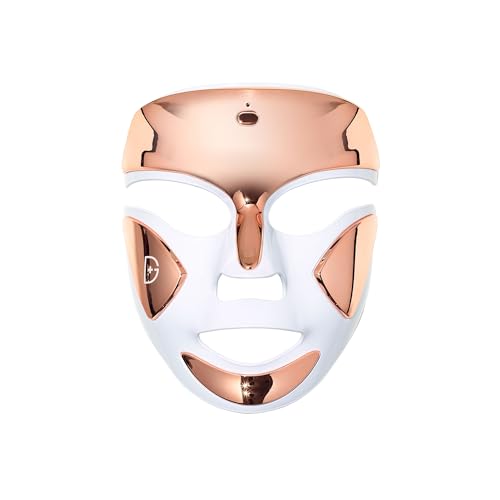
This is the fastest mask on our list and the only one that offers both red and blue light in a single three-minute session. The rigid shell design looks futuristic, which is either a selling point or a drawback depending on your taste.
Wavelengths: Red and blue light (specific wavelengths not always disclosed in marketing materials).
Treatment time: 3 minutes per mode.
Ease of use: Very simple. Three settings: red only, blue only, or both simultaneously.
Fit: Moderate. The hard shell does not conform to every face shape. Users with narrower or wider faces may experience light gaps.
Targets: Acne (blue mode), fine lines (red mode), or both.
Advantages: Unbeatable speed. Three minutes is easy to commit to every morning.
Limitations: Rigid construction can be uncomfortable for longer wear. The fit issue is real and frequently mentioned in user reviews.
Who should buy it: Busy beginners who will not use a mask that takes more than five minutes.
Who may prefer another option: Anyone with a face shape that does not match the rigid mold.
Shark CryoGlow LED Mask (~$299)

- RED LIGHT THERAPY MASK: CryoGlow is an at-home LED face mask combining red, blue & deep infrared light with under-eye co…
- MOST AWARDED LED MASK IN THE U.S.*: Real people. Real results. Clinically tested on 119 participants by an independent t…
- EXPERTLY DEVELOPED: Developed by Shark Beauty alongside optical light experts and engineers, bringing MedSpa-inspired re…
Shark is a newer entrant to the LED mask space, but the CryoGlow stands out by combining red, blue, and near-infrared light with a built-in cooling function. At under $300, it also represents strong value.
Wavelengths: Red, blue, and near-infrared.
Treatment time: 6–12 minutes depending on mode.
Ease of use: Multiple modes require a brief learning curve, but the interface is intuitive.
Fit: Good. Semi-flexible design with adjustable straps.
Targets: Acne, redness, fine lines, puffiness (cooling mode).
Advantages: Most versatile mode selection at this price point. The cooling feature is a genuine comfort bonus.
Limitations: As a newer product, long-term durability data is limited. The brand lacks the clinical track record of Omnilux or CurrentBody.
Who should buy it: Beginners who want both acne and anti-aging capabilities without spending $500+.
Who may prefer another option: Users who prefer a brand with years of clinical validation.
HigherDOSE Red Light Face Mask (~$349)

- Red Light Therapy for Face & Skin Rejuvenation – This FDA cleared, FSA eligible red light therapy mask uses red (630nm) …
- Facial Light Therapy, Anywhere – Lightweight and wireless, this LED face mask with red light therapy delivers targeted w…
- Red Light Mask That Works Deep – Red and near-infrared light reach deep layers to improve tone, reduce puffiness, and vi…
HigherDOSE built its reputation on wellness-focused simplicity, and this mask reflects that philosophy. It does one thing — red and near-infrared light — and does it well.
Wavelengths: Red 630nm and near-infrared 830nm.
Treatment time: 10 minutes.
Ease of use: Extremely simple. One mode, one button.
Fit: Very comfortable. Soft silicone with a lightweight build.
Targets: Inflammation, redness, fine lines, overall skin calm.
Advantages: Gentle and well-suited for reactive skin. Minimal learning curve.
Limitations: No blue light. Single mode limits versatility.
Who should buy it: Beginners with sensitive, rosacea-prone, or easily irritated skin. If redness and reactivity are your main concerns, you may also want to explore our recommendations for the best LED face masks for sensitive skin and redness.
Who may prefer another option: Acne-prone users or those wanting multi-mode flexibility.
Therabody TheraFace Mask (~$599)
- Supercharged Face Care in 9 Minutes: A facial mask routine with 3 impressive LED light therapy technologies. Red light t…
- Vibrating Facial Massager, Too: TheraFace LED mask delivers a 15-minute vibration therapy treatment to key pressure poin…
- Powerful, Medical-Grade Lights: With 3x more LEDs than leading mask competitors for maximum efficacy and mask skincare r…
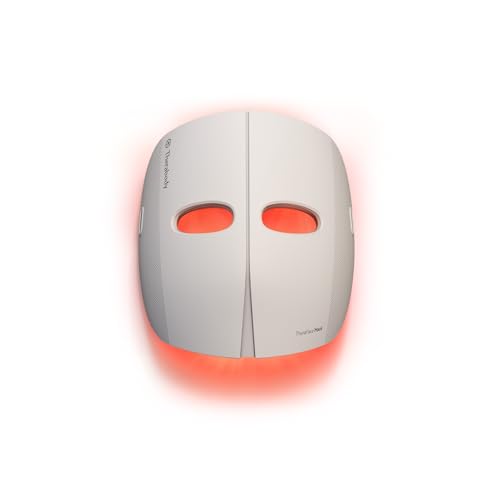
The TheraFace Mask is the most feature-rich option under $800. It combines red, blue, and near-infrared LED with percussive vibration, which Therabody claims enhances product absorption and relaxation.
Wavelengths: Red, blue, and near-infrared.
Treatment time: 3–9 minutes depending on mode.
Ease of use: Moderate. Multiple modes and vibration settings require a few sessions to learn.
Fit: Good but heavier than silicone-only masks. The added weight is noticeable during longer sessions.
Targets: Acne, wrinkles, tension, puffiness.
Advantages: Most comprehensive feature set. Vibration adds a spa-like element that some users genuinely enjoy.
Limitations: Heavier and more complex than simpler masks. The vibration feature is polarizing — some love it, others find it distracting.
Who should buy it: Beginners who want a premium, do-everything device and do not mind a short learning curve.
Who may prefer another option: Minimalists who want the simplest possible routine.
Best Overall Beginner Pick
CurrentBody Skin LED Light Therapy Mask. It is the easiest mask to use, the most comfortable to wear, and the least likely to frustrate a first-time user. Ten minutes, one button, no complicated settings. If you are unsure where to start, start here.
Best for Acne + Anti-Aging
Shark CryoGlow LED Mask. It offers red, blue, and near-infrared light at a price point that undercuts most competitors. If you are dealing with both occasional breakouts and early fine lines, this gives you the most flexibility without a premium price tag.
For acne-specific concerns, the American Academy of Dermatology notes that light-based treatments can be a useful complement to a broader acne management plan, though results vary by individual.
Best for Simple Anti-Aging
Omnilux Contour Face. If wrinkles and loss of firmness are your primary concerns and you do not need blue light, the Omnilux delivers consistent, well-documented wavelengths in a comfortable format. Readers over 40 who are focused on collagen support may also benefit from our guide to the best LED face masks for beginners over 40.
Best for Quick Treatments
Dr. Dennis Gross DRx SpectraLite FaceWare Pro. Three minutes is hard to beat. If you know yourself well enough to admit that a 10-minute session will eventually feel like a chore, the FaceWare Pro removes that barrier entirely. For more options that fit into a compact routine, see our roundup of the best red light therapy devices for a 10-minute routine.
Best for Sensitive Skin
HigherDOSE Red Light Face Mask. The gentle, single-mode approach minimizes the risk of irritation, and the soft silicone construction avoids the pressure points that rigid masks can create on reactive skin.
Best Premium Option Under $800
Therabody TheraFace Mask. At $599, it sits well under the $800 ceiling while offering features that masks at twice the price sometimes lack. The combination of LED and vibration is unique in this category.
Is an $800 LED Mask Really Worth It?
Here is the honest answer: for most beginners, no.
The jump from a $400 mask to an $800 mask does not typically double the light output or halve your treatment time. What you are usually paying for is brand prestige, additional modes you may or may not use, and build quality differences that are real but incremental.
An expensive mask makes sense if you have specific needs — for example, if you require both blue and red light in a clinical-grade device, or if you want integrated features like vibration or cooling. But if your goal is simply to start using LED therapy consistently, a well-made $300–$400 mask will serve you just as well.
Consistency matters far more than price. A $350 mask you use five times a week will outperform a $900 mask you use once a month.
Red Light vs Blue Light vs Near-Infrared for Beginners
This is where most beginner confusion starts, so let us keep it simple.
Red light (630–660nm) penetrates the upper layers of skin and is associated with collagen production, reduced inflammation, and improved skin tone. The American Academy of Dermatology acknowledges that red light therapy is generally considered safe, though they note that more research is needed to fully understand long-term efficacy.
Near-infrared light (810–850nm) penetrates deeper than visible red light, reaching the dermis and subcutaneous tissue. It is often paired with red light in anti-aging devices because the two wavelengths appear to work synergistically.
Blue light (410–420nm) targets P. acnes bacteria on the skin’s surface. It is the go-to wavelength for active breakouts but does not meaningfully address wrinkles or firmness.
Beginner recommendation: Start with red and near-infrared unless active acne is your primary concern. You can always add a blue-light device later.
How to Use an LED Mask for the First Time
- Cleanse your face. Remove makeup, sunscreen, and heavy serums. LED light penetrates best on bare, clean skin.
- Read the manual. Every mask has specific instructions for charging, strap adjustment, and session length.
- Start with the shortest recommended session. If the mask offers 10-minute cycles, do one full cycle. Do not double it on day one.
- Use it 3–4 times per week for the first two weeks. This lets your skin adjust without overwhelming it.
- Apply your regular skincare afterward. Serums, moisturizers, and sunscreen go on after your LED session, not before.
- Be patient. Most users report noticing subtle changes after 4–6 weeks of consistent use, with more visible results around the 8–12 week mark.
Common Beginner Mistakes
- Expecting overnight results. LED therapy is a cumulative treatment. It works gradually, not dramatically.
- Using it over heavy skincare products. Thick creams and mineral sunscreens can block light penetration.
- Inconsistent use. Three sessions per week for two months will outperform daily use for one week followed by abandonment.
- Ignoring eye comfort. If the light bothers your eyes, use the included goggles or choose a mask with built-in eye shields.
- Assuming more expensive means better. As discussed above, price and performance are not linearly correlated in this category.
- Using blue light too aggressively. Blue light can be drying. If you notice increased flakiness, reduce frequency.
Safety and Who Should Ask a Dermatologist First
At-home LED masks are generally considered low-risk when used as directed. They are non-invasive, do not generate significant heat, and do not damage the skin’s surface the way UV light does.
However, you should consult a dermatologist or qualified healthcare provider before using an LED device if you:
- Take medications that increase photosensitivity (certain antibiotics, retinoids, or acne medications)
- Have a history of light-triggered conditions such as lupus or porphyria
- Have an active eye condition or recent eye surgery
- Are pregnant or nursing and want to exercise extra caution
- Have a history of skin cancer or precancerous lesions
FDA clearance indicates that a device has met certain safety and equivalence standards, but it is not a guarantee of individual results. At-home devices are also significantly less powerful than the professional-grade LED panels used in dermatology offices.
Frequently Asked Questions
Are LED face masks worth it for beginners?
Yes, provided you set realistic expectations. LED masks are a low-risk, low-effort addition to a skincare routine. They will not replace sunscreen, retinoids, or professional treatments, but they can complement them.
What is the best LED mask for a first-time user?
The CurrentBody Skin LED Light Therapy Mask is our top recommendation for most beginners due to its simplicity, comfort, and reliable performance.
How many minutes should a beginner use an LED mask?
Follow the manufacturer’s recommended session time, which is typically 3–10 minutes. Do not exceed the recommended duration in an attempt to speed up results.
Can beginners use LED masks every day?
Most manufacturers recommend 3–5 sessions per week. Daily use is generally safe for red and near-infrared modes, but blue light modes may be drying if used daily. Start conservatively and adjust based on how your skin responds.
Is red light or blue light better for beginners?
Red light is the better starting point for most beginners because it addresses a wider range of concerns (tone, texture, fine lines) and is well-tolerated by all skin types. Blue light is more specialized for acne.
Are expensive LED masks better?
Not necessarily. A $400 mask from a reputable brand often performs comparably to an $800+ model for everyday use. The main differences are build quality, additional modes, and brand positioning.
What should I look for in an FDA-cleared LED face mask?
Verify that the specific model (not just the brand) appears in the FDA’s 510(k) database. Check that the listed wavelengths align with published research. Be skeptical of brands that use vague language like “FDA-registered” instead of “FDA-cleared.”
Can I use skincare products before an LED mask?
Light, water-based serums are generally fine. Avoid heavy creams, oils, and mineral sunscreens before your session, as they can block light penetration. Apply your full skincare routine after the session.
How long does it take to see results?
Most users notice subtle improvements in skin tone and texture after 4–6 weeks of consistent use. More significant changes in fine lines and firmness typically take 8–12 weeks. Individual results vary.
Which LED mask is easiest to use?
The CurrentBody and HigherDOSE masks are the simplest, with single-button operation and no mode selection required. The Dr. Dennis Gross mask is also very easy but requires you to choose between red, blue, or combined modes.
Final Verdict
Choosing the best LED face mask under $800 for beginners does not have to be complicated. Here is the straightforward breakdown:
If you want the safest, simplest starting point and your concerns are general — tone, texture, early fine lines — buy the CurrentBody Skin LED Light Therapy Mask. It is comfortable, foolproof, and well-supported by user feedback.
If active breakouts are your main frustration alongside early aging signs, the Shark CryoGlow gives you blue, red, and near-infrared light at a price that leaves room in your budget for good sunscreen.
If you are laser-focused on wrinkles and firmness and prefer a brand with deep clinical roots, the Omnilux Contour Face is a confident choice.
If you know you will not commit to 10-minute sessions, the Dr. Dennis Gross FaceWare Pro removes the time barrier entirely.
And if you want the most feature-rich experience under $800 and do not mind a slight learning curve, the Therabody TheraFace Mask delivers the most comprehensive package.
Whatever you choose, the single most important factor is consistency. The best LED mask is the one you will actually use four times a week for the next three months. Pick the one that fits your face, your schedule, and your patience level — and give it time to work.
SEO Title: Best LED Face Masks Under $800 for Beginners (2025 Guide)
Meta Description: New to LED therapy? We compare the best LED face masks under $800 for beginners, covering fit, wavelengths, ease of use, and realistic results.
URL Slug: best-led-face-masks-under-800-beginners
Primary Keyword: Best LED Face Masks Under $800 for Beginners
Secondary Keywords: best LED mask for beginners, LED face mask for first-time users, red light therapy mask for beginners, beginner-friendly LED face mask, best red light therapy mask, LED mask buying guide, FDA-cleared LED face mask, LED face mask for wrinkles, LED face mask for acne, premium LED face mask