
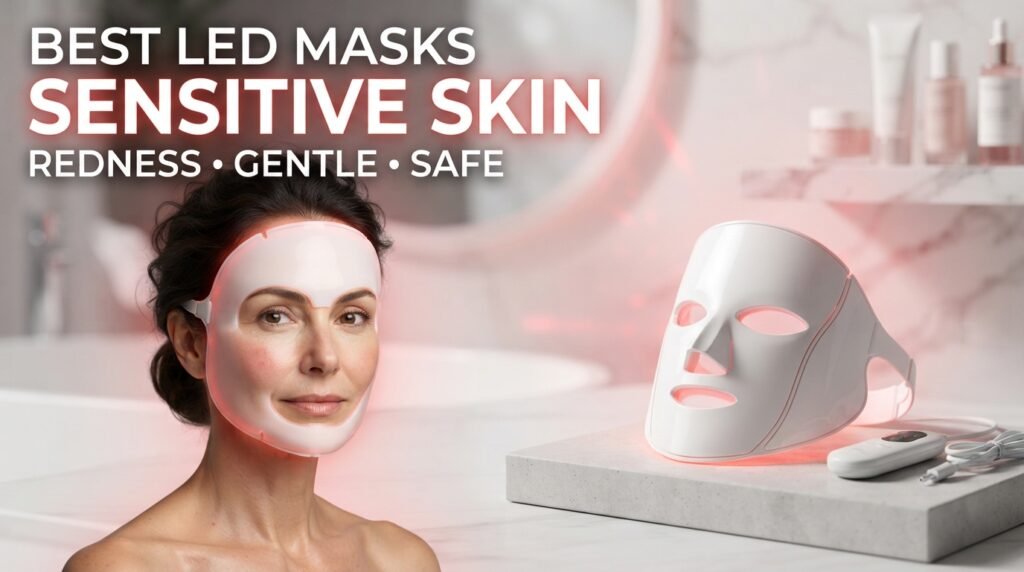
Sensitive skin can make choosing skincare technology difficult because a product that works well for one person may trigger redness or irritation in another. LED face masks have become one of the most talked-about at-home skincare devices in recent years, but if your skin tends to flush, react, or feel tight after trying new products, you’re probably approaching this category with some healthy caution.
This guide is specifically written for people with sensitive or reactive skin. It explains how LED therapy may help with facial redness, what to look for before buying, which products are worth considering, and how to use them safely without making things worse.
A note before we begin: if you experience persistent facial redness, rosacea symptoms, eczema, or any unexplained skin changes, please consult a board-certified dermatologist before relying on any at-home device. LED masks are a skincare tool, not a medical treatment.
Quick Answer: Best LED Face Masks for Sensitive Skin and Redness
The table below summarizes the products reviewed in this article. Prices are approximate and subject to change. Always verify FDA clearance status and current specifications directly with the manufacturer before purchasing.
| LED Mask | Best For | Main Wavelengths | Treatment Time | Sensitive-Skin Considerations | FDA Status | Approx. Price Range |
|---|---|---|---|---|---|---|
| Omnilux Contour Face | Redness, anti-aging | 633nm red, 830nm near-infrared | 10 minutes | No heat, flexible fit, no blue light | FDA cleared | $395 |
| CurrentBody Skin LED Mask Series 2 | Overall skin quality, redness support | 633nm red, 830nm near-infrared | 10 minutes | Flexible, lightweight, minimal heat | FDA cleared | $380 |
| Dr. Dennis Gross DRx SpectraLite FaceWare Pro | Multi-concern including acne + redness | 162 LEDs: red, blue, amber, white | 3 minutes | Blue light option present; amber may soothe | FDA cleared | $455 |
| Therabody TheraFace Mask | Combination skin concerns | Red (660nm), near-infrared (850nm) | 10 minutes | Breathable; some users report pressure fit issues | FDA cleared | $399 |
| HigherDOSE Red Light Face Mask | Red light focus, portability | 660nm red, 850nm near-infrared | 10 minutes | Flexible silicone, no stated blue light | Verify directly | $349 |
| Solawave Wrinkle Retreat Pro | Travel-friendly, wrinkles | Red light (660nm) | Varies by mode | Compact; less coverage than full masks | Verify directly | $199–$229 |
Prices and availability change frequently. Verify current listings before purchasing.
How LED Face Masks May Help Sensitive Skin and Redness
LED face masks emit specific wavelengths of light that penetrate the skin at varying depths. The two wavelengths most commonly associated with reducing redness and supporting sensitive skin are:
- Red light (typically 620–700nm): Research suggests red light may help calm inflammation, support the skin barrier, and improve overall skin tone. Some small studies have shown encouraging results for conditions involving redness and irritation, though most have been conducted in clinical settings rather than with consumer-grade at-home devices.
- Near-infrared light (typically 800–850nm): This wavelength penetrates more deeply than red light and is often associated with tissue recovery, circulation support, and reducing inflammatory responses.
It’s important to understand the difference between evidence for clinical light therapy (used by dermatologists with professional-grade equipment) and evidence for consumer LED masks specifically. Peer-reviewed research on photobiomodulation is genuinely promising in certain contexts, but the research landscape for individual consumer devices is less complete. Results vary between people and devices.
To learn more about the general evidence behind this technology, see our deeper look at whether LED face masks really work.
What Makes an LED Mask Suitable for Sensitive Skin?
Not all LED masks are created equal, and for sensitive or reactive skin, the details matter more than the marketing.
Wavelengths
Red and near-infrared wavelengths are generally considered more appropriate for sensitive and redness-prone skin than blue light, which is primarily used for acne-related bacteria and may be unnecessarily stimulating for reactive skin. Look for masks with verified wavelength information, not just vague color descriptions.
Heat Output
Even low-level heat can aggravate already-reactive skin. Quality LED masks for sensitive skin should feel warm at most, not hot. Excessive heat is a red flag, especially if you’re prone to flushing.
Irradiance and Power Output
Higher irradiance means more light energy delivered per session, which is not automatically better for sensitive skin. Look for devices that allow shorter sessions or adjustable intensity, and follow the manufacturer’s guidelines carefully.
Treatment Duration
Shorter initial sessions are always preferable for sensitive skin. A mask that requires only 10 minutes is easier to start slowly with than one requiring 20–30 minutes per session.
Materials and Comfort
Flexible silicone masks generally conform to the face more gently than rigid plastic frames and are less likely to create pressure points. For sensitive skin, pressure and friction can be just as problematic as light exposure.
Eye Protection
Every LED mask should either incorporate built-in eye protection or come with goggles. Prolonged direct light exposure to the eyes is a safety concern. This is non-negotiable.
Blue Light Avoidance
If your primary concern is redness or reactive skin rather than acne, there is no compelling reason to seek out blue light. Some multi-mode masks include it as an option, but you can simply avoid using it if you prefer.
FDA Clearance
FDA clearance (not the same as FDA approval) means a device has met specific safety and performance standards. For light-emitting devices making skin-related claims, FDA clearance is worth verifying directly rather than assuming based on marketing language. The FDA provides guidance on light-based skin devices that is worth reading before purchasing any at-home device.
Clear Instructions
A mask without clear, specific instructions for sensitive skin is a mask to approach with caution. Good manufacturers will specify contraindications, recommended frequency, and what to do if irritation occurs.
Best LED Face Masks for Sensitive Skin and Redness
Omnilux Contour Face
The Omnilux Contour Face is one of the more consistently recommended options for sensitive and redness-prone skin. It uses 633nm red and 830nm near-infrared light exclusively — no blue light — which makes it a straightforward choice for people whose primary concern is inflammation, tone, or redness rather than acne.
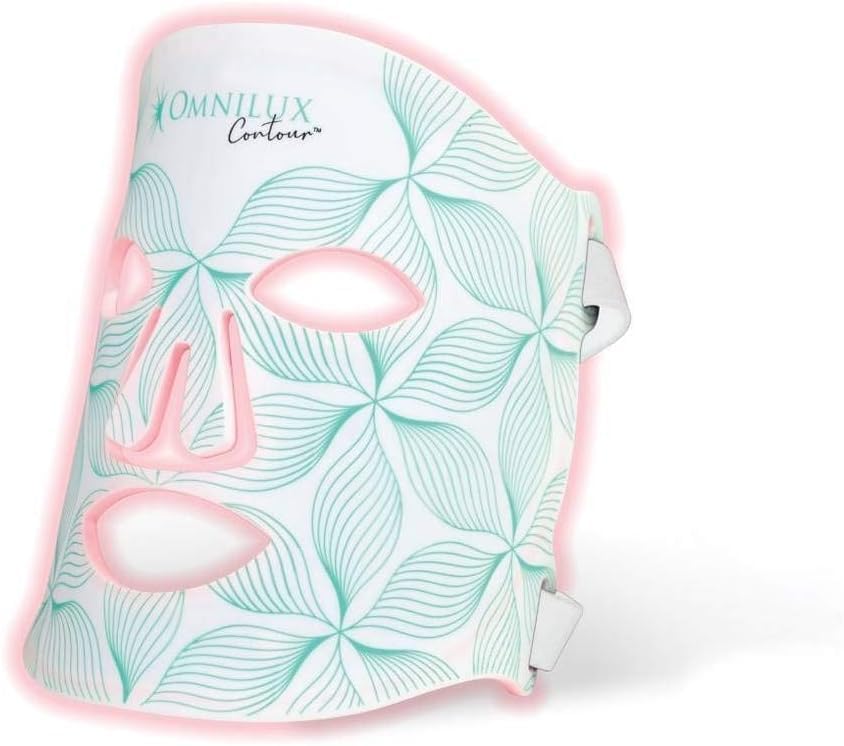
The flexible silicone design molds gently to the face and generates minimal heat, which is a meaningful advantage for reactive skin. Treatment time is 10 minutes. Omnilux is an established medical-grade LED brand, and the Contour Face carries FDA clearance.
This is not the cheapest option at around $395, but the verified specifications and the absence of blue light make it a practical starting point for sensitive-skin users. If you’re also interested in its anti-aging potential, see our guide to best LED face masks for wrinkles and firmer skin.
Important limitation: Like all consumer LED devices, individual results vary. It is not a treatment for diagnosed skin conditions.
CurrentBody Skin LED Light Therapy Mask Series 2
The CurrentBody Skin LED mask uses the same two clinically studied wavelengths — 633nm red and 830nm near-infrared — and takes a similar approach to the Omnilux in terms of simplicity and focus. It is flexible, lightweight, and designed for 10-minute daily sessions.

- Enhanced collagen production capability significantly reduces fine lines, wrinkles and redness, for younger-looking skin…
- Upgraded light coverage provides our famous instant glow, for a healthier, brighter and smoother complexion.
- An all-new, exclusive layout of 236 LED bulbs emits three clinically recognised wavelengths: red (633nm), near-infrared …
For sensitive-skin users, the lack of heat and the straightforward wavelength profile make this a reasonable option. It carries FDA clearance and is widely available through CurrentBody’s US site and through Amazon-affiliated retailers.
At around $380, it sits in a similar price bracket to the Omnilux. The choice between the two often comes down to fit preference, as individual face shapes will respond differently to each mask’s design.
Dr. Dennis Gross DRx SpectraLite FaceWare Pro
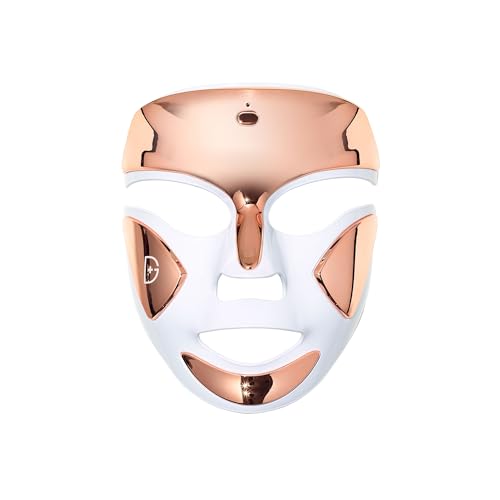
The SpectraLite FaceWare Pro is a more feature-rich mask that includes red, blue, amber, and white LED options across 162 LEDs. Treatment time is notably short at 3 minutes, which could be an advantage for sensitive-skin beginners.
- WHAT IT IS: This LED device for the face targets wrinkles and acne for visibly smoother, clearer skin in just 3 minutes….
- HOW IT WORKS: Treat acne and breakouts with blue light, smooth wrinkles and build collagen with red light, or address bo…
- HOW TO USE: After cleansing, place the mask over your face, securing the strap around your head. Press & hold the power …
The amber light setting is sometimes associated with soothing and redness support, which may be useful. However, sensitive-skin users should be aware that the blue light option is present and should be avoided if blue light is not appropriate for their skin concerns.
The rigid design is less flexible than silicone alternatives, which some users find comfortable and others find less so. It carries FDA clearance. At approximately $455, it is the most expensive option on this list.
For those considering this mask primarily for acne concerns rather than redness, our guide to LED face masks for acne-prone skin may be more relevant.
Therabody TheraFace Mask
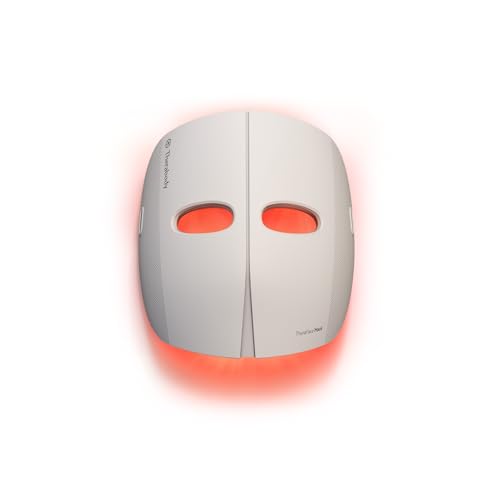
The TheraFace Mask uses 660nm red and 850nm near-infrared light and is designed to combine LED therapy with breathable wearable comfort. Treatment sessions are 10 minutes. It carries FDA clearance.
- Supercharged Face Care in 9 Minutes: A facial mask routine with 3 impressive LED light therapy technologies. Red light t…
- Vibrating Facial Massager, Too: TheraFace LED mask delivers a 15-minute vibration therapy treatment to key pressure poin…
- Powerful, Medical-Grade Lights: With 3x more LEDs than leading mask competitors for maximum efficacy and mask skincare r…
For sensitive skin, the breathable design is appealing. Some users have noted that the fit and pressure may vary depending on face shape, so comfort is worth assessing carefully. As with all masks reviewed here, heat output is relatively low compared with aggressive treatments.
At around $399, it falls in the mid-to-upper price range.
HigherDOSE Red Light Face Mask
The HigherDOSE Red Light Face Mask uses 660nm red and 850nm near-infrared light in a flexible silicone design. Its focus on red and near-infrared only — without blue light — makes it straightforward for sensitive-skin users who are primarily concerned with redness and inflammation rather than acne.

- Red Light Therapy for Face & Skin Rejuvenation – This FDA cleared, FSA eligible red light therapy mask uses red (630nm) …
- Facial Light Therapy, Anywhere – Lightweight and wireless, this LED face mask with red light therapy delivers targeted w…
- Red Light Mask That Works Deep – Red and near-infrared light reach deep layers to improve tone, reduce puffiness, and vi…
Treatment time is approximately 10 minutes. The silicone material is generally well-tolerated, though individual responses vary.
Important note: FDA clearance status for this device should be verified directly with the manufacturer or on the FDA’s database before purchasing, as this could not be independently confirmed at the time of writing.
At approximately $349, it is one of the more affordable options among full-face LED masks.
Solawave Wrinkle Retreat Pro
The Solawave Wrinkle Retreat Pro is a smaller, more portable device that uses red light (660nm) in a targeted wand or panel format rather than a full face mask. It is less expensive at around $199–$229, making it a lower-commitment starting point.
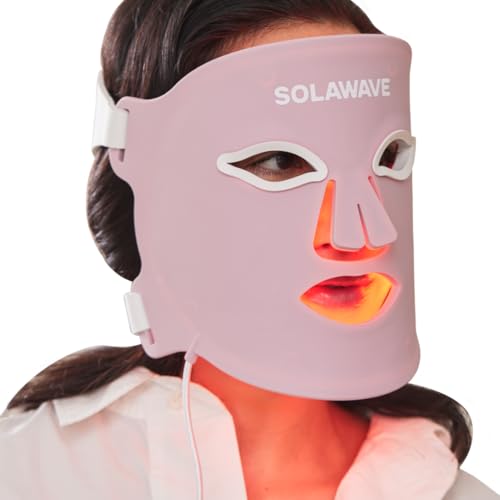
- 4 WAVELENGTHS. ZERO BLIND SPOTS: Red (630nm) softens fine lines. Deep Red (660nm) targets elasticity. Amber (605nm) revi…
- FASTER THAN BREWING YOUR MORNING COFFEE: 3 minutes. Hands-free. Automatic shut-off. While most LED masks demand 10-20 mi…
- 320 LEDS. BUILT FOR EFFICIENCY: One charge powers up to 20 full sessions – most competitor masks max out at six. Digital…
For sensitive-skin users who want to test how their skin responds to red light therapy before investing in a full mask, a device like this may be a sensible first step. Coverage is more limited than a full mask, however.
As with the HigherDOSE mask, FDA clearance should be verified directly with the manufacturer.
If anti-aging is also a concern alongside redness, our guide to best red light therapy masks for anti-aging covers that angle in more detail.
LED Masks for Sensitive Skin: Red Light vs. Blue Light
The difference matters, especially for reactive or redness-prone skin.
Red light (620–700nm) is most commonly associated with anti-inflammatory effects, barrier support, and improving skin tone. It is the wavelength most relevant to addressing redness and sensitivity concerns.
Blue light (typically 415–450nm) targets the bacteria associated with acne breakouts. It has less direct relevance to reducing facial redness and may, in some cases, be unnecessarily stimulating for very reactive skin.
If your primary concern is redness, sensitivity, or a flushed complexion rather than active acne, there is no particular reason to seek out blue light. If a mask includes blue light as a mode, you can simply choose not to use that setting.
Someone managing both acne and sensitive skin has a more complex situation and should consider consulting a dermatologist for personalized guidance before choosing a device.
Can LED Face Masks Make Sensitive Skin Redder?
Yes, it is possible, and it’s worth understanding why before you start.
Possible reasons for post-treatment redness include:
- Heat: Even moderate warmth can cause temporary flushing in reactive skin.
- Overuse: Using the mask too frequently or for longer than recommended can overstimulate the skin.
- Using the mask on already-irritated skin: If your skin barrier is already compromised, any additional input — including light — can push it further.
- Skincare product interactions: Applying certain active ingredients (such as retinols, AHAs, or vitamin C serums) immediately before or after a session may increase sensitivity.
- Individual variation: Some people are simply more sensitive to light stimulation than others, regardless of device quality.
What to do if irritation occurs:
Stop the session immediately. Allow the skin to cool and settle. Do not apply active skincare ingredients while the skin is reactive. If redness or discomfort persists beyond a few hours or becomes painful, consult a dermatologist. Do not resume use until the skin has fully settled and you have identified a probable cause.
How to Start Using an LED Mask If You Have Sensitive Skin
Starting slowly is the most practical approach for sensitive-skin users.
- Read the manufacturer’s instructions in full before your first session. Device-specific guidance takes priority over any general protocol.
- Start with fewer sessions per week than the maximum recommended — for example, once every two to three days rather than daily.
- Use on clean, dry skin unless the manufacturer specifies otherwise.
- Avoid applying potentially irritating actives (retinol, acids, high-concentration vitamin C) immediately before your session until you know how your skin responds.
- Keep initial sessions to the minimum recommended time and work up gradually if your skin tolerates it well.
- Monitor your skin for 24 hours after each session, especially in the early weeks.
- Stop immediately if you experience significant redness, stinging, or discomfort that persists beyond a short period after the session.
- Seek professional guidance if you are uncertain whether LED therapy is appropriate for your specific skin concern.
LED Mask Safety for Sensitive and Redness-Prone Skin
Eye Safety
This cannot be overstated. Always use the built-in eye protection or supplied goggles. Do not use a device without appropriate eye coverage.
Photosensitivity and Medications
Certain medications — including some antibiotics, retinoids, and diuretics — can increase the skin’s sensitivity to light. The American Academy of Dermatology provides guidance on photosensitivity that is worth reviewing. Check with your prescribing doctor or pharmacist if you are on any medication before using an LED device.
Pregnancy
Most LED mask manufacturers list pregnancy as a contraindication or advise consulting a healthcare provider before use. Follow the device-specific guidance.
Active Skin Irritation
Do not use an LED mask over actively broken, irritated, infected, or sunburned skin.
FDA Clearance
Verify FDA clearance directly through the FDA’s 510(k) premarket notification database rather than relying solely on manufacturer claims.
Device-Specific Contraindications
Every device has its own list of contraindications. Read these carefully before first use.
What to Look for Before Buying an LED Mask
Use this checklist before committing:
- ✅ Verified wavelength information (specific nanometer values, not just color descriptions)
- ✅ Appropriate treatment time (10 minutes or less is generally manageable for sensitive skin)
- ✅ Comfortable, flexible fit with minimal pressure
- ✅ Minimal heat output
- ✅ Clear safety information and contraindications provided by the manufacturer
- ✅ FDA clearance confirmed directly (not assumed from marketing language)
- ✅ No blue light if your concern is redness rather than acne
- ✅ Reasonable, evidence-based claims (avoid masks that promise cures or guaranteed results)
- ✅ Clear warranty and return policy
- ✅ Realistic expectations set by the brand
Our detailed look at LED face masks for mature skin and fine lines and our guide to red light therapy devices for skin firmness may also be useful if you have additional concerns beyond redness.
Frequently Asked Questions
Is LED light safe for sensitive skin?
For most people, LED light therapy at the wavelengths and intensities used by consumer masks is considered low-risk. However, sensitive skin can react to many different inputs, including heat and light. Starting slowly, following manufacturer instructions, and monitoring your skin’s response is the safest approach. If you have a diagnosed skin condition, speak with a dermatologist first.
Can red light reduce facial redness?
Some research suggests that red and near-infrared light may help reduce inflammation and support skin barrier function, both of which could contribute to calmer-looking skin over time. However, results vary significantly between individuals, and consumer LED masks have a less robust evidence base than professional-grade clinical devices. It is reasonable to approach this with cautious optimism rather than firm expectations. Research published in peer-reviewed journals does support the broader concept of photobiomodulation, though not always in the specific consumer-device context.
Is red light or blue light better for sensitive skin?
For sensitive and redness-prone skin, red and near-infrared light are generally more appropriate. Blue light is primarily useful for targeting acne-related bacteria and has less direct relevance to reducing redness or sensitivity. Some reactive skin types may find blue light unnecessarily stimulating.
Can LED masks cause irritation?
Yes, particularly if used too frequently, at too high an intensity, immediately after applying irritating skincare, or on already-compromised skin. Temporary post-session flushing can occur even in people without sensitive skin. If irritation is more than mild and brief, discontinue use and allow the skin to recover.
How often should sensitive skin use an LED mask?
Follow the specific manufacturer’s instructions for your device. As a general starting approach, beginning with fewer sessions per week than the maximum recommended allows your skin to adapt. Many devices suggest daily use once established, but sensitive-skin users may find that three to four sessions per week is more comfortable, at least initially.
Can I use an LED mask if I have rosacea-prone skin?
This is a genuinely important question. Some people with rosacea-prone skin have reported that red light therapy feels calming, while others have found it triggers flushing. There is no reliable universal answer. If you have rosacea or suspect you might, consult a dermatologist before using any LED device. Rosacea involves complex triggers and can be worsened by heat, pressure, or certain light exposures depending on the individual.
Should I stop using an LED mask if my face becomes red after a session?
Brief, mild flushing immediately after a session can occur and is usually temporary. However, if redness is significant, prolonged (lasting more than a couple of hours), accompanied by stinging or discomfort, or worsening over time, you should stop using the device and allow your skin to fully recover. Consult a dermatologist if the reaction is concerning or does not resolve.
Are expensive LED masks better for sensitive skin?
Not automatically. Price does not always correlate directly with suitability for sensitive skin. What matters more is verified wavelengths, appropriate treatment time, minimal heat, a comfortable fit, and transparent safety information. Some mid-range options with red and near-infrared light and no blue light may be perfectly appropriate, while some expensive masks that include multiple light colors may include settings that are unnecessary for your concern. Focus on verified specifications rather than price alone.
Final Takeaway
If you have sensitive or reactive skin, LED therapy is not off-limits — but it does require more careful consideration than it might for other skin types.
The most important factors are not the price or the number of LEDs but the wavelengths used, the heat generated, the comfort of the fit, the clarity of the manufacturer’s instructions, and the verified safety profile of the device. For redness and sensitivity concerns specifically, red and near-infrared wavelengths are the most relevant. Blue light is not necessary and can be avoided.
Start slowly. Follow the manufacturer’s instructions. Monitor your skin’s response before committing to a full treatment schedule. And if you have a diagnosed skin condition — including rosacea, eczema, or persistent unexplained redness — please talk to a dermatologist before adding any light-emitting device to your routine.
LED masks are not a cure for sensitive skin. They are a tool that, used correctly, may support calmer, healthier-looking skin over time. That is a reasonable and realistic expectation to work with.
For related reading on what the technology can and cannot do, visit our article on whether LED face masks really work, and if crow’s feet or under-eye concerns are also on your radar, our guide to LED face masks for crow’s feet and under-eye wrinkles may be helpful too.
Prices, product availability, and specifications are subject to change. Always verify current details with the retailer or manufacturer before purchasing. This article contains affiliate links. SylomaSkincare.com may earn a commission on qualifying purchases at no additional cost to you.