
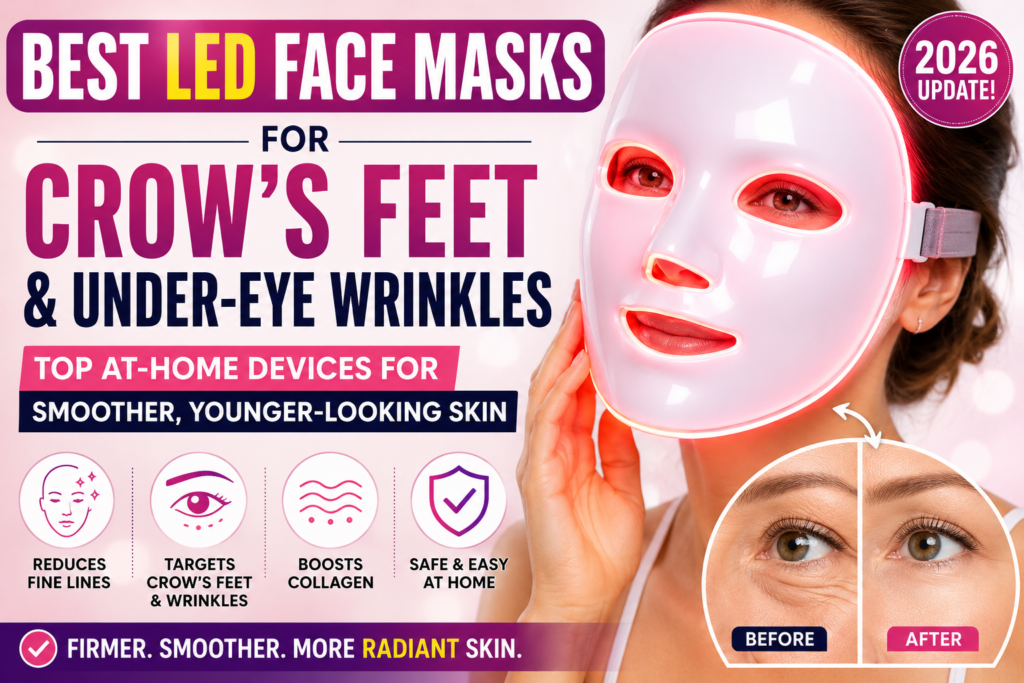
Crow’s feet and under-eye wrinkles are often the first lines people notice in the mirror. The skin around the eyes is thinner than skin almost anywhere else on the face, and it moves constantly — every smile, squint, and expression adds up over the years. So it’s no surprise that this is usually where fine lines show up earliest, even in people who are diligent about sunscreen and skincare.
That’s part of why at-home LED face masks have become so popular. They promise a way to support the eye area from home, without a trip to the dermatologist’s office. But not every LED mask is designed with the eye area in mind, and the category ranges widely in price, wavelength quality, and how much evidence actually backs up the claims.
This guide breaks down what LED light therapy can realistically do for crow’s feet and under-eye wrinkles, what to look for before buying a mask, and a closer look at several well-known devices currently available in the U.S. market.
Quick Answer: Best LED Face Masks for Crow’s Feet and Under-Eye Wrinkles
If you’re short on time, here’s the general landscape:
- Best full-face mask with dedicated eye-area LEDs: CurrentBody Skin LED Light Therapy Mask Series 2
- Best FDA-cleared full-face option for fine lines: Omnilux Contour Face
- Best dedicated eye-only device: Dr. Dennis Gross DRx SpectraLite EyeCare Pro
- Best handheld eye-targeted device: Solawave Radiant Renewal Eye Recovery Pro
- Best full-face mask with added massage: Therabody TheraFace Mask Glo
Each of these takes a slightly different approach, so the “best” one really depends on your budget, how much of your face you want to treat, and how much time you’re willing to spend per session.
Can LED Face Masks Help With Crow’s Feet and Under-Eye Wrinkles?
LED light therapy, sometimes called photobiomodulation, uses specific wavelengths of light to interact with skin cells. According to research published in the International Journal of Molecular Sciences, red light (roughly in the 620–700 nanometer range) works closer to the skin’s surface, while near-infrared light (roughly 700–1400 nanometers) penetrates a bit deeper. The idea is that this light stimulates fibroblasts, supports collagen production, and may improve circulation to the treated area.
Importantly, this isn’t just marketing language. A randomized, double-blind, sham-controlled clinical study looked specifically at a home-use LED and IRED mask for crow’s feet and found measurable improvements in wrinkle appearance among participants, with researchers publishing their results in the medical journal Medicine. That’s a meaningful data point, because a lot of LED research focuses on general facial skin rather than the eye area specifically.
That said, it’s worth keeping expectations realistic. LED masks are not a substitute for professional dermatology treatments, and results tend to be gradual. Regular sessions are necessary to see results, and the therapy is meant to complement — not replace — other core skin habits like sun protection and consistent moisturizing. No at-home device can permanently remove wrinkles or reverse the aging process. What these devices may do, with consistent use over weeks or months, is support the appearance of smoother, more even-looking skin around the eyes.
What to Look for in an LED Face Mask for the Eye Area
Before buying a mask specifically for crow’s feet or under-eye wrinkles, a few factors matter more than flashy marketing claims.
Wavelength. Look for devices that clearly disclose their wavelengths in nanometers. Red light around 630–633nm and near-infrared light around 830nm are the two most commonly cited in published research on skin aging.
Eye-area coverage. Some full-face masks leave the eye area uncovered or require you to close your eyes and skip that zone entirely. If crow’s feet are your main concern, look for a mask with LEDs positioned close to the orbital area, or consider a dedicated eye device.
Fit and comfort. A rigid mask that doesn’t contour to your face may not deliver even light exposure. Flexible silicone designs generally mold more closely to the curves around the eyes and cheeks.
Treatment time. Sessions on today’s masks range from about 3 minutes to 12 minutes. Shorter sessions can make it easier to stay consistent, which matters more than any single session’s length.
Manufacturer transparency and FDA clearance. Dermatologists generally recommend looking for devices labeled “FDA-cleared,” since the FDA evaluates safety — though clearance alone doesn’t guarantee effectiveness. Reputable brands are upfront about their clearance status, wavelength specs, and study details rather than relying on vague claims. The FDA’s own device database is a good way to verify a manufacturer’s clearance claims.
If you’re also noticing looser or crepey-looking skin beyond the eye area, it’s worth reading about the best red light therapy devices for sagging skin and loss of firmness, since some devices are built more for firmness than fine lines specifically.
Best LED Face Masks for Crow’s Feet and Under-Eye Wrinkles in 2026
CurrentBody Skin LED Light Therapy Mask Series 2

- Enhanced collagen production capability significantly reduces fine lines, wrinkles and redness, for younger-looking skin…
- Upgraded light coverage provides our famous instant glow, for a healthier, brighter and smoother complexion.
- An all-new, exclusive layout of 236 LED bulbs emits three clinically recognised wavelengths: red (633nm), near-infrared …
Type: Full-face flexible silicone mask Wavelengths: Red (633nm), near-infrared (830nm), and deep near-infrared (1072nm) Treatment area: Full face, with additional deep near-infrared LEDs concentrated around the eyes and mouth Treatment time: 10 minutes per session
The Series 2 uses 236 LED bulbs and is FDA-cleared. What sets it apart for the eye area is the placement of extra deep near-infrared bulbs specifically around the eyes and mouth, the zones where expression lines tend to form first. The silicone shape is flexible and designed to contour to the face, and the mask is cordless with a clip-on controller, so you can move around during treatment.
Pros: Three distinct wavelengths, dedicated eye-area LED placement, comfortable flexible fit, cordless design. Cons: Higher price point than many competitors; full-face design means it isn’t purely eye-focused. Who may benefit: People who want a comprehensive full-face treatment that also pays attention to the eye area. Who may prefer another option: Anyone who only wants to treat the eye area and doesn’t need full-face coverage. Overall value: A strong option if you’re willing to invest in a premium mask, given its wavelength range and eye-focused LED placement.
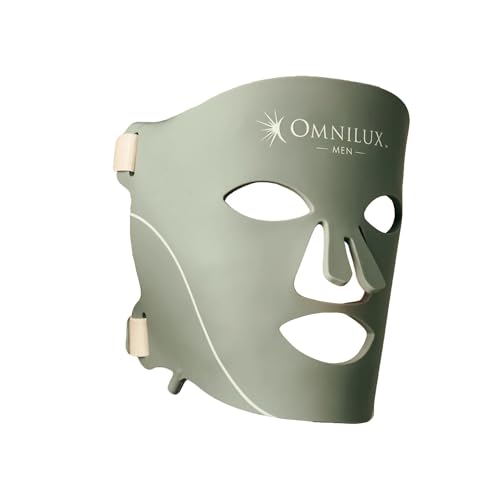
Omnilux Contour Face
- Skin Tightens and Firms: Epidermis feels more taut and compact
- Free Radical Defense: Skin shielded from oxidative damage
- Aging Signs Minimized: Visible aging indicators reduced
Type: Full-face flexible silicone mask Wavelengths: Red (633nm) and near-infrared (830nm) Treatment area: Full face Treatment time: 10 minutes per session
Omnilux’s Contour Face is FDA-cleared and uses 132 medical-grade LEDs that each emit both wavelengths simultaneously. The brand has a long history in professional-grade light therapy, and the device is built around two of the most clinically referenced wavelengths for fine lines and wrinkles.
Pros: FDA-cleared, dual wavelength delivered from every bulb, no heat or UV exposure, relatively short daily commitment. Cons: Lacks the deep near-infrared wavelength found on some competing masks; doesn’t have dedicated additional eye-area LEDs. Who may benefit: Those who want a straightforward, well-studied two-wavelength option for fine lines across the whole face. Who may prefer another option: People specifically seeking a third, deeper wavelength or an eye-only device. Overall value: A solid mid-range-to-premium choice with a long clinical track record behind its underlying technology.
Dr. Dennis Gross DRx SpectraLite EyeCare Pro
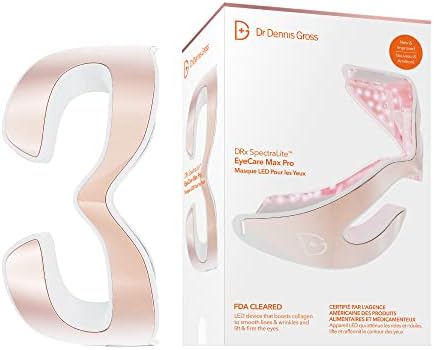
- WHAT IT IS: Dermatologist-developed and FDA-cleared, this LED eye device builds natural elasticity to firm skin, reduce …
- HOW IT WORKS: Four wavelengths of red light stimulate collagen production to treat wrinkles, firm skin & even tone aroun…
- HOW TO USE: On clean, dry skin, place device comfortably over eye area. (Strap included for comfort & hands-free use.) P…
Type: Dedicated eye-area LED device Wavelengths: Red light therapy Treatment area: Eye area only, including crow’s feet Treatment time: 3 minutes per session
This is one of the few widely available devices built exclusively for the eye area rather than the whole face. It’s FDA-cleared, uses 72 LEDs, and is designed to sit directly over the orbital area with a flexible silicone shape and adjustable strap. Because it’s a targeted device, sessions are much shorter than most full-face masks.
Pros: Purpose-built for crow’s feet and the eye area, FDA-cleared, short 3-minute sessions, hands-free design. Cons: Only treats the eye area, so it won’t address concerns elsewhere on the face; single-wavelength design. Who may benefit: Anyone whose primary concern is crow’s feet and under-eye fine lines specifically, or who wants a fast daily routine. Who may prefer another option: Readers who want a device that also treats cheeks, forehead, or the lower face. Overall value: A focused, well-established option if crow’s feet are your main priority.
Solawave Radiant Renewal Eye Recovery Pro

- 4-in-1 Facial Light Therapy Device for Visible Results: This powerful face light therapy device combines red light thera…
- Optimized Performance with Renew Complex Serum: This all-natural priming serum hydrates and enhances the effects of red …
- 3‑Minute Radiance Boost: In only 3 minutes per area, the wand delivers soothing warmth and red light to smooth fine line…
Type: Dedicated eye-area LED device Wavelengths: Amber (605nm), red (630nm), deep red (660nm), and near-infrared (880nm) Treatment area: Eye area, including under-eyes and crow’s feet Treatment time: 3 minutes per session
This device uses 80 LEDs across four separate wavelengths, which is a broader wavelength spread than most eye-specific devices on the market. Solawave markets it as targeting dark circles, puffiness, and crow’s feet in short daily sessions. Solawave’s broader red light therapy line includes other FDA-cleared devices, though shoppers should verify the specific clearance status of any individual product on the manufacturer’s site before purchasing.
Pros: Four wavelengths in one eye-focused device, quick 3-minute sessions, targets multiple eye-area concerns at once. Cons: Smaller treatment footprint than a full-face mask; verify current FDA clearance details directly with the manufacturer. Who may benefit: People who want an eye-specific device with a wider wavelength range than typical single-wavelength options. Who may prefer another option: Anyone prioritizing full-face coverage in a single device. Overall value: A reasonably priced, focused option for the eye area with a notably broad wavelength combination.
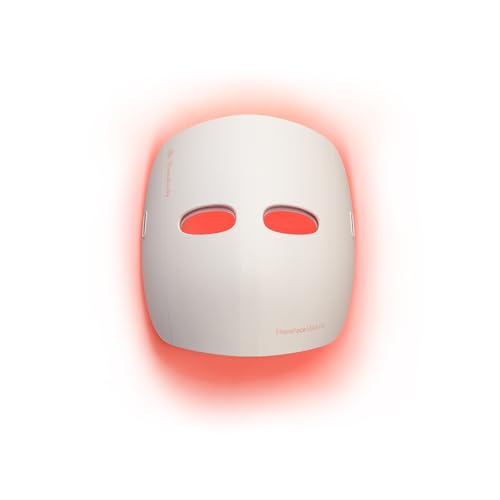
Therabody TheraFace Mask Glo
- CLINICALLY-PROVEN LED LIGHT THERAPY: 3 types of science-backed LED light therapy address specific skin concerns for clin…
- FULL-COVERAGE FACE MASK: 504 medical-grade LEDs, enhanced by Therabody’s proprietary PrecisionLED technology, deliver op…
- CUSTOMIZABLE TREATMENT OPTIONS: The preset 12-minute treatment cycles through 4 minutes of each light therapy to boost c…
Type: Full-face LED mask with added vibration therapy Wavelengths: Blue (415nm), red (633nm), and red plus infrared (633nm/830nm) Treatment area: Full face, including the eye and mouth area Treatment time: 12 minutes per session
The TheraFace Mask Glo is FDA-cleared and uses 504 medical-grade LEDs. Unlike some full-face masks, it’s built to deliver light across the eye and mouth area rather than leaving those spots uncovered. It also includes Therabody’s VibraWave vibration technology, which provides a gentle massage around the eyes and scalp during treatment — a nice-to-have rather than a wrinkle-specific feature.
Pros: FDA-cleared, includes eye and mouth coverage, adds a relaxing vibration component, cordless. Cons: Longest treatment time on this list at 12 minutes; the vibration feature adds bulk and cost. Who may benefit: People who want a full sensory, spa-like experience along with light therapy. Who may prefer another option: Anyone who wants the shortest possible daily commitment. Overall value: A well-rounded option, particularly if you like the added massage component, though it requires more time per session.
If you’re also interested in extending LED treatments beyond the face, some readers look into the best LED neck and chest masks for crepey skin as a complementary step, since the neck and chest often show similar signs of aging.
Comparison Table
| Device | Best For | Type | Key Feature | Treatment Time | Overall Value |
|---|---|---|---|---|---|
| CurrentBody Series 2 | Full face + eye focus | Full-face mask | Extra deep near-infrared LEDs around eyes | 10 minutes | Premium, feature-rich |
| Omnilux Contour Face | Full face, fine lines | Full-face mask | Long clinical track record | 10 minutes | Solid mid-to-premium |
| Dr. Dennis Gross SpectraLite EyeCare Pro | Crow’s feet specifically | Eye-only device | Purpose-built for eye area | 3 minutes | Focused, efficient |
| Solawave Radiant Renewal Eye Recovery Pro | Eye area, multiple concerns | Eye-only device | Four wavelengths in one device | 3 minutes | Budget-friendlier eye option |
| Therabody TheraFace Mask Glo | Full face with relaxation | Full-face mask | Vibration massage included | 12 minutes | Well-rounded, longer session |
How to Use an LED Face Mask Around the Eyes
General usage guidance for LED masks tends to follow a similar pattern, but you should always defer to the specific instructions that come with your device.
- Start with clean, dry skin. Some brands recommend a water-based cleanser rather than an oil-based one before LED treatment, since oil residue can sometimes interfere with light penetration.
- Do a sensitivity test the first time you use a new device, as many manufacturers recommend.
- Position the mask or eye device as directed, using any included straps for a secure, even fit.
- Run the full programmed treatment cycle. Don’t cut sessions short or extend them beyond what the manufacturer recommends.
- Stop immediately if your skin feels hot, uncomfortable, or irritated, and consult the device’s contraindications list.
- Follow with your regular moisturizer or serum, since LED therapy doesn’t replace the rest of your skincare routine.
How Long Does It Take to See Results?
Most manufacturers and dermatologists point to a similar timeline: initial changes may become visible around 3 to 6 weeks in, with fuller results after 8 to 12 weeks of consistent use. For at-home devices to be effective, they generally need to be used multiple times a week over several months, since results build slowly rather than appearing overnight.
Consistency matters more than intensity. Skipping sessions, or expecting a single treatment to make a visible difference, is one of the most common reasons people feel disappointed with LED masks.
Common Mistakes to Avoid
- Inconsistent use. LED therapy works cumulatively, so sporadic sessions are unlikely to produce noticeable results.
- Ignoring manufacturer instructions. Treatment times, distances, and frequency recommendations exist for a reason, especially near the eyes.
- Expecting instant results. Visible changes typically take weeks, not days.
- Using a device incorrectly. Poor fit or incorrect positioning can mean the eye area isn’t getting adequate light exposure.
- Neglecting basic skincare habits. Sunscreen, hydration, and a consistent routine still matter; LED therapy works best as a complement, not a replacement.
LED Masks vs. Other Anti-Aging Options
LED masks sit in the non-invasive, no-downtime category of skincare tools. Compared to options like retinoids, chemical peels, or in-office treatments such as microneedling, LED therapy tends to work more gradually and gently, with less risk of irritation or downtime. It’s generally considered safe to use alongside topical treatments and even after cosmetic procedures like Botox or filler, though you should always check with a dermatologist about your specific situation.
That said, LED masks are not a replacement for professional treatments if you’re looking for more dramatic or faster change. Many people use LED therapy as a maintenance tool between other treatments, or as a lower-commitment starting point for addressing early fine lines. For a broader look at the category, our guide to the best LED face masks for mature skin and fine lines covers how these devices compare across different age groups and skin concerns.
Travel can also disrupt consistency, which matters given how much LED therapy depends on regular use. Packing your device — or at least keeping up a simplified version of your routine — while away from home is worth planning for; our roundup of best travel skincare kits can help you keep the rest of your routine on track even when your mask stays home.
Frequently Asked Questions
Can LED masks reduce crow’s feet? Clinical research, including a sham-controlled study on a home-use LED and IRED mask, has shown measurable improvement in periorbital wrinkles with consistent use. Results vary between individuals, and LED masks may help improve the appearance of crow’s feet rather than eliminate them entirely.
Are LED masks safe around the eyes? Many devices are specifically designed and FDA-cleared for eye-area use, but the skin there is delicate. Always follow the manufacturer’s instructions, use any included eye protection or shields as directed, and stop use if you notice irritation.
How often should you use an LED face mask? Most manufacturers recommend three to five sessions per week for visible results, continuing with regular maintenance sessions afterward.
What wavelength is commonly used for red light therapy? Red light around 630–633nm is the most frequently referenced wavelength in published research on skin rejuvenation, often paired with near-infrared light around 830nm for deeper effects.
Are LED masks worth it for fine lines? For many people, yes, especially as part of a broader skincare routine. They’re not a miracle fix, but they may support healthier-looking skin with consistent use over time.
Can LED masks help mature skin? LED therapy is commonly used by people with more mature skin, since fine lines, uneven tone, and loss of firmness are common concerns in this group. Results still depend on consistency and realistic expectations.
How long does it take to see results? Most people report early changes around 3 to 6 weeks, with more noticeable results after 8 to 12 weeks of regular use.
Final Verdict
There isn’t a single “best” LED face mask for every reader — it really depends on what you’re trying to accomplish. If crow’s feet and under-eye wrinkles are your main concern and you’d rather not commit to a full-face routine, a dedicated eye device like the Dr. Dennis Gross SpectraLite EyeCare Pro or the Solawave Radiant Renewal Eye Recovery Pro offers a fast, targeted approach. If you want broader coverage that still pays attention to the eye area, the CurrentBody Series 2, Omnilux Contour Face, and Therabody TheraFace Mask Glo are all reasonable full-face options with FDA clearance and eye-area treatment built in https://sylomaskincare.com/ .