
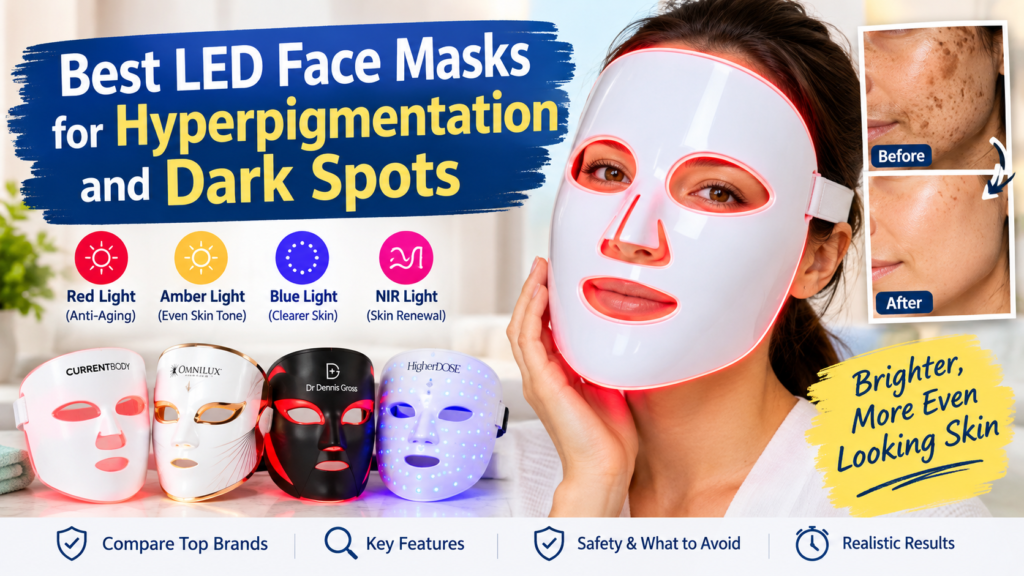
If you’re dealing with dark spots, sun damage, post-acne marks, or uneven skin tone, you’ve probably come across LED face masks as a possible solution. The short answer: certain wavelengths of LED light — particularly red, amber, and green — may support skin renewal and help reduce the appearance of some types of hyperpigmentation over time. They are not a cure, and they work best as part of a consistent skincare routine that includes broad-spectrum sunscreen every single day.
This guide explains which wavelengths matter, what LED masks can realistically do, which products are worth considering in 2026, and what to think about before you buy.
Quick Comparison Table
| Mask | Best For | Wavelengths | Treatment Time | FDA Status | Key Consideration |
|---|---|---|---|---|---|
| CurrentBody Skin LED Light Therapy Mask | Overall anti-pigmentation, skin renewal | Red (633nm), Near-infrared (830nm) | 10 minutes | FDA cleared | Flexible fit, clinically tested wavelengths |
| Omnilux Contour FACE | Skin tone, fine lines, overall renewal | Red (633nm), Near-infrared (830nm) | 10 minutes | FDA cleared | Medical-grade LEDs, well-documented wavelengths |
| Dr. Dennis Gross DRx SpectraLite FaceWare Pro | Multi-concern including acne + pigmentation | Red (620nm), Blue (423nm), Amber, Green | 3 minutes | FDA cleared | Short sessions, multi-wavelength versatility |
| Therabody TheraFace Mask | Multiple skin concerns, convenience | Red, Blue, Infrared, Green | 10 minutes | FDA cleared | Vibration therapy combined, app-connected |
| Solawave 4-in-1 Facial Wand | Targeted spot treatment, travel-friendly | Red (660nm) | 3–5 minutes | FDA cleared | Wand format, not a full mask; good for targeted areas |
| HigherDOSE Red Light Face Mask | Skin glow, overall rejuvenation | Red (660nm), Near-infrared (850nm) | 10 minutes | Check manufacturer | Cocoon-style design, less flexible fit |
Prices vary and change frequently. Always check current pricing on Amazon or the manufacturer’s website before purchasing.
Can LED Face Masks Help Hyperpigmentation and Dark Spots?
LED (light-emitting diode) therapy has been studied for a range of skin concerns, including wound healing, acne, collagen production, and more recently, pigmentation. It works by delivering specific wavelengths of light into the skin, where cells absorb the energy and respond in various ways depending on the wavelength used.
For hyperpigmentation, the evidence is growing but still evolving. Some wavelengths — particularly green and amber — have shown the ability to influence melanin production and reduce the activity of melanocytes (the cells responsible for producing pigment). Red and near-infrared light support general skin renewal, which can improve the overall tone and texture of skin over time.
Research published on PubMed has explored how photobiomodulation (the scientific term for what LED masks do) affects skin cells, suggesting meaningful cellular responses at certain wavelengths. More recent work continues to investigate practical applications for skin tone concerns.
That said, it is important to be realistic. LED masks are not a standalone treatment for pigmentation. They are unlikely to produce dramatic results quickly, and they will not permanently remove deep or hormonally driven pigmentation such as melasma. Think of them as a supportive tool — useful alongside a well-constructed skincare routine, not instead of one.
For a deeper look at the science behind how these devices work, visit our detailed guide: Do LED Face Masks Really Work?
What Type of Pigmentation Are You Trying to Treat?
Not all dark spots are the same, and understanding what you are dealing with will help you set realistic expectations.
Sun Spots and Age Spots
These are flat, darkened areas caused by cumulative UV exposure. They typically appear on the face, hands, chest, and shoulders. They tend to respond better to LED therapy than deeper pigmentation conditions, though results still take time.
Post-Acne Marks and Post-Inflammatory Hyperpigmentation (PIH)
After a breakout heals, the skin can leave behind pink, red, or brown discoloration. This is not a scar — it is a pigmentation response. PIH often fades on its own over months, but LED therapy may help support faster skin turnover and reduce the duration of these marks. For those primarily dealing with active acne alongside PIH, our guide to the best LED face masks for acne breakouts covers the blue and red light combination in more detail.
Uneven Skin Tone
Dullness, patchiness, and general unevenness can result from a mix of mild PIH, sun damage, and slower cell turnover. This is arguably where LED masks show the most accessible benefit — supporting a brighter, more even overall appearance over consistent use.
Melasma
Melasma is a more complex hormonal condition causing symmetrical patches of pigmentation, typically on the cheeks, forehead, and upper lip. It is notoriously difficult to treat and is often worsened by heat and light exposure. LED therapy for melasma requires caution. The American Academy of Dermatology strongly recommends sun protection and professional guidance for melasma management.
Post-Inflammatory Erythema and Acne Scars
Red marks left after acne are different from brown PIH — they are vascular in nature. Textural acne scars are a different concern again. LED masks do not resurface the skin, so they will not alter raised or depressed scarring. They may support improved skin tone around existing scarring.
For more information on the overlap between pigmentation and acne-related marks, see our article on LED face masks for hyperpigmentation, melasma, and acne.
Which LED Wavelengths Matter for Dark Spots?
Different wavelengths of light penetrate the skin to different depths and trigger different cellular responses. Here is what the relevant wavelengths are understood to do in relation to pigmentation:
Red Light (620–660nm)
Red light penetrates into the dermis and is primarily associated with collagen production, inflammation reduction, and accelerated cell turnover. While red light does not directly target melanin, by supporting healthy skin renewal it may gradually contribute to a more even skin tone. This is the most widely studied wavelength for home use.
Near-Infrared Light (800–850nm)
Near-infrared goes deeper than red light and supports cellular energy production (via mitochondria). It helps with healing and inflammation. Near-infrared is less directly linked to pigmentation but contributes to overall skin health and may be useful in combination with other wavelengths.
Amber and Yellow Light (570–620nm)
This is arguably the most relevant wavelength range for hyperpigmentation specifically. Amber and yellow light are understood to interact with melanocytes and may help reduce excess melanin production. Some research suggests this range can help calm post-inflammatory pigmentation and support more even tone. A 2024 study indexed on PubMed explored the effects of different wavelengths on pigmentation-related pathways, adding to a growing body of research in this area.
Green Light (520–560nm)
Green light is specifically absorbed by melanin in the skin and is sometimes described as the most targeted wavelength for dark spots. It has been used in professional settings for pigmentation concerns. Some LED masks now include green light, though it is less common in home devices than red or blue.
Blue Light (415–450nm) and Pigmentation Considerations
Blue light is primarily used for acne because of its antibacterial properties. For pigmentation specifically, blue light has limited direct benefit. Additionally, there is evidence that visible blue light can stimulate melanin production in darker skin tones, so people with deeper complexions should approach blue-light-dominant masks cautiously if pigmentation is their primary concern.
Best LED Face Masks for Hyperpigmentation and Dark Spots
1. CurrentBody Skin LED Light Therapy Mask
Best for: Consistent daily use, skin tone improvement, skin renewal

- FITS TO YOU – Unlike many other wearable LED devices, the CurrentBody Light Therapy Mask is made from patented flexible …
- LIGHT THERAPY – The device combines Red (633nm) and near Infra-Red Light (830nm). Harnessed at the perfect measurement t…
- REAL RESULTS – You can expect to see visible results in just 4 weeks when used consistently 10 minutes a day, 3 to 5 tim…
Wavelengths: Red (633nm) and near-infrared (830nm)
Treatment time: 10 minutes
FDA status: FDA cleared
The CurrentBody mask uses two of the most clinically studied wavelengths for skin health. Its flexible silicone design allows it to conform closely to the contours of the face, which improves light delivery across the treatment area. The 633nm red wavelength is one of the most documented for skin cell stimulation.
Benefits: Flexible and comfortable fit, well-supported wavelengths, relatively accessible price point compared to some competitors, built-in eye protection
Limitations: Does not include amber or green wavelengths specifically targeting melanin production, results take consistent use over weeks
Who may consider it: People new to LED therapy looking for an evidence-backed starting point, those focused on overall skin renewal alongside pigmentation support
2. Omnilux Contour FACE
Best for: Overall skin quality, evening skin tone, anti-aging alongside pigmentation support

Wavelengths: Red (633nm), Near-infrared (830nm)
Treatment time: 10 minutes
FDA status: FDA cleared
Omnilux has a long track record in professional LED therapy and their home device uses the same core wavelengths. The Contour FACE is a flexible mask that has been studied in clinical settings, which adds a layer of transparency that many LED mask brands lack.
Benefits: Medical-grade LEDs, FDA cleared, flexible fit, clean and simple design, good build quality
Limitations: Premium price point; like CurrentBody, it focuses on red and near-infrared rather than amber or green wavelengths
Who may consider it: Those willing to invest more and looking for a well-documented device with professional credibility
3. Dr. Dennis Gross DRx SpectraLite FaceWare Pro
Best for: Multi-concern skin — especially those dealing with both acne-related marks and pigmentation together
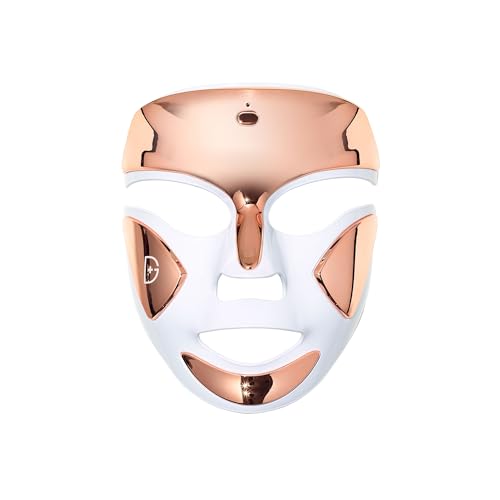
- WHAT IT IS: This LED device for the face targets wrinkles and acne for visibly smoother, clearer skin in just 3 minutes….
- HOW IT WORKS: Treat acne and breakouts with blue light, smooth wrinkles and build collagen with red light, or address bo…
- HOW TO USE: After cleansing, place the mask over your face, securing the strap around your head. Press & hold the power …
Wavelengths: Red (620nm), Blue (423nm), Amber (580nm), and a combination mode including Green
Treatment time: 3 minutes
FDA status: FDA cleared
The SpectraLite FaceWare Pro stands out in this category because it includes amber wavelengths, which are more directly relevant to melanin and pigmentation concerns. The three-minute treatment time makes it the most time-efficient option on this list. The combination of wavelengths also makes it versatile for skin that has both PIH from acne and general dark spots.
Benefits: Includes amber and green options relevant to pigmentation, short session time, rigid mask design, FDA cleared
Limitations: Rigid design may not suit all face shapes as well as flexible options; blue light component is less relevant to pigmentation and requires consideration for darker skin tones; on the higher end of pricing
Who may consider it: Those who want amber and green wavelengths specifically for dark spots, or those managing both acne and pigmentation concerns
4. Therabody TheraFace Mask
Best for: People who want multiple skin benefits from one device and appreciate technology integration
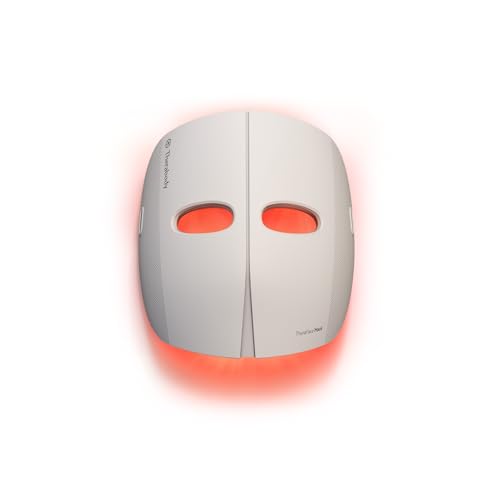
- Supercharged Face Care in 9 Minutes: A facial mask routine with 3 impressive LED light therapy technologies. Red light t…
- Vibrating Facial Massager, Too: TheraFace LED mask delivers a 15-minute vibration therapy treatment to key pressure poin…
- Powerful, Medical-Grade Lights: With 3x more LEDs than leading mask competitors for maximum efficacy and mask skincare r…
Wavelengths: Red, Infrared, Blue, Green (varies by mode)
Treatment time: 10 minutes
FDA status: FDA cleared
Therabody built its reputation on percussion therapy devices and expanded into skincare with the TheraFace Mask. It includes multiple wavelength options and adds vibration therapy, which is aimed at supporting product absorption and circulation. The companion app allows mode selection.
Benefits: Multi-wavelength including green, FDA cleared, well-known brand with customer support, app connectivity for guided use
Limitations: Bulkier than some alternatives, higher price point, and the vibration feature adds complexity that not everyone will find necessary
Who may consider it: Tech-forward users who want a multi-function device and are comfortable with a larger investment
5. Solawave 4-in-1 Facial Wand
Best for: Targeted treatment of specific dark spots and post-acne marks rather than full-face coverage
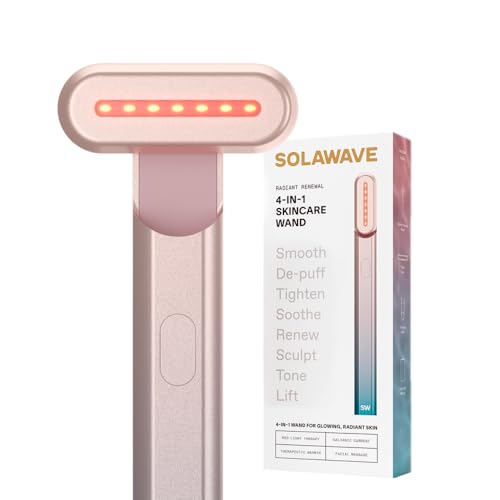
- FOUR TECHNOLOGIES, ONE SESSION: Red Light, Galvanic Current, Therapeutic Warmth & Facial Massage smooth, depuff & rejuve…
- FDA-CLEARED, VISIBLY FIRMER SKIN: Red light (630nm) helps reduce the look of fine lines & wrinkles over time.
- HYDRATED, REFRESHED LOOK: Galvanic Current supports a hydrated, refreshed look and boosts absorption of your Activating …
Wavelengths: Red (660nm)
Treatment time: 3–5 minutes
FDA status: FDA cleared
The Solawave is not a mask — it is a wand. This makes it fundamentally different from the other options here. However, for people who want to focus LED energy on specific areas of concern rather than the full face, it can be a practical and affordable option. It also combines microcurrent, therapeutic warmth, and red light.
Benefits: Affordable, portable, targeted application, simple to use, FDA cleared
Limitations: Does not provide full-face treatment; red light only; less efficient for addressing widespread hyperpigmentation; limited wavelength range for pigmentation specifically
Who may consider it: Those with isolated dark spots or PIH who want a budget-friendly starting point, or those looking for a travel-friendly complement to a full mask
6. HigherDOSE Red Light Face Mask
Best for: Skin renewal, general glow improvement, anti-aging alongside pigmentation support
Wavelengths: Red (660nm), Near-infrared (850nm)

- Red Light Therapy for Face & Skin Rejuvenation – This FDA cleared, FSA eligible red light therapy mask uses red (630nm) …
- Facial Light Therapy, Anywhere – Lightweight and wireless, this LED face mask with red light therapy delivers targeted w…
- Red Light Mask That Works Deep – Red and near-infrared light reach deep layers to improve tone, reduce puffiness, and vi…
Treatment time: 10 minutes
FDA status: Verify current FDA status directly with the manufacturer before purchasing
The HigherDOSE mask takes a more lifestyle-brand aesthetic approach and has a strong following. It uses red and near-infrared light at commonly studied wavelengths. It is worth noting that its more rigid, cocoon-style fit may not suit all face shapes as evenly as flexible silicone alternatives.
Benefits: Well-built device, solid wavelengths, brand transparency around technology used
Limitations: Fit can be less adaptable than flexible silicone masks, premium price; always verify current FDA clearance status directly with HigherDOSE
Who may consider it: Existing HigherDOSE customers or those drawn to the brand’s wellness positioning who want LED therapy as part of a broader routine
How to Choose an LED Mask for Dark Spots
With so many options available, these are the key factors to evaluate:
Wavelengths
If pigmentation is your primary concern, look for masks that include amber, yellow, or green wavelengths alongside red. Most consumer masks focus on red and near-infrared, which offer broad skin benefits but are not the most targeted options for melanin specifically.
Irradiance (Power Output)
The amount of energy delivered to the skin matters. Look for brands that publish their irradiance data (measured in mW/cm²). A mask with a beautiful design but inadequate power output will deliver limited results regardless of how long you use it.
Treatment Time
Shorter is not always better. Some devices achieve results in three minutes because of higher power output; others require ten minutes at lower output. Both approaches can be effective — what matters is total energy delivered.
Face Coverage
A mask that does not cover the full face will leave some areas untreated. Flexible silicone designs tend to contour more effectively than rigid shells, particularly along the jawline and around the nose.
Eye Protection
Some masks include built-in eye shields or are designed with LEDs that do not emit directly into the eyes. Check each product carefully. If your mask does not have integrated eye protection, keeping your eyes closed is a minimum precaution.
FDA Clearance
For the US market, FDA clearance means a device has been reviewed for safety and basic effectiveness claims. Always verify clearance status directly on the FDA 510(k) database rather than relying solely on marketing materials. FDA clearance is not the same as FDA approval — but it is a meaningful baseline for consumer safety.
Comfort and Build Quality
If a mask is uncomfortable, you will not use it consistently. Consistent use is essential for seeing any results from LED therapy.
Warranty and Manufacturer Transparency
Reputable LED mask brands will clearly publish their wavelengths, LED counts, irradiance data, and warranty terms. Brands that are vague about these specifications are worth approaching carefully.
How Long Does It Take to See Results?
This is one of the most common questions, and the honest answer is: it varies considerably.
Most people who use LED masks consistently report noticing improvements in skin brightness and texture within four to eight weeks. For more stubborn pigmentation such as sun spots or established PIH, meaningful improvement may take three to six months of regular use.
There are no shortcuts. LED therapy works cumulatively — cells need repeated exposure to accumulate the benefit. Skipping sessions consistently or stopping after a few weeks is unlikely to produce visible results.
Research on photobiomodulation suggests that regular, repeated exposure over weeks is necessary for measurable changes, as found in several studies reviewing the mechanisms of LED therapy on skin tissue.
Can LED Masks Make Hyperpigmentation or Melasma Worse?
This is an important question and the answer depends on the type of pigmentation and the device being used.
For melasma specifically: Heat and certain types of light can trigger or worsen melasma. While LED therapy operates at low energy levels and does not generate significant heat, some practitioners advise caution with melasma. The American Academy of Dermatology recommends professional consultation for melasma management. If you have melasma, speak with a dermatologist before beginning LED therapy.
For darker skin tones: Blue light, in particular, has been associated with increased melanin production in deeper skin tones. If you have Fitzpatrick skin type IV–VI, you may want to avoid blue-light-dominant masks and focus on red and amber wavelengths instead.
Photosensitizing medications: If you are taking medications that increase your skin’s sensitivity to light — including certain antibiotics, retinoids, or other prescriptions — LED therapy may not be appropriate without medical guidance. Always check with your prescribing physician.
Research published on PubMed continues to explore the relationship between light-based therapies and pigmentation responses, highlighting that the nuances of wavelength, energy, and individual skin factors all play a role.
How to Use an LED Mask for Dark Spots
Getting the most from your LED mask comes down to consistency and correct application:
- Cleanse your face first. Remove all makeup, SPF, and skincare products. A clean face allows light to penetrate without interference.
- Do not apply photosensitizing serums before use. Products containing retinol or strong AHAs may increase light sensitivity. Apply these after your LED session, or use them in your evening routine at a different time.
- Follow the recommended session length. More is not better with LED therapy. Stick to the manufacturer’s guidelines.
- Use it consistently. Most brands recommend three to five sessions per week for the first month, then a maintenance frequency thereafter.
- Apply sunscreen every morning. This is non-negotiable. LED therapy supports skin renewal, but that renewal means nothing if you allow UV exposure to continue creating new pigmentation. Broad-spectrum SPF 30 or higher, daily, is essential.
- Be patient. Track your progress with consistent photos every four weeks rather than checking daily.
LED Masks vs Other Treatments for Hyperpigmentation
LED therapy is one tool among several. Here is how it compares:
| Treatment | Effectiveness for Pigmentation | Accessibility | Professional Required | Notes |
|---|---|---|---|---|
| Topical vitamin C | Moderate, well-studied | Easy | No | Works well alongside LED therapy |
| Niacinamide | Moderate | Easy | No | Well-tolerated, complements LED |
| Chemical exfoliants (AHA/BHA) | Good for surface pigmentation | Moderate | No | Can increase sun sensitivity |
| Prescription retinoids | Strong evidence | Prescription needed | Yes | Very effective for turnover |
| Chemical peels | Good for surface marks | Professional setting | Usually yes | Downtime involved |
| Laser treatments | Strong, faster results | Clinic only | Yes | Higher cost, more risk |
| IPL | Good for sun spots | Clinic only | Yes | Requires multiple sessions |
| LED masks | Mild to moderate, accumulative | Easy | No | Safe, low risk, consistent use needed |
LED masks are best positioned as a supportive, accessible, low-risk option — not a replacement for proven actives or professional treatments when those are indicated.
If you are exploring other LED mask applications, our guides on the best LED face masks for mature skin and fine lines and the best red light therapy masks for anti-aging provide additional context.
FAQs
Can LED face masks fade dark spots?
Some studies suggest that certain LED wavelengths — particularly green, amber, and red — may support a reduction in the appearance of dark spots over time by influencing melanocyte activity and accelerating skin cell turnover. Results are gradual and not guaranteed. LED masks are best used as a complementary tool alongside a broader skincare routine.
What color LED light is best for hyperpigmentation?
Green and amber light are considered most directly relevant to melanin and pigmentation. Red light supports overall skin renewal. Most consumer LED masks focus on red and near-infrared, which provide broad skin benefits but are less specifically targeted at pigmentation than green or amber.
Is red light good for dark spots?
Red light supports cellular renewal and reduces inflammation, which can contribute to a gradual improvement in skin tone over time. It is not specifically targeted at melanin production, but by supporting healthier, faster-turning skin, it may help the appearance of dark spots improve with consistent use.
Can LED masks help acne marks?
Yes, this is one of the more realistic applications for home LED therapy. Post-inflammatory hyperpigmentation (PIH) from acne tends to respond reasonably well over several weeks of consistent use, particularly with red and amber wavelengths. For more on this topic, see our guide on LED face masks for acne-prone skin.
Can LED light make melasma worse?
Potentially, yes. Melasma is hormonally driven and sensitive to heat, hormonal changes, and UV exposure. Some forms of light and heat may trigger flares. If you have melasma, consult a board-certified dermatologist before starting LED therapy rather than experimenting independently.
How long does LED therapy take to work?
Most users notice skin brightness and texture improvements within four to eight weeks of consistent use. For established dark spots or stubborn PIH, meaningful change may take three to six months. Results depend heavily on consistency of use, correct technique, and whether sunscreen is being used daily.
Should I use sunscreen with an LED mask?
Absolutely — and this cannot be overstated. Sunscreen should be part of your morning routine every single day, regardless of whether you use an LED mask. New skin cells produced through LED-supported renewal are vulnerable to UV damage. Without SPF, pigmentation will continue to reform.
Can darker skin tones use LED masks safely?
Generally, red and near-infrared LED therapy is considered safe across skin tones. However, blue light may stimulate increased melanin production in deeper skin tones (Fitzpatrick IV–VI), so it is worth choosing masks that allow you to use red or amber wavelengths independently of blue. If you have concerns, consult a dermatologist familiar with treating darker skin tones.
Final Takeaway
LED face masks can be a genuinely useful addition to a skincare routine focused on hyperpigmentation, dark spots, and uneven skin tone — but they work best when expectations are realistic and use is consistent.
The most evidence-supported wavelengths for pigmentation-related concerns are green, amber, and red. Most consumer LED masks focus primarily on red and near-infrared, which offer broad skin renewal benefits. If targeting dark spots specifically is your goal, look for masks that include amber or green wavelengths, such as the Dr. Dennis Gross SpectraLite FaceWare Pro.
None of these devices will erase deep pigmentation quickly. Melasma, in particular, requires professional dermatological management. And for any type of dark spot, daily broad-spectrum sunscreen remains the most important single step you can take to prevent new pigmentation from forming.
Choose a device that is FDA cleared, transparent about its specifications, and comfortable enough to use consistently. Then commit to the process for at least three months before drawing conclusions.
For further reading on related topics, explore our guides on best red light therapy devices for sagging skin and best LED face masks for wrinkles and firming.
This article contains affiliate links. SylomaSkincare.com may earn a commission from qualifying purchases at no additional cost to you. All recommendations are based on research and publicly available product information. Prices and product availability change frequently — please verify current details before purchasing. This content is for informational purposes only and does not constitute medical advice. Consult a board-certified dermatologist for personalized skin health guidance.