
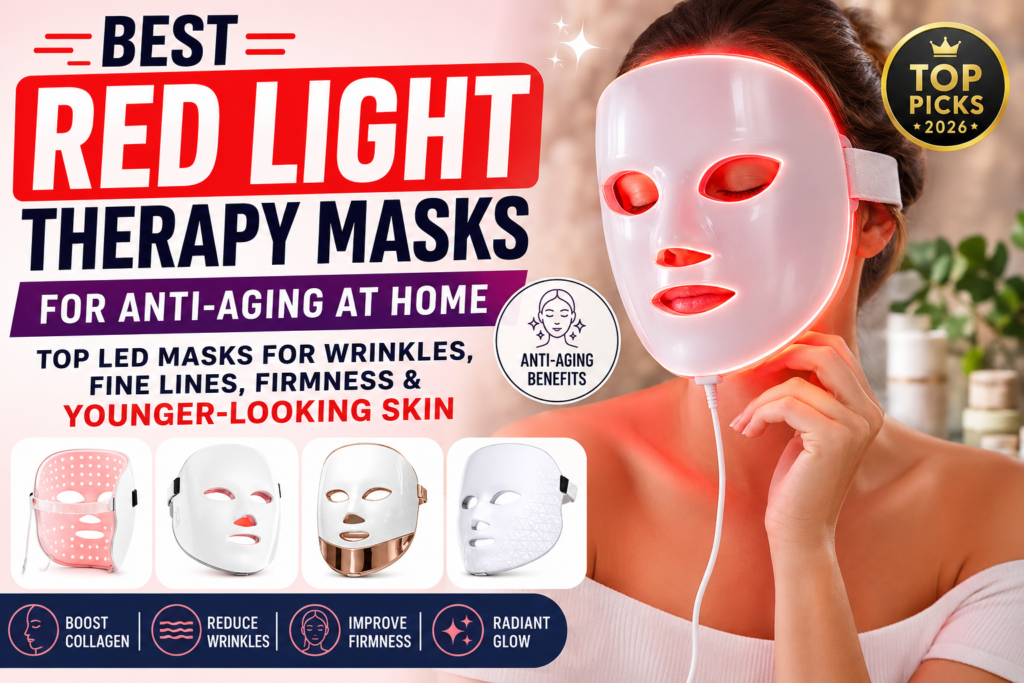
If you’ve spent any time scrolling skincare TikTok or browsing Sephora’s device wall, you’ve seen them: glowing red masks that make everyone look like a low-budget sci-fi extra for ten minutes a night. That’s red light therapy, and it’s become one of the most requested at-home tools for people who want firmer, smoother, more even-toned skin without needles, downtime, or a dermatologist’s copay.
The appeal is obvious. In-office LED and photobiomodulation treatments have been used in dermatology offices for years to support collagen production and calm inflammation. Now that same core technology is available in wearable masks you can use while you catch up on email or watch TV. For anyone dealing with fine lines around the eyes, loss of firmness along the jaw, or skin that just looks tired, the idea of a low-effort, no-downtime routine is genuinely appealing.
This guide breaks down what red light therapy actually does, what the research supports (and doesn’t), what to look for before you spend a few hundred dollars on a mask, and which best red light therapy masks for anti-aging at home are worth considering in 2026. We’ll also compare them side by side so you can find the one that fits your skin goals, routine, and budget.
What Is Red Light Therapy?
Red light therapy, sometimes called low-level light therapy or photobiomodulation, uses specific wavelengths of light to reach different layers of the skin. It doesn’t involve heat, UV rays, or needles — the light itself is the treatment.
Here’s the simple version: red light (usually in the 620–660 nanometer range) tends to work more on the surface layers of skin, while near-infrared light (roughly 800–850nm and up) penetrates a bit deeper into the dermis, where collagen and elastin are produced. Many at-home devices combine both, and some newer masks add extra wavelengths like deep red or amber for a broader effect.
The general idea behind how it works: cells absorb this light energy through structures called mitochondria, which can make them more efficient at producing the energy they need to function, repair, and generate collagen. Over time and with consistent use, that can translate into visible changes in skin tone, texture, and firmness.
This is different from a red light therapy mask used purely for acne, which typically leans on blue light to target bacteria. Many masks on the market today combine red, near-infrared, and sometimes blue light so you can treat more than one concern.
Does Red Light Therapy Really Help With Anti-Aging?
This is the question that matters most, and the honest answer is: it depends on your expectations.
Multiple published studies have looked at red and near-infrared light for skin aging, and the general pattern in the research is encouraging but modest. Trials have shown measurable reductions in wrinkle depth and improvements in skin texture after consistent use over several weeks, and the safety profile across these studies has been strong, with mild, temporary redness being the most commonly reported side effect.
That said, a large share of the research on specific consumer masks is sponsored by the brands themselves, and the American Academy of Dermatology and similar bodies have generally addressed red light in the context of professional treatments rather than issuing formal guidelines for at-home cosmetic use. A 2025 evidence-based consensus statement in the Journal of the American Academy of Dermatology supported the clinical use of photobiomodulation when proper protocols are followed, but researchers still note that ideal settings and long-term outcomes need more standardization.
What this means in practice: red light therapy is not going to erase deep wrinkles, replace injectables, or deliver an overnight transformation. What the evidence more realistically supports is a gradual improvement in fine lines, tone, and firmness with regular use over 8 to 12 weeks or longer — and results that tend to fade if you stop using the device altogether. Think of it as a long-term skin maintenance habit, not a quick fix.
What to Look for in a Red Light Therapy Mask
Not all masks are built the same, and price alone isn’t a reliable guide. Here’s what actually matters when you’re comparing options.
Red-light wavelengths. Look for something in the 620–660nm range, which is the most studied band for collagen support and fine lines.
Near-infrared light. Wavelengths around 800–850nm (and sometimes higher) reach deeper into the skin and are associated with firmness and elasticity benefits. A mask that combines red and near-infrared generally has a broader effect than red alone.
Light coverage. A mask that sits flush against your whole face delivers light more evenly than one with gaps or a rigid shape that doesn’t contour to your features. Research has actually shown that poor skin contact can cause a device to lose a significant portion of its light to reflection, so fit matters more than most people assume.
LED count. More diodes generally mean more even coverage, but LED count alone doesn’t tell you much about power or wavelength accuracy — it’s one data point among several.
Irradiance, when available. This measures how much light energy actually reaches the skin. Not every brand publishes this number, but when it’s available, it’s one of the more useful ways to compare real-world strength between devices.
Treatment time. Sessions range from 3 minutes to 20 minutes depending on the brand’s protocol and intensity. Shorter sessions are easier to stick with, which matters because consistency drives results.
Fit and comfort. A flexible, contoured mask is usually more comfortable for extended or daily use than a rigid shell, especially for anyone who wants to move around during a session.
Eye protection. Some masks include built-in eye protection or come with separate goggles; others require you to keep your eyes closed. If you have sensitive eyes, this is worth checking before you buy.
FDA clearance. Most reputable masks are FDA-cleared, not FDA-approved — those are two different regulatory pathways. Clearance means the FDA has determined the device is substantially equivalent to an already-legally-marketed device from a safety standpoint. It’s a meaningful signal of safety and quality control, though it doesn’t independently verify every marketing claim a brand makes.
Warranty. A one-year (or longer) warranty is standard among the major brands and worth confirming before you buy, especially at higher price points.
Ease of use. Look for simple controls, a rechargeable battery, and an auto shut-off feature so you don’t have to think too hard about your routine.
Price and value. Higher price doesn’t automatically mean better results. Focus on wavelength science, fit, and your own willingness to actually use the device consistently — the best mask is the one you’ll stick with. If you want a broader look at how these masks stack up against other facial LED tools, our guide to the best LED face masks for wrinkles and firm skin covers additional options worth considering.
Best Red Light Therapy Masks for Anti-Aging at Home in 2026
We looked at wavelength science, FDA clearance, fit, treatment time, and real-world value to narrow this down to five standout options. Manufacturer claims are noted as such — always verify current pricing and specs directly with the brand before purchasing, since both can change.
1. Omnilux Contour Face
Best for: Anyone who wants the most clinically documented option on the market.
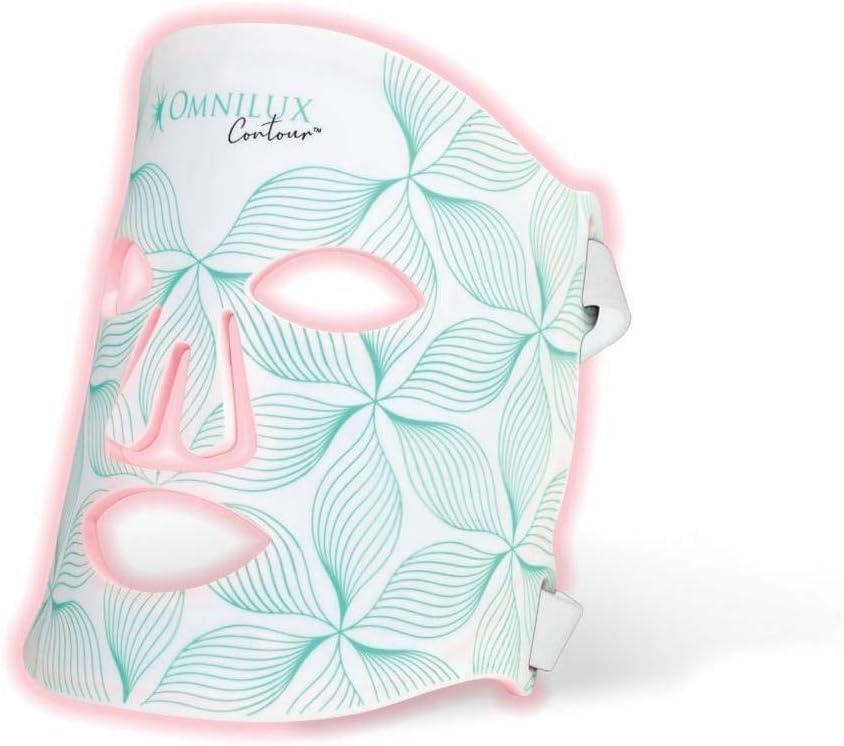
Key features: 132 medical-grade LEDs in a flexible silicone mask that contours to the face. Each LED emits both wavelengths simultaneously.
Wavelengths: Red (633nm) and near-infrared (830nm).
Treatment time: 10 minutes, used 3–5 times per week.
Main anti-aging benefits: According to the manufacturer’s trials, users reported improvements in firmness, brightness, and the visibility of fine lines after 4–6 weeks of consistent use, with full results building over that period.
Pros:
- Backed by more independently referenced clinical research than most competitors
- FDA-cleared, CE-marked, and TGA-approved
- No heat, no UV, suitable for sensitive skin and most skin tones
- Flexible design that conforms well to the face
Cons:
- No eye protection included
- Straps can feel less secure than rigid designs
- Doesn’t address acne (no blue light option)
Who should consider it: People whose primary goal is firmness, fine lines, and tone — not acne — and who want a device with strong published research behind its specific wavelength combination.
Overall value: Strong. At roughly $395, it sits in the middle of the premium pack and offers some of the most transparent clinical backing available for a consumer mask.
2. CurrentBody Skin LED Light Therapy Mask: Series 2
Best for: Deeper skin support and a slightly longer, more comprehensive treatment.

- Enhanced collagen production capability significantly reduces fine lines, wrinkles and redness, for younger-looking skin…
- Upgraded light coverage provides our famous instant glow, for a healthier, brighter and smoother complexion.
- An all-new, exclusive layout of 236 LED bulbs emits three clinically recognised wavelengths: red (633nm), near-infrared …
Key features: A flexible silicone mask with a significantly higher LED count than the original Series 1, plus an added deep near-infrared wavelength.
Wavelengths: Red (633nm), near-infrared (830nm), and deep near-infrared (1072nm).
Treatment time: 10 minutes per session.
Main anti-aging benefits: Brand-cited studies point to visible improvement in fine lines and skin tone after around 10 weeks of consistent use.
Pros:
- Three distinct wavelengths, including a deeper near-infrared option most competitors don’t offer
- FDA-cleared
- Cordless, flexible fit designed for full-face coverage
- Auto shut-off for convenience
Cons:
- One of the pricier options on this list
- Some users find the 10-minute commitment less convenient than 3-minute masks
- Doesn’t include acne-specific blue light
Who should consider it: Anyone who wants the broadest wavelength range on the market and is comfortable investing more for it.
Overall value: Good, especially for people who plan to use it daily long-term. At around $469.99, it’s priced at the higher end, but a single in-office LED treatment often runs $150–$300, so frequent home use can offset the upfront cost over time.
3. Dr. Dennis Gross DRx SpectraLite FaceWare Pro
Best for: People who want both anti-aging and acne support in one device, with the shortest possible session time.
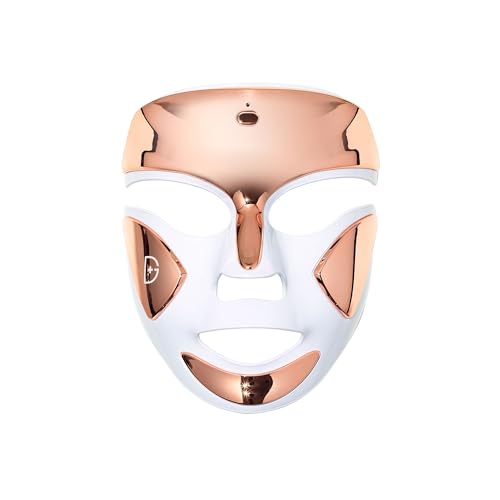
- WHAT IT IS: This LED device for the face targets wrinkles and acne for visibly smoother, clearer skin in just 3 minutes….
- HOW IT WORKS: Treat acne and breakouts with blue light, smooth wrinkles and build collagen with red light, or address bo…
- HOW TO USE: After cleansing, place the mask over your face, securing the strap around your head. Press & hold the power …
Key features: A rigid, dermatologist-designed shell with 162 total LEDs across red and blue modes, which can be run separately or together.
Wavelengths: Red (630nm) and blue (415nm). No near-infrared.
Treatment time: 3 minutes, automatically shutting off when the session ends.
Main anti-aging benefits: The brand cites internal trial data showing the majority of users saw improvement in fine lines, wrinkles, tone, and (in blue mode) acne.
Pros:
- Fastest session time on this list, which can support better consistency
- Dual red/blue functionality addresses both aging and breakouts
- FDA-cleared and CE-marked
- One-year warranty
Cons:
- Rigid shell fit isn’t ideal for every face shape
- No near-infrared wavelength, which some dermatologists consider important for deeper collagen support
- Premium price relative to treatment depth
Who should consider it: Anyone juggling both early signs of aging and occasional breakouts who wants a fast, low-commitment daily routine.
Overall value: Solid if speed and dual-purpose treatment matter most to you. At roughly $455, it’s priced similarly to Omnilux and CurrentBody, but delivers a shorter, more concentrated session rather than a longer, lower-intensity one.
4. Solawave Wrinkle Retreat Pro LED Face Mask
Best for: A high LED count and multiple wavelengths in a quick session.
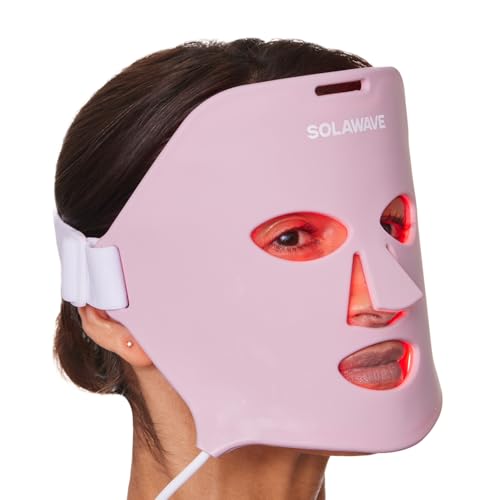
- Red & Near-Infrared Light Therapy Face Mask: Harness the power of red light therapy (630nm) and near-infrared light ther…
- Visible Skin Rejuvenation: This red light therapy mask for face helps visibly reduce the appearance of fine lines and wr…
- Comfortable, Hands-Free Treatment: This LED light therapy mask is made from flexible, medical-grade silicone that comfor…
Key features: 320 LEDs across four wavelengths in a flexible mask, positioned by the brand as one of the more powerful full-face options available.
Wavelengths: Amber (605nm), red (630nm), deep red (660nm), and near-infrared (830nm).
Treatment time: 3 minutes per session, used 3–5 times per week.
Main anti-aging benefits: The brand cites visible improvements in fine lines, firmness, and tone typically emerging after about 8 weeks of consistent use.
Pros:
- Four wavelengths in one device, including amber for tone and redness
- Short 3-minute sessions
- FDA-cleared as a Class II medical device
- Comes with protective eyewear included
Cons:
- As with all brand-reported irradiance and fluence figures, third-party verification is limited
- Some users find the strap system less secure than a fully rigid shell
- Doesn’t include a dedicated acne-fighting blue light mode
Who should consider it: People who want the broadest wavelength combination available in a quick daily session, particularly if uneven tone and redness are concerns alongside fine lines.
Overall value: Very good. At around $399, it undercuts CurrentBody and Dr. Dennis Gross slightly while offering more wavelengths and a shorter session time.
5. iRestore Illumina LED Face Mask
Best for: A more accessible price point without giving up FDA clearance or multi-wavelength coverage.
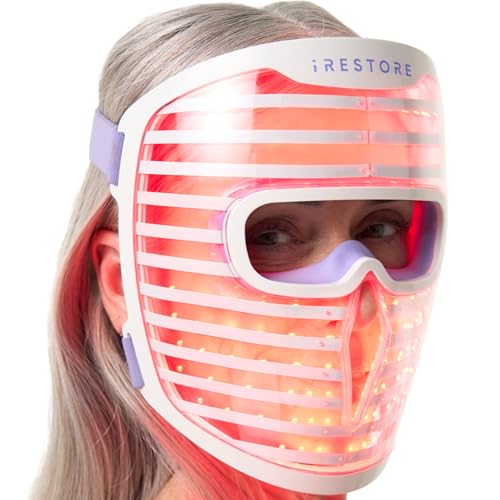
- The Most Powerful Red Light Mask for Visible Results: Experience professional-level rejuvenation at home with 360 LEDs, …
- Advanced Triple-Wavelength Technology: Powered by 3 scientifically backed wavelengths – Red (635nm), Infrared (830nm), a…
- Designed for Comfort and Multitasking: Lightweight yet sturdy, our dual-strap face mask hovers comfortably over your fac…
Key features: 360 medical-grade LEDs offering red, near-infrared, and blue light simultaneously, manufactured in a GMP-certified, FDA-listed facility.
Wavelengths: Red (635nm), near-infrared (830nm), and blue (415nm).
Treatment time: 10 minutes per session.
Main anti-aging benefits: Positioned by the brand for firmer, more youthful-looking skin with gradual, non-surgical results.
Pros:
- All three wavelengths run at once rather than requiring you to pick a mode
- High LED count for the price
- Lightweight and breathable for daily wear
- FDA-cleared
Cons:
- Some independent reviewers note the price feels high relative to a few lower-cost competitors
- Results, like all masks on this list, depend heavily on consistent use
- Less independently published clinical research than Omnilux or CurrentBody
Who should consider it: Shoppers who want a well-rounded, three-wavelength mask without stepping all the way up to the $450+ tier.
Overall value: Good. At around $399, it’s priced similarly to Omnilux and Solawave while adding a blue-light option, though it has less third-party clinical documentation behind it.
Comparison Table
| Product | Best For | Red/NIR Wavelengths | Session Time | Main Benefit | Price Range | Overall Value |
|---|---|---|---|---|---|---|
| Omnilux Contour Face | Clinically documented anti-aging | 633nm red / 830nm NIR | 10 min | Firmness, fine lines, tone | ~$395 | Strong |
| CurrentBody Skin LED Mask Series 2 | Deep, multi-wavelength treatment | 633nm red / 830nm NIR / 1072nm deep NIR | 10 min | Fine lines, tone, deeper collagen support | ~$470 | Good |
| Dr. Dennis Gross SpectraLite FaceWare Pro | Anti-aging + acne in one device | 630nm red (+415nm blue) | 3 min | Wrinkles, acne, tone | ~$455 | Solid |
| Solawave Wrinkle Retreat Pro | Multi-wavelength, quick sessions | 630nm/660nm red / 830nm NIR (+605nm amber) | 3 min | Fine lines, firmness, tone/redness | ~$399 | Very good |
| iRestore Illumina LED Face Mask | Budget-friendlier multi-wavelength option | 635nm red / 830nm NIR (+415nm blue) | 10 min | Firmness, fine lines, mild breakouts | ~$399 | Good |
Prices and specifications reflect information available at the time of publication and are subject to change. Always confirm current details on the manufacturer’s official product page before purchasing.
How to Use a Red Light Therapy Mask for Anti-Aging
Getting real value from any of these devices comes down to routine more than the mask itself.
- Start with clean, dry skin. Remove all makeup and cleanse thoroughly so light can reach your skin directly rather than being blocked by product buildup.
- Follow the manufacturer’s instructions exactly. Session time, mode, and frequency vary by device, and sticking to the brand’s protocol is how the studies behind these products were actually run.
- Stick to the recommended frequency. Most masks call for 3–5 sessions per week rather than daily use, though some are designed for daily wear — check your specific device.
- Apply skincare afterward, not before, unless your brand says otherwise. Many manufacturers recommend using serums and moisturizers after your session so the products aren’t blocking light penetration. If you’re building out the rest of your routine, our breakdown of the best vitamin E serums for skincare is a good next stop.
- Be consistent for at least 8–12 weeks before judging results. This is not a treatment that shows dramatic change after one or two uses.
- Wear sunscreen during the day, every day. Red light therapy does not replace sun protection, and consistent SPF use is one of the most effective things you can do for visible aging overall.
How Long Does Red Light Therapy Take to Show Results?
Patience matters here. Most manufacturer-cited timelines suggest early changes in tone and texture around 4 weeks, with more noticeable improvements in fine lines and firmness closer to 8–12 weeks of consistent use. Some published studies have tracked results out to three months, showing continued improvement with sustained use and enough of a lasting effect that benefits didn’t disappear immediately after stopping.
Individual results vary quite a bit based on skin type, age, consistency, and the specific device and protocol used. If you’re hoping for a visible difference before a big event next week, red light therapy isn’t the right tool — but as part of a long-term routine, it can be a meaningful addition.
Red Light Therapy Mask vs. Other Anti-Aging Skincare
It’s worth understanding where red light therapy fits alongside the rest of your routine rather than treating it as a replacement for proven skincare basics.
Vitamin E serums work as antioxidants, helping protect skin from environmental damage and support the skin barrier. They address a different mechanism than red light and can be layered into the same routine — check out our guide to the best vitamin E serums for skincare if you want to pair the two.
Night creams and sleeping masks focus on hydration and barrier repair overnight, which complements rather than competes with light therapy. If you’re deciding between the two for your evening routine, our comparison of sleeping mask vs. night cream breaks down which fits your skin type best.
Sunscreen remains the single most important anti-aging step in any routine, full stop. No LED mask, serum, or device changes that. If you wear makeup during the day, it’s worth knowing how to reapply sunscreen over makeup so you’re not skipping reapplication out of convenience.
Other actives, like retinoids and peptides, target collagen and cell turnover through different pathways than light therapy. Many dermatologists view red light as a complementary tool rather than a substitute for these ingredients — not an either/or decision.
Safety and Who Should Be Careful
Red light therapy has a strong overall safety profile in the research, with mild, temporary redness being the most commonly reported side effect across studies. It doesn’t involve UV light, so it doesn’t carry the skin cancer risk associated with tanning devices.
That said, a few groups should be more cautious or check with a doctor first:
- Anyone taking photosensitizing medications, including certain antibiotics, some antidepressants, and isotretinoin
- People with active skin cancer, suspicious lesions, or a history of skin cancer in the treatment area
- Anyone with a history of melasma, since red light could theoretically worsen pigmentation in some cases and patch testing is recommended
- People with darker skin tones, who some research suggests may be somewhat more prone to temporary pigmentation changes with visible light treatments
- Anyone with a seizure disorder triggered by flashing lights, or a diagnosed eye condition, should check with their doctor given the bright, close-range light exposure
As with any new device, it’s worth doing a patch test and following the manufacturer’s guidance closely, and checking in with a dermatologist if you have any underlying skin or health conditions.
Frequently Asked Questions
Do red light therapy masks really work for wrinkles? Research suggests they can help reduce the appearance of fine lines and support collagen production with consistent use over several weeks to months. Results tend to be gradual and moderate rather than dramatic, and they vary from person to person.
How often should you use a red light therapy mask? Most manufacturers recommend 3–5 sessions per week, though this varies by brand and protocol. Always follow the specific instructions for your device.
Is red light therapy safe for everyday use? For most people, yes, when used according to manufacturer instructions. Some devices are designed for daily use, while others recommend a few sessions per week. If you’re on photosensitizing medication or have a skin condition, check with a dermatologist first.
How long does it take to see results? Most people report noticing early changes around 4 weeks, with more visible improvement in firmness and fine lines closer to 8–12 weeks of consistent use.
Is red light or near-infrared better for anti-aging? They work differently rather than one being universally “better.” Red light tends to focus more on surface-level texture and tone, while near-infrared reaches deeper toward collagen-producing layers. Many of the most effective masks combine both.
Can I use skincare products before a red light mask? Most brands recommend applying serums and moisturizers after your session, not before, so your skincare doesn’t block the light from reaching your skin. Check your specific device’s instructions to confirm.
Are expensive red light masks worth it? Not automatically. Price doesn’t guarantee better wavelengths, fit, or results. Focus on verified wavelengths, FDA clearance, coverage, and whether you’ll realistically use the device consistently — that matters more than the price tag.
Can red light therapy replace sunscreen? No. Red light therapy and sunscreen serve completely different purposes. Sunscreen protects against UV damage, which is a primary driver of visible skin aging. Red light therapy should be viewed as an addition to your routine, not a substitute for daily SPF.
Final Verdict
Red light therapy masks aren’t a miracle fix, but for people willing to build them into a consistent routine, the research supports real, gradual improvements in fine lines, firmness, and skin tone. The masks worth your money share a few things in common: verified red and near-infrared wavelengths, FDA clearance, a comfortable fit that actually sits against your skin, and a session length you’ll realistically stick with.
If clinical backing matters most to you, Omnilux Contour Face stands out. If you want the broadest wavelength range, CurrentBody’s Series 2 delivers that. If speed and dual acne-and-aging treatment are the priority, Dr. Dennis Gross is worth a look. And if you want strong multi-wavelength coverage without the highest price tag, Solawave and iRestore both offer solid middle-ground options.
Whichever mask you choose, the biggest factor in your results won’t be the device itself — it’ll be whether you actually use it, consistently, for months rather than weeks. Pair it with daily sunscreen and the rest of a solid skincare routine, and a red light therapy mask can be a genuinely worthwhile addition to your at-home anti-aging routine.