
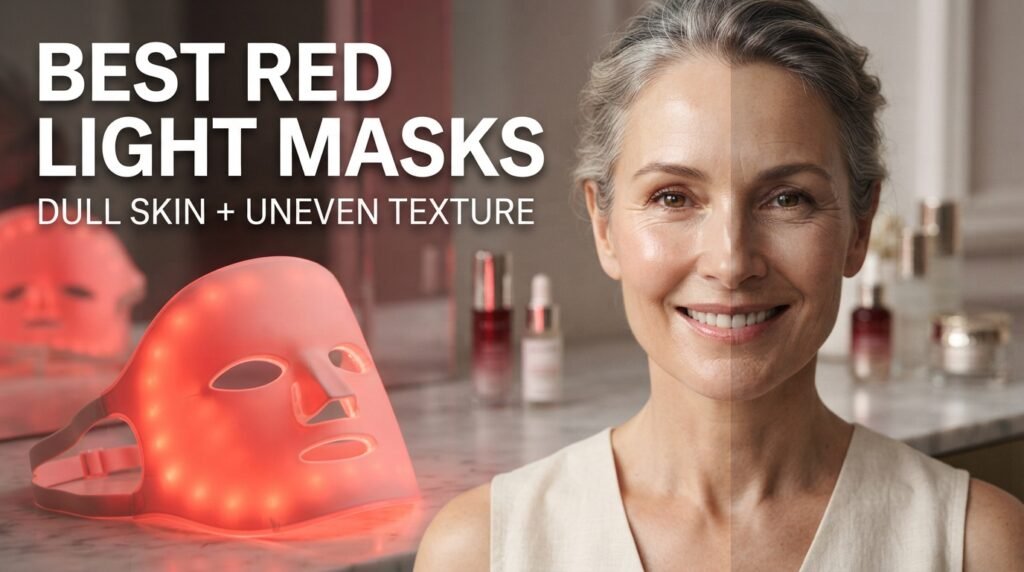
Why Does Your Skin Look Dull and Uneven at the Same Time?
If your skin looks flat, tired, and rough all at once, you’re not imagining things — and it’s not just one problem causing it.
Dull skin and uneven texture usually show up together for a connected set of reasons: slower cell turnover as you age, a buildup of dead skin cells on the surface, sluggish circulation, reduced collagen production, and general environmental stress. The result is skin that looks less reflective (that’s the dullness), feels rough to the touch, and has a patchy, inconsistent tone.
What makes this frustrating is that standard skincare — moisturizers, serums — can only go so far. That’s why a lot of people have started looking at LED light therapy masks, specifically red light therapy, as a way to support the skin from a different angle.
But the market is crowded, the claims are loud, and the price range is wild. So this guide exists to cut through that. Below, you’ll find honest information on how red light therapy may help these specific concerns, what the evidence actually says, which masks are worth considering in 2026, and how to avoid common mistakes.
Quick Answer: Best Red Light Therapy Masks for Dull Skin and Uneven Texture
If you want the short version:
- Best overall for dullness + texture: Omnilux Contour Face
- Best flexible/wearable option: CurrentBody Skin LED Light Therapy Mask
- Best for combining red + near-infrared: Joovv Go 2.0 or higher-end panel alternatives
- Best budget-friendly starting point: Project E Beauty (with adjusted expectations)
- Best for aging skin + texture concerns together: Dr. Dennis Gross SpectraLite FaceWare Pro
Keep reading for the full breakdown.
Comparison Table
| Mask | Best For | Main Wavelengths | Treatment Time | Key Feature | Approx. Price (2026) | FDA Status |
|---|---|---|---|---|---|---|
| Omnilux Contour Face | Overall dullness + texture | 633nm, 830nm | 10 min | Medical-grade LEDs, flexible fit | ~$395 | FDA-cleared |
| CurrentBody Skin LED Mask | Daily use, uneven tone | 633nm, 830nm | 10 min | Flexible silicone, travel-friendly | ~$380 | FDA-cleared |
| Dr. Dennis Gross SpectraLite FaceWare Pro | Anti-aging + texture | 162 LEDs, red + blue | 3 min | Very short treatment time | ~$455 | FDA-cleared |
| LightStim for Wrinkles | Fine lines + smoothness | Amber, red, near-infrared, infrared | 3 min/zone | Multi-wave technology | ~$249 (panel) | FDA-cleared |
| Solawave Wrinkle & Skin Concern Wand | Targeted texture + glow | 630nm | 5 min | Combines red light + microcurrent | ~$169 | FDA-registered |
| Foreo FAQ 202 | Sensitive skin + glow | 633nm, 830nm | 10 min | Ultra-hygienic silicone, app-guided | ~$599 | Manufacturer claims CE-marked |
| Project E Beauty LED Mask | Budget-conscious entry | Multiple (manufacturer-listed) | 20–30 min | Multiple color modes, lower price | ~$80–$120 | Not FDA-cleared (typical for price point) |
| Bon Charge Red Light Face Mask | Texture + circulation support | 630nm, 850nm | 10–20 min | High LED density, lightweight | ~$299 | Not FDA-cleared (check current info) |
| MZ Skin Light-Therapy Golden Treatment Mask | Luxury + even-looking tone | Red, blue, green, yellow, white | 10 min | Premium feel, multiple wavelengths | ~$625 | Manufacturer clearance claims — verify directly |
Prices are approximate and may change. Always verify FDA clearance status directly with the manufacturer or the FDA 510(k) database before purchasing.
Best Red Light Therapy Masks for Dull Skin and Uneven Texture
1. Omnilux Contour Face
Who it may suit: Anyone serious about improving skin radiance and texture over time, especially people in their 30s through 60s looking for a clinically supported option.
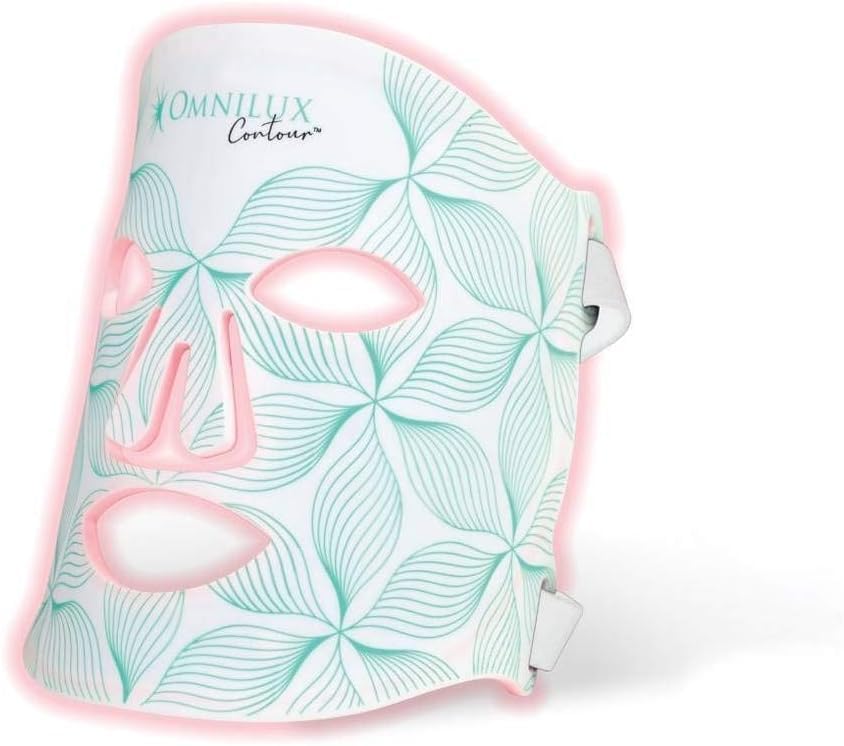
Why it may help with dullness or texture: Omnilux uses 633nm red light and 830nm near-infrared light — two wavelengths that appear consistently in research on skin cell energy, collagen support, and improved skin appearance. The flexible mask design means LEDs stay in close contact with your skin, which matters more than many people realize.
Wavelengths: 633nm (red), 830nm (near-infrared)
Treatment time: 10 minutes
Key features: Medical-grade LED panel, flexible silicone design, pairs with their app
FDA status: FDA-cleared
Pros: Well-researched wavelengths, comfortable fit, consistent positive user feedback, transparent about specifications
Cons: High price point, requires consistent use over weeks, no blue light option
Who should skip it: Anyone expecting fast results or not willing to commit to regular sessions over 4–8 weeks.
2. CurrentBody Skin LED Light Therapy Mask
Who it may suit: People who want a hands-free, daily-use mask that travels well and feels comfortable.

- FITS TO YOU – Unlike many other wearable LED devices, the CurrentBody Light Therapy Mask is made from patented flexible …
- LIGHT THERAPY – The device combines Red (633nm) and near Infra-Red Light (830nm). Harnessed at the perfect measurement t…
- REAL RESULTS – You can expect to see visible results in just 4 weeks when used consistently 10 minutes a day, 3 to 5 tim…
Why it may help: Uses the same 633nm and 830nm combination as Omnilux, in a flexible silicone design that conforms to different face shapes. Good LED coverage and a simple operation approach encourage consistent use — which is the actual key to seeing any results.
Wavelengths: 633nm (red), 830nm (near-infrared)
Treatment time: 10 minutes
FDA status: FDA-cleared
Pros: Comfortable, straightforward to use, well-established brand in the UK and US, FDA-cleared
Cons: Similar price range to Omnilux, no major differentiation in technology
Who should skip it: Those wanting additional wavelengths like blue or green for acne or pigmentation alongside texture work. (For acne-related concerns, see our guide on the best LED face masks for acne-prone skin.)
3. Dr. Dennis Gross SpectraLite FaceWare Pro
Who it may suit: People who want both anti-aging support and help with dullness, and who are short on time.
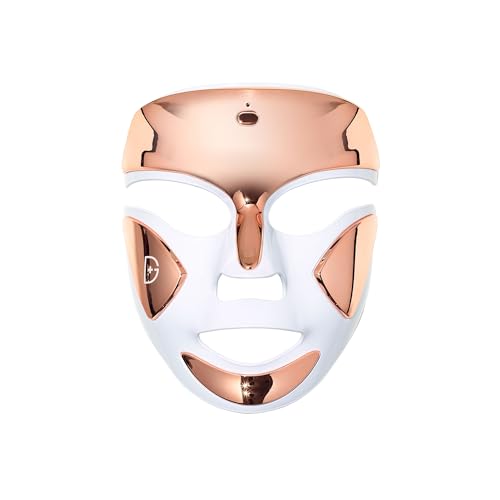
- WHAT IT IS: This LED device for the face targets wrinkles and acne for visibly smoother, clearer skin in just 3 minutes….
- HOW IT WORKS: Treat acne and breakouts with blue light, smooth wrinkles and build collagen with red light, or address bo…
- HOW TO USE: After cleansing, place the mask over your face, securing the strap around your head. Press & hold the power …
Why it may help: One of the shorter treatment times on the market at just 3 minutes, using both red and blue LEDs. The 162-LED panel covers the face reasonably well. It’s particularly popular among people dealing with a combination of texture concerns and early aging signs.
Wavelengths: Red + blue (exact nm specifications — verify with manufacturer for current model)
Treatment time: 3 minutes
FDA status: FDA-cleared
Pros: Fast treatment, well-known brand, good coverage, dual wavelength for combination concerns
Cons: Rigid design fits some faces better than others; blue light primarily targets acne bacteria rather than texture; higher price
Who should skip it: People with purely texture/dullness concerns who don’t need the blue light component. Also check our guide on the best LED face masks for wrinkles and firming if anti-aging is your main concern.
4. LightStim for Wrinkles
Who it may suit: People focused on fine line smoothing and overall skin appearance improvement over time.
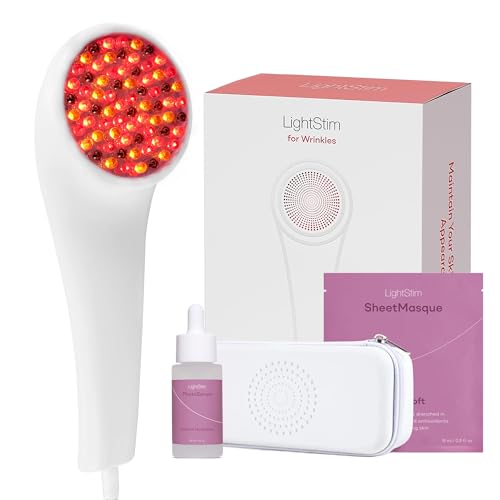
- Therapeutic Light Energy: LightStim delivers light energy in a similar way plants absorb light energy from the sun. Each…
- Clinically Proven Results: In FDA clinical studies, 100% of participants were shown to have significant improvement in t…
- LightStim MultiWave Patented Technology: LightStim MultiWave Patented Technology simultaneously emits multiple wavelengt…
Why it may help: LightStim uses what they call MultiWave technology, combining amber, red, light infrared, and infrared wavelengths. The handheld panel format means you treat one area at a time, which some find tedious but others appreciate for targeting specific zones.
Wavelengths: Amber (~590nm), red (~630nm), light infrared (~855nm), infrared (~940nm)
Treatment time: 3 minutes per area
FDA status: FDA-cleared for wrinkles
Pros: FDA-cleared for wrinkles specifically, multiple wavelengths, solid reputation
Cons: Handheld means longer full-face sessions, not a mask format, requires focus and consistency per area
Who should skip it: People wanting a full-face, hands-free treatment experience.
5. Solawave Wrinkle & Skin Concern Wand
Who it may suit: People who want targeted treatment for specific rough or dull areas, or those curious about combining red light with microcurrent stimulation.
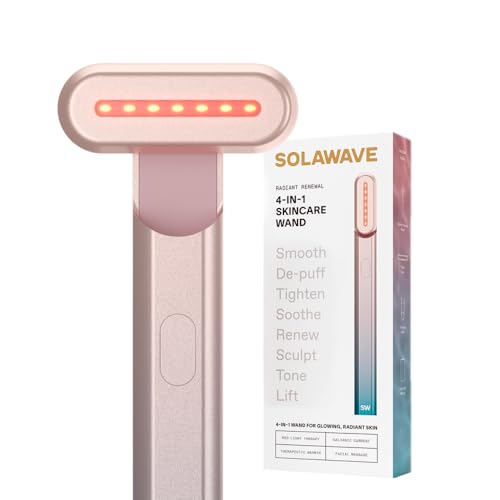
- FOUR TECHNOLOGIES, ONE SESSION: Red Light, Galvanic Current, Therapeutic Warmth & Facial Massage smooth, depuff & rejuve…
- FDA-CLEARED, VISIBLY FIRMER SKIN: Red light (630nm) helps reduce the look of fine lines & wrinkles over time.
- HYDRATED, REFRESHED LOOK: Galvanic Current supports a hydrated, refreshed look and boosts absorption of your Activating …
Why it may help: Combines 630nm red light with microcurrent, which proponents say may help with circulation and overall skin appearance. The wand format means it’s not technically a mask, but it’s worth mentioning for people targeting specific areas.
Wavelengths: 630nm (red)
Treatment time: ~5 minutes, targeted
FDA status: FDA-registered (not the same as FDA-cleared — note this distinction)
Pros: Lower price point, compact, adds microcurrent element, widely available
Cons: Not a full-face mask, single red wavelength only, FDA-registered rather than cleared
6. Foreo FAQ 202
Who it may suit: Sensitive skin types who want a high-hygiene, app-guided LED experience, or people who prefer premium tech-forward brands.

- A NEW GENERATION OF WEARABLES Ultra-lightweight, wireless flexi-fit silicone face mask mimics facial contours.
- 8 LED LIGHT COLORS FACIAL MASK 8 colors LED light carry individual benefits and, depending on their wavelength, target v…
- EVEN LIGHT COVERAGE The 600 strategically placed glow points for optimal light distribution of wavelengths provides cons…
Why it may help: Uses 633nm and 830nm in a flexible silicone mask. The brand’s reputation for hygiene and the app-guided treatment approach encourage consistency.
Wavelengths: 633nm, 830nm (verify with current product page)
Treatment time: 10 minutes
Price: ~$599
Considerations: Confirm current certification status directly. If sensitivity is your main concern, see our guide on best LED face masks for sensitive skin.
Pros: Premium feel, well-designed app, hygienic materials
Cons: Very high price for similar wavelengths to lower-cost options
7. Project E Beauty LED Mask
Who it may suit: Someone who wants to explore LED therapy without a large financial commitment upfront.

- The Project E Beauty LED Light Therapy Mask is a facemask-shaped devicedesigned for home-use.
- The Project E Beauty LED Light Therapy Mask has a total of 36 LEDs.
- The redlight with wavelengths centered at 635-644nm and the infrared light withwavelengths centered at 845-855nm to trea…
Why it may help: Offers multiple color modes including red light, which may support general skin health at a lower cost.
Important caveat: Budget LED masks often lack verified irradiance data, independent testing, and FDA clearance. Results may be more limited compared to medical-grade options. Treat this as an entry-level experiment, not a replacement for higher-quality devices.
Price: ~$80–$120
FDA status: Typically not FDA-cleared at this price point — confirm directly.
Pros: Low financial risk, accessible, multiple modes
Cons: Unverified specifications, less clinical support, typically not FDA-cleared
How Red Light Therapy May Help Dull Skin
Red light therapy works on a principle called photobiomodulation. When specific wavelengths of light — typically around 630–660nm (red) and 810–850nm (near-infrared) — reach skin cells, they’re absorbed by mitochondria, which are the energy-producing structures inside cells. This may stimulate the cells to produce more adenosine triphosphate (ATP), essentially giving them more fuel to function.
Research published in journals like Seminars in Cutaneous Medicine and Surgery suggests this process can support collagen production, improve local circulation, and encourage faster cell turnover — all of which directly influence how bright, smooth, and even-looking your skin appears.
When skin cell activity is sluggish, you get dull, flat-looking skin. Supporting those cells doesn’t erase problems, but it may help the skin look more energized, smoother, and more reflective over time.
The American Academy of Dermatology notes that light-based therapies have a growing body of evidence for skin health applications, though research is still maturing for at-home consumer devices specifically.
Can Red Light Therapy Improve Uneven Skin Texture?
Realistically: it may help — but it’s not a standalone solution, and results vary significantly.
Consistent red light therapy sessions over 4–12 weeks may lead to:
- Smoother-looking surface texture as collagen support improves skin structure
- A more even-looking tone through circulation support and reduced inflammation
- Slightly more radiant or reflective-looking skin as cell turnover improves
- Reduced appearance of fine lines that make skin look less smooth
What LED masks are unlikely to fix on their own:
- Deep acne scarring or significant post-inflammatory hyperpigmentation
- Active breakouts (though blue light may help — that’s a different mechanism)
- Severe uneven skin tone from sun damage — this typically requires additional treatments
- Hormonal or systemic causes of skin problems
Think of red light therapy as a support tool that works best alongside a solid skincare routine — not as a replacement for it.
Red Light vs. Other LED Colors for Dull Skin
- Red (630–660nm): The primary wavelength for skin health, collagen support, and brightness concerns. Most evidence concentrates here.
- Near-infrared (810–850nm): Penetrates deeper than red light, may support tissue repair and firming at a deeper level. Often paired with red.
- Blue (415–450nm): Primarily targets acne-causing bacteria. Less relevant for dullness or texture unless acne is also a concern.
- Amber/Yellow (~590nm): Marketed for reducing redness and supporting a more even complexion. Less research than red or near-infrared.
- Green (~520nm): Sometimes marketed for pigmentation and calming. Evidence is thinner here for home devices.
For dullness and texture specifically, red and near-infrared are the most relevant wavelengths. You don’t necessarily need every color — and not every device delivers what it claims. Check the FDA’s 510(k) database to verify cleared devices.
What to Look for When Buying an LED Mask for Dull Skin
Wavelengths
Focus on verified red (around 630–660nm) and near-infrared (around 830–850nm). Be cautious of vague claims like “multiple therapeutic wavelengths” with no specific numbers.
Irradiance
Measured in mW/cm². This is how powerful the light output is. Most reputable brands publish this. Higher isn’t always better — there are optimal ranges. Budget masks often don’t disclose this at all.
Treatment Dose
Total energy delivered (mJ/cm²) matters more than just power or time alone. This is why simply adding more LEDs doesn’t automatically mean a better mask.
LED Coverage
Does the mask cover your full face, including the sides, chin, and forehead? Poor coverage means uneven treatment.
Fit and Skin Contact
Flexible masks that conform to your face keep LEDs closer to the skin — and light intensity drops quickly with distance. This is more important than most people realize. The National Institutes of Health notes that proper light delivery is fundamental to photobiomodulation efficacy.
Treatment Time
Should fit your lifestyle. A 10-minute daily mask you’ll actually use beats a 3-minute mask you forget about — or a 30-minute mask that becomes a burden.
FDA Clearance
Not every legitimate device needs it, but FDA-cleared status for a specific use gives you more confidence in the device’s safety testing. Learn how FDA clears these devices here.
Eye Protection
Many masks include eye shields or built-in protection. Check this carefully — LED light exposure to unprotected eyes over time is a legitimate safety consideration.
Comfort, Warranty, and Return Policy
If it’s uncomfortable, you won’t use it. A solid return window (30+ days) shows brand confidence.
How Often Should You Use a Red Light Mask?
Most reputable brands recommend daily or near-daily sessions, typically once per day for 4–8 weeks, then 2–3 times per week as maintenance. However, schedules vary by device and manufacturer — always follow the specific guidance that comes with your mask.
What’s consistent across all devices: frequency and consistency matter more than any single session. Sporadic use is the main reason people don’t see results.
For those also concerned with aging signs and facial firmness, see our guide on red light therapy masks for anti-aging for more on treatment protocols.
How Long Does It Take to See Results?
Realistically:
- 4–6 weeks: Some people notice slightly more radiant, smoother-looking skin
- 8–12 weeks: More visible changes in texture and tone for consistent users
- Individual variation is significant: Skin type, age, existing conditions, and overall skincare routine all influence outcomes
Improvements are typically gradual. If you’re expecting a dramatic change in two weeks, you’ll likely be disappointed. That’s not a reason not to try it — it’s just an accurate expectation to have going in.
If you’re specifically focused on crow’s feet or under-eye texture, our guide on LED masks for crow’s feet and under-eye wrinkles covers targeted options.
Safety and Who Should Be Careful
LED face masks are generally considered safe for most adults when used as directed. That said:
- Photosensitivity: Certain medications — including some antibiotics, retinoids, and St. John’s Wort — can increase skin sensitivity to light. If you take prescription medications, check with your prescribing doctor or pharmacist before starting light therapy.
- Eye protection: Use the goggles or eye protection provided. Don’t assume the mask is automatically safe for your eyes at close range.
- Pregnancy: Most brands recommend avoiding LED devices during pregnancy out of precaution. Consult your healthcare provider.
- Active skin conditions: If you have lupus, a history of photosensitive skin conditions, or skin cancer history, speak with a dermatologist before using LED devices.
- Irritation: If you experience unexpected redness, irritation, or discomfort, stop use and consult a professional.
This is general information only. A dermatologist or healthcare provider is the right resource for personal medical questions. For a broader review of what these devices do and don’t do, see our article on whether LED face masks really work.
Common Mistakes When Using a Red Light Mask
1. Using it inconsistently
Missing sessions regularly and expecting results is the most common error. These devices require sustained use.
2. Assuming more time = better results
Longer sessions don’t automatically help and can occasionally be counterproductive depending on dose. Follow the instructions.
3. Ignoring manufacturer instructions
Session frequency, duration, and technique matter. Generic rules don’t always apply to every device.
4. Choosing based only on LED count
More LEDs doesn’t mean better therapy. Irradiance, wavelength accuracy, and LED quality matter far more.
5. Ignoring fit
A rigid mask that sits away from your skin wastes a significant portion of the light energy. Fit and contact matter.
6. Expecting overnight results
This is gradual skincare support, not a quick fix.
7. Treating it as a replacement for sunscreen or basic skincare
Red light therapy is an addition to a skincare routine, not a reason to skip sunscreen, gentle cleansing, or appropriate moisturizing. Protecting skin from UV damage remains the single most important external step for long-term skin health.
Final Buying Guide: Which Mask Is Right for Your Priorities?
| Priority | Consider |
|---|---|
| Dullness and improved glow | Omnilux Contour Face or CurrentBody Skin LED Mask |
| Uneven texture and smoothness | Omnilux Contour Face, CurrentBody, or Bon Charge |
| Anti-aging concerns plus texture | Dr. Dennis Gross SpectraLite or LightStim for Wrinkles |
| Sensitive skin | CurrentBody or Foreo FAQ 202 (see our sensitive skin guide) |
| Short available treatment time | Dr. Dennis Gross (3 minutes) |
| Premium features + luxury feel | Foreo FAQ 202 or MZ Skin |
| Lower budget / testing the waters | Project E Beauty (with adjusted expectations) |
| Mature skin concerns | Omnilux + check our guide for mature skin |
| Sagging skin alongside texture | See our red light therapy devices for firmness guide |
The honest bottom line: for dull skin and uneven texture specifically, the most evidence-supported approach is a consistent red and near-infrared light protocol over 8–12 weeks, paired with a good basic skincare routine. The Omnilux Contour Face and CurrentBody Skin LED Mask represent the clearest combination of documented specifications, FDA clearance, and practical usability. If budget is a concern, don’t stretch beyond your means — consistency with a lower-priced device will always outperform sporadic use of an expensive one.
FAQ: Red Light Therapy Masks for Dull Skin and Uneven Texture
Q: Can a red light mask actually make my skin look brighter?
A: Possibly, with consistent use over weeks. Red light therapy may support cellular energy and collagen production, which can contribute to a more radiant appearance. Results are gradual and not guaranteed for everyone.
Q: Do I need near-infrared light as well as red, or is red enough?
A: Red light alone (around 630–660nm) is what most research focuses on for skin surface concerns. Near-infrared (810–850nm) penetrates deeper and may support firmness and tissue repair. For dullness and texture, red is the priority — near-infrared is a bonus, not a necessity.
Q: How is an FDA-cleared LED mask different from one that’s just FDA-registered?
A: FDA-cleared means the device has gone through a premarket review process and been found substantially equivalent to an already-approved device for a specific intended use. FDA-registered simply means the manufacturer has registered with the FDA — it’s not an endorsement of safety or effectiveness. Look for cleared status for consumer LED devices.
Q: Can I use a red light mask if I’m using retinol or prescription retinoids?
A: Retinoids can increase photosensitivity. If you’re using prescription retinoids, check with your dermatologist or doctor before adding LED therapy. For over-the-counter retinol, consider using it at night separately and not immediately before LED treatment. This is general guidance — individual advice from your provider takes priority.
Q: How many LEDs should a good mask have?
A: LED count alone is not a useful quality indicator. What matters is wavelength accuracy, irradiance (mW/cm²), LED coverage across the face, and treatment dose. A mask with 36 high-quality, properly positioned LEDs can outperform one with 300 poorly calibrated ones.
Q: Will a red light mask help with dark spots or hyperpigmentation?
A: Red light therapy has some evidence for supporting more even-looking skin tone, but significant hyperpigmentation typically requires targeted treatments like chemical exfoliants, vitamin C, or professional procedures. Red light is not the primary tool for dark spots.
Q: Is it safe to use a red light mask every day?
A: Most reputable devices are designed for daily use, especially during an initial treatment phase. Always follow the specific device guidelines. If you notice irritation or discomfort, reduce frequency and consult a professional.
Information in this article is for general educational purposes only and does not constitute medical advice. Always consult a qualified healthcare professional for personal medical questions. Product prices and specifications are approximate and subject to change — verify current details with retailers and manufacturers before purchasing.