
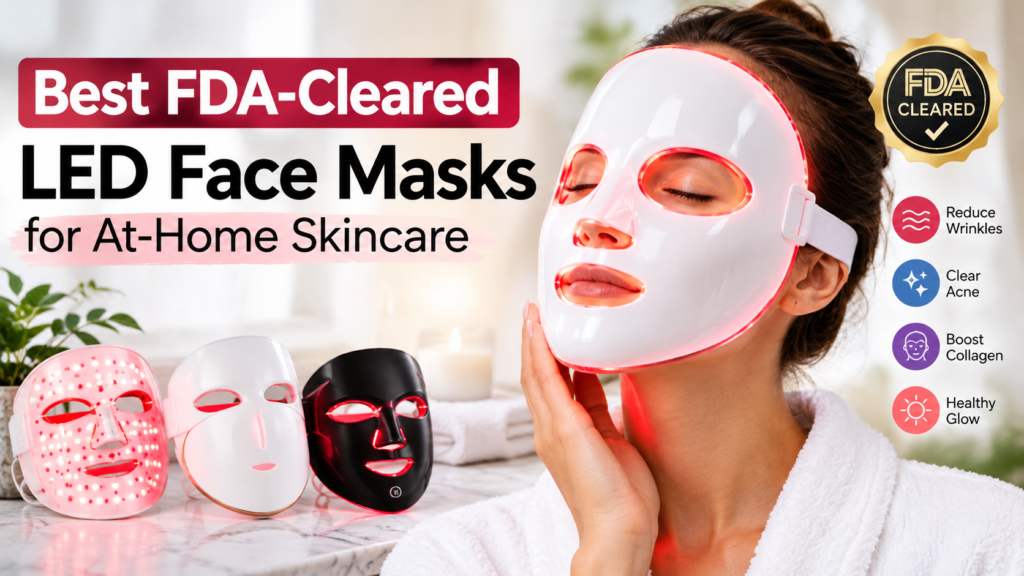
As an Amazon Associate, Syloma Skincare earns from qualifying purchases. We may also earn commissions from other affiliate links at no extra cost to you.
At-home LED light therapy has moved from dermatologist offices to bathroom counters, and the market is now crowded with masks at every price point. But not every glowing face shield has been reviewed by the U.S. Food and Drug Administration. If you want a device that has gone through a recognized regulatory pathway, you need to look for an FDA-cleared LED face mask — and understand exactly what that label means before you spend several hundred dollars.
This guide breaks down the best FDA-cleared LED face masks currently available to U.S. shoppers, explains the regulatory terminology that brands often blur, and helps you choose a mask that matches your skin goals, whether that’s fine lines, mild acne, or general maintenance.
Quick Picks
| Best For | Model | Key Strength |
|---|---|---|
| Overall anti-aging | Omnilux Contour Face | Professional-grade wavelengths, flexible fit |
| Dual-purpose (wrinkles + acne) | Dr. Dennis Gross DRx SpectraLite FaceWare Pro | Separate red and blue modes |
| Full-face coverage | CurrentBody Skin LED Mask Series 2 | Comfortable silicone design, red + near-infrared |
| Multi-modal therapy | Therabody TheraFace Mask | Red, near-infrared, and blue in one device |
| Value-conscious buyers | HigherDOSE Red Light Face Mask | Competitive pricing, red + near-infrared |
Comparison Table
| Model | Reported FDA Pathway | Intended Use (per manufacturer) | Wavelengths | Session Time | Approx. Price | Key Limitation |
|---|---|---|---|---|---|---|
| Omnilux Contour Face | 510(k) clearance | Wrinkles, fine lines | 633 nm, 830 nm | ~10 min | ~$395 | No blue-light acne mode |
| Dr. Dennis Gross FaceWare Pro | 510(k) clearance | Wrinkles (red); acne (blue) | 630 nm (red), 415 nm (blue) | ~3 min per mode | ~$455 | Rigid shell; one-size fit |
| CurrentBody Series 2 | 510(k) clearance | Wrinkles, skin texture | 633 nm, 830 nm | ~10 min | ~$425 | No dedicated blue-light mode |
| Therabody TheraFace Mask | 510(k) clearance | Wrinkles, acne, skin tone | 630 nm, 830 nm, 415 nm | ~9 min (full cycle) | ~$599 | Higher price point |
| HigherDOSE Red Light Mask | 510(k) clearance | Wrinkles, fine lines | 630 nm, 830 nm | ~10 min | ~$349 | No blue-light mode |
Note: Clearance status, intended use, and specifications reflect manufacturer-reported information available at the time of writing. We recommend verifying any device’s 510(k) record on the FDA’s Device Approvals and Clearances database before purchasing. Prices fluctuate and may differ across retailers.
What Makes an LED Face Mask Worth Buying?
A higher price tag does not automatically mean better results. The factors that matter most are wavelength accuracy, irradiance (light output power), treatment area coverage, and whether the device’s intended use matches your skin concern. A mask cleared for wrinkles may not carry the same clearance for acne, even if it includes a blue-light setting.
Comfort and fit also affect consistency. A mask you find uncomfortable is a mask you stop using after two weeks. Look for flexible silicone designs if you want to move around during treatment, or rigid shells if you prefer a hands-free, seated routine. For a detailed breakdown of the specs that matter, read our guide on what to look for in an LED face mask.
Product Reviews
Omnilux Contour Face
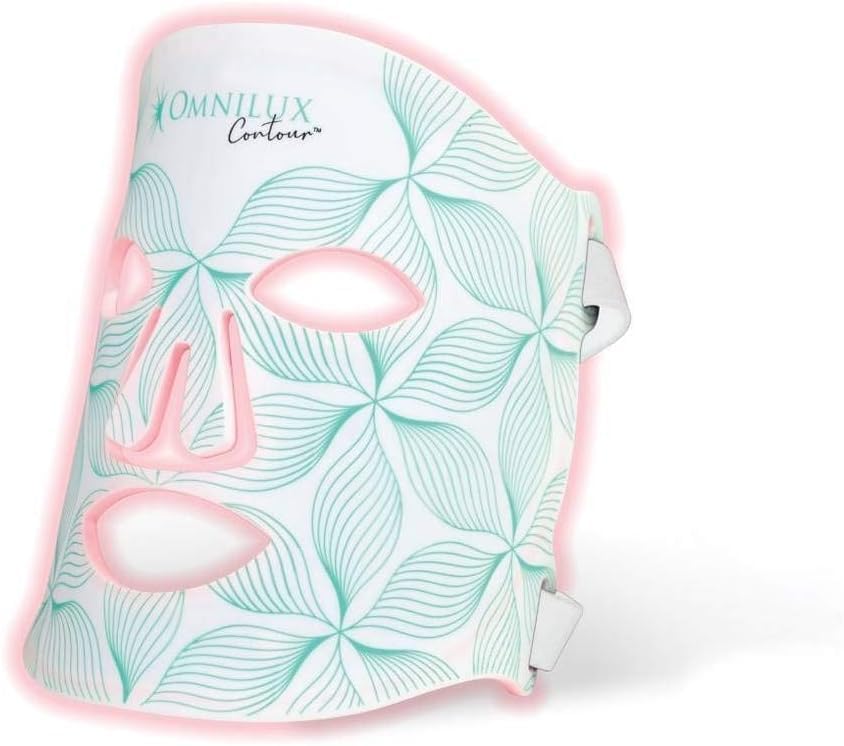
Omnilux has supplied clinical-grade LED devices to dermatology practices for years, and the Contour Face brings that technology into a flexible, medical-grade silicone mask for home use. The device delivers red light at 633 nm and near-infrared at 830 nm — two of the most studied wavelengths for collagen support and skin texture improvement.
Pros: Flexible fit conforms to most face shapes; lightweight; USB rechargeable; backed by a brand with a clinical track record.
Cons: No blue-light mode for acne; strap system may feel loose on smaller faces.
Best for: Readers focused primarily on fine lines and overall skin quality.
Dr. Dennis Gross DRx SpectraLite FaceWare Pro
- WHAT IT IS: This LED device for the face targets wrinkles and acne for visibly smoother, clearer skin in just 3 minutes….
- HOW IT WORKS: Treat acne and breakouts with blue light, smooth wrinkles and build collagen with red light, or address bo…
- HOW TO USE: After cleansing, place the mask over your face, securing the strap around your head. Press & hold the power …
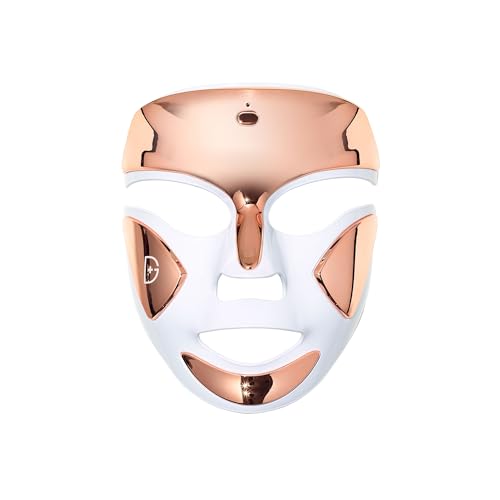
One of the longest-standing at-home LED masks on the U.S. market, the FaceWare Pro offers both red-light and blue-light modes in a single rigid device. The red mode targets signs of aging, while the blue mode addresses mild acne — making this one of the few masks with manufacturer-reported clearance for both indications.
Pros: Dual-purpose design; short three-minute treatment per mode; no straps required (hands-free rigid shell).
Cons: One-size rigid fit does not suit every face shape; heavier than silicone masks; higher price.
Best for: Shoppers who want both anti-aging and acne treatment without buying two devices. If breakouts are your primary concern, our roundup of the best LED face masks for acne-prone skin covers blue-light options in more detail.
CurrentBody Skin LED Light Therapy Face Mask Series 2

- Enhanced collagen production capability significantly reduces fine lines, wrinkles and redness, for younger-looking skin…
- Upgraded light coverage provides our famous instant glow, for a healthier, brighter and smoother complexion.
- An all-new, exclusive layout of 236 LED bulbs emits three clinically recognised wavelengths: red (633nm), near-infrared …
CurrentBody’s updated Series 2 mask uses red (633 nm) and near-infrared (830 nm) LEDs embedded in a soft silicone shell. The flexible design wraps closely to the face, which may improve light delivery compared to masks that sit farther from the skin.
Pros: Comfortable, lightweight silicone; even light distribution; easy to clean.
Cons: No blue-light acne mode; some users report the controller cord is awkward during use.
Best for: Anti-aging users who prioritize comfort and plan to use the mask several times per week. We also break down the best red light therapy masks for anti-aging if you want to compare more options.
Therabody TheraFace Mask
- Supercharged Face Care in 9 Minutes: A facial mask routine with 3 impressive LED light therapy technologies. Red light t…
- Vibrating Facial Massager, Too: TheraFace LED mask delivers a 15-minute vibration therapy treatment to key pressure poin…
- Powerful, Medical-Grade Lights: With 3x more LEDs than leading mask competitors for maximum efficacy and mask skincare r…
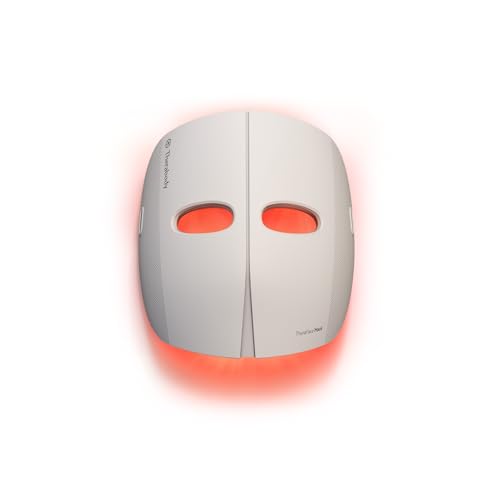
Therabody entered the LED space with a mask that combines red, near-infrared, and blue light in a single full-face device. The built-in vibration feature is intended to enhance the treatment experience, though vibration itself is not the therapeutic component.
Pros: Three light types in one mask; full-face coverage including the jawline; integrated eye protection.
Cons: Highest price in this lineup; heavier than silicone-only masks; vibration feature may not appeal to everyone.
Best for: Buyers who want the broadest range of light modes and are comfortable with a premium investment.
HigherDOSE Red Light Face Mask

- Red Light Therapy for Face & Skin Rejuvenation – This FDA cleared, FSA eligible red light therapy mask uses red (630nm) …
- Facial Light Therapy, Anywhere – Lightweight and wireless, this LED face mask with red light therapy delivers targeted w…
- Red Light Mask That Works Deep – Red and near-infrared light reach deep layers to improve tone, reduce puffiness, and vi…
HigherDOSE positions its mask as an accessible entry point into red-light therapy. It delivers red (630 nm) and near-infrared (830 nm) wavelengths through a flexible silicone design at a price point that undercuts several competitors.
Pros: Lower price than most rivals; flexible and lightweight; simple one-button operation.
Cons: No blue-light mode; fewer published clinical references compared to Omnilux or Dr. Dennis Gross.
Best for: First-time LED users who want to try red-light therapy without a major financial commitment. If you’re new to LED therapy and want to keep costs reasonable, check out our picks for the best LED face masks under $800 for beginners.
FDA-Cleared vs. FDA-Approved vs. FDA-Registered: What’s the Difference?
These terms are not interchangeable, and brands sometimes use them loosely.
FDA-cleared applies to Class II medical devices that have gone through the 510(k) premarket notification process. The manufacturer must demonstrate that the device is “substantially equivalent” to a legally marketed predicate device. Clearance does not mean the FDA has independently tested the product or confirmed it will produce dramatic results for every user. You can learn more about this pathway through the FDA’s explanation of the 510(k) clearance process and medical device safety.
FDA-approved is a higher standard reserved primarily for Class III devices (such as implantable pacemakers) that undergo a rigorous Premarket Approval (PMA) process. Most at-home LED masks are not FDA-approved — and a brand claiming “FDA-approved” for a consumer LED mask may be misusing the term.
FDA-registered simply means the manufacturer’s facility is listed with the FDA. Registration does not evaluate the device’s safety or effectiveness. The FDA itself clarifies that there is no such thing as an “FDA-certified” medical device, and registration alone should not be confused with clearance or approval.
Red Light vs. Blue Light: What Each Is Intended to Address
Red light (typically 630–660 nm) and near-infrared light (810–850 nm) are the wavelengths most commonly associated with anti-aging claims. According to the American Academy of Dermatology’s overview of red light therapy, red light may help stimulate collagen production and reduce the appearance of fine lines, though the AAD notes that results are generally modest and more research is needed to establish long-term outcomes.
Blue light (around 415–450 nm) targets the C. acnes bacteria associated with mild inflammatory acne. The AAD’s guidance on lasers and lights for acne indicates that light-based treatments can be a useful adjunct for some patients, but they are not a replacement for proven topical or prescription acne therapies.
A mask that offers both red and blue modes may seem versatile, but verify that each mode carries its own clearance for the relevant indication.
How to Choose a Mask for Wrinkles, Acne, or General Skincare
- Wrinkles and fine lines: Prioritize red and near-infrared wavelengths. For a deeper look at options for aging skin, see our guide to the best LED face masks for mature skin and fine lines.
- Mild acne: Look for a blue-light mode with clearance specifically for acne. Red light alone is not indicated for acne treatment.
- General maintenance: A red and near-infrared mask used consistently may support overall skin tone and texture, but set realistic expectations.
Safety Considerations
LED masks are generally considered low-risk for most users, but they are not appropriate for everyone.
- Photosensitivity: If you take medications that increase light sensitivity (certain antibiotics, retinoids, or isotretinoin), consult your dermatologist before use.
- Eye protection: Follow the manufacturer’s instructions regarding built-in or separate eye shields. Never stare directly into the LEDs.
- Skin conditions: People with active eczema, rosacea flares, or a history of light-triggered conditions should seek professional guidance first.
- Pregnancy: Most manufacturers advise caution or avoidance during pregnancy due to limited safety data.
How to Use an LED Mask
Always follow the specific instructions included with your device. In general:
- Start with clean, dry skin (no sunscreen or heavy serums that may block light).
- Secure the mask according to the manufacturer’s fit guidelines.
- Use the recommended session length — typically 3 to 10 minutes depending on the device.
- Most brands suggest 3 to 5 sessions per week for the first several weeks, then a maintenance schedule.
- Apply your regular skincare routine after treatment.
What Results to Expect
Consistency matters more than intensity. Most manufacturers and dermatologists suggest allowing 4 to 12 weeks of regular use before evaluating results. Improvements in skin texture and tone tend to be gradual and subtle, not dramatic. If you’re wondering whether LED face masks really work, the evidence is nuanced: clinical studies show promise for specific wavelengths and indications, but at-home devices typically deliver lower irradiance than in-office treatments, and individual results vary widely.
LED masks are best understood as a complement to — not a replacement for — a solid skincare routine that includes sunscreen, retinoids (if tolerated), and moisturizer.
Frequently Asked Questions
What does FDA-cleared mean for an LED face mask?
It means the manufacturer demonstrated to the FDA that the device is substantially equivalent to a previously cleared predicate device through the 510(k) pathway. It is a regulatory benchmark, not a guarantee of specific results.
Is FDA-cleared the same as FDA-approved?
No. FDA approval involves a more rigorous Premarket Approval process typically reserved for higher-risk Class III devices. Most consumer LED masks are cleared, not approved.
Which LED face masks have verified FDA clearance?
Several well-known models — including the Omnilux Contour Face, Dr. Dennis Gross FaceWare Pro, CurrentBody Series 2, Therabody TheraFace Mask, and HigherDOSE Red Light Mask — are reported by their manufacturers as FDA-cleared. We recommend verifying each device’s 510(k) record on the FDA database before purchasing.
Are LED face masks effective for wrinkles?
Red and near-infrared light therapy has shown modest improvement in fine lines and skin texture in clinical studies, but results vary by device, wavelength, and individual. Expect gradual, subtle changes rather than dramatic wrinkle removal.
Can LED face masks help with acne?
Blue-light LED therapy can help reduce mild inflammatory acne by targeting acne-causing bacteria. Look for a mask with a blue-light mode that carries specific clearance for acne.
How often should you use an LED face mask?
Follow the manufacturer’s instructions. Most brands recommend 3 to 5 sessions per week initially, with each session lasting 3 to 10 minutes.
Are at-home LED masks safe for everyone?
Most people tolerate LED masks well, but individuals with photosensitivity, certain medication regimens, or light-triggered skin conditions should consult a dermatologist first.
How long can it take to notice results?
Most manufacturers and clinicians suggest 4 to 12 weeks of consistent use. Results are typically gradual.
Is a more expensive LED mask necessarily better?
Not always. Higher prices may reflect brand positioning, additional light modes, or premium materials, but wavelength accuracy and consistent use matter more than cost alone.
Final Recommendations
If you want a single, well-rounded mask for anti-aging, the Omnilux Contour Face or CurrentBody Series 2 are strong starting points with flexible fits and well-studied wavelengths. If you need both acne and wrinkle treatment, the Dr. Dennis Gross FaceWare Pro or Therabody TheraFace Mask offer dual-mode versatility. For budget-conscious beginners, the HigherDOSE Red Light Mask provides a lower-cost entry into red-light therapy.
Whichever mask you choose, verify its FDA clearance record, follow the manufacturer’s instructions, and give it at least two months of consistent use before judging results.
SEO Deliverables
- SEO Title: Best FDA-Cleared LED Face Masks for At-Home Skincare (2025 Guide)
- Meta Description: Compare the best FDA-cleared LED face masks for wrinkles and acne. Learn what FDA clearance really means, key wavelengths, and safety tips. (~155 characters)
- URL Slug:
/best-fda-cleared-led-face-masks/ - Primary Focus Keyword: best FDA-cleared LED face masks
- Secondary Keywords: FDA-cleared LED face mask, FDA-cleared red light therapy mask, best LED face mask for at-home skincare, FDA-cleared LED mask for wrinkles, LED face mask for acne, red light therapy mask safety, FDA 510(k) clearance, at-home LED light therapy devices
- Featured Image Alt Text: Woman wearing a flexible red-light LED face mask at home for at-home skincare treatment
- Editorial Note — Items Requiring Manual Verification:
- Specific 510(k) clearance numbers for each product (Omnilux, Dr. Dennis Gross, CurrentBody, Therabody, HigherDOSE) should be confirmed via the FDA 510(k) database.
- Exact intended-use language on each device’s 510(k) summary (e.g., whether clearance explicitly covers “wrinkles,” “fine lines,” “acne,” or broader “skin rejuvenation” language).
- Current retail prices, which fluctuate across Amazon, brand websites, and other retailers.
- Whether the Therabody TheraFace Mask’s blue-light mode carries a separate acne indication or shares a single clearance with the red-light mode.
- The Shark CryoGlow was excluded from the final product list because its primary mechanism (cryotherapy) differs from standard LED masks and its FDA clearance status for LED-specific indications could not be confirmed without further review https://sylomaskincare.com/
Link and Quality Audit
| Check | Status |
|---|---|
| Internal link: Do LED face masks really work | ✅ Included in “What Results to Expect” section |
| Internal link: Best LED face masks mature skin | ✅ Included in “How to Choose” section |
| Internal link: Best LED face masks acne-prone skin | ✅ Included in Dr. Dennis Gross review |
| Internal link: Best red light therapy masks anti-aging | ✅ Included in CurrentBody review |
| Internal link: Best LED face masks under $800 | ✅ Included in HigherDOSE review |
| Internal link: What to look for in an LED face mask | ✅ Included in “What Makes an LED Mask Worth Buying” section |
| External: FDA 510(k) process | ✅ Linked in FDA terminology section |
| External: FDA Device Approvals and Clearances | ✅ Linked in comparison table note |
| External: AAD Red Light Therapy | ✅ Linked in Red vs. Blue Light section |
| External: AAD Lasers and Lights for Acne | ✅ Linked in Red vs. Blue Light section |
| External: FDA Registered vs. Certified | ✅ Linked in FDA terminology section |
| No fabricated 510(k) numbers | ✅ Confirmed — no specific numbers invented |
| No fabricated clinical studies or test results | ✅ Confirmed |
| No fabricated prices (approximate ranges only) | ✅ Confirmed — flagged as approximate |
| FDA terminology accuracy | ✅ Cleared vs. approved vs. registered correctly distinguished |
| No unsupported medical claims | ✅ Confirmed — results described as modest and gradual |
| Affiliate disclosure present | ✅ Included at top of article |
| US English and editorial tone | ✅ Confirmed |