
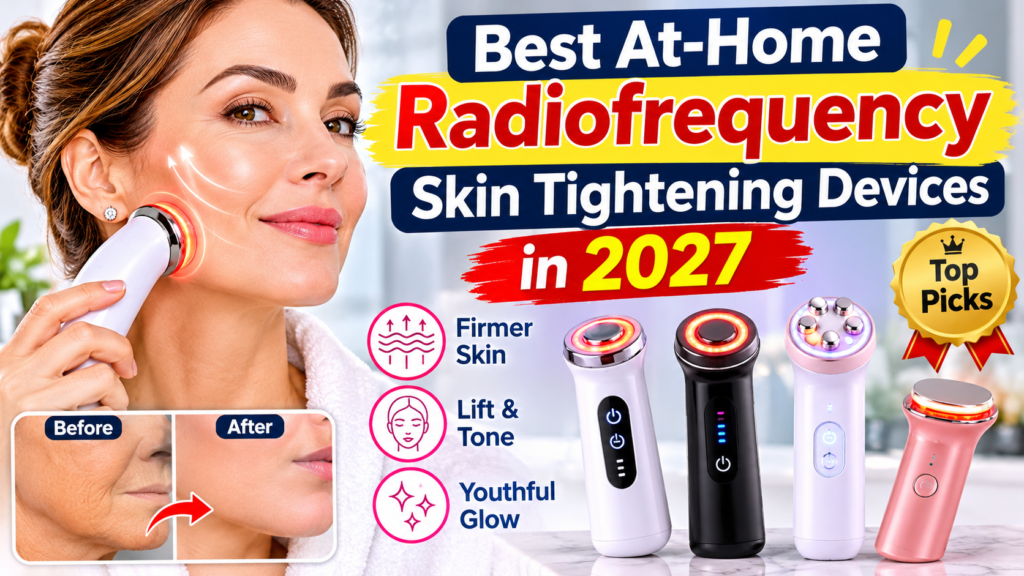
Radiofrequency skin tightening used to be something you could only get in a dermatologist’s office — usually at $1,000 or more per session. That has changed. A small but growing category of FDA-cleared at-home RF devices now lets you deliver controlled thermal energy to your skin from your bathroom counter.
But here’s the problem: the market is flooded with devices making bold promises, and most buying guides read like repackaged spec sheets. Few explain the actual science, the realistic limitations, or the meaningful differences between a $200 device and a $500 one.
This guide is different. We researched clinical evidence, verified FDA records, compared technology types, and evaluated every major device currently available in the United States.
Whether you’re dealing with early fine lines or more noticeable skin laxity, this is the information you need before spending several hundred dollars on an at-home RF device.
What Is At-Home Radiofrequency Skin Tightening?
Radiofrequency (RF) skin tightening is a non-invasive treatment that uses electromagnetic energy to heat the deeper layers of the skin — specifically the dermis, where collagen fibers live.
When those fibers are gently heated to a therapeutic range (typically 40–43°C), two things happen: existing collagen contracts slightly, and the body’s wound-healing response is triggered, stimulating the production of new collagen over time.
Professional RF treatments have been used in dermatology and aesthetics for over two decades. At-home devices use the same basic principle but operate at lower energy levels and incorporate safety mechanisms designed to prevent burns or overheating.
They’re intended for gradual, cumulative improvement with consistent use over weeks or months — not a single dramatic transformation.
It’s worth noting that RF technology works very differently from LED light therapy. While LED face masks for wrinkles and skin firmness use specific wavelengths of light to stimulate cellular processes at the surface and shallow dermal level, RF energy penetrates deeper to generate volumetric heating in the tissue.
Many skincare enthusiasts use both technologies as complementary parts of their routine.
How Does RF Technology Work?
RF devices deliver alternating electromagnetic current through the skin. As this energy passes through tissue, it meets natural resistance, which generates heat.
The key variable is how deep that heat reaches and how evenly it distributes — and that depends on the type of RF technology used.
There are three main RF configurations found in home devices:
- Monopolar RF uses a single electrode on the handpiece and a return electrode placed elsewhere on the body. This allows deeper energy penetration but is more common in professional settings.
- Bipolar RF uses two electrodes on the handpiece itself, keeping energy concentrated in the superficial-to-mid dermis. Most at-home devices use bipolar RF because it’s easier to control and safer for consumer use.
- Multipolar RF uses three or more electrodes to create multiple energy fields simultaneously. This can provide broader and more uniform heating across the treatment area. The TriPollar device line is the most well-known example of this approach.
The critical factor for both safety and effectiveness is temperature control.
RF is only therapeutic within a narrow temperature window. Below 38°C, there’s not enough thermal stimulus to trigger a meaningful collagen response. Above 45°C, there’s risk of burns, blistering, or subcutaneous fat atrophy.
The best at-home devices include real-time temperature monitoring that automatically adjusts or cuts power to stay in the safe range.
Are At-Home RF Devices Actually Effective?
This is the question that matters most — and the answer is nuanced.
Clinical evidence for at-home RF devices exists, but it’s limited in scope.
A 2022 randomized controlled trial evaluated an at-home RF device and found statistically significant improvements in skin laxity and wrinkle appearance compared to a sham device, with results measured through objective imaging and blinded clinical assessment.
A 2024 study on home-based RF for facial rejuvenation similarly reported improvements in skin texture and firmness with consistent use.
These studies are encouraging, but buyers should understand their limitations.
Sample sizes tend to be small (often fewer than 100 participants). Study durations are usually 8–12 weeks. Long-term data beyond six months is scarce. And some studies are funded or supported by device manufacturers, which doesn’t invalidate the findings but is worth noting when evaluating the evidence.
Realistic expectations matter.
At-home RF devices can modestly improve skin texture, fine lines, and mild laxity over time. They are not substitutes for surgical facelifts, injectable fillers, or professional RF treatments like Thermage or Morpheus8.
If a device’s marketing suggests otherwise, treat that as a red flag.
Best At-Home Radiofrequency Skin Tightening Devices in 2027
After evaluating available devices for technology, safety features, clinical backing, FDA regulatory status, and real-world usability, these are the top at-home RF devices worth considering this year.
1. CurrentBody Skin RF Device

- Enhanced collagen production capability significantly reduces fine lines, wrinkles and redness, for younger-looking skin…
- Upgraded light coverage provides our famous instant glow, for a healthier, brighter and smoother complexion.
- An all-new, exclusive layout of 236 LED bulbs emits three clinically recognised wavelengths: red (633nm), near-infrared …
Technology: Bipolar RF with real-time temperature monitoring.
Best For: Safety-conscious buyers who want an FDA-cleared device with strong regulatory credentials.
The CurrentBody Skin RF device stands out primarily for its regulatory standing. It received FDA 510(k) clearance (K232424) for skin tightening, placing it among a small number of at-home RF devices with formal FDA clearance for this specific indication.
It falls under the FDA’s product classification for RF devices intended for skin treatment.
The device uses bipolar RF and incorporates automatic temperature sensors that modulate energy output to keep skin within the therapeutic range.
Treatment takes approximately 10 minutes per session, and the manufacturer recommends five sessions per week for the first several weeks, transitioning to a maintenance schedule.
A water-based conductive gel is required. The device is compact and relatively intuitive to use.
Pros:
- FDA-cleared for skin tightening (verified).
- Real-time temperature control.
- Simple, guided treatment sessions.
- Reasonable treatment time.
Cons:
- Requires consistent, frequent use to see results.
- Conductive gel is an ongoing cost.
- Treatment area per session is limited to the face.
Approximate US Price: ~$399 (verify current pricing at time of purchase).
Best For: Buyers who prioritize FDA clearance and verified safety features over raw power or speed.
2. NEWA Skin Therapy System
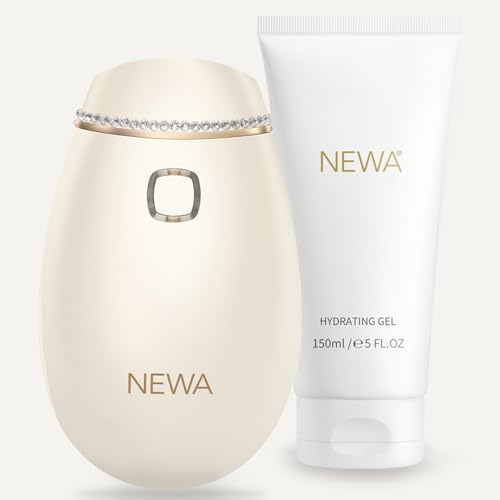
- SKIN TIGHTENING DEVICE: NEWA uses the power of radio frequency to: ✔️Boost the skin’s collagen production ✔️Visibly redu…
- FDA CLEARED – BACKED BY CLINICAL STUDIES: The NEWA device and gel were clinically tested on various skin types aged 37 t…
- TRUSTED TECHNOLOGY: One of the most clinically validated skin tightening technologies around today, radio frequency mach…
Technology: Bipolar 3DEEP RF.
Best For: Users focused on facial wrinkle reduction with a device backed by published clinical data.
The NEWA device uses a proprietary technology called 3DEEP, which the manufacturer describes as a multi-layer bipolar RF configuration designed to heat the dermis more evenly than standard bipolar systems.
The NEWA has been on the market for several years and has accumulated more published clinical research than most competitors.
Treatment sessions take approximately 12 minutes per zone (each cheek, forehead, and neck are treated separately), meaning a full-face treatment can take 20–30 minutes.
The manufacturer recommends four to five treatments per week during the initial phase, with reduced frequency for maintenance.
NEWA requires its own branded conductive gel, which is an ongoing expense.
Pros:
- Multiple clinical studies published.
- Focused wrinkle-reduction claims backed by data.
- Temperature feedback system.
- Established track record.
Cons:
- Longer treatment time per session.
- Proprietary gel adds recurring cost.
- Device design is functional rather than elegant.
- Can feel slow for users treating multiple zones.
Approximate US Price: ~$349–$399 (verify current pricing).
Best For: Users willing to invest longer treatment sessions and who value clinical evidence.
3. TriPollar STOP VX2

- AIDS IN COLLAGEN PRODUCTION: new Triple-Wave Multi-RF Technology delivers interchanging RF waves that comb the dermis la…
- PERSONALIZED TREATMENT: 2nd Generation Thermal Mapping provides the skin with the most accurate temperature for effectiv…
- PLEASANT TREATMENT & SUPERIOR RESULTS: the 3rd Generation features automatically adjusts in real-time to ensure a pleasa…
Technology: Multi-RF (multipolar) with DMA (Dynamic Muscle Activation) and thermal sensors.
Best For: Users looking for a multi-technology device combining RF with muscle stimulation.
The TriPollar STOP VX2 combines multipolar RF with what the manufacturer calls ELV (Extra Low Voltage) muscle activation and DMA technology, which delivers electrical stimulation intended to exercise the underlying facial muscles during treatment.
This dual approach targets both the dermal layer (via RF heating) and the muscular layer (via electrical stimulation).
The device includes a real-time thermal indicator to signal when the treatment zone has reached the target temperature.
Sessions take approximately 15–20 minutes for a full face.
A preparation gel is required, and the manufacturer offers its own branded option.
Pros:
- Multipolar RF for broader heating distribution.
- Combined muscle stimulation adds a dimension most competitors lack.
- Visual temperature feedback.
- Treats face and neck.
Cons:
- Higher price point.
- Muscle stimulation sensation is not comfortable for everyone.
- Gel requirement adds cost.
- Multipolar RF is not necessarily “better” — just different in how energy distributes.
Approximate US Price: ~$449–$499 (verify current pricing).
Best For: Users who want a combined RF and muscle-stimulation device and are comfortable with a higher price.
4. FOREO FAQ™ 202

- A NEW GENERATION OF WEARABLES Ultra-lightweight, wireless flexi-fit silicone face mask mimics facial contours.
- 8 LED LIGHT COLORS FACIAL MASK 8 colors LED light carry individual benefits and, depending on their wavelength, target v…
- EVEN LIGHT COVERAGE The 600 strategically placed glow points for optimal light distribution of wavelengths provides cons…
Technology: RF with LED light therapy and microcurrent.
Best For: Users who want a multi-technology device in premium packaging.
FOREO’s FAQ line combines RF energy with red LED light and microcurrent stimulation.
The FAQ 202 (the higher-tier model) offers more power and treatment modes than the FAQ 100-series models.
FOREO emphasizes a quick treatment time and a sleek, app-connected design.
The combination of RF with LED light is interesting, though buyers should understand these technologies have different evidence bases and mechanisms.
If you’re curious about how LED therapy works independently, our guide to red light therapy devices for sagging skin and firmness covers the topic in depth.
Pros:
- Multi-technology approach (RF + LED + microcurrent).
- Premium build quality.
- App connectivity with guided routines.
- No conductive gel required (uses FOREO’s serum instead).
Cons:
- Premium pricing.
- Multi-technology approach means each individual technology may be less powerful than dedicated single-technology devices.
- Relatively newer in the RF device space compared to NEWA or TriPollar.
- Clinical evidence specific to FOREO’s RF implementation is less extensive.
Approximate US Price: ~$399–$599 depending on model (verify current pricing).
Best For: Users drawn to premium design who want LED and microcurrent in the same device.
5. Silk’n Titan AllWays
- PURPOSE-BUILT FOR SILK'N FACETITE, TITAN & SILHOUETTE – Engineered as the official conductive medium for Silk'n at-home …
- PROTECTS SKIN FROM OVERHEATING & REDDENING – The 91% water-based formula creates a smooth, conductive layer between devi…
- COMPATIBLE WITH MICROCURRENT, RF & EMS DEVICES – While engineered for the Silk'n line, the clear, water-based, fragrance…
Technology: Bipolar RF combined with LED light energy and IR (infrared).
Best For: Budget-conscious buyers who want a multi-energy device at a lower price point.
The Silk’n Titan AllWays combines bipolar RF with infrared heat and red LED light.
It uses a wider treatment surface than some competitors, which can shorten full-face treatment times.
The device includes a temperature sensor and adjustable energy levels.
Silk’n has a long history in the home beauty device market, and the Titan line has been through several iterations.
The AllWays model is designed for use on the face and body.
Pros:
- Lower price point than many competitors.
- Combined RF + IR + LED.
- Larger treatment head for faster coverage.
- Adjustable energy levels.
Cons:
- Build quality feels less premium than higher-priced devices.
- Individual technology intensities may be lower than dedicated devices.
- Clinical evidence specific to this model is limited.
- Some users report uneven heating.
Approximate US Price: ~$249–$349 (verify current pricing).
Best For: Buyers who want an affordable entry point into at-home RF without spending $400+.
Comparison Table: At-Home RF Devices in 2027
| Feature | CurrentBody Skin RF | NEWA | TriPollar STOP VX2 | FOREO FAQ 202 | Silk’n Titan AllWays |
|---|---|---|---|---|---|
| Primary Technology | Bipolar RF | 3DEEP Bipolar RF | Multipolar RF + DMA | RF + LED + Microcurrent | Bipolar RF + IR + LED |
| Best For | Safety-focused buyers | Wrinkle reduction | RF + muscle stimulation | Multi-technology users | Budget-conscious buyers |
| Treatment Time | ~10 min | ~20–30 min (full face) | ~15–20 min | ~10–15 min | ~15–20 min |
| Temperature Monitoring | Automatic, real-time | Yes | Visual thermal indicator | Yes | Yes |
| FDA Clearance (Verified) | Yes — 510(k) K232424 | Not publicly verified for current model | Not publicly verified | Not publicly verified | Not publicly verified |
| Conductive Gel Required | Yes | Yes (proprietary) | Yes | No (uses serum) | No |
| Approximate US Price | ~$399 | ~$349–$399 | ~$449–$499 | ~$399–$599 | ~$249–$349 |
| Main Limitation | Limited treatment area | Long session time | Higher cost | Less RF-specific clinical data | Less premium build |
Note: FDA clearance status reflects publicly available information verified through the FDA’s 510(k) database. “Not publicly verified” means we could not confirm a current, active FDA clearance for skin tightening for that specific model at the time of writing. This does not necessarily mean the device is unsafe — it means buyers should verify regulatory status directly with the manufacturer.
FDA Clearance: What Buyers Need to Know
The terms “FDA-cleared” and “FDA-approved” are not interchangeable, and this distinction matters.
FDA clearance (via the 510(k) pathway) means a device has been reviewed and found to be substantially equivalent to a legally marketed device already on the market. It confirms that the device meets safety and performance standards for its intended use.
Most at-home RF devices that go through FDA review receive 510(k) clearance.
FDA approval (via the PMA pathway) is a more rigorous process typically reserved for higher-risk medical devices, involving extensive clinical trial data. At-home RF devices generally do not go through PMA.
When a device is marketed as “FDA-cleared,” verify it yourself. You can search the FDA’s 510(k) database using the device name or manufacturer.
The CurrentBody Skin RF device, for example, has a verifiable 510(k) record (K232424).
Be cautious of devices that vaguely claim “FDA-registered” or “FDA-compliant.” Registration simply means the manufacturer has listed their establishment with the FDA — it does not indicate any review of safety or effectiveness.
Safety, Risks, and Who Should Avoid RF Devices
RF devices are generally considered safe for home use when they include proper temperature controls and when used according to manufacturer instructions.
But “generally safe” is not the same as “risk-free.”
Known Risks
- Burns and blistering: Inadequate temperature control, using a device on dry skin without gel, or holding the device stationary in one spot can cause thermal injury.
- Redness and irritation: Mild, temporary redness after treatment is common and usually subsides within an hour. Persistent redness or swelling is not normal.
- Subcutaneous fat loss: Excessive or improperly applied RF energy can damage subcutaneous fat, leading to volume loss. This is more of a concern with professional devices, but it underscores why temperature control matters.
Who Should Not Use At-Home RF Devices
- People with pacemakers or implanted electronic devices — RF energy can interfere with device function.
- People with metal implants in the treatment area (including dental implants near treatment zones, depending on manufacturer guidance).
- People with active skin infections, open wounds, or inflammatory skin conditions in the treatment area.
- Pregnant or nursing women (most manufacturers advise against use as a precaution).
- People with a history of keloid scarring (heat can trigger excessive scar tissue formation).
An Important Distinction: Non-Invasive RF vs. RF Microneedling
The FDA issued a safety communication about potential risks associated with certain uses of radiofrequency microneedling devices.
This warning specifically addresses RF microneedling — devices that combine RF energy with needles that penetrate the skin.
These are invasive devices, predominantly used in professional settings.
Non-invasive at-home RF devices (like the ones reviewed in this guide) do not use needles and do not break the skin.
The FDA microneedling safety communication should not be conflated with non-invasive surface RF devices, though buyers are right to take all safety communications seriously.
When to see a dermatologist: If you have any skin condition, are on medications that affect skin healing (like retinoids or immunosuppressants), or are unsure whether RF is appropriate for your skin type, consult a board-certified dermatologist before purchasing a device.
RF Devices for Different Skin Types and Concerns
Mature Skin
RF devices can be used on mature skin, and in fact, the collagen-stimulating mechanism is particularly relevant for skin that has experienced age-related collagen loss.
However, expectations should be calibrated.
Significant laxity — pronounced jowls, deep nasolabial folds, or substantial neck sagging — is unlikely to respond dramatically to at-home RF alone.
These devices work best for mild-to-moderate concerns.
For mature skin, devices with robust temperature control are especially important, as older skin can be thinner and more susceptible to thermal injury.
If you’re exploring other at-home anti-aging technologies alongside RF, our guide to the best LED face masks for beginners over 40 covers a complementary approach using photobiomodulation.
Jawline and Lower Face
The jawline area is one of the most requested treatment zones for RF devices.
While some users report visible improvement in jawline definition with consistent use, clinical evidence specifically for at-home RF on the lower face and jowls is limited.
If jawline tightening is your primary concern, you may also want to read our comparison of LED devices for jawline tightening, which covers a different but potentially complementary technology.
Fine Lines vs. Deep Wrinkles
At-home RF is most effective for fine lines and early wrinkling.
Deep, etched wrinkles (static wrinkles that are visible even when the face is at rest) are less responsive to at-home RF because they involve structural changes beyond what surface-level collagen stimulation can address.
At-Home RF vs. Professional Radiofrequency Treatments
| Factor | At-Home RF | Professional RF |
|---|---|---|
| Energy Levels | Lower (regulated for safety) | Significantly higher |
| Results | Gradual, modest | More noticeable, faster |
| Cost Per Treatment | Low (device is one-time cost + gel) | $500–$2,000+ per session |
| Total Cost | Lower long-term | Higher (multiple sessions needed) |
| Convenience | High — use at home anytime | Requires clinic visits |
| Risk | Lower (lower energy) | Higher (requires trained operator) |
| Best For | Prevention, maintenance, mild concerns | Moderate-to-significant laxity |
Many dermatologists suggest that at-home RF devices work best as maintenance tools between professional treatments, or as preventative measures for people in their 30s–40s who are experiencing early signs of laxity.
How to Choose the Right RF Device
Rather than defaulting to the most expensive option, consider these factors in order of importance:
1. Safety features. Real-time temperature monitoring is non-negotiable. Avoid any device that doesn’t clearly specify how it prevents overheating.
2. FDA regulatory status. A verified FDA 510(k) clearance provides an additional layer of confidence that the device has been reviewed for safety and basic efficacy.
3. Treatment time and commitment. Be honest about how much time you’ll spend. A device that requires 30 minutes per session, five days a week, is only effective if you’ll actually use it that consistently.
4. Ongoing costs. Conductive gels and proprietary serums add up. Factor this into your total cost of ownership.
5. Your specific concern. If wrinkle reduction is the goal, a device with clinical data supporting that claim (like the NEWA) deserves extra consideration. If you want multi-technology versatility, the TriPollar STOP VX2 or FOREO FAQ line may be more appealing.
6. Technology type. Bipolar, multipolar, and combined-energy devices all have trade-offs. More technologies in one device does not automatically equal better results — it sometimes means each technology operates at a lower intensity.
Are Expensive RF Devices Worth It?
Not automatically.
A $500 device is not inherently twice as effective as a $250 one.
Price differences often reflect brand positioning, build materials, packaging, app features, and marketing spend as much as they reflect core RF technology quality.
What does tend to correlate with higher prices:
- Better temperature-control systems.
- More extensive clinical testing.
- More durable build quality.
- Better customer support and warranty terms.
What doesn’t necessarily improve with price:
- Fundamental RF effectiveness (the physics doesn’t change).
- Speed of results.
- Suitability for your specific skin concern.
The best device is the one with verified safety features, appropriate technology for your concern, and a treatment protocol you’ll realistically follow.
If you’re building a broader at-home skincare technology routine and are weighing RF against LED-based options, our guide to the best red light therapy masks for anti-aging can help you understand where each technology fits.
Frequently Asked Questions
Do at-home radiofrequency devices really work?
Yes, but modestly. Published clinical studies, including a 2022 randomized controlled trial and a 2024 facial rejuvenation study, show measurable improvements in skin texture, fine lines, and mild laxity with consistent use.
Results are gradual and subtle — not comparable to professional treatments or surgical procedures.
What is the best at-home RF device in 2027?
There isn’t a single “best” device for everyone.
The CurrentBody Skin RF offers the strongest verified FDA clearance credentials. The NEWA has the most clinical research supporting its wrinkle-reduction claims. The TriPollar STOP VX2 offers the most technology in one device.
Your best choice depends on your priorities.
How long does RF skin tightening take to show results?
Most users and studies report initial improvements after 6–8 weeks of consistent use, with continued improvement through 12 weeks and beyond.
Maintenance treatments are needed to sustain results because collagen remodeling is an ongoing biological process.
Can RF devices help with sagging skin and jowls?
At-home RF may modestly improve mild laxity along the jawline with consistent use.
Moderate-to-severe sagging — the kind that involves significant tissue descent — is unlikely to respond meaningfully to at-home devices alone.
Professional treatments or surgical consultation may be more appropriate for advanced concerns.
Are home RF devices safe for mature skin?
Generally, yes, provided the device has proper temperature controls and you follow manufacturer guidelines.
Mature skin can be thinner, so starting at lower energy settings and monitoring for any unusual reaction is prudent.
Consult a dermatologist if you have any concerns.
How often should you use an RF facial device?
Most manufacturers recommend 4–5 sessions per week during an initial treatment phase (usually 6–12 weeks), then 1–2 maintenance sessions per week thereafter.
Follow the specific protocol for your device — more is not better with RF, and overuse can irritate or damage skin.
Is at-home RF better than professional treatment?
No. Professional RF treatments deliver significantly more energy and produce more noticeable results.
At-home devices are better thought of as maintenance tools, prevention strategies, or options for people with mild concerns who prefer the convenience and lower cost of home treatment.
Is FDA clearance important when buying an RF device?
It’s one of the most reliable indicators that a device has been formally reviewed for safety and basic effectiveness.
It’s not a guarantee of dramatic results, but it means the device has met a recognized regulatory standard.
Verify any FDA claims through the FDA’s public database.
Can RF devices cause burns?
Yes, if used improperly.
Holding the device in one spot too long, using it without required conductive gel, or using a device without adequate temperature controls can cause thermal burns.
Devices with real-time temperature monitoring significantly reduce this risk.
Are expensive RF skin tightening devices worth buying?
Sometimes.
Higher prices often reflect better safety systems, build quality, and clinical validation — but not always.
A well-designed $350 device with verified FDA clearance and temperature monitoring is a better buy than a $600 device with flashy marketing and no regulatory credentials.
Final Verdict
The best at-home radiofrequency skin tightening devices in 2027 are genuinely useful tools — but only if you go in with the right expectations.
They can improve skin texture, reduce fine lines, and modestly improve mild laxity when used consistently over weeks and months.
They cannot replicate a facelift, replace injectable treatments, or reverse significant sagging.
For most buyers, the CurrentBody Skin RF represents the safest recommendation thanks to its verified FDA 510(k) clearance and real-time temperature control.
The NEWA is the strongest choice for users who prioritize published clinical evidence.
The TriPollar STOP VX2 is the most feature-rich option for buyers willing to invest in a combined RF and muscle-stimulation approach.
The Silk’n Titan AllWays offers a reasonable entry point for budget-conscious shoppers.
Whichever device you choose, look for verified safety features, understand the time commitment, and set realistic expectations.
Consistency matters far more than which brand name is on the device.
If you’re building a comprehensive at-home skincare technology routine, RF works well alongside other modalities.
Our guide to the best LED face masks for mature skin and fine lines covers how LED phototherapy complements RF by targeting different biological pathways — a combination many skincare enthusiasts consider worth exploring.
Disclosure: Syloma Skincare is a participant in affiliate programs, including the Amazon Services LLC Associates Program. Some links in this article may be affiliate links, meaning we may earn a small commission if you purchase through them at no additional cost to you. This does not influence our editorial recommendations. We recommend products based on research, verified specifications, and genuine utility to our readers.