

As an Amazon Associate, Syloma Skincare earns from qualifying purchases.
The gap between the dermatologist’s office and your bathroom vanity is shrinking fast. Advanced at-home beauty technology that once seemed like science fiction — medical-grade LED arrays, radiofrequency collagen stimulators, and microcurrent facial toners — now sits comfortably on the shelves of major US retailers. For anyone building a professional-style skincare routine at home, the question is no longer whether these devices work, but which luxury skincare devices genuinely justify their price tags and which are more marketing than mechanism.
This guide cuts through the hype. We evaluated the most popular premium beauty devices available to US shoppers across LED light therapy, microcurrent, radiofrequency, and laser categories, comparing real specifications, ongoing costs, FDA regulatory status, and the type of buyer each device actually serves.
Quick Picks – Best Luxury Skincare Devices at a Glance
| Device | Technology | Best For | Treatment Time | Approx. US Price | Main Advantage |
|---|---|---|---|---|---|
| CurrentBody Skin LED Mask | Red + NIR LED | Overall LED therapy | 10 min | $395 | Flexible, well-studied wavelengths |
| Omnilux Contour Face | Red + NIR LED | Clinical-grade LED | 10 min | $395 | Professional heritage brand |
| Therabody TheraFace Mask | LED + Percussion | Multi-sensory experience | 3–9 min | $599 | Combines LED with vibration |
| ZIIP HALO | Microcurrent + Nanocurrent | Facial toning and glow | 4–12 min | $495 | Dual-waveform technology |
| NuFACE Trinity+ | 3-Depth Microcurrent | Lifting and contouring | 5–15 min | $325 | Established, attachment system |
| NEWA Classic RF | 3DEEP Radiofrequency | Collagen rebuilding | 12–16 min | $299–$349 | Clinically studied RF platform |
| TriPollar STOP Vx2 | Multi-RF + DMA | Tightening and firming | 12–15 min | $449 | RF plus muscle activation |
| LYMA Laser | Near-Infrared Laser | Deep cellular repair | 10–15 min/area | $2,695 | True laser, lifetime warranty |
Prices reflect manufacturer suggested retail at time of writing and may vary. Always check current pricing before purchasing.
What Makes a Skincare Device Worth Its Luxury Price?
Not every expensive device is genuinely luxurious, and not every luxury device delivers professional-style results. A premium skincare device earns its price through a combination of factors: clinically validated technology, build quality that withstands years of daily use, regulatory clearance from the FDA, and a treatment experience that actually rivals what you would receive in a clinical setting.
The most important differentiator is the technology itself. A $400 LED mask using medical-grade diodes at precisely calibrated wavelengths is fundamentally different from a $50 version using generic bulbs with inconsistent output. Similarly, a radiofrequency device that maintains stable thermal energy across the dermis operates in a different league than one that simply warms the skin’s surface.
Beyond hardware, consider the total cost of ownership. Many luxury skincare devices require proprietary conductive gels, replacement heads, or subscription-based app features that add $100–$300 per year to the initial investment. The best premium beauty devices are transparent about these ongoing costs upfront.
Best Luxury Skincare Devices for a Professional-Style Routine
CurrentBody Skin LED Light Therapy Mask

- FITS TO YOU – Unlike many other wearable LED devices, the CurrentBody Light Therapy Mask is made from patented flexible …
- LIGHT THERAPY – The device combines Red (633nm) and near Infra-Red Light (830nm). Harnessed at the perfect measurement t…
- REAL RESULTS – You can expect to see visible results in just 4 weeks when used consistently 10 minutes a day, 3 to 5 tim…
Best For: Anyone seeking a reliable, hands-free LED introduction to at-home light therapy.
Technology: Red light (633nm) and near-infrared light (830nm) LED.
Features: Flexible silicone construction, adjustable strap, automatic 10-minute timer, rechargeable battery.
Benefits: Targets fine lines, uneven tone, and overall skin radiance. If you are exploring at-home red light therapy for facial rejuvenation, this mask is one of the most widely recommended entry points.
Pros: Comfortable fit, no gels required, extensively reviewed in consumer and clinical settings.
Cons: Single technology (LED only), no blue light mode for acne on this model.
Who Should Buy It? First-time LED users who want a proven, low-maintenance device.
Who Should Skip It? Those seeking multi-technology devices or active acne treatment.
Value for Money: Strong. At roughly $395 with no recurring gel costs, the long-term cost per use is low.
Omnilux Contour Face
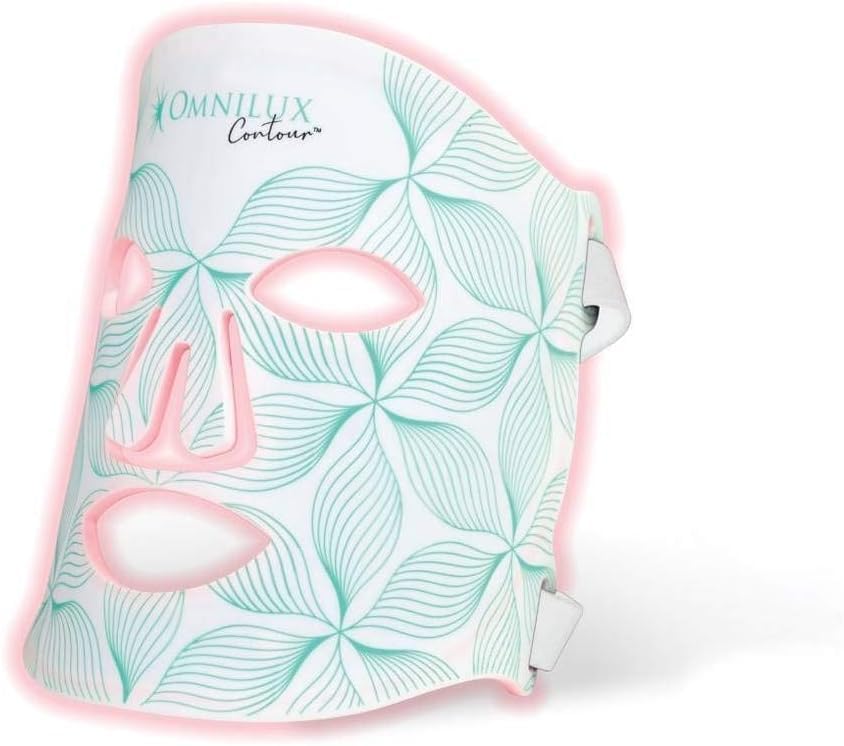
Best For: Buyers who prioritize clinical pedigree in their LED device.
Technology: Red (633nm) and near-infrared (830nm) LED.
Features: Medical-grade diode technology from a brand that manufactures professional clinic equipment, flexible silicone design, 10-minute treatment cycle.
Benefits: Delivers the same wavelength specifications used in Omnilux’s in-office systems, supporting collagen production and skin recovery.
Pros: Backed by decades of clinical phototherapy research, comfortable, lightweight.
Cons: Nearly identical in function to the CurrentBody at a similar price point, making the choice largely brand-preference.
Who Should Buy It? Skincare enthusiasts who value a brand with a professional clinical background.
Who Should Skip It? Budget-conscious buyers who can get comparable LED performance for less.
Value for Money: Good, especially if you plan to use it consistently for years.
Therabody TheraFace Mask
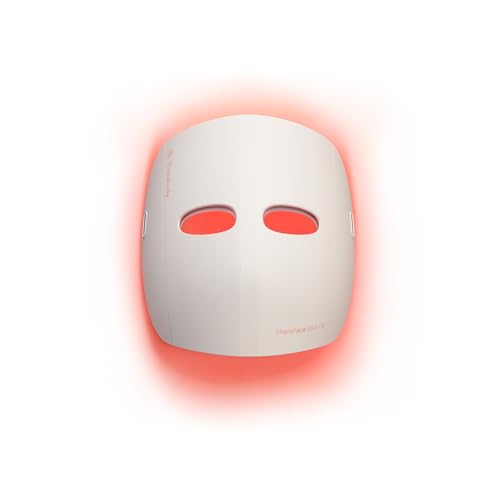
- CLINICALLY-PROVEN LED LIGHT THERAPY: 3 types of science-backed LED light therapy address specific skin concerns for clin…
- FULL-COVERAGE FACE MASK: 504 medical-grade LEDs, enhanced by Therabody's proprietary PrecisionLED technology, deliver op…
- CUSTOMIZABLE TREATMENT OPTIONS: The preset 12-minute treatment cycles through 4 minutes of each light therapy to boost c…
Best For: Those who want a multi-sensory treatment combining light therapy with percussive relaxation.
Technology: Red, near-infrared, and blue LED combined with percussive vibration motors.
Features: Three LED modes, three vibration patterns, 3–9 minute treatments, premium hard-shell design.
Benefits: Addresses multiple skin concerns (aging, breakouts, tension) in a single session. The vibration component may improve product absorption and reduce facial tension, though the clinical evidence for percussive skin benefits is still emerging compared to LED.
Pros: Versatile, well-built, blue light option for occasional breakouts.
Cons: Highest price in the LED category, vibration benefits are less clinically established than light therapy alone.
Who Should Buy It? Therabody loyalists and users who enjoy a spa-like sensory experience.
Who Should Skip It? Purists who prefer to invest in a single, deeply researched technology.
Value for Money: Moderate. You are paying a premium for the brand and the multi-modal experience.
ZIIP HALO

- This hard carrying traveling case is designed for ZIIP Halo, ZIIP OX, ZIIP GX Facial Toning Device / for Gillette Venus …
- High-quality Material: The storage case is made of high quality EVA material, very durable and sturdy, shockproof and wa…
- Function: Storage & Protective. Preventing any damages or scratches caused by accidentally. Protect the device in good c…
Best For: Targeted facial toning, de-puffing, and achieving a visible “glow.”
Technology: Microcurrent combined with nanocurrent (a lower-frequency waveform designed to stimulate cellular activity).
Features: App-guided treatments, multiple program modes (lift, sculpt, glow, lymphatic), dual-waveform delivery.
Benefits: Microcurrent stimulates facial muscles for a temporary lifting effect, while nanocurrent targets deeper cellular processes. Many users report visible de-puffing after a single session.
Pros: Dual-waveform technology is unique in the at-home space, app integration keeps routines fresh.
Cons: Requires ZIIP conductive gel ($49–$85 per bottle), results are cumulative and fade without maintenance.
Who Should Buy It? Users who want an active, hands-on facial sculpting tool and do not mind the gel commitment.
Who Should Skip It? Anyone with a pacemaker, epilepsy, or metal implants in the face (microcurrent contraindication).
Value for Money: Good for dedicated users. Factor in $100–$150 annually for gel.
NuFACE Trinity+
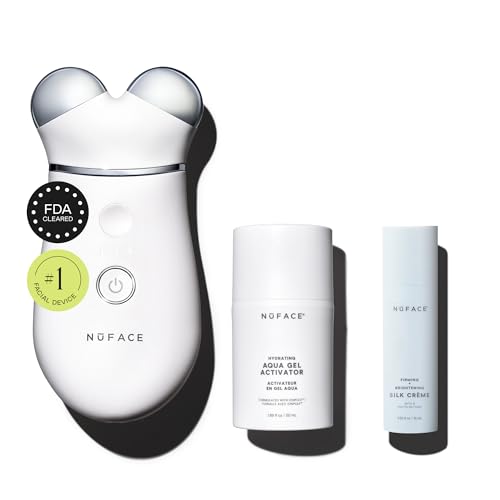
- The Original Lift Authority: TRINITY+ is the most advanced FDA-cleared microcurrent facial device, delivering 3 customiz…
- Face Lift Device & Skin Tightening: Microcurrent supports collagen and elastin production. Sculpts cheeks, lifts brows, …
- 3 Frequencies, 3 Intensities: Targets sagging jowls, tech neck, and sagging skin. Improves skin firmness, contour, and r…
Best For: Lifting and contouring, particularly around the jawline and cheekbones.
Technology: 3-depth microcurrent (surface, mid, and deep tissue stimulation).
Features: Interchangeable attachments (sold separately), smart skin sensor that adjusts current, 5-minute quick-lift mode.
Benefits: One of the most established microcurrent brands in the US. The Trinity+ improves on earlier models with deeper tissue targeting. For those specifically focused on LED and microcurrent devices for jawline tightening, pairing the NuFACE with an LED device can address both muscle tone and skin quality.
Pros: Proven track record, modular attachment system, widely available.
Cons: Requires NuFACE Aqua Gel, initial 5x/week commitment can feel demanding.
Who Should Buy It? Microcurrent beginners who want a trusted brand with room to expand.
Who Should Skip It? Users seeking a completely hands-free or passive treatment.
Value for Money: Solid at ~$325, though attachments and gel add to the total cost.
NEWA Classic RF
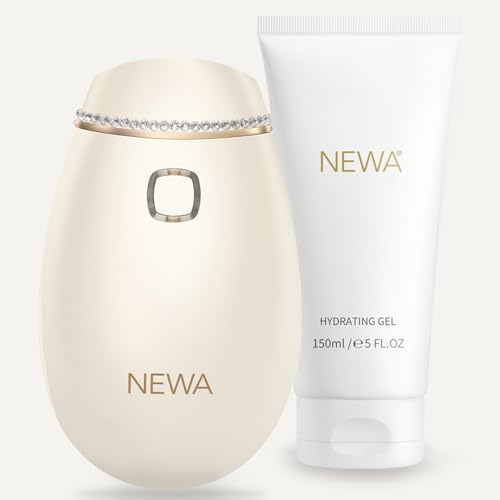
- SKIN TIGHTENING DEVICE: NEWA uses the power of radio frequency to: ✔️Boost the skin’s collagen production ✔️Visibly redu…
- FDA CLEARED – BACKED BY CLINICAL STUDIES: The NEWA device and gel were clinically tested on various skin types aged 37 t…
- TRUSTED TECHNOLOGY: One of the most clinically validated skin tightening technologies around today, radio frequency mach…
Best For: Collagen rebuilding and long-term skin thickening.
Technology: 3DEEP Radiofrequency (delivers controlled heat to the dermis to stimulate new collagen production).
Features: Built-in temperature sensor, four-minute treatment per zone, compact handheld design.
Benefits: Radiofrequency is one of the most clinically studied technologies for skin tightening. The 3DEEP platform used in NEWA has been evaluated in peer-reviewed research for its ability to deliver energy to the deep dermis while protecting the epidermis.
Pros: Clinically validated platform, relatively affordable for RF technology, straightforward to use.
Cons: Requires NEWA Activator Gel (~$39), results take 8–12 weeks to become noticeable, mild heat sensation during use.
Who Should Buy It? Patient users focused on long-term anti-aging and collagen support.
Who Should Skip It? Anyone seeking immediate visible results or those with very sensitive or rosacea-prone skin.
Value for Money: Excellent. At under $350, it is one of the most accessible FDA-cleared RF devices.
TriPollar STOP Vx2
Best For: Comprehensive tightening combining skin remodeling with muscle toning.
Technology: Multi-polar radiofrequency combined with Dynamic Muscle Activation (DMA).

- AIDS IN COLLAGEN PRODUCTION: new Triple-Wave Multi-RF Technology delivers interchanging RF waves that comb the dermis la…
- PERSONALIZED TREATMENT: 2nd Generation Thermal Mapping provides the skin with the most accurate temperature for effectiv…
- PLEASANT TREATMENT & SUPERIOR RESULTS: the 3rd Generation features automatically adjusts in real-time to ensure a pleasa…
Features: Simultaneous RF and DMA delivery, built-in thermal mapping, 12–15 minute full-face treatment.
Benefits: The dual-technology approach addresses both dermal collagen and underlying facial muscle tone, offering a more complete anti-aging treatment than RF alone.
Pros: Professional heritage (TriPollar technology is used in clinical settings), dual-action treatment.
Cons: Higher price point, requires proprietary gel, treatment can feel intense for sensitive users.
Who Should Buy It? Experienced device users who want a more aggressive at-home anti-aging approach.
Who Should Skip It? Beginners or those with very thin, reactive skin.
Value for Money: Good for the technology delivered, though the total cost of ownership is higher than NEWA.
LYMA Laser

Best For: The ultimate luxury buyer who wants true laser technology at home.
Technology: 500mW near-infrared low-level laser (not LED — a coherent, focused light source).
Features: Cold laser (no heat sensation), no gel required, lifetime warranty, premium titanium housing.
Benefits: The LYMA is the only at-home device in this guide that uses a genuine laser rather than LED or other energy sources. Manufacturer claims include accelerated wound healing, reduced inflammation, and improved skin texture. Independent clinical data on the specific LYMA device is limited, though low-level laser therapy research broadly supports the mechanism of action for tissue repair and anti-inflammatory effects.
Pros: No gels or consumables, lifetime warranty, true laser technology.
Cons: Extremely expensive, small treatment head requires patience (10–15 minutes per facial zone), limited independent clinical validation of this specific device.
Who Should Buy It? Luxury buyers with unlimited patience and budget who want the most advanced technology available.
Who Should Skip It? Virtually everyone else. The cost-to-benefit ratio is difficult to justify for most users.
Value for Money: Debatable. The lifetime warranty offsets some cost, but the initial outlay is enormous.
LED vs Microcurrent vs Radiofrequency – Which Technology Is Best?
There is no single “best” technology — each addresses different layers of the aging process.
LED Light Therapy uses specific wavelengths of light to stimulate cellular energy (ATP) production. Red light (630–660nm) targets collagen and inflammation, while near-infrared (810–850nm) penetrates deeper to support tissue repair. A comprehensive review of LED photobiomodulation research confirms its safety and growing evidence base for skin rejuvenation, though the authors note that study protocols vary widely, making direct comparisons difficult. LED is the gentlest option and the easiest to use consistently. If you are wondering whether LED face masks really work, the short answer is yes — with consistent use over weeks, not days.
Microcurrent delivers low-level electrical currents to facial muscles, producing a temporary lifting and toning effect. Think of it as a workout for your face. Results are immediately visible but fade within 24–72 hours without maintenance. Microcurrent is best for contouring and de-puffing.
Radiofrequency generates controlled heat in the dermis, triggering a wound-healing response that produces new collagen over 8–12 weeks. RF addresses structural aging — sagging, laxity, and thinning skin — more directly than LED or microcurrent. Clinical studies on radiofrequency skin tightening demonstrate measurable improvements in skin elasticity, though results vary based on device power, treatment protocol, and individual skin characteristics.
The bottom line: LED for overall skin quality and prevention. Microcurrent for immediate contouring. RF for long-term structural tightening. The most comprehensive routines combine two of these technologies.
Can You Combine Multiple Skincare Devices in One Routine?
Yes, but strategically. The most effective combination pairs technologies that work on different skin layers — for example, an LED mask for cellular energy and a microcurrent device for muscle tone. These complement each other without overlapping.
Avoid combining two devices that use the same mechanism (two different LED masks, for instance) or stacking too many active treatments in a single session, which can irritate the skin. A sensible approach is to alternate technologies across different days or use one in the morning and another in the evening.
How to Build a Professional-Style Skincare Routine at Home
Morning (10–15 minutes):
- Cleanse
- Microcurrent device (5 minutes) with conductive gel
- Rinse gel, apply vitamin C serum and SPF
Evening (15–20 minutes, 3–5x per week):
- Double cleanse
- LED mask (10 minutes) on clean, dry skin
- Apply retinoid or peptide serum and moisturizer
Weekly addition (2–3x per week):
- Radiofrequency treatment (12–16 minutes) on alternate evenings from LED, or on the same evening after LED if your skin tolerates it.
This schedule delivers a professional-style routine in roughly 20–30 minutes per day, which is realistic for most people to maintain long-term.
Luxury Skincare Devices vs Professional Spa Treatments
A single in-office radiofrequency session can cost $300–$800, and most protocols require 4–6 sessions. A $350 at-home RF device pays for itself within a few months if used consistently. However, professional treatments deliver higher energy levels, deeper penetration, and faster results under medical supervision.
At-home devices are best understood as maintenance tools that extend the results of professional treatments or as standalone options for those who prefer gradual, consistent improvement over dramatic one-time changes.
Are Expensive Skincare Devices Worth the Investment?
For consistent users, yes. The cost-per-use of a $400 LED mask used four times per week for two years drops to under $1 per session — far less than any professional treatment. The risk is abandonment. The most expensive device is the one that sits in a drawer after three weeks. Choose a device that fits your schedule, not just your aspirations.
For a deeper look at the LED category specifically, our ultimate LED face mask buying guide breaks down the key specifications to compare before you invest.
Safety, Contraindications and FDA Considerations
Most premium skincare devices sold in the US are FDA-cleared as Class II medical devices, typically through the 510(k) pathway. It is important to understand that FDA clearance is not the same as FDA approval. Clearance means the FDA has determined the device is substantially equivalent to an already legally marketed device. Approval is a more rigorous process reserved for higher-risk devices. You can verify any device’s clearance status by searching the FDA’s 510(k) premarket notification database using the manufacturer’s name.
Key contraindications to be aware of:
- Microcurrent: Do not use if you have a pacemaker, epilepsy, active cancer, or metal implants in the treatment area. Not recommended during pregnancy.
- Radiofrequency: Avoid over active acne, open wounds, or areas with dermal fillers (consult your dermatologist). Use caution with rosacea or very sensitive skin.
- LED: Generally the safest category. Avoid if you take photosensitizing medications (certain antibiotics, retinoids, or Accutane). Eye protection is recommended with bright LED arrays.
Always read the manufacturer’s safety guidelines and consult a dermatologist if you have a chronic skin condition.
Frequently Asked Questions
What is the best luxury skincare device for home use?
There is no single best device because it depends on your primary concern. For overall skin quality, the CurrentBody or Omnilux LED masks are excellent starting points. For lifting and contouring, the ZIIP HALO or NuFACE Trinity+ lead the microcurrent category. For collagen rebuilding, the NEWA Classic RF offers the best value.
Are at-home beauty devices worth the money?
Yes, if you use them consistently. The biggest risk is purchasing an expensive device and abandoning it within a month. Start with one technology that addresses your primary concern and build from there.
Which skincare device gives the most professional-style results?
Radiofrequency devices like the TriPollar STOP Vx2 and NEWA Classic come closest to replicating in-office treatments because they target the deep dermis where collagen remodeling occurs. However, professional devices deliver significantly higher energy levels.
Is LED better than microcurrent?
They serve different purposes. LED improves skin quality at the cellular level (texture, tone, inflammation). Microcurrent tones facial muscles for a lifting effect. Neither is objectively “better” — they are complementary.
Can I use microcurrent and LED together?
Yes. Many users apply microcurrent in the morning and LED in the evening, or alternate days. These technologies work on different skin structures and do not conflict.
How often should I use luxury skincare devices?
LED masks are typically used 3–5 times per week. Microcurrent devices require 3–5 sessions weekly for initial results, then 2–3 for maintenance. Radiofrequency is usually recommended 2–3 times per week. Always follow the specific manufacturer’s guidelines.
Are professional skincare devices safe to use at home?
FDA-cleared devices are designed with built-in safety limits that make them appropriate for unsupervised home use. However, “safe” does not mean “risk-free.” Follow contraindications carefully and discontinue use if you experience unexpected irritation or discomfort.
What is the best all-in-one facial device?
The Therabody TheraFace Mask combines LED and percussive vibration in a single unit, while the Medicube AGE-R Booster Pro layers electroporation, microcurrent, EMS, and LED. However, multifunction devices often deliver less power per technology than specialized single-purpose devices.
Final Verdict
The best luxury skincare device for you depends on three factors: your primary skin concern, your patience for gradual results, and your willingness to maintain a consistent routine.
- Best overall LED: CurrentBody Skin LED Mask or Omnilux Contour Face — choose based on brand preference; performance is nearly identical.
- Best microcurrent: ZIIP HALO for advanced users, NuFACE Trinity+ for beginners.
- Best radiofrequency: NEWA Classic RF for value, TriPollar STOP Vx2 for a more comprehensive treatment.
- Best splurge: LYMA Laser, if budget is truly no object and you understand the patience required.
- Best multi-technology: Therabody TheraFace Mask for a premium sensory experience.
Start with one device. Master the routine. Add a complementary technology only after you have established consistency. The most professional-style skincare routine at home is not the one with the most gadgets — it is the one you actually stick with.
SEO Deliverables
- SEO Title: Best Luxury Skincare Devices for a Pro Routine at Home (57 characters)
- Meta Description: Discover the best luxury skincare devices for a professional-style routine at home. Compare LED, microcurrent, RF and laser devices with expert guidance. (155 characters)
- URL Slug: best-luxury-skincare-devices
- Primary Focus Keyword: Best Luxury Skincare Devices
- Secondary Keywords: Luxury skincare devices, professional skincare devices for home, best at-home facial devices, premium beauty devices, professional-style skincare routine at home, luxury anti-aging devices, advanced at-home skincare technology, best facial devices for home use
- Suggested WordPress Category: Skincare Devices
- Image Alt-Text Suggestions:
- “Woman using luxury LED light therapy face mask at home”
- “Comparison of best luxury skincare devices including LED microcurrent and radiofrequency”
- “ZIIP HALO microcurrent device applied to cheekbone area”
- “Professional-style at-home skincare routine with LED mask and serum”
- “NEWA radiofrequency device for collagen stimulation at home”
- Additional FAQ Questions:
- How long does it take to see results from luxury skincare devices?
- Can I use skincare devices if I have sensitive skin or rosacea?
- Do luxury skincare devices replace professional dermatologist visits?