
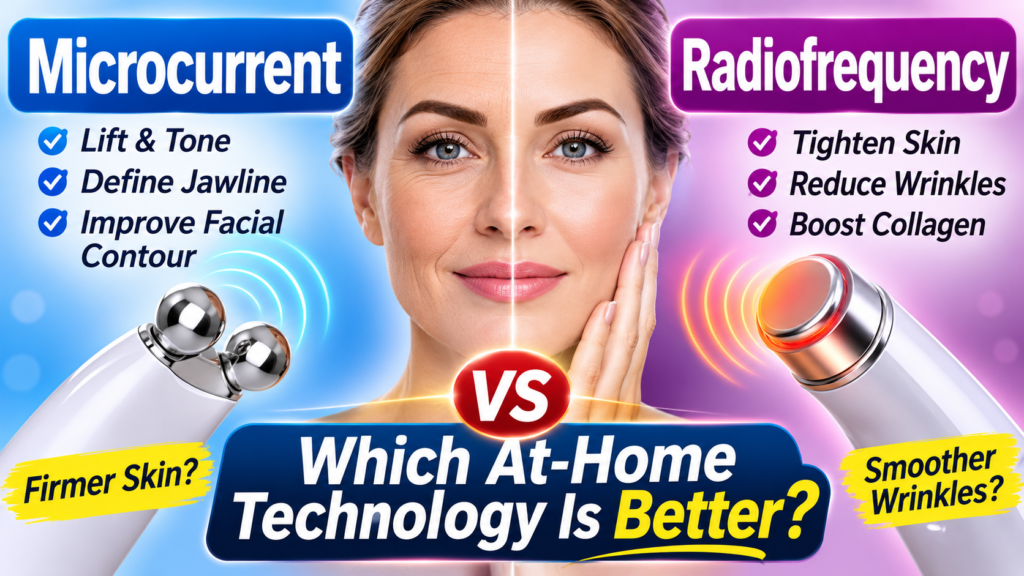
For most people, microcurrent is the better choice if you want facial toning and a low-sensation routine. At-home radiofrequency (RF) is the better fit if your priority is firmness and texture and you don’t mind warmth and a gel-based routine. Neither technology lifts sagging skin the way surgery does, and results from either are usually subtle. The right choice depends on your main goal, how sensitive your skin is, and how consistently you’ll use the device.
As an Amazon Associate, Syloma Skincare earns from qualifying purchases.

- ENERGIZING FACIAL WORKOUT – Experience a targeted facial workout with this compact facial firming device that targets in…
- MICROCURRENT FACIAL TONING – Two microcurrent spheres channel energy directly into the skin. While signs of aging are er…
- T-SONIC PULSATIONS – Help to relax facial muscle tension points and smooth the appearance of fine lines and wrinkles. Th…
Both categories have grown quickly, and marketing often promises more than the research supports. This guide explains how each technology works, where each has a real edge, and which devices are worth a closer look. Syloma Skincare has not performed hands-on testing of these devices. Device details come from manufacturer information and public listings, which change often.

- TECHNOLOGY: Clinically validated as a safe and effective over-the-counter (OTC) aesthetic electrosurgical device for the…
- ADVANCED 1MHz MULTI-POLAR RF: Utilizing a professional-grade 1.0 MHz Radio Frequency sine wave, this device delivers con…
- DUAL-REDUNDANT THERMAL SAFETY: Your safety is our priority. Built with two independent internal thermistors, the system …
Quick Answer: Which Technology Should You Choose?
- Choose microcurrent if your priority is toning, a sculpted look along the cheeks and jawline, or a routine with little or no heat.
- Choose at-home RF if your priority is firmness and texture and you’re comfortable with warmth and regular gel application.
- Choose neither as a fix for significant sagging. For more substantial concerns, a consultation with a board-certified dermatologist or plastic surgeon is the better starting point.
What Is Microcurrent Technology?
Microcurrent devices deliver extremely low-level electrical current, measured in microamps. Most at-home models are designed to stay below the level people can easily feel, though some users notice a faint tingle. Supporters describe the technology as mimicking the body’s own bioelectrical signals. That idea is plausible, but it isn’t firmly established for skin-care outcomes.
Microcurrent has been used in clinical and spa settings for years and is often marketed for muscle toning. The research base is modest. Many published studies are small, and some were funded or conducted by manufacturers, so results should be read with caution.
How Do At-Home Microcurrent Devices Work?
Most at-home microcurrent devices are handheld units with metal probes. You apply a conductive gel, glide the probes over areas such as the cheeks, jawline, or forehead, and follow the manufacturer’s session length. Sessions are typically short, and many people build them into a nightly routine.
The effect most people notice is temporary toning. Some users see a firmer look right after a session, which is generally attributed to muscle engagement and changes in fluid distribution. That look fades. Longer-term changes depend on consistent use and are usually modest.
What Is Radiofrequency (RF) Technology?
Radiofrequency devices use electromagnetic energy to heat the deeper layers of skin, the dermis, in a controlled way. The proposed mechanism is that this controlled heating prompts the skin to remodel its collagen over several weeks to months. This is the mechanism most often cited for improvements in firmness and texture.
Professional RF systems have more research behind specific devices and treatment settings. Consumer devices generally operate at lower energy levels, so their results tend to be more gradual and less predictable.
How Do At-Home RF Devices Work?
At-home RF devices typically use metal electrodes in monopolar, bipolar, or multipolar configurations. Like microcurrent devices, they require conductive gel, which helps energy distribute evenly and reduces the risk of hot spots. You’ll feel warmth during use. Many manufacturers recommend several sessions per week during an initial phase, then less frequent maintenance, though schedules vary by model.
Consistency matters more than intensity. Pressing harder or using a device more often than directed doesn’t speed results, and it raises the risk of irritation or burns.
Microcurrent vs Radiofrequency: Key Differences
- ENERGIZING FACIAL WORKOUT – Experience a targeted facial workout with this compact facial firming device that targets in…
- MICROCURRENT FACIAL TONING – Two microcurrent spheres channel energy directly into the skin. While signs of aging are er…
- T-SONIC PULSATIONS – Help to relax facial muscle tension points and smooth the appearance of fine lines and wrinkles. Th…
- Sensation: Microcurrent is usually subtle or nearly imperceptible. RF produces noticeable warmth.
- Mechanism: Microcurrent uses electrical signals. RF uses heat.
- Timeline: Microcurrent users often notice toning changes within weeks, but the effect is temporary. RF changes are gradual and take longer to appear.
- Evidence: Professional RF has a stronger research base than at-home devices. Evidence for both at-home categories is limited and varies by device.
- Gel: Both usually require conductive gel, so both carry recurring costs.
- TECHNOLOGY: Clinically validated as a safe and effective over-the-counter (OTC) aesthetic electrosurgical device for the…
- ADVANCED 1MHz MULTI-POLAR RF: Utilizing a professional-grade 1.0 MHz Radio Frequency sine wave, this device delivers con…
- DUAL-REDUNDANT THERMAL SAFETY: Your safety is our priority. Built with two independent internal thermistors, the system …
Detailed Comparison Table
| Factor | Microcurrent | Radiofrequency (RF) |
|---|---|---|
| Technology | Very low-level electrical current | Radiofrequency energy producing controlled heat |
| How it works | Stimulates facial muscles and skin with tiny currents | Heats deeper skin layers to prompt collagen remodeling |
| Main target | Toning and contouring | Firmness and texture |
| Skin concerns | Muscle tone, mild contour concerns, subtle fine lines | Fine lines, mild laxity, texture |
| Collagen-related effects | Less clearly established; limited research | Proposed mechanism; stronger evidence for professional systems |
| Facial toning | Primary strength; effects often temporary | Possible, but not the main focus |
| Expected results | Subtle, short-term toning; gradual changes with consistency | Gradual firmness over weeks to months; modest |
| Treatment time | Short sessions; follow manufacturer timing | Short sessions; follow manufacturer timing |
| Usage frequency | Often daily or several times weekly | Often several times weekly at first, then less often |
| Maintenance | Ongoing use; ongoing gel purchases | Ongoing sessions; ongoing gel purchases |
| Safety considerations | Avoid with implanted electronics, pregnancy, and other listed conditions | Warmth, irritation, burn risk with misuse; more restrictions (tattoos, rosacea flare-ups) |
| Typical device cost | Varies widely; check current listings | Varies widely; check current listings |
Which Technology Is Better For?
Fine Lines and Wrinkles
Winner: RF, slightly. Heat-driven collagen remodeling is the proposed mechanism, so RF has the more logical case for softening fine lines and surface texture. Neither technology will erase established wrinkles. Realistic expectations are subtle softening at best.
Sagging Skin
Winner: RF. Firmness is RF’s core claim, but the improvement is typically modest. Mild laxity may look slightly better. Significant sagging generally requires procedures beyond at-home devices.
Jawline Definition
Winner: Microcurrent, for the look of definition. Jawline shape depends heavily on bone structure, fat distribution, posture, and weight. Microcurrent may sharpen the appearance through toning, but that effect fades when you stop. If you’re comparing light-based options too, see our guide to LED devices for jawline tightening.
Facial Toning
Winner: Microcurrent. Toning is where microcurrent is most distinctive, and its effects are easiest to notice soon after use.
Collagen Support
Winner: RF, in theory. RF is designed to influence collagen through heat. Microcurrent’s effect on skin collagen is less clearly established, and any evidence should be treated as preliminary. Neither device guarantees collagen regeneration.
Mature Skin Over 40, 50, and 60
- Over 40: RF is often the better fit for firmness goals, provided you tolerate heat.
- Over 50: Decide whether you want toning, firmness, or both, and expect gradual changes. Microcurrent may appeal to people who want a gentler daily toning routine.
- Over 60: At-home devices are unlikely to address significant laxity. Realistic goals are subtle toning and a consistent routine, and a professional consultation makes sense for more visible concerns.
For a broader look at light-based options for this age group, see our guide to LED face masks for mature skin and fine lines.
Sensitive Skin

- Hydrating Care for All Skin Types: Gentle yet effective, this fragrance-free and paraben-free conductive gel is formulat…
- Boosts Microcurrent Performance: Specially designed for use with microcurrent devices, the gel enhances conductivity and…
- Infused with Hyaluronic Acid for Deep Hydration: Packed with skin-loving hyaluronic acid, this hydrating conductive gel …
Winner: Microcurrent. Heat from RF can trigger flushing, especially in people with rosacea or reactive skin. Microcurrent is usually gentler, although gel and probes can still irritate. Patch-test any new device on a small area first. If your skin is dry or easily irritated, our guide to red light therapy devices for dry, dehydrated skin may also help you think through gentler options.
Popular Microcurrent Devices
Specifications, accessories, and pricing change often, so confirm details on each manufacturer’s site before buying.
NuFACE Trinity+
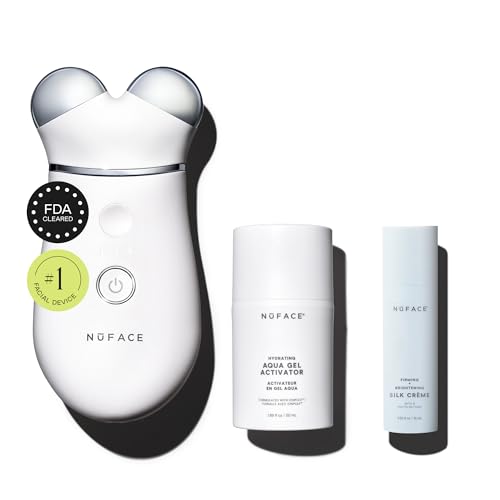
- The Original Lift Authority: TRINITY+ is the most advanced FDA-cleared microcurrent facial device, delivering 3 customiz…
- Face Lift Device & Skin Tightening: Microcurrent supports collagen and elastin production. Sculpts cheeks, lifts brows, …
- 3 Frequencies, 3 Intensities: Targets sagging jowls, tech neck, and sagging skin. Improves skin firmness, contour, and r…
A well-known handheld microcurrent device with attachments for different facial areas.
- Strengths: Established brand, broad user base, straightforward to use.
- Limitations: Requires conductive gel, so ongoing gel costs add up. Results are generally modest and depend on consistency.
FOREO BEAR 2

- 4 REVOLUTIONARY MICROCURRENTS The only device with Advanced Microcurrent and 3 more microcurrent modes Tapping & Sculpti…
- ANTI-SHOCK SYSTEM 2.0 A new & improved version of FOREO's patented Anti-Shock System now measures your skin at a rate of…
- 5 T-SONIC MASSAGE PATTERNS Body sculpting massager with Targeted and Soothing Massages, Shiatsu, and more, to relax musc…
Marketed as a microcurrent device from a brand known for sonic skincare tools, with a design aimed at daily use.
- Strengths: Sleek and convenient for regular routines.
- Limitations: Check whether it needs a specific gel and how that fits your budget over a year.
ZIIP HALO

- This hard carrying traveling case is designed for ZIIP Halo, ZIIP OX, ZIIP GX Facial Toning Device / for Gillette Venus …
- High-quality Material: The storage case is made of high quality EVA material, very durable and sturdy, shockproof and wa…
- Function: Storage & Protective. Preventing any damages or scratches caused by accidentally. Protect the device in good c…
Marketed for microcurrent-based toning.
- Strengths: A simple, toning-focused option for people who want a routine device.
- Limitations: Confirm its exact technology, session guidance, and gel requirements directly with the manufacturer.
Popular At-Home RF Devices
TriPollar STOP VX2

- AIDS IN COLLAGEN PRODUCTION: new Triple-Wave Multi-RF Technology delivers interchanging RF waves that comb the dermis la…
- PERSONALIZED TREATMENT: 2nd Generation Thermal Mapping provides the skin with the most accurate temperature for effectiv…
- PLEASANT TREATMENT & SUPERIOR RESULTS: the 3rd Generation features automatically adjusts in real-time to ensure a pleasa…
A multipolar RF device marketed for facial firmness. Multipolar designs distribute energy across several electrodes.
- Strengths: Designed for everyday facial use with a clear, structured routine.
- Limitations: Results are gradual, and the device requires regular gel and consistent sessions.
TriPollar STOP Vx Gold
A related model in the same product line. Compare design, features, and included accessories with the VX2 on the manufacturer’s listing before choosing.
- Strengths and limitations: Similar to the VX2, including gradual results, gel dependence, and a learning curve for session timing.
NEWA RF
A handheld RF device marketed for facial firming.
- Strengths: May suit people who want a simpler, single-device RF routine.
- Limitations: Confirm its RF type, energy output, and intended use. Like all at-home RF devices, results are gradual and variable.
Microcurrent vs RF: Results and How Long They Take
Microcurrent: Many users notice short-term toning within a session or a few weeks of consistent use. Effects tend to fade within days of stopping, so microcurrent works best as an ongoing routine rather than a one-time fix.
RF: Changes are gradual, usually developing over several weeks to months, because collagen remodeling is a slow biological process. Results aren’t permanent because skin continues to age, so maintenance sessions are needed to preserve gains.
A practical routine: Use your device consistently for two to three weeks, cleanse first, and apply gel as directed. Take photos in the same lighting every two to four weeks, and keep a simple log. If you see no change after several weeks of consistent use, reassess the device or your goals rather than increasing intensity.
Safety, Side Effects and Contraindications
Common side effects include redness, warmth, mild tingling, temporary puffiness, and irritation. Stop using the device if you experience pain, blistering, persistent redness, or burns. Don’t use either device on broken skin, sunburned areas, or active infections.
Who should avoid either device, or check with a professional first:
- People with pacemakers, defibrillators, or other implanted electronic devices
- Pregnant or breastfeeding people, unless the manufacturer and a clinician confirm it’s appropriate
- Anyone with a seizure disorder (check manufacturer warnings)
- People with metal implants in or near the treatment area
- Anyone who has recently had fillers, injectables, or cosmetic procedures in the area
- People with cancer, or a history of cancer near the treatment area
- People with bleeding disorders or who take anticoagulants (particularly relevant for RF)
- Anyone with tattoos in the treatment area (RF) or with rosacea or reactive skin
This list isn’t exhaustive. Read the manufacturer’s instructions and consult a qualified professional if you have a medical condition.
Understanding FDA status: The FDA’s medical device resources explain that many consumer devices are registered, not approved. Registration is an administrative step and doesn’t mean the FDA has reviewed a device’s safety or effectiveness. Clearance applies to a specific device for a specific intended use, not to the entire product category. Check whether a particular model is cleared and for what indication before relying on any claim.
Can You Combine Microcurrent and Radiofrequency?
Combining them can be reasonable for some people, but it isn’t necessary, and doing both in one session increases the chance of irritation. Many users alternate devices on different days, or use microcurrent for daily toning and RF a few times a week. Start with one device for several weeks so you can see how your skin responds. Follow each manufacturer’s guidance on spacing and gel use. Avoid layering strong exfoliants or retinoids into the same session, since that combination can irritate.
If you’re also considering light-based tools, our article on whether LED face masks really work explains what the evidence does and doesn’t show.
Which Technology Is More Cost-Effective?
The device price is only part of the cost. Most models require conductive gel, and that recurring expense can exceed the device price over time.
A simple way to compare: add the device price to a year of gel, then divide by the number of sessions you realistically expect to complete. A cheaper device you abandon after two months costs more per use than a pricier one you keep using. Choose based on the routine you’ll actually maintain. Check current prices directly on Amazon or the manufacturer’s site, since they change.
At-Home Devices vs Professional Treatments
Professional RF and microcurrent treatments typically offer more precise settings, clinician assessment, and protocols tied to specific research. The cost per session is higher, but sessions are usually spaced out and supervised.
Consumer devices are less expensive and convenient, but they generally offer lower energy, less consistent results, and less device-specific evidence. Neither replaces a surgical facelift, which can address deeper laxity that no handheld device can reach. The American Academy of Dermatology’s public guidance on cosmetic procedures is a useful starting point for questions to ask a provider.
Final Verdict: Which Technology Is Worth Buying?
Microcurrent is worth considering if you want a toning-focused routine, prefer little or no heat, and will use it consistently. RF is worth considering if firmness and texture are your priorities and you can tolerate warmth.
Neither is a replacement for surgery, dermatologic treatment, daily sunscreen, or a solid skincare routine. Expect subtle improvements over months, not dramatic lifting. If you have an implanted device, an active skin condition, or significant sagging, speak with a qualified professional before starting.
Frequently Asked Questions
Is microcurrent better than radiofrequency?
Not universally. Microcurrent is generally better for toning and gentler routines. RF has the stronger case for firmness and texture.
Does RF tighten skin better than microcurrent?
For firmness, RF has the more logical mechanism, but at-home results are typically modest. Neither produces a surgical lift.
Is microcurrent or RF better for wrinkles?
RF has a slight edge for fine lines because heat-driven collagen remodeling is the proposed mechanism. Neither will smooth deep wrinkles.
Which technology is better for sagging skin?
RF is generally the better fit, though improvements are usually subtle. Significant sagging calls for a professional evaluation.
Can microcurrent stimulate collagen?
Some studies suggest possible effects on skin structure, but the evidence is limited and mostly small. Don’t expect guaranteed collagen changes.
How long do RF results last?
There’s no guaranteed duration. Changes develop over weeks to months, and aging continues, so maintenance sessions are typically needed.
Can I use microcurrent and RF together?
Possibly, but many people do better using one at a time or alternating days. Follow manufacturer guidance and watch for irritation.
Which is better for mature skin over 50?
It depends on your goals. Microcurrent suits gentle daily toning. RF may suit firmness goals if you tolerate heat. Significant laxity needs professional evaluation.
Are at-home RF devices safe?
Many people use them without problems when directions are followed, but they aren’t appropriate for everyone. Burns and irritation can occur with misuse. Review contraindications and the manufacturer’s instructions before use.
Is microcurrent worth the money?
It can be, if you’ll use it consistently and value a low-heat toning routine. Factor in gel costs and keep expectations realistic. If you’re hoping for dramatic change, it likely won’t deliver it.
As an Amazon Associate, Syloma Skincare earns from qualifying purchases.
SEO Deliverables
1. SEO title (under 60 characters):
Microcurrent vs Radiofrequency: Which Is Better at Home?
2. Meta description (150–160 characters):
Microcurrent or radiofrequency at home? Compare how each works, realistic results, safety limits, and the best devices for firmness, toning, and mature skin.
3. URL slug:
microcurrent-vs-radiofrequency-at-home-devices
4. Primary focus keyword:
Microcurrent vs Radiofrequency
5. Secondary keywords:
- Microcurrent vs RF facial devices
- At-home microcurrent devices
- At-home radiofrequency devices
- Radiofrequency skin tightening
- Microcurrent vs RF for mature skin
6. Suggested image alt text:
Side-by-side view of an at-home microcurrent facial device and a radiofrequency device on a bathroom vanity with conductive gel
7. Featured image concept:
A bright, uncluttered vanity with a handheld microcurrent device and an RF device placed side by side, a bottle of conductive gel, and a folded towel in soft natural light. Avoid before-and-after facial images or any imagery that suggests dramatic lifting.
8. Suggested image filename:
microcurrent-vs-radiofrequency-at-home-devices.jpg
9. Internal links used:
- LED devices for jawline tightening
- LED face masks for mature skin and fine lines
- red light therapy devices for dry, dehydrated skin
- whether LED face masks really work
10. External links used:
- FDA’s medical device resources
- American Academy of Dermatology’s public guidance on cosmetic procedures
Note: The brief asks for five external links, but this article links only two. The three PubMed and PMC sources were not placed, because I couldn’t open them to confirm what they say and didn’t want to attach them to claims I can’t verify. Add them only after you’ve checked each one. The remaining three would go best in the Microcurrent and RF “What Is” and “Safety” sections, supporting the evidence-limitation statements.
Pre-Publication Checklist
- URLs: I couldn’t visit the site, so confirm that all four internal links resolve and that no better-matching existing articles on Syloma should be added.
- External sources: Open each PMC and PubMed link. Confirm it supports the sentence it’s attached to, and check that the PubMed IDs are correct before publishing. Add the three missing sources where they fit, bringing the total to five.
- Device details: Verify features, gel requirements, and “strengths” against each manufacturer’s current listing. ZIIP HALO and NEWA RF in particular need confirmed technical details.
- FDA status: If you name any specific clearance, confirm it in FDA’s databases first. Don’t imply clearance for devices that only have registration.
- Prices: None are included. Add current pricing only if your affiliate workflow requires it, and check it on the day of publication.
- Testing statement: Keep the disclosure that Syloma hasn’t tested these devices hands-on. Remove it only if your team has actually tested them.
- Affiliate disclosure: Confirm the Amazon Associates disclosure appears on the page as required.