
You catch them in the rearview mirror one morning — the faint lines around your eyes that don’t vanish when you stop smiling, the forehead creases that linger a little longer each year. So you start researching anti-aging serums, and two ingredients dominate every recommendation: retinol and peptides.

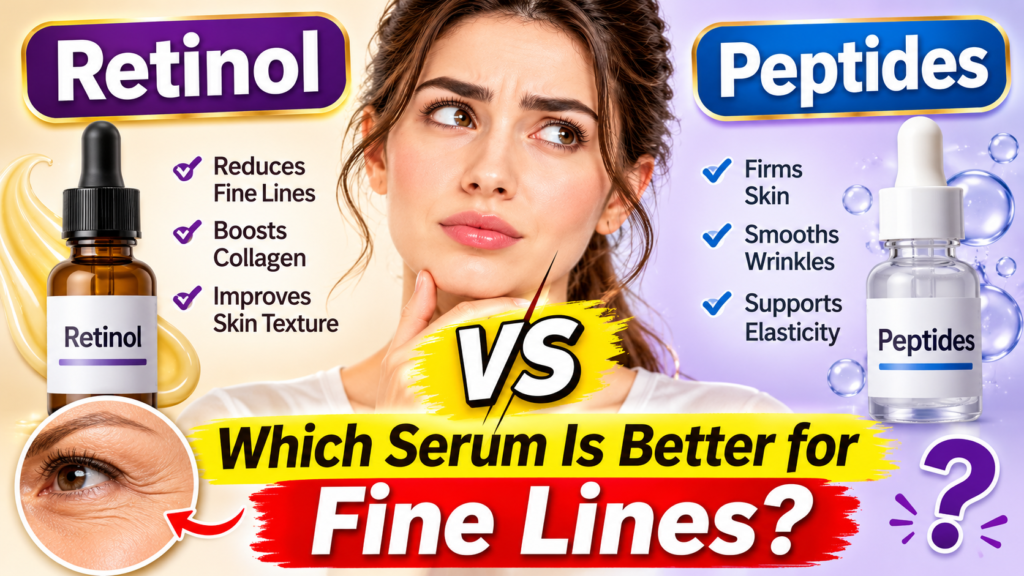
Here’s the short answer. Retinol has the stronger, longer research track record for visibly softening fine lines. Peptides are the gentler, more versatile option — and often the smarter choice for sensitive skin. But “which is better” genuinely depends on your skin type, your tolerance, and your patience. For many people, the best answer isn’t either/or. It’s both.
This guide breaks down how each ingredient works, what the clinical evidence actually says (without the hype), and how to choose — or combine — the right serum for your skin.
Retinol vs Peptides: Quick Comparison
| Factor | Retinol | Peptides |
|---|---|---|
| Main function | Speeds skin cell turnover; supports collagen-related processes | Signal skin toward repair, firmness, and hydration (varies by peptide type) |
| How it works | Converts to retinoic acid, which interacts with receptors in skin cells | Act as messengers; different peptide classes perform different jobs |
| Fine-line benefits | Softens the look of fine lines; improves texture and tone | May soften lines; supports firmness and plumpness |
| Collagen-related evidence | Decades of clinical research on retinoids | Promising but smaller, shorter studies; varies by peptide |
| Irritation potential | Moderate to high (dryness, peeling, redness) | Low for most users |
| Best skin types | Normal, oily, combination, tolerant skin | Sensitive, dry, reactive, or retinol-intolerant skin |
| Application time | Nighttime | Morning, night, or both |
| Expected results | Visible change often in 8–12+ weeks | Subtle change often in 4–12 weeks |
| Research strength | Strong and extensive | Emerging, with mixed study quality |
What Is Retinol and How Does It Help Fine Lines?
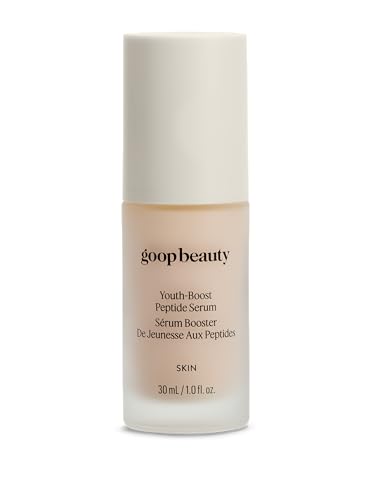
- Instant Face Lift: Our goop Beauty Youth-Boost Peptide Serum takes a 360-degree approach to repair and restore visible s…
- Niacinamide Serum: This facial serum is made with peptides to target wrinkles, ceramides & bifidus postbiotics for barri…
- Clean Skin Care: This discoloration correcting serum is gluten free and formulated without parabens, petroleum, phthalat…
Retinol is a derivative of vitamin A, part of a family of compounds called retinoids. As the American Academy of Dermatology explains in its guide to retinoids and retinol, prescription retinoids and over-the-counter retinol work through the same biological pathway — the difference is potency and how quickly skin converts them into their active form.
Once applied, retinol gradually converts into retinoic acid, which interacts with receptors inside skin cells. This speeds up cell turnover — the rate at which fresh skin cells replace older ones — and influences processes tied to collagen, the protein responsible for keeping skin firm and smooth.
Benefits for fine lines:
- Softens the appearance of forehead lines and crow’s feet over time
- Smooths rough, uneven texture
- Fades the look of sun-related discoloration
- Helps skin look brighter and more refined
Limitations:
- An adjustment period with dryness, peeling, and redness is common
- Increases sun sensitivity
- Results take weeks to months of consistent use
- Not recommended during pregnancy
- Can be too aggressive for very sensitive or compromised skin
If you’re ready to try one, our guide to the top retinol products for wrinkles and fine lines compares well-formulated options across price points.
What Are Peptides and How Do They Help Fine Lines?
- Instant Face Lift: Our goop Beauty Youth-Boost Peptide Serum takes a 360-degree approach to repair and restore visible s…
- Niacinamide Serum: This facial serum is made with peptides to target wrinkles, ceramides & bifidus postbiotics for barri…
- Clean Skin Care: This discoloration correcting serum is gluten free and formulated without parabens, petroleum, phthalat…
Peptides are short chains of amino acids — the same building blocks that form proteins like collagen and elastin. In skincare, they function as messengers: the theory is that certain peptides can signal skin to support processes related to repair, firmness, and hydration.
Here’s what most comparisons skip: “peptides” is not a single ingredient. It’s an enormous category, and different peptide types do very different things.
- Signal peptides (Matrixyl and palmitoyl peptides): Designed to mimic fragments of broken-down collagen, which may encourage skin to behave as if repair is needed. Matrixyl (palmitoyl pentapeptide) and palmitoyl tripeptides are among the most studied in this class.
- Carrier peptides (copper peptides): Deliver trace minerals like copper to the skin and are popular for their association with repair and firmness support.
- Neurotransmitter-inhibiting peptides (Argireline): Acetyl hexapeptide-8 is designed to soften the look of expression lines. Sometimes marketed as “Botox in a bottle” — an exaggeration. Any effect is far subtler and temporary.
- Enzyme-inhibiting peptides: Aim to slow the breakdown of existing collagen.
Potential peptide serum benefits include improved firmness, better hydration, and a plumper appearance — usually with far less irritation than retinol.
Now the honest caveat: topical peptide research is still maturing. A recent systematic review of oral and topical peptides for skin aging found promising results overall but noted that many trials are small, short, or industry-funded. It also highlighted an important distinction: evidence for oral collagen peptide supplements should not be confused with evidence for topical peptide serums. They are different products with different evidence bases.
Retinol vs Peptides: Which Works Better for Fine Lines?
Let’s compare them on what actually matters.
Strength of evidence. Retinol wins clearly. Retinoids have been studied in clinical settings for decades, while peptide research is younger and based on smaller trials.
Visible wrinkle improvement. Retinol has more consistent documentation of visible fine-line improvement over 12 or more weeks of use. That said, peptides aren’t without evidence. One small clinical trial comparing a cyclized hexapeptide-9 formulation with retinol reported comparable improvements on some aging measures, with better tolerability in the peptide group. Interesting — but a single small trial on one specific peptide can’t tell us how the thousands of peptide serums on the market perform.
Skin texture. Retinol has the edge, thanks to its effect on cell turnover.
Firmness and hydration. This is where peptides shine. Many formulas pair signaling peptides with hyaluronic acid and other hydrators, and peptides tend to be barrier-friendly. Retinol, by contrast, often causes temporary dryness before skin adapts.
Tolerability. Peptides, easily. Most people can use them daily with no adjustment period at all.
Bottom line: If your skin tolerates retinol and your primary goal is visible fine-line reduction, retinol has the stronger evidence. If your skin is sensitive or you prefer a gentle, hydration-forward approach, peptides are the smarter pick.
Which Is Better for Your Skin Type?
Dry skin: Peptides are the easier starting point, since most formulas are hydrating and non-irritating. If you want retinol, choose a cream-based formula and buffer it with moisturizer.
Oily skin: Oily skin typically tolerates retinol well, and retinol’s turnover-boosting effect can help with congested texture. Lightweight gel or serum formats work best.
Sensitive skin: Peptides are the classic retinol alternative for sensitive skin — effective-adjacent benefits without the peeling. If you want retinol eventually, introduce it at the lowest strength, once or twice weekly.
Combination skin: Either ingredient works. Many people with combination skin do well using peptides in the morning and retinol at night.
Mature skin: For established wrinkles, retinol’s evidence base makes it the stronger primary active, with peptides adding firmness and hydration support. Peptides for mature skin work best as part of a layered routine — our guide to the best anti-aging serums for wrinkles covers formulas designed for exactly this.
Beginners: Start low and slow, whichever you choose. If retinol is your pick, our roundup of the best retinol serums for beginners focuses on gentle, entry-level formulas.
Individual tolerance and formulation quality matter more than any general rule.
Can You Use Retinol and Peptides Together?
Yes — and for many people, it’s the best of both worlds. The two ingredients work through different pathways, so they don’t cancel each other out. In fact, clinical research on a retinol and natural pea peptide formulation examined the pairing directly, reflecting growing interest in combining retinol’s proven activity with peptides’ gentler, barrier-supportive profile.
A simple combined routine:
Morning
- Gentle cleanser
- Peptide serum
- Moisturizer
- Broad-spectrum SPF 30 or higher (non-negotiable when retinol is in your routine)
Evening
- Cleanse
- Peptide serum on dry skin (optional here if you use it in the morning)
- Retinol — a pea-sized amount for the whole face
- Moisturizer
- Instant Face Lift: Our goop Beauty Youth-Boost Peptide Serum takes a 360-degree approach to repair and restore visible s…
- Niacinamide Serum: This facial serum is made with peptides to target wrinkles, ceramides & bifidus postbiotics for barri…
- Clean Skin Care: This discoloration correcting serum is gluten free and formulated without parabens, petroleum, phthalat…
How to Layer Retinol and Peptides Correctly
- Apply thinnest to thickest. Water-based serums first, then retinol, then moisturizer.
- Introduce one product at a time. Wait at least two weeks before adding a second active so you know what’s causing any reaction.
- Build retinol frequency gradually. Start with two nights per week for two weeks, then three nights, then every other night as tolerated. Peptides can be used daily from day one.
- Try the sandwich method if you’re sensitive. Moisturizer, then retinol, then moisturizer again to buffer irritation.
- Simplify if needed. Using peptides in the morning and retinol at night is an equally valid, lower-effort approach.
How Long Does Retinol Take to Work vs Peptides?
Retinol: Early texture improvements often appear around 8–12 weeks; more visible fine-line changes typically take three to six months of consistent use. Many clinical studies evaluate retinoids over 12 weeks or longer for exactly this reason.
Peptides: Hydration and plumpness can show within days to weeks (often thanks to supporting ingredients in the formula). Firmness-related changes, when they occur, are usually measured over 4–12 weeks.
Neither ingredient erases wrinkles. Consistency beats intensity with both.
Side Effects and Safety Considerations
- Retinol irritation: Dryness, peeling, redness, and temporary flaking are the most common complaints, especially in the first month. Reduce frequency rather than quitting entirely.
- Sun protection: Retinol increases photosensitivity. Daily broad-spectrum SPF 30+ is essential.
- Pregnancy: The AAD’s pregnancy skincare guidance advises avoiding retinoids during pregnancy. Peptides are widely considered a gentler alternative, but confirm any routine changes with your healthcare provider.
- Patch testing: Apply any new serum to a small area (like the inner forearm or behind the ear) for a few days before full-face use.
- Darker skin tones: Irritation can trigger post-inflammatory hyperpigmentation — dark marks that linger after the redness fades. Introduce retinol especially slowly, and never push through significant irritation.
This article is cosmetic skincare information, not medical advice. For persistent skin concerns, consult a board-certified dermatologist.
How to Choose the Best Retinol or Peptide Serum
- Ingredient transparency: For retinol, look for a stated concentration (beginners do well at 0.1%–0.3%). For peptides, look for specific named peptides — palmitoyl pentapeptide-4, copper tripeptide-1, acetyl hexapeptide-8 — listed meaningfully on the ingredient list, not buried at the bottom.
- Stability and packaging: Retinol degrades in light and air, so choose opaque, airless pumps or tubes over jars. Peptides also benefit from protective packaging.
- Supporting ingredients: Niacinamide, ceramides, and hyaluronic acid buffer retinol irritation. Antioxidants pair beautifully with either active — our guide to the best vitamin E serums is worth a look if you want to round out a routine.
- Realistic claims: Be wary of any product promising to “erase” wrinkles. Good brands state what’s inside and let the formula speak.
- Price and value: Expensive doesn’t mean effective. Well-formulated options exist at every budget — our editors compare standouts in both the best anti-wrinkle serums for the face and the broader best anti-aging serums of 2026 guides.
Frequently Asked Questions
Is retinol better than peptides for fine lines?
For visible fine-line reduction specifically, retinol has the stronger and longer clinical evidence base. Peptides offer gentler, more gradual support for firmness and hydration. “Better” depends on your skin’s tolerance and your goals.
Can peptides replace retinol?
For people who can’t tolerate retinol — or who are pregnant (with a doctor’s approval) — peptides are the most practical retinol alternative for sensitive skin. They work differently, though, so expect subtler results rather than a direct substitute.
Can I use peptides and retinol together?
Yes. They work through different pathways and don’t interfere with each other. Many people use peptides in the morning and retinol at night, or layer both in the evening under moisturizer.
Are peptides better for sensitive skin?
Generally, yes. Peptides have a very low irritation profile, making them the usual recommendation for reactive, redness-prone, or barrier-compromised skin.
Which is better for wrinkles after 40?
Retinol’s evidence for established wrinkles is stronger, making it a solid primary active for mature skin that tolerates it. Adding a peptide serum supports firmness and hydration, which become bigger concerns with age.
Do peptides really stimulate collagen?
Some peptides are designed to signal collagen-related processes, and early research is promising — but studies are generally small and short, and results vary by peptide type and formulation. It’s reasonable to be optimistic but not to expect retinoid-level evidence.
How long does retinol take to reduce fine lines?
Most people need 8–12 weeks for early visible improvement and three to six months for more noticeable change. Consistency matters more than strength.
Should I use peptides in the morning or at night?
Either works. Peptides aren’t sun-sensitizing, so morning use pairs well with sunscreen, while nighttime use complements skin’s natural repair window. Choose whichever slot you’ll actually stick to.
Final Verdict – Which Serum Should You Choose?
Choose retinol if your skin tolerates active ingredients well, visible fine-line reduction is your top priority, and you’re willing to commit to months of consistent use plus daily sunscreen.
Choose peptides if your skin is sensitive or reactive, you’re pregnant or nursing (with your doctor’s sign-off), or you want a gentle, hydration-forward routine with virtually no irritation risk.
Choose both if you want the most comprehensive approach: retinol’s proven line-softening power at night, peptides’ firmness and barrier support around the clock.
There is no universally superior ingredient here — only the one your skin will tolerate and you’ll actually use every day. That’s the serum worth buying.