
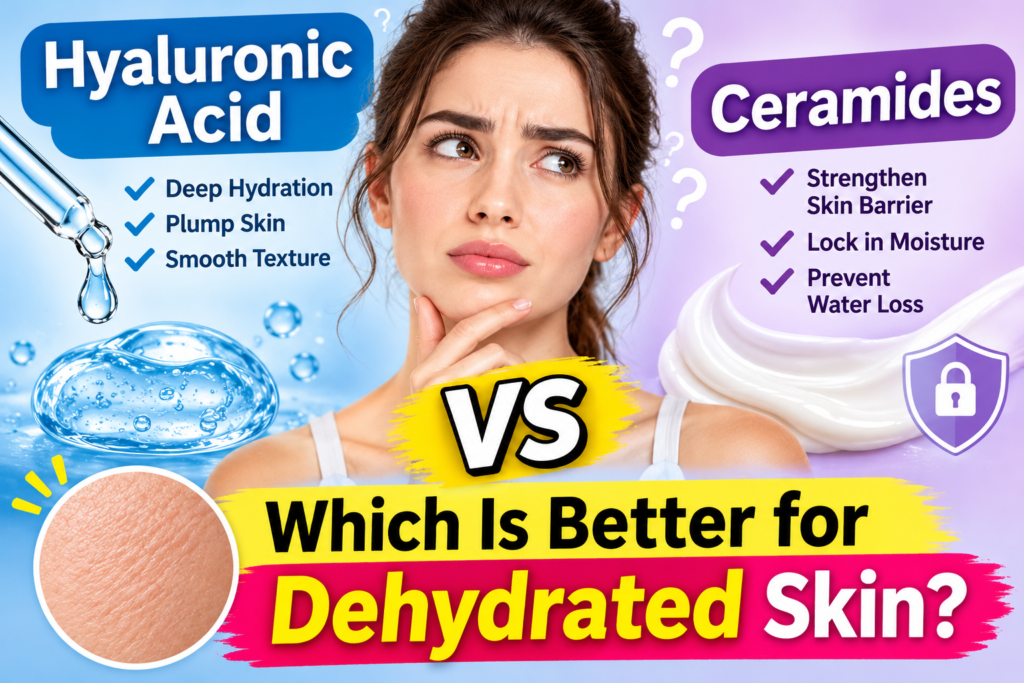
If your skin feels tight by midday no matter how much product you apply, you’ve run into the hyaluronic acid vs ceramides question — one of the most common and most misunderstood matchups in skincare. These are two of the best ingredients for dehydrated skin, but they are not rivals.
Here’s the short answer: hyaluronic acid pulls water into the skin, while ceramides help keep it there. Which one you need depends on what’s actually causing your dehydration — and for most people, the real solution involves both. This guide explains how each ingredient works, which skin types benefit most, and how to layer them for hydration that actually lasts.
What Is the Difference Between Hyaluronic Acid and Ceramides?
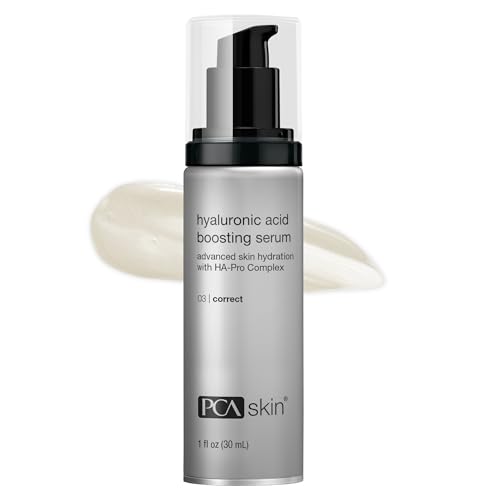
- PCA SKIN Hyaluronic Acid Boosting Face Serum delivers instant hydration and smoothing on the surface of the skin
- This Hyaluronic Acid serum for dry skin gives you skin deeper hydration and reduces fine lines with Hyaluronic Acid
- Proprietary blend HA-Pro Complex in this hydrating facial serum encourages the skin to create its own Hyaluronic Acid, r…
Think of your skin as a brick wall. Hyaluronic acid (HA) is a humectant — a molecule that draws water into the skin like a sponge. Ceramides are lipids (fats) found in the “mortar” between your skin cells, sealing the wall so moisture can’t escape and irritants can’t get in.
One hydrates. The other protects. Asking which is “better” is a bit like asking whether a house needs plumbing or a roof.
Dry Skin vs. Dehydrated Skin: A Quick Distinction
Before choosing an ingredient, know what you’re treating. Dry skin is a skin type that naturally produces less oil. Dehydrated skin is a temporary condition where skin lacks water — and yes, oily skin can be dehydrated too. Over-cleansing, exfoliating acids, air conditioning, and cold weather can strip water from any skin type, leaving it tight, dull, and shiny all at once.
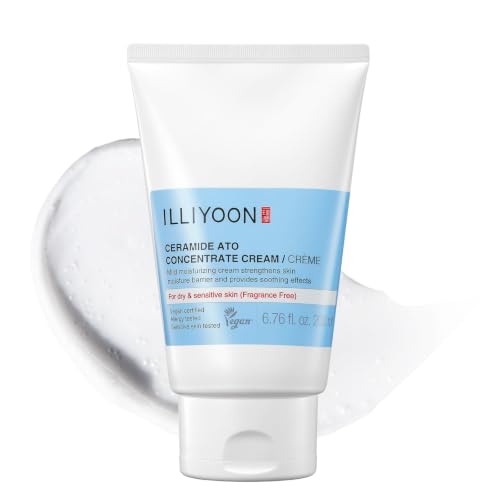
- REVOLUTIONARY MULTI-CERAMIDE COMPLEX: Our innovative formula features plant-sourced Ceramides, structurally akin to thos…
- ALL-AGE SOLUTION FOR HEALTHY SKIN: Leveraging cutting-edge technology, ILLIYOON ensures safe use for all family, even fo…
- UNPARALLELED HYDRATION DURABILITY: Its ultra-hydrating formula that guarantees an astounding 100-hour moisture retention…
What Is Hyaluronic Acid and How Does It Benefit Skin?
Hyaluronic acid is a sugar molecule found naturally in your skin, where it acts as a built-in water reservoir. As a humectant, it attracts and binds water molecules — famously holding up to 1,000 times its weight in water.
The key hyaluronic acid benefits for skin appear quickly:
- Fast hydration — skin feels softer and looks fresher within minutes.
- Temporary plumping — water-filled skin smooths the appearance of fine dehydration lines, the crepey lines caused by thirst rather than age.
- Weightless texture — a hyaluronic acid serum hydrates without adding oil, making it ideal for oily and combination skin.
Almost every skin type tolerates HA well. If you’re comparing formulas, our guide to the best hyaluronic acid serums for plumping skin breaks down what actually works.
The limitation: HA adds water but can’t hold it on its own. Applied without a moisturizer on top — especially in dry climates or air-conditioned rooms — that surface hydration can simply evaporate. Results depend on the complete formula and your environment, so treat HA as a first step, not the final one.
What Are Ceramides and Why Does Your Skin Need Them?
- REVOLUTIONARY MULTI-CERAMIDE COMPLEX: Our innovative formula features plant-sourced Ceramides, structurally akin to thos…
- ALL-AGE SOLUTION FOR HEALTHY SKIN: Leveraging cutting-edge technology, ILLIYOON ensures safe use for all family, even fo…
- UNPARALLELED HYDRATION DURABILITY: Its ultra-hydrating formula that guarantees an astounding 100-hour moisture retention…
Ceramides are lipids that make up roughly half of the skin’s outer barrier. As the Cleveland Clinic’s overview of ceramides explains, they act like mortar between the bricks of your skin cells, holding the barrier together.
Their core jobs:
- Slow moisture loss — a ceramide-rich barrier reduces transepidermal water loss (TEWL), the invisible evaporation that leaves skin parched.
- Keep irritants out — a strong barrier defends against pollution, weather, and bacteria.
- Comfort dry, sensitive skin — ceramide levels decline with age, sun exposure, and over-washing, so replenishing them often eases tightness and reactivity.
This makes ceramides some of the most important skin barrier repair ingredients available. A published review of ceramide formulations and the skin barrier notes that moisturizers designed to restore skin lipids may help support barrier function and improve moisture retention — one reason ceramide creams are a staple of dermatologist-recommended routines for dryness.
Hyaluronic Acid vs Ceramides: Key Differences
| Hyaluronic Acid | Ceramides | |
|---|---|---|
| Ingredient category | Humectant (water-binding sugar) | Lipid (barrier fat) |
| Main function | Draws water into skin | Seals barrier, prevents water loss |
| How it works | Attracts and binds water molecules | Fills gaps between skin cells |
| Hydration benefits | Immediate, surface-level | Indirect — improves retention over time |
| Barrier support | Minimal | Primary role |
| Best skin types | All; especially oily/dehydrated | Dry, sensitive, mature, compromised |
| Common products | Serums, toners, gel moisturizers | Creams, lotions, balms |
| Ideal use | First hydration step | Sealing/finishing step |
Which Is Better for Dehydrated Skin?
There’s no universal winner — it depends on what’s driving the dehydration:
- Generally dehydrated skin (tight, dull, fine lines): Start with hyaluronic acid under a light moisturizer. If tightness returns within hours, add ceramides.
- Very dry skin: Prioritize ceramides. Ceramides for dry skin address the root cause — a lack of barrier lipids — while HA underneath is a helpful bonus.
- Oily and dehydrated skin: Hyaluronic acid is the hero — hydration without heaviness. Seal it with a light, non-comedogenic ceramide lotion.
- Combination skin: Apply HA all over; use a richer ceramide cream only on dry zones like the cheeks.
- Sensitive skin: Ceramides first for barrier comfort; introduce HA in a simple, fragrance-free formula.
- Mature skin: Both. Natural HA and ceramide levels decline with age — which is why many of the best anti-aging serums for women over 30, 40, and 50 pair hydration with barrier support.
Can You Use Hyaluronic Acid and Ceramides Together?
Absolutely — and this is where the ceramides vs hyaluronic acid framing falls apart. Hyaluronic acid and ceramides together solve both halves of the problem: HA floods the skin with water, and ceramides seal the barrier so it stays put. Neither interferes with the other, both are gentle enough for daily use, and the combination is the most reliable strategy for how to hydrate dehydrated skin long term.
- PCA SKIN Hyaluronic Acid Boosting Face Serum delivers instant hydration and smoothing on the surface of the skin
- This Hyaluronic Acid serum for dry skin gives you skin deeper hydration and reduces fine lines with Hyaluronic Acid
- Proprietary blend HA-Pro Complex in this hydrating facial serum encourages the skin to create its own Hyaluronic Acid, r…
How to Layer Hyaluronic Acid and Ceramides Correctly
Order matters — water-based hydration goes on before lipid-based sealing:
- Cleanse gently with a mild, non-stripping cleanser and lukewarm water.
- Apply hyaluronic acid serum to slightly damp skin — dampness gives HA water to bind.
- Follow with a ceramide moisturizer to lock in hydration and support the barrier.
- Finish with sunscreen every morning — UV exposure worsens both dehydration and barrier damage.
Adjust to your skin type: oily skin can swap the cream for a gel-cream, while very dry skin can add a richer cream or a few drops of facial oil at night.
Common Mistakes to Avoid
- Applying HA without moisturizer. Unsealed hydration evaporates — always follow with a cream.
- Over-cleansing. Hot water and harsh surfactants strip the barrier. The American Academy of Dermatology’s tips for relieving dry skin recommend gentle, fragrance-free cleansers and short, lukewarm showers.
- Stacking too many actives. Exfoliating acids and retinoids have their place, but overuse weakens the barrier and worsens dehydration.
- Ignoring barrier warning signs. Stinging, redness, and flaking mean repair mode: pause strong actives and lean on ceramides.
- Buying on marketing claims. “Hydrating” on the front label means little — read the ingredient list.
- Expecting instant, permanent results. HA’s plumping is real but temporary; barrier improvement takes consistent use over weeks.
How to Choose the Right Products for Your Skin
Ingredient lists reveal more than packaging. Look for:
- Hyaluronic acid and sodium hyaluronate — the smaller salt form common in serums; both hydrate effectively.
- Ceramide NP, AP, and EOP — the most studied types; formulas containing several better mimic skin’s natural lipid mix.
- Cholesterol and fatty acids — the barrier needs all three lipid types, not ceramides alone.
- Glycerin — a proven, underrated supporting humectant.
The Cleveland Clinic’s guide to choosing a moisturizer for dry skin offers the same advice: judge formulas by ingredients like ceramides, hyaluronic acid, and glycerin rather than texture or claims. Formulation beats any single hero ingredient — the best moisturizer for dehydrated skin typically combines humectants, ceramides, and supporting lipids in one product. For serum-specific picks, see our tested roundup of the top hyaluronic acid serums.
Final Verdict: Hyaluronic Acid or Ceramides?
So, hyaluronic acid vs ceramides for dehydrated skin — where should you land?
Prioritize hyaluronic acid if your skin feels tight and looks dull but isn’t flaky — classic water loss, common in oily and combination skin. Prioritize ceramides if your skin is rough, flaking, or reactive — signs of a weakened barrier. Most people with dehydrated skin see the best results using both: a hyaluronic acid serum for immediate hydration, followed by a ceramide moisturizer to hold onto it.
Expect visible plumping within minutes to days, and steadier comfort after two to four weeks of consistent use. If dryness is severe or persistent — or comes with itching, cracking, or irritation — consult a board-certified dermatologist. The Mayo Clinic’s dry skin guidance explains when professional evaluation makes sense.
Frequently Asked Questions
1. Is hyaluronic acid or ceramide better for dehydrated skin?
Neither works best alone — HA adds water, ceramides retain it. Most dehydrated skin improves fastest with both.
2. Can I use hyaluronic acid and ceramides together every day?
Yes. Both are gentle, non-irritating, and safe for daily morning and evening use.
3. Should I apply hyaluronic acid before ceramides?
Yes — apply HA serum first on damp skin, then seal it in with a ceramide moisturizer.
4. Are ceramides better for dry skin?
Generally yes. Dry skin lacks barrier lipids, so ceramides target the root cause; add HA underneath for extra hydration.
5. Can hyaluronic acid cause dryness?
Not directly — but without a moisturizer on top, its hydration can evaporate in dry environments, leaving skin feeling tight. Always seal it in.
6. Can oily skin benefit from ceramides?
Yes. Lightweight, non-comedogenic ceramide lotions support the barrier without heaviness or shine.
7. How long does it take to see results from hydrating skincare?
HA plumps within minutes, hydration improves within days, and barrier support typically takes two to four weeks of consistency.
8. Do I need both a hyaluronic acid serum and a ceramide moisturizer?
It’s the ideal pairing — though many moisturizers already contain HA, so check labels before doubling up.