
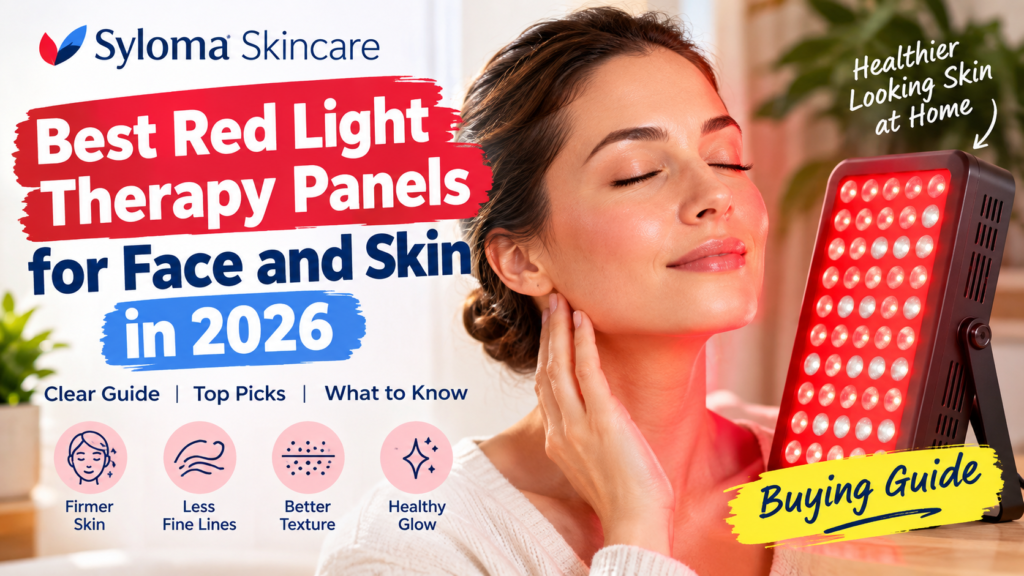
If you’ve started shopping for red light therapy, you’ve probably noticed the problem right away: some panels are the size of a full-length mirror, others fit on a desk, some look almost identical to LED face masks, and the price tags range from under $200 to well over $1,500. Wavelength numbers, “irradiance” claims, and vague marketing language make it hard to tell which panel is actually built with facial skin in mind versus one designed for muscle recovery that happens to work on your face too.
This guide is focused specifically on choosing a red light therapy panel for facial skin and skincare, not general wellness or pain relief. We’ll walk through which panels are worth considering, what specs actually matter for the face, and how panels stack up against LED face masks.
Quick Comparison: Panels Worth Considering for Face and Skin
Specs and prices change often, so treat the numbers below as a starting point and confirm current details on each manufacturer’s product page before buying.
| Panel | Best For | Red Wavelengths | Near-Infrared | Approx. Coverage | Session Convenience | Price Range |
|---|---|---|---|---|---|---|
| Hooga HG300 | Budget entry point | 660nm | 850nm | ~31″ x 28″ at 18″ | Desktop/stand, built-in timer | Under $250 |
| Hooga PRO300 | Targeted facial sessions | 660nm | 850nm | ~33″ x 29″ at 18″ | Adjustable stand, timer, independent red/NIR control | $250–$350 |
| Mito Red Light MitoPRO 300+ | Face and targeted skin use | 630nm, 660nm | 830nm, 850nm | Compact (11″ x 10″) | Digital timer, three modes | $350–$450 |
| PlatinumLED BioMax 300 | Higher-output targeted sessions | 630nm, 660nm | 810nm, 830nm, 850nm, 1060nm | Compact tabletop | Digital controls, modular | $550–$700 |
| BON CHARGE Demi | Compact half-body/face sessions | 660nm | 850nm | Half-body panel | Built-in timer (10–20 min), low EMF | $500–$700 |
| Joovv Solo 3.0 | Premium build, app-based routines | 660nm | 850nm | Partial-body panel | Bluetooth app, pulse mode | $600–$900 |
Best Red Light Therapy Panels for Face and Skin
Hooga HG300 and PRO300

- DUAL-CHIP RED & NEAR-INFRARED LIGHT – Features 60 dual-chip LEDs, with each LED delivering both 660nm red light and 850n…
- HIGH-OUTPUT DUAL-CHIP LED PANEL: Features 900 dual-chip LEDs for consistent light output and true full-body coverage in …
- SUPPORTS DAILY WELLNESS: A convenient way to support relaxation, post-exercise recovery, and skin health as part of a da…
Hooga’s HG and PRO lines are two of the most recognized entry points in the category. The HG300 uses 60 single-chip LEDs and delivers roughly 73 mW/cm² of irradiance at six inches, in a compact 12.2 by 8.2 inch housing with a kickstand and built-in timer. The PRO300 steps things up with 60 dual-chip LEDs that push irradiance above 100 mW/cm² at six inches, along with independent control over the red and near-infrared channels. havenofheathavenofheat
Why it can work for facial skincare: Both models are small enough to sit on a bathroom counter or desk, and the adjustable stand on the PRO300 makes it easy to angle toward your face while seated.
Advantages: Affordable entry price, simple two-wavelength design, portable size, digital timer.
Limitations: Only two wavelengths (no 630nm or deeper NIR options), and the plain dual-chip design means you’re paying mostly for irradiance, not variety.
Who should consider it: Someone testing red light therapy for the first time who wants a no-frills, budget-friendly device.
Who may prefer another option: Buyers who want a wider range of documented wavelengths in one device.
Mito Red Light MitoPRO 300+

- The Mito Red Difference: Founded in 2018 in Scottsdale, Arizona, Mito Red Light has served 125,000+ customers across 30+…
- Red Light Therapy Benefits: Use the power of red and near infrared light to support a range of wellness and recovery ben…
- Premium Features: Red light therapy panel features 60 high-powered LED diodes, digital control panel with timer, and whi…
The MitoPRO 300+ is Mito Red Light’s smallest panel and is explicitly positioned by the brand for face and targeted skin use. It runs 60 LEDs across four peak wavelengths — 630nm, 660nm, 830nm, and 850nm — in an 11 by 10 by 3 inch housing weighing about 7 pounds, with irradiance reported above 130 mW/cm² at six inches. mitoredlight
Why it can work for facial skincare: The four-wavelength mix covers both commonly cited “skin” wavelengths (630nm, 660nm) and near-infrared ranges, and the panel is small enough to be genuinely face-focused rather than a scaled-down body panel.
Advantages: Compact size, multiple wavelengths in one unit, published (brand-reported) irradiance data, three-year warranty.
Limitations: Irradiance figures come from the manufacturer’s own testing methodology, so they should be read as a reference point rather than an independently verified number.
Who should consider it: Someone who specifically wants a panel built for face-and-neck-sized sessions rather than a repurposed body panel.
PlatinumLED BioMax 300
The BioMax 300 is PlatinumLED’s compact flagship model. It’s built around six wavelengths — 630nm, 660nm, 810nm, 830nm, 850nm, and 1060nm — with an all-metal housing, high-velocity fans, and a digital control panel, and the panel is modular, so additional units can be linked together to expand coverage later. revgearrevgear

- PlatinumLED lights have the HIGHEST PAR/LUMEN OUTPUT PER WATT of any LED grow light! 2x-3x the intensity of any other li…
- COMPLETE *12-band full spectrum* from the depths of UV to the heights of IR – The most complete and efficient spectral o…
- Selectable VEG/FLOWER switches with 2x high speed whisper quiet fans plus ALL NEW upgraded aluminum cooling heat sinks
Why it can work for facial skincare: The wider wavelength spread and high output mean shorter sessions may reach a comparable light dose, and the compact size suits face-and-upper-body use without needing floor space.
Advantages: Broadest documented wavelength range on this list, sturdy build, expandable.
Limitations: Higher price point than the Hooga or Mito entry panels; some models require eye protection due to the higher output.
Who should consider it: Buyers who want the widest wavelength coverage in a still-compact panel and don’t mind paying more for it.
Who may prefer another option: Anyone on a tighter budget who mainly wants a straightforward two-wavelength device.
BON CHARGE Demi
The Demi is BON CHARGE’s compact panel, built around 660nm red light and 850nm near-infrared light, with irradiance reported above 100 mW/cm², a built-in timer for 10 to 20 minute sessions, and a compact 8.4-pound design. BON CHARGE reports low EMF output in the 0.1–0.05 microtesla range. athletechnewsathletechnews

- RED & NEAR-INFRARED LIGHT FOR DAILY WELLNESS – The Hooga HG300 features 60 LEDs delivering 660nm red light and 850nm nea…
- COMPACT PANEL, TARGETED SESSIONS – Designed for convenient, targeted use on smaller areas of the body. The HG300 is idea…
- HIGH-OUTPUT PERFORMANCE IN A SMALL FOOTPRINT – Delivers over 73 mW/cm² irradiance at 6 inches, with high-quality 5W LEDs…
Why it can work for facial skincare: It’s smaller and lighter than most full-body panels, and the built-in timer takes the guesswork out of session length.
Advantages: Compact and portable, low reported EMF, straightforward interface.
Limitations: Only two wavelengths; designed more as a half-body panel than a face-specific one, so positioning at a facial distance takes some trial and error.
Who should consider it: Shoppers who like BON CHARGE’s other skincare devices, such as their <a href=”https://sylomaskincare.com/best-red-light-therapy-masks-anti-aging-2026/”>red light therapy face masks</a>, and want a panel to complement one.
Joovv Solo 3.0
Joovv remains one of the most recognized names in consumer red light therapy. The Solo 3.0 uses 660nm and 850nm wavelengths, an aluminum chassis, a modular stacking system that lets two units link into a larger setup, and a pulse mode, backed by a three-year warranty. liftbigeatbigliftbigeatbig
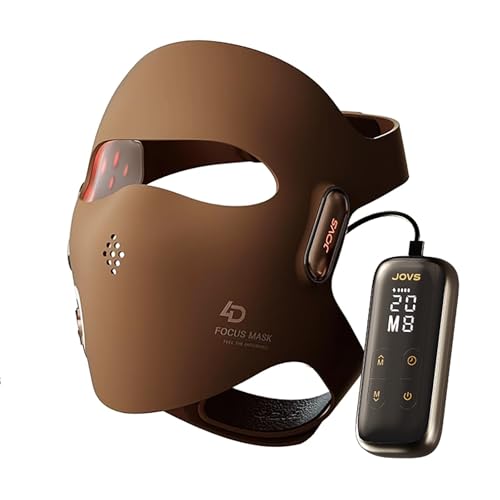
- Advanced Anti-Aging FPT Technology: JOVS exclusive FPT technology delivers precise light therapy to reduce wrinkles and …
- Four Wavelengths for Comprehensive Skin Care: Combines 660nm, 850nm, 940nm, and 1064nm light waves to boost collagen pro…
- Precise and Comfortable Design: 140 targeted light beams and a curved design ensure full coverage and a comfortable fit …
Why it can work for facial skincare: The build quality and quiet fan make it comfortable for longer or more frequent sessions, and the Bluetooth app can help with tracking consistency, which matters more for results than any single spec.
Advantages: Premium build, strong warranty, app-based session tracking, established brand support.
Limitations: Only two wavelengths despite the premium price, and less independent, third-party output testing has been published compared to some competitors.
Who should consider it: Buyers who prioritize build quality, brand support, and app tracking over having the widest wavelength lineup.
Who may prefer another option: Someone who wants more wavelengths or a lower price for similar output.
What Makes a Red Light Panel Good for Facial Skin?
Wavelength
Red light therapy panels typically combine two bands of light. Visible red light around 630–660nm is absorbed closer to the skin’s surface, which is why it’s the wavelength most often discussed in skincare contexts. Near-infrared light around 810–850nm is invisible to the eye and reaches somewhat deeper into tissue. Having both bands in one panel is common, but no single exact wavelength number guarantees a better outcome — the evidence generally supports a range rather than one “magic” figure.
Irradiance
Irradiance is measured in milliwatts per square centimeter (mW/cm²) and describes how much light energy actually reaches your skin at a given distance. This matters more than a panel’s advertised wattage, because wattage describes total power draw, not the dose your skin receives. Two panels can list similar wattage and deliver very different irradiance depending on LED design, lens angle, and how far you sit from them. Look for brands that disclose the distance at which their irradiance was measured — a number with no stated distance is close to meaningless.
Distance From the Panel
Irradiance drops off quickly as you move away from a panel, which is why manufacturers publish recommended distances (often 6–24 inches depending on the device). Sitting closer generally increases the dose per minute, and sitting farther spreads light over a wider area but at lower intensity. Always default to the specific manufacturer’s instructions for your device rather than a generic distance, since output varies significantly between panels.
Treatment Time
More time isn’t automatically better. Manufacturers generally recommend sessions in the 5–20 minute range depending on the panel’s irradiance, and going well beyond the recommended time doesn’t reliably produce faster or bigger results. Consistency — showing up for sessions several times a week over weeks or months — tends to matter more than stretching any single session.
Panel Size: Do You Really Need a Large Panel Just for Your Face?
This is one of the most overlooked questions in panel shopping. Red light panels generally fall into three size categories:
- Small desktop panels (like the Hooga HG300 or Mito MitoPRO 300+): sized for face, neck, and hands.
- Medium panels (like the BON CHARGE Demi or PlatinumLED BioMax 600): cover face plus upper body or half-body in one session.
- Large/full-body panels (like the Mito MitoPRO 1500 or Joovv Max): designed for standing, full-body sessions.
If your primary goal is facial skincare, a large full-body panel is often unnecessary and impractical — it requires more floor space, more standing distance to fit your whole face in the beam evenly, and usually costs significantly more. A small or medium panel positioned correctly can deliver comparable irradiance to your face for a fraction of the price and footprint. A larger panel makes more sense if you also plan to use it for shoulders, back, or joint-focused sessions and want one device that does both.
Red Light Panel vs. LED Face Mask
Panels and masks solve the same basic problem in different ways, and neither is automatically the better choice.
| Feature | Red Light Panel | LED Face Mask |
|---|---|---|
| Hands-free use | Yes, once positioned | Yes, wearable |
| Coverage | Face plus neck, chest, or body depending on size | Face only (some masks add neck) |
| Distance from skin | Set distance (several inches) | Direct skin contact |
| Portability | Lower — needs a stand or wall space | High — wearable, travel-friendly |
| Face-specific design | Not usually contoured to the face | Purpose-built to match facial contours |
| Full-body use | Possible with larger panels | Not applicable |
| Setup | Position and angle each session | Put on and go |
| Typical price range | ~$150–$1,500+ | ~$150–$700 |
If you only care about facial skin and want something you can wear while multitasking, a mask like the options covered in our https://sylomaskincare.com best-led-face-masks-wrinkles-firm-skin-2026 guide to LED face masks for wrinkles and firmness may fit your routine better. If you want one device that can also treat your neck, chest, shoulders, or joints, a panel offers more flexibility. Some people use both — a mask for hands-free facial sessions and a panel for everything else — and our comparison of <a href=”https://sylomaskincare.com/best-red-light-therapy-masks-anti-aging-2026/”>red light therapy masks for anti-aging covers that pairing in more detail. If you’re still unsure whether LED devices are worth it at all, our piece on https://sylomaskincare.com/do-led-face-masks-really-work whether LED face masks really work is a good starting point.
What Can Red Light Therapy Realistically Do for Facial Skin?
Based on current research and cautious, evidence-aware framing, red light therapy may help support:
- The appearance of fine lines over consistent, weeks-to-months-long use
- Firmer-looking skin in some users
- Improved appearance of skin texture
- A healthier-looking, more even complexion
- The appearance of mild redness or inflammation for some people
Results vary significantly by person, device, and consistency, and research in this area, while growing, is still developing. Cautious wording matters here: red light therapy “may help” and “can support” the appearance of these concerns — it does not guarantee them.
What Red Light Therapy Cannot Do
To keep expectations realistic, a red light panel should not be treated as:
- A substitute for a facelift or other surgical procedure
- A replacement for daily sunscreen
- A guaranteed method for removing wrinkles
- A replacement for professional dermatological or medical treatment
- A cure for any diagnosed skin disease or condition
If you have a specific, diagnosed skin condition, a dermatologist remains the right first point of contact — a panel is a supportive tool, not a treatment plan on its own.
Safety and FDA Clearance
Following the manufacturer’s specific instructions for your device is the single most important safety step, since recommended distance, session time, and eye protection requirements vary between panels. A few points worth understanding:
- Eye protection: Many panels recommend or require eye protection, since direct, prolonged exposure to bright LED light can be uncomfortable or irritating to the eyes.
- Photosensitivity: Certain medications (some acne treatments, antibiotics, and other prescriptions) can increase skin’s sensitivity to light. If you take any of these, check with a doctor or pharmacist before starting a routine.
- Existing skin conditions: If you have an active skin condition, rash, or are recovering from a procedure, check with a dermatologist before using a light-based device on the area.
- Darker skin tones: Heat and light-based devices can, in some cases, raise questions around pigmentation changes for people with darker skin tones. If this concerns you, it’s worth discussing with a dermatologist familiar with your skin type before regular use.
- FDA clearance is not a guarantee of effectiveness. Some panels and masks carry FDA clearance for general indications, but clearance confirms a device meets certain safety and manufacturing standards — it is not the FDA’s endorsement that the device will produce specific cosmetic results for every user.
The <a href=”https://www.aad.org/public/cosmetic/safety/red-light-therapy”>American Academy of Dermatology’s overview of red light therapy safety</a> is a solid, trustworthy starting point if you want more detail, as is the <a href=”https://my.clevelandclinic.org/health/treatments/22114-red-light-therapy”>Cleveland Clinic’s explanation of red light therapy</a>. For how the FDA actually reviews and lists medical devices, its <a href=”https://www.fda.gov/medical-devices/device-advice-comprehensive-regulatory-assistance/medical-device-databases”>medical device database resource</a> explains what clearance does and doesn’t mean. If you want to look into the underlying research yourself, <a href=”https://pubmed.ncbi.nlm.nih.gov/”>PubMed</a> and the <a href=”https://www.ncbi.nlm.nih.gov/”>National Center for Biotechnology Information</a> are both searchable, peer-reviewed sources.
None of this is personalized medical advice — when in doubt about your own skin or health situation, talk to a dermatologist.
How to Use a Red Light Panel for Your Face
- Clean your skin before each session so light isn’t blocked by makeup or heavy product buildup.
- Remove any products your device’s instructions flag as interfering with treatment (some brands note certain photosensitizing skincare ingredients).
- Position the panel at the distance your manufacturer recommends — don’t guess based on a different panel’s instructions.
- Use the recommended session time rather than extending it in hopes of faster results.
- Protect your eyes if your device’s instructions call for it.
- Follow the suggested weekly schedule consistently rather than sporadically.
- Track your progress realistically — photos under similar lighting, spaced weeks apart, are more useful than daily mirror checks.
There’s no single universal “dose” that applies to every panel, so treat your specific device’s manual as the primary guide.
How Long Does It Take to See Results?
Results with red light therapy are generally gradual rather than immediate. Consistency over weeks to months tends to matter more than any single session, and outcomes vary from person to person and device to device. If you want to track changes, take photos in similar lighting and from the same angle every one to two weeks rather than relying on memory. Avoid expecting a specific timeline unless it’s backed by your device’s own published guidance or a cited study — and even then, treat it as an average, not a promise.
Buying Checklist
Before spending money on a panel, check for:
☐ Verified wavelength information (not just “red light”)
☐ Transparent irradiance information, including the measurement distance
☐ Clear guidance on face coverage/positioning
☐ A stated recommended treatment time
☐ Eye-safety instructions
☐ A meaningful warranty
☐ A workable return policy
☐ A manufacturer with an established reputation
☐ Current, up-to-date price (always check the brand’s own site)
☐ Realistic marketing claims, without guarantees of dramatic results
FAQ
Are red light therapy panels good for your face?
They can be a reasonable option for supporting the appearance of fine lines, texture, and firmness for some users, provided you choose a panel with documented wavelengths and follow a consistent routine. They are not a guaranteed or dramatic fix.
What red light wavelength is best for facial skin?
Most research and product design center on 630–660nm red light for skin-level effects, often paired with 810–850nm near-infrared. No single wavelength is proven superior for every skin concern — the combination and consistency of use matter more.
Is 660nm or 630nm better for skin?
Both fall within the commonly researched red light range and are used in comparable ways in commercial devices. There isn’t strong evidence that one is definitively superior to the other for facial skin; many panels include both.
Is near-infrared light useful for facial skincare?
Near-infrared light (roughly 810–850nm) penetrates somewhat deeper than visible red light, and some panels include it alongside red light for a broader effect. It’s a reasonable addition, though not strictly required for every routine.
Can I use a full-body red light panel on my face?
Yes, as long as you follow the manufacturer’s recommended distance and session time for that panel. Full-body panels aren’t harmful to use on the face — they’re often just larger and more expensive than necessary if facial skincare is your only goal.
How far should I sit from a red light therapy panel?
This depends entirely on the specific device — check your manufacturer’s instructions, since recommended distances commonly range from about 6 to 24 inches depending on the panel’s output.
How long should I use a red light panel on my face?
Follow your device’s recommended session length, which is often somewhere between 5 and 20 minutes. Longer isn’t automatically better.
Are red light panels better than LED face masks?
Neither is universally “better.” Panels offer more flexibility (face, neck, body) but require positioning each session; masks are hands-free and shaped to the face but typically cover a smaller area. Choose based on your routine, budget, and whether you want the option to treat areas beyond your face.
Can red light therapy reduce wrinkles?
It may support the appearance of fine lines and firmer-looking skin over consistent use, based on current, evolving research — but it should not be marketed or expected as a guaranteed wrinkle remover.
Are red light therapy panels safe?
Generally yes, when manufacturer instructions are followed, including any eye protection guidance. People on photosensitizing medications, with active skin conditions, or with concerns about pigmentation should check with a dermatologist first.
Conclusion
There isn’t one universal “best” red light therapy panel for face and skin in 2026 — the right choice depends on your specific goals. If facial skincare is your only priority, a smaller, well-documented panel like the Hooga PRO300 or Mito Red Light MitoPRO 300+ likely offers everything you need without the expense or footprint of a full-body setup. If you want broader wavelength coverage or plan to treat other areas of your body too, a mid-size panel like the PlatinumLED BioMax 300 or BON CHARGE Demi is worth the higher investment. And if build quality, brand support, and app-based tracking matter most to you, a premium option like the Joovv Solo 3.0 may be worth its price, even with a simpler two-wavelength design.
Whichever panel you choose, look past the marketing and focus on verified wavelengths, transparent irradiance data, and realistic expectations — that combination, paired with consistent use, is what actually determines whether a red light therapy panel earns its place in your skincare routine. If you’re weighing a panel against neck- and chest-specific options, our guides on <a href=”https://sylomaskincare.com/best-led-neck-chest-masks-crepey-skin-2026/”>LED devices for neck and chest skin</a> and <a href=”https://sylomaskincare.com/best-red-light-therapy-devices-sagging-skin-firmness-2026/”>red light therapy for sagging skin and firmness</a> can help round out a full routine, alongside supporting products like a good <a href=”https://sylomaskincare.com/best-vitamin-e-serums-2026/”>vitamin E serum</a>.