
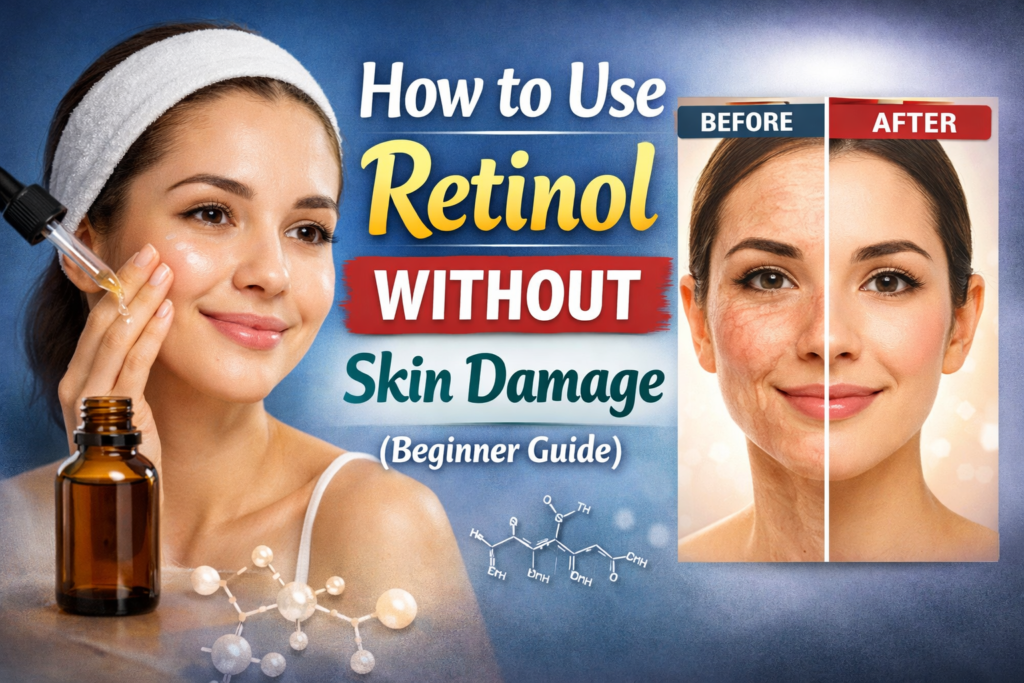
Learn how to use retinol safely as a beginner without damaging your skin. This step-by-step guide will help you avoid irritation and dryness. Get glowing skin results with proper use.
SylomaSkincare is a reader-supported website. This means that when you click on certain links on our site and make a purchase, we may earn a small commission—at no extra cost to you.As an affiliate, we may participate in programs such as the Amazon Services LLC Associates Program and other affiliate networks designed to provide a means for websites to earn advertising fees by advertising and linking to products.We only recommend skincare products and services that we genuinely believe can provide value to our readers. Our reviews and recommendations are based on research, personal opinions, and industry knowledge—not influenced by affiliate partnerships.Your support helps us continue to create helpful, high-quality skincare content for our readers.If you have any questions regarding this disclosure, feel free to contact us through our website.
Retinol is one of the most powerful and dermatologist-recommended skincare ingredients. It helps in improving skin texture, reducing acne, and fighting signs of aging. However, if used incorrectly, it can lead to irritation, dryness, redness, and even damage your skin barrier.
If you’re a beginner, this guide will help you use retinol safely and effectively—without the side effects.
What is Retinol?
Retinol is a derivative of Vitamin A that helps speed up cell turnover. This means it encourages your skin to shed old, dead cells and replace them with new, healthy ones.
This guide will help you use retinol safely and effectively—without the side effects.
Because of this, retinol is widely used to treat:
- Fine lines and wrinkles
- Acne and breakouts
- Hyperpigmentation
- Uneven skin tone
- Dull skin
However, its strength is also why beginners need to be careful.
Why Retinol Can Damage Skin (If Used Wrong)
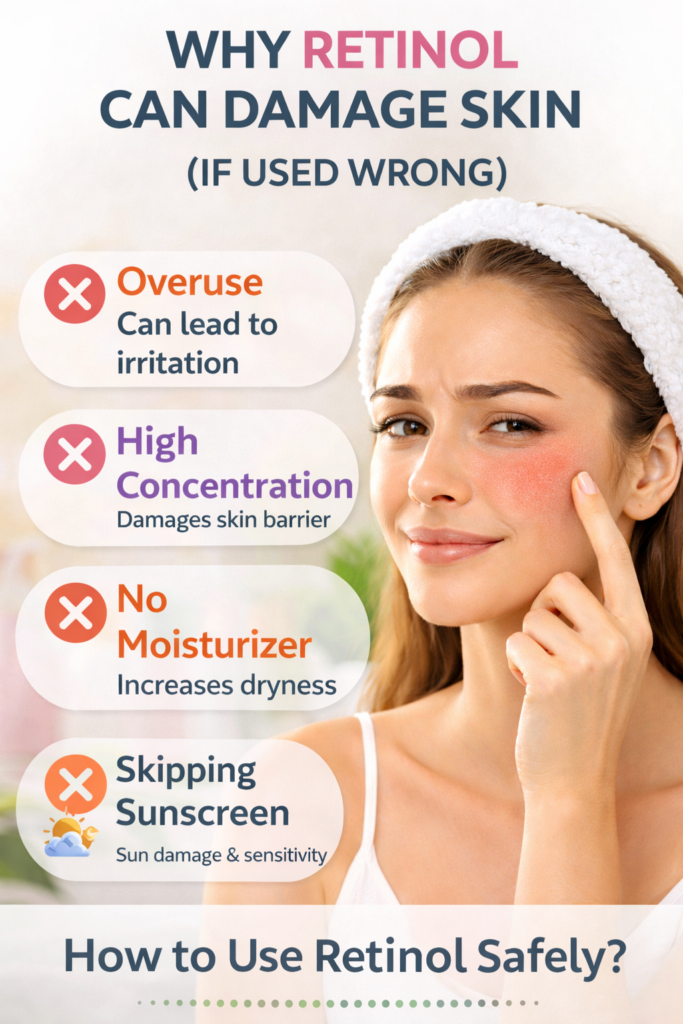
Before learning how to use it, it’s important to understand why retinol sometimes causes problems. Overuse can lead to irritation. Starting with a high concentration can damage your skin barrier. Not using moisturizer can increase dryness. Skipping sunscreen can cause sensitivity and sun damage.
- Overuse can lead to irritation
- Starting with a high concentration can damage your skin barrier
- Not using moisturizer can increase dryness
- Skipping sunscreen can cause sensitivity and sun damage
This is why a slow and controlled approach is essential.
Step-by-Step Guide to Using Retinol Safely
This is why a slow and controlled approach is essential for healthy skin.
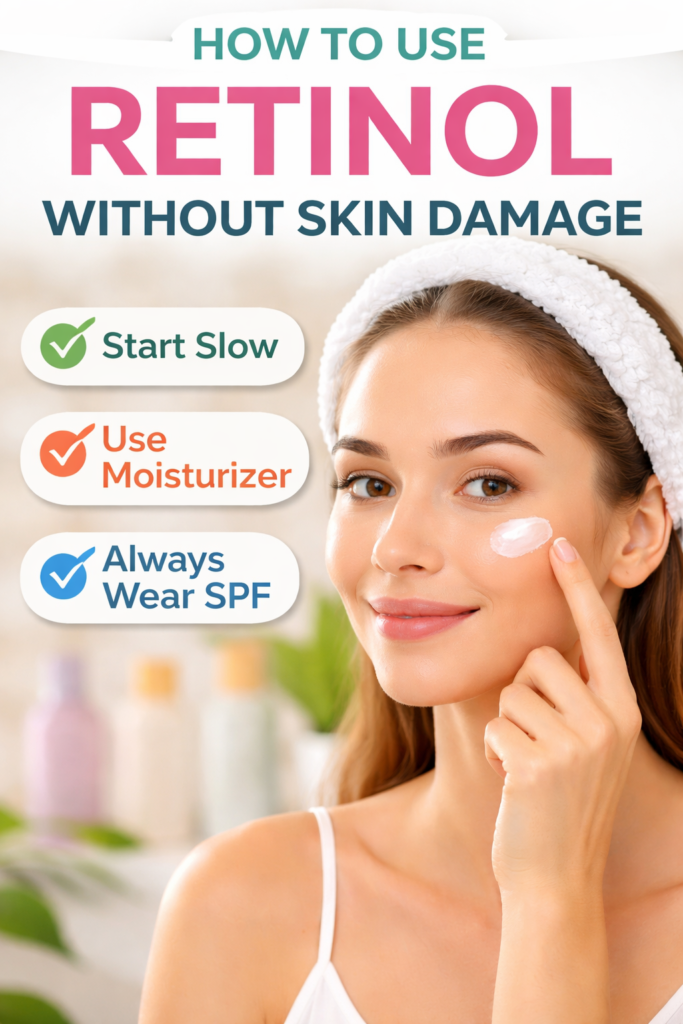
1. Start with a Low Strength
Starting with a low concentration (around 0.25% or 0.3%) is crucial if you’re new to retinol.
Starting strong might seem tempting, but it often leads to:
- Redness
- Peeling
- Burning sensation
Using a low strength allows your skin to build tolerance gradually, which is important for beginners.
2. Use It Only 2–3 Times a Week
Do NOT use retinol daily in the beginning.
A safe routine:
- Week 1–2: Use 2 times per week
- Week 3–4: Increase to 3 times per week
- After 1–2 months: You can slowly move to alternate days
Your skin needs time to adapt.
3. Apply at Night Only
Retinol breaks down in sunlight and makes your skin more sensitive to UV rays.
Always use it:
- At night
- On clean, dry skin
This reduces irritation and improves effectiveness.
This reduces irritation and improves effectiveness of the product.
This is one of the safest ways to use retinol without irritation:
Step 1: Apply a moisturizer
Step 2: Apply a pea-sized amount of retinol
Step 3: Apply another layer of moisturizer
This method helps:
- Reduce irritation
- Protect your skin barrier
- Keep your skin hydrated
5. Use Only a Pea-Sized Amount
More product does NOT mean better results.
Use:
- A pea-sized amount for your entire face
Applying too much can cause:
- Burning
- Flaking
- Redness
6. Avoid Sensitive Areas
Do not apply retinol on:
- Around the eyes
- Corners of the nose
- Lips
These areas are more prone to irritation.
7. Always Use Sunscreen in the Morning
This is non-negotiable.
Retinol makes your skin more sensitive to the sun, so skipping sunscreen can lead to:
- Sunburn
- Dark spots
- Skin damage
Use:
- SPF 30 or higher
- Broad-spectrum sunscreen
Common Mistakes to Avoid
❌ Using Too Much Too Soon
This is the biggest mistake beginners make. It leads to irritation and makes people quit retinol completely.
❌ Mixing with Harsh Ingredients
Avoid combining retinol with:
- AHAs (glycolic acid)
- BHAs (salicylic acid)
- Benzoyl peroxide (initially)
These combinations can over-exfoliate your skin.
❌ Applying on Wet Skin
Wet skin increases absorption, which can increase irritation. Always apply on dry skin.
❌ Skipping Moisturizer
Retinol can dry your skin. Moisturizer helps maintain hydration and protects your skin barrier.
What is “Retinol Purging”?
When you start retinol, you may experience breakouts. This is called purging.
It happens because retinol speeds up cell turnover, bringing clogged pores to the surface faster.
Purging vs Breakout:
- Purging: Temporary, improves in 4–6 weeks
- Breakouts: Persistent and worsening
Don’t panic—this is normal for many beginners.
How to Reduce Retinol Side Effects
If you experience irritation, here’s what to do:
- Reduce frequency (use once a week)
- Use more moisturizer
- Switch to a lower concentration
- Avoid other active ingredients
If irritation continues, stop use and consult a dermatologist.
When Will You See Results?
Retinol is not a quick fix. Results take time:
- 2–4 weeks: Skin may feel smoother
- 6–8 weeks: Improvement in texture
- 3–6 months: Visible anti-aging results
Consistency is key.
Use only a pea-sized amount of retinol for your entire face to avoid irritation.
Who Should Avoid Retinol?
Retinol is not suitable for everyone. Avoid it if you:
- Are pregnant or breastfeeding
- Have extremely sensitive skin
- Have severe skin conditions (consult a dermatologist first)
Beginner-Friendly Retinol Routine
Here’s a simple routine you can follow:
Night Routine (Retinol Days)
- Gentle cleanser
- Moisturizer (light layer)
- Retinol (pea-sized)
- Moisturizer again
Morning Routine
- Cleanser
- Moisturizer
- Sunscreen (SPF 30+)
Tips for Best Results
- Be patient—retinol takes time
- Stay consistent
- Hydration is key
- Don’t chase high percentages early
- Listen to your skin
Final Thoughts
Retinol is one of the most effective skincare ingredients, but only when used correctly. Beginners often make the mistake of using too much too quickly, leading to irritation and frustration.
Start slow, keep your routine simple, and prioritize hydration and sun protection. If you follow the right approach, retinol can transform your skin—without causing damage.
FAQs
1. Can I use retinol every day?
Not in the beginning. Start with 2–3 times per week and increase gradually.
2. Can I use retinol with vitamin C?
Yes, but use them at different times (Vitamin C in the morning, retinol at night).
3. Is peeling normal with retinol?
Mild peeling is normal, but excessive peeling means you’re overusing it.
4. What age should I start retinol?
Most people start in their mid-20s for anti-aging benefits.
5. Can retinol remove dark spots?
Yes, retinol helps fade hyperpigmentation over time.
If you want, I can also create:
- SEO slug
- Meta description
- Thumbnail prompt
- Or affiliate product recommendations for this post 👍
is ki faq likh do
FAQs – How to Use Retinol Without Skin Damage
1. How often should beginners use retinol?
Beginners should start with 2 times per week. After a few weeks, you can increase it to 3 times per week depending on how your skin reacts.
2. Can I use retinol every night?
Not initially. Daily use is only recommended after your skin has built tolerance, which can take 6–8 weeks or longer.
3. What percentage of retinol is best for beginners?
A low concentration like 0.25% or 0.3% is ideal for beginners to minimize irritation and allow gradual adjustment.
4. Is it normal for skin to peel after using retinol?
Yes, mild peeling and dryness are normal in the beginning. However, excessive peeling or burning means you should reduce usage.
5. What is retinol purging and how long does it last?
Retinol purging is a temporary phase where breakouts increase due to faster skin cell turnover. It usually lasts 4–6 weeks.
6. Can I apply retinol under my eyes?
It’s best to avoid the under-eye area unless the product is specifically formulated for that delicate skin.
7. Should I apply retinol before or after moisturizer?
Beginners should use the “sandwich method”: moisturizer → retinol → moisturizer to reduce irritation.
8. Can I use retinol with other active ingredients?
Avoid using it with strong actives like AHAs, BHAs, and benzoyl peroxide in the same routine, especially as a beginner.
9. Do I need sunscreen while using retinol?
Yes, sunscreen is essential. Retinol makes your skin more sensitive to the sun, so use SPF 30 or higher every morning.
10. How long does retinol take to show results?
You may see initial improvements in 4–6 weeks, but noticeable anti-aging results usually take 3–6 months.
11. Can people with sensitive skin use retinol?
Yes, but they should start with a very low concentration and use it less frequently (once or twice a week).
12. What should I do if retinol irritates my skin?
Retinol is one of the most effective skincare ingredients, but you must know how to use retinol correctly to avoid damage.
Reduce usage, apply more moisturizer, and switch to a lower strength. If irritation continues, stop using it temporarily.
13. Can I use retinol during the day?
No, retinol should only be used at night because it breaks down in sunlight and increases sun sensitivity.
14. When should I start using retinol?
Most people start in their mid-20s for anti-aging benefits, but it can also be used earlier for acne treatment.
15. Can retinol remove acne scars and dark spots?
Yes, retinol helps improve skin texture and fade hyperpigmentation over time with consistent use.https://sylomaskincare.com/
By following the right approach, you can transform your skin sustainably.
For more in-depth guidance, refer to the section on how to use retinol.