
This article contains affiliate links. If you purchase through these links, we may earn a small commission at no extra cost to you. We only recommend products we genuinely believe in.

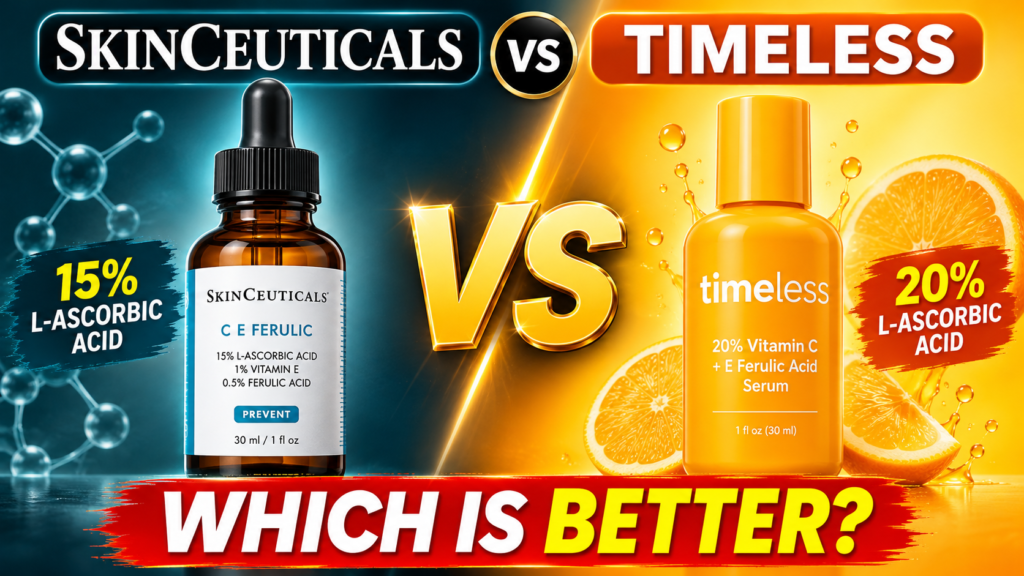
If you have spent more than five minutes researching vitamin C serums, you have probably landed on the same debate: SkinCeuticals C E Ferulic vs Timeless 20% Vitamin C. One is the gold-standard antioxidant serum backed by decades of clinical research. The other costs a fraction of the price and features a nearly identical ingredient list. So which one actually delivers better results?
This comparison breaks down every detail — ingredients, texture, packaging, price per milliliter, and real-world suitability for different skin types — so you can stop guessing and start choosing. For a broader look at top-performing options, explore our roundup of the best vitamin C serums for brightening skin in 2026.

- Enriched Serum for Brightening Skin: Our skin care serum is infused with a megadose of vitamin C to support bright skin …
- Advanced Skin Serum Formula: This vitamin C serum contains a blend of 20% vitamin C and E alongside Ferulic Acid, formul…
- Face Serum for Skin Barrier Support: Our vitamin C serum supports a healthy skin defense against environmental pollutant…
Quick Verdict: Which Vitamin C Serum Is Better?
SkinCeuticals C E Ferulic wins on clinical evidence, formula stability, and dermatologist trust. Timeless 20% Vitamin C + E Ferulic Acid wins on affordability, packaging design, and value per milliliter. If budget is no concern and you want the most scientifically validated formula, choose SkinCeuticals. If you want a well-formulated antioxidant serum at a fraction of the cost, Timeless is a genuinely strong alternative.
SkinCeuticals vs Timeless: Side-by-Side Comparison Table
| Feature | SkinCeuticals C E Ferulic | Timeless 20% Vitamin C + E Ferulic |
|---|---|---|
| Vitamin C | 15% L-Ascorbic Acid | 20% L-Ascorbic Acid |
| Vitamin E | 1% Alpha Tocopherol | Vitamin E (undisclosed %) |
| Ferulic Acid | 0.5% | Ferulic Acid (undisclosed %) |
| Notable Extras | Carnosine, Endophytol | Sodium Hyaluronate, Panthenol |
| pH Level | 2.5–3.0 | ~3.0 (estimated) |
| Size | 30 ml / 1 fl oz | 30 ml / 1 fl oz |
| Price (approx.) | ~$182 | ~$28 |
| Cost per ml | ~$6.07 | ~$0.93 |
| Packaging | Amber glass dropper | Airless pump |
| Fragrance | Fragrance-free | Fragrance-free |
Ingredient Comparison: 15% vs 20% Vitamin C
The most obvious difference is concentration. SkinCeuticals uses 15% L-ascorbic acid, while Timeless uses 20%. Does higher automatically mean better? Not necessarily. According to a comprehensive review of vitamin C in dermatology, L-ascorbic acid penetration increases with concentration up to about 20%, after which absorption plateaus. Higher concentrations can also increase the risk of irritation without delivering proportionally greater benefits.
SkinCeuticals chose 15% based on extensive in-house research identifying it as the optimal balance between efficacy and tolerability. Timeless opted for 20%, which sits at the upper effective threshold. Both concentrations fall within the range supported by published science.
Formula and Antioxidant Technology
Both serums follow the same foundational antioxidant trio: L-ascorbic acid, vitamin E, and ferulic acid. This combination is not arbitrary. Research published in the Journal of Investigative Dermatology demonstrated that adding ferulic acid to a solution of vitamins C and E doubles photoprotection and significantly stabilizes both vitamins against oxidation.
SkinCeuticals holds a patent on its specific 15-1-0.5 ratio and has invested heavily in clinical testing of the finished product. The current formula also includes carnosine and endophytol, which may support skin resilience. Timeless uses the same three-antioxidant framework but does not disclose exact percentages for vitamin E and ferulic acid. It adds sodium hyaluronate for hydration and panthenol for barrier support — practical inclusions that SkinCeuticals omits. If you are building a layered routine, pairing your vitamin C with a dedicated vitamin E serum can further boost antioxidant defense.
SkinCeuticals C E Ferulic: Benefits and Drawbacks
Benefits: Extensively studied formula with published clinical data. Precise, disclosed ingredient percentages. pH-optimized for maximum L-ascorbic acid penetration. Widely recommended by board-certified dermatologists — see our guide to dermatologist-recommended vitamin C serums for more context.
Drawbacks: Very high price point. Amber glass dropper bottle exposes the formula to air and light every time you open it. The scent — often described as metallic or hot-dog-like — is off-putting to some users.
Timeless 20% Vitamin C: Benefits and Drawbacks
Benefits: Exceptional value at roughly one-seventh the price. Airless pump packaging protects the formula from oxidation far better than a dropper. Added sodium hyaluronate and panthenol provide lightweight hydration. Fragrance-free and suitable for most skin types.
- Enriched Serum for Brightening Skin: Our skin care serum is infused with a megadose of vitamin C to support bright skin …
- Advanced Skin Serum Formula: This vitamin C serum contains a blend of 20% vitamin C and E alongside Ferulic Acid, formul…
- Face Serum for Skin Barrier Support: Our vitamin C serum supports a healthy skin defense against environmental pollutant…
Drawbacks: Exact percentages of vitamin E and ferulic acid are not disclosed. No published clinical trials on the finished product. The 20% concentration may cause stinging in sensitive or reactive skin.
Texture, Absorption and Application Experience
SkinCeuticals has a thin, watery texture that absorbs quickly but can leave a slightly tacky finish for a few minutes. Timeless is similarly lightweight and layers well under moisturizer and sunscreen. Both are fragrance-free, though SkinCeuticals carries a distinct metallic scent from the raw L-ascorbic acid that dissipates after application.
Packaging, Freshness and Oxidation
This is where Timeless has a clear advantage. Its airless pump minimizes air exposure, helping the L-ascorbic acid stay potent longer. SkinCeuticals uses an amber glass dropper bottle, which offers some UV protection but introduces oxygen every time the cap is removed. Regardless of which serum you choose, store it in a cool, dark place and use it within three to four months of opening. If the liquid turns dark orange or brown, it has oxidized and should be replaced.
Which Serum Is Better for Dark Spots and Hyperpigmentation?
Both serums can help fade dark spots over time because L-ascorbic acid inhibits tyrosinase, the enzyme responsible for melanin production. SkinCeuticals has more clinical data supporting visible improvement in discoloration, giving it a slight edge. However, if you are dealing with stubborn hyperpigmentation, combining vitamin C with other proven brightening actives can accelerate results. Our breakdown of vitamin C vs niacinamide for hyperpigmentation explains how these ingredients compare and whether you can use them together.
Winner: SkinCeuticals (based on stronger clinical evidence for discoloration improvement).
Which Is Better for Fine Lines and Aging Skin?
Both formulas deliver antioxidant protection that helps neutralize free radicals from UV exposure and pollution — two major drivers of premature aging. SkinCeuticals has published data showing improvement in the appearance of fine lines after consistent use. Timeless can provide similar antioxidant benefits, though without product-specific clinical confirmation. For a complete anti-aging strategy, consider pairing your vitamin C with one of the best anti-aging serums of 2026.
Winner: SkinCeuticals (stronger clinical backing for anti-aging outcomes).
Which Is Better for Sensitive Skin?
Timeless’s 20% concentration may sting or cause redness on reactive skin. SkinCeuticals at 15% is generally better tolerated, though its low pH (2.5–3.0) can still irritate very sensitive complexions. If your skin is easily irritated, start by applying either serum every other day and gradually increase frequency. For more tailored recommendations, check our list of the best vitamin C serums for sensitive skin.
Winner: SkinCeuticals (lower concentration, better studied for tolerability).
Price Comparison and Cost Per Milliliter
At approximately $182 for 30 ml, SkinCeuticals costs about $6.07 per ml. Timeless at roughly $28 for 30 ml comes out to about $0.93 per ml. That makes Timeless nearly 6.5 times more affordable per milliliter. Over the course of a year, the savings add up significantly.
Is SkinCeuticals Worth the Extra Money?
It depends on your priorities. You are paying for a patented, clinically tested formula with disclosed concentrations, a pH-optimized delivery system, and decades of dermatologist confidence. If you want the most evidence-backed option and cost is not a barrier, SkinCeuticals justifies its premium. If you are comfortable with a well-formulated alternative that shares the same core antioxidant trio, Timeless delivers impressive value.
Possible Side Effects and Precautions
Both serums can cause temporary tingling, redness, or dryness, especially during the first few weeks of use. L-ascorbic acid is inherently acidic, and formulas with a low pH may irritate compromised skin barriers. Always apply sunscreen during the day — vitamin C enhances photoprotection but does not replace SPF. For a deeper understanding of how vitamin C serums work alongside sun protection, this overview is a helpful resource.
How to Use Vitamin C Serum Correctly
Apply four to five drops to clean, dry skin each morning before moisturizer and sunscreen. Allow the serum to fully absorb for about one to two minutes before layering other products. Start with every other day if you are new to vitamin C, then build up to daily use. Store your bottle away from heat and direct sunlight to preserve potency.
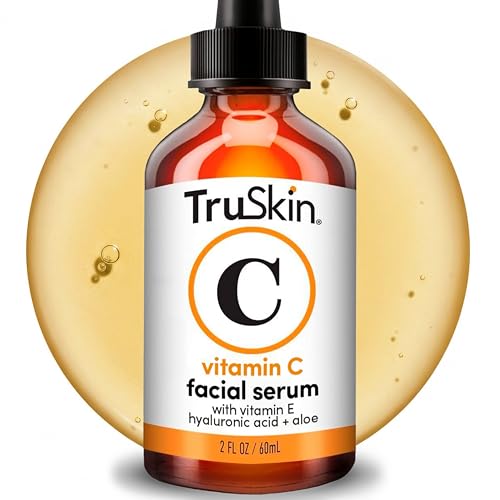
- ADVANCED BRIGHTENING FORMULA: Vitamin C helps fight free radical damage and support natural collagen while improving the…
- HYDRATION-BOOSTED FORMULA: Layers vitamin C with Hyaluronic Acid, Vitamin E, Aloe Vera, and Jojoba Oil to help balance m…
- SUPERIOR FORM OF VITAMIN C: Uses highly stable Sodium Ascorbyl Phosphate to maintain potency over time while helping min…
Who Should Buy SkinCeuticals?
Choose SkinCeuticals C E Ferulic if you want the most clinically validated vitamin C serum available, you have normal to dry skin that tolerates low-pH formulas well, and you are comfortable investing in a premium product.
Who Should Buy Timeless?
Choose Timeless 20% Vitamin C + E Ferulic Acid if you want a well-formulated antioxidant serum on a budget, you prefer airless pump packaging, or you are a vitamin C beginner who wants to test the ingredient category before committing to a luxury price. You can verify the full ingredient list on the Timeless official product page.
Final Verdict: Which One Should You Choose?
SkinCeuticals C E Ferulic remains the benchmark for topical vitamin C serums, backed by peer-reviewed research and precise formulation. Timeless 20% Vitamin C is a legitimate, well-designed alternative that delivers the same core antioxidant benefits at a dramatically lower price. Neither serum is a bad choice — the right one depends on your skin, your budget, and how much weight you place on clinical validation. Whichever you pick, consistency is what drives results.
Frequently Asked Questions
Is Timeless a good dupe for SkinCeuticals C E Ferulic?
Timeless shares the same core antioxidant trio (vitamin C, vitamin E, ferulic acid) and is widely considered one of the closest affordable alternatives. However, it lacks the published clinical data and disclosed percentages that distinguish SkinCeuticals.
Does 20% vitamin C work better than 15%?
Not necessarily. Research indicates that L-ascorbic acid absorption plateaus around 20%, and higher concentrations increase irritation risk without guaranteed additional benefit. The 15% concentration used by SkinCeuticals is well-supported by clinical evidence.
Can beginners use either serum?
Yes. Start with application every other morning and gradually increase to daily use. If you have sensitive skin, the 15% SkinCeuticals formula may be more comfortable initially.
How should I store vitamin C serum?
Keep both serums in a cool, dark place away from direct sunlight and heat. The Timeless airless pump offers better oxidation protection, but both products should be used within three to four months of opening.
Does vitamin C serum replace sunscreen?
No. Vitamin C provides antioxidant support that complements sun protection, but it does not replace broad-spectrum SPF. Always apply sunscreen as the final step in your morning routine.