
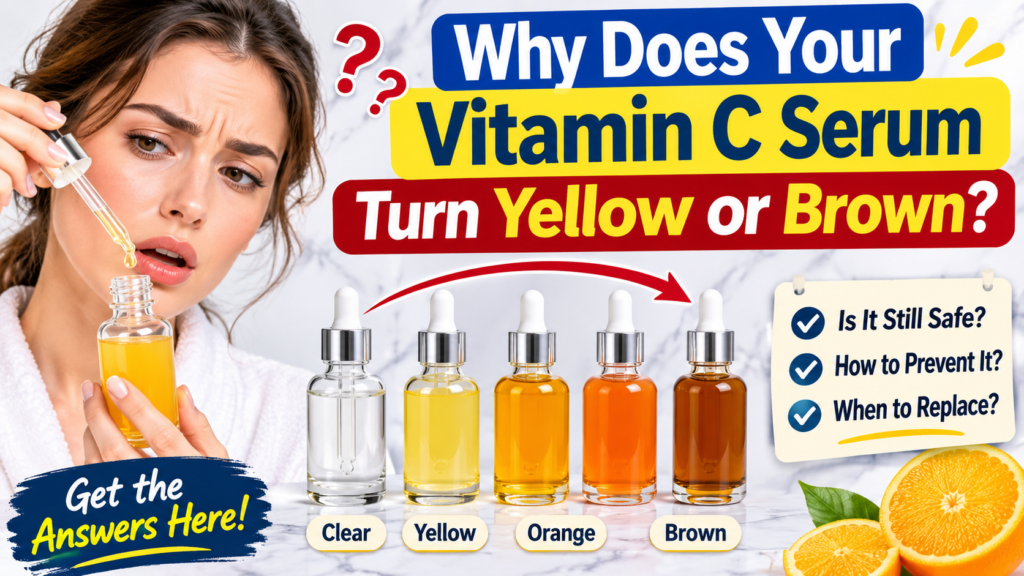
You reach for your favorite Vitamin C serum one morning and notice something off — the once-clear liquid has turned yellow, or worse, a murky brown. Is it still safe? Has it lost its brightening power? You’re not alone in wondering.
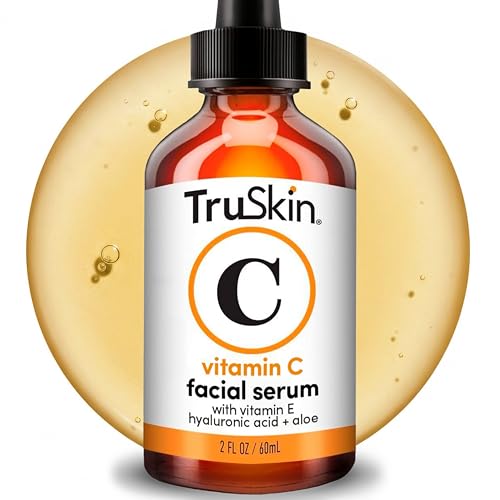
- ADVANCED BRIGHTENING FORMULA: Vitamin C helps fight free radical damage and support natural collagen while improving the…
- HYDRATION-BOOSTED FORMULA: Layers vitamin C with Hyaluronic Acid, Vitamin E, Aloe Vera, and Jojoba Oil to help balance m…
- SUPERIOR FORM OF VITAMIN C: Uses highly stable Sodium Ascorbyl Phosphate to maintain potency over time while helping min…
Quick Answer: Vitamin C serum turns yellow or brown primarily because of oxidation, a chemical reaction triggered by exposure to air, light, and heat. A slight yellow tint can be perfectly normal depending on the formula, but a deep orange or brown color often signals that the active ingredient has degraded significantly. Compare your serum to its original appearance, check for changes in smell and texture, and follow the manufacturer’s guidance before deciding whether to keep using it.
Why Does Vitamin C Serum Turn Yellow or Brown?
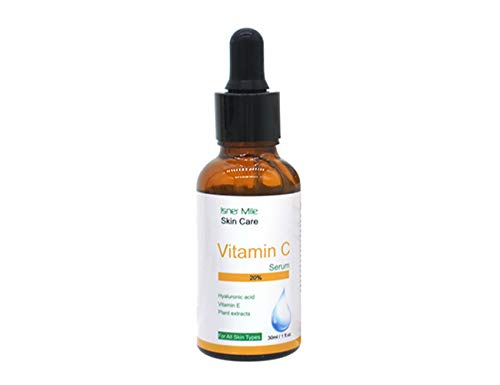
- Universally Suitable: Our skin beauty serum is crafted with the diversity of all skin types in mind. No matter your skin…
- Generous Size: With a full size of 30ml/1 fl. oz., enjoy long-lasting skincare that goes a long way. Our product is desi…
- Extended Freshness: Our serum ensures extended freshness with a shelf life of 36 months, ensuring you get the most out o…
Vitamin C — especially in its most potent form, L-ascorbic acid — is a powerful antioxidant. Ironically, that same antioxidant nature makes it highly reactive. When L-ascorbic acid is exposed to oxygen, it begins to break down into dehydroascorbic acid and eventually into diketogulonic acid, a compound with a yellow-to-brown hue. This process is called oxidation, and it is the main reason behind vitamin C serum color change.
Not every color shift means your serum is ruined. Some formulations start with a pale yellow tint due to the concentration of active ingredients or the presence of supporting compounds like ferulic acid or Vitamin E.
What Causes Vitamin C Serum to Oxidize?
Several environmental and formulation factors accelerate vitamin C serum oxidation:
- Oxygen exposure: Every time you open the bottle, air enters and reacts with the active ingredients.
- Sunlight and artificial light: UV and visible light break down ascorbic acid molecules.
- Heat: Warm environments — including steamy bathrooms — speed up chemical degradation.
- Water content: Water-based formulas are inherently less stable than anhydrous (water-free) ones.
- Improper storage: Leaving the cap loose or storing the bottle on a sunny windowsill invites faster breakdown.
What Does the Color of Your Vitamin C Serum Mean?
Use this general guide to interpret your serum’s appearance. Remember, this is not a universal potency test — always compare with the product’s original color and follow the brand’s own guidance.
| Serum Color | What It May Mean | What to Do |
|---|---|---|
| Clear | Depends on formulation | Check original appearance |
| Pale Yellow | May be normal or early oxidation | Compare with original color |
| Deep Yellow | Possible increased oxidation | Check product guidance |
| Amber/Orange | Possible significant oxidation | Evaluate other signs |
| Brown | May indicate substantial degradation | Consider replacing it |
A pale yellow hue in a high-concentration L-ascorbic acid serum may be completely normal from day one. The key question is whether the color has changed since you first opened the bottle.
Can You Still Use Yellow Vitamin C Serum?
In many cases, yes. A light yellow tint in a serum that was originally clear may indicate early oxidation, but the product can still retain meaningful potency. If the formula was already pale yellow when you bought it — which is common among dermatologist-recommended vitamin C serums formulated at 15–20% L-ascorbic acid — the color alone is not a reason to stop using it. Monitor for further darkening and any other signs of degradation.
Is Brown Vitamin C Serum Harmful?
An oxidized vitamin C serum that has turned dark brown is unlikely to cause serious harm, but it is probably far less effective. The degraded compounds may also increase the risk of mild irritation, especially for those with reactive or compromised skin barriers. If you have a sensitive complexion, consider switching to a gentler option from a curated list of vitamin C serums for sensitive skin rather than continuing with a heavily oxidized product.
Signs Your Vitamin C Serum Has Gone Bad
Color is just one clue. Look for these additional warning signs:
- Unusual odor: A metallic, sour, or distinctly “off” smell suggests degradation.
- Texture changes: New stickiness, grittiness, or unexpected thickness.
- Separation: Liquid pooling or visible layers forming in the bottle.
- Cloudiness: A once-clear serum turning hazy or murky.
- Major color shift: A dramatic change from the product’s original appearance.
L-Ascorbic Acid vs. Vitamin C Derivatives: Which Is More Stable?
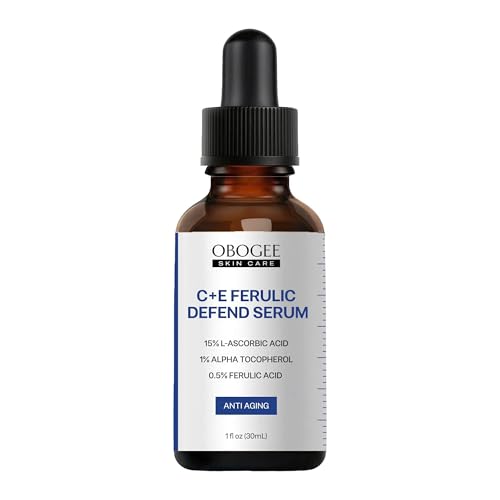
- CLINICAL-QUALITY VITAMIN C SERUM – Powered by 15% pure L-Ascorbic Acid (Vitamin C), 0.5% Ferulic Acid, and Vitamin E, th…
- DERMATOLOGIST-APPROVED, PREMIUM INGREDIENTS – Made with the same clinically proven ingredients found in professional der…
- SKIN FACE SERUM – Contains 15% L-Ascorbic Acid—the purest and most potent form of Vitamin C at 99.9% purity, unlike lowe…
Not all Vitamin C serums oxidize at the same rate. The specific form of Vitamin C matters significantly.
- L-Ascorbic Acid (L-AA): The most researched and potent form, but also the most unstable. It requires a low pH (around 3.5) and is highly susceptible to oxidation. Research published in Nutrients confirms that L-AA’s efficacy is closely tied to its stability within a given formulation.
- Sodium Ascorbyl Phosphate (SAP): A water-soluble derivative that is more stable and gentler, making it a popular choice in vitamin C serums for oily skin.
- Magnesium Ascorbyl Phosphate (MAP): Another stable, hydrating derivative well suited for drier or sensitive skin types.
- Ascorbyl Glucoside: A slow-release form that converts to L-AA on the skin; more resistant to oxidation than pure L-AA.
- Tetrahexyldecyl Ascorbate (THD): An oil-soluble derivative with excellent stability and skin penetration, often found in premium anhydrous formulas.
- 3-O-Ethyl Ascorbic Acid: A highly stable, fast-acting derivative gaining popularity in brightening vitamin C serums.
No single form is universally superior. L-AA offers the strongest clinical evidence for collagen synthesis and photoprotection, while derivatives trade some potency for greater shelf stability and gentler application.
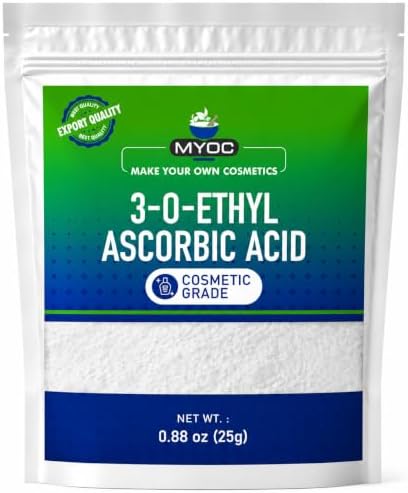
- COSMETIC GRADE INGREDIENT – 3-O-Ethyl Ascorbic Acid (3-O-EAC) is a cosmetic-grade, water-soluble Vitamin C derivative in…
- HIGH STABILITY – Formulated for cosmetic applications requiring a stable Vitamin C derivative. Suitable for formulations…
- WATER-SOLUBLE POWDER – Dissolves in warm water and can be incorporated into the water phase of cosmetic formulations dur…
How to Prevent Vitamin C Serum From Turning Brown
Follow these practical steps to extend your serum’s lifespan:
- Tighten the cap immediately after each use to minimize air exposure.
- Store in a cool, dark place — a drawer or cabinet well away from windows.
- Avoid the bathroom counter if your bathroom gets hot and steamy after showers.
- Choose opaque or amber glass packaging over clear bottles whenever possible.
- Prefer airless pump dispensers over dropper bottles to reduce oxygen contact.
- Buy smaller sizes you can realistically finish within the recommended period.
- Look for formulas with Vitamin E, which helps stabilize Vitamin C — and consider adding Vitamin E serums to your routine for complementary antioxidant support.
Should You Keep Vitamin C Serum in the Refrigerator?
Refrigeration can slow oxidation, especially for water-based L-ascorbic acid serums stored in warm climates or heated homes. However, it is not always necessary. Many stabilized derivatives and anhydrous formulas perform perfectly well at room temperature. Proper storage recommendations vary by brand, so always check the manufacturer’s label first. If you do refrigerate your serum, keep it in a consistent spot and avoid frequent temperature swings caused by repeatedly moving it in and out.
How Long Does Vitamin C Serum Last After Opening?
There is no universal shelf life. Most L-ascorbic acid serums remain effective for roughly three to six months after opening, while stabilized derivatives may last considerably longer. Check two things on your packaging:
- The expiration date printed on the box or bottle.
- The PAO (Period After Opening) symbol — a small open-jar icon with a number like “6M” or “12M” indicating how many months the product is expected to remain stable after first use.
Actual longevity depends on the specific formula, packaging design, and how consistently you store it.
When Should You Throw Away Your Vitamin C Serum?
Replace your serum if it has turned dark brown, smells unusual, has changed texture, or is past its expiration date — even if the color shift seems minor. When in doubt, err on the side of caution. A degraded serum will not deliver the brightening and antioxidant benefits you are looking for, and it may irritate your skin.
Frequently Asked Questions
1. Why did my Vitamin C serum turn yellow overnight?
A sudden shift is unusual. Check whether the cap was left loose or the bottle was exposed to heat or direct sunlight. A slight yellowing may also be normal for high-concentration L-AA formulas that were already pale when purchased.
2. Is it normal for Vitamin C serum to be yellow?
Yes, in many cases. Some formulations are naturally pale yellow due to ingredient concentration. The concern arises when the color changes significantly after you first open the product.
3. Can I use Vitamin C serum if it turns brown?
It is generally not recommended. A brown color suggests substantial degradation, meaning the serum has likely lost most of its effectiveness and could potentially cause irritation.
4. Does oxidized Vitamin C serum still work?
Partially oxidized serum may retain some antioxidant activity, but its potency is diminished. Heavily oxidized (brown) serum offers minimal benefit.
5. Should I throw away orange Vitamin C serum?
An amber or orange tint suggests significant oxidation. Evaluate the smell, texture, and age of the product. If multiple signs of degradation are present, it is time to replace it.
6. Can oxidized Vitamin C serum stain your skin?
Yes. Heavily oxidized serum can leave a temporary orange or yellowish tint on the skin, especially in creases and around the fingernails. This staining is cosmetic and washes off with cleanser.
7. Does keeping Vitamin C serum in the fridge prevent oxidation?
Refrigeration slows oxidation but does not stop it entirely. It is most helpful for water-based L-AA serums in warm environments.
8. How do I know if my Vitamin C serum has expired?
Check the printed expiration date and the PAO symbol on the packaging. Combine this with visual, smell, and texture checks for a complete assessment.
9. Which type of Vitamin C serum is most stable?
Oil-soluble derivatives like tetrahexyldecyl ascorbate and anhydrous L-AA formulas tend to be the most stable overall. However, stability varies significantly by specific formulation and packaging.
10. How can I make my Vitamin C serum last longer?
Store it in a cool, dark place, keep the cap tightly sealed, choose airless packaging when possible, and buy sizes you can finish within a few months.
Final Verdict
A color change in your Vitamin C serum is a signal worth paying attention to, but it is never the whole story. Some formulas are naturally yellow. Some darken slightly and remain effective. Others degrade rapidly under poor storage conditions. The smartest approach is to compare your serum with its original appearance, follow the manufacturer’s storage and expiration guidance, and evaluate smell and texture alongside color. If you are unsure whether your current serum is still performing, it may be time to explore a fresh option — and understanding how Vitamin C compares with other brightening actives like niacinamide can help you build a more resilient, results-driven skincare routine overall.
Disclaimer: This article is for educational purposes only and does not replace professional dermatological advice. Individual results and product stability may vary based on formulation, storage, and skin type.