
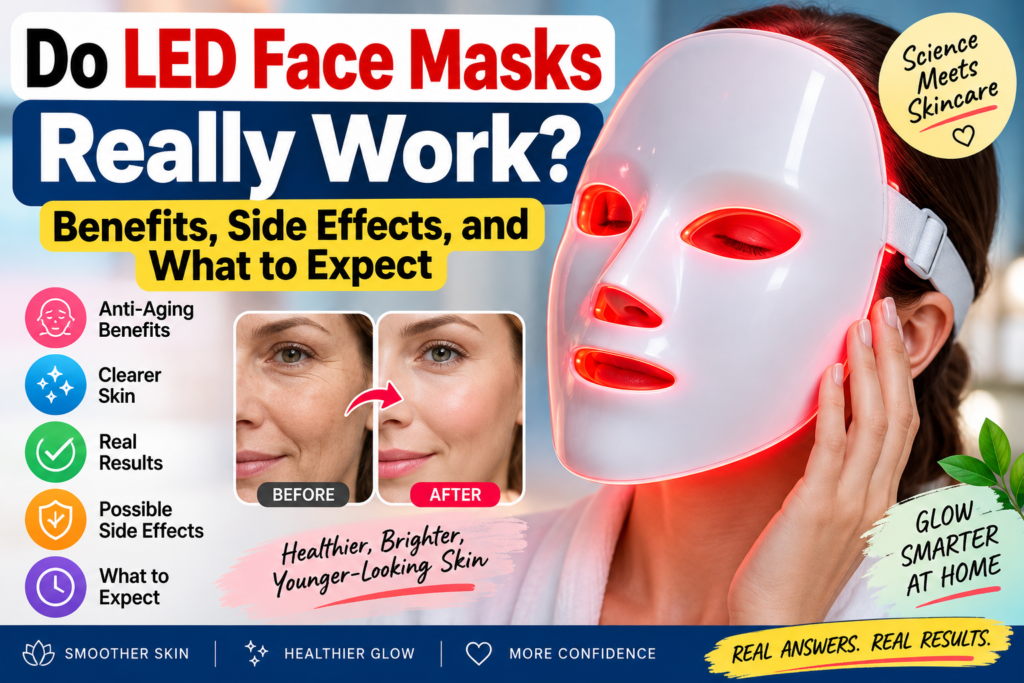
LED face masks have gone from dermatologist offices to bathroom shelves, and it’s fair to wonder whether the hype matches reality.
Do LED face masks really work? In short: research suggests certain wavelengths of LED light can support skin health, and many at-home devices are backed by real (if often modest) clinical data. But results are typically gradual, vary from person to person, and depend heavily on the specific device, wavelength, and how consistently it’s used. LED masks are not a miracle fix, and they work best as one part of a broader skincare routine rather than a stand-alone solution.
This guide breaks down what the evidence actually shows, what you can realistically expect, and how to use an LED face mask safely.
Do LED Face Masks Really Work?
The honest answer is: it depends on the device, the wavelength, and the specific concern you’re targeting.
Multiple wavelengths of LED light have been studied for skin benefits, and the American Academy of Dermatology notes that some studies indicate red-light LED devices can produce subtle to noticeable results on the face. In one study the AAD references, more than 90% of patients who received eight LED red-light treatments over four weeks reported some improvement, including softer, smoother skin, less redness, and lighter dark spots.
That’s encouraging, but it comes with an important caveat. As the AAD also points out, researchers test different devices for different lengths of time using different study designs, which means results from one study can’t be directly compared to another, and more research is still needed before we fully understand how LED light affects the skin.
There’s also a meaningful gap between professional and at-home results. Harvard Health notes that regular red light treatments are needed to see benefits, and a Harvard Medical School dermatologist explains that devices need to be used multiple times a week for four to six months to be effective, calling it “slow and steady” rather than a quick fix. The American Academy of Dermatology similarly points out that home devices are generally less effective than in-office professional treatments.
So do LED face masks work? For many people, yes — to a degree. Just don’t expect overnight or dramatic transformations.
How Do LED Face Masks Work?
LED stands for light-emitting diode. LED face masks use rows of small lights that shine specific wavelengths onto your skin. Unlike lasers used in dermatology offices, at-home LED devices are low-energy and non-invasive — they don’t cut, heat, or damage the skin’s surface.
The scientific term for this is photobiomodulation. Harvard Health describes it as light believed to stimulate mitochondria, the tiny “powerhouses” inside skin cells, in a way that may reduce inflammation and boost the skin’s production of collagen, a protein that helps keep skin firm and supple.
Different wavelengths are absorbed by skin at different depths, which is why manufacturers design LED masks around specific colors of light for specific goals — a concept we’ll break down in the section below.
If you’re comparing devices, this guide to the best red light therapy masks for anti-aging walks through what separates a well-designed mask from a basic one.
What Are the Benefits of LED Face Masks?
Based on current research, potential benefits of LED light therapy may include:
- Fine lines and the look of wrinkles — some studies suggest a modest smoothing effect over time
- Skin firmness and texture — linked to potential collagen support
- Redness and inflammation — red and near-infrared light are commonly studied for calming effects
- Mild acne — blue light in particular has research behind it for acne-prone skin
- Overall skin appearance — including brightness and evenness
- Uneven-looking skin tone — some users report a more even look with consistent use
Acne and mild signs of aging have the most consistent research behind them. Claims around deeper wrinkles, sagging, or dramatic firming are far less established, and results for these concerns tend to be subtle rather than transformative.
Red Light vs. Blue Light: What’s the Difference?
Not all LED light does the same thing. Here’s a simple breakdown of the most common wavelengths used in at-home masks:
| Light Type | Common Skincare Goal | What Users May Expect | Important Limitations |
|---|---|---|---|
| Red light (roughly 630–660 nm) | Fine lines, firmness, overall rejuvenation | Gradual improvement in skin texture and tone with consistent use over weeks to months | Results are typically subtle; not a replacement for professional anti-aging treatments |
| Near-infrared light (roughly 800–850 nm) | Deeper skin support, healing, inflammation | May penetrate more deeply than red light; often paired with red light in masks | Less standardized research on at-home mask formats specifically |
| Blue light (roughly 405–420 nm) | Acne-prone skin | May help reduce acne-causing bacteria and future breakouts | Not a treatment for cystic or severe acne; doesn’t address all acne causes |
| Combination (red + blue, or red + near-infrared) | Multiple concerns at once | A broader but still moderate range of benefits | Effectiveness depends on both wavelengths being at a therapeutic strength |
If your main goal is firmer, smoother-looking skin, it may help to browse options built specifically for that goal, like these best LED face masks for wrinkles and firm skin.
Can LED Face Masks Reduce Wrinkles?
LED masks are not going to erase deep wrinkles, and no reputable source claims they can. What the research does suggest is more modest: consistent red and near-infrared light exposure may support collagen activity and, over time, contribute to smoother-looking, more even-textured skin.
The key word is consistent. Skin cell turnover and collagen remodeling happen gradually, which is why dermatologists emphasize repeated sessions over weeks or months rather than a single use. Pairing LED use with other proven anti-aging habits — daily sunscreen, moisturizer, and antioxidant-rich ingredients — tends to give better overall results than relying on light therapy alone. A good vitamin E serum is a popular complement, since vitamin E is often used for its antioxidant and moisturizing properties.
Can LED Face Masks Help Acne?
Blue light therapy has some of the more established research behind it when it comes to acne. Blue wavelengths are thought to target the bacteria associated with breakouts, while red light may help calm the inflammation that comes with acne.
A systematic review and meta-analysis published in JAMA Dermatology examined at-home LED devices for treating acne vulgaris, reflecting growing scientific interest in whether these consumer devices are genuinely effective — and how they compare across different product types.
That said, LED therapy is not a cure and doesn’t work for everyone. It tends to be most useful for mild-to-moderate acne, and it isn’t a substitute for treatments like topical retinoids, benzoyl peroxide, or prescription medication. If you have persistent, cystic, or severe acne, a dermatologist can help you decide whether LED therapy makes sense alongside — not instead of — standard treatment.
How Long Does It Take for an LED Face Mask to Work?
There’s no universal timeline, and any source promising a specific number of days for guaranteed results should be viewed with skepticism. That said, here’s a general pattern many users and dermatology sources describe:
- First few sessions: Skin may look slightly calmer or more hydrated right after use, but visible changes to texture or tone are unlikely yet.
- Several weeks in: With consistent use (often multiple times a week), some people begin noticing subtle improvements in texture, redness, or breakouts.
- Months of ongoing use: The AAD notes that people usually see the best results several weeks after their treatment sessions, and follow-up sessions may be needed to maintain those results — meaning this isn’t a one-and-done treatment.
Consistency matters more than intensity. Using a mask sporadically is unlikely to produce the same results as following a regular schedule based on your specific device’s instructions.
LED Face Mask Side Effects
LED light therapy is generally considered low-risk compared to more invasive skin treatments, but it isn’t entirely without side effects. Possible, usually temporary, effects can include:
- Mild redness immediately after use
- Temporary warmth or a tingling sensation
- Dryness or tightness
- Slight irritation, especially with overuse or in sensitive skin
According to the American Academy of Dermatology Association, red light therapy is likely safe for short-term use, and no research to date has suggested that red light causes cancer. Still, that doesn’t mean every device or every use case is risk-free. Another dermatology-reviewed source notes that possible side effects and risks of red light therapy can include swelling, blistering, and worsening of conditions linked to light sensitivity — which is why following instructions matters.
If you notice ongoing irritation, unusual redness that doesn’t fade, or any discomfort that doesn’t resolve shortly after a session, stop using the device and check in with a dermatologist or healthcare provider.
Are LED Face Masks Safe?
For most healthy adults using a well-made device as directed, LED face masks are considered safe. LED light doesn’t use UV rays, which is the main driver of sun-related skin damage, and the treatment is non-invasive — it doesn’t break the skin or involve heat intense enough to burn. Many devices have also gone through FDA clearance for specific uses, which is worth a closer look. The FDA has cleared several red-light devices for treating signs of skin aging at home, but FDA clearance is about the device’s safety and regulatory classification — not a guarantee that it will deliver dramatic or specific cosmetic results. As one dermatology-affiliated source puts it, “FDA approved” and “FDA certified” don’t actually mean anything for red light devices — what matters is whether a device is properly FDA-cleared for its intended use.
When shopping for a device, it’s worth checking:
- Whether the device has FDA clearance for its stated use
- The specific wavelengths used and whether they match your skin goals
- Whether eye protection is included or recommended
- Manufacturer instructions for session length and frequency
- Build quality and warranty information
Who Should Be Careful With LED Face Masks?
LED masks aren’t right for everyone. Talk with a dermatologist before using an at-home LED device if you:
- Have a light-sensitive skin condition (such as certain forms of lupus or porphyria)
- Take photosensitizing medications, including certain antibiotics or acne medications like isotretinoin
- Have active skin infections, open wounds, or a rash in the treatment area
- Are pregnant (out of general caution, since research in this group is limited)
- Have a history of skin cancer or are currently undergoing skin cancer treatment
- Have any eye conditions, since eye protection is especially important with light devices
If you’re unsure whether LED therapy is appropriate for your situation, a quick conversation with a dermatologist is worth it before you invest in a device.
How to Use an LED Face Mask Correctly
Every device is a little different, so the manufacturer’s instructions should always take priority. That said, here’s a general routine that applies to most LED face masks:
- Clean your skin first. Remove makeup, sunscreen, and dirt so light can reach the skin directly.
- Follow the device’s specific instructions. Wavelength strength, timing, and safety features vary between brands.
- Position the mask correctly. It should sit close to the skin without gaps, per the manufacturer’s fit guidance.
- Use the recommended session length. Longer isn’t necessarily better — excess exposure can increase irritation risk.
- Stick to the recommended frequency. Most devices are designed for multiple uses per week, not daily marathon sessions.
- Apply skincare afterward if the brand allows it. Some devices recommend serums or moisturizer post-session; others don’t. Check your manual.
- Stay consistent. Results build gradually over weeks and months, not single sessions.
Many masks also use bright light that can be uncomfortable for the eyes, so use any included eye protection as directed.
What to Expect After Using an LED Face Mask
First few uses: Skin may appear slightly more relaxed or hydrated-looking right after a session, but visible changes to fine lines, acne, or tone are unlikely yet.
Several weeks of consistent use: Some people start noticing subtle shifts — smoother texture, calmer-looking redness, or fewer new breakouts. Not everyone will notice changes in the same timeframe, and some may not notice a dramatic difference at all.
Longer-term maintenance: LED benefits generally aren’t permanent without continued use, so ongoing sessions, spaced per your device’s guidance, are typically needed to maintain results.
Combining LED sessions with the rest of a supportive skincare routine — like these summer skin glow tips — can help your skin look its best in between sessions.
Are LED Face Masks Worth It?
Worth considering if you:
- Want a non-invasive addition to your existing skincare routine
- Have mild acne, occasional redness, or early signs of aging you’d like to address gradually
- Are willing to use the device consistently over weeks or months
- Have realistic expectations about subtle, gradual improvement rather than dramatic change
- Have checked that the device is properly cleared for its intended use
May not be right if you:
- Are looking for a fast or dramatic transformation
- Have a light-sensitive condition or take photosensitizing medication without medical clearance
- Have moderate-to-severe acne or significant wrinkles that likely need professional treatment
- Aren’t able to commit to a regular usage schedule
- Have a limited budget better spent on core skincare basics like sunscreen and moisturizer first
For some people, an LED mask is a helpful long-term addition. For others, the same budget might be better spent on fundamentals, like a sleeping mask vs. night cream comparison to figure out which overnight product fits their routine best.
Final Verdict: Do LED Face Masks Really Work?
Yes, but with real caveats. Evidence supports LED light therapy as a legitimate, generally safe tool that may help with mild acne, redness, and early signs of aging — especially red and blue light, which have the most research behind them. At-home devices tend to be less powerful than professional treatments, results build gradually with consistent use, and outcomes vary from person to person and device to device.
LED face masks aren’t a replacement for dermatologist care, sun protection, or a solid daily skincare routine — but for many people, used correctly and consistently, they can be a reasonable, evidence-informed addition to one.
Frequently Asked Questions
Do LED face masks really work? Research suggests red and blue light in particular may offer real but modest skin benefits, like improved texture, reduced redness, or fewer breakouts. Results vary by device and consistency of use, and at-home masks are generally less powerful than professional treatments.
How long does it take for an LED mask to work? Most people don’t see changes after one or two sessions. Consistent use over several weeks is typically needed before subtle improvements appear, and ongoing use helps maintain results.
Can LED masks get rid of wrinkles? No device can “get rid of” wrinkles entirely. Red and near-infrared light may support collagen activity and contribute to smoother-looking skin over time, but results are gradual and vary by individual.
Can LED masks help acne? Blue light has research supporting its use for mild-to-moderate acne, often combined with red light for inflammation. It’s not a guaranteed fix and isn’t a replacement for standard acne treatment when that’s needed.
How often should you use an LED face mask? This depends on the specific device — always follow the manufacturer’s recommended frequency, often multiple sessions per week.
Are LED face masks safe? For most healthy adults using a properly cleared device as directed, LED masks are generally considered safe, since they don’t use UV light. Mild, temporary side effects like redness or dryness are possible. People with light-sensitive conditions or on photosensitizing medications should check with a dermatologist first.
Can you use skincare products before an LED mask? This varies by device — some manufacturers recommend cleansing only, while others allow products before or after. Check your specific device’s instructions.
Is red light or blue light better for skin? Neither is universally “better” — they target different concerns. Red light is more associated with fine lines and firmness, while blue light is more associated with acne-prone skin. Many masks combine both.
This article is for informational purposes only and is not a substitute for professional medical or dermatological advice. Talk with a dermatologist about any skin condition or before starting a new skincare device, especially if you have a light-sensitive condition or take photosensitizing medication.