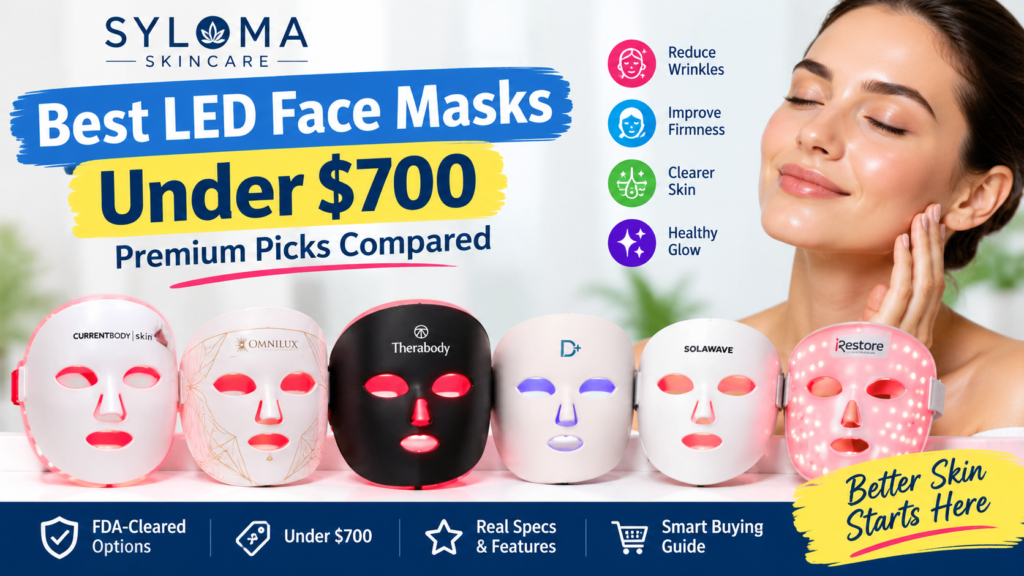
If you’ve started shopping for an LED face mask, you’ve probably noticed something strange: prices range from $20 gas-station gadgets to $2,000 medical-spa panels, with most of the “serious” options landing somewhere between $300 and $700. That middle tier is where most of today’s dermatologist-recommended, FDA-cleared masks actually live — and it’s also where marketing claims get the loudest.
This guide focuses on LED face masks priced at $700 or less in the U.S. market, based on current listings from official brand sites and major retailers as of late 2026. Prices for beauty devices change often with sales, bundles, and promotions, so treat every figure here as approximate and double-check it before you buy. The goal isn’t to crown a single “best” mask — it’s to show you what separates a genuinely capable device from one that’s just riding the trend, so you can match a mask to your skin goals instead of your budget alone.
If your top priority is wrinkles and firmness specifically, our deeper dive into best LED face masks for wrinkles and firm skin may be a useful companion to this guide.
Quick Answer / Quick Comparison
| LED Face Mask | Approx. Price | Wavelengths | Treatment Time | FDA Status | Best For |
|---|---|---|---|---|---|
| Therabody TheraFace Mask | $649.99 | Red, Red+NIR, Blue | 9 min (or 3-min targeted modes) | FDA-cleared (Class II) | Multiple concerns + vibration massage |
| CurrentBody Skin LED Mask: Series 2 | $469.99 | Red 633nm, NIR 830nm, deep NIR 1072nm | 10 min | FDA-cleared | Fine lines and overall anti-aging |
| Dr. Dennis Gross SpectraLite FaceWare Pro | $455 | Red 633nm + Blue | 3 min | FDA-cleared | Wrinkles and acne together |
| CurrentBody-comparable: Omnilux Contour Face | $395–$483 | Red 633nm, NIR 830nm | 10 min | FDA-cleared | Fine lines, firmness, sun damage |
| Solawave Wrinkle Retreat Pro | $399 (list $499) | Amber 605nm, Red 630nm, Deep Red 660nm, NIR 830nm | 3 min | FDA-cleared | Fast routines, multi-wavelength coverage |
| iRestore Illumina Face Mask | approx. $399–$499 | Red 635nm, NIR 830nm, Blue | 10 min | Not clearly disclosed | Acne + aging combined |
| HigherDOSE Red Light Face Mask | $349 | Red 630nm, NIR 830nm | 10 or 20 min | FDA-cleared | Budget-conscious buyers wanting real specs |
Prices and promotions shift constantly, so treat this table as a starting point rather than a live price feed.
What Should You Expect From an LED Face Mask Under $700?
Home LED masks are genuinely useful, but they are not miniature versions of in-office laser or professional LED treatments. According to Harvard Health, red and near-infrared light therapy works by stimulating mitochondria in skin cells, which can support collagen production and calm inflammation, but at-home devices tend to have weaker light output than professional versions, making it hard to know exactly how much light exposure any given session delivers. That’s a fair baseline for what “under $700” buys you: a genuinely science-backed technology, delivered at a lower intensity than a dermatologist’s office, that requires patience and consistency. harvard
Realistically, that means:
- Gradual, cumulative improvement — not an overnight transformation
- Better results for fine lines, dullness, and mild acne than for deep wrinkles or significant sagging
- A need for regular use over weeks to months, not occasional sessions
What Actually Matters When Comparing LED Masks?
Wavelengths
Wavelength, measured in nanometers (nm), determines how deep the light penetrates and what it can influence. Red light (roughly 620–700nm) mainly works at the skin’s surface layers to support collagen and reduce visible redness. Near-infrared light (roughly 700–1000nm+) penetrates deeper into the dermis and is more associated with firmness and structural support. Blue light (around 415–470nm) targets acne-causing bacteria rather than aging. A device combining red and near-infrared, like most masks in this guide, is generally aimed at anti-aging concerns, while red-plus-blue combinations target both aging and breakouts.
Irradiance
Irradiance is the intensity of light hitting your skin, usually expressed in milliwatts per square centimeter (mW/cm²). Two masks can have identical wavelengths but very different real-world effects if their irradiance differs — a higher number generally means more energy delivered per session, though manufacturers rarely publish this figure using consistent testing methods, so treat published irradiance numbers as a rough guide rather than a precise comparison tool.
LED Count
A higher LED count sounds impressive, but it doesn’t automatically mean a more effective treatment. What matters more is how evenly the light covers your face, what wavelengths those LEDs emit, and the irradiance each one delivers. A mask with fewer, well-placed, higher-output LEDs can outperform one with more LEDs spread thin across low-intensity diodes.
Treatment Time
Session length is a trade-off between irradiance and convenience, not a simple “longer is better” scale. A 3-minute mask (like the Solawave Wrinkle Retreat Pro or Dr. Dennis Gross SpectraLite) is typically delivering higher-intensity light in a shorter window, while a 10-minute mask (like CurrentBody or Omnilux) is spreading a lower-intensity dose over more time. Neither approach is inherently superior — what matters is whether you’ll actually use the device consistently.
Coverage and Fit
Flexible silicone masks mold to your face and tend to keep LEDs closer to the skin, which can matter for irradiance delivery. Rigid masks are often cheaper to manufacture but may sit further from certain contours (like around the nose or jawline), creating uneven light exposure.
Eye Protection
Some masks include built-in eye protection sewn into the silicone (like HigherDOSE), while others require separate goggles or shields (like Therabody’s included eye shields). Never look directly into LED light without protection, and always follow the manufacturer’s specific eye-safety instructions.
FDA Status
Look for the specific term “FDA-cleared” rather than vaguer marketing language. We’ll explain exactly what that means below.
Warranty and Returns
Warranties on these masks commonly range from one to two years, and return windows vary by retailer. Given the price point, this is worth checking before purchase rather than after.
Ease of Consistent Use
The best mask, statistically, is the one you’ll actually use several times a week for weeks on end. A shorter session time or a more comfortable fit can matter more for real-world results than a marginally higher spec sheet.
Best LED Face Masks Under $700
Therabody TheraFace Mask
Approximate Price: $649.99
Wavelengths: Red, Red + Infrared, Blue
LED Count: 648 medical-grade LEDs
Treatment Time: 9-minute preset cycle, or individual 3-minute targeted sessions
FDA Status: FDA-cleared, Class II medical device
Best For: People who want one device to address wrinkles, tone, and acne, plus facial tension relief
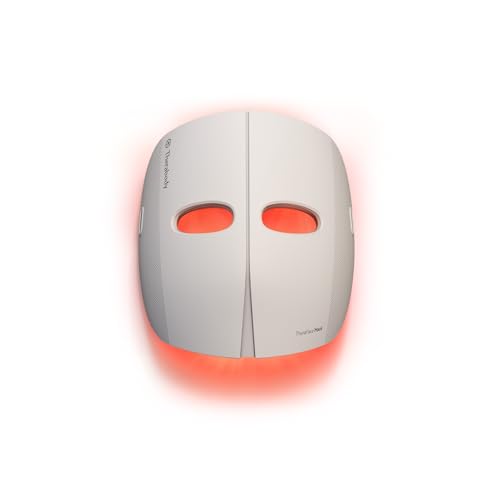
- Supercharged Face Care in 9 Minutes: A facial mask routine with 3 impressive LED light therapy technologies. Red light t…
- Vibrating Facial Massager, Too: TheraFace LED mask delivers a 15-minute vibration therapy treatment to key pressure poin…
- Powerful, Medical-Grade Lights: With 3x more LEDs than leading mask competitors for maximum efficacy and mask skincare r…
This is the most fully-loaded option under $700. Beyond LED therapy, it adds vibration/massage functionality aimed at facial tension. Its 648 LEDs give it the highest count on this list, and it offers three separate light modes rather than one fixed combination.
Main strengths: Combines three light types with massage in one hands-free device; shorter targeted sessions are available for busy routines.
Main limitations: Some buyers report the mask feels heavy on the face during longer sessions, and the vibration feature isn’t essential to the light therapy itself, so you may be paying for functionality you don’t use.
Who should consider it: Anyone who wants LED therapy plus facial massage in a single device and is comfortable at the top of this price range.
Who may want another type of mask: Buyers who only care about light therapy and don’t want to pay for vibration features may prefer a simpler mask like CurrentBody or Solawave.
Buying consideration: Confirm current retailer pricing, since this model has been seen anywhere from roughly $580 to $899 depending on the seller and promotion.
CurrentBody Skin LED Light Therapy Mask: Series 2
Approximate Price: $469.99
Wavelengths: Red 633nm, near-infrared 830nm, deep near-infrared 1072nm
LED Count: 236 LED bulbs
Treatment Time: 10 minutes
FDA Status: FDA-cleared
Best For: Fine lines, firmness, and general anti-aging maintenance

- Enhanced collagen production capability significantly reduces fine lines, wrinkles and redness, for younger-looking skin…
- Upgraded light coverage provides our famous instant glow, for a healthier, brighter and smoother complexion.
- An all-new, exclusive layout of 236 LED bulbs emits three clinically recognised wavelengths: red (633nm), near-infrared …
CurrentBody’s mask stands out for using three distinct wavelengths, including a deeper 1072nm near-infrared setting that fewer competitors offer, alongside published third-party study data on its site.
Main strengths: Three-wavelength design, flexible silicone with a “best-fit” contour, and one of the more thoroughly documented irradiance specs in this category.
Main limitations: At $469.99, it sits mid-pack in price without blue light for acne-prone users.
Who should consider it: Buyers focused specifically on wrinkles, firmness, and sun-damage recovery rather than acne.
Who may want another type of mask: Anyone dealing with active breakouts should look at masks with blue light instead.
Buying consideration: Independent reviewers have measured irradiance around 30 mW/cm², which is useful context when comparing against masks that don’t publish this figure.
Dr. Dennis Gross DRx SpectraLite FaceWare Pro
Approximate Price: $455
Wavelengths: Red and Blue
LED Count: 162 LEDs (100 red, 62 blue)
Treatment Time: 3 minutes
FDA Status: FDA-cleared
Best For: Buyers who want both anti-aging and acne support in the shortest possible routine
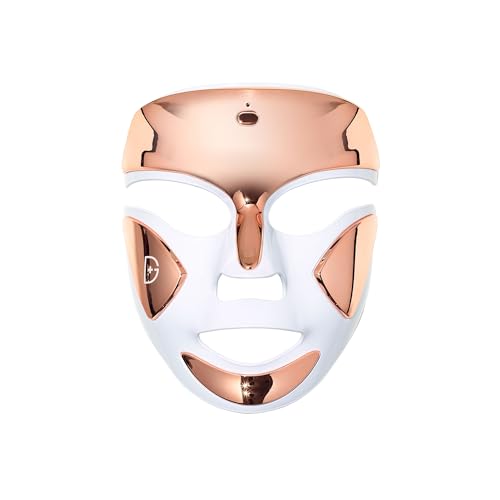
- WHAT IT IS: This LED device for the face targets wrinkles and acne for visibly smoother, clearer skin in just 3 minutes….
- HOW IT WORKS: Treat acne and breakouts with blue light, smooth wrinkles and build collagen with red light, or address bo…
- HOW TO USE: After cleansing, place the mask over your face, securing the strap around your head. Press & hold the power …
This is one of the most established masks in the category, developed by a practicing dermatologist and sold with a fast, 3-minute daily protocol.
Main strengths: Very short session time makes daily consistency easier; combines red and blue light for a dual-concern approach; backed by a published 10-week clinical study showing improvement in the large majority of daily users.
Main limitations: Rigid design rather than flexible silicone, which may not contour as closely to every face shape; lacks a dedicated near-infrared wavelength for deeper firmness support.
Who should consider it: People managing both fine lines and occasional breakouts who want a fast daily habit.
Who may want another type of mask: Those prioritizing deep near-infrared penetration for firmness may prefer CurrentBody or Omnilux instead.
Buying consideration: The device auto-shuts off after 3 minutes, so results depend on genuinely daily use over the full 10-week study window mentioned in its marketing.
Omnilux Contour Face
Approximate Price: $395 (list pricing seen up to $610 at some retailers before discounts)
Wavelengths: Red 633nm, near-infrared 830nm
LED Count: 132 medical-grade LEDs
Treatment Time: 10 minutes
FDA Status: FDA-cleared
Best For: Buyers who want dermatologist-favored, clinic-grade technology at a comparatively accessible price
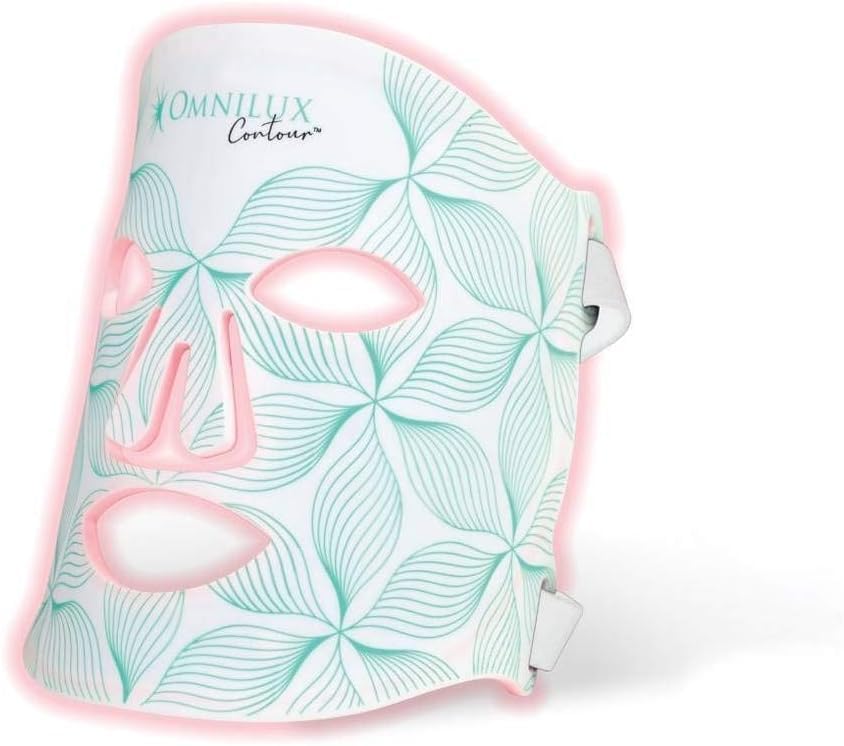
Omnilux has one of the longer track records in professional light therapy, and the Contour Face brings a version of that technology home. It’s often positioned as offering strong value relative to its FDA-cleared, medical-grade construction.
Main strengths: Backed by a long research history in clinical settings; simple two-wavelength focus keeps the device straightforward; a 2-year device warranty is longer than several competitors.
Main limitations: No blue light option for acne; fewer total LEDs than some pricier competitors, though placement and wavelength matter more than raw count.
Who should consider it: Buyers who want anti-aging-focused light therapy from a brand with an established clinical research base.
Who may want another type of mask: Anyone who wants acne coverage in the same device should look elsewhere.
Buying consideration: Pricing varies significantly by retailer — we saw the same device listed from $395 up to $610 before discounts, so shop around.
Solawave Wrinkle Retreat Pro LED Face Mask
Approximate Price: $399 (frequently listed at $499 before discount)
Wavelengths: Amber 605nm, Red 630nm, Deep Red 660nm, Near-Infrared 830nm
LED Count: 320 LEDs
Treatment Time: 3 minutes, 3–5 times weekly
FDA Status: FDA-cleared
Best For: Buyers who want the broadest wavelength coverage in a short daily session
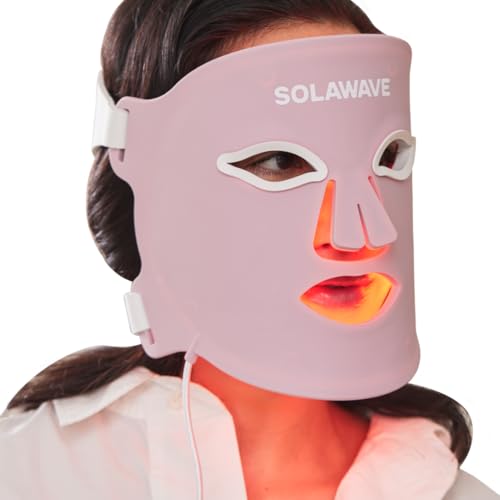
- 4 WAVELENGTHS. ZERO BLIND SPOTS: Red (630nm) softens fine lines. Deep Red (660nm) targets elasticity. Amber (605nm) revi…
- FASTER THAN BREWING YOUR MORNING COFFEE: 3 minutes. Hands-free. Automatic shut-off. While most LED masks demand 10-20 mi…
- 320 LEDS. BUILT FOR EFFICIENCY: One charge powers up to 20 full sessions – most competitor masks max out at six. Digital…
Solawave’s mask uses four distinct wavelengths rather than the two or three found on most competitors, plus a high LED count, all within a short 3-minute session.
Main strengths: Widest range of wavelengths among masks in this guide; short session length; comes with a 60-day money-back guarantee and 1-year warranty.
Main limitations: More wavelengths doesn’t automatically mean stronger or more effective results — as noted earlier, LED count and wavelength variety are not substitutes for verified irradiance data, which Solawave doesn’t fully publish.
Who should consider it: Buyers who want to hedge across multiple light types without a long daily commitment.
Who may want another type of mask: Those who prefer a brand with a longer independent clinical research history might lean toward Omnilux or CurrentBody.
Buying consideration: List price and sale price are frequently different on Solawave’s own site — confirm what you’re actually being charged before checkout.
iRestore Illumina Face Mask
Approximate Price: approximately $399–$499 depending on current promotions
Wavelengths: Red 635nm, near-infrared 830nm, blue
LED Count: 360 LEDs (described as triple-core, roughly 120 bulbs)
Treatment Time: 10 minutes
FDA Status: Not clearly disclosed as FDA-cleared in manufacturer materials reviewed
Best For: Buyers who want triple-wavelength coverage and don’t need a confirmed FDA clearance as a purchase requirement
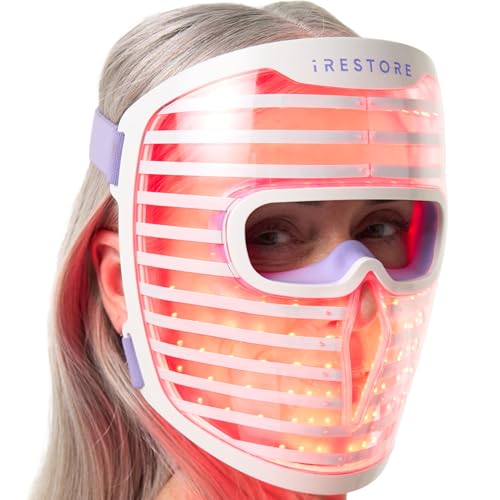
- The Most Powerful Red Light Mask for Visible Results: Experience professional-level rejuvenation at home with 360 LEDs, …
- Advanced Triple-Wavelength Technology: Powered by 3 scientifically backed wavelengths – Red (635nm), Infrared (830nm), a…
- Designed for Comfort and Multitasking: Lightweight yet sturdy, our dual-strap face mask hovers comfortably over your fac…
iRestore markets this as a triple-wavelength mask combining anti-aging and acne-fighting light in one device, with a magnetic charging cable and integrated eye shield as design highlights.
Main strengths: Three wavelengths in one mask; built-in eye protection; high published LED count.
Main limitations: We could not clearly confirm specific FDA clearance language for this model in the materials reviewed — if regulatory clearance matters to you, verify this directly with iRestore before buying.
Who should consider it: Buyers prioritizing wavelength variety and comfort features who have confirmed regulatory status to their own satisfaction.
Who may want another type of mask: Buyers who want FDA clearance as a non-negotiable should choose a mask where that status is explicitly and consistently stated, like Omnilux or Dr. Dennis Gross.
Buying consideration: Listed pricing for this mask has varied widely across sources, from around $399 to $699 — confirm the current price directly with iRestore.
HigherDOSE Red Light Face Mask
Approximate Price: $349
Wavelengths: Red 630nm, near-infrared 830nm
LED Count: 66 dual-core LED bulbs (132 total diodes)
Treatment Time: 10 or 20 minutes
FDA Status: FDA-cleared
Best For: Budget-conscious buyers who still want verified specs and eye protection

- Red Light Therapy for Face & Skin Rejuvenation – This FDA cleared, FSA eligible red light therapy mask uses red (630nm) …
- Facial Light Therapy, Anywhere – Lightweight and wireless, this LED face mask with red light therapy delivers targeted w…
- Red Light Mask That Works Deep – Red and near-infrared light reach deep layers to improve tone, reduce puffiness, and vi…
HigherDOSE keeps things simple: two wavelengths, straightforward specs, and one of the more transparently published irradiance figures in the category at around 50 mW/cm².
Main strengths: Built-in eye protection means no separate goggles; cordless and portable; published irradiance figure allows for more direct comparison against other masks.
Main limitations: No blue light for acne; irradiance is on the lower end compared to full-body LED panels (though panels are a different product category entirely).
Who should consider it: Buyers who want a lower price point without giving up FDA clearance or published specs.
Who may want another type of mask: Anyone wanting acne coverage or a shorter session time should look at Solawave or Dr. Dennis Gross instead.
Buying consideration: This model has appeared for well under its $349–$350 list price during retailer sales, so it’s worth comparing prices across HigherDOSE’s own site and major retailers.
If your focus is specifically on sagging and firmness rather than fine lines, our separate guide to best red light therapy devices for sagging skin and firmness covers that concern in more depth.
What Can You Get at Different Price Points?
| Price Range | What You Generally Get | What to Watch For |
|---|---|---|
| Under $200 | Basic red/NIR masks, often rigid, thinner LED coverage | FDA clearance status is frequently unclear; irradiance rarely disclosed |
| $200–$399 | HigherDOSE, Omnilux Contour Face, Solawave, some iRestore listings | Solid FDA-cleared options; fewer wavelength combinations |
| $400–$499 | Dr. Dennis Gross SpectraLite, CurrentBody Series 2 | Multiple wavelengths, established brands, published clinical data |
| $500–$599 | Fewer dedicated single-mask options at this exact tier; often bundle/kit pricing | Compare whether you’re paying for extra accessories, not just the mask |
| $600–$699 | Therabody TheraFace Mask | Added features like massage; confirm you’ll actually use the extras |
Moving up in price generally buys you more wavelength options, published clinical or irradiance data, longer warranties, or added features like massage — not necessarily a more effective core light therapy.
Red Light vs. Multi-Wavelength Masks
Red light (roughly 620–700nm) is the most studied wavelength for skin aging concerns, generally associated with supporting collagen production and improving surface texture.
Near-infrared light (roughly 700–1000nm+) penetrates further into the skin and is often paired with red light for a combined surface-and-depth approach, which is why most masks on this list use red + NIR together rather than either alone.
Blue light (roughly 415–470nm) works differently — it’s aimed at acne-causing bacteria rather than collagen or aging, which is why it’s typically found in masks marketed for both anti-aging and acne, like the Dr. Dennis Gross or Therabody masks.
Multi-wavelength masks (like Solawave’s four-wavelength design or Therabody’s three light modes) try to cover more concerns in one device. This can be genuinely useful if you have combination concerns, but more wavelengths on paper doesn’t guarantee proportionally better results — the irradiance and consistency of use still matter most.
Are Expensive LED Masks Worth It?
Paying more within this category can make sense if it buys you:
- A closer, more comfortable fit (flexible silicone vs. rigid shells)
- Genuinely more complete wavelength coverage for your specific concerns
- Shorter, more convenient treatment times that make consistent use realistic
- A longer or clearer warranty
- Better-documented clinical or irradiance evidence
- Added functionality you’ll actually use, like massage or acne-specific modes
A cheaper mask in the $200–$400 range can be entirely sufficient if it’s FDA-cleared, has documented wavelengths matching your concern, and you’ll use it consistently. Price alone is not a reliable indicator of effectiveness — a $650 mask isn’t automatically better than a $350 one; it’s a different set of trade-offs.
Common Buying Mistakes
- Buying based only on LED count, without checking wavelength or irradiance.
- Assuming the most expensive mask is automatically the best for your specific skin concern.
- Ignoring treatment time, then not using the mask consistently because sessions feel too long.
- Ignoring fit, especially for rigid masks that may not contour to your face shape.
- Ignoring eye protection, or using a mask without following its specific eye-safety instructions.
- Confusing FDA registration with FDA clearance — these are not the same thing, explained below.
- Trusting vague “clinically proven” claims without checking whether a study is cited, how many participants were involved, and who funded it.
- Ignoring return and warranty terms on a purchase this size.
- Buying without checking current specifications, since brands do update models and pricing.
FDA-Cleared vs. FDA-Registered: What’s the Difference?
This distinction matters more than most shoppers realize. According to the FDA’s own device classification framework, Class II devices — the category most LED face masks fall into — go through an FDA clearance process, while device manufacturers themselves must register with the FDA regardless of whether their specific product required clearance. In plain terms: “FDA-registered” simply means a company is on file with the FDA as a device manufacturer or facility — it is not a safety or effectiveness claim about a specific product. “FDA-cleared” means the specific device went through a 510(k) review and was found substantially equivalent to an already-legally-marketed device. If a listing only says “FDA-registered” without mentioning clearance, that’s worth a closer look — you can check any specific device’s clearance status directly through the FDA’s own database. goodrx
How to Choose the Right Mask for Your Goal
For Fine Lines and Wrinkles
Prioritize masks with red and near-infrared wavelengths and documented irradiance, such as CurrentBody Series 2 or Omnilux Contour Face.
For Firmness and Loss of Elasticity
Look for deeper near-infrared coverage specifically, since that wavelength is more associated with structural, deeper-layer effects — CurrentBody’s 1072nm deep NIR setting is a relevant example.
For Acne and Breakouts
Blue light is the key feature to look for — Dr. Dennis Gross and Therabody both include it alongside anti-aging wavelengths. For a dedicated deep dive, see our guide to <a href=”https://sylomaskincare.com/best-led-face-masks-acne-breakouts-2026/”>best LED face masks for acne and breakouts</a>.
For Multiple Skin Concerns
Multi-wavelength masks like Solawave’s Wrinkle Retreat Pro or Therabody’s TheraFace Mask combine several light types in one device.
For Someone Who Wants the Shortest Routine
Dr. Dennis Gross and Solawave both use 3-minute sessions, which is the shortest commitment among the masks covered here.
For Someone Who Wants Maximum Feature Coverage
Therabody’s TheraFace Mask combines the most light modes with an added massage function, at the top of this price range.
If your main concern is mature skin overall rather than one specific issue, our guide to best LED face masks for mature skin and fine lines and our roundup of best LED face masks for crow’s feet and under-eye wrinkles go into more targeted detail.
Realistic Expectations
LED face masks are a gradual, cumulative treatment, not a one-time fix. Results vary meaningfully between individuals based on skin type, consistency of use, and the specific concern being addressed. Home devices are generally less powerful than in-office professional treatments, and they work best as a supporting part of a broader skincare routine rather than a standalone solution. If you have a persistent or serious skin concern — significant acne, unusual pigmentation changes, or anything that concerns you — an LED mask should complement, not replace, care from a board-certified dermatologist. For a broader look at what the evidence actually shows, our article on do LED face masks really work covers the research in more depth.
FAQ
Are LED face masks under $700 worth it?
For many people, yes — this range includes FDA-cleared devices with documented wavelengths and, in several cases, published clinical or consumer study data. Whether it’s “worth it” depends on your goals and whether you’ll use it consistently.
What is the best wavelength for wrinkles?
Red light (around 620–700nm) and near-infrared light (around 700–1000nm+) are the two wavelengths most associated with anti-aging effects in published research.
Is a more expensive LED mask better?
Not automatically. Higher price often buys more wavelengths, added features, or better documentation, but the core light therapy in a well-specified $350 mask can be just as legitimate as one costing $650.
How many minutes should an LED face mask be used?
This varies by device — some are designed for 3-minute sessions, others for 10 or even 20 minutes. Follow the specific manufacturer’s protocol rather than assuming more time is automatically better.
Does LED count matter?
It’s one factor, but not the most important one. Wavelength accuracy, irradiance, and even coverage across the face matter more than raw LED count.
Is FDA clearance important for an LED face mask?
It’s a meaningful signal of device safety review, and it’s worth prioritizing masks that clearly state FDA clearance over those using vaguer terms like “FDA-registered.”
Can LED masks help acne and wrinkles?
Masks that combine blue light (for acne-causing bacteria) with red or near-infrared light (for aging concerns) are designed to address both, such as the Dr. Dennis Gross and Therabody masks covered above.
How often should you use an LED face mask?
Most masks in this guide recommend 3–5 sessions per week for consistent, cumulative results over several weeks to months.
Are expensive LED masks safe?
Price doesn’t determine safety. FDA clearance, proper eye protection, and following the manufacturer’s instructions are the relevant safety factors, regardless of what a mask costs.
What should I look for before buying an LED mask?
Wavelengths matched to your concern, disclosed or estimable irradiance, FDA clearance status, fit and comfort, eye protection, warranty terms, and a price you’ve verified is current.
Conclusion
There’s no single “best” LED face mask under $700 — there’s a best mask for your specific skin concern, budget, and routine. Before buying, compare:
- Your primary skin concern (aging, firmness, acne, or a combination)
- The wavelengths offered
- Irradiance, where disclosed
- Treatment time and whether you’ll realistically stick with it
- Fit — flexible silicone versus rigid
- Eye protection included or required separately
- FDA clearance status specifically
- Warranty and return policy
- What clinical or consumer evidence is actually published
- The current price, since these devices are frequently discounted
An LED mask in this price range can be a legitimate, evidence-informed addition to a skincare routine — but it works gradually, requires consistency, and isn’t a substitute for dermatologist care when something more serious is going on.