
Disclosure: SylomaSkincare.com may earn a commission from qualifying purchases made through links in this article. This does not affect our editorial opinions or the products we choose to discuss. We research products independently and aim to give you honest, balanced guidance.
Introduction: Is That $500 LED Mask Really Worth It?
You’ve probably seen them everywhere — LED face masks with price tags that make you do a double take. Four hundred dollars. Five hundred. Some pushing close to seven hundred. And the natural question is a fair one:
“Am I actually getting a better device, or am I just paying for the brand name and a nicer box?”
That’s exactly what this article is going to help you figure out. Because the honest answer is: it depends — and the price tag alone tells you almost nothing about whether a mask is worth buying.
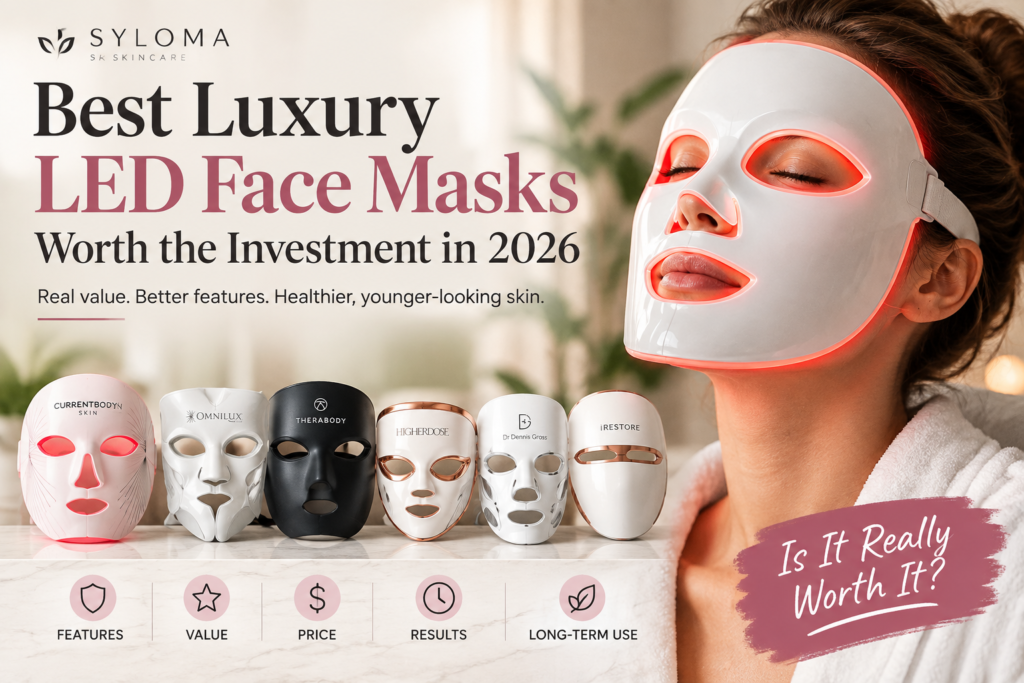
The best luxury LED face masks worth the investment in 2026 earn that description by offering something real: verified wavelengths, adequate light output, comfortable extended wear, solid build quality, meaningful warranty coverage, and a design that actually makes you want to use the device consistently. Not every expensive mask delivers on all of those points, and some mid-range options punch well above their weight.
Throughout this article, we’ll look at what separates genuinely premium LED masks from expensive-looking ones, compare the most talked-about devices on the market right now, and give you an honest framework for deciding whether spending $400–$700+ actually makes sense for your situation. Before we get into individual products, if you want a broader look at the LED mask category, our guide on do LED face masks really work is a good starting point.
Quick Answer: Are Luxury LED Face Masks Worth the Investment?
For the right buyer, yes — a premium LED face mask can absolutely be worth the higher cost. But for the wrong buyer, that extra money is completely wasted.
A luxury LED mask tends to make sense when you:
- Will realistically use it consistently over months, not just weeks
- Want documented wavelengths and transparent device specifications
- Prioritize comfortable fit and convenient cordless operation
- Want a device backed by a meaningful warranty and reliable customer support
- Have a clear skin goal (anti-aging, acne, tone) and want a device designed for it
- Value FDA clearance as part of your purchase decision
A luxury LED mask is probably not worth it when you:
- Are unsure whether you’ll use it regularly
- Are choosing it primarily because it’s expensive
- Expect dramatic results after a handful of sessions
- Have a tight budget that a costly mask would genuinely strain
- Haven’t checked whether the wavelengths match your actual skin goal
The bottom line: price is a factor, but it shouldn’t be the deciding one. Let’s look at the specifics.
Quick Comparison Table: Best Luxury LED Face Masks in 2026
Prices change frequently. Figures below reflect approximate pricing at the time of research. Always verify current pricing directly with the retailer or brand before purchasing.
| Product | Approx. Price | Main Light Types | Treatment Time | Best For | Premium Advantage | Potential Drawback | Value Consideration |
|---|---|---|---|---|---|---|---|
| CurrentBody Skin LED Light Therapy Mask Series 2 | ~$385–$435 | Red, Near-Infrared | ~10 min | Anti-aging, firmness | FDA cleared, flexible, clinical backing | No blue light mode | Strong long-term value for consistent users |
| Omnilux Contour Face | ~$395–$455 | Red, Near-Infrared | ~10 min | Anti-aging, skin quality | Flexible, FDA cleared, clinical evidence | No blue light | Very competitive at this price level |
| Therabody TheraFace Mask Glo | ~$399–$449 | Red, Near-Infrared, Blue | ~10 min | Anti-aging + acne, multi-goal | Multi-wavelength, clinical study backing, sleek design | Adds features beyond pure LED | Good for users who want multiple wavelengths |
| HigherDOSE Red Light Face Mask | ~$380–$420 | Red, Near-Infrared | ~10–20 min | Anti-aging, wellness | Premium materials, strong brand following | Limited published technical specs | Strong on comfort and aesthetics; spec-conscious buyers may want more detail |
| Dr. Dennis Gross DRx SpectraLite FaceWare Pro | ~$455–$495 | Red, Blue, Amber | ~3 min | Acne + anti-aging combo | Very short treatment time, multi-wavelength | Rigid design, limited coverage areas | Best for busy routines; comfort may vary |
| iRestore Laser Face Mask Pro | ~$599–$699 | Red, Near-Infrared (laser + LED) | ~25 min | Serious anti-aging, skin renewal | Combines laser diodes with LEDs, high-output claim | Highest price point, long session time | Premium investment; best for highly committed users |
What Actually Makes an LED Face Mask “Luxury”?
The word “luxury” gets thrown around a lot in skincare marketing. But for a device that sits on your face for ten minutes several times a week, luxury should mean something real — not just a premium-looking website and elegant packaging.
Here’s what genuinely matters in a high-end LED mask:
Features That Can Improve Your Experience
- Flexible construction: A mask that conforms to your face gets light closer to the skin across different facial contours — cheeks, jawline, forehead, nose. Rigid masks can create gaps in coverage.
- Full-face LED coverage: More LEDs distributed evenly across the mask means fewer untreated patches.
- Appropriate wavelengths: Red light (typically around 630–660nm) and near-infrared (around 830–850nm) are the most well-researched for anti-aging. Blue light (around 415–430nm) targets acne-causing bacteria. What wavelengths you need depends on your goal.
- Adequate light output (irradiance): This is how much light energy actually reaches your skin. Brands don’t always publish this data clearly, which is a problem.
- Reasonable treatment time: Shorter sessions mean you’re more likely to actually use it. Anything under 15 minutes is generally more sustainable.
- Cordless operation: Freedom of movement matters during a 10-minute session.
- Automatic shutoff: A useful convenience feature, not a gimmick.
- Eye protection: Quality masks account for eye safety in their design.
- Warranty and support: A 2-year warranty from a brand with responsive support is worth real money over time.
- FDA clearance where applicable: For devices marketed for specific cosmetic or therapeutic purposes, FDA clearance signals that the manufacturer has submitted evidence supporting safety and effectiveness claims for that intended use.
Features That Are More About Aesthetics Than Performance
- Premium packaging and branded accessories
- App connectivity that adds complexity without improving results
- Celebrity or influencer branding
- High price used as a proxy for quality without technical data to back it up
True luxury in an LED mask means the device is built well, performs transparently, is comfortable to wear, and is backed by verifiable information. Marketing polish is not a substitute for any of that.
How Much Should You Actually Spend on an LED Face Mask?
Here’s a practical framework by spending tier:
Budget (Under $100)
Entry-level masks. Specifications are often vague or incomplete. Build quality is typically lower. May still provide some light therapy benefit, but you’re often buying with less information available. Suitable for curious first-timers who aren’t ready to commit to a larger purchase.
Mid-Range ($100–$250)
Growing category with more transparent brands. Some solid options exist here, particularly for users with a single skin concern like mild acne or early signs of aging. Worth researching carefully.
Premium ($250–$400)
This is where well-established brands begin to appear with documented specifications, clinical evidence, and meaningful warranties. Strong value territory for consistent users.
Luxury / High-End ($400–$700+)
The focus of this article. At this level, buyers should expect — and demand — full transparency: verified wavelengths, irradiance data where available, FDA clearance where claimed, solid build quality, and strong customer support. Not every brand at this price delivers all of that, which is why doing the homework matters.
Best Luxury LED Face Masks Worth Considering in 2026
CurrentBody Skin LED Light Therapy Mask Series 2

- Enhanced collagen production capability significantly reduces fine lines, wrinkles and redness, for younger-looking skin…
- Upgraded light coverage provides our famous instant glow, for a healthier, brighter and smoother complexion.
- An all-new, exclusive layout of 236 LED bulbs emits three clinically recognised wavelengths: red (633nm), near-infrared …
The CurrentBody Series 2 is one of the most talked-about premium LED masks in the US market right now, and for good reason. It carries FDA 510(k) clearance, which means the manufacturer has demonstrated to the FDA’s satisfaction that the device is safe and effective for its intended cosmetic use — a meaningful distinction that many competitors can’t claim.
The mask uses red light (around 633nm) and near-infrared light (around 830nm), both well-researched wavelengths for stimulating collagen production and improving skin texture. The flexible silicone design conforms to different face shapes, which helps maximize skin contact and light delivery. Treatment time is approximately 10 minutes, making it realistic for regular use. The device is cordless.
Who should consider it: Anti-aging focused users who want an FDA-cleared, well-documented device with a comfortable flexible design. Strong pick for consistent, long-term users.
Limitations: No blue light for acne. On the higher end of the premium price range. Some users with very narrow or wider faces may need to assess fit.
Is the premium price justified? For someone who will use this consistently and values FDA clearance and flexible construction, yes. See also: best LED face masks for wrinkles and firm skin for broader context on anti-aging LED devices.
Omnilux Contour Face
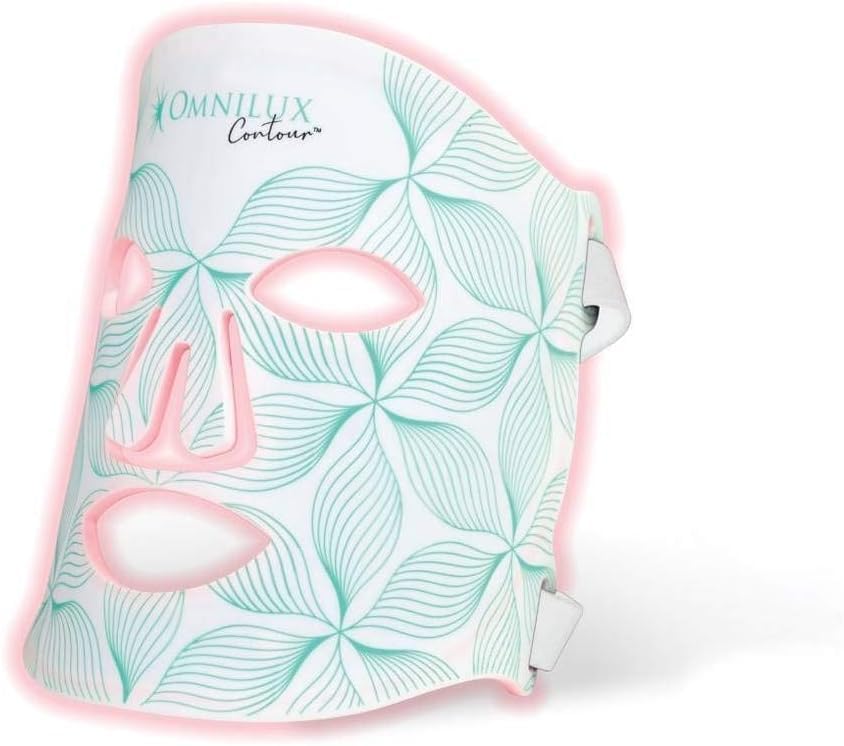
Omnilux has a long-standing reputation in the professional and clinical LED space, and the Contour Face brings that heritage into a home-use device. Like the CurrentBody, it uses red and near-infrared wavelengths in a flexible design, with approximately 10-minute treatments. It has been used in clinical settings and has FDA clearance.
What distinguishes Omnilux is a combination of its clinical pedigree and its flexible medical-grade silicone design that wraps comfortably around facial contours. The brand publishes wavelength data and has independent clinical support for its anti-aging claims.
Who should consider it: Users who want a flexible, clinically credible anti-aging LED mask with a brand that has roots in professional light therapy. Good for users who prioritize evidence over aesthetics.
Limitations: No blue light. Similar price and wavelength profile to CurrentBody means the choice often comes down to personal preference in fit and brand trust. For a deeper dive into anti-aging LED therapy, our guide to best red light therapy masks for anti-aging covers this category in detail.
Therabody TheraFace Mask Glo
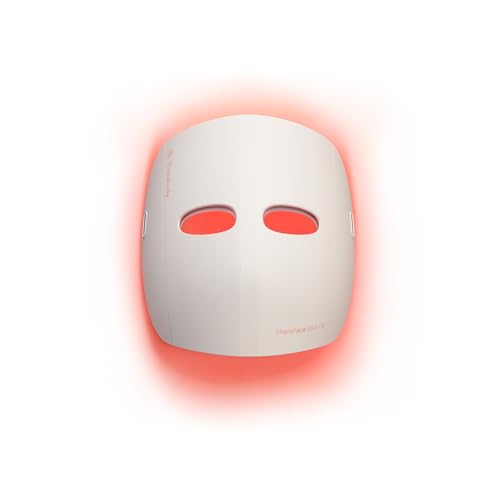
- CLINICALLY-PROVEN LED LIGHT THERAPY: 3 types of science-backed LED light therapy address specific skin concerns for clin…
- FULL-COVERAGE FACE MASK: 504 medical-grade LEDs, enhanced by Therabody’s proprietary PrecisionLED technology, deliver op…
- CUSTOMIZABLE TREATMENT OPTIONS: The preset 12-minute treatment cycles through 4 minutes of each light therapy to boost c…
The Therabody TheraFace Mask Glo takes a different approach. It offers red, near-infrared, and blue light wavelengths, making it one of the more versatile premium options for users dealing with both aging and acne concerns. Therabody has published clinical findings for the TheraFace Mask Glo, which the brand describes as among the largest LED mask studies conducted to date — worth reading if you want to understand what evidence supports the device’s claims.
Treatment time is approximately 10 minutes. The mask has a sleek, full-face design and is intended for standalone LED use without the vibration features of earlier Therabody face devices.
Who should consider it: Users who want multiple wavelength modes in a single device, particularly those juggling anti-aging and acne concerns. Also good for users who appreciate transparent clinical data from the manufacturer.
Limitations: Slightly higher price point than some competitors. Users whose only goal is anti-aging may find the multi-wavelength feature less essential.
HigherDOSE Red Light Face Mask
HigherDOSE has built a loyal following in the wellness and biohacking space, and their Red Light Face Mask carries that brand identity. The mask uses red and near-infrared wavelengths and is designed with a premium aesthetic. Treatment times typically run 10–20 minutes depending on the setting.

- Red Light Therapy for Face & Skin Rejuvenation – This FDA cleared, FSA eligible red light therapy mask uses red (630nm) …
- Facial Light Therapy, Anywhere – Lightweight and wireless, this LED face mask with red light therapy delivers targeted w…
- Red Light Mask That Works Deep – Red and near-infrared light reach deep layers to improve tone, reduce puffiness, and vi…
Where HigherDOSE excels is in the experience — it feels like a premium product, it looks like one, and the brand community is engaged. Where it can fall short for more analytically minded buyers is in the level of published technical specification detail. If you like to verify exact irradiance numbers and treatment dose, you may find the available documentation less thorough than brands like CurrentBody or Omnilux.
Who should consider it: Buyers who value the wellness brand experience and want a comfortable, attractive device for anti-aging red light therapy. Less ideal for specification-driven buyers who want every number verified.
Limitations: Limited published spec detail. No blue light. Higher treatment times on some settings.
Dr. Dennis Gross DRx SpectraLite FaceWare Pro
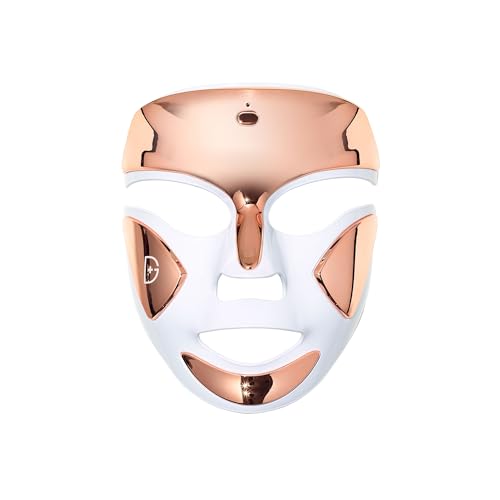
- WHAT IT IS: This LED device for the face targets wrinkles and acne for visibly smoother, clearer skin in just 3 minutes….
- HOW IT WORKS: Treat acne and breakouts with blue light, smooth wrinkles and build collagen with red light, or address bo…
- HOW TO USE: After cleansing, place the mask over your face, securing the strap around your head. Press & hold the power …
The Dr. Dennis Gross SpectraLite FaceWare Pro has been a fixture in the premium LED mask conversation for several years, and its standout feature remains its approximately 3-minute treatment time. It offers red, blue, and amber wavelengths, making it genuinely versatile. The amber light is intended to support brightening and overall skin tone.
The design is more rigid than the flexible silicone options from CurrentBody and Omnilux, which means fit can vary. The short treatment time is a genuine advantage for users who struggle to maintain longer routines.
Who should consider it: Busy users who want a multi-wavelength device and genuinely cannot commit to 10-minute sessions. Also suitable for users who want to address acne alongside anti-aging concerns. See our guide to best LED face masks for acne-prone skin for more on acne-focused LED options.
Limitations: Rigid construction. Higher price relative to flexible competitors. Shorter treatment time may mean lower total light dose per session depending on light output.
iRestore Laser Face Mask Pro
The iRestore Laser Face Mask Pro sits at the top of the price range in this category, typically around $599–$699. What sets it apart is its combination of laser diodes and LEDs, a distinction the brand uses to justify the higher output and price. Treatment times run approximately 25 minutes, which is longer than most competitors.
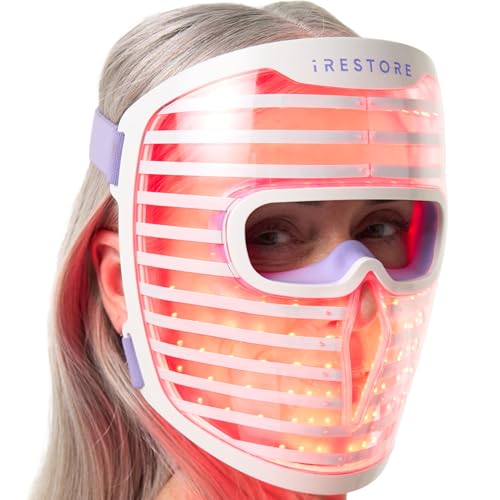
- The Most Powerful Red Light Mask for Visible Results: Experience professional-level rejuvenation at home with 360 LEDs, …
- Advanced Triple-Wavelength Technology: Powered by 3 scientifically backed wavelengths – Red (635nm), Infrared (830nm), a…
- Designed for Comfort and Multitasking: Lightweight yet sturdy, our dual-strap face mask hovers comfortably over your fac…
The inclusion of laser diodes is a meaningful technical distinction — lasers deliver coherent, focused light, while LEDs deliver broader-spectrum light. Whether this translates to meaningfully better outcomes for home users depends on many factors, and buyers should review the brand’s published evidence carefully before assuming a higher price means proportionally better results.
Who should consider it: Highly committed users who are willing to invest both money and longer session time, and who want a device positioned at the upper end of the home-use light therapy spectrum. For those focused on skin firmness and sagging, our guide to best red light therapy devices for sagging skin and firmness is worth reading alongside this section.
Limitations: Highest price point in this comparison. Longer session time. Results, as with all LED and laser devices, are not guaranteed and vary by individual.
CurrentBody vs Omnilux: Which Premium Approach Is Right for You?
These two devices are frequently compared because they occupy a very similar space: flexible, FDA-cleared, red and near-infrared LED masks in the $385–$455 range with approximately 10-minute treatment times. So what actually separates them?
Wavelengths and Light Output
Both use established red and near-infrared wavelengths. Both brands publish wavelength data. Neither currently offers blue light, which means neither is the first choice if acne is your primary concern.
Flexibility and Coverage
Both use flexible silicone designs intended to conform to the face. Real-world fit varies by face shape, and trying to assess fit from reviews is imperfect. If possible, check the brand’s return policy before purchasing.
Clinical Evidence and Regulatory Status
Both brands point to clinical support and carry FDA clearance. The FDA 510(k) information for CurrentBody Skin LED Multi Light Therapy Mask is publicly available, as is the Series 2 clearance linked earlier.
Brand Trust and Support
Omnilux has deeper roots in the professional and clinical LED space. CurrentBody has built strong consumer-facing retail presence and support infrastructure. Neither is a fly-by-night operation.
Which One to Choose?
If you’re deciding between these two specifically, the choice often comes down to pricing at the time of purchase, the return/trial policy, and which brand’s customer support you find more accessible. On pure performance criteria, they are close competitors at this price level.
Therabody vs Traditional LED Masks: Does the Extra Technology Matter?
The TheraFace Mask Glo is focused on LED light therapy — it’s not built around vibration or percussion features in the same way earlier Therabody devices were. So the primary comparison is around its multi-wavelength LED delivery versus the single-mode (red/NIR only) approach of masks like CurrentBody and Omnilux.
The honest answer: if your only goal is anti-aging via red and near-infrared light, you don’t need blue light — and paying more for wavelengths you won’t use isn’t wise. But if you’re managing both acne and early signs of aging, a device that offers multiple modes in one mask can genuinely simplify your routine and reduce the number of devices you need to own.
The key question is always: what are my actual skin goals? Buy wavelengths that match those goals, not wavelengths that simply look impressive on a spec sheet.
Are More Wavelengths Always Better?
Short answer: no. More wavelengths are only better if you need them.
Here’s a quick breakdown of what the most common wavelengths are generally understood to target, based on available research:
- Red light (~630–660nm): Most studied for stimulating collagen, improving skin texture, reducing fine lines. The core anti-aging wavelength.
- Near-infrared (~830–850nm): Penetrates more deeply than red light. Used for deeper tissue benefit, often combined with red for anti-aging.
- Blue light (~415–430nm): Targets acne-causing bacteria (specifically Cutibacterium acnes). Less relevant for purely anti-aging goals.
- Amber/yellow (~570–590nm): Sometimes used for brightening and skin tone improvement. Less extensively studied in the context of home LED masks than red and NIR.
The American Academy of Dermatology guidance on red light therapy is a useful reference for understanding where the evidence base currently stands on light therapy for skin concerns.
Don’t be dazzled by a device offering six or seven wavelengths if you don’t need all of them. A device that does two wavelengths well is more valuable than one that does six wavelengths poorly.
Does a Higher Price Mean Better Results?
This is probably the most important question in this entire article, so let’s be direct about it: no, a higher price does not automatically mean better results.
Here’s why the assumption breaks down:
- Marketing costs money. A significant portion of a premium product’s price reflects brand building, influencer partnerships, packaging, and retail margins — not device performance.
- Device quality and clinical evidence are separate things. A beautifully built mask with premium materials doesn’t automatically deliver better light therapy than a simpler device with equivalent wavelengths and output.
- Results vary by individual. Skin type, age, baseline skin condition, consistency of use, and skincare routine all influence outcomes more than the price of the device alone.
- Convenience matters for compliance. A $200 mask you use three times a week will likely outperform a $600 mask that sits in a drawer. In this sense, a device’s “luxury” fit and feel can legitimately improve results — not because of the wavelengths, but because comfort and ease of use increase consistency.
The honest framework: price can correlate with better build quality, more transparent specifications, and better support. It does not directly buy you better photobiomodulation outcomes in isolation from those factors.
Cost Per Use: A Better Way to Think About Value
Here’s a simple way to reframe the investment question.
Suppose you spend $400 on a premium LED mask. You use it three times per week for two years — that’s roughly 312 sessions.
$400 ÷ 312 sessions = approximately $1.28 per session.
Now suppose you spend $250 on a mid-range mask, but you find it uncomfortable and end up using it once a week for six months before losing interest — that’s roughly 24 sessions.
$250 ÷ 24 sessions = approximately $10.42 per session.
The “cheaper” mask cost over eight times more per session in this scenario.
This is an illustration, not a guarantee of any outcome. But it makes the point clearly: value is determined by consistent use over time, not by the sticker price. A device that’s comfortable, convenient, and enjoyable to use will almost always deliver better practical value than one you avoid.
This is also why fit, treatment time, and cord-free operation aren’t trivial luxury features — they’re factors that determine whether you’ll actually keep using the device.
What to Check Before Spending $500+ on an LED Mask
Use this as your pre-purchase checklist:
- ✓ Wavelengths match your specific skin goal (anti-aging, acne, or both)
- ✓ Brand publishes clear wavelength data — not just marketing language
- ✓ Light output/irradiance information is available where possible
- ✓ FDA clearance is confirmed (if the brand claims it — verify, don’t assume)
- ✓ Comfortable fit for your face shape based on available reviews and fit information
- ✓ Good face coverage including around nose, chin, and jaw
- ✓ Treatment time you can realistically maintain (10 minutes is generally sustainable)
- ✓ Warranty of at least one year, preferably two
- ✓ Return or trial policy in case it doesn’t suit you
- ✓ No hidden ongoing costs for consumables or replacement parts
- ✓ Brand transparency — you can contact them, find real support, and find real clinical or regulatory documentation
- ✓ Independent evidence or clinical data reviewed — not just the brand’s own marketing copy
When a Luxury LED Mask May NOT Be Worth It
Let’s be direct. A high-end LED mask is not the right call for everyone, and it’s worth saying that clearly.
Skip the luxury tier if:
- You’re not sure you’ll use it regularly. LED therapy works cumulatively. Sporadic use will not deliver the kind of results consistent use might.
- You’re buying it to feel good about spending money on skincare. That’s an emotional purchase, not an investment in skin health.
- You expect dramatic results within a few weeks. LED therapy is a long game. Realistic expectations matter, and they don’t cost $500 to develop.
- The features you’re paying for don’t apply to your goals. Paying for blue light when you have no acne concerns, or for amber wavelengths when you just want anti-aging red light, is money not working for you.
- You haven’t checked the return policy. At $400–$700, a no-return purchase is a serious risk. Make sure you have a path back if the device doesn’t suit you.
For users who are still deciding whether LED therapy is right for them at all, our article on best LED face masks for mature skin and fine lines provides helpful context for aging-focused concerns, and our piece on LED face masks for crow’s feet and under-eye wrinkles covers more targeted use cases.
Safety and Realistic Expectations
LED face masks designed for home use are generally considered safe when used as directed. That said, a few important points:
- Results vary significantly between individuals. Skin type, age, lifestyle, and consistency of use all play a role.
- LED light therapy is not an overnight transformation. Most clinical studies measure outcomes over weeks to months of consistent use.
- Always follow the manufacturer’s instructions, including guidance on session frequency and duration.
- If you are taking photosensitizing medications, have a light-sensitive skin condition, or are pregnant, consult an appropriate healthcare professional before starting LED therapy at home.
- Always use eye protection as recommended by the device manufacturer.
We’re not here to provide medical advice, and nothing in this article should be taken as such. When in doubt, a conversation with a board-certified dermatologist is the right step.
How to Choose the Right Luxury LED Mask for Your Goal
Here’s a quick match guide:
- Wrinkles and fine lines: Look for a device with red (630–660nm) and near-infrared (830–850nm) wavelengths, FDA clearance, and a flexible design for full coverage. Our guide to best LED face masks for wrinkles and firm skin is a helpful companion resource.
- Acne: Prioritize a device with blue light (around 415–430nm), ideally with FDA clearance for acne-related use. See our roundup of best LED face masks for acne and breakouts.
- Multiple concerns: A multi-wavelength device (red, NIR, blue) allows you to switch modes based on your current priority.
- Comfort and wearability: Prioritize flexible silicone construction over rigid designs, particularly if you plan to move around during sessions.
- Fastest possible routine: The Dr. Dennis Gross SpectraLite at approximately 3 minutes per session is the outlier in this space.
- Body areas beyond the face: Don’t forget that face masks don’t address the neck and décolletage. Our guide to best LED neck and chest masks for crepey skin covers those areas.
Final Verdict: Is a Luxury LED Face Mask Worth the Investment?
If there’s a single takeaway from this article, it’s this: a luxury LED face mask can absolutely be worth the investment — but only when you’ve done the work of matching the device to your actual needs, verified that the specifications support what the brand is claiming, and made an honest assessment of whether you’ll use it consistently.
The best luxury LED face masks worth the investment in 2026 — devices like the CurrentBody Series 2, Omnilux Contour Face, and Therabody TheraFace Mask Glo — earn their price through transparent specifications, FDA clearance, flexible comfortable designs, and meaningful warranty coverage. The iRestore Laser Face Mask Pro appeals to the most committed users willing to invest at the top of the price range. The Dr. Dennis Gross SpectraLite carves out a niche for busy users who need the shortest possible treatment time.
But the highest price does not automatically buy the best results. What it should buy — and what you should demand before spending this kind of money — is transparency, evidence, quality, and a device you will realistically use for months and years, not weeks.
Spend wisely. Use consistently. Manage expectations realistically. That combination will deliver far more value than the price tag on the box.
Frequently Asked Questions
Are expensive LED face masks really worth it?
They can be — but only if you’ll use them regularly and the device’s specifications match your skin goals. A $500 mask used consistently may deliver better long-term value than a $200 mask that goes unused. Price alone doesn’t determine value; consistent use, correct wavelengths, and build quality do.
What is the best luxury LED face mask in 2026?
There isn’t a single universally best answer. For anti-aging, the CurrentBody Series 2 and Omnilux Contour Face are among the most well-documented flexible options with FDA clearance. For multiple concerns including acne, the Therabody TheraFace Mask Glo is worth serious consideration. Your best choice depends on your skin goal, budget, and how you’ll actually use the device.
Is CurrentBody worth the money?
For consistent anti-aging users who want an FDA-cleared flexible LED mask with documented wavelengths, yes — the CurrentBody Series 2 offers strong long-term value. If you’re uncertain about committing to regular use or acne is your primary concern, the value proposition weakens.
Is Omnilux worth the price?
Yes, for similar reasons to CurrentBody. Omnilux has strong clinical credibility and a flexible, comfortable design. It’s a serious anti-aging device backed by documented evidence. Whether it’s better than CurrentBody for you specifically depends on price at the time of purchase, fit, and brand preference.
Is a $500 LED face mask better than a $200 one?
Not automatically. A $500 mask should offer better build quality, more transparent specifications, stronger warranty coverage, and potentially better fit. But it doesn’t guarantee better results. Wavelengths, light output, treatment consistency, and your individual skin response matter more than the price differential alone.
How long do premium LED face masks last?
Most quality LED masks are designed for several years of regular use. LED diodes have a long operational lifespan. Battery degradation in cordless models is worth monitoring over time. A good warranty (1–2 years) provides some protection, but regular care and following manufacturer guidelines will extend the life of any device.
How often should you use a luxury LED face mask?
Most premium LED mask brands recommend 3–5 sessions per week during an initial phase, often tapering to 1–3 sessions per week for maintenance. Always follow the specific guidance from your device’s manufacturer, as protocols vary between devices and intended use cases.
Are LED face masks safe to use at home?
Yes, home LED masks are generally considered safe when used as directed. Users taking photosensitizing medications, those with light-sensitive conditions, and pregnant users should consult a healthcare professional before use. Eye protection during treatment is important and most devices address this in their design or instructions.
Does a higher price mean better LED results?
Not directly. A higher price should correlate with better build quality, verified specifications, and stronger support — but LED light therapy outcomes depend on wavelengths, light output, consistency of use, and individual skin biology. Paying more doesn’t override those variables.
What should I look for before buying an expensive LED mask?
Check that wavelengths match your goal, the brand publishes clear specifications, FDA clearance is verified if claimed, the fit is appropriate for your face shape, treatment time is manageable, the warranty is meaningful, and there’s a return policy you can rely on if the device doesn’t work for you. Never spend this much based on marketing alone.
Information in this article is provided for educational purposes only and does not constitute medical advice. Results from LED light therapy vary between individuals. Consult a qualified healthcare professional if you have specific skin health concerns or questions about whether LED therapy is appropriate for your situation.
Link Audit
Internal links included: 9
- do LED face masks really work — Introduction section
- best LED face masks for wrinkles and firm skin — CurrentBody section + How to Choose section
- best red light therapy masks for anti-aging — Omnilux section
- best LED face masks for acne-prone skin — Dr. Dennis Gross section
- best red light therapy devices for sagging skin and firmness — iRestore section
- best LED face masks for mature skin and fine lines — When a Luxury Mask May Not Be Worth It section
- LED face masks for crow’s feet and under-eye wrinkles — When a Luxury Mask May Not Be Worth It section
- best LED face masks for acne and breakouts — How to Choose section
- best LED neck and chest masks for crepey skin — How to Choose section
External links included: 5
- FDA 510(k) information for CurrentBody Series 2 — CurrentBody section
- FDA 510(k) information for CurrentBody Skin LED Multi Light Therapy Mask — CurrentBody vs Omnilux section
- Therabody TheraFace Mask Glo — Therabody product section
- Therabody’s published clinical findings for TheraFace Mask Glo — Therabody section
- American Academy of Dermatology guidance on red light therapy — Are More Wavelengths Always Better section
Raw URLs visible in article: No
Markdown links used: No
Exact URL verification: Passed — all internal URLs match supplied SylomaSkincare.com URLs exactly; all external URLs match supplied sources exactly