
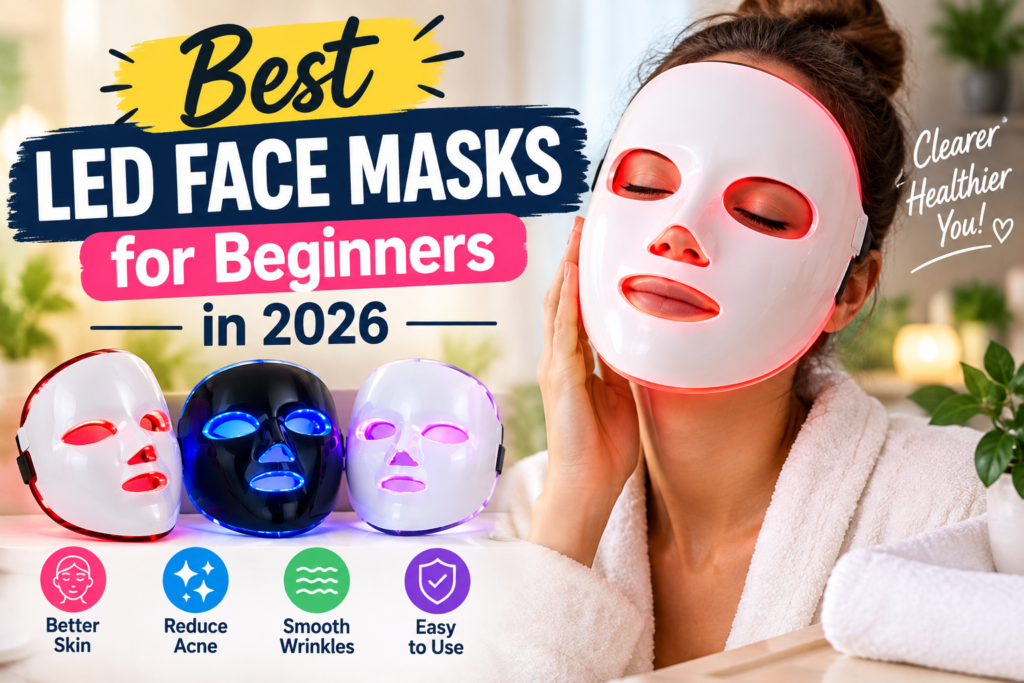
This article may contain affiliate links. If you buy through one of these links, we may earn a commission at no extra cost to you.
“I’ve never used an LED face mask before. Which one am I supposed to buy?”
If that’s roughly the question that brought you here, you’re not alone. LED face masks have moved from dermatology offices into everyday skincare routines, but most articles about them assume you already know what a wavelength is, why 132 LEDs might beat 600 LEDs (or vice versa), or what “FDA cleared” actually promises you. This guide skips the ranking-for-ranking’s-sake approach and instead answers the question beginners actually have: which mask should a first-time buyer choose, what do the specs mean, how do you use one safely, and what mistakes should you avoid before you spend $200 to $500 or more?
We’ll walk through the technology in plain English, compare several 2026 masks that genuinely suit beginners, and give you a checklist so you can shop with confidence instead of guesswork.
Quick Answer: Best LED Face Masks for Beginners in 2026
| Product | Best For | Light/Wavelengths | Session Time | Ease of Use | FDA Status | Approx. Price |
|---|---|---|---|---|---|---|
| Omnilux Contour Face | First-time users who want a proven, simple routine | Red 633nm + NIR 830nm | 10 min | Very easy (2 wavelengths, one mode) | FDA cleared | ~$395 |
| CurrentBody Skin LED Mask | Beginners who want a flexible, closely-fitting mask | Red 633nm + NIR 830nm (multi-light versions add more) | 10 min | Easy, flexible silicone | FDA cleared | ~$380–$460 |
| Dr. Dennis Gross SpectraLite FaceWare Pro | Short sessions and acne + aging together | Red + Blue LEDs | 3 min | Very easy, single button | FDA cleared | ~$455–$499 |
| Solawave Wrinkle Retreat Pro | Beginners who want a fast routine with several wavelengths | Amber 605nm, Red 630nm, Deep Red 660nm, NIR 830nm | 3 min | Easy, one-button interface | FDA cleared (Class II) | ~$399 |
| HigherDOSE Red Light Face Mask | Beginners who want to move around during treatment | Red 630nm + NIR 830nm | 10 or 20 min | Easy, cordless controller | FDA cleared | ~$349 |
| Therabody TheraFace Mask | Beginners who also want facial massage built in | Blue 415nm, Red 633nm, Red+IR 633/830nm | 3–9 min | Moderate (rigid shell, more features) | FDA cleared | ~$399–$549 |
| iRestore Illumina Face Mask | Beginners who want eye protection built into the design | Red 635nm, NIR 830nm, Blue | 10 min | Easy, integrated eye shields | FDA cleared | ~$399 (sale) / $699 (list) |
| Shark CryoGlow LED Face Mask | Beginners who want simple presets and under-eye cooling | Red 630nm, Blue, Infrared 830nm | 4–8 min | Easy, preset treatment modes | FDA cleared | ~$349–$400 |
Prices change often. Always check the current price on the manufacturer’s site before buying.
What Is an LED Face Mask?
An LED face mask is a wearable device lined with small light-emitting diodes (LEDs) that shine specific colors of light onto your skin for a few minutes at a time. Unlike a laser, an LED does not cut, burn, or remove any skin. It simply delivers light energy that your skin cells absorb. There’s no downtime, no numbing cream, and no recovery period involved.
Think of it less like a medical procedure and more like a very targeted form of light exposure, similar in concept to how sunlight affects your skin, but using specific, controlled wavelengths instead of the full spectrum of sunlight (and without the UV rays that cause sun damage).
How Does LED Light Therapy Work?
Different wavelengths of light penetrate the skin to different depths and are absorbed by different structures in your cells. Researchers describe this general process as photobiomodulation: light energy is absorbed by mitochondria (the energy-producing parts of your cells), which can influence cell activity. A peer-reviewed review of LED-based phototherapy in dermatology describes LED devices as one of the safer, more studied tools for skin conditions linked to inflammation and aging. In simpler terms, the light nudges your skin cells to behave a bit differently, and over repeated sessions that can show up as visible changes in tone, texture, or fine lines.
It’s worth being clear-eyed here: according to the American Academy of Dermatology’s consumer guidance on red light therapy, red light therapy is a popular treatment for signs of aging like wrinkles, age spots, and sagging skin, and some studies show it can produce subtle to noticeable results on skin texture, redness, and dark spots. But according to dermatologists interviewed by Harvard Health Publishing, the red light available in-office is more powerful than what’s found in devices sold for home use, so an at-home mask is a gentler, slower-acting tool, not a replacement for professional treatment.
Red vs Blue vs Near-Infrared Light
| Light | Common Wavelength Range | Commonly Used For | Beginner Notes |
|---|---|---|---|
| Red | ~630–660nm | Fine lines, firmness, overall glow | The most common starting point; good general pick for anti-aging |
| Near-infrared (NIR) | ~800–850nm | Deeper skin layers, collagen support | Invisible to the eye; often paired with red light rather than used alone |
| Blue | ~405–420nm | Acne-causing bacteria, active breakouts | Best used only on active blemishes, not as a daily default |
If your main concern is fine lines, firmness, or general skin maintenance, red and near-infrared light are the wavelengths to prioritize. If breakouts are your main concern, look for a mask that includes blue light, ideally alongside red light rather than blue alone.
What Should a Beginner Look for in an LED Face Mask?
This is the part most roundup articles skip. Here’s what actually matters before you spend $300+.
1. Wavelength
Look for a published, specific number in nanometers (nm), not vague marketing language like “advanced light technology.” A mask that clearly states “633nm red” and “830nm near-infrared” is giving you real, checkable information.
2. Irradiance / Light Strength
Irradiance (measured in mW/cm²) describes how strong the light output is. Two masks can use the same wavelength but deliver very different amounts of light energy. Brands don’t always publish this number, but when they do, it’s a useful comparison point, not a guarantee of better results on its own.
3. Treatment Dose
Dose is a combination of irradiance and treatment time. A short, high-output session and a longer, lower-output session can deliver a similar total dose. This is why some masks run 3-minute sessions while others run 10 or 20 minutes.
4. Treatment Time
Shorter sessions (3–10 minutes) are generally easier to fit into a daily routine, which matters more for beginners than raw specs. A mask you’ll actually use consistently beats a “stronger” one that ends up in a drawer.
5. Fit and Coverage
Flexible silicone masks contour to your face and tend to keep LEDs closer to the skin. Rigid or semi-rigid masks hold a fixed shape and may fit some face shapes better than others.
6. Comfort
A mask that pinches, feels too tight, or is heavy on your face is a mask you’ll stop using. Comfort should weigh as heavily as specs in your decision.
7. Eye Protection
Some masks include built-in eye shields or cutouts that avoid direct light exposure to the eyes; others require you to keep your eyes closed for the session. Check which approach a mask uses before buying, especially if you want to multitask during treatment.
8. FDA Clearance
Many LED masks are FDA cleared, but “cleared” and “approved” are not the same thing. According to the FDA’s own overview of the 510(k) clearance process, clearance means a manufacturer notified the FDA of its intent to market a device and the agency determined it was substantially equivalent to a device already on the market. It is a safety and equivalence pathway, not a government guarantee that the product will deliver specific cosmetic results. A cleared device has met a bar for safety; it hasn’t been independently proven by the FDA to work as well as the marketing claims suggest.
9. Controls
Simple, single-button masks are usually easier for a first-time user than devices with many modes and settings. If you’re new to this category, simplicity is a feature, not a limitation.
10. Battery / Cordless Design
Cordless, battery-powered controllers let you move around during treatment, which can make it easier to stick to a routine. Corded designs tend to be less expensive but keep you tethered for the session.
11. Warranty and Return Policy
Look for at least a one-year warranty and a real return window. Some premium masks (like certain Omnilux devices) are final sale, so confirm return policy before buying if you want the option to send it back.
12. Price
Most reputable beginner-friendly masks fall between $300 and $550. Extremely cheap masks (under $100) often don’t publish wavelength or irradiance data, which makes it hard to know what you’re actually buying.
Product Reviews
Omnilux Contour Face
Best for: First-time users who want a simple, clinically established option
Approximate price: ~$395
Light wavelengths: Red 633nm, near-infrared 830nm
Treatment time: 10 minutes, 3–5 times per week
FDA status: FDA cleared
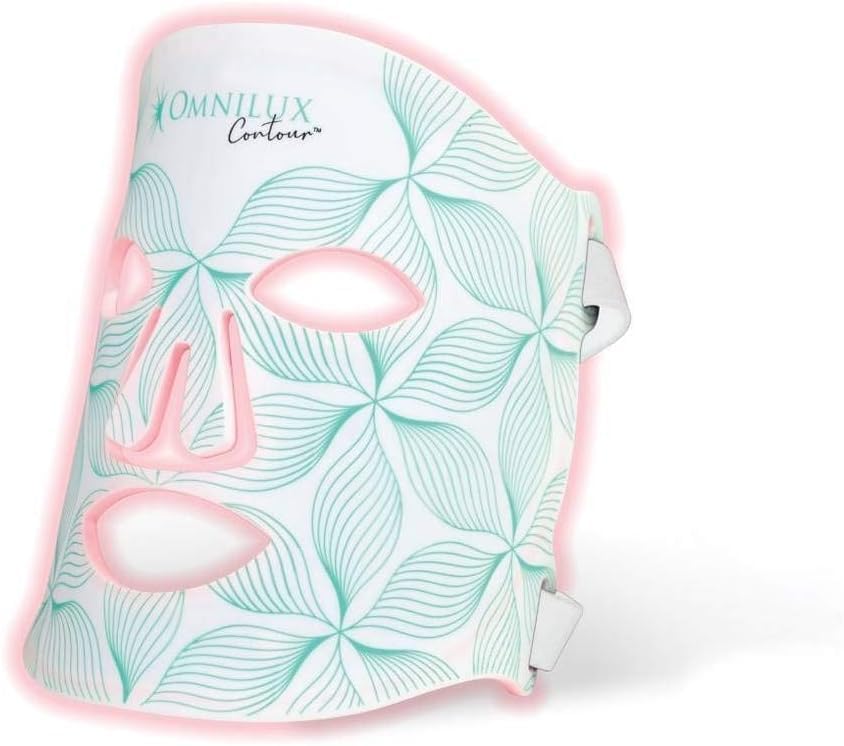
Omnilux has manufactured medical-grade LED devices for dermatology clinics for over two decades, and the Contour Face’s official product page confirms that same two-wavelength formula in a semi-rigid, flexible design with 132 medical-grade LEDs. For a beginner, the appeal is simplicity: there’s essentially one thing this mask does, and it does it consistently. The semi-rigid frame keeps LEDs at a fixed distance from skin for repeatable results, though that also means the fit is less adaptable than a fully flexible silicone mask. Main weakness: it’s final sale with no returns, and at $395 it’s a real commitment for a first purchase. Those set on trying LED therapy for wrinkles specifically may also want to read our guide to best LED face masks for wrinkles and firm skin.
CurrentBody Skin LED Light Therapy Mask
Best for: Beginners who want a closely-fitting, flexible mask
Approximate price: ~$380–$460 depending on version
Light wavelengths: Red 633nm and near-infrared 830nm on the core mask; multi-light versions add blue, green, yellow, and deep near-infrared
Treatment time: 10 minutes, 3–5 times per week
FDA status: FDA cleared

- Enhanced collagen production capability significantly reduces fine lines, wrinkles and redness, for younger-looking skin…
- Upgraded light coverage provides our famous instant glow, for a healthier, brighter and smoother complexion.
- An all-new, exclusive layout of 236 LED bulbs emits three clinically recognised wavelengths: red (633nm), near-infrared …
CurrentBody’s fully flexible silicone construction drapes closer to the face than rigid designs, which some beginners find more comfortable for a 10-minute daily habit. Ease of use is straightforward: strap it on, press start, and go. The multi-light versions add more wavelengths but also more decisions for a first-time buyer, so beginners may prefer starting with the core red/NIR mask. If skin tone and firmness are your focus, this pairs well with our guide to best red light therapy masks for anti-aging.
Dr. Dennis Gross SpectraLite FaceWare Pro
Best for: Beginners who want the shortest possible daily session
Approximate price: ~$455–$499
Light wavelengths: Red and blue LEDs (up to 100 red, 60 blue)
Treatment time: 3 minutes
FDA status: FDA cleared
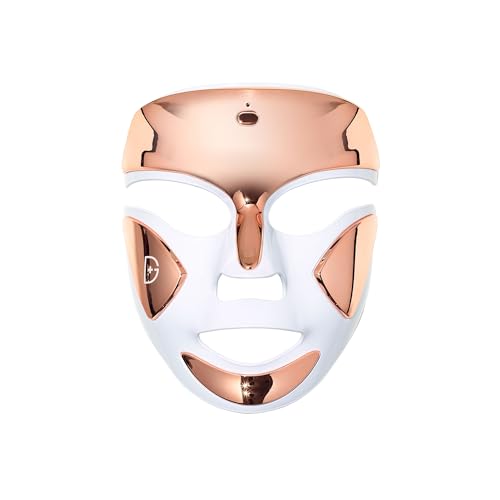
- WHAT IT IS: This LED device for the face targets wrinkles and acne for visibly smoother, clearer skin in just 3 minutes….
- HOW IT WORKS: Treat acne and breakouts with blue light, smooth wrinkles and build collagen with red light, or address bo…
- HOW TO USE: After cleansing, place the mask over your face, securing the strap around your head. Press & hold the power …
This is one of the fastest routines on this list, which matters if you know you won’t stick to a 10 or 20-minute daily habit. It’s a rigid, dermatologist-founded design that combines red light for fine lines with blue light for occasional breakouts in one device, useful for beginners dealing with both concerns at once. Main tradeoff: it’s on the pricier end, and the rigid shape may not hug every face shape as closely as a silicone mask. Manufacturer materials note that optimal results generally occur after roughly a 10-week course of consistent treatment, which is a helpful, realistic expectation to set going in.
Solawave Wrinkle Retreat Pro
Best for: Beginners who want more wavelengths without a longer routine
Approximate price: ~$399
Light wavelengths: Amber 605nm, red 630nm, deep red 660nm, near-infrared 830nm
Treatment time: 3 minutes, 3–5 times per week
FDA status: FDA cleared, Class II
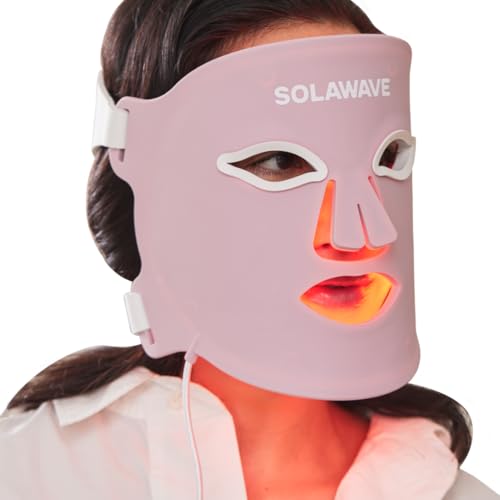
- 4 WAVELENGTHS. ZERO BLIND SPOTS: Red (630nm) softens fine lines. Deep Red (660nm) targets elasticity. Amber (605nm) revi…
- FASTER THAN BREWING YOUR MORNING COFFEE: 3 minutes. Hands-free. Automatic shut-off. While most LED masks demand 10-20 mi…
- 320 LEDS. BUILT FOR EFFICIENCY: One charge powers up to 20 full sessions – most competitor masks max out at six. Digital…
Solawave packs four wavelengths and 320 LEDs into a soft, flexible silicone mask with a short 3-minute session, which is a practical combination for beginners with busy mornings. The flexible fit and single-button interface keep the learning curve low. As with any newer four-wavelength device, it’s worth reading the manufacturer’s own published irradiance and study data closely, since independent, third-party verification of consumer LED masks is still limited across the category generally.
HigherDOSE Red Light Face Mask
Best for: Beginners who want to move around during treatment
Approximate price: ~$349
Light wavelengths: Red 630nm, near-infrared 830nm
Treatment time: 10 or 20 minutes
FDA status: FDA cleared

- Red Light Therapy for Face & Skin Rejuvenation – This FDA cleared, FSA eligible red light therapy mask uses red (630nm) …
- Facial Light Therapy, Anywhere – Lightweight and wireless, this LED face mask with red light therapy delivers targeted w…
- Red Light Mask That Works Deep – Red and near-infrared light reach deep layers to improve tone, reduce puffiness, and vi…
The rechargeable, cordless controller is the standout feature here: you can do chores, answer emails, or stretch while wearing it instead of sitting still. The two-wavelength formula keeps things simple for a first mask. It runs a bit lower in published irradiance than some competitors at a similar price, so beginners focused purely on maximum output may want to compare it against CurrentBody or Omnilux before deciding.
Therabody TheraFace Mask
Best for: Beginners who also want facial massage in the same session
Approximate price: ~$399–$549 depending on version
Light wavelengths: Blue 415nm, red 633nm, red+infrared 633/830nm
Treatment time: 3–9 minutes
FDA status: FDA cleared, Class II
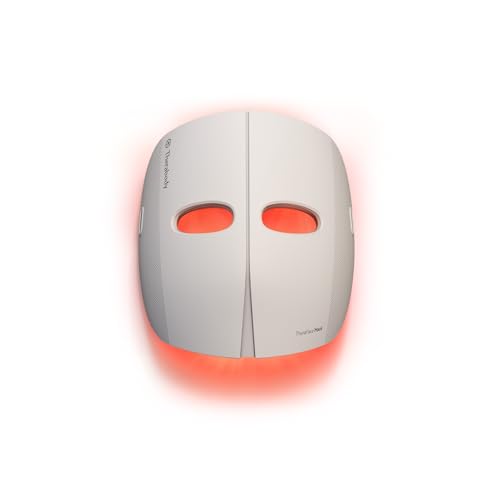
- Supercharged Face Care in 9 Minutes: A facial mask routine with 3 impressive LED light therapy technologies. Red light t…
- Vibrating Facial Massager, Too: TheraFace LED mask delivers a 15-minute vibration therapy treatment to key pressure poin…
- Powerful, Medical-Grade Lights: With 3x more LEDs than leading mask competitors for maximum efficacy and mask skincare r…
This rigid-shell mask adds built-in vibration massage around the eyes, browline, and scalp alongside three light settings, which appeals to beginners who want a more spa-like routine rather than “just” light therapy. The tradeoff is a slightly steeper learning curve: more modes and features mean more choices for someone brand new to the category. It’s a heavier device than most flexible silicone masks, which some beginners notice during longer sessions.
iRestore Illumina Face Mask
Best for: Beginners who want built-in eye protection
Approximate price: ~$399 on sale, ~$699 list price
Light wavelengths: Red 635nm, near-infrared 830nm, blue
Treatment time: 10 minutes
FDA status: FDA cleared
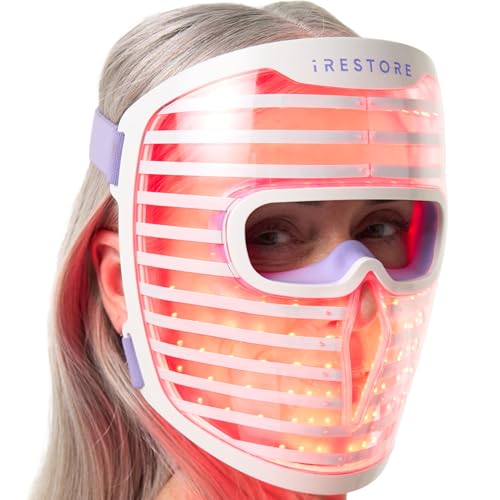
- The Most Powerful Red Light Mask for Visible Results: Experience professional-level rejuvenation at home with 360 LEDs, …
- Advanced Triple-Wavelength Technology: Powered by 3 scientifically backed wavelengths – Red (635nm), Infrared (830nm), a…
- Designed for Comfort and Multitasking: Lightweight yet sturdy, our dual-strap face mask hovers comfortably over your fac…
The integrated eye shields are the main draw for beginners who are nervous about light near their eyes or who want to multitask (read, scroll, work) during treatment without worrying about eye exposure. With 360 medical-grade LEDs across three wavelengths, it targets aging and occasional breakouts in one device. Its list price is among the highest on this list, though it’s frequently discounted, so beginners should confirm the current price rather than assuming full retail.
Shark CryoGlow LED Face Mask
Best for: Beginners who want simple presets plus a cooling feature
Approximate price: ~$349–$400
Light wavelengths: Red 630nm, blue, infrared 830nm
Treatment time: 4–8 minutes depending on the preset mode
FDA status: FDA cleared

- RED LIGHT THERAPY MASK: CryoGlow is an at-home LED face mask combining red, blue & deep infrared light with under-eye co…
- MOST AWARDED LED MASK IN THE U.S.*: Real people. Real results. Clinically tested on 119 participants by an independent t…
- EXPERTLY DEVELOPED: Developed by Shark Beauty alongside optical light experts and engineers, bringing MedSpa-inspired re…
Shark’s first skincare device uses four preset treatment modes (aging, clearing, sustaining, and an under-eye cooling mode) that a beginner selects with a single dial, rather than customizing individual wavelength combinations. The under-eye cooling pads are a genuinely different feature from anything else on this list. The hard-shell design is easy to use but can be less flexible to store than a soft silicone mask. This mask can also work well for readers exploring options in our roundup of best LED face masks for acne-prone skin, thanks to its dedicated blue-light clearing mode.
Beginner Mistakes to Avoid
- Buying based only on LED count without checking wavelength or irradiance
- Ignoring published wavelength information entirely
- Assuming the most expensive mask is automatically the most effective one
- Expecting visible results after one or two sessions
- Using the mask more often than the manufacturer recommends, hoping for faster results
- Applying retinoids, exfoliating acids, or other active ingredients immediately before a session
- Skipping the eye protection instructions
- Not checking contraindications, medications, or skin conditions before starting
- Buying an uncomfortable mask and then quietly never using it again
- Comparing masks by price alone instead of wavelength, dose, and fit together
How to Use an LED Face Mask for the First Time
- Clean your face. Start with a bare, makeup-free face so light can reach your skin directly.
- Read the manufacturer’s instructions. Every mask has slightly different session times, modes, and setup steps.
- Position the mask correctly. Adjust the strap so the LED panel sits close and even across your face.
- Start with the recommended treatment time. Don’t extend a session hoping for faster results.
- Don’t exceed the recommended frequency. More sessions per week isn’t automatically better.
- Finish with your normal skincare routine if the manufacturer’s instructions say it’s appropriate to apply serum or moisturizer afterward.
- Clean and store the mask correctly according to the manufacturer’s care instructions to keep it working well over time.
How Often Should Beginners Use an LED Mask?
There’s no single universal schedule that applies to every device, because treatment time, wavelength, and irradiance all vary by product. Some masks are designed for daily use; others recommend 3 to 5 sessions per week. Always follow the specific manufacturer’s instructions for your device rather than a generic rule you read somewhere else. What matters most for beginners is consistency: showing up for your sessions on schedule tends to matter more than squeezing in extra ones.
When Will a Beginner See Results?
Timelines vary by person, device, and consistency of use, and results are never guaranteed. As a general, non-binding pattern reported across devices and studies:
- First few uses: Skin may look slightly calmer or more radiant right after a session, though this is typically temporary.
- First few weeks: With consistent use, some people begin noticing subtle changes in texture or tone.
- Around 4–8 weeks: This is the window many manufacturer and independent studies use to evaluate visible change in fine lines, firmness, or breakouts.
- Longer-term maintenance: Continued, regular use is generally needed to maintain any visible improvement, similar to how skincare and sunscreen habits work over time.
Dermatologists interviewed by Harvard Health note that for at-home devices to be effective, they typically need to be used multiple times a week for four to six months, so patience is genuinely part of the process, not just marketing language.
Who Should Be Careful With LED Masks?
LED masks are generally considered safe for home use, but they aren’t automatically right for everyone. People with certain medical conditions, a history of skin cancer, photosensitivity, light-sensitive medications, active skin infections, or specific eye conditions should review the manufacturer’s warnings closely and speak with a qualified healthcare professional, such as a board-certified dermatologist, before starting. Pregnant or breastfeeding individuals should also check manufacturer guidance, since some devices explicitly note they haven’t been tested in these groups. This article is general information, not personalized medical advice, and it isn’t a substitute for a conversation with your own doctor or dermatologist about your specific skin and health history.
If you’re also researching options specifically for mature skin and fine lines, our guide to best LED face masks for mature skin and fine lines goes deeper on that use case, and if sagging and firmness are your main concern, see red light therapy devices for sagging skin and firmness.
Beginner Buying Checklist
☐ Wavelengths are clearly published (in nanometers)
☐ Treatment instructions are clear and easy to follow
☐ Fit is comfortable for your face shape
☐ Eye area is comfortable and protected
☐ FDA status is accurately and clearly stated
☐ Warranty is reasonable (ideally 1 year or more)
☐ Return policy is clearly explained
☐ Price genuinely fits your budget
☐ You can realistically follow the recommended treatment schedule
☐ Your main skin concern matches what the mask is designed to treat
Frequently Asked Questions
Are LED face masks safe for beginners?
Most FDA-cleared LED masks are considered safe for home use by dermatologists, but always review the manufacturer’s specific warnings and check with a doctor if you have a relevant medical condition or take photosensitizing medication.
What is the best LED light color for beginners?
Red light paired with near-infrared is the most common, well-studied starting point for general anti-aging concerns. Add blue light only if acne or active breakouts are a specific concern.
Should I start with red light or blue light?
Start with red light if your main goal is fine lines, firmness, or overall skin quality. Use blue light specifically for active blemishes rather than as a daily default across your whole face.
How long should a beginner wear an LED face mask?
Follow the specific manufacturer’s recommended session time, which ranges from about 3 minutes to 20 minutes depending on the device. Don’t extend sessions on your own.
Can I use an LED mask every day?
Some devices are designed for daily use; others recommend 3 to 5 sessions per week. Check your specific mask’s instructions rather than assuming daily use is always appropriate.
Should I use an LED mask before or after skincare?
Most manufacturers recommend using the mask on clean, product-free skin, then applying serum or moisturizer afterward. Avoid applying active ingredients like retinoids or acids immediately before a session.
Do expensive LED masks work better?
Not automatically. Price doesn’t always correlate with wavelength accuracy, irradiance, or fit. Compare published specs rather than assuming a higher price means better results.
How many LEDs should a good face mask have?
LED count alone doesn’t determine quality. A mask with fewer, well-placed, correctly-calibrated LEDs at the right wavelength can outperform a mask with a higher LED count but unclear specs.
Do LED face masks really work?
Some clinical research and dermatologist-reported observations suggest red and near-infrared light therapy can help with the appearance of fine lines, tone, and texture, though results vary by person and consistency of use. For a deeper look at the evidence, see our article on do LED face masks really work?
How long does it take to see results?
Many studies and manufacturer trials evaluate visible changes around the 4-to-8-week mark of consistent use, with longer-term maintenance needed to sustain results.
Can beginners use LED masks for acne?
Yes, masks that include blue light are commonly used for mild to moderate acne. Results vary, and LED therapy is generally considered a complement to, not a replacement for, a full acne skincare routine or dermatologist care.
Can I use an LED mask if I have sensitive skin?
Many masks are marketed as suitable for all skin types, but sensitive skin can still react differently. Patch-test your reaction with shorter sessions at first, and stop use if you notice irritation, discoloration, or discomfort.
Sources: This article references guidance from the U.S. Food and Drug Administration on 510(k) device clearance, the American Academy of Dermatology’s consumer guidance on red light therapy, Harvard Health Publishing, and peer-reviewed research on LED-based phototherapy, alongside current manufacturer specifications as published in 2026. Manufacturer claims are noted as such throughout and should be distinguished from independent research findings.