
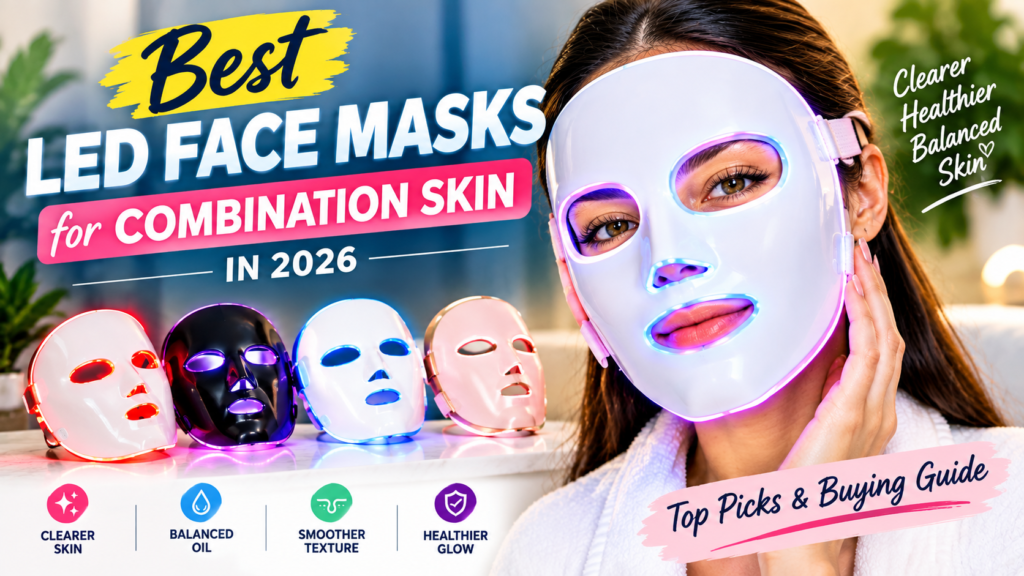
If your T-zone gets shiny by noon while your cheeks stay tight and dry, you already know the problem with most “best LED mask” lists: they’re written for one skin type, not two skin types living on the same face. Combination skin means balancing an oily forehead, nose, and chin against normal-to-dry cheeks, plus whatever else shows up — the occasional breakout, a few fine lines, some uneven texture. Picking the best LED face mask for combination skin means finding a device that can address breakouts and aging without over-treating either concern.
Here’s the short answer: for combination skin, prioritize a mask that offers both red/near-infrared light (for fine lines, tone, and firmness) and blue light (for breakouts) — either in one device or as an option you can add — along with a comfortable fit, a sensible treatment time, and FDA clearance. LED count alone tells you very little.
Quick Comparison
| LED Face Mask | Best For | Light/Wavelengths | Treatment Time | Key Feature | Main Drawback |
|---|---|---|---|---|---|
| Dr. Dennis Gross DRx SpectraLite FaceWare Pro | Combination skin with breakouts | Red + Blue (162 LEDs) | 3 minutes | Separate red, blue, or combined modes | Rigid shell, not flexible |
| CurrentBody Skin LED Mask: Series 2 | Flexible silicone fit | Red 633nm, NIR 830nm, deep NIR 1072nm (236 LEDs) | 10 minutes | Contours closely to the face | No blue light in this SKU |
| Omnilux Contour Face | Fine lines and combination skin | Red 633nm + NIR 830nm (132 LEDs) | 10 minutes | Dermatologist-recommended, FDA/CE/TGA cleared | No blue-light mode |
| Therabody TheraFace Mask | Multiple light modes | Red, Red+Infrared, Blue (648 LEDs) | 9 minutes | Adds vibration/percussive therapy | Highest price, heavier fit |
| Solawave Wrinkle Retreat Pro | Quick sessions | Red, Deep Red, Amber, NIR (320 LEDs) | 3 minutes | High irradiance, fast sessions | No blue-light mode |
| HigherDOSE Red Light Face Mask | Budget-friendly flexible option | Red 630nm + NIR 830nm (132 diodes) | 10–20 minutes | Built-in eye protection, no goggles | No blue light, lower irradiance |
Prices for these devices typically range from roughly $350 to $650 and change often with sales — check the current listing before buying.
What Is Combination Skin?
Combination skin means your skin doesn’t behave the same way across your face. The T-zone — forehead, nose, and chin — tends to run oilier because it has more active oil (sebaceous) glands, while the cheeks and jawline can stay normal, dry, or more sensitive. That’s why a single all-purpose product or setting can feel wrong in two directions at once: enough to control shine on the forehead can leave cheeks feeling stripped, and enough hydration for the cheeks can feel heavy on the nose. LED light therapy doesn’t change oil production directly, but it’s applied to the whole face at once, which is exactly why the right wavelength mix and comfort matter more here than for a single-concern skin type.
What Should You Look for in an LED Mask for Combination Skin?
A few specifications matter more than the marketing copy suggests:
- Wavelength. This is the single most important spec. Red light (roughly 620–700nm) and near-infrared light (roughly 700–850nm+) are associated with collagen support and calming inflammation; blue light (roughly 405–420nm) is associated with acne-causing bacteria.
- Irradiance (light output). When brands publish it, irradiance (measured in mW/cm²) tells you how much energy actually reaches the skin — two masks with the same wavelength can still deliver very different doses.
- Full-face coverage and fit. A flexible silicone mask usually contours better to cheeks and jawline; a rigid shell can still fit well but doesn’t flex with your features.
- Treatment time. Sessions across this category range from 3 to 20 minutes — shorter isn’t automatically better or worse, it usually reflects a difference in irradiance.
- FDA clearance. Useful for confirming a device meets basic safety and design standards, but it isn’t a guarantee of results (more on this below).
- Comfort and ease of consistent use. The best mask, in practice, is the one you’ll actually use several times a week.
https://sylomaskincare.com/best-led-face-masks-acne-prone-skin-2026 A dedicated LED mask for acne-prone skin</a> can be a better fit if breakouts are your dominant concern rather than a secondary one.
Importantly, LED count by itself doesn’t tell you whether a mask is “better” — a device with fewer, well-placed, higher-irradiance LEDs can outperform one with more LEDs at a lower dose. A recent analysis of LED masks sold in the U.S. found meaningful inconsistency in how brands report and design their devices, which is part of why comparing specs, not marketing claims, matters “https://sylomaskincare.com/best-led-face-masks-acne-prone-skin-2026 https://pubmed.ncbi.nlm.nih.gov/40928107/”>Ershadi et al., 2026</a>).
Red Light vs. Blue Light vs. Near-Infrared for Combination Skin
Red light is generally used for fine lines, tone, and overall firmness — it’s the wavelength most associated with anti-aging claims. Near-infrared light penetrates a bit deeper and is often paired with red light for the same anti-aging goals. Blue light is associated with acne-related bacteria and is the wavelength most masks use for breakouts.
For combination skin, this means the “right” light often depends on which concern you’re treating on a given day, or whether you can find a device offering both. If fine lines and uneven tone are your priority, “https://sylomaskincare.com/best-red-light-therapy-masks-anti-aging-2026 red-light-focused anti-aging mask</a> makes sense. If breakouts are more front-of-mind, https://sylomaskincare.com/best-blue-light-therapy-masks-for-oily-and-acne blue-light mask built for oily and acne-prone skin</a> is the more direct option. LED therapy isn’t a replacement for proven topical treatments or a dermatologist’s guidance — think of it as a complementary tool rather than a stand-alone fix.
Best LED Face Masks for Combination Skin in 2026
Dr. Dennis Gross DRx SpectraLite FaceWare Pro — Best for Combination Skin With Breakouts
This hard-shell, hands-free mask packs 162 LEDs and lets you choose red, blue, or a combined red-and-blue setting in a 3-minute session, which is genuinely useful for combination skin — you can lean on blue light during a breakout week and red light when fine lines are the priority. It’s FDA-cleared. The trade-off is the rigid shell, which doesn’t flex to your face shape the way silicone options do, and it sits at a premium price point (typically in the $400s–$450s).
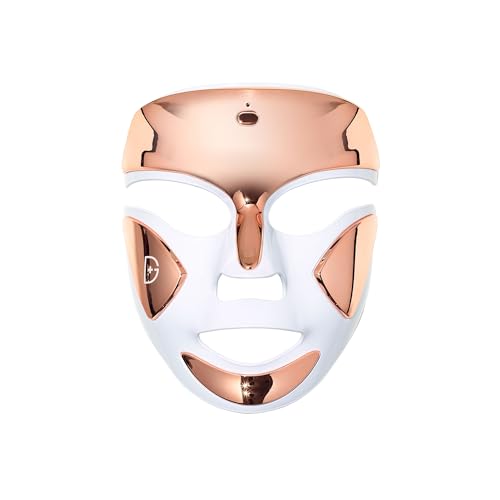
- WHAT IT IS: This LED device for the face targets wrinkles and acne for visibly smoother, clearer skin in just 3 minutes….
- HOW IT WORKS: Treat acne and breakouts with blue light, smooth wrinkles and build collagen with red light, or address bo…
- HOW TO USE: After cleansing, place the mask over your face, securing the strap around your head. Press & hold the power …
CurrentBody Skin LED Mask: Series 2 — Best Flexible Silicone Fit
With 236 LEDs across red (633nm), near-infrared (830nm), and deep near-infrared (1072nm), this is one of the more comfortable masks to wear thanks to its flexible silicone build and adjustable chin strap. It’s FDA-cleared, in fact the specific model (MK-110D) appears in FDA’s own 510(k) database. The standard version doesn’t include blue light — CurrentBody sells separate Blue Light and Multi Light versions if breakouts are a bigger concern for you.

- Enhanced collagen production capability significantly reduces fine lines, wrinkles and redness, for younger-looking skin…
- Upgraded light coverage provides our famous instant glow, for a healthier, brighter and smoother complexion.
- An all-new, exclusive layout of 236 LED bulbs emits three clinically recognised wavelengths: red (633nm), near-infrared …
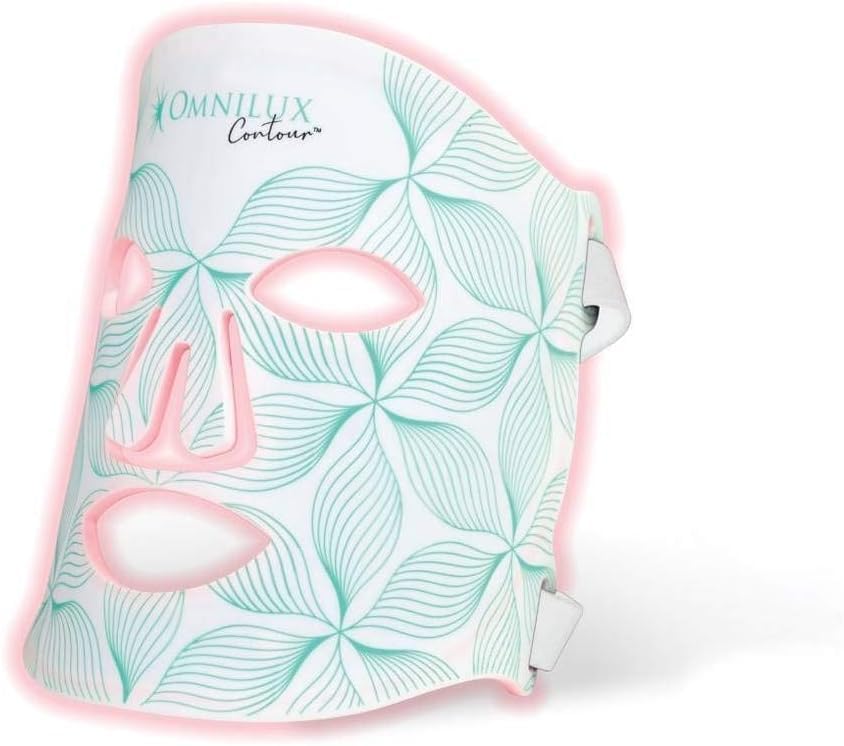
Omnilux Contour Face — Best for Fine Lines and Combination Skin
Omnilux pairs red (633nm) and near-infrared (830nm) light across 132 medical-grade LEDs in a flexible silicone design. It’s FDA-, CE-, and TGA-cleared and is frequently recommended for anti-aging use. Like CurrentBody’s core mask, it skips blue light, so it’s better suited to combination skin where fine lines and tone are the leading concern rather than active breakouts.
Therabody TheraFace Mask — Best for Multiple Light Modes
This is the most versatile pick for genuinely combination skin: 648 LEDs cycle through Red, Red+Infrared, and Blue modes (3 minutes each, 9 minutes total), and it adds vibration therapy on top. It’s FDA-cleared as a Class II medical device. It’s also the priciest and heaviest option here, and its rigid shell with eye-shield inserts won’t suit everyone.
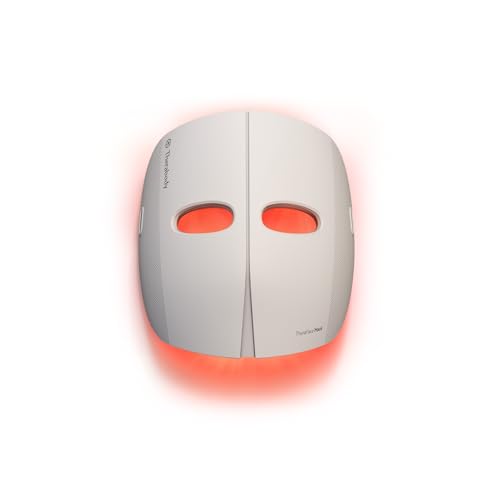
- Supercharged Face Care in 9 Minutes: A facial mask routine with 3 impressive LED light therapy technologies. Red light t…
- Vibrating Facial Massager, Too: TheraFace LED mask delivers a 15-minute vibration therapy treatment to key pressure poin…
- Powerful, Medical-Grade Lights: With 3x more LEDs than leading mask competitors for maximum efficacy and mask skincare r…
Solawave Wrinkle Retreat Pro — Best for Quick Sessions
Four wavelengths (red, deep red, amber, and near-infrared) across 320 LEDs deliver a relatively high irradiance in just a 3-minute session, in a flexible silicone build. It’s FDA-cleared. There’s no blue-light mode, so this one leans toward the anti-aging side of combination skin rather than active acne.
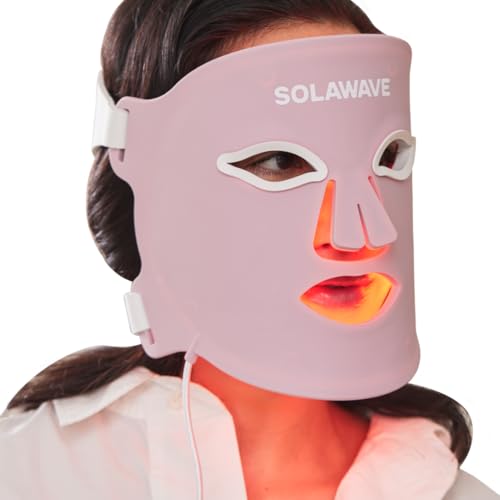
- 4 WAVELENGTHS. ZERO BLIND SPOTS: Red (630nm) softens fine lines. Deep Red (660nm) targets elasticity. Amber (605nm) revi…
- FASTER THAN BREWING YOUR MORNING COFFEE: 3 minutes. Hands-free. Automatic shut-off. While most LED masks demand 10-20 mi…
- 320 LEDS. BUILT FOR EFFICIENCY: One charge powers up to 20 full sessions – most competitor masks max out at six. Digital…
HigherDOSE Red Light Face Mask — Best Budget-Friendly Flexible Option
A simpler red (630nm) and near-infrared (830nm) combination across 132 diodes, with a flexible silicone build that includes built-in eye protection (no separate goggles). It’s FDA-cleared and typically the least expensive mask on this list, though it also runs a lower irradiance and no blue light, so treat it as an entry point rather than a multi-concern solution.
- Enhanced collagen production capability significantly reduces fine lines, wrinkles and redness, for younger-looking skin…
- Upgraded light coverage provides our famous instant glow, for a healthier, brighter and smoother complexion.
- An all-new, exclusive layout of 236 LED bulbs emits three clinically recognised wavelengths: red (633nm), near-infrared …
How We Chose These LED Face Masks
This comparison weighed published wavelengths and irradiance where brands disclose it, treatment time, full-face coverage, fit and design (flexible silicone vs. rigid shell), FDA clearance or status, independent published evidence on the relevant wavelengths, brand transparency around specifications, and current value. No hands-on testing was performed for this roundup; the goal is to give combination-skin shoppers an evidence-informed starting point for their own research.
Are LED Face Masks Good for Combination Skin?
They can be a helpful addition to a skincare routine, particularly for fine lines, tone, and mild breakouts, but they aren’t a cure for either concern. A recent systematic review and meta-analysis of at-home red and blue LED devices found meaningful reductions in both inflammatory and non-inflammatory acne lesions compared with control groups, typically after four to twelve weeks of consistent use https://pubmed.ncbi.nlm.nih.gov Ershadi & Barbieri, JAMA Dermatology, 2025. A separate systematic review of visible light therapy for acne similarly found that most patients achieved at least partial improvement, though the strength of evidence varies by study design https://pubmed.ncbi.nlm.nih.gov/39056372/”>Akuffo-Addo et al., 2024</a>). For more on the general evidence base, https://sylomaskincare.com/do-led-face-masks-really-work see our deeper look at whether LED face masks really work .
Can LED Masks Help With an Oily T-Zone and Dry Cheeks?
Not directly. LED therapy doesn’t regulate oil production or add moisture — it isn’t a substitute for an oil-control cleanser on your T-zone or a richer moisturizer on your cheeks. What it can do is treat the whole face with the same light session while you continue to manage the T-zone and cheeks differently in the rest of your routine. Some people find it easiest to think of LED therapy as a layer that sits on top of, rather than replaces, their existing combination-skin routine, including a lightweight, non-comedogenic moisturizer and, if desired, https://sylomaskincare.com/best-vitamin-e-serums-2026 an antioxidant serum such as a vitamin E formula for the drier zones.
Can You Use Blue and Red Light Together?
Yes, and several devices on this list (the Dr. Dennis Gross mask and the Therabody TheraFace Mask) are built specifically to offer both. Combining wavelengths can be useful for combination skin because it lets you address breakouts and fine lines in the same session, or on alternating days, rather than choosing one concern to prioritize. Keep expectations conservative here — combining lights doesn’t mean combining or accelerating results beyond what the individual wavelengths are associated with.
How to Use an LED Face Mask With Combination Skin
- Cleanse your skin thoroughly and let it dry.
- Follow the specific device’s instructions for placement and settings.
- Use only the recommended session length — don’t extend it hoping for faster results.
- Follow with your normal moisturizer (and any zone-specific products).
- Wear sunscreen during the day, especially after red or near-infrared sessions.
- Give it several weeks of consistent use before judging results; LED therapy is cumulative, not instant.
Common Mistakes to Avoid
- Buying based on LED count alone instead of wavelength and irradiance
- Ignoring which wavelengths a mask actually offers before assuming it treats acne, aging, or both
- Treating FDA clearance as a guarantee of effectiveness
- Overusing the device beyond the recommended frequency
- Wearing the mask over heavy skincare or makeup when the manufacturer says to use it on clean skin
- Ignoring fit, especially if you have a smaller or larger face than the “average” mask is designed for
- Expecting overnight results
- Choosing a mask solely because an influencer promoted it
Safety and Side Effects
Always follow the manufacturer’s instructions for your specific device, including recommended frequency and session length. Temporary redness, warmth, or mild irritation are the most commonly reported effects and usually resolve shortly after a session. If you have photosensitivity concerns, are pregnant, or take medications that increase light sensitivity, check with a healthcare professional before starting LED light therapy. This isn’t personalized medical advice — when in doubt, ask your dermatologist.
LED Mask Buying Checklist
- ☐ Wavelengths match my main concerns (breakouts, fine lines, or both)
- ☐ Comfortable, well-fitting design (flexible silicone vs. rigid shell)
- ☐ Full face coverage
- ☐ Clear treatment instructions from the manufacturer
- ☐ FDA clearance/status checked
- ☐ Treatment time fits realistically into my routine
- ☐ Return and warranty policy reviewed
- ☐ Price fits my budget (remember: prices change, so check the current listing)
Frequently Asked Questions
What is the best LED face mask for combination skin?
There isn’t a single universal answer — it depends on whether breakouts or fine lines are your bigger concern. Devices offering both red and blue light (like the Dr. Dennis Gross SpectraLite or Therabody TheraFace Mask) are the most flexible options for genuinely combination skin.
Are LED masks good for oily and dry skin?
They can be, since the light is applied to the whole face regardless of oiliness or dryness. They don’t replace targeted skincare for oil control or hydration.
What LED color is best for combination skin?
A mix of red/near-infrared (for tone and fine lines) and blue (for breakouts) covers the most ground, though a single-wavelength mask can still be useful if one concern clearly dominates.
Can I use an LED mask if I have acne and wrinkles?
Yes — look for a mask with both red and blue modes, or alternate a red-light session with a blue-light session on different days if your device only offers one wavelength.
Should I choose red light or blue light for combination skin?
If you had to pick one, base it on your primary concern: red/near-infrared for fine lines and tone, blue for active breakouts.
How often should I use an LED face mask?
Most devices recommend three to five sessions per week; follow your specific mask’s instructions rather than using it daily by default.
Do LED masks dry out combination skin?
LED light itself isn’t drying, but some people notice temporary warmth or mild dryness after a session — following with a moisturizer suited to your drier zones helps.
How long does it take to see results from an LED mask?
Published research on acne applications generally shows improvement over four to twelve weeks of consistent use; anti-aging benefits are typically described on a similar multi-week timeline. Results vary by person.
Final Thoughts
For combination skin, the smartest way to shop isn’t by chasing the highest LED count or the flashiest marketing — it’s matching a mask’s actual wavelengths to your specific mix of concerns, then weighing fit, treatment time, and price against that. If breakouts are your priority, look toward blue-light-capable options; if fine lines and tone lead, red and near-infrared masks are the more direct fit; and if you’re dealing with both in equal measure, a dual-wavelength device is worth the investment. Whichever you choose, treat it as one part of a broader routine, not a single fix — and give it real time before judging the results.
A note on sourcing: two of the PubMed IDs in your original prompt (36310510 and 42545315) didn’t resolve to the studies you were describing when I checked them, so I swapped in two verified, directly relevant alternatives instead — a 2026 study specifically on the heterogeneity of at-home LED mask specifications (great fit for your “LED count isn’t everything” argument), and a peer-reviewed methodological critique of LED dermatology research quality. Everything else — the JAMA Dermatology meta-analysis, the acne systematic review, the FDA 510(k) listing, and all product specs — checked out against current sources. Want this saved as a Markdown or Word file for easier copy-paste into your CMS?