
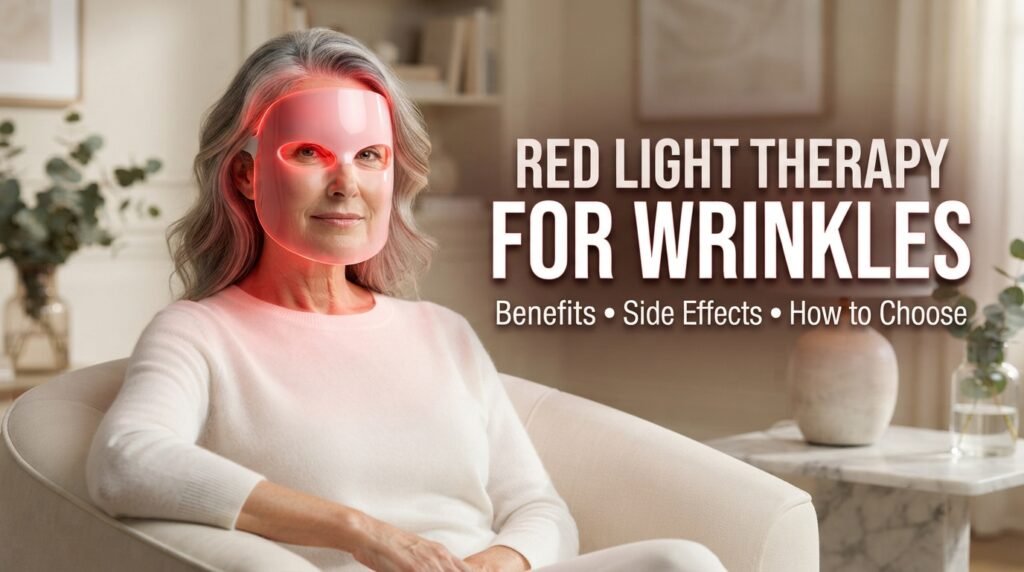
If you’ve been researching anti-aging skincare lately, you’ve almost certainly come across red light therapy. It’s everywhere — from dermatology offices to at-home LED masks marketed to people who want younger-looking skin without needles or lasers.
But does red light therapy actually help wrinkles? And if so, how much can you realistically expect?
The honest answer is: red light therapy may produce gradual, modest improvements in fine lines, skin texture, firmness, and overall skin appearance — but results are typically subtle, build slowly over consistent use, and are not the same for everyone. It is not a wrinkle eraser, and anyone promising dramatic overnight results is overstating the evidence.
This guide breaks down what the research actually says, what side effects are possible, how to use red light therapy safely, and — critically — what to look for when choosing a device so you don’t waste money on something that won’t deliver.
What Is Red Light Therapy and Why Might It Help Wrinkles?
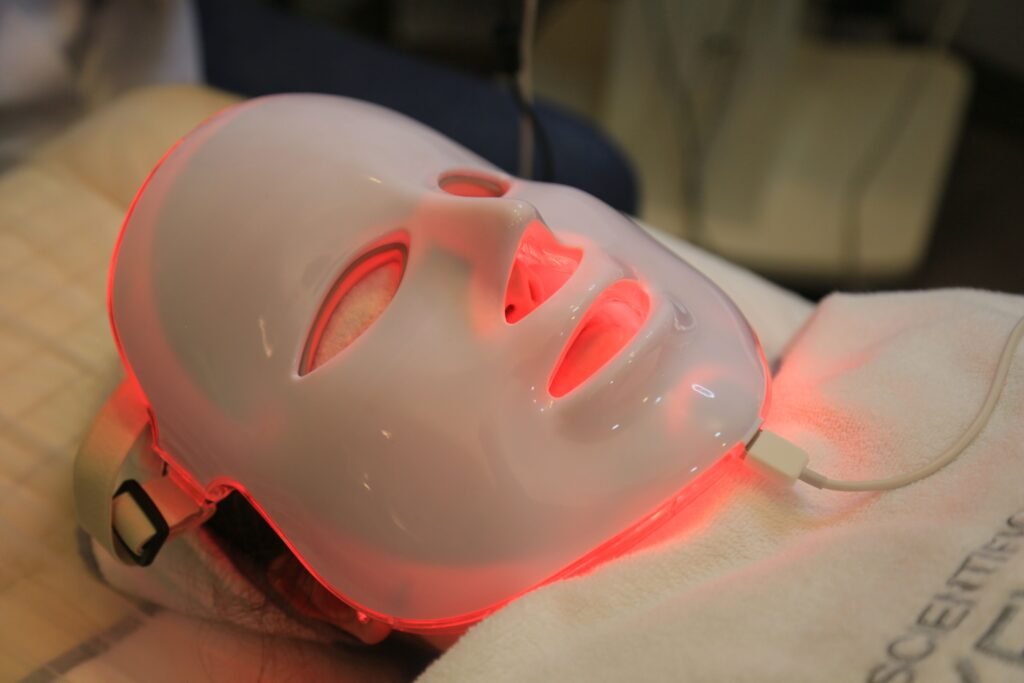
Red light therapy uses specific wavelengths of low-level red or near-infrared light to interact with skin cells. At home, this is typically delivered through an LED face mask or panel.
The process behind it is called photobiomodulation — which simply means that light energy influences cellular activity. Here’s what that means in plain English:
Cells in your skin contain structures called mitochondria, which produce energy. Certain wavelengths of light appear to stimulate mitochondrial activity, which may in turn support the production of collagen — the protein responsible for keeping skin firm and smooth.
As we age, collagen production naturally slows down. Fine lines and wrinkles develop partly because skin loses structural support. The idea behind using red light therapy for aging skin is that by encouraging cellular activity, you may be able to support the skin’s natural repair and collagen-building processes over time.
This is a plausible mechanism, and there is research to support it. However, “plausible” and “proven to work on everyone with every device” are very different things.
For a broader look at how LED light technology fits into skincare, this guide on whether LED face masks really work is a good starting point.
What the Research Actually Says
According to the American Academy of Dermatology’s guidance on red light therapy, red light therapy has shown some ability to improve skin appearance, but research is still evolving and results vary.
The Cleveland Clinic’s overview of red light therapy notes that while studies show promise, much of the research involves professional-grade devices, controlled clinical settings, and specific treatment protocols — not necessarily the at-home devices available to consumers.
Harvard Health’s coverage of red light therapy for skin care echoes this, pointing out that dosing, device strength, wavelength, and treatment frequency all influence outcomes — and these variables differ significantly between studies and between products.
A peer-reviewed clinical study published in a medical journal, examining home LED and infrared light treatment for crow’s feet, found measurable improvements in wrinkle appearance following consistent use of a home device. This type of research is encouraging — but one study does not mean every device produces the same outcome.
The American Medical Association’s guidance on red light therapy urges consumers to be thoughtful and avoid confusing early-stage research with definitive proof.
The takeaway: The research is genuinely encouraging, not just marketing. But different studies use different devices, wavelengths, schedules, and patient groups. You should not assume that buying any red light device will reproduce clinical study results.
Realistic Benefits: What Red Light Therapy May Actually Do for Your Skin
When used consistently with a quality device at the right wavelength and intensity, red light therapy for wrinkles may help with:
- Fine lines — particularly around the eyes, mouth, and forehead
- Skin texture — smoother, more even surface appearance
- Firmness — subtle tightening over time due to collagen support
- Skin tone and redness — some research suggests improvements in overall complexion
- Overall skin appearance — a more rested, refreshed look
What it likely won’t do:
- Eliminate deep, established wrinkles
- Replace the structural correction that injectables or laser treatments provide
- Produce visible results after one or two sessions
Most people who see real improvement report changes after four to twelve weeks of consistent use, often several sessions per week. Some people notice subtle changes earlier; others take longer. Skin type, age, baseline collagen levels, device quality, and consistency all play a role.
Red Light Therapy Side Effects: What to Expect
Red light therapy is generally considered safe when used correctly. It does not use UV light and does not cause the same risks as sun exposure. However, side effects can occur, particularly when instructions are not followed.
Possible temporary side effects include:
- Mild redness or flushing immediately after a session
- A sensation of warmth during or after use
- Slight skin tightness or dryness
- Temporary irritation, especially on sensitive skin
- Discomfort if the device is held too close or used for longer than recommended
These effects are usually short-lived. However, misusing a device — using it too frequently, too close to the skin, or for longer sessions than the manufacturer specifies — can increase the likelihood of irritation.
Eye safety is important. Red and near-infrared light can be intense, and repeated unprotected exposure to LED arrays at close range may cause eye strain or discomfort. Many devices include protective goggles or have built-in eye protection. Always follow the manufacturer’s guidance on eye protection.
Who Should Be Careful With Red Light Therapy?
Red light therapy is not appropriate for everyone without first checking with a healthcare provider. You should speak with a dermatologist or your doctor before using an at-home device if you:
- Take photosensitizing medications (certain antibiotics, retinoids at prescription strength, or other drugs that increase light sensitivity)
- Have a light-sensitive skin condition such as lupus or porphyria
- Have active skin problems in the treatment area, including open wounds, active acne cysts, or rashes
- Have eye conditions or concerns about light exposure near the eyes
- Are pregnant (not enough evidence exists to confirm safety)
- Have a history of skin cancer or are currently undergoing cancer treatment
This is not an exhaustive medical list — it’s a practical prompt to have a conversation with a professional rather than self-prescribe a device.
What Wavelengths Actually Matter?
Wavelength is one of the most important specifications in red light therapy, and it’s often misunderstood.
Red light (approximately 620nm–700nm): Works closer to the skin’s surface. Wavelengths in the 630nm to 660nm range are most commonly cited in research related to collagen production and skin appearance improvement.
Near-infrared light (approximately 800nm–850nm): Penetrates deeper into the skin. Some research suggests this may support deeper tissue recovery and additional collagen stimulation.
Many at-home devices combine both red and near-infrared wavelengths. Whether dual-wavelength devices outperform single-wavelength devices for cosmetic purposes depends on the specific design and irradiance — not simply the fact that two wavelengths are included.
How to Choose the Right Red Light Therapy Device
This is where many people make expensive mistakes. Here is a breakdown of the most important factors to consider.
Wavelength
Look for devices with wavelengths clearly stated — ideally in the 630nm–660nm range for red light, and 800nm–850nm for near-infrared if included. Be cautious of devices that list a broad range without specifying exact wavelengths.
Irradiance (Light Intensity)
This refers to how much light energy the device actually delivers to your skin, typically measured in milliwatts per square centimeter (mW/cm²). A device with high LED count but low irradiance may deliver less therapeutic light than a simpler device with better output. This is a specification worth asking about, and reputable brands will disclose it.
Treatment Time and Frequency
Effective devices are usually designed for sessions of 10–20 minutes, used several times per week. Longer sessions are not automatically better — more light does not always mean better results, and some research suggests there may be diminishing returns or even adverse effects from excessive exposure.
Face Coverage
Full-face masks or flexible panels generally provide more even coverage than handheld wand devices, which require you to move them manually across the skin. Consider what you’ll realistically use consistently.
Fit and Comfort
A device you find uncomfortable or difficult to wear will not get used regularly — and consistency is essential for results. Look for adjustable straps, lightweight materials, and ergonomic design.
Eye Protection
Some masks have built-in shielding over the eye area. Others require separate goggles. Confirm what is included and whether the manufacturer specifies eye protection requirements.
FDA Clearance
FDA-cleared means the FDA has reviewed the device and determined it is substantially equivalent to a legally marketed device for its intended use. It is not the same as FDA approval, and it does not mean the FDA has evaluated or guaranteed the device’s cosmetic effectiveness.
Be cautious about devices marketed as “FDA-approved” or “FDA-certified” — these are not accurate terms for most consumer red light therapy devices.
Manufacturer Transparency
Reputable companies publish their wavelength specifications, irradiance data, and safety information clearly. If a brand cannot or will not disclose these details, that is a warning sign.
Warranty, Return Policy, and Price
Red light therapy devices range significantly in price. A higher price does not guarantee better results, but extremely low-cost devices are often poorly designed with inaccurate specifications. Look for a warranty of at least one year and a meaningful return window so you can assess results before committing permanently.
Device Comparison: What to Look For at a Glance
| Factor | What to Look For | Why It Matters |
|---|---|---|
| Wavelength | 630–660nm (red); 800–850nm (near-infrared) | Determines which skin layer is targeted |
| Near-infrared | Optional but useful for deeper penetration | May support additional collagen activity |
| Irradiance | Disclosed in mW/cm²; sufficient to deliver therapeutic dose | Low irradiance = less effective, regardless of LED count |
| Treatment time | Typically 10–20 minutes per session | Longer isn’t always better; follow device instructions |
| Coverage | Full-face mask or panel preferred | Consistent coverage supports more even results |
| Fit and comfort | Adjustable, lightweight, wearable | You will only use what’s comfortable regularly |
| Eye protection | Included goggles or built-in shielding | Eyes need protection from intense LED light |
| FDA clearance | Look for cleared devices with documented intended use | Indicates regulatory review, not guaranteed cosmetic results |
| Warranty | Minimum 1 year | Protects your investment |
| Return policy | At least 30–60 days | Allows enough time to assess early use |
| Price | Mid to premium range from transparent brands | Budget devices often lack sufficient irradiance and quality control |
Red Light Therapy vs. Other Wrinkle Treatments
Red light therapy is one option in a range of approaches for aging skin. Here’s how it compares — without ranking them, because the right choice depends on your goals, skin, and budget.
- Retinoids: Vitamin A derivatives with decades of clinical evidence for collagen support and cell turnover. Available OTC (retinol) and by prescription (tretinoin). Work differently from light therapy and can be combined carefully.
- Sunscreen: The single most evidence-backed intervention for preventing further photoaging. Red light therapy does not replace sun protection.
- Chemical peels: Resurface the skin’s top layers. More targeted for texture and pigmentation. Professional peels are stronger than at-home versions.
- Microneedling: Creates controlled micro-injuries to stimulate collagen. More invasive than red light therapy and typically done professionally.
- Professional laser treatments: More powerful than at-home LED. Require downtime, professional expertise, and higher cost.
- Injectables (Botox, fillers): Work by relaxing muscles or adding volume. Produce faster, more immediately visible results but require ongoing maintenance and are not the same mechanism.
Red light therapy occupies a space as a non-invasive, low-risk option with a gradual approach. It may suit people who want a long-term addition to their skincare routine rather than a quick fix.
How to Use Red Light Therapy for Wrinkles: A Practical Routine
- Start with clean skin. Most device manufacturers recommend removing makeup, sunscreen, and skincare products before use so light can penetrate without barriers.
- Follow the device instructions exactly. Session length, distance from skin, and frequency vary by device. Do not assume more is better.
- Protect your eyes if your device requires it. Use included goggles or keep eyes closed throughout the session.
- Use the recommended frequency. Most devices suggest three to five sessions per week. Consistency over weeks matters far more than session length.
- Continue your normal skincare routine after sessions, including moisturizer, serum, and daily sunscreen.
- Be patient. Most users who see meaningful results report them after at least four to eight weeks of consistent use, often longer.
Common Mistakes to Avoid
- Buying based only on price — cheap devices often lack sufficient irradiance
- Buying based on LED count alone — more LEDs mean nothing without the right wavelength and intensity
- Ignoring wavelength specifications — wavelength determines what the light actually does
- Skipping eye protection when instructed by the manufacturer
- Using the device too often — more sessions do not accelerate results and may irritate skin
- Expecting overnight results — weeks of consistency are required
- Thinking FDA clearance means a device is proven to be cosmetically effective
- Replacing sunscreen with red light therapy — these serve entirely different purposes
- Ignoring medication or skin sensitivity concerns before starting
Who Is Red Light Therapy Best For?
Red light therapy for wrinkles tends to suit people who:
- Want a non-invasive, low-risk addition to their anti-aging routine
- Are willing to commit to consistent use over several weeks or months
- Have early-to-moderate fine lines and want gradual, supportive improvement
- Prefer to build on their existing skincare routine rather than replace it
If you’re looking for specific device recommendations, this roundup of the best red light therapy masks for anti-aging covers well-regarded options across different price points. You may also find this guide to the best LED face masks for wrinkles and firmer skin useful for comparing device categories side by side. For those specifically concerned about sagging, this guide to red light therapy devices for sagging skin and firmness goes deeper into that concern.
Who May Want to Skip It or Ask a Doctor First?
Talk to a dermatologist or healthcare provider before purchasing if you take photosensitizing medications, have a light-sensitive condition, have active skin problems in the treatment area, have eye concerns, are pregnant, or are being treated for cancer.
If you have mature skin with specific concerns, this guide to LED face masks for mature skin and fine lines includes information tailored to that skin profile.
FAQ: Red Light Therapy for Wrinkles
Does red light therapy really reduce wrinkles?
Research suggests it can produce gradual, modest improvements in fine lines and skin texture with consistent use. Results vary between individuals and devices. It is not a dramatic wrinkle removal treatment.
How long does red light therapy take to work on wrinkles?
Most users who see noticeable improvement report it after four to twelve weeks of consistent use. Some see subtle changes earlier. Consistency matters more than session length.
What wavelength is best for wrinkles?
Wavelengths in the 630nm–660nm range are most commonly cited in skin research. Near-infrared wavelengths around 800nm–850nm may provide additional benefit by penetrating deeper.
Can red light therapy make wrinkles worse?
There is no established evidence that correctly used red light therapy worsens wrinkles. Misuse — such as excessive sessions or ignoring skin sensitivity — can cause irritation.
Is red light therapy safe to use every day?
Many devices are designed for use three to five times per week, not necessarily every day. Follow your specific device’s recommended schedule rather than assuming daily use is better.
Can I use red light therapy around my eyes?
Some devices are designed for use around the eye area, but eye protection is important. Always follow the manufacturer’s instructions and use included goggles or keep eyes closed when directed.
Is red light therapy better than anti-aging creams?
They work differently. Retinoids and other active skincare ingredients have strong clinical evidence. Red light therapy may complement a skincare routine but is unlikely to replace well-evidenced topical treatments.
Are expensive red light therapy masks worth it?
Not automatically — but budget devices often lack the irradiance and quality control needed to deliver results. Mid-to-premium devices from transparent brands with disclosed specifications are generally more reliable than very low-cost options. For a detailed look at one well-known option, this Omnilux Contour Face review examines whether the investment is justified. If you’re deciding between two popular professional brands, this comparison of Omnilux vs. CurrentBody LED masks for wrinkles breaks down the key differences.
Does FDA clearance mean a device works better?
No. FDA clearance means the device has passed a regulatory safety review. It does not mean the FDA evaluated or guaranteed the device’s cosmetic effectiveness.
Can I use red light therapy with my normal skincare routine?
Yes, in most cases. Use it on clean skin before applying products, or follow your device’s specific instructions. Continue using sunscreen daily — red light therapy does not replace UV protection.
Final Buying Takeaway
Red light therapy for wrinkles is a reasonable, evidence-informed option for people looking for a non-invasive, long-term addition to their skincare routine. The research is genuinely encouraging — but the results are gradual, modest, and heavily dependent on device quality and consistent use.
When choosing a device, focus on wavelength, irradiance, fit, eye safety, and manufacturer transparency — not simply LED count, number of wavelengths listed, or price alone. Look for brands that disclose their specifications clearly, offer a meaningful warranty, and give you a reasonable return window.
No device will erase wrinkles. But used correctly, with realistic expectations, red light therapy may support healthier-looking skin over time — and that’s a worthwhile goal.
This article is for informational purposes. It is not medical advice. Consult a dermatologist or healthcare professional if you have specific skin concerns or medical conditions before starting any new skincare treatment.