
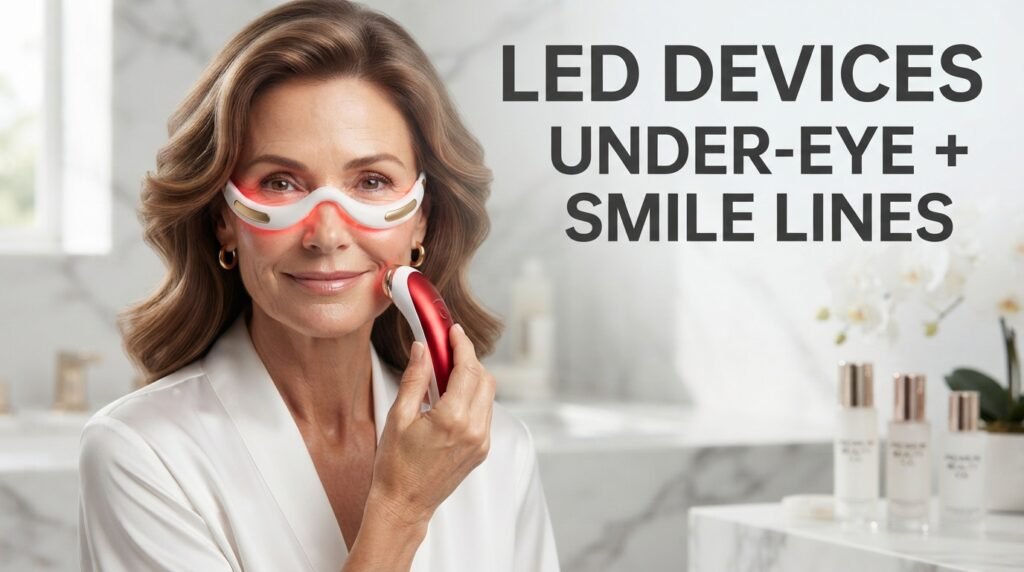
If you’re researching LED devices for fine lines, you’ve probably already noticed that most articles treat every device the same way. A full-face LED mask, a small eye wand, and a handheld panel all get lumped together as though they work on the same areas with the same effectiveness.
They don’t.
Where an LED device can physically reach matters just as much as the wavelengths it uses. A device designed to sit over your eyes cannot treat your smile lines. A full-face mask that fits loosely may not deliver consistent light to your crow’s feet. A handheld wand gives you control, but requires daily discipline to use consistently.
This guide focuses specifically on that distinction: which LED devices actually target under-eye wrinkles, which ones can realistically reach your smile lines and laugh lines, and what you need to know before spending money on either.
Quick Answer
For under-eye wrinkles and crow’s feet: A dedicated LED eye device or a well-fitted full-face LED mask will generally give you the most consistent light exposure in that area.
For smile lines and laugh lines: A full-face mask with coverage extending to the lower face, or a handheld LED device you can direct precisely, will serve you better than an eye-specific device alone.
If you want to address both areas: A quality full-face LED mask is likely your most practical single investment. A dedicated eye device can complement it but is unlikely to replace it for lower-face concerns.
Quick Comparison Table
| Device | Type | Best Treatment Area | Under-Eye Coverage | Smile-Line Coverage | Wavelengths | Treatment Time | Frequency | Approx. Price |
|---|---|---|---|---|---|---|---|---|
| CurrentBody Skin LED Eye Perfector | Dedicated eye device | Under-eye, crow’s feet | Excellent | Minimal | 633nm red, 830nm near-infrared | 10 minutes | Daily | ~$195 |
| Omnilux Eye Brightener | Dedicated eye device | Under-eye, crow’s feet | Excellent | None | 633nm red, 830nm near-infrared | 10 minutes | Daily | ~$195 |
| Dr. Dennis Gross DRx SpectraLite EyeCare | Dedicated eye device | Under-eye, orbital area | Excellent | None | 160 red LEDs around eye area | 3 minutes | Daily | ~$225 |
| Omnilux Contour Face | Full-face flexible mask | Full face including lower face | Excellent | Good | 633nm red, 830nm near-infrared | 10 minutes | Daily | ~$395 |
| CurrentBody Skin LED Face Mask | Full-face flexible mask | Full face | Excellent | Good | 633nm red, 830nm near-infrared | 10 minutes | Daily | ~$380 |
| LightStim for Wrinkles | Handheld panel | Targeted — wherever you direct it | Good with technique | Good with technique | Multiple wavelengths including red and infrared | 3 min per area | Daily | ~$249 |
| Solawave Wrinkle Retreat Pro | Handheld wand | Targeted — user-directed | Good with technique | Good with technique | Red light + microcurrent | 5 minutes | Daily | ~$150 |
Prices are approximate and subject to change. Always check current pricing before purchasing.
What Makes an LED Device “Targeted”?
The word “targeted” gets used loosely in the LED skincare space. In practice, it means different things depending on the device:
- Dedicated eye devices are shaped specifically to fit around the orbital bone and deliver light to the under-eye area and crow’s feet. They are targeted in the sense that they stay in one place, but that place is limited to the eye zone.
- Handheld LED devices are targeted in a different sense — you move them where you want to treat. This gives you flexibility but requires consistent technique.
- Full-face LED masks cover a broad area simultaneously. They are not “targeted” in the narrow sense, but they provide even, consistent coverage across the whole face — including both the under-eye area and the smile-line zone — which handheld devices require effort to replicate.
The important takeaway: targeted treatment does not automatically mean better results. A targeted eye device excels at sustained, hands-free light exposure to the under-eye area, but it simply cannot treat areas it doesn’t cover.
Can LED Light Help Under-Eye Wrinkles?
Red and near-infrared light therapy has been studied for its potential effects on skin appearance. Research suggests that certain wavelengths — particularly red light around 630–633nm and near-infrared light around 830nm — may support collagen production and help skin look firmer and smoother over time. You can read more about the general research behind photobiomodulation through the National Institutes of Health’s published research on low-level light therapy and skin rejuvenation.
The under-eye area has thin, delicate skin that can show fine lines earlier than other facial zones. Because this skin is thinner, it may respond to consistent light therapy, though results vary significantly between individuals. Most manufacturers who make dedicated eye devices cite improvements in the appearance of fine lines, puffiness, and skin texture — but these are manufacturer claims and should be understood as such.
Realistic expectations: LED light therapy for under-eye wrinkles may help skin look smoother and more hydrated over several weeks of consistent use. It is unlikely to produce the immediate, dramatic results of injectable treatments. Progress is typically gradual.
Can LED Light Help Smile Lines?
Smile lines — also called nasolabial folds or laugh lines — are caused by a combination of skin thinning, volume loss, and repeated facial movement over time. LED light therapy cannot address volume loss or change facial structure.
What it may do is support the skin’s surface appearance by potentially improving collagen density and skin texture in the area. Some users report that consistent use of red light therapy around the mouth area helps skin look slightly firmer and more even over time.
The key challenge: many LED eye devices simply do not reach this area. If treating smile lines is a priority for you, a full-face LED mask or a handheld device you can direct to the lower face will be more practical than an eye-specific device.
For a broader look at how full-face LED masks compare for wrinkle concerns, see our guide to the best LED face masks for wrinkles and firmer skin in 2026.
Dedicated Eye Devices vs. Full-Face LED Masks
This is one of the most common questions from buyers who already own one type of device and are wondering whether to add the other.
When a dedicated eye device makes sense:
- You want hands-free, consistent light exposure specifically to the under-eye and crow’s-feet area
- You already own a full-face LED mask but find it doesn’t sit flush against the under-eye zone
- You prefer shorter targeted sessions rather than full-face treatments
- You want a travel-friendly device focused on one area
When a full-face LED mask makes more sense:
- You want to address both under-eye wrinkles and smile lines with one device
- You prefer consistent, even coverage across the whole face
- You don’t want to manage multiple devices
- Budget is a consideration and you need one device to do more
The honest trade-off:
A dedicated eye device like the CurrentBody Skin LED Eye Perfector or the Omnilux Eye Brightener will sit snugly against your under-eye area and deliver consistent light exposure hands-free. That is genuinely useful. But it will not treat your smile lines, your forehead, or your cheeks.
A quality full-face LED mask covers all of these areas simultaneously, but the fit around the eye area varies by mask design. Some full-face masks fit closer to the orbital area than others. The flexible silicone designs from CurrentBody and Omnilux tend to conform better to facial contours than rigid plastic designs.
For a detailed look at how specific full-face masks perform around the eye area, visit our guide to the best LED face masks for crow’s feet and under-eye wrinkles.
Detailed Product Reviews
Best Dedicated Eye Device: CurrentBody Skin LED Eye Perfector
The CurrentBody Skin LED Eye Perfector uses both 633nm red light and 830nm near-infrared light — wavelengths that appear in the majority of serious LED skincare research. It is designed as a flexible, goggle-style device that sits around the orbital area, making it well suited to consistent under-eye and crow’s-feet treatment.

- Anti-aging LED eye treatment to treat fine lines and wrinkles
- 4 powerful LED wavelengths target collagen and elastin production. 80 LEDs deliver 61.59 mW/cm² for a powerful 3-minute …
- Use 6 times a week for 8 weeks to see a fresher, more youthful eye area
Treatment area: Under-eye zone, outer corners of the eye (crow’s feet)
Smile-line coverage: None by design
Treatment time: 10 minutes
Frequency: Daily use recommended by the manufacturer
FDA status: This device is classified as a cosmetic device; check the manufacturer’s current regulatory claims
Key advantage: Hands-free, consistent eye-area coverage; flexible design fits most face shapes
Key limitation: Does not address smile lines or lower face
If you already own this device and want to add lower-face coverage, a handheld device or a full-face mask would complement it.
Also for Under-Eye: Omnilux Eye Brightener
The Omnilux Eye Brightener is similar in concept to the CurrentBody eye device, using the same clinically referenced wavelengths of 633nm and 830nm. Omnilux is a brand with a strong clinical background, originally supplying professional LED devices to dermatology practices before entering the consumer market.

- Omnilux Mini Eye Brightener
- Item form : Plastic
- Product benefit : De-puff, brighten, and firm the under eye area with Mini device.
Treatment area: Under-eye, crow’s feet, orbital area
Smile-line coverage: None
Treatment time: 10 minutes
Frequency: Daily
Key advantage: Clinically referenced wavelengths; flexible fit; reputable brand with professional heritage
Key limitation: Eye-area only; no lower-face coverage
Omnilux’s professional background is worth noting. Their consumer devices use the same core wavelengths as their clinical-grade equipment. For a direct comparison of Omnilux against another popular brand in this category, see our Omnilux vs. HigherDose comparison for mature skin.
Dr. Dennis Gross DRx SpectraLite EyeCare Pro
The Dr. Dennis Gross EyeCare Pro device uses 160 red LEDs arranged around a goggle-style design. It is one of the faster eye devices in terms of session time, with a 3-minute treatment protocol.
Treatment area: Under-eye, periorbital area
Smile-line coverage: None
Treatment time: 3 minutes
Frequency: Daily
Key advantage: Fast treatment time; high LED count for the eye area
Key limitation: Shorter sessions may deliver less total energy than longer-session devices; no lower-face coverage
Best for Smile Lines + Under-Eye: Omnilux Contour Face
If treating both under-eye wrinkles and smile lines is your goal and you want a single device, the Omnilux Contour Face is one of the most practical options available. It uses flexible medical-grade silicone that conforms to facial contours, including the areas around the mouth where smile lines develop.
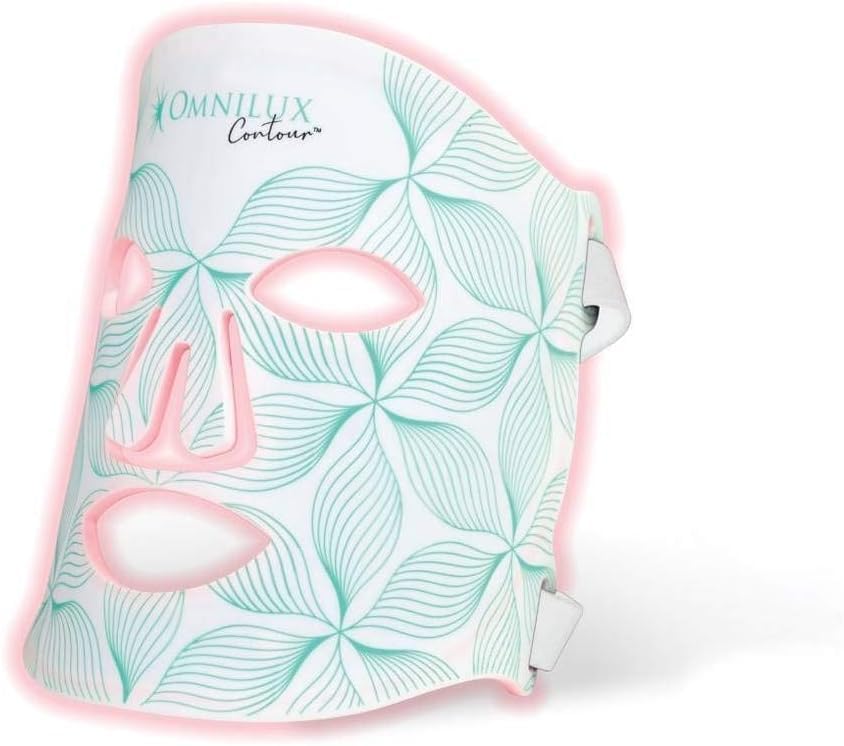
Treatment area: Full face — forehead, eye area, cheeks, lower face including smile-line zone
Under-eye coverage: Good — flexible design sits close to the orbital area
Smile-line coverage: Good — lower-face panels reach the nasolabial fold area
Wavelengths: 633nm red, 830nm near-infrared
Treatment time: 10 minutes
Frequency: Daily
FDA clearance: FDA cleared — check manufacturer’s current clearance status as it may be updated
Key advantage: Professional-grade wavelengths in a flexible, full-face design; one device treats both concern areas
Key limitation: Higher price point; requires consistent daily use for best results
The Omnilux official product page provides current specifications and clearance information.
Best Handheld Option: LightStim for Wrinkles
LightStim is an FDA-cleared handheld LED panel that uses multiple wavelengths in the red and near-infrared spectrum. Its advantage is flexibility — you can use it on your under-eye area, then move it to your smile lines, then treat any other area of concern.
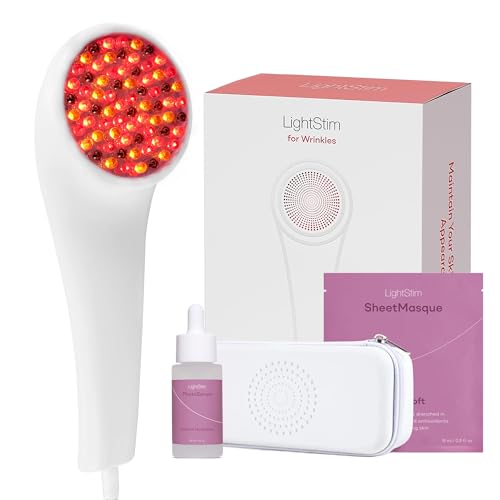
- Therapeutic Light Energy: LightStim delivers light energy in a similar way plants absorb light energy from the sun. Each…
- Clinically Proven Results: In FDA clinical studies, 100% of participants were shown to have significant improvement in t…
- LightStim MultiWave Patented Technology: LightStim MultiWave Patented Technology simultaneously emits multiple wavelengt…
Treatment area: Wherever you direct it — under-eye, crow’s feet, smile lines, forehead
Under-eye coverage: Good if used consistently in that area
Smile-line coverage: Good — you can target the nasolabial fold area directly
Treatment time: Approximately 3 minutes per area
Frequency: Daily
FDA clearance: FDA cleared for the treatment of wrinkles
Key advantage: Flexibility to treat multiple zones; FDA cleared; established track record
Key limitation: Requires active use — you must hold it and move it consistently; total treatment time increases if treating multiple areas
The LightStim official website provides current device specifications and clearance documentation.
Handheld with Microcurrent: Solawave Wrinkle Retreat Pro
The Solawave Wrinkle Retreat Pro combines red light with microcurrent, which distinguishes it from pure LED devices. Microcurrent therapy uses very low electrical currents that may temporarily support the appearance of muscle tone.
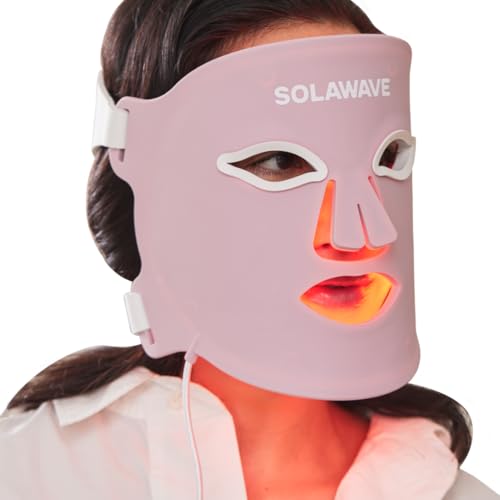
- 4 WAVELENGTHS. ZERO BLIND SPOTS: Red (630nm) softens fine lines. Deep Red (660nm) targets elasticity. Amber (605nm) revi…
- FASTER THAN BREWING YOUR MORNING COFFEE: 3 minutes. Hands-free. Automatic shut-off. While most LED masks demand 10-20 mi…
- 320 LEDS. BUILT FOR EFFICIENCY: One charge powers up to 20 full sessions – most competitor masks max out at six. Digital…
Treatment area: User-directed — under-eye, smile lines, any facial zone
Under-eye coverage: Good with technique
Smile-line coverage: Good — can be directed precisely to the nasolabial area
Key advantage: Combines red light and microcurrent; flexible targeting
Key limitation: Requires technique and consistency; combination claims are harder to evaluate independently; not a passive, hands-free device
Full-Face Option: CurrentBody Skin LED Face Mask
For readers who want a full-face flexible mask as their primary device, the CurrentBody Skin LED Face Mask is widely used and uses the same 633nm and 830nm wavelengths as their eye device. The flexible silicone design is intended to conform to the face better than rigid masks.

- FITS TO YOU – Unlike many other wearable LED devices, the CurrentBody Light Therapy Mask is made from patented flexible …
- LIGHT THERAPY – The device combines Red (633nm) and near Infra-Red Light (830nm). Harnessed at the perfect measurement t…
- REAL RESULTS – You can expect to see visible results in just 4 weeks when used consistently 10 minutes a day, 3 to 5 tim…
For a detailed review of how this mask compares to others in the full-face category, including coverage around the eye area and lower face, visit our guide to the best LED face masks for mature skin and fine lines.
For readers also researching devices focused on skin firmness and sagging, our guide to the best red light therapy devices for sagging skin and firmness in 2026 covers relevant options in more depth.
Notable Mention: Shark CryoGlow
The Shark CryoGlow combines LED light with cryotherapy (cooling). It is a different type of device compared to pure LED masks and works differently from standard red-light panels. For a detailed breakdown of what this device does and how it compares, see our Shark CryoGlow LED face mask review.

- RED LIGHT THERAPY MASK: CryoGlow is an at-home LED face mask combining red, blue & deep infrared light with under-eye co…
- MOST AWARDED LED MASK IN THE U.S.*: Real people. Real results. Clinically tested on 119 participants by an independent t…
- EXPERTLY DEVELOPED: Developed by Shark Beauty alongside optical light experts and engineers, bringing MedSpa-inspired re…
What Wavelengths Matter?
For anti-aging concerns including fine lines, crow’s feet, and smile lines, the most researched wavelengths are:
- Red light at approximately 630–633nm: Most commonly associated with potential surface-level skin improvements, including collagen support and skin texture
- Near-infrared light at approximately 830nm: Penetrates more deeply and may support underlying skin structures
Devices that use both wavelengths — sometimes called dual-wavelength devices — are generally considered more comprehensive for anti-aging applications than devices using a single wavelength. This applies to both dedicated eye devices and full-face masks.
The U.S. FDA’s guidance on light therapy devices provides useful context on regulatory classification without making treatment claims.
For additional scientific context, peer-reviewed literature on photobiomodulation — including its application to skin aging — can be explored through resources like the Journal of the American Academy of Dermatology, which has published research on light-based skin treatments.
How Often Should You Use an LED Device?
Most manufacturers of dedicated eye devices and full-face LED masks recommend daily use, particularly during an initial treatment period of four to twelve weeks. After that initial phase, some manufacturers suggest a maintenance schedule of three to five sessions per week.
Key points:
- Consistency matters more than intensity
- Missing occasional sessions will not ruin progress, but irregular use will slow it
- Follow the manufacturer’s recommended session duration — more time does not necessarily mean better results and may cause irritation
How Long Before You See Results?
This is one of the most important questions to answer honestly.
Most people who use LED devices consistently report noticing gradual changes after approximately four to eight weeks. Some notice earlier improvements in skin texture and hydration. Visible changes to established wrinkles like smile lines or deep crow’s feet tend to take longer and may be more modest than changes to surface-level fine lines.
Realistic expectations:
- Fine lines and skin texture: may show improvement after four to six weeks of consistent use
- Established wrinkles and deeper folds: results are more variable; LED therapy is not a substitute for injectable treatments or cosmetic procedures for pronounced lines
- Results vary between individuals based on age, skin type, existing skincare routine, and lifestyle factors
Common LED Device Mistakes
Using the wrong device for the wrong area. An eye device will not treat your smile lines. Be clear about what area you’re targeting.
Inconsistent use. LED therapy requires repeated sessions to build results. Using a device twice a week will generally deliver less than daily use, particularly early on.
Expecting injectable-level results. LED devices work gradually and may improve the appearance of fine lines. They cannot replicate the effects of fillers, botulinum toxin injections, or resurfacing treatments.
Skipping skincare basics. LED therapy is most effective when combined with a consistent skincare routine including SPF use, hydration, and appropriate active ingredients. Light therapy does not replace daily sun protection.
Choosing device type based on marketing language alone. “Targeted” does not mean comprehensive. “Clinical wavelengths” does not guarantee results. Read the treatment area specifications carefully.
Safety and Who Should Be Careful
LED light therapy is generally considered safe for most people when used as directed. However, there are situations where caution or professional guidance is appropriate:
Follow manufacturer instructions carefully. Each device has specific session time and frequency recommendations. Do not exceed these.
Eye protection: Some devices require you to keep your eyes closed or use protective eyewear. Dedicated eye devices are designed to sit over closed eyes — follow device-specific guidance. Never direct bright LED light directly into open eyes.
Photosensitizing medications: Certain medications — including some antibiotics, retinoids used systemically, and others — can increase photosensitivity. If you take any medication that may cause photosensitivity, consult a healthcare provider before using LED devices.
Active skin conditions: If you have a diagnosis such as lupus, active rosacea flare-ups, or another condition affecting your skin’s response to light, speak with a dermatologist before beginning LED therapy.
Photosensitivity disorders: People with conditions that cause unusual sensitivity to light should seek professional advice first.
Stop use if you experience significant irritation, burning, or discomfort and do not resume without guidance from a healthcare provider.
FDA clearance does not guarantee effectiveness. FDA clearance means a device has met certain safety and substantial equivalence standards. It does not mean the FDA has confirmed that the device will produce specific results for you.
The American Academy of Dermatology’s guidance on at-home light treatments provides helpful context from a dermatological perspective.
LED Devices vs. Eye Creams and Skincare
LED therapy and topical skincare are not competing approaches — they are complementary. A good eye cream containing ingredients like retinol, peptides, or caffeine addresses the skin surface through different mechanisms than LED light.
Using both consistently may produce better overall results than either approach alone, though individual results always vary. LED therapy does not replace the need for SPF, hydration, or evidence-backed topical actives.
Frequently Asked Questions
Can LED light help under-eye wrinkles?
LED light therapy — particularly red and near-infrared wavelengths — may help improve the appearance of fine lines in the under-eye area over time. Results are gradual and vary between individuals. It is not a substitute for cosmetic procedures.
Can LED light help smile lines?
It may support smoother-looking skin in the smile-line area through potential collagen support, but it cannot address volume loss or structural changes that contribute to nasolabial folds. A full-face LED mask or handheld device is needed to reach this area.
Can an LED eye mask treat smile lines?
No. Dedicated eye devices are designed to treat the orbital area only. They do not cover the smile-line or mouth area.
Are dedicated eye devices better than full-face masks for crow’s feet?
Dedicated eye devices may provide more consistent light exposure to the under-eye and crow’s-feet area because they are shaped specifically for that zone. Full-face flexible masks can also provide good coverage here, but fit varies by mask and by individual facial shape.
How often should I use an LED device?
Most manufacturers recommend daily use during an initial treatment phase, then three to five sessions per week for maintenance. Follow the specific guidance for your device.
How long does it take to see results from LED therapy?
Most users report gradual changes after four to eight weeks of consistent daily use. Surface texture and hydration may improve earlier; visible changes to established wrinkles typically take longer.
Are LED devices safe?
For most people, yes, when used as directed. Those taking photosensitizing medications, those with light-sensitive conditions, or those with active skin conditions should consult a dermatologist first.
Can LED devices replace my skincare routine?
No. LED therapy complements skincare but does not replace SPF, hydration, or appropriate topical treatments.
Does FDA clearance mean an LED device is guaranteed to work?
No. FDA clearance for a consumer LED device means the device has met certain safety and regulatory standards. It does not confirm that the device will produce specific results for any individual.
Is a dedicated eye device worth buying if I already own a full-face LED mask?
It depends on your goals and how well your full-face mask fits around the eye area. If your mask fits well and sits close to the orbital area, a dedicated eye device may be redundant. If your mask has gaps around the eyes or feels uncomfortable when sitting close to that area, an eye device can complement it effectively.
Final Buying Guide
If under-eye wrinkles and crow’s feet are your primary concern:
A dedicated eye device — the CurrentBody Skin LED Eye Perfector or the Omnilux Eye Brightener — will give you consistent, hands-free coverage in that specific zone. If you also want to address the rest of your face, you will need an additional device.
If smile lines are your primary concern:
A dedicated eye device will not help you here. Choose a full-face flexible LED mask like the Omnilux Contour Face or CurrentBody Skin LED Face Mask, or use a handheld device like the LightStim for Wrinkles that you can direct to the nasolabial area.
If you want to address both areas with one device:
A full-face flexible LED mask is your most practical option. The key is choosing a design that fits your face well and conforms to both the under-eye area and the lower face.
If you value targeting flexibility:
A handheld device like LightStim for Wrinkles gives you the ability to treat any area you choose, but requires consistent active use rather than passive hands-free treatment.
Budget consideration:
Dedicated eye devices typically run $195–$225. Full-face flexible LED masks typically run $380–$395 from the most researched brands. Handheld devices vary widely. Before purchasing, confirm current pricing, as these figures are approximate and change regularly.
The most important factor in any LED device purchase is not which product you choose, but whether you will use it consistently. A well-designed, appropriately priced device used daily over several months will produce better results than a premium device used sporadically.
Prices and product specifications were accurate at the time of writing but are subject to change. Always verify current information on manufacturer websites or retailers before purchasing. SylomaSkincare.com participates in affiliate programs, which means we may earn a commission if you purchase through links on this site. This does not affect our editorial recommendations.