
This article contains affiliate links. If you purchase through these links, Syloma Skincare may earn a commission at no extra cost to you. All opinions are based on published specifications, regulatory records, and available clinical research.
Choosing between the Omnilux Clear and a CurrentBody LED mask for acne is more confusing than it should be — largely because CurrentBody sells two very different face masks, and only one of them is designed for breakouts. The CurrentBody Skin Red and Blue Light Therapy Mask is the brand’s dedicated anti-acne device, while the popular CurrentBody Skin LED Light Therapy Mask Series 2 uses red and near-infrared light for anti-aging and is not an acne treatment.
This comparison focuses on Omnilux Clear versus CurrentBody’s dedicated red-and-blue anti-acne model. If you are looking for a broader overview of the category, our guide to the best LED face masks for acne and breakouts covers additional options.
The short answer: both masks target acne with the same two wavelengths — blue light around 415 nm and red light around 633 nm — and neither is a guaranteed cure. Omnilux Clear currently has stronger device-specific clinical data and a well-documented FDA 510(k) clearance, while CurrentBody’s anti-acne mask offers a competitive design with a more generous return window. The better choice depends on how much weight you place on published evidence versus purchase flexibility.
Quick Verdict — Which LED Mask Is Better for Acne?
Choose Omnilux Clear if you want the device with the most published, device-specific clinical research and a clearly documented FDA 510(k) clearance for mild-to-moderate inflammatory acne. It is the more evidence-backed option for readers who prioritize clinical validation.
Choose the CurrentBody Skin Red and Blue Light Therapy Mask if you want a similarly specified anti-acne LED mask with a longer return window and prefer CurrentBody’s design or customer service. It may also appeal to shoppers who want to explore CurrentBody LED mask alternatives within the same brand ecosystem.
Neither mask is universally superior. Both use the same therapeutic wavelengths, and individual results with at-home LED devices vary significantly.
| Feature | Omnilux Clear | CurrentBody Anti-Acne |
|---|---|---|
| Best for | Evidence-focused buyers | Shoppers prioritizing return flexibility |
| Key wavelengths | 415 nm + 633 nm | 415 nm + 633 nm |
| FDA 510(k) clearance | Yes (K210948) | Registered/listed; 510(k) status not independently verified |
| Published device-specific study | Yes | Not identified |
Omnilux Clear vs CurrentBody: Key Differences
The table below compares verified specifications from Omnilux Clear’s official product page and the CurrentBody Skin Red and Blue Light Therapy Mask page. Where a detail could not be independently confirmed, it is marked accordingly.
| Specification | Omnilux Clear | CurrentBody Red & Blue Anti-Acne |
|---|---|---|
| Exact product name | Omnilux Clear | CurrentBody Skin Red and Blue Light Therapy Mask |
| Intended use | Mild-to-moderate inflammatory acne vulgaris | Acne and blemish-prone skin |
| Blue-light wavelength | 415 nm | 415 nm |
| Red-light wavelength | 633 nm | 633 nm |
| LED count | 132 LEDs (manufacturer stated) | Not verified |
| Treatment duration | 10 minutes | 10 minutes |
| Weekly frequency | 3–5 sessions per week | 3–5 sessions per week |
| Initial treatment period | 6 weeks (per manufacturer) | 6 weeks (per manufacturer) |
| FDA status | 510(k) cleared (K210948) | FDA-registered/listed (listing record); 510(k) not independently verified |
| Eye protection | Integrated eye shields | Integrated eye shields |
| Fit and material | Flexible medical-grade silicone | Flexible silicone |
| Warranty | 1 year | 1 year |
| Return policy | 30 days | 60 days |
| Approximate US price | ~$395 | ~$399 |
Prices, promotions, and return policies change frequently. Verify current terms on each brand’s website before purchasing.
Omnilux Clear Review — Is It Worth Buying for Acne?
Omnilux Clear is built specifically for inflammatory acne. It combines blue light at 415 nm — intended to target Cutibacterium acnes bacteria — with red light at 633 nm, which is associated with anti-inflammatory effects. The 10-minute treatment protocol is straightforward, and the flexible silicone design conforms to most face shapes.
The strongest argument in Omnilux Clear’s favor is its evidence base. The device holds a 510(k) clearance from the FDA specifically for the treatment of mild-to-moderate inflammatory acne vulgaris, and a published clinical study on PMC reports device-specific outcomes. While manufacturer-associated research should always be read with appropriate scrutiny, the existence of peer-reviewed, device-level data gives Omnilux Clear an edge over most at-home competitors.
Practical advantages: simple one-button operation, comfortable fit, and a well-documented treatment protocol. Drawbacks: the 30-day return window is shorter than some competitors, and the ~$395 price is a meaningful investment for a device that may not work for everyone.
Omnilux Clear is best suited for people with mild-to-moderate inflammatory acne who want the most clinically documented at-home option and are willing to commit to a consistent six-week trial.
CurrentBody Anti-Acne LED Mask Review
It is critical to distinguish the CurrentBody Skin Red and Blue Light Therapy Mask from the brand’s more widely reviewed Series 2 anti-aging model. The Series 2 uses red and near-infrared light and is not designed for acne. If you are browsing LED masks for acne-prone skin, make sure you are looking at the red-and-blue model.
The dedicated anti-acne mask uses the same 415 nm blue and 633 nm red wavelengths as Omnilux Clear, with a similar 10-minute treatment time and flexible silicone construction. CurrentBody’s device is FDA-registered and listed, though we could not independently verify a 510(k) premarket clearance record comparable to Omnilux’s K210948. This does not mean the device is unsafe or ineffective, but it does mean the regulatory documentation differs.
Practical advantages: a 60-day return policy gives you more time to evaluate results, and CurrentBody’s customer service is well-regarded. Limitations: we could not identify a published, device-specific clinical trial for this particular mask, so the evidence supporting it rests primarily on general blue-and-red light research rather than product-level data.
Shoppers should verify the exact model name and wavelength specifications on CurrentBody’s website before purchasing, as product naming and generations can change.
Blue Light vs Red Light: Which Matters More for Acne?
Acne-specific LED masks combine two wavelengths because each addresses a different aspect of breakouts.
Blue light (~415 nm) is thought to activate porphyrins produced by C. acnes bacteria, generating reactive oxygen species that may reduce bacterial load on the skin. This mechanism is supported by laboratory and small clinical studies, though the magnitude of the effect in real-world, at-home use is less certain.
Red light (~633 nm) does not directly target bacteria. Instead, it is associated with reducing inflammation and supporting skin healing, which may help calm the redness and swelling of active breakouts.
Research generally suggests that combining blue and red light produces better outcomes for inflammatory acne than either wavelength alone. However, the American Academy of Dermatology notes that light-based therapies are one of many acne treatment options and are not a standalone cure for most people.
Which Mask Has Better Clinical Evidence?
This is where the two devices diverge most clearly.
Omnilux Clear has a published, peer-reviewed clinical study evaluating its specific device, and its FDA 510(k) clearance required a demonstration of substantial equivalence to a predicate device. Readers should note that manufacturer-associated studies can carry inherent biases, and sample sizes in home-device trials are often modest.
CurrentBody’s anti-acne mask does not appear to have a comparable device-specific published trial. The general body of research on blue-and-red LED therapy for acne is encouraging but mixed, with many studies using professional-grade equipment that delivers higher irradiance than at-home masks.
Important context: FDA 510(k) clearance confirms that a device is substantially equivalent to an already-marketed predicate — it is not the same as FDA approval and does not prove that one cleared device outperforms another.
Which Mask Is Better for Your Skin Concern?
- Mild-to-moderate inflammatory acne: Omnilux Clear has the stronger device-specific evidence base.
- Occasional breakouts: Either mask may be suitable; consistency matters more than brand.
- Oily, acne-prone skin: Both masks target the inflammatory component of acne. Neither regulates sebum production directly.
- Sensitive or reactive skin: Start with shorter sessions and consult a dermatologist. Blue light can be irritating for some skin types.
- Post-acne dark marks (PIH): Red light may support healing, but LED masks are not a primary treatment for hyperpigmentation. See our guide to LED masks for post-acne marks and hyperpigmentation for more targeted options.
- Acne plus visible aging: Neither acne-specific mask includes near-infrared light. If anti-aging is a priority alongside acne, you may need a separate device or a multi-wavelength mask.
Neither mask will remove indented acne scars. Atrophic scarring typically requires in-office procedures such as microneedling, laser resurfacing, or chemical peels.
Safety, Skin Tone, and Potential Side Effects
Both devices are designed for home use and are generally well-tolerated when used according to the manufacturer’s instructions. However, important precautions apply:
- Follow the exact treatment schedule. More sessions do not mean faster results and may increase irritation.
- Use the integrated eye shields every session. Never look directly at the LEDs.
- Photosensitizing medications — including certain antibiotics (e.g., doxycycline), retinoids, and some acne prescriptions — can increase light sensitivity. Check your device’s contraindications and consult your prescribing doctor.
- Darker skin tones: Emerging research suggests that blue light may contribute to hyperpigmentation in some individuals with Fitzpatrick skin types IV–VI. If you are prone to post-inflammatory hyperpigmentation, discuss LED use with a dermatologist before starting.
- Stop using the device if you experience persistent redness, burning, or worsening breakouts, and seek professional guidance.
LED masks are not a substitute for medical treatment. Severe, painful, cystic, or scarring acne warrants a dermatologist’s care.
How Long Does It Take to See Acne Results?
Both manufacturers recommend an initial treatment period of approximately six weeks with 3–5 sessions per week. Some users report visible improvement within two to four weeks, while others may need the full initial cycle or longer. Results are not guaranteed, and consistency is the single most important factor. At-home LED devices deliver lower energy than in-office treatments, so patience and realistic expectations are essential.
Can You Use an LED Mask Alongside Acne Skincare?
Yes, in most cases. A gentle routine of cleanser, moisturizer, and sunscreen is compatible with LED therapy. However, check each device’s contraindications before combining LED sessions with prescription retinoids, benzoyl peroxide, or oral photosensitizing medications. Some dermatologists recommend using LED on clean, bare skin and applying active treatments afterward. Never stop a prescribed acne medication without your doctor’s guidance.
Price, Warranty, and Overall Value
At approximately $395 for Omnilux Clear and $399 for the CurrentBody anti-acne mask, the two devices are priced almost identically. Both carry a one-year warranty. The most meaningful difference in value is CurrentBody’s 60-day return policy versus Omnilux’s 30-day window — an extra month to determine whether the device works for your skin.
The best value depends on your priorities. If published clinical evidence is your deciding factor, Omnilux Clear justifies its price. If purchase flexibility and a longer trial period matter more, CurrentBody’s return policy is a genuine advantage.
Frequently Asked Questions
1. Is Omnilux Clear better than CurrentBody for acne?
Omnilux Clear has stronger device-specific clinical evidence and a documented FDA 510(k) clearance. However, both masks use the same wavelengths, and individual results vary. “Better” depends on your priorities.
2. Does CurrentBody make a dedicated blue-light acne mask?
Yes. The CurrentBody Skin Red and Blue Light Therapy Mask is their dedicated anti-acne model. Do not confuse it with the Series 2 anti-aging mask, which uses red and near-infrared light only.
3. What is the difference between Omnilux Clear and CurrentBody Series 2?
Omnilux Clear uses blue (415 nm) and red (633 nm) light for acne. The CurrentBody Series 2 uses red (633 nm) and near-infrared (830 nm) light for anti-aging. They address different skin concerns.
4. Do both acne masks use blue and red light?
Yes. Both the Omnilux Clear and the CurrentBody anti-acne mask combine 415 nm blue light with 633 nm red light.
5. Are both devices FDA-cleared for acne?
Omnilux Clear holds a 510(k) clearance (K210948) for mild-to-moderate inflammatory acne. CurrentBody’s anti-acne mask is FDA-registered and listed; we could not independently verify a comparable 510(k) clearance.
6. How many weeks should you use an acne LED mask?
Both manufacturers recommend an initial period of approximately six weeks with 3–5 sessions per week, followed by a reduced maintenance schedule.
7. Can LED masks help hormonal acne?
LED therapy may help reduce the inflammatory component of hormonal breakouts, but it does not address the underlying hormonal cause. Consult a dermatologist for persistent hormonal acne.
8. Can blue LED light cause pigmentation on darker skin?
Some research suggests blue light may worsen hyperpigmentation in darker skin tones. If you have Fitzpatrick skin type IV–VI or are prone to PIH, consult a dermatologist before using a blue-light device.
9. Can LED masks replace acne medication?
No. LED masks are a complementary tool, not a replacement for prescribed acne treatments. Do not discontinue medication without medical advice.
10. Which mask is better for acne marks rather than active breakouts?
Neither mask is a primary treatment for post-inflammatory hyperpigmentation or scarring. Red light may support general skin healing, but dedicated PIH treatments (topical agents, chemical peels, or professional procedures) are typically more effective.
Final Verdict — Which Should You Buy?
If you are deciding between the Omnilux Clear vs CurrentBody LED mask for acne, the most honest answer is that both devices use the same evidence-based wavelengths and similar treatment protocols. The differences are meaningful but nuanced.
Omnilux Clear is the stronger choice for evidence-focused buyers. Its FDA 510(k) clearance and published clinical study provide a level of documentation that CurrentBody’s anti-acne mask does not currently match. If you want the most clinically validated at-home option for mild-to-moderate inflammatory acne, Omnilux Clear is the recommendation.
CurrentBody’s anti-acne mask is a reasonable alternative for shoppers who value a longer return window or prefer the CurrentBody brand. Its specifications are comparable, and the 60-day return policy reduces the financial risk of trying LED therapy for the first time.
Whichever mask you choose, commit to the full six-week protocol, pair it with a gentle skincare routine, and consult a board-certified dermatologist if your acne is severe, persistent, or scarring. At-home LED therapy can be a useful part of an acne management plan, but it is not a miracle cure.
SEO Slug: omnilux-clear-vs-currentbody-led-mask-acne
Meta Description: Omnilux Clear vs CurrentBody anti-acne LED mask compared on wavelengths, FDA status, clinical evidence, price, and real results. Find out which is right for your breakouts.
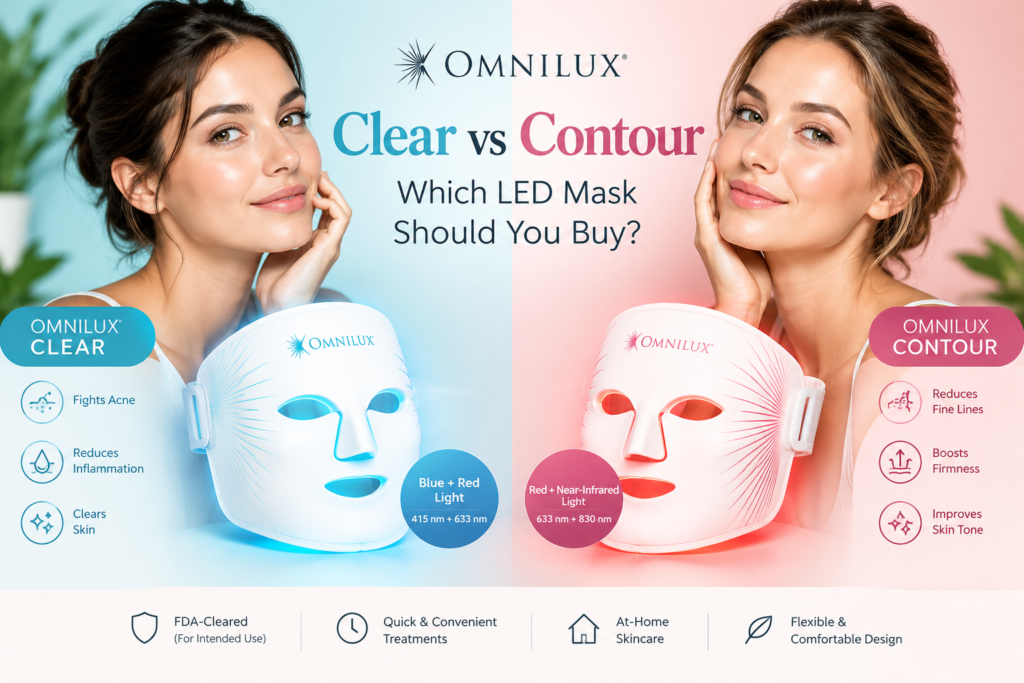
Image Alt Text: Omnilux Clear and CurrentBody red and blue LED face masks side by side on a clean white background
Featured Image Concept: A split-layout hero image showing the Omnilux Clear mask on the left and the CurrentBody Red and Blue Light Therapy Mask on the right, both laid flat on a minimal marble or linen surface with soft, neutral lighting. A subtle “VS” graphic in the center. Clean, premium aesthetic consistent with a US skincare editorial site.
Link-Verification Report
| Link | Type | Status |
|---|---|---|
| sylomaskincare.com/best-led-face-masks-acne-breakouts-2026/ | Internal | Used as supplied; not independently verified as live |
| sylomaskincare.com/best-led-face-masks-acne-prone-skin-2026/ | Internal | Used as supplied; not independently verified as live |
| sylomaskincare.com/best-led-masks-acne-scars-pih-2026/ | Internal | Used as supplied; not independently verified as live |
| sylomaskincare.com/currentbody-led-mask-alternatives-2026/ | Internal | Used as supplied; not independently verified as live |
| omniluxled.com/…/omnilux-clear | External | Used as supplied; official product page |
| currentbody.us/…/red-and-blue-light-therapy-mask | External | Used as supplied; official product page |
| FDA 510(k) K210948 | External | Used as supplied; Omnilux Clear premarket notification |
| FDA listing lid=876697 | External | Used as supplied; CurrentBody device listing/registration |
| PMC12710991 | External | Used as supplied; peer-reviewed clinical study |
| aad.org/…/acne/derm-treat/treat | External | Used as supplied; AAD acne treatment guidance |
Note: All internal Syloma URLs were used exactly as provided. External links were used as provided in the brief. No URLs were fabricated or altered. The FDA listing link for CurrentBody points to the Registration and Listing database (cfRL), not the 510(k) PMN database; this distinction is explained in the article body.