
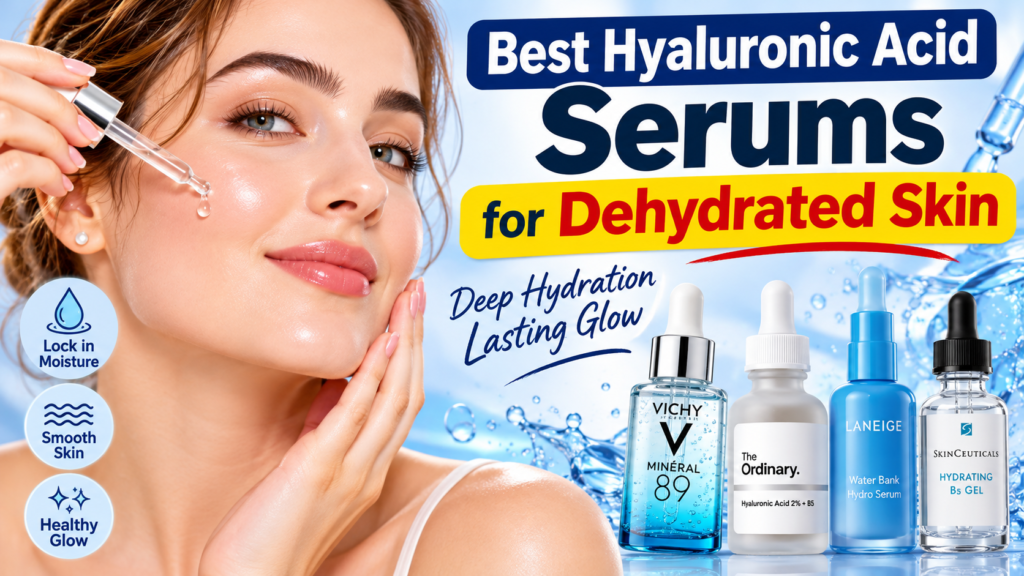
When your complexion feels tight, looks dull, and shows fine surface lines by midday—even after applying a rich face cream—your skin is likely thirsty for water rather than oil. Standard heavy creams often sit on top of parched skin without addressing underlying water depletion. Finding the best hyaluronic acid serums for dehydrated skin helps bridge that gap by drawing moisture directly into the upper layers of your skin.
Unlike generic hydrating lists, this guide focuses specifically on formulas engineered to relieve surface dehydration, cushion compromised moisture barriers, and keep your skin comfortable from morning to night.
Quick Comparison – Best Hyaluronic Acid Serums for Dehydrated Skin
| Product | Best For | Key Ingredients | Texture | Approximate Price Category |
|---|---|---|---|---|
| Medik8 Hydr8 B5 Serum | Best Overall | Multi-weight hyaluronic acid, Vitamin B5 | Lightweight, fast-absorbing liquid gel | Mid-Range ($$) |
| The Ordinary Hyaluronic Acid 2% + B5 | Best Budget | 5 forms of hyaluronic acid, ceramides, panthenol | Smooth, non-tacky serum | Budget ($) |
| CeraVe Hydrating Hyaluronic Acid Serum | Best for Skin Barrier Support | Sodium hyaluronate, 3 essential ceramides, Vitamin B5 | Creamy gel-lotion | Budget ($) |
| Neutrogena Hydro Boost Hyaluronic Acid Serum | Best Lightweight Formula | Purified hyaluronic acid, glycerin, panthenol | Weightless water-gel | Budget ($) |
| La Roche-Posay Hyalu B5 Serum | Best for Mature Skin | Dual-weight hyaluronic acid, Vitamin B5, madecassoside | Rich, cushiony water-gel | Mid-Range ($$) |
| SkinCeuticals Hydrating B5 Gel | Best Premium Option | Sodium hyaluronate, Vitamin B5 | Fluid, oil-free gel | Luxury ($$$) |
Best Hyaluronic Acid Serums for Dehydrated Skin
1. Medik8 Hydr8 B5 Serum – Best Overall
Why We Recommend It: Medik8 Hydr8 B5 pairs multiple molecular weights of hyaluronic acid with panthenol in a clean, crystal-clear formula that absorbs in seconds without pilling under sunscreen or makeup.

- UNLOCK YOUR TRUE HYDRATION POTENTIAL. This hydrating face serum with hyaluronic acid replenishes moisture in dry skin, h…
- INTENSE MOISTURE RESCUE. Multi-weight hyaluronic acid serum for face works with natural moisturizing factors to restore …
- SOOTHING SKIN PLUMPER. This silky hydrating serum melts into the skin to soften fine lines, wrinkles, sagging, and dehyd…
- Key Ingredients: Multi-weight hyaluronic acid, panthenol (vitamin B5)
- Benefits: Replenishes surface moisture, softens fine dehydration lines, and layers seamlessly into any routine.
- Pros: Fragrance-free, oil-free, non-sticky finish, suitable for all skin types.
- Cons: Higher price point than drugstore alternatives.
- Who Should Choose It: Anyone seeking a reliable, fast-absorbing daily multi-weight hyaluronic acid serum that works across dry, oily, or combination skin.
Check Price on Amazon
2. The Ordinary Hyaluronic Acid 2% + B5 (with Ceramides) – Best Budget

- INSTANT HYDRATION: Provides immediate, long-lasting hydration for smoother, plumper, and healthier-looking skin.
- SUPPORTS SKIN BARRIER: Ceramides lock in moisture and support the skin’s protective barrier.
- REDUCES FINE LINES: Minimizes the appearance of fine dry lines and wrinkles while promoting elasticity and skin smoothne…
Why We Recommend It: Recently reformulated to eliminate the sticky feel of the original version, this affordable staple combines five forms of hyaluronic acid with barrier-supporting lipids.
- Key Ingredients: Five molecular forms of hyaluronic acid, ceramides, pro-vitamin B5
- Benefits: Delivers multi-depth surface hydration while helping reinforce the skin’s moisture seal.
- Pros: Extremely affordable, fragrance-free, noticeably smoother texture than the previous formula.
- Cons: Dropper bottle can dispense more product than needed if you are not careful.
- Who Should Choose It: Budget-conscious shoppers looking for the best serum for skin dehydration without paying department-store prices.
Check Price on Amazon
3. CeraVe Hydrating Hyaluronic Acid Serum – Best for Skin Barrier Support

- [ HYALURONIC ACID SERUM ] CeraVe Hydrating Hyaluronic Acid Serum for Face is formulated with our highest concentration o…
- [ SMOOTH TEXTURE ] Lightweight, hydrating serum with a smooth, gel texture. If layering with an eye cream or facial mois…
- [ ALL DAY HYDRATION ] With Vitamin B5 to help soothe skin. Features CeraVe's patented MVE ingredient-delivery technology…
Why We Recommend It: Rather than a watery liquid, CeraVe uses a comforting gel-cream vehicle that bridges the gap between a humectant serum and a light lotion.
- Key Ingredients: Sodium hyaluronate, ceramides NP, AP, and EOP, panthenol
- Benefits: Attracts water while replenishing essential barrier lipids to reduce tightness and flaking.
- Pros: Fragrance-free, non-comedogenic, hygienic pump packaging, gentle on compromised skin.
- Cons: May feel slightly rich for very oily complexions in humid weather.
- Who Should Choose It: Those searching for a hyaluronic acid serum with ceramides to soothe a stripped or wind-chapped moisture barrier.
Check Price on Amazon
4. Neutrogena Hydro Boost Hyaluronic Acid Serum – Best Lightweight Formula
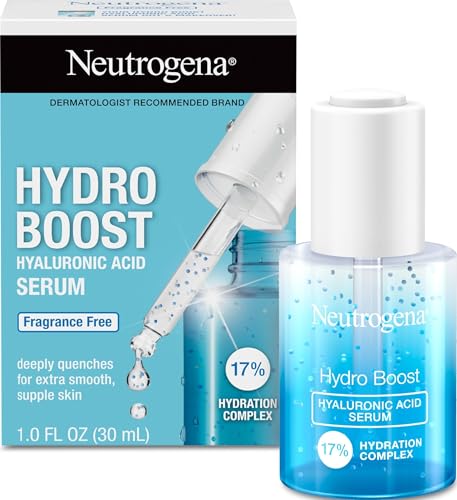
- 1 fl. oz bottle of Neutrogena Hydro Boost Hyaluronic Acid Serum delivers deep hydration for face and neck, restoring dry…
- Lightweight facial serum enriched with purified hyaluronic acid, trehalose, and glycerin penetrates deeply for long-last…
- Non-comedogenic, fragrance-free, and hypoallergenic, this serum is suitable for all skin types, including sensitive skin…
Why We Recommend It: This oil-free formula floods tight, thirsty skin with a refreshing burst of humectants that disappears almost immediately upon contact.
- Key Ingredients: Purified hyaluronic acid, glycerin, pro-vitamin B5
- Benefits: Quenches dehydrated surface cells without adding weight, shine, or pore-clogging emollients.
- Pros: Fragrance-free, widely accessible, layers effortlessly under gel moisturizers.
- Cons: Dropper doesn’t easily reach the very bottom of the bottle.
- Who Should Choose It: Oily, acne-prone, or combination skin types that dislike heavy textures.
Check Price on Amazon
5. La Roche-Posay Hyalu B5 Serum – Best for Mature Skin
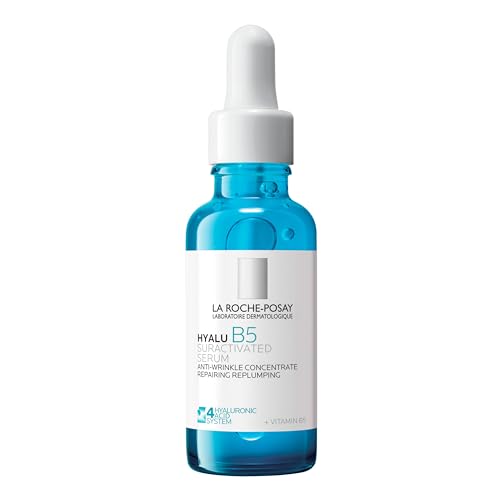
- Ultra Hydrating Hyaluronic Acid Serum for Barrier Repair: Deeply hydrates, plumps skin to the touch, and restores the mo…
- Targeted Anti-Aging & Skin Repair: A super-activated hydrating serum designed to target anti-aging concerns, reducing fi…
- Formulated for Rich, Plump Hydration: Features pure hyaluronic acid, glycerin, and vitamin B5 for optimal hydration, ric…
Why We Recommend It: Formulated specifically to address loss of bounce and visible dehydration lines, this cushiony serum gives tired complexions an immediate supple glow.
- Key Ingredients: High- and low-molecular-weight hyaluronic acid, vitamin B5, madecassoside
- Benefits: Visibly plumps dry surface creases and comforts skin experiencing age-related moisture decline.
- Pros: Luxurious slip, backed by brand consumer hydration testing, pairs well with anti-aging creams.
- Cons: Contains added fragrance, which may not suit reactive or fragrance-sensitive users.
- Who Should Choose It: Shoppers looking for a hyaluronic acid serum for mature skin who do not mind a light floral scent.
Check Price on Amazon
6. SkinCeuticals Hydrating B5 Gel – Best Premium Option
Why We Recommend It: Minimalist and clinically minded, this luxury gel keeps its ingredient list focused strictly on high-grade humectants to maximize tolerance and versatility.

- Key Ingredients: Sodium hyaluronate, vitamin B5, sodium PCA, urea
- Benefits: Boosts the efficacy of daily moisturizers and provides oil-free comfort for stressed complexions.
- Pros: Fragrance-free, oil-free, contains natural moisturizing factors alongside HA.
- Cons: Steep luxury price tag for a straightforward humectant formula.
- Who Should Choose It: Skincare minimalists willing to invest in a prestige, no-frills hydrator.
Check Price on Amazon
What Is Dehydrated Skin and How Is It Different from Dry Skin?
Dry skin and dehydrated skin are frequently confused, yet they describe two distinct concerns. Dry skin is a permanent or genetic skin type characterized by underactive sebaceous glands that produce insufficient natural oils (lipids). It typically looks flaky year-round and requires lipid-rich emollients.
Dehydrated skin, by contrast, is a temporary skin condition caused by a lack of water in the stratum corneum (the outermost layer of the epidermis). Anyone—including people with very oily or breakout-prone skin—can experience dehydration triggered by harsh cleansers, weather shifts, or over-exfoliation. When your skin lacks water, applying a heavy oil or cream alone only seals an empty reservoir, which explains why your face can still feel tight underneath moisturizer.
How Does Hyaluronic Acid Help Dehydrated Skin?
Hyaluronic acid (HA) is a naturally occurring glycosaminoglycan and powerful humectant. According to the Cleveland Clinic’s overview of hyaluronic acid, this sugar molecule binds water molecules to help keep tissues lubricated, cushioned, and flexible. In topical skincare, understanding hyaluronic acid serum benefits comes down to surface water retention and molecular weight.
Formulators often use sodium hyaluronate (the salt form of HA) in different molecular sizes. As detailed in a recent biomedical review on hyaluronic acid and skin biology, molecular weight dictates how the ingredient behaves on the skin. High-molecular-weight HA stays on the surface, forming a breathable, moisture-binding film that reduces transepidermal water loss. Low-molecular-weight HA penetrates slightly further into the upper epidermis to support hydration, though consumers should know that topical serums primarily hydrate the surface layers rather than reaching the deep dermis.
Even so, surface hydration makes a visible difference. A clinical study evaluating a multi-weight topical hyaluronic acid serum demonstrated significant improvements in skin hydration and smoothness shortly after application. If your primary goal is smoothing fine dehydration lines, explore our dedicated guide to the best hyaluronic acid serums for plumping skin.
What Ingredients Should You Look for Alongside Hyaluronic Acid?
Because hyaluronic acid only attracts water, the best hydrating face serums pair it with supporting ingredients that soothe and seal the barrier:
- Glycerin: A classic, smaller-molecule humectant that works synergistically with HA to pull moisture into the upper skin layers.
- Panthenol (Vitamin B5): Acts as both a humectant and a skin-soothing agent that improves softness and elasticity.
- Ceramides: Naturally occurring lipids that fill the gaps between skin cells, preventing the water drawn in by HA from evaporating.
- Antioxidants: Pairing your hydrator with one of the best vitamin E serums for barrier protection helps defend lipid membranes against environmental stressors while locking in moisture.
The American Academy of Dermatology’s moisturizer guidelines consistently highlight humectants like hyaluronic acid and glycerin alongside barrier-repairing ceramides as top choices for relieving dry, tight skin.
How to Choose the Right Hyaluronic Acid Serum for Your Skin Type
When shopping for a hyaluronic acid serum for dry and dehydrated skin, look past bold percentage claims on the front label. As explained by the FDA guide on cosmetics labeling claims, cosmetic marketing terms are not vetted the way drug claims are, and ultra-high percentages of pure HA can actually feel sticky or drying. Focus instead on texture and overall formulation:
- Sensitive Skin: Choose a fragrance-free, alcohol-free hyaluronic acid serum for sensitive skin enriched with panthenol or centella asiatica.
- Oily and Combination Skin: Opt for weightless, watery gels that hydrate without congesting pores. You can also browse our targeted roundup of hyaluronic acid serums for oily skin for shine-free options.
- Dry Skin: Look for gel-cream textures containing ceramides or squalane to address both water and oil deficits.
- Mature Skin: Prioritize multi-weight formulas that cushion fine lines and layer smoothly under richer anti-aging creams.
How to Use Hyaluronic Acid Serum for Maximum Hydration
Knowing how to use hyaluronic acid serum properly determines whether your skin feels dewy or tighter than before:
- Start with Gentle Cleansing: Avoid stripping sulfates. Understanding how water vs. oil cleansers affect your skin barrier can help you wash away impurities without depleting natural moisture.
- Apply to Slightly Damp Skin: Never apply HA to a bone-dry face. Leave your skin slightly damp after cleansing or misting so the humectant has water ready to bind.
- Use a Pea-Sized Amount: Three to four drops are plenty for the entire face and neck.
- Seal with Moisturizer Immediately: Lock in the serum while your skin is still supple. In the evening, understanding the difference between a sleeping mask vs. night cream for overnight hydration helps you pick the right occlusive layer.
- Finish with Broad-Spectrum SPF 30+: During the morning routine, always apply sunscreen as your final step to prevent UV-induced barrier damage.
Common Mistakes That Can Make Dehydrated Skin Feel Worse
The biggest mistake consumers make is applying hyaluronic acid as a standalone hydrator without a moisturizer on top. Because HA is a magnet for water, leaving it unsealed in dry environments—such as heated bedrooms in winter, air-conditioned offices, or arid climates—causes moisture to evaporate right off the skin’s surface, leaving your face feeling tighter than before. Over-exfoliating with strong acids while your barrier is dehydrated will also sabotage your serum’s progress.
Potential Side Effects and Who Should Be Careful
Hyaluronic acid itself is naturally present in the human body and rarely triggers allergic reactions. When stinging, redness, or breakouts occur, the culprit is usually added fragrance, essential oils, specific preservatives, or using a formula packed with very low-molecular-weight fragments on raw, compromised skin. Always patch test a new serum along your jawline for 24 to 48 hours. If you experience persistent burning, severe scaling, or suspected eczema or rosacea flares, consult a board-certified dermatologist.
Frequently Asked Questions
Which hyaluronic acid serum is best for dehydrated skin?
Medik8 Hydr8 B5 Serum is our top overall pick for its fast-absorbing, multi-weight formula, while CeraVe Hydrating Hyaluronic Acid Serum is best if your skin barrier also needs ceramides.
Can hyaluronic acid help dehydrated skin?
Yes. As a humectant, it draws water into the outermost layer of the epidermis, relieving surface tightness and improving skin suppleness when sealed with a moisturizer.
Should I apply hyaluronic acid to wet or dry skin?
Apply it to slightly damp—not dripping wet—skin so the humectant molecules have immediate surface water to bind and hold.
Do I need moisturizer after hyaluronic acid?
Yes. Without an emollient or occlusive moisturizer on top, the water attracted by your serum will quickly evaporate into the air.
Can oily skin be dehydrated?
Absolutely. Oily skin has plenty of sebum (oil) but can still lack water, often causing the skin to feel tight underneath a greasy surface sheen.
Can I use hyaluronic acid every day?
Yes, hyaluronic acid serums are gentle enough to be used twice daily, both morning and night, year-round.
Can I combine hyaluronic acid with retinol?
Yes. Applying hyaluronic acid before or alongside retinol helps buffer dryness and irritation without reducing the retinoid’s effectiveness.
Is hyaluronic acid suitable for sensitive skin?
Yes, provided you choose a fragrance-free, dye-free formula and patch test first on intact skin.
How long does hyaluronic acid take to improve skin hydration?
Surface plumping and relief from tightness often happen within minutes of application, while consistent barrier comfort improves over two to four weeks of daily use.
Why does my skin feel tight after using hyaluronic acid?
Tightness usually happens when you apply the serum to dry skin in a low-humidity room or skip applying a moisturizer immediately afterward.
Final Verdict – Which Hyaluronic Acid Serum Should You Choose?
Choosing the best hyaluronic acid serum for dehydrated skin comes down to your texture preference and barrier health. For an effortless, all-skin-types daily hydrator, choose Medik8 Hydr8 B5 Serum. If you want an affordable formula with barrier lipids, reach for The Ordinary Hyaluronic Acid 2% + B5 or CeraVe Hydrating Hyaluronic Acid Serum. Oily complexions will love Neutrogena Hydro Boost, while La Roche-Posay Hyalu B5 and SkinCeuticals Hydrating.