
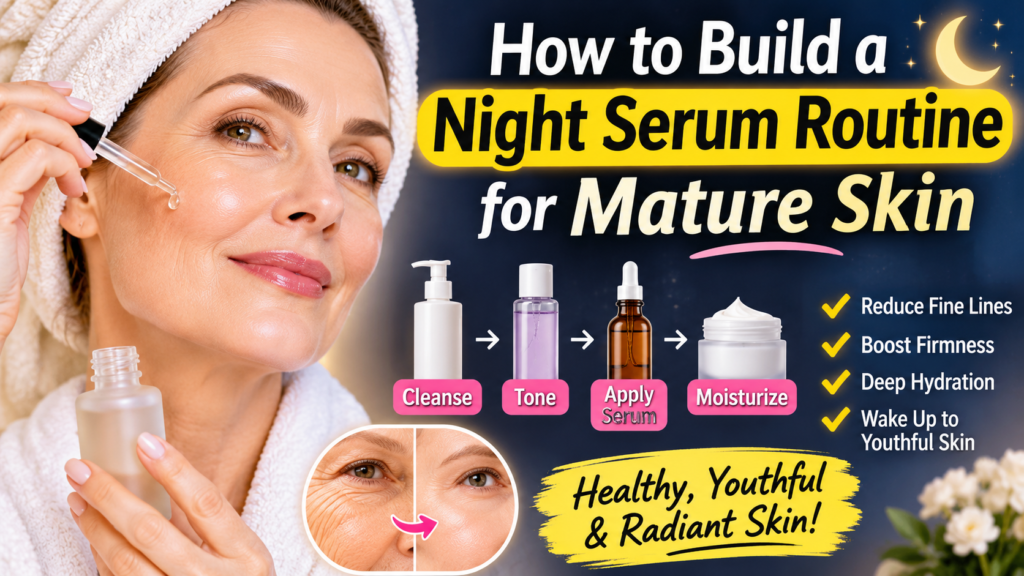
Your skin does its most important repair work while you sleep. But after 40, the overnight recovery process slows down — collagen production drops, moisture levels decline, and cell turnover takes longer. A well-planned night serum routine for mature skin can support that natural renewal cycle without overwhelming a more delicate complexion. The key is choosing the right active ingredients, layering them correctly, and giving your skin barrier the respect it deserves. Here is a practical, dermatologist-informed guide to building a nighttime serum routine that actually works for your skin at every stage.

- A True Multi-Tasker – One drop of Vibriance Super C Vitamin C Facial Serum nourishes your skin with a powerful combinati…
- Hydration Without Irritation – For those seeking a vitamin C serum for sensitive skin, know that Vibriance Super C Serum…
- Not Just Water – When it comes to vitamin C face serum, the ordinary face serum is watered down and ineffective. Our for…
1. Why Mature Skin Needs a Thoughtful Night Serum Routine
Mature skin is not simply “older skin.” It is skin that has accumulated years of sun exposure, hormonal shifts, and environmental stress. A generic nighttime routine that worked in your 30s may now leave you dry, irritated, or seeing no improvement at all. A targeted night serum routine for mature skin addresses specific concerns — fine lines, uneven tone, loss of firmness, and chronic dryness — with concentrated ingredients that penetrate effectively during sleep.
2. How Skin Changes After 40, 50, and 60
- In your 40s: Estrogen levels begin to fluctuate. You may notice the first deeper lines, dullness, and slower healing from breakouts or irritation.
- In your 50s: Collagen loss accelerates. Skin becomes thinner, drier, and more prone to sagging. The moisture barrier weakens noticeably.
- In your 60s and beyond: Cell turnover slows dramatically. Skin may feel fragile, and hyperpigmentation becomes more stubborn. Hydration and gentle barrier support become the top priorities.
Each decade calls for subtle shifts in your mature skin serum routine — stronger actives in your 40s, more hydration in your 50s, and ultra-gentle nourishment in your 60s.
3. How to Choose the Right Night Serum for Mature Skin
Start with your primary concern. Wrinkles and texture? Look for retinol or peptides. Persistent dryness? Prioritize hyaluronic acid and ceramides. Uneven tone? Niacinamide and vitamin E are excellent choices. If you are new to active serums, begin with a single hydrating formula and introduce one treatment active at a time. For a broader look at age-specific options, explore the best anti-aging serums for women over 30, 40, and 50 to find formulas matched to your decade.
- A True Multi-Tasker – One drop of Vibriance Super C Vitamin C Facial Serum nourishes your skin with a powerful combinati…
- Hydration Without Irritation – For those seeking a vitamin C serum for sensitive skin, know that Vibriance Super C Serum…
- Not Just Water – When it comes to vitamin C face serum, the ordinary face serum is watered down and ineffective. Our for…
4. Best Serum Ingredients for Mature Skin
- Retinol and Retinal: Gold-standard ingredients for encouraging cell turnover and smoothing fine lines. Retinal works faster but may cause more irritation. According to the Cleveland Clinic, retinol is a vitamin A derivative that supports collagen production when used consistently over time.
- Hyaluronic Acid: A powerful humectant that draws moisture into the skin. Essential for plumping dehydrated mature skin overnight.
- Peptides: Short chains of amino acids that signal skin to produce more collagen. Gentle enough for sensitive complexions and safe to use nightly.
- Niacinamide (Vitamin B3): Calms redness, strengthens the barrier, and helps fade dark spots. Pairs well with nearly every other ingredient.
- Ceramides: Lipid molecules that rebuild the skin’s protective barrier. Especially important for mature skin that loses moisture easily.
- Vitamin E: A nourishing antioxidant that supports skin repair and works beautifully in overnight formulas. If you are looking for dedicated options, these best vitamin E serums for 2026 are worth considering.
- Bakuchiol: A plant-derived alternative to retinol that offers similar smoothing benefits with significantly less irritation — ideal for sensitive or retinol-intolerant skin.
- A True Multi-Tasker – One drop of Vibriance Super C Vitamin C Facial Serum nourishes your skin with a powerful combinati…
- Hydration Without Irritation – For those seeking a vitamin C serum for sensitive skin, know that Vibriance Super C Serum…
- Not Just Water – When it comes to vitamin C face serum, the ordinary face serum is watered down and ineffective. Our for…
5. Step-by-Step Night Serum Routine for Mature Skin
- Cleanse with a gentle, non-foaming cleanser to remove sunscreen and makeup without stripping natural oils.
- Tone (optional) with an alcohol-free hydrating toner on damp skin.
- Apply treatment serum — your active ingredient, such as retinol or a peptide complex. Use a pea-sized amount.
- Layer a hydrating serum — hyaluronic acid or a ceramide serum to lock in moisture and cushion the skin barrier.
- Seal with a night cream or sleeping mask. If you are unsure which finish is right for you, this comparison of a sleeping mask vs. night cream breaks down the differences clearly.
6. Correct Order of Applying Night Serums
The general rule is thinnest to thickest. Water-based serums (hyaluronic acid, niacinamide) go on first, followed by slightly heavier treatment serums (retinol, peptides), and finally oil-based or cream-based formulas. When in doubt, apply your most active ingredient closest to clean skin for maximum absorption.
7. Night Serum Routine for Different Skin Types
| Skin Type | Recommended Approach |
|---|---|
| Dry Mature Skin | Layer hyaluronic acid under a ceramide-rich serum. Use retinol only 2–3 nights per week and buffer with moisturizer. |
| Sensitive Mature Skin | Start with bakuchiol or peptides. Avoid retinol until your barrier is strong. Patch test every new product. |
| Oily Mature Skin | Use a lightweight niacinamide serum nightly. Retinol can help regulate oil production — introduce it slowly. |
| Combination Mature Skin | Apply hydrating serums to dry areas and treatment actives to the T-zone. Adjust seasonally. |
8. How Often Should You Use Retinol at Night?
More is not better. The American Academy of Dermatology recommends starting retinol once or twice a week and gradually increasing frequency as your skin tolerates it. Many people in their 50s and 60s do best with retinol two to three nights per week, using hydrating serums on the off nights. Retinoids should be avoided entirely during pregnancy. If you experience persistent redness, peeling, or stinging, stop use and consult a dermatologist.
9. Which Serum Ingredients Can Be Used Together?
Hyaluronic acid and retinol are a well-studied, safe combination — the HA helps counteract retinol’s drying effects, as GoodRx dermatology guidance confirms. Peptides and hyaluronic acid layer beautifully and can be used every night. Niacinamide pairs safely with retinol, peptides, and HA. Ceramides are compatible with virtually everything.
10. Ingredients and Combinations to Approach Carefully
- Retinol + AHA/BHA acids: Using both on the same night significantly increases irritation risk. Alternate nights instead.
- Retinol + Vitamin C: Both are potent actives. Use vitamin C in the morning and retinol at night.
- Multiple strong actives at once: Layering retinol, glycolic acid, and a high-strength niacinamide in one routine is a fast track to barrier damage. When building a retinol routine for mature skin, introduce one active at a time and wait at least two weeks before adding another.
11. A Simple 7-Night Night Serum Schedule
| Night | Serum Focus |
|---|---|
| Monday | Retinol + hyaluronic acid |
| Tuesday | Peptides + ceramides (recovery night) |
| Wednesday | Retinol + hyaluronic acid |
| Thursday | Niacinamide + hyaluronic acid |
| Friday | Retinol + hyaluronic acid |
| Saturday | Bakuchiol or peptides + ceramides |
| Sunday | Hydrating serum only (full recovery night) |
This schedule balances active treatment with barrier repair. Beginners should start with just one retinol night and build up over four to six weeks.
12. Common Night Serum Mistakes to Avoid
- Applying retinol to damp skin (increases absorption and irritation).
- Skipping moisturizer after an active serum.
- Using three or more treatment serums in a single routine.
- Ignoring signs of barrier damage — tightness, flaking, and stinging mean your routine is too aggressive.
- Neglecting daily broad-spectrum SPF 30 or higher. Retinol increases sun sensitivity, making morning sunscreen non-negotiable.
13. How Long Does a Night Serum Take to Show Results?
Patience is essential. Hydrating serums can improve skin texture within a few days. Retinol typically requires 8 to 12 weeks of consistent use before visible smoothing occurs. Peptides and niacinamide may take 6 to 8 weeks. No serum eliminates wrinkles or reverses aging — realistic expectations lead to better long-term satisfaction.
14. Frequently Asked Questions
What is the best night serum routine for mature skin?
A simple routine with one active treatment serum (like retinol or peptides), a hydrating layer (hyaluronic acid), and a nourishing night cream is the most effective and sustainable approach.
Should mature skin use retinol every night?
Not necessarily. Most dermatologists recommend two to three nights per week for mature skin, with hydrating recovery serums on alternate nights.
Can I use hyaluronic acid with retinol?
Yes. Hyaluronic acid is one of the best ingredients to pair with retinol because it offsets dryness and supports the skin barrier. Apply retinol first on dry skin, then layer HA on top.
What is the best serum for mature skin over 50?
Look for formulas that combine hydration with gentle cell-turnover support. A retinol or bakuchiol serum paired with hyaluronic acid and ceramides addresses the most common concerns after 50. For curated recommendations, see expert roundups from sources like Oprah Daily’s nighttime skincare guide.
Should I apply serum before or after night cream?
Serum always goes before cream. Serums are lighter and designed to penetrate deeply, while creams seal everything in.
Are peptides better than retinol for mature skin?
They serve different purposes. Retinol is more effective for cell turnover and wrinkle smoothing. Peptides are gentler and better for barrier support and firmness. Many mature skin routines benefit from using both on alternating nights.
Can sensitive mature skin use anti-aging serums?
Yes, but choose gentle actives like bakuchiol, peptides, and niacinamide. Always patch test and introduce one product at a time. Resources like the Boots night serum guide offer helpful options for sensitive complexions.
How many serums should I use at night?
One to two serums is ideal. A treatment serum plus a hydrating serum is plenty. More layers increase the risk of irritation without delivering better results.
- A True Multi-Tasker – One drop of Vibriance Super C Vitamin C Facial Serum nourishes your skin with a powerful combinati…
- Hydration Without Irritation – For those seeking a vitamin C serum for sensitive skin, know that Vibriance Super C Serum…
- Not Just Water – When it comes to vitamin C face serum, the ordinary face serum is watered down and ineffective. Our for…
15. Final Thoughts
Building a night serum routine for mature skin does not require a complicated shelf of products. The most effective anti-aging nighttime skincare routine is one you can follow consistently — a gentle cleanse, a targeted treatment serum, a hydrating layer, and a protective night cream. Listen to your skin, introduce actives slowly, and never skip sunscreen in the morning. Whether you are refining your skincare routine for women over 60 or just starting to explore night serums for women over 50, the principles remain the same: hydrate, treat gently, and give your skin time to respond. Your future skin will thank you.