

If your main goal is softer-looking fine lines, firmer skin, and a more lifted appearance — not clearer pores or fewer breakouts — the LED mask you choose should be judged differently than a typical “best LED masks” roundup suggests. For wrinkles and firmness, the wavelengths that matter most are red (around 630–633nm) and near-infrared (around 830nm and up), because these are the wavelengths most consistently studied for supporting collagen-related changes in the skin. A high LED count or a long features list doesn’t automatically mean a better anti-aging result. What matters more is a mask that fits closely to your skin, delivers a red/near-infrared combination at a reasonable output, and is comfortable enough that you’ll actually use it several times a week for months.
Affiliate disclosure: Syloma Skincare may earn a commission if you buy through links in this article, at no additional cost to you. We only recommend products we believe are genuinely worth your consideration.
This guide focuses specifically on masks priced under $600 that are realistic choices for wrinkles, fine lines, loss of firmness, and general skin aging — not acne, not general “glow,” and not devices priced well above what most shoppers are willing to spend on an at-home device.
Quick Answer: Best LED Face Masks Under $600 for Wrinkles and Firm Skin
| Product | Price | Best For | Wavelengths | Treatment Time | FDA Status | Key Feature |
|---|---|---|---|---|---|---|
| CurrentBody Skin LED Face Mask: Series 3 | ~$569.99 | Shoppers who want the newest tech and full customization | 415, 532, 590, 633, 830, 1072nm | 10 min, 3–5x/week | FDA-cleared | MyDose personalized dosing across 6 wavelengths |
| CurrentBody Skin LED Face Mask: Series 2 | ~$469.99 | Buyers who want CurrentBody’s proven red/NIR combo at a lower price | 633, 830nm | 10 min, 3–5x/week | FDA-cleared | Simpler, well-reviewed predecessor to Series 3 |
| Omnilux Contour Face | ~$395 | Dermatologist-favored, straightforward anti-aging | 633, 830nm | 10 min, 3–5x/week | FDA-cleared | Flexible silicone with a 2-year device warranty |
| Dr. Dennis Gross DRx SpectraLite FaceWare Pro | ~$455 | Wrinkles plus occasional breakouts | Red + blue LEDs | 3 min | FDA-cleared | Fastest full-face session on this list |
| TheraFace Mask Glo (Therabody) | ~$449–$453 | Buyers who also want scalp/face vibration relaxation | Red, Red+Infrared, Blue | 12 min (or 4-min modes) | FDA-cleared | 504 LEDs with VibraWave massage |
| HigherDOSE Red Light Face Mask | ~$349 | Budget-conscious shoppers who still want NIR | 630, 830nm | 10–20 min | FDA-cleared | Built-in eye protection, no goggles needed |
| Solawave Wrinkle Retreat Pro | ~$399 | Shoppers who want a short daily session | 605, 630, 660, 830nm | 3 min, 3–5x/week | FDA-cleared | 320 LEDs across four wavelengths |
| iRestore Illumina Face Mask | ~$399 (frequently discounted from $699) | Wrinkles plus occasional acne, want a hovering (non-contact) fit | 415, 635, 830nm | 10 min | FDA-cleared (per brand) | Hovers slightly off the skin instead of pressing against it |
| Shark CryoGlow LED Face Mask | ~$349.99 | Buyers who also want under-eye de-puffing | 630, 830nm (plus blue for a separate acne mode) | 6 min (aging mode) | FDA-cleared | Built-in cooling pads for the under-eye area |
| LightStim for Wrinkles | ~$249–$349 | Spot-treating specific wrinkle zones, not full-face convenience | 605, 630, 660, 855nm | 3 min per zone (handheld) | FDA-cleared | Handheld device, not a full mask — longer full-face routine |
Prices and promotions on beauty tech change often. Always check the current product page before buying, since brands frequently run sales, bundle offers, or limited-time price drops.
How We Chose These LED Face Masks
We started from the specific intent behind this search: a shopper who wants visibly firmer, smoother-looking skin and fewer noticeable fine lines, on a budget capped at $600. That ruled out several premium devices priced well above $600, and it also ruled out masks built mainly around acne-focused blue light with no meaningful red or near-infrared component.
For every mask on this list, we looked at:
- Whether red and/or near-infrared wavelengths are present, since these are the wavelengths most associated with anti-aging use
- Current US pricing, since prices shift with sales and bundles
- FDA clearance status, and whether the brand’s own claims match what clearance actually covers
- Treatment time and realistic weekly frequency
- Fit and comfort (flexible silicone vs. rigid shell)
- Battery/cordless convenience
- Warranty length and what’s included in the box
We did not rank products by LED count alone, and we did not treat manufacturer marketing claims as independently verified fact. Where a claim comes from the brand’s own testing, we say so.
What Matters Most When Buying an LED Mask for Wrinkles and Firm Skin?
Wavelength
Wavelength is measured in nanometers (nm) and determines how deep the light travels into skin. Red light around 630–633nm is generally associated with more surface-level and mid-dermal effects, while near-infrared light around 830nm and deep near-infrared around 1072nm is associated with reaching deeper skin layers. For wrinkles and firmness specifically, a mask that combines red and near-infrared is generally considered more relevant than a single-wavelength device or one built primarily around blue light for acne.
Irradiance and Dose
Irradiance (often shown as mW/cm²) describes how much light energy hits the skin per second, while dose (or fluence, shown as J/cm²) accounts for both irradiance and treatment time. Two masks with the same wavelength can still deliver very different doses depending on their output and how long you use them. Brands don’t always publish irradiance, and when they don’t, we say so rather than guessing.
Coverage
A mask that fits closely and evenly across the forehead, cheeks, and jawline delivers more consistent light exposure than one with gaps or a shell that hovers unevenly off the face. Flexible silicone masks generally hug the contours of the face more closely than rigid shells, though some rigid designs are engineered to sit close enough to still perform well.
Treatment Time and Frequency
Most masks on this list recommend 10-minute sessions, three to five times a week, though a few newer designs (Solawave, Dr. Dennis Gross) use higher-output LEDs to shorten sessions to three minutes. Shorter sessions are more convenient, but consistency over weeks and months matters more than any single session length.
Fit and Comfort
If a mask is uncomfortable, heavy, or awkward to wear, you’re less likely to use it consistently — and consistency is what drives results with LED therapy. Flexible silicone masks tend to feel lighter and more forgiving; rigid designs can feel more secure but may press unevenly or feel warm during longer sessions.
Consistency of Use
No single spec matters more than whether you’ll actually use the device on schedule for eight or more weeks. A slightly less “powerful” mask used consistently is likely to outperform a higher-spec mask left in a drawer.
FDA Clearance
Most credible LED face masks sold in the US carry FDA 510(k) clearance for treating full-face wrinkles, and some also carry clearance for mild-to-moderate acne. Clearance means the FDA determined the device is substantially equivalent to a legally marketed predicate device — it is a safety and manufacturing-equivalence pathway, not a stamp of proven effectiveness for every marketing claim. We explain this in more detail in the safety section below.
Warranty
Warranties on this list range from one year to five years (LightStim). A longer warranty can be a useful signal of how a brand expects the device to hold up, though it isn’t a guarantee of performance.
LED count alone does not determine effectiveness. A mask with 750 LEDs and one with 132 LEDs can both use the same core red/near-infrared wavelengths; more LEDs generally means more even coverage across a larger surface, but it does not automatically mean a stronger or more effective treatment. The same is true of wavelength count — a mask with six wavelengths isn’t automatically superior to one with two, especially if your main concern is wrinkles and firmness rather than pigmentation, redness, or acne.
8–10 Best LED Face Masks Under $600
CurrentBody Skin LED Face Mask: Series 3
Price: Approximately $569.99, per the CurrentBody US site.
Best for: Shoppers who want the newest LED mask technology and don’t mind paying near the top of the under-$600 range for it.

- FITS TO YOU – Unlike many other wearable LED devices, the CurrentBody Light Therapy Mask is made from patented flexible …
- LIGHT THERAPY – The device combines Red (633nm) and near Infra-Red Light (830nm). Harnessed at the perfect measurement t…
- REAL RESULTS – You can expect to see visible results in just 4 weeks when used consistently 10 minutes a day, 3 to 5 tim…
Key specifications:
- Wavelengths: red 633nm, near-infrared 830nm, deep near-infrared 1072nm, plus blue 415nm, green 532nm, and yellow 590nm
- LED count: 750
- Treatment time: 10 minutes, recommended 3–5 times a week
- FDA clearance: Yes, per CurrentBody’s product listing
- Warranty: Not independently verified at time of writing; check the current product page
- Design: Flexible silicone with extended chin coverage, cordless, USB-C charging
Why consider it: Released in 2026, the Series 3 is CurrentBody’s newest mask and introduces “MyDose,” a system that lets you assign specific wavelengths to specific LED zones through the CurrentBody app, which then calculates a dose based on your selections. It builds on the red/near-infrared combination used in the earlier Series 1 and Series 2 masks and adds deep near-infrared (1072nm) along with three additional wavelengths aimed at other concerns.
CurrentBody cites internal testing (SGS 2024 and Eurofins 2026 studies) reporting improvements in measures like skin elasticity and the appearance of wrinkles after several weeks of use, details it publishes on its own official CurrentBody Skin LED mask product page. These are manufacturer-commissioned studies, not independent peer-reviewed research, so treat the specific percentages as brand-reported rather than externally verified. For readers who want more background on how CurrentBody’s masks compare across generations, our guide to the best LED face masks for wrinkles and firm skin breaks this down in more detail.
Pros:
- Six wavelengths, including deep near-infrared not found on most masks in this price range
- MyDose lets you personalize which LEDs emit which wavelength
- Cordless, hands-free, with an auto-timer
- Extended chin coverage for a fuller fit
- Includes a storage bag and USB-C cable for travel
Cons:
- Sits near the top of the under-$600 range
- The added wavelengths and app-based customization may be more complexity than some buyers want
- As a newer 2026 release, it has less long-term user feedback than the Series 2
Who should consider it: Buyers who want the latest available technology in this category, are comfortable using a companion app, and have budget room near $570.
Who may want to skip it: Anyone who wants the simplest possible red/near-infrared routine without extra wavelength options, or who wants to stay well under $500.
CurrentBody Skin LED Face Mask: Series 2
Price: Approximately $469.99 (regularly discounted to around $379.99 on the CurrentBody site).
Best for: Buyers who want CurrentBody’s well-reviewed red/near-infrared formula without paying for the Series 3’s extra wavelengths.

- Enhanced collagen production capability significantly reduces fine lines, wrinkles and redness, for younger-looking skin…
- Upgraded light coverage provides our famous instant glow, for a healthier, brighter and smoother complexion.
- An all-new, exclusive layout of 236 LED bulbs emits three clinically recognised wavelengths: red (633nm), near-infrared …
Key specifications:
- Wavelengths: red 633nm, near-infrared 830nm
- LED count: 132
- Treatment time: 10 minutes, recommended 3–5 times a week
- FDA clearance: Yes
- Design: Flexible silicone, cordless controller with “Pillow Technology” for even light distribution
Why consider it: The Series 2 is CurrentBody’s longer-standing anti-aging mask and carries thousands of customer reviews. It sticks to the two wavelengths most studied for anti-aging use — red and near-infrared — rather than layering on additional colors. Independent outlets that have tested it describe it as comfortable and straightforward to use, with a wrinkle-focused clinical claim from the brand’s own testing of visible improvement within four weeks.
Pros:
- Simple two-wavelength focus on red and near-infrared
- Frequently discounted below its list price
- Large volume of verified customer reviews
- Comfortable, flexible silicone build
Cons:
- Fewer LEDs and wavelengths than the newer Series 3
- No app-based dose customization
- Doesn’t include eye protection in the box, per some retailer listings
Who should consider it: Shoppers who want a proven, simpler red/NIR mask and would rather save roughly $100 versus the Series 3.
Who may want to skip it: Buyers specifically drawn to deep near-infrared (1072nm) or app-based customization, which are Series 3 exclusives.
Omnilux Contour Face
Price: Approximately $395 (list price has been shown as high as $610 with promotional pricing around $395–$483 depending on retailer).
Best for: Buyers who want a dermatologist-favored brand with a straightforward two-wavelength approach.
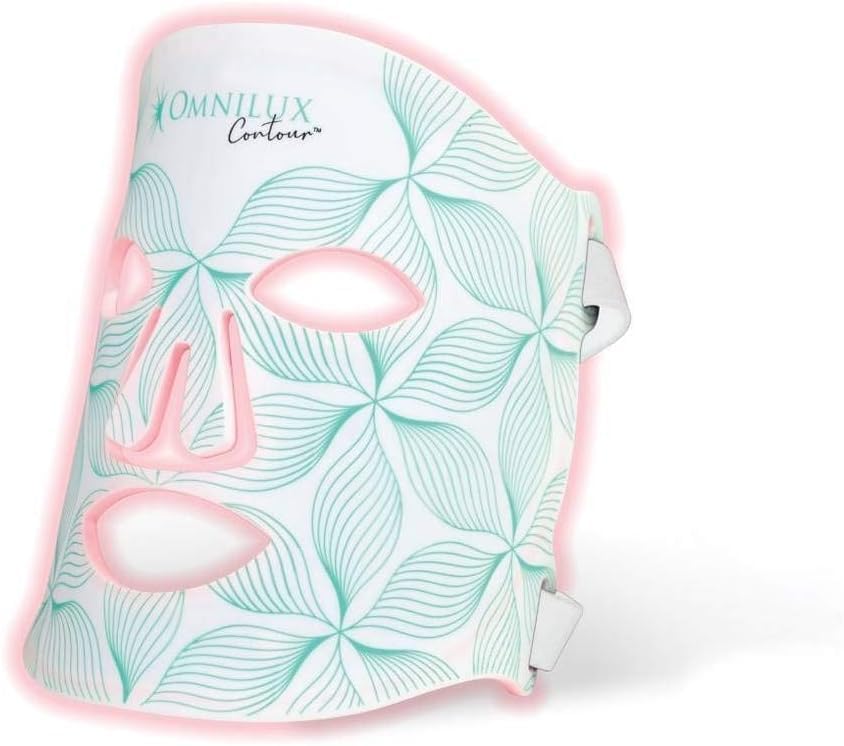
Key specifications:
- Wavelengths: red 633nm, near-infrared 830nm
- LED count: 132 (66 dual-wavelength bulbs)
- Irradiance: approximately 35 mW/cm², per third-party retailer listings
- Treatment time: 10 minutes, recommended 3–5 times a week
- FDA clearance: Yes, plus CE and TGA certification
- Warranty: 2 years on the device
- Design: Flexible silicone with velcro head straps
Why consider it: Omnilux is built on the brand’s original medical-grade LED technology and has a strong reputation among dermatologists — the company notes that board-certified dermatologists, including some with large social media followings, sit on or advise its scientific board. The Contour Face mask keeps things simple with the red/near-infrared pairing most associated with collagen-related skin changes, and it’s backed by a 2-year device warranty, which is longer than many competitors offer.
Pros:
- Strong dermatologist association and brand reputation
- Simple, well-studied wavelength pairing
- Above-average 2-year warranty
- Lightweight, flexible silicone design
Cons:
- Fewer wavelengths than multi-color competitors
- List price can run close to $600 without a promotion
- No blue light option if acne is also a concern
Who should consider it: Shoppers who prioritize a well-established, dermatologist-associated brand over having every extra wavelength option.
Who may want to skip it: Anyone who also wants blue light for breakouts in the same device.
Dr. Dennis Gross DRx SpectraLite FaceWare Pro
Price: Approximately $455.
Best for: Buyers who want to address wrinkles and occasional acne in a single fast device.
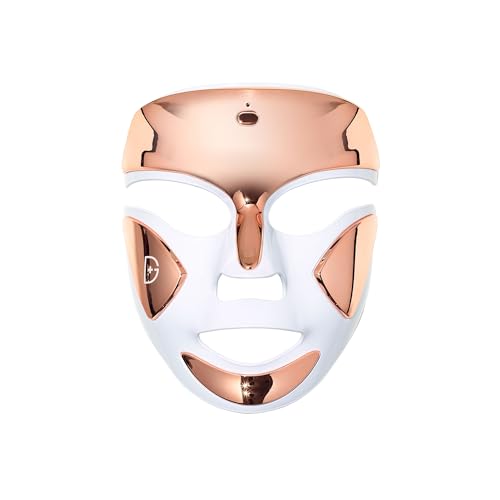
- WHAT IT IS: This LED device for the face targets wrinkles and acne for visibly smoother, clearer skin in just 3 minutes….
- HOW IT WORKS: Treat acne and breakouts with blue light, smooth wrinkles and build collagen with red light, or address bo…
- HOW TO USE: After cleansing, place the mask over your face, securing the strap around your head. Press & hold the power …
Key specifications:
- LEDs: 100 red + 62 blue (some retailer listings cite slightly different totals, such as 162 total lights)
- Treatment time: 3 minutes, daily use
- FDA clearance: Yes
- Warranty: 1 year
- Design: Rigid plastic shell with an adjustable silicone head strap
Why consider it: This mask was designed by a practicing dermatologist and is one of the fastest full-face options on this list at just three minutes per session. It combines red light (for collagen-related, wrinkle-focused use) with blue light (for acne-causing bacteria) in one device, which is useful if breakouts are an occasional secondary concern alongside fine lines. The brand’s own <a href=”https://drdennisgross.com/es/collections/skincare-devices”>Dr. Dennis Gross skincare devices product listing</a> cites clinical testing showing improvements in wrinkle appearance within a matter of weeks; as with other manufacturer claims in this space, treat the specific figures as brand-reported rather than independently peer-reviewed.
Pros:
- Fastest full-face session on this list at 3 minutes
- Combines red and blue light for both wrinkles and occasional breakouts
- Hands-free, full-face design
- Widely available at major beauty retailers
Cons:
- Rigid shell rather than flexible silicone, which some users find less comfortable than contact masks
- No near-infrared wavelength, which some anti-aging research emphasizes for deeper skin layers
- Shorter 1-year warranty compared to some competitors
Who should consider it: Buyers who want speed and also deal with occasional blemishes alongside wrinkle concerns.
Who may want to skip it: Anyone specifically seeking a near-infrared wavelength or a flexible, skin-hugging silicone fit.
TheraFace Mask Glo (Therabody)
Price: Approximately $449–$453, per current listings (note: Therabody’s separate, higher-LED-count “TheraFace Mask” with vibration therapy is priced closer to $650 and falls outside this article’s budget).
Best for: Buyers who want LED therapy paired with a gentle massage-like sensation.
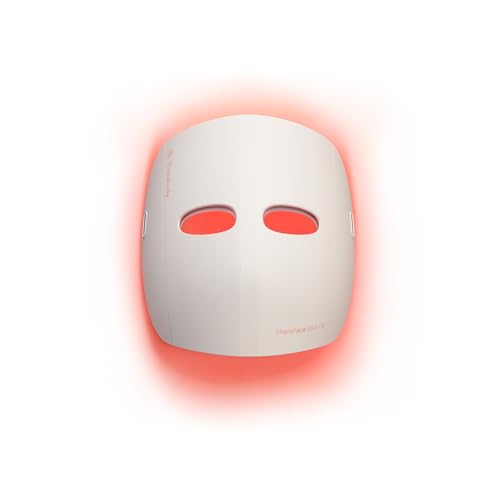
- CLINICALLY-PROVEN LED LIGHT THERAPY: 3 types of science-backed LED light therapy address specific skin concerns for clin…
- FULL-COVERAGE FACE MASK: 504 medical-grade LEDs, enhanced by Therabody’s proprietary PrecisionLED technology, deliver op…
- CUSTOMIZABLE TREATMENT OPTIONS: The preset 12-minute treatment cycles through 4 minutes of each light therapy to boost c…
Key specifications:
- LED count: 504, using PrecisionLED technology
- Light types: Red, Red+Infrared, and Blue
- Treatment time: 12-minute preset cycle, or individual 4-minute sessions
- FDA clearance: Yes, as a Class II medical device
- Design: Cordless, medical-grade silicone, with VibraWave massage settings
Why consider it: The Glo version of Therabody’s mask brings the brand’s signature LED-plus-vibration approach into a sub-$600 price point. It offers separate Red, Red+Infrared, and Blue modes, so you can lean into the anti-aging wavelengths specifically rather than always running a combined mode. Therabody’s <a href=”https://therabody.dk/products/theraface-mask-glo-led-light-therapy”>official TheraFace Mask Glo product information</a> cites a 12-week clinical study behind these claims. The vibration feature is a genuine point of difference versus most other masks on this list, though it’s a comfort and relaxation feature rather than a documented anti-aging mechanism on its own.
Pros:
- High LED count with separate red/infrared and blue modes
- Cordless, lightweight silicone build
- Vibration feature adds a spa-like sensation during treatment
- FDA-cleared Class II medical device
Cons:
- Sits near the top-middle of the price range
- The vibration feature adds cost without directly changing the light therapy itself
- Full-strength “TheraFace Mask” (non-Glo) with more LEDs and stronger vibration motors is priced above $600 and not covered here
Who should consider it: Buyers who want LED therapy plus a relaxing massage-like experience during treatment.
Who may want to skip it: Anyone who wants to put their full budget toward light output alone, without paying for vibration hardware.
HigherDOSE Red Light Face Mask
Price: Approximately $349.
Best for: Budget-conscious shoppers who still want a genuine red/near-infrared combination.

- Red Light Therapy for Face & Skin Rejuvenation – This FDA cleared, FSA eligible red light therapy mask uses red (630nm) …
- Facial Light Therapy, Anywhere – Lightweight and wireless, this LED face mask with red light therapy delivers targeted w…
- Red Light Mask That Works Deep – Red and near-infrared light reach deep layers to improve tone, reduce puffiness, and vi…
Key specifications:
- Wavelengths: red 630nm, near-infrared 830nm
- LED count: 66 dual-core LEDs (132 total diodes)
- Irradiance: approximately 50 mW/cm² total, per retailer listings
- Treatment time: 10- or 20-minute presets
- FDA clearance: Yes
- Design: Flexible medical-grade silicone with built-in eye protection (no separate goggles needed), battery-powered
Why consider it: HigherDOSE keeps its face mask relatively simple and priced well under $400 while still using the red/near-infrared pairing associated with anti-aging use. A standout feature is the mask’s built-in eye protection, which some competitors leave out or require as a separate accessory. The brand cites results from an 8-week third-party trial, including a majority of participants reporting firmer, smoother-feeling skin — again, this is brand-commissioned testing, not independent peer-reviewed research.
Pros:
- One of the lower prices among full silicone, cordless masks with near-infrared
- Built-in eye protection is a genuine convenience and safety plus
- Battery-powered for cordless use during other activities
- Flexible head strap and open eye holes for multitasking
Cons:
- Lower LED count than several competitors
- Only two wavelengths, with no blue or additional color options
- Battery life is limited to roughly 80–100 minutes per charge, so it needs regular recharging with frequent use
Who should consider it: Shoppers who want a real red/near-infrared mask without spending close to $400–$500.
Who may want to skip it: Anyone who wants the highest LED density or multiple wavelength options in this price bracket.
Solawave Wrinkle Retreat Pro
Price: Approximately $399 (list price shown as $499 with a common promotional price of $399).
Best for: Buyers who want the shortest realistic daily treatment time.
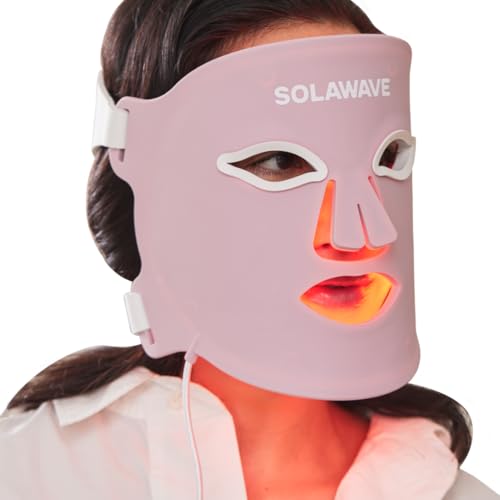
- 4 WAVELENGTHS. ZERO BLIND SPOTS: Red (630nm) softens fine lines. Deep Red (660nm) targets elasticity. Amber (605nm) revi…
- FASTER THAN BREWING YOUR MORNING COFFEE: 3 minutes. Hands-free. Automatic shut-off. While most LED masks demand 10-20 mi…
- 320 LEDS. BUILT FOR EFFICIENCY: One charge powers up to 20 full sessions – most competitor masks max out at six. Digital…
Key specifications:
- Wavelengths: red 630nm, near-infrared 830nm, deep red 660nm, amber 605nm
- LED count: 320
- Irradiance: approximately 65 mW/cm², with a fluence of about 11.7 J/cm² per session, per the brand
- Treatment time: 3 minutes, recommended 3–5 times a week
- FDA clearance: Yes, 510(k) Class II
- Warranty: 1 year, with a 60-day money-back guarantee
- Design: Flexible medical-grade silicone
Why consider it: The Wrinkle Retreat Pro stands out for combining a relatively high LED count with a short, 3-minute session — a combination the brand attributes to higher output per LED rather than simply a longer exposure time. It uses four wavelengths rather than the more common two, adding deep red (660nm) for deeper dermal layers and amber (605nm) for surface tone and redness. Dermatologists quoted in Solawave’s own marketing materials speak positively about the device, though these are brand-featured endorsements rather than independent clinical reviews.
Pros:
- Shortest daily session on this list at 3 minutes
- Four wavelengths targeting different depths of skin
- 60-day money-back guarantee reduces purchase risk
- Competitive price relative to LED count
Cons:
- Higher stated irradiance means it’s worth following the brand’s session-time guidance closely rather than extending sessions on your own
- Newer clearance number means less long-term independent track record than some older devices
- Some marketing comparisons to competitors are self-reported by the brand
Who should consider it: Buyers who want to minimize daily time commitment while still getting a multi-wavelength, full-face treatment.
Who may want to skip it: Shoppers who prefer a longer, lower-intensity session style, or who want independently published (rather than brand-commissioned) research behind a device.
iRestore Illumina Face Mask
Price: List price around $699, frequently discounted to approximately $399–$499.
Best for: Buyers who want wrinkle-focused red/near-infrared light plus an occasional-acne blue mode, in a mask that hovers rather than presses against the skin.
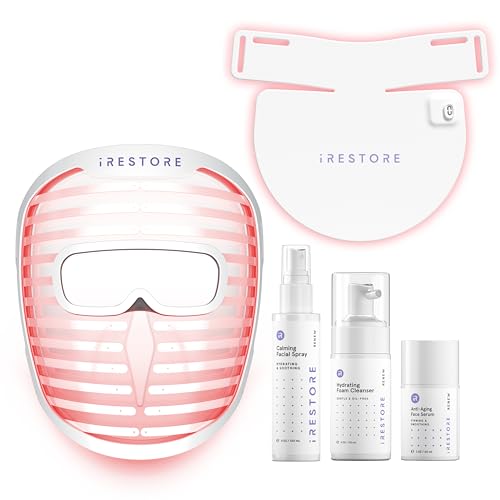
- Full Coverage: Includes LED masks designed to target the face, neck, and chest, ensuring comprehensive treatment for all…
- Anti-Aging Benefits: Red light therapy stimulates natural collagen production, helping to achieve firmer, smoother, and …
- Prep & Enhance: The included cleanser and facial spray prime your skin for maximum absorption, creating the perfect foun…
Key specifications:
- Wavelengths: red 635nm, near-infrared 830nm, blue 415nm
- LED count: 360
- Treatment time: 10 minutes
- FDA clearance: Brand describes the device as FDA-cleared; also IEC safety tested and ISO quality assured, per the brand
- Warranty: 1 year, with a 100-day return window
- Design: Rigid-leaning shell that sits slightly off the skin rather than pressing directly against it, USB-C rechargeable
Why consider it: Unlike most masks on this list, the Illumina is designed to hover just off the face rather than sit in direct contact with skin, which some reviewers find more breathable and comfortable for longer sessions. It combines three wavelengths — red, near-infrared, and blue — so it can address wrinkles and occasional breakouts in the same device. Its list price sits above $600, but it’s regularly discounted into the $399–$499 range, which is where most buyers will actually purchase it; always confirm the current price before assuming it qualifies for an under-$600 budget.
Pros:
- Triple-wavelength coverage for wrinkles, firmness, and occasional acne
- Non-contact “hover” design some users find more comfortable
- Integrated eye shields
- Longer-than-average 100-day return window
Cons:
- List price is above $600; only the discounted price fits this article’s budget, so check current pricing carefully
- The hover design means less direct skin contact than flexible silicone masks, which may affect delivered light intensity
- 1-year warranty is shorter than some competitors
Who should consider it: Buyers who like the idea of a non-contact mask and want blue light included alongside red/near-infrared.
Who may want to skip it: Anyone who wants to be certain of paying under $600 without relying on a sale, or who prefers a flexible silicone mask that presses closer to the skin.
Shark CryoGlow LED Face Mask
Price: Approximately $349.99.
Best for: Buyers who also want under-eye cooling and de-puffing alongside anti-aging light therapy.

- RED LIGHT THERAPY MASK: CryoGlow is an at-home LED face mask combining red, blue & deep infrared light with under-eye co…
- MOST AWARDED LED MASK IN THE U.S.*: Real people. Real results. Clinically tested on 119 participants by an independent t…
- EXPERTLY DEVELOPED: Developed by Shark Beauty alongside optical light experts and engineers, bringing MedSpa-inspired re…
Key specifications:
- Wavelengths: red 630nm, infrared 830nm, plus a separate blue mode for acne
- LED count: 160 tri-wick LEDs (480 total light sources)
- Treatment time: 6 minutes for the “Better Aging” mode (red + infrared)
- FDA clearance: Yes
- Warranty: 2 years
- Design: Rigid, non-flexible shell with clip-on cooling pads for the under-eye area
Why consider it: Shark’s first foray into skincare devices stands out for its unique under-eye cooling feature, which many reviewers highlight as genuinely effective for reducing morning puffiness — a complementary benefit alongside the mask’s red/infrared “Better Aging” mode aimed at fine lines and firming. Shark cites a 12-week clinical study with 60 subjects using the Better Aging mode once daily; as with other brand-commissioned studies referenced in this guide, treat the specific outcome figures as manufacturer-reported.
Pros:
- Unique built-in under-eye cooling feature
- Four distinct treatment modes, including a dedicated anti-aging mode
- Strong 2-year warranty
- 160 tri-wick LEDs designed for even, gap-free coverage
Cons:
- Rigid, hard shell can be less comfortable for some users than flexible silicone
- Bulkier and reportedly harder to store than flat, flexible masks
- Multiple modes may mean shorter individual anti-aging sessions per mode
Who should consider it: Buyers who want cooling/de-puffing built into their LED routine, not just fine-line and firmness support.
Who may want to skip it: Anyone who prioritizes a flexible, contoured fit over a rigid shell.
LightStim for Wrinkles
Price: Approximately $249–$349, depending on retailer and bundle.
Best for: Spot-treating specific wrinkle-prone areas (crow’s feet, forehead, nasolabial folds) rather than doing one full-face session.
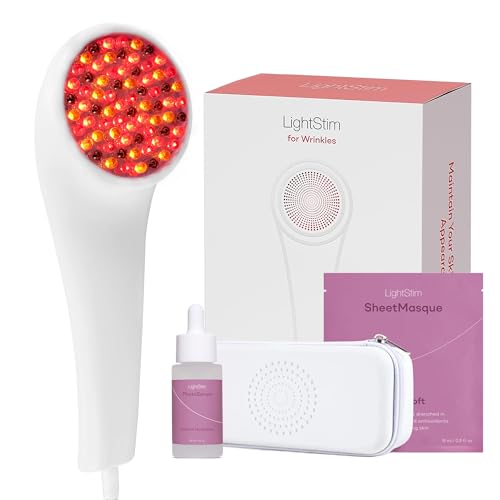
- Therapeutic Light Energy: LightStim delivers light energy in a similar way plants absorb light energy from the sun. Each…
- Clinically Proven Results: In FDA clinical studies, 100% of participants were shown to have significant improvement in t…
- LightStim MultiWave Patented Technology: LightStim MultiWave Patented Technology simultaneously emits multiple wavelengt…
Key specifications:
- Wavelengths: amber 605nm, light red 630nm, deep red 660nm, infrared 855nm
- LED count: 72
- Irradiance: approximately 42 mW/cm² at contact, per independent reviewers
- Treatment time: 3 minutes per treatment area (handheld, not a full mask)
- FDA clearance: Yes, 510(k) cleared
- Warranty: 5 years
- Design: Handheld device, not a wearable mask
Why consider it: LightStim has been making LED phototherapy devices since 2001 and is one of the more established names in this category. Unlike every other product on this list, it’s a handheld device rather than a wearable mask, which means you move it from area to area (forehead, crow’s feet, cheeks, nasolabial folds, jawline) for three minutes each — a routine that can take 20–30 minutes for full-face coverage, versus roughly 10 minutes for most masks. In exchange, it offers a notably long 5-year warranty and a lower entry price than most full masks on this list.
Pros:
- Long-standing, established brand with 20+ years in LED phototherapy
- Lowest typical price point on this list
- Outstanding 5-year warranty
- Precise spot-treatment for specific wrinkle zones
Cons:
- Handheld design means a longer, more hands-on routine than a wearable mask
- Smaller treatment area per session (about 32 cm²) means less coverage per minute
- Not ideal for anyone who wants a hands-free, multitask-friendly session
Who should consider it: Buyers who want to target specific problem areas precisely, don’t mind a hands-on routine, and want the lowest price point on this list alongside a long warranty.
Who may want to skip it: Anyone who wants a quick, hands-free, full-face session — a wearable mask will suit that better.
Are LED Face Masks Safe?
Most reputable at-home LED face masks are considered safe for home use by dermatologists, and the American Academy of Dermatology’s guidance on red light therapy notes that at-home LED and low-level laser devices are generally considered safe, while pointing out that the light used in professional dermatology settings is typically more powerful than what’s found in consumer devices.
It’s important to understand what “FDA-cleared” actually means. Most of the masks in this guide carry FDA 510(k) clearance, which the FDA’s own page on 510(k) clearances explains is a premarket notification process that requires a manufacturer to show its device is “substantially equivalent” to a device that’s already legally on the market. This is a real regulatory pathway and a meaningful bar, but it is not the same thing as “FDA approved,” a term generally reserved for drugs and higher-risk Class III devices that go through more rigorous premarket approval. We’ve used “FDA-cleared” throughout this article rather than “FDA-approved” for that reason, and we’d encourage you to be cautious of any brand or reviewer that uses the terms interchangeably.
A few groups of people should consider speaking with a dermatologist before starting at-home red light or near-infrared therapy:
- Anyone taking photosensitizing medications (some antibiotics, retinoid medications, or other light-sensitizing drugs)
- People with light-sensitive skin conditions, such as lupus
- Anyone with a personal or family history of skin cancer
- People concerned about pigmentation changes, since darker skin tones may be more sensitive to visible light and could be at higher risk of hyperpigmentation with overuse
- Anyone simply unsure whether red light therapy is appropriate for their specific skin history
Beyond that, always follow the manufacturer’s instructions closely, particularly around eye protection. Some masks include built-in eye shields or opaque zones over the eyes, while others leave eye areas open for multitasking; if your device’s instructions call for eye protection or goggles, use them every time. This article is general information, not a personalized medical recommendation — if you have specific health questions about using an LED mask, a board-certified dermatologist is the right person to ask.
What Results Can You Expect From an LED Face Mask?
LED face masks are not a quick fix, and results are typically gradual rather than dramatic. Based on how these devices are studied and marketed, here’s a realistic picture of what to expect:
- Most brands recommend consistent use — several sessions a week — for at least four to eight weeks before expecting visible changes
- With consistent use, some people report that fine lines appear somewhat less noticeable and skin looks smoother or slightly firmer
- Results vary significantly from person to person, and not everyone will see the same degree of change
- LED masks are generally positioned as a maintenance or supportive tool, not a replacement for professional procedures like injectables, microneedling, or laser resurfacing
- Consistency of use appears to matter more than any single spec on the device
We won’t tell you an LED mask will erase your wrinkles, reverse aging, or deliver guaranteed results — no device in this category can honestly make those claims, and you should be skeptical of any brand or article that does.
Are Expensive LED Masks Worth It?
Price alone isn’t a reliable measure of effectiveness in this category. Here’s a general breakdown of what tends to change as you move up in price:
Under $300: At this level, you’ll typically find handheld devices (like LightStim) or occasionally a lower-cost mask. Handheld devices trade full-face convenience for a lower price and, often, a longer warranty, but they require a more hands-on routine.
$300–$399: This tier includes several well-reviewed, flexible silicone masks with a genuine red/near-infrared combination (HigherDOSE, Shark CryoGlow, Solawave, Omnilux, and heavily discounted iRestore pricing). For many buyers focused specifically on wrinkles and firmness, this range offers a strong balance of core features without paying for extras you may not need.
$400–$499: Here you’ll find masks with either more LEDs, additional wavelengths, or added features like vibration therapy (TheraFace Mask Glo) or blue light for occasional breakouts (Dr. Dennis Gross, CurrentBody Series 2). This tier is worth it if one of those specific extras matters to you.
$500–$599: At the top of this article’s budget, you’re generally paying for the newest technology, the widest wavelength range, or app-based customization, as with the CurrentBody Series 3. This tier makes sense for buyers who specifically want the latest available features and have already ruled out lower tiers as insufficient for their needs.
In short: a $350 mask with a solid red/near-infrared combination and consistent use is a reasonable, evidence-informed choice. A $550 mask isn’t automatically going to outperform it — it may offer extra wavelengths, faster sessions, or added features, but the core anti-aging mechanism (red and near-infrared light reaching the skin) is present across most of this price range.
How to Choose the Right LED Mask for Your Skin
If wrinkles are your main concern: Prioritize a red + near-infrared combination over a mask built mainly around blue light. Omnilux Contour Face, CurrentBody Series 2, and HigherDOSE all keep this pairing simple and central.
If firmness is your biggest concern: Near-infrared wavelengths (830nm and above) are generally associated more with deeper skin layers, so masks that include near-infrared — most on this list — are relevant here. The CurrentBody Series 3’s addition of deep near-infrared (1072nm) is worth considering if firmness specifically is your priority and budget allows.
If you also get acne: Look at masks with a dedicated blue light mode alongside red/near-infrared, such as Dr. Dennis Gross, TheraFace Mask Glo, iRestore Illumina, or Shark CryoGlow. For a deeper dive into acne-focused options, see our guide to the best LED face masks for acne-prone skin.
If you want the shortest treatment: Dr. Dennis Gross (3 minutes) and Solawave Wrinkle Retreat Pro (3 minutes) offer the fastest full-face sessions on this list.
If comfort is most important: Flexible silicone masks (Omnilux, HigherDOSE, CurrentBody, Solawave, TheraFace Mask Glo) generally feel lighter and more adaptable to face shape than rigid shells like Dr. Dennis Gross or Shark CryoGlow.
If you want the latest technology: The CurrentBody Series 3 is the newest release covered here, with app-based dose customization across six wavelengths.
If you want to spend less: LightStim for Wrinkles has the lowest typical price on this list, though it requires a longer, hands-on routine rather than a quick full-face session.
If you want a flexible silicone mask specifically: Omnilux, HigherDOSE, CurrentBody (both generations), Solawave, and TheraFace Mask Glo are all built with flexible, skin-contouring silicone rather than a rigid shell.
If you’re weighing devices specifically for sagging or crepey areas beyond the face, our roundup of red light therapy devices for sagging skin and loss of firmness and our guide to LED neck and chest masks for crepey skin cover options this article doesn’t focus on. And if under-eye wrinkles and crow’s feet are your top priority, see our dedicated guide to LED masks for crow’s feet and under-eye wrinkles.
Frequently Asked Questions
Are LED face masks worth it for wrinkles? For many people, yes, as a supportive part of a broader skincare routine — but expectations should stay realistic. Red and near-infrared light are reasonably well studied for supporting collagen-related skin changes, and dermatologists generally consider at-home devices safe. They are not a substitute for professional treatments if you’re looking for dramatic change.
How often should you use an LED face mask? Most masks in this guide recommend three to five sessions a week. Daily use is generally not necessary and, for some devices, isn’t recommended — always follow your specific device’s instructions.
Can LED masks make skin firmer? Near-infrared wavelengths are associated with reaching deeper skin layers where firmness-related processes occur, and several brands report firmness-related improvements in their own testing. Individual results vary, and independent, large-scale research specific to at-home devices remains limited.
What wavelength is best for wrinkles? Red light (roughly 630–633nm) and near-infrared light (roughly 830nm and up) are the wavelengths most commonly associated with anti-aging use in LED devices. A mask combining both is generally considered more relevant for wrinkles than a single-wavelength or blue-light-only device.
Is red light or near-infrared better for aging skin? They’re generally considered complementary rather than competing — red light is associated with more surface and mid-dermal effects, while near-infrared is associated with reaching deeper layers. Many of the masks on this list combine both for that reason.
How long does it take to see results from an LED mask? Brands typically suggest four to eight weeks of consistent use before expecting visible changes, and some cite study periods as long as 12 weeks. Results are gradual, not immediate.
Are expensive LED masks better? Not necessarily. Price often reflects extra wavelengths, added features (like vibration or cooling), or newer technology rather than a fundamentally different or stronger anti-aging effect. A mid-priced mask with a solid red/near-infrared combination, used consistently, is a reasonable choice for most budgets.
Is FDA clearance important for an LED face mask? Yes — it’s a meaningful signal that the device has gone through a real regulatory safety and equivalence review. Just remember that “FDA-cleared” is not the same as “FDA-approved,” and clearance doesn’t independently verify every specific marketing claim a brand makes about results.
Can you use an LED mask every day? Some devices allow daily use, but most brands in this guide recommend three to five sessions a week rather than daily use. Check your specific device’s instructions rather than assuming daily use is fine or necessary.
Can LED masks replace professional treatments? No. LED masks are generally positioned by dermatologists and manufacturers alike as a supportive, at-home tool rather than a replacement for procedures like injectables, laser resurfacing, or microneedling performed by a professional.
Final Thoughts
If your priority is wrinkles and firmer-looking skin, the smartest place to start is with wavelength, not price. Look for a mask that combines red and near-infrared light, fits your face comfortably enough that you’ll actually use it several times a week, and comes from a brand that’s transparent about what’s manufacturer-reported versus independently verified.
At the lower end of this list, HigherDOSE, Shark CryoGlow, and Solawave Wrinkle Retreat Pro offer genuine red/near-infrared therapy well under $400. In the middle, Omnilux Contour Face and CurrentBody Series 2 add a stronger brand track record and, in Omnilux’s case, a notably long warranty. Near the top of the range, TheraFace Mask Glo and the CurrentBody Series 3 bring added features — vibration therapy and app-based wavelength customization, respectively — for buyers who want more than the core red/near-infrared essentials.
Whichever mask you choose, the biggest factor in your results will likely be consistency: using the device on schedule, week after week, for long enough to give the light therapy a fair chance to work. No mask on this list — regardless of price — can promise more than gradually smoother, firmer-looking skin over time. For a broader look at whether this technology lives up to the hype in the first place, see our guide to whether LED face masks really work.