
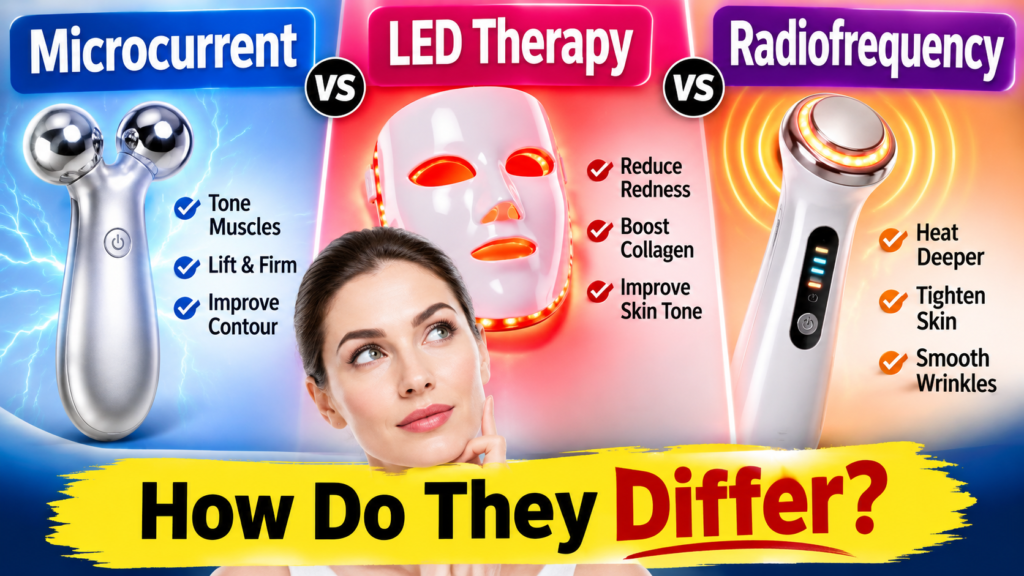
Choosing an at-home beauty device can feel overwhelming. Microcurrent, LED light therapy, and radiofrequency are three of the most popular technologies in the anti-aging market, yet they work in fundamentally different ways. One stimulates facial muscles, another uses specific wavelengths of light, and the third delivers controlled heat to deeper skin layers. Understanding these differences is the key to investing in a device that actually addresses your concerns.
This guide breaks down the science, benefits, limitations, and real-world considerations for each technology so you can make a confident, informed decision.

- ENERGIZING FACIAL WORKOUT – Experience a targeted facial workout with this compact facial firming device that targets in…
- MICROCURRENT FACIAL TONING – Two microcurrent spheres channel energy directly into the skin. While signs of aging are er…
- T-SONIC PULSATIONS – Help to relax facial muscle tension points and smooth the appearance of fine lines and wrinkles. Th…
What Is Microcurrent Facial Technology?
Microcurrent devices deliver low-level electrical currents—typically below 500 microamps—to facial muscles and skin tissue. The concept draws from physical therapy, where microcurrent has long been used to support muscle recovery. In skincare, the goal is to gently “exercise” facial muscles, potentially improving muscle tone and creating a temporary lifting effect.

- RED LIGHT THERAPY MASK: CryoGlow is an at-home LED face mask combining red, blue & deep infrared light with under-eye co…
- MOST AWARDED LED MASK IN THE U.S.*: Real people. Real results. Clinically tested on 119 participants by an independent t…
- EXPERTLY DEVELOPED: Developed by Shark Beauty alongside optical light experts and engineers, bringing MedSpa-inspired re…
Popular devices include the NuFACE Trinity+, FOREO BEAR 2, and ZIIP HALO. All require a conductive gel or serum to allow the current to travel smoothly across the skin. Most manufacturers recommend daily or near-daily use for the first several weeks, followed by a maintenance schedule of two to three sessions per week.
The primary appeal of microcurrent is its potential to enhance facial contour definition and reduce the appearance of fine lines through improved muscle tone. Results, however, are generally temporary and require consistent upkeep. Microcurrent does not significantly remodel collagen or elastin on its own. Side effects are usually minimal—mild tingling or redness—but people with pacemakers, epilepsy, or metal facial implants should avoid these devices entirely.
What Is LED Light Therapy?
LED (light-emitting diode) therapy uses specific wavelengths of light to trigger biological responses in skin cells. Red light (around 630–660 nm) and near-infrared light (around 810–850 nm) are the most studied wavelengths for anti-aging. They are believed to support cellular energy production, which may improve skin texture and reduce the appearance of fine lines over time. Blue light (around 415 nm) targets acne-causing bacteria and is commonly used for breakout-prone skin.
LED devices come in two main formats: full-face masks and handheld wands. Well-known brands include Omnilux and CurrentBody. If you are curious about whether LED face masks really work, the evidence is promising but still evolving. The American Academy of Dermatology notes that red light therapy appears safe for most skin types, though more large-scale clinical trials are needed to confirm long-term efficacy. For a closer look at leading options, our guide to the top red light therapy masks for anti-aging compares the most popular models side by side.
Typical treatment sessions last 10 to 20 minutes, and consistency is critical—most protocols require daily or near-daily use for at least eight to twelve weeks before visible changes appear. Eye protection is recommended with most devices, particularly those emitting blue light. LED therapy is non-invasive and generally well tolerated, but it is not a quick fix, and individual responses vary widely.
What Is Radiofrequency Skin Tightening?
Radiofrequency (RF) devices use electromagnetic energy to generate controlled heat in the deeper layers of the skin, particularly the dermis. This thermal stimulation triggers a wound-healing response that may encourage new collagen production and remodeling over time. The result is a gradual improvement in skin firmness and a reduction in the appearance of wrinkles.

- TECHNOLOGY: Clinically validated as a safe and effective over-the-counter (OTC) aesthetic electrosurgical device for the…
- ADVANCED 1MHz MULTI-POLAR RF: Utilizing a professional-grade 1.0 MHz Radio Frequency sine wave, this device delivers con…
- DUAL-REDUNDANT THERMAL SAFETY: Your safety is our priority. Built with two independent internal thermistors, the system …
At-home RF devices such as the TriPollar STOP VX2 and NEWA operate at lower energy levels than professional in-office treatments like Thermage or Morpheus8. This makes them safer for unsupervised use but also means results are more subtle. It is important to distinguish non-invasive home RF from RF microneedling, which combines radiofrequency energy with tiny needles that penetrate the skin—a procedure that should only be performed by a licensed professional.
The FDA regulates aesthetic and cosmetic devices sold in the United States, and many at-home RF devices carry FDA clearance (not approval) for specific indications. Treatment schedules typically involve two to three sessions per week for several months. Common side effects include temporary redness and warmth. RF is not recommended for people with certain implants, active skin infections, or those who are pregnant.
Microcurrent vs LED vs Radiofrequency: Key Differences
| Feature | Microcurrent | LED Light Therapy | Radiofrequency |
|---|---|---|---|
| Technology | Low-level electrical current | Specific light wavelengths | Electromagnetic heat energy |
| How It Works | Stimulates facial muscles | Triggers cellular responses | Heats dermis to remodel collagen |
| Main Target | Facial muscles and tone | Skin cells and surface concerns | Deeper dermal layers |
| Primary Concerns | Contouring, mild lifting | Acne, fine lines, texture | Skin laxity, wrinkles |
| Expected Results | Temporary toning and lift | Gradual texture improvement | Gradual firmness improvement |
| Treatment Frequency | Daily initially, then 2–3×/week | Daily or near-daily | 2–3×/week |
| Session Duration | 5–20 minutes | 10–20 minutes | 10–20 minutes |
| Maintenance | Ongoing, high | Ongoing, moderate | Ongoing, moderate |
| Side Effects | Mild tingling, redness | Minimal; eye sensitivity | Warmth, redness, rare burns |
| Relative Cost | Mid to high | Mid to high | Mid to high |
| Best Suited For | Facial contouring goals | Acne and early aging | Mild skin laxity |
Which Technology Is Best for Different Skin Concerns?
- TECHNOLOGY: Clinically validated as a safe and effective over-the-counter (OTC) aesthetic electrosurgical device for the…
- ADVANCED 1MHz MULTI-POLAR RF: Utilizing a professional-grade 1.0 MHz Radio Frequency sine wave, this device delivers con…
- DUAL-REDUNDANT THERMAL SAFETY: Your safety is our priority. Built with two independent internal thermistors, the system …
Fine lines and wrinkles: LED therapy and RF both target fine lines through different mechanisms. LED supports cellular repair, while RF encourages collagen remodeling. Evidence for both is moderate, with RF showing slightly stronger results for deeper wrinkles in clinical settings.
Sagging skin and jawline definition: Microcurrent is the most targeted option for temporary facial lifting and jawline contouring. For longer-term firmness, red light therapy devices for sagging skin and at-home RF may offer complementary benefits.
Acne-prone skin: LED therapy with blue light is the clear choice, as neither microcurrent nor RF is designed to address acne.
Dullness and uneven texture: LED therapy, particularly red and near-infrared wavelengths, may improve overall skin radiance over time.
Mature skin: A combination approach often makes the most sense. The best LED face masks for mature skin can address surface concerns, while RF targets deeper laxity.
Neck and décolleté: These delicate areas benefit from gentler technologies. LED neck and chest masks designed for crepey skin are a popular option, as RF and microcurrent devices are not always designed for use below the jawline.
Which Device Is Best for Different Age Groups?
Age alone should never dictate your device choice—skin condition, concerns, and tolerance matter far more. That said, some general patterns emerge.
30s: Prevention is the priority. LED therapy is a gentle entry point for early fine lines and uneven tone. Microcurrent can help maintain facial contour.
40s: Fine lines and early laxity become more noticeable. RF begins to make sense alongside LED for a more comprehensive approach.
50s: Deeper wrinkles and volume loss may call for RF as a primary technology, supplemented by LED for texture. Microcurrent can still support muscle tone.
60+: Expectations should be realistic. At-home devices can offer modest improvements, but professional treatments may be necessary for significant concerns. LED remains the safest and most tolerable option.
Microcurrent vs LED vs RF: Which Gives Faster Results?
- ENERGIZING FACIAL WORKOUT – Experience a targeted facial workout with this compact facial firming device that targets in…
- MICROCURRENT FACIAL TONING – Two microcurrent spheres channel energy directly into the skin. While signs of aging are er…
- T-SONIC PULSATIONS – Help to relax facial muscle tension points and smooth the appearance of fine lines and wrinkles. Th…
Microcurrent typically produces the most immediately visible effects—a subtle lift and improved contour that can appear after a single session. However, these results are temporary and fade within 24 to 72 hours without continued use.
LED therapy and RF require more patience. A 2024 review of home beauty devices published in PMC found that most light-based and energy-based devices require a minimum of eight to twelve weeks of consistent use before measurable improvements appear. RF may take even longer, as collagen remodeling is a slow biological process.
The key takeaway: fast results are usually temporary, and lasting improvements demand consistency regardless of technology.
Can You Combine Microcurrent, LED and Radiofrequency?
Yes, combining technologies can make sense because they target different layers and mechanisms. For example, using LED for surface texture and RF for deeper firmness addresses aging from multiple angles. A systematic review of home-based dermatology devices suggests that multimodal approaches may enhance overall outcomes, though more research is needed.
The main risk is overuse. Stacking multiple devices in a single session can irritate the skin and compromise your barrier. Always follow each manufacturer’s instructions, space treatments appropriately, and consult a dermatologist if you have sensitive skin or an active condition.
Safety, Side Effects and Who Should Avoid These Devices
Microcurrent: Avoid if you have a pacemaker, epilepsy, metal facial implants, or are pregnant (per most manufacturer guidelines). Side effects are typically limited to mild tingling.
LED therapy: Generally the safest of the three. Use eye protection, especially with blue light. People taking photosensitizing medications should consult a doctor first. A 2026 study in Dermatologic Surgery highlights the importance of proper wavelength calibration in consumer devices to avoid ineffective or potentially irritating treatments.
Radiofrequency: Carries the highest risk profile of the three. Avoid if you have metal implants in the treatment area, active rosacea, open wounds, or are pregnant. Burns are rare with FDA-cleared home devices but possible if used incorrectly. Never use RF over the thyroid area or eyelids unless the device is specifically designed for those zones.
How Much Do These Beauty Devices Cost?
Entry-level devices across all three categories typically start in the $100–$200 range, while premium models can exceed $500. Microcurrent devices often require ongoing purchases of conductive gel, which adds to the long-term cost. LED masks generally have fewer consumable expenses, though replacement parts or upgraded models may be needed over time. RF devices may require periodic replacement of treatment heads or coupling gels.
More expensive devices do not automatically deliver better results. Build quality, wavelength accuracy, and energy output consistency matter more than price alone.
This article contains affiliate links. If you purchase through these links, we may earn a small commission at no additional cost to you.
Which Technology Should You Choose?
- Choose microcurrent if your primary goal is temporary facial toning, jawline definition, and a subtle lifting effect.
- Choose LED therapy if you want a gentle, low-risk approach to acne, fine lines, or overall skin texture. The best LED face masks for wrinkles and firm skin are a strong starting point.
- Consider RF if mild skin laxity and deeper wrinkles are your main concerns and you are comfortable with a more intensive treatment routine.
Individual results vary with every technology. Consistency, realistic expectations, and proper technique matter more than the brand you choose.
Final Verdict
There is no universal winner in the microcurrent vs LED therapy vs radiofrequency debate. Each technology addresses different concerns through different mechanisms, and the best choice depends on your specific skin goals, budget, tolerance, and willingness to maintain a routine. LED therapy is the safest entry point for most people. Microcurrent suits those seeking visible contouring. RF offers the most targeted approach to skin laxity. Whichever you choose, patience and consistency will determine your results far more than the price tag on the box.
- ENERGIZING FACIAL WORKOUT – Experience a targeted facial workout with this compact facial firming device that targets in…
- MICROCURRENT FACIAL TONING – Two microcurrent spheres channel energy directly into the skin. While signs of aging are er…
- T-SONIC PULSATIONS – Help to relax facial muscle tension points and smooth the appearance of fine lines and wrinkles. Th…
Frequently Asked Questions
1. Is microcurrent better than LED light therapy?
Neither is universally better. Microcurrent targets facial muscles for temporary contouring, while LED addresses skin cell function for texture and tone. Your goals determine which is more suitable.
2. Is radiofrequency better than microcurrent for wrinkles?
RF is generally more effective for wrinkles because it stimulates collagen remodeling in deeper skin layers. Microcurrent primarily affects muscle tone and provides temporary lifting rather than structural skin changes.
3. Which technology is best for sagging skin?
RF is the most targeted at-home technology for mild sagging, as it promotes collagen tightening. Microcurrent can provide temporary lifting, and LED may support overall skin quality.
4. Can LED therapy and microcurrent be used together?
Yes. Because they work through different mechanisms, combining LED and microcurrent is generally safe. Space treatments apart and follow each device’s instructions to avoid irritation.
5. Is radiofrequency safe for home use?
FDA-cleared home RF devices are considered safe when used as directed. However, RF carries a higher risk of burns and irritation than LED or microcurrent, so careful adherence to instructions is essential.
6. Which beauty device is best for mature skin?
A combination approach often works best. RF addresses deeper laxity, LED supports surface texture, and microcurrent can help maintain muscle tone. Consult a dermatologist for personalized advice.
7. Does microcurrent stimulate collagen?
Microcurrent’s primary mechanism is muscle stimulation, not collagen production. Some manufacturers claim indirect collagen benefits, but the evidence is limited compared to RF and LED therapy.
8. How long does LED therapy take to show results?
Most users report visible improvements after eight to twelve weeks of consistent daily use. Results vary based on the device, wavelength, and individual skin response.
9. Are expensive facial devices worth buying?
Not necessarily. Higher price does not guarantee better results. Look for FDA-cleared devices with verified wavelength accuracy, consistent energy output, and positive independent reviews.
10. Which technology should beginners choose?
LED therapy is the most beginner-friendly option. It is non-invasive, requires minimal technique, and carries the lowest risk of side effects. Microcurrent is a good second step once you are comfortable with a device routine.