
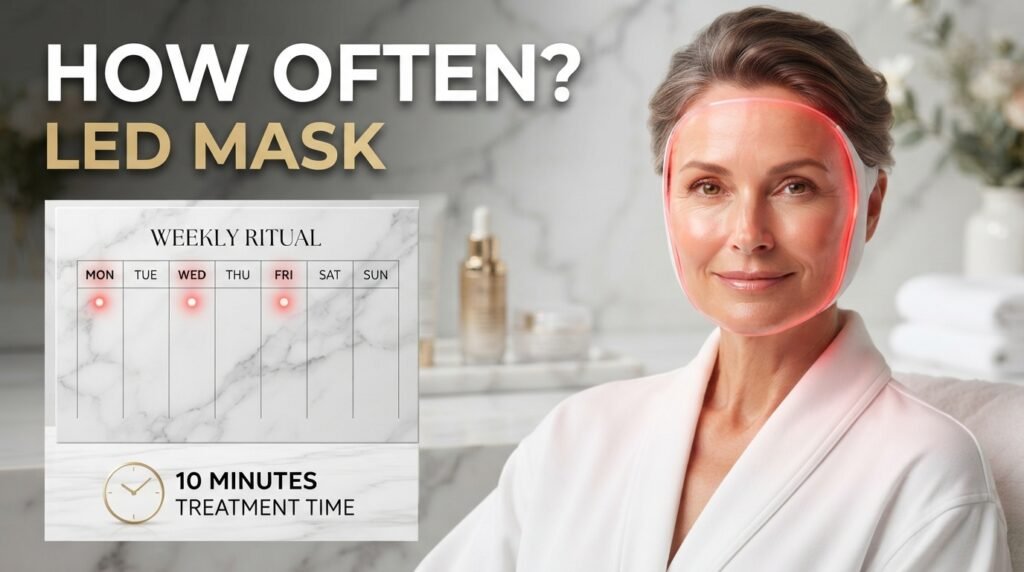
You bought an LED face mask, you’re excited to use it — and now you’re staring at the box wondering whether to use it every day, three times a week, or just whenever you remember.
Here’s the straightforward answer: most popular at-home LED masks recommend around 3–5 sessions per week, typically lasting about 10 minutes per session. But that number is not universal. The single most important rule is this — always follow the manufacturer’s instructions for your specific device. Session length, frequency, and technique can vary significantly between products.
With that said, there’s a lot more to understand about getting real results safely. Let’s break it down.
Why Frequency Varies Between LED Devices
Not all LED masks work the same way. The recommended schedule depends on several factors:
- Light wavelength — Red, near-infrared, blue, and combination devices target different concerns and deliver energy differently
- Power output and irradiance — A higher-powered clinical-grade device may require fewer minutes than a lower-powered consumer device
- Intended use — Anti-aging masks often have different protocols than acne-focused ones
- Cumulative energy dose — The total amount of light energy your skin receives per session matters, not just the time
This is why one mask might say “use daily for 10 minutes” while another says “use 3 times per week for 10 minutes.” Neither is wrong — they’re just designed differently.
If you’re still researching which device is right for you, our guide to the best LED face masks for wrinkles and firm skin compares top options with their recommended protocols.
LED Mask Frequency by Wavelength: Quick Comparison Table
| Light Type | Main Skin Goal | Typical Frequency | Typical Session Length | Key Caution |
|---|---|---|---|---|
| Red Light (630–660nm) | Fine lines, skin texture, radiance | 3–5x per week | 10–20 minutes | Follow device-specific time limits |
| Near-Infrared (810–850nm) | Deeper tissue, skin firmness | 3–5x per week | 10–20 minutes | Not visible to the eye; avoid overuse |
| Blue Light (415–465nm) | Acne-causing bacteria | Daily or 3–5x week | 10–15 minutes | Can cause dryness; use as directed |
| Red + Blue Combination | Acne treatment + skin calming | 3–5x per week | 10–15 minutes | Skin type sensitivity varies |
Daily Use vs. 3–5 Times Per Week: What’s the Difference?
Some devices — including several well-known brands — are specifically engineered for daily use. Others are not.
Daily use can be appropriate when:
- The device has lower irradiance designed for daily application
- The manufacturer explicitly states daily use is safe
- You’re in a treatment phase rather than a maintenance phase
Three to five sessions per week is often the starting point for most mid-range at-home masks. Once your skin responds well, some brands suggest dropping to a maintenance schedule of 2–3 times per week.
The bottom line: More sessions do not automatically mean faster or better results. LED therapy works on a dose-response principle. Your skin needs time to respond between sessions. Exceeding the recommended frequency does not accelerate progress — it may actually reduce the benefit or cause unnecessary irritation.
Can You Use an LED Mask Twice a Day?
This comes up often, and the answer is almost always no — unless your device specifically permits it.
Using an LED mask twice daily is not a standard protocol for at-home devices. Research into photobiomodulation consistently shows that optimal results come from the right dose at appropriate intervals, not from doubling up. Stick to what your device instructions recommend.
Beginner-Friendly Weekly Schedule
If you’re just starting out, don’t jump to daily use right away. Here’s a sensible approach for most standard at-home LED masks:
Week 1–2 (Introduction Phase)
- 3 sessions per week
- Follow the manufacturer’s recommended session length (typically 10 minutes)
- Use on clean, dry skin
- Pay attention to how your skin responds
Week 3–4 (Building Consistency)
- Increase to 4–5 sessions per week if your device recommends it and your skin is responding well
- Continue consistent session lengths — don’t extend beyond what’s instructed
Week 5 onward (Maintenance or continued treatment)
- Follow your device’s long-term protocol
- Many brands recommend a maintenance phase of 2–3 times per week after 8–12 weeks of regular use
Understanding LED Wavelengths: Which Does What?
Red light (typically 630–660nm) is widely used for skin rejuvenation. It’s associated with supporting collagen production and improving skin texture. If fine lines and dullness are your concern, red light is typically the primary wavelength used. Our guide to LED face masks for mature skin and fine lines covers some top options in more detail.
Near-infrared light (NIR, typically 810–850nm) penetrates deeper than red light and is often included in anti-aging devices to support tissue health and firmness. It’s invisible to the naked eye.
Blue light (typically 415–465nm) targets Cutibacterium acnes (formerly P. acnes), the bacteria associated with acne breakouts. It doesn’t penetrate as deeply as red or NIR light.
Red + blue combination is common in acne-focused masks — blue addresses bacteria while red helps calm inflammation. If acne is your primary concern, explore our reviews of the best LED face masks for acne-prone skin to find devices designed for this purpose.
No single wavelength is universally superior. The right one depends entirely on your skin concern.
Realistic Results Timeline
| Timeframe | What You Might Notice |
|---|---|
| First 1–3 sessions | Possible temporary glow or skin warmth; no structural changes yet |
| Around 4 weeks | Some users notice improved skin tone, minor texture improvement, or reduced breakout frequency |
| Around 8–12 weeks | More visible improvements in fine lines, firmness, or acne — with consistent use |
| Beyond 12 weeks | Continued gradual improvement; maintenance protocols typically begin |
Results vary by device quality, skin concern, individual biology, and consistency of use. This is not a treatment where skipping weeks and then doubling up will catch you up. Slow and steady genuinely wins here.
For a broader look at what the evidence actually says, our article on whether LED face masks really work breaks down the research in plain language.
10 Common LED Face Mask Mistakes
- Using it more often than instructed. Frequency guidelines exist for good reason. Don’t assume more is better.
- Keeping it on longer than recommended. Session length is calibrated to the device’s output. Longer does not mean more effective.
- Expecting overnight results. LED therapy is cumulative. Visible changes take weeks of consistent use.
- Using it over makeup, sunscreen, or heavy skincare products when the device instructs use on clean skin. Product residue can block light transmission.
- Ignoring eye protection guidelines. Some devices require protective goggles. If yours includes them or recommends them, use them every single session without exception. The American Academy of Ophthalmology notes that bright light exposure without protection can cause eye damage.
- Choosing the wrong wavelength for your skin concern. A blue light mask is not ideal for anti-aging. A red light mask won’t target acne bacteria the same way blue light does.
- Skipping sessions and then doubling the next session. This doesn’t compensate for missed treatments and may irritate skin.
- Using photosensitizing medications or products without checking safety first. Certain prescription medications and topical retinoids can increase light sensitivity. Always check with a healthcare provider if you’re using prescription treatments.
- Failing to clean the device. Product buildup on the LED panel can affect performance and hygiene. Wipe it down as the manufacturer recommends.
- Stopping too early. If you quit after two weeks because you don’t see results yet, you’ve stopped before most protocols even enter their effective phase. Commit to at least 8 weeks before evaluating.
LED Face Mask Safety: Who Should Check With a Doctor First
LED masks are generally considered safe for most adults when used as directed. However, you should speak with a licensed healthcare professional before use if you:
- Have a diagnosed photosensitivity condition (such as lupus or porphyria)
- Are taking medications known to increase photosensitivity (including certain antibiotics, antidepressants, or acne medications — check with your prescribing doctor)
- Have active skin infections, open wounds, or inflammatory skin conditions on the treatment area
- Have certain eye conditions or have had recent eye surgery
- Are pregnant (limited data exists; consult your OB-GYN)
- Have a history of skin cancer on the face
The FDA classifies most at-home LED devices as low-risk wellness devices, but individual health circumstances vary. When in doubt, consult a board-certified dermatologist.
When Should You Stop Using an LED Mask?
Stop use and consult a professional if you experience:
- Persistent redness or irritation that doesn’t resolve between sessions
- Unusual changes in skin pigmentation
- Significant discomfort during or after use
- Worsening breakouts or skin reactions
- Any unexpected skin change that concerns you
Correct Order of Use
A general guideline for most devices:
- Cleanse your skin thoroughly — remove all makeup, SPF, and heavy products
- Apply the LED mask — follow the device’s exact instructions for session length
- Remove the mask and apply skincare — serums, moisturizers, and SPF (if used in the morning) go on after treatment, not before
Note: Some devices have specific product pairing protocols. Always check your manual. Research on photobiomodulation, including studies available via PubMed, generally supports applying light to clean skin for optimal penetration.
Can You Use an LED Mask at Night?
Yes — and for many people, nighttime is actually an ideal time to use an LED mask. There’s no SPF on your skin, your face is clean, and you can apply your full evening skincare routine afterward. Red and NIR light won’t disrupt your sleep the way blue-spectrum light from screens can, though turning off bright overhead lights during your session doesn’t hurt.
Can You Use an LED Mask on Sensitive Skin?
Possibly — but proceed with extra caution. Start with the shortest recommended session length. If your device has adjustable intensity, start at the lower setting. Do a small test on a less sensitive area first. Avoid combining LED sessions with active retinoid nights until you know how your skin responds. If you have rosacea or chronic skin sensitivity, consult a dermatologist before starting.
For targeted concerns like crow’s feet and under-eye wrinkles, see our roundup of LED face masks for crow’s feet and under-eye wrinkles — some are specifically designed for delicate skin areas.
How Long Should You Use an LED Mask Before Judging Results?
Give it at least 8 weeks of consistent use before deciding whether a device is working for you. Collagen synthesis and cellular repair are gradual biological processes. Most clinical studies on LED therapy run for 8–12 weeks for this reason.
If you’re treating acne, you may notice some improvement in 4–6 weeks, but full results typically take longer. Manage your expectations, track progress with photos taken in consistent lighting, and resist the urge to quit early.
LED Face Mask: Pros and Cons
Pros
- Non-invasive and painless
- Can be used at home on your own schedule
- Multiple wavelengths available for different skin concerns
- No downtime required
- Accumulating body of peer-reviewed research supporting light therapy
Cons
- Results are gradual — not immediate
- Quality and output vary significantly between devices
- Requires consistent, long-term commitment
- Not suitable for everyone without medical clearance
- Higher-quality devices can be expensive
For a breakdown of some of the best current options, check out our guide to the best LED face masks for acne breakouts.
Brands like Omnilux and CurrentBody publish detailed clinical data and usage protocols on their websites — worth reviewing if you’re comparing devices.
Frequently Asked Questions
How often should I use an LED face mask for anti-aging?
Most anti-aging LED masks recommend 3–5 sessions per week during an initial treatment phase, then dropping to 2–3 times per week for maintenance. Always follow your specific device’s guidelines. Results from red and near-infrared light build gradually over 8–12 weeks of consistent use.
Can I use an LED face mask every day?
Some devices are designed for daily use — but not all. Check your manufacturer’s instructions. If daily use is not explicitly recommended, stick to the stated schedule. Using a mask daily when it’s designed for every other day use won’t speed up results and could cause irritation.
How long should each LED mask session last?
Most at-home LED masks recommend sessions of 10–20 minutes. Never exceed the session length stated in your device manual. Longer sessions do not deliver more benefit once the optimal energy dose has been delivered.
Can you overuse an LED face mask?
Yes. Overuse beyond manufacturer recommendations is unlikely to improve results and may cause skin irritation, dryness, or light sensitivity. The dose-response relationship in photobiomodulation means that more light exposure past a certain threshold is counterproductive.
Can I use an LED mask with retinol?
Use caution. Retinoids can increase skin sensitivity. Many practitioners suggest not combining LED therapy with active retinol or retinoid products on the same night until you understand how your skin responds. Consult a dermatologist for personalized guidance.
When will I see results from an LED face mask?
Some users notice a temporary glow after early sessions, but meaningful changes in texture, tone, fine lines, or acne typically become visible around 4–8 weeks of consistent use. Structural results like firmer skin may take 8–12 weeks or longer.
Is it safe to use an LED mask without goggles?
Follow your device’s specific eye safety instructions. Some masks are designed with integrated eye panels and include protective goggles; others do not cover the eye area. If your device comes with goggles or recommends them, use them every session. Never look directly into LED panels.
What’s the difference between red light and blue light for skin?
Red light (typically 630–660nm) is primarily used for anti-aging — supporting skin texture, tone, and collagen over time. Blue light (typically 415–465nm) targets acne-causing bacteria on the skin’s surface. Many acne devices combine both wavelengths. The right choice depends entirely on your primary skin concern.
Final Thoughts
The most effective LED face mask routine isn’t the most frequent one — it’s the most consistent one. Whether your device recommends three sessions a week or daily use, following that protocol exactly and sticking with it for at least 8–12 weeks is what actually moves the needle.
Don’t be tempted to add extra sessions to speed things up. Don’t skip weeks and then double-dip to compensate. And don’t judge the device after two weeks when most protocols are barely getting started.
Pair your LED routine with good skincare fundamentals — consistent cleansing, moisturizing, and daily SPF — and you give your skin the best possible environment to respond.
LED therapy, used correctly and consistently, has a growing body of evidence behind it. Used impatiently and out of sequence, it’s just an expensive timer. The difference is mostly in following the instructions.