

This article contains affiliate links. If you purchase through our links, we may earn a small commission at no additional cost to you. All recommendations are based on verified product specifications and manufacturer guidelines.
You’ve invested in a hydrating serum routine, and now you’re curious about red light therapy — but you’re not sure how to combine the two without canceling out benefits or applying products in the wrong order. It’s a legitimate concern. Some LED masks demand clean, bare skin, while certain handheld wands actually require a conductive serum during treatment. Getting the sequence wrong can mean wasted product or a less effective session.
This guide breaks down the best red light therapy tools for layering with hydrating serums, explains which devices need which application order, and helps you build a routine that supports both hydration and light-based skincare.
Quick Answer — Which Red Light Therapy Tools Are Best With Hydrating Serums?
Most full-face LED masks work best on clean, dry skin, meaning your hydrating serum goes on after the light session. Handheld wands with microcurrent or galvanic functions often require a compatible conductive serum during treatment. The right choice depends on your routine preferences, skin concerns, and budget.
| Device | Type | Wavelengths | Session Time | Approx. Price | Serum Timing |
|---|---|---|---|---|---|
| Omnilux Contour Face | Flexible mask | 633 nm, 830 nm | 10 min | $395 | After |
| CurrentBody Skin LED Series 2 | Flexible mask | 633 nm, 830 nm | 10 min | $399 | After |
| Dr. Dennis Gross FaceWare Pro | Rigid mask | 630 nm, 880 nm | 3 min | $455 | After |
| Therabody TheraFace Mask | Rigid mask | Red, NIR, blue | 9 min | $599 | After |
| Solawave 4-in-1 Wand | Handheld wand | 630 nm | 5–12 min | $169 | During (conductive) |
| LightStim for Wrinkles | Handheld LED | Amber, red, NIR | 3 min/area | $249 | After or during (brand serum) |
Prices are approximate US retail at the time of research and may vary.
Best Red Light Therapy Tools for Hydrating Serum Routines
Omnilux Contour Face — Best Flexible Mask for Post-Treatment Serum Layering
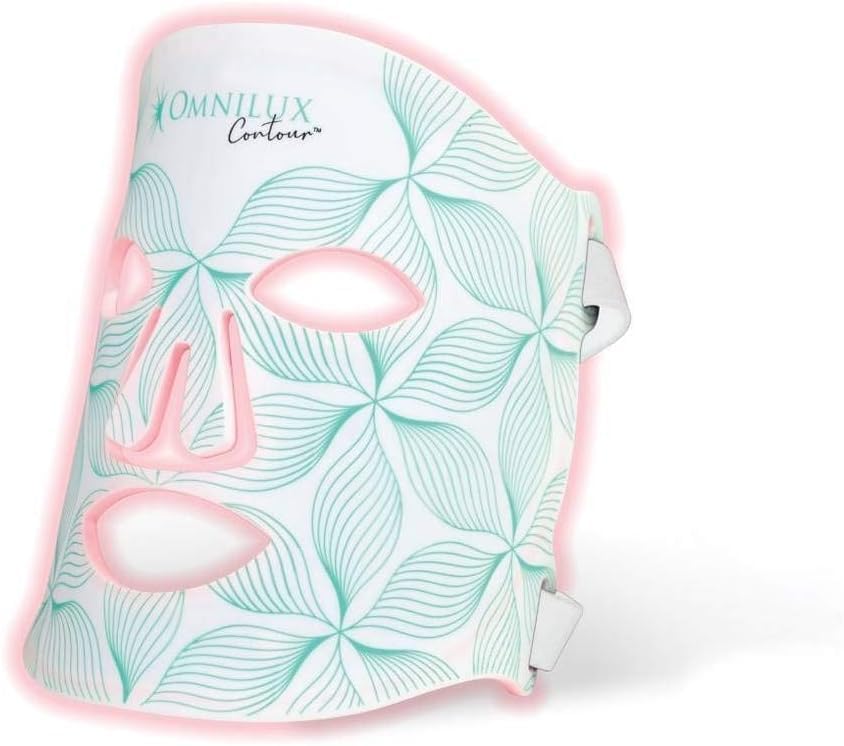
Device format: Flexible silicone full-face mask
Wavelengths: 633 nm (red) and 830 nm (near-infrared)
Treatment time: 10 minutes per session, 3–5 times per week
Approximate price: $395
Serum compatibility: Use on clean, dry skin. Apply hydrating serums after the session.
Regulatory: FDA-cleared
Advantages: Lightweight and flexible for a close fit across facial contours. Dual wavelengths target both surface and deeper skin layers. Simple, single-button operation. Easy to clean.
Disadvantages: Higher price point. No built-in eye protection beyond the opaque silicone around the eye area. Requires consistent use over weeks for visible results.
Who should consider it: Anyone wanting a comfortable, full-coverage mask who plans to layer hyaluronic acid or peptide serums immediately after treatment. If you’re exploring red light therapy devices for dry, dehydrated skin, this is a strong starting point.
Who should skip it: Those seeking a quick sub-five-minute session or a lower-cost entry point.
CurrentBody Skin LED Light Therapy Mask Series 2 — Best for Sensitive, Dehydrated Skin

- FITS TO YOU – Unlike many other wearable LED devices, the CurrentBody Light Therapy Mask is made from patented flexible …
- LIGHT THERAPY – The device combines Red (633nm) and near Infra-Red Light (830nm). Harnessed at the perfect measurement t…
- REAL RESULTS – You can expect to see visible results in just 4 weeks when used consistently 10 minutes a day, 3 to 5 tim…
Device format: Flexible silicone full-face mask
Wavelengths: 633 nm (red) and 830 nm (near-infrared)
Treatment time: 10 minutes per session, up to 5 times per week
Approximate price: $399
Serum compatibility: Clean, dry skin required. Layer hydrating serums and moisturizers after the session.
Regulatory: FDA-cleared
Advantages: Medical-grade silicone conforms closely to the face. Dual-zone treatment options. Well-documented wavelength output. Comfortable for extended wear.
Disadvantages: Premium pricing. Strap system may require adjustment for smaller face shapes. No vibration or additional modalities.
Who should consider it: Readers with sensitive or easily irritated skin who want a gentle, well-tolerated mask. If you’re still weighing whether LED face masks really work, CurrentBody’s published clinical data may help inform your decision.
Who should skip it: Budget-conscious shoppers or those wanting multi-function devices.
Dr. Dennis Gross DRx SpectraLite FaceWare Pro — Best for Short Sessions
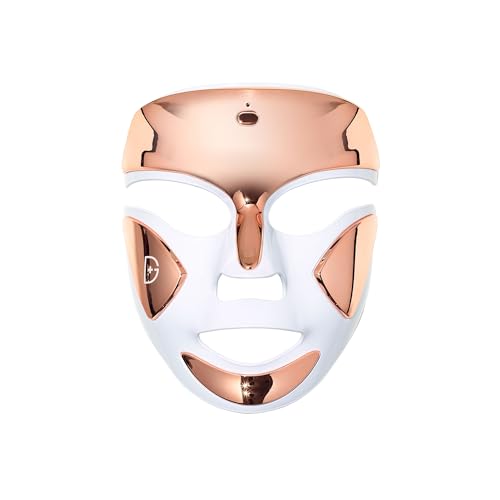
- WHAT IT IS: This LED device for the face targets wrinkles and acne for visibly smoother, clearer skin in just 3 minutes….
- HOW IT WORKS: Treat acne and breakouts with blue light, smooth wrinkles and build collagen with red light, or address bo…
- HOW TO USE: After cleansing, place the mask over your face, securing the strap around your head. Press & hold the power …
Device format: Rigid full-face mask
Wavelengths: 630 nm (red) and 880 nm (near-infrared)
Treatment time: 3 minutes per mode
Approximate price: $455
Serum compatibility: Clean, dry skin. Apply serums after treatment.
Regulatory: FDA-cleared
Advantages: Extremely fast sessions — ideal for busy schedules. Hands-free design. Three treatment modes (red, blue, combination). Rigid structure keeps LEDs at a consistent distance from the skin.
Disadvantages: Rigid fit may not suit all face shapes comfortably. Heavier than flexible masks. Higher cost per wavelength.
Who should consider it: Anyone who struggles with consistency and needs a red light therapy device that fits a 10-minute routine — this one finishes even faster.
Who should skip it: Those with very narrow or wide faces who may find the rigid shell uncomfortable.
Therabody TheraFace Mask — Best Multi-Function Premium Option
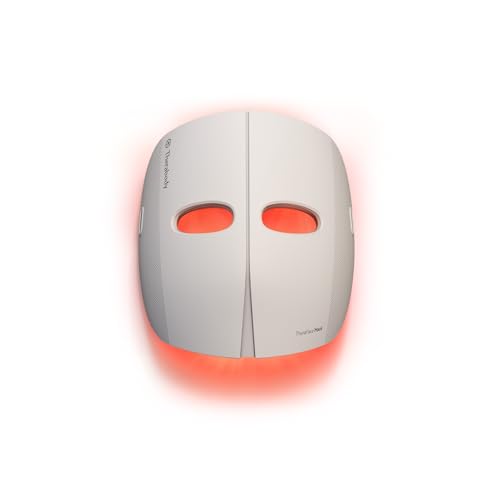
- Supercharged Face Care in 9 Minutes: A facial mask routine with 3 impressive LED light therapy technologies. Red light t…
- Vibrating Facial Massager, Too: TheraFace LED mask delivers a 15-minute vibration therapy treatment to key pressure poin…
- Powerful, Medical-Grade Lights: With 3x more LEDs than leading mask competitors for maximum efficacy and mask skincare r…
Device format: Rigid full-face mask with vibration
Wavelengths: Red, near-infrared, and blue LED
Treatment time: 9 minutes (full cycle)
Approximate price: $599
Serum compatibility: Clean, dry skin. Apply hydrating products after the session.
Advantages: Combines LED therapy with percussive vibration for a spa-like experience. Multiple light modes. Backed by Therabody’s established wellness brand reputation.
Disadvantages: Highest price in this guide. Heavier than silicone masks. Vibration feature may not appeal to everyone.
Who should consider it: Readers who want a premium, multi-sensory experience and are interested in anti-aging LED mask options with added features.
Who should skip it: Anyone on a moderate budget or those who prefer lightweight, travel-friendly devices.
Solawave 4-in-1 Radiant Renewal Skincare Wand — Best Wand for Use With Serum
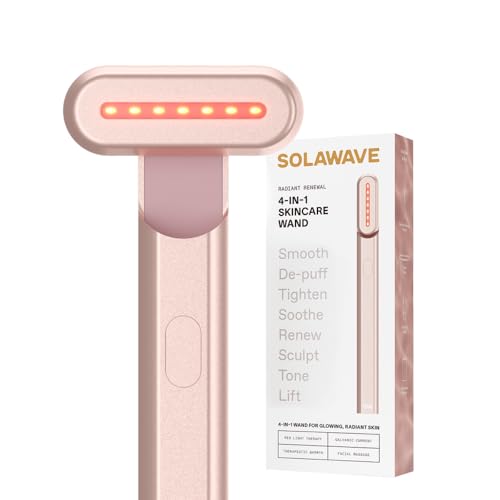
- FOUR TECHNOLOGIES, ONE SESSION: Red Light, Galvanic Current, Therapeutic Warmth & Facial Massage smooth, depuff & rejuve…
- FDA-CLEARED, VISIBLY FIRMER SKIN: Red light (630nm) helps reduce the look of fine lines & wrinkles over time.
- HYDRATED, REFRESHED LOOK: Galvanic Current supports a hydrated, refreshed look and boosts absorption of your Activating …
Device format: Handheld wand
Wavelengths: 630 nm (red light)
Treatment time: 5–12 minutes depending on area
Approximate price: $169
Serum compatibility: Requires a water-based conductive serum or gel during use for the microcurrent function. This is a key difference from LED masks.
Advantages: Most affordable option in this guide. Combines red light with microcurrent, facial massage, and therapeutic warmth. Compact and travel-friendly. For detailed guidance on integrating this type of device, Solawave’s own guide on how to integrate red light masks into your daily skincare offers useful routine tips.
Disadvantages: Small treatment head means full-face coverage takes longer. Not a substitute for full-face LED masks. Microcurrent function requires ongoing serum purchases.
Who should consider it: Beginners, travelers, and anyone who prefers a portable red light therapy device they can use with their existing hydrating serum.
Who should skip it: Those wanting full-face coverage in a single hands-free session.
LightStim for Wrinkles — Best Handheld LED for Targeted Areas
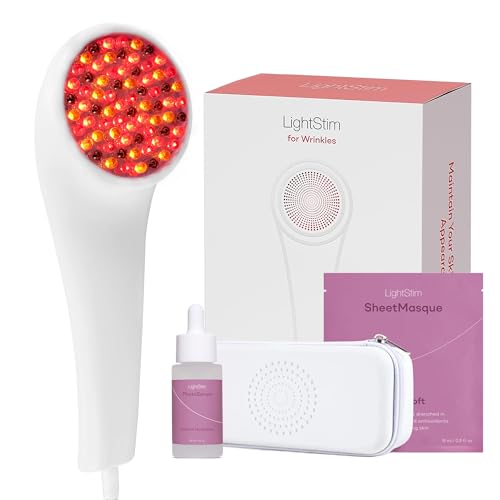
- Therapeutic Light Energy: LightStim delivers light energy in a similar way plants absorb light energy from the sun. Each…
- Clinically Proven Results: In FDA clinical studies, 100% of participants were shown to have significant improvement in t…
- LightStim MultiWave Patented Technology: LightStim MultiWave Patented Technology simultaneously emits multiple wavelengt…
Device format: Handheld LED panel
Wavelengths: Amber, light red, dark red, and infrared
Treatment time: 3 minutes per treatment area
Approximate price: $249
Serum compatibility: Can be used on clean skin or with LightStim’s own peptide serums during treatment. Hydrating serums can be layered afterward.
Regulatory: FDA-cleared
Advantages: Multiple wavelengths in a single device. No gels or conductive serums strictly required. Durable build quality with a long track record.
Disadvantages: Handheld use can be tiring for full-face routines. Treats one area at a time. No near-infrared at 830 nm (uses a different infrared range).
Who should consider it: Readers targeting specific areas like the forehead, nasolabial folds, or jawline rather than the full face.
Who should skip it: Those who want a hands-free, set-it-and-forget-it experience.
LED Masks vs. Red Light Therapy Wands vs. Panels
Full-face LED masks (Omnilux, CurrentBody, Dr. Dennis Gross, Therabody) cover the entire face in a single session. They require clean, dry skin and are the most convenient option for consistent use. Treatment times range from 3 to 10 minutes.
Handheld wands (Solawave) treat smaller areas and often combine red light with other technologies like microcurrent. Some wands require a conductive serum during use, which changes your product order entirely.
Handheld LED panels (LightStim) offer broader coverage than wands but still treat one zone at a time. They’re a middle ground between masks and wands.
For product compatibility, the rule is straightforward: masks almost universally require bare skin, while certain wands need a conductive medium. Always check your specific device manual before applying any product.
Can You Use Hydrating Serums Before Red Light Therapy?
The answer depends on your device. Most LED masks instruct users to start with clean, dry skin because thick or opaque serums can scatter or absorb light before it reaches the skin. However, this does not mean every serum blocks every wavelength — the concern is primarily about formulations with heavy occlusives, mineral sunscreens, or pigmented ingredients that physically obstruct light.
Some handheld devices, particularly those with microcurrent or galvanic functions, specifically require a water-based conductive serum during treatment. In those cases, the serum is part of the device’s function, not an optional add-on.
The safest approach: follow your device’s manual. Solawave’s guide on the best products to use before red light therapy provides brand-specific guidance that illustrates how instructions vary between device types.
Best Hydrating Serum Ingredients to Pair With Red Light Therapy
After your light session, these ingredients support hydration and barrier function:
- Hyaluronic acid: Draws moisture into the skin’s surface layers. Lightweight and well-tolerated by most skin types. Apply to damp skin for best results.
- Glycerin: A reliable humectant that works well in any climate. Less trendy than hyaluronic acid but equally effective.
- Panthenol (vitamin B5): Soothes and supports barrier repair. A good choice for sensitive or post-procedure skin.
- Niacinamide: Supports barrier function and helps manage uneven tone. Generally well-tolerated at concentrations of 2–5%.
- Peptides: Signal skin-supporting processes. Best applied in a serum or moisturizer after treatment.
- Ceramides: Reinforce the skin barrier and help lock in moisture. Ideal as a final moisturizer step.
None of these ingredients need to be applied during a standard LED mask session. Reserve them for your post-treatment routine unless your device specifically calls for a compatible product during use.
How to Layer Hydrating Serums With Red Light Therapy
- Cleanse gently. Use a mild, non-stripping cleanser to remove makeup, sunscreen, and impurities.
- Dry the skin if your device requires it (most LED masks do).
- Complete the light session according to the manufacturer’s recommended time and frequency.
- Apply your hydrating serum to slightly damp skin immediately after the session, unless your device requires a conductive product during treatment.
- Follow with moisturizer to seal in hydration.
- Apply broad-spectrum SPF 30+ during daytime routines.
For wands requiring an activating serum, apply the conductive product before turning on the device, then layer your hydrating serum and moisturizer after the session is complete.
What to Avoid When Combining Red Light Therapy and Skincare
- Strong actives under occlusive masks. Applying high-concentration retinoids or exfoliating acids immediately before an LED mask session may increase irritation for some users. This is a precaution, not a universal prohibition — formulation and individual tolerance matter.
- Photosensitizing medications. If you take medications that increase light sensitivity, consult your dermatologist before starting red light therapy. The American Academy of Dermatology’s guidance on red light therapy safety outlines key precautions.
- Skipping eye protection. Even though most LED masks are designed with eye safety in mind, avoid staring directly at the LEDs. Use the device as directed.
- Neglecting device hygiene. Clean your mask or wand regularly according to the manufacturer’s instructions to prevent bacterial buildup.
- Overusing the device. More sessions do not automatically mean better results. Stick to the recommended frequency.
How to Choose the Right Tool for Your Skin and Budget
Consider these factors before purchasing:
- Coverage: Full-face masks treat everything at once. Wands and panels require more time for the same area.
- Wavelength transparency: Reputable brands publish their specific wavelengths. You can verify FDA clearance status through the FDA 510(k) Premarket Notification database. Note that FDA clearance indicates the device is substantially equivalent to a legally marketed predicate — it is not an endorsement of specific results.
- Comfort and consistency: The best device is the one you’ll actually use. A comfortable mask you wear four times a week will outperform an uncomfortable one that stays in a drawer.
- Budget: Expect to spend $150–$600 for a quality at-home device. Wands are the most affordable entry point.
- Warranty and support: Look for at least a one-year warranty and responsive customer service.
Frequently Asked Questions
Can I use hyaluronic acid with a red light therapy mask?
Yes. Apply your hyaluronic acid serum after the LED session on slightly damp skin. Most masks require clean, dry skin during treatment.
Should I apply serum before or after LED therapy?
For most LED masks, apply serums after the session. For wands with microcurrent, a conductive serum is used during treatment, followed by your regular serum afterward.
Which red light therapy tools work with activating serums?
Handheld devices with microcurrent or galvanic functions, such as the Solawave 4-in-1 Wand, typically require a water-based conductive serum during use. Standard LED masks generally do not.
Can I use niacinamide after red light therapy?
Yes. Niacinamide is well-tolerated by most skin types and can be applied as part of your post-treatment serum or moisturizer step.
Should I moisturize after an LED session?
Yes. Follow your hydrating serum with a moisturizer to lock in hydration and support the skin barrier.
How often should I use an at-home red light device?
Most manufacturers recommend 3–5 sessions per week. Consistency over several weeks matters more than daily overuse.
Can sensitive or dehydrated skin use red light therapy?
Generally, yes. Red and near-infrared light are non-thermal and non-invasive. Start with shorter sessions and monitor your skin’s response. Consult a dermatologist if you have active inflammatory conditions.
Does red light therapy improve skin hydration directly?
Red light therapy is not a substitute for topical hydration. While some research suggests it may support skin barrier function over time, you should continue using hydrating serums and moisturizers as the primary method of addressing dehydration.
Final Verdict
There is no single best red light therapy tool for everyone. If you want full-face coverage and plan to layer hydrating serums after each session, the Omnilux Contour Face or CurrentBody Skin LED Series 2 offer the best combination of comfort, verified wavelengths, and straightforward routines. If you need speed, the Dr. Dennis Gross FaceWare Pro delivers a complete session in three minutes.
If you prefer a targeted, budget-friendly approach and want to use a conductive serum during treatment, the Solawave 4-in-1 Wand is the most practical choice. For a middle ground between coverage and portability, the LightStim for Wrinkles provides multiple wavelengths in a durable handheld format.
Whatever you choose, the most important step is following your device’s specific instructions for serum compatibility and application order. Your hydrating serums will work best when layered at the right time — and that timing depends on the tool in your hands https://sylomaskincare.com/