
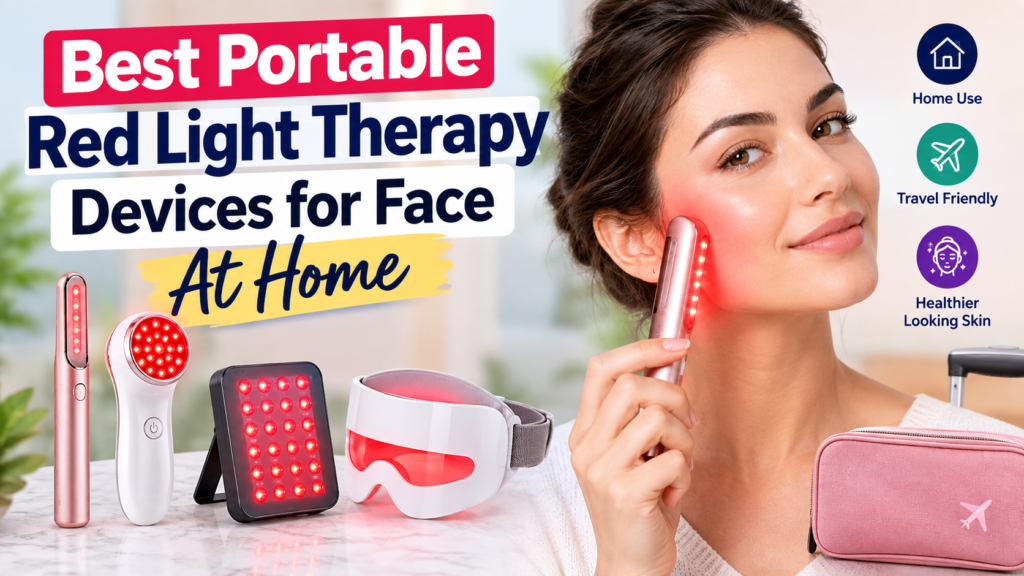
Full-face LED masks work well, but they are not for everyone. They can feel bulky, they take up drawer space, and they are awkward to pack. If you want a portable red light therapy device for your face that fits a small bathroom, a carry-on bag, or a quick nightly routine, the right format matters more than the biggest spec sheet.
This guide focuses on portability: what it really means, which formats cover the face best, and which devices make sense for different needs. Specs and prices come from manufacturer pages and published sources, and they can change.
Quick Answer: Best Portable Red Light Devices for Face
- Best for wrinkles and mature skin: LightStim for Wrinkles (FDA-cleared for wrinkles on the entire face, cordless)
- Best for beginners: Solawave Radiant Renewal 4-in-1 Wand (guided 12-minute routine)
- Best budget and travel pick: Solawave 2-in-1 Skincare Mini (palm-sized, red plus near-infrared)
- Best for people who dislike masks: MitoMIN 2.0 (small tabletop panel with higher published output)
- Best for a near-infrared wand: BON CHARGE Red Light Face Wand (read the FDA note before buying)
Portable Red Light Therapy Devices Compared
| Product | Best For | Device Type | Wavelengths | Treatment Time | Portability | Face Coverage | Approx. Price* |
|---|---|---|---|---|---|---|---|
| LightStim for Wrinkles | Wrinkles, mature skin | Cordless handheld LED | 605, 640, 652, 850 nm | 3 min per area | Cordless, USB-C, case included | Zone by zone | $269 |
| Solawave Radiant Renewal 4-in-1 Wand | Beginners, guided routine | Cordless wand | 630 nm | 12 min total (3 min × 4 zones) | Travel case, magnetic USB charging | Zone by zone | $169 |
| Solawave 2-in-1 Skincare Mini | Budget, travel | Palm-sized handheld | 630 nm + 830 nm | About 3 min per area | Collapsible, storage bag | Small, targeted | About $89 |
| MitoMIN 2.0 | Mask-haters, higher output | Mini tabletop panel | 660 nm + 850 nm | 10 min per area | About 6–7 lb, plug-in, kickstand | Whole face at once | $249 |
| BON CHARGE Red Light Face Wand | Red plus near-infrared wand | Cordless wand | 660 nm + 850 nm | Not clearly published | Charges via power bank | Zone by zone | About $149–$200+ |
Prices are approximate, based on manufacturer and retailer listings, and can change. Check the current price before you buy.
What Makes a Red Light Therapy Device Truly Portable?
“Portable” is a marketing word, so it helps to check four things:
- Weight and size: Can you hold it in one hand, or does it need a surface?
- Power: Cordless (rechargeable) designs work anywhere. Plug-in designs need an outlet and a spot to prop them up.
- Setup: Can you start a session in under a minute?
- Packing: Does it come with a case, and does it survive a bag?
Portability does involve trade-offs. Smaller heads cover less skin per minute, so sessions take longer. Battery devices tend to prioritize convenience over maximum output. A portable device can still be a good choice, but it is a different tool from a full-face mask.
Portable Red Light Therapy Device Types Explained
Portable wand
A handheld wand, such as the ones in our guide to the best red light therapy wands for fine lines and puffiness, is the most travel-friendly format. You treat one zone at a time, which suits targeted care but takes more hands-on effort.
Handheld LED device
These have a wider treatment head and often several wavelengths. They are still cordless, but cover more skin per placement than a slim wand.
Mini tabletop panel
A small panel lights the whole face at a distance and frees your hands. The trade-off is weight, a power cord, and the need for eye protection.
Wearable device
Masks cover the whole face hands-free, but they are the least compact. See our guide to at-home red light therapy for face rejuvenation if you want the full-mask route.
Best Portable Red Light Therapy Devices for Face at Home
LightStim for Wrinkles
Best for: Fine lines, wrinkles, and mature skin.
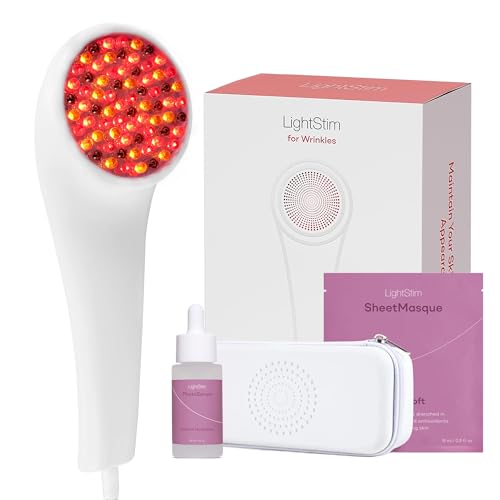
- Therapeutic Light Energy: LightStim delivers light energy in a similar way plants absorb light energy from the sun. Each…
- Clinically Proven Results: In FDA clinical studies, 100% of participants were shown to have significant improvement in t…
- LightStim MultiWave Patented Technology: LightStim MultiWave Patented Technology simultaneously emits multiple wavelengt…
Why we like it: Based on the manufacturer’s page, this is a cordless handheld with 72 LEDs and four wavelengths (605, 640, 652, and 850 nm). It is FDA-cleared to treat fine lines and wrinkles on the entire face. The battery is listed at about 2 hours of continuous use, or up to 40 three-minute areas per charge. It ships with a storage case, USB-C cable, and goggles. You can review the specs on the official LightStim for Wrinkles page.
Pros
- FDA-cleared specifically for wrinkles on the face
- Cordless, with goggles and a case included
- Multiple wavelengths, including near-infrared
Cons
- Zone-by-zone treatment: the manufacturer recommends 3 minutes per area, 5–7 days a week
- Weight and dimensions are not clearly published
- The “100% of participants improved” figure is the manufacturer’s own, and full study details are not shown on the product page
- Some retailers still list an older corded model or a pricier kit, so confirm which version you are buying
Who it is best for: Shoppers who want an FDA-cleared option for wrinkles that also travels well. Who should choose something else: Anyone who wants a hands-free session or the lowest price.
Solawave Radiant Renewal 4-in-1 Wand
Best for: Beginners who like a guided routine.

- 4-in-1 Facial Light Therapy Device for Visible Results: This powerful face light therapy device combines red light thera…
- Optimized Performance with Renew Complex Serum: This all-natural priming serum hydrates and enhances the effects of red …
- 3‑Minute Radiance Boost: In only 3 minutes per area, the wand delivers soothing warmth and red light to smooth fine line…
Why we like it: This wand combines 630 nm red light with galvanic current, warmth, and facial massage. Solawave describes a 12-minute routine across four zones (3 minutes each), and the device shuts off automatically. It is listed at about $169 and is described by the brand as FDA-cleared. Its help center says the intended use is to treat fine lines and wrinkles and provide facial and neck stimulation.
Pros
- Clear, timed routine that is easy to follow
- Travel case and magnetic USB charging included
- Rotating head helps with contours
Cons
- Red light only (630 nm), with no near-infrared
- Needs a water-based serum for glide, and it is not waterproof
- The galvanic current feature means extra caution for some people (see the safety section)
- Weight is not clearly published
Who it is best for: First-time buyers who want structure. Who should choose something else: Anyone who wants near-infrared or wants to avoid electrical stimulation.
Solawave 2-in-1 Skincare Mini
Best for: Budget shoppers and frequent travelers.
- TARGET BREAKOUTS + SUPPORT SMOOTHER-LOOKING SKIN: Two devices designed for different needs—use Bye Acne Pro for active b…
- ADVANCED MULTI-LIGHT THERAPY: Bye Acne Pro combines blue and red light to target breakouts, while the 2-in-1 Mini uses r…
- QUICK, EASY 3-MINUTE TREATMENTS: Simple sessions make it easy to stay consistent—perfect for daily use at home or on the…
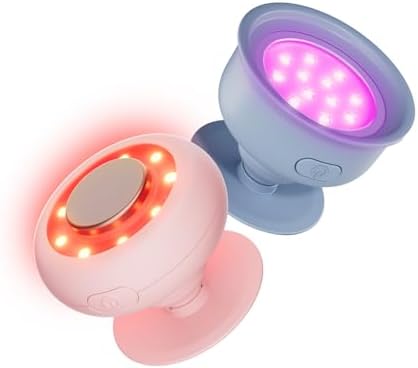
Why we like it: The Mini pairs 630 nm red light with 830 nm near-infrared in a palm-sized, collapsible body. Solawave lists an aluminum body and a storage bag. Published coverage describes about 3 minutes per area, and the brand recommends one session per area per day. It is listed at roughly $89 and described by Solawave as FDA-cleared. With no galvanic current, it can be used on the face and body.
Pros
- Lowest price on this list
- One-button simplicity
- Fits in a handbag
Cons
- Small treatment head means longer sessions for the full face
- Output and irradiance are not clearly published
- One reviewer noted the blinking reminder is hard to see on the face
Who it is best for: Travelers and anyone testing red light cheaply. Who should choose something else: People who want maximum coverage per session.
MitoMIN 2.0
Best for: People who dislike LED masks and want whole-face coverage without wearing anything.

- The Mito Red Difference: Founded in 2018 in Scottsdale, Arizona, Mito Red Light has served 125,000+ customers across 30+…
- Red Light Therapy Benefits: Use the power of red and near infrared light to support a range of wellness and recovery ben…
- Premium Features: Red light therapy panel features 60 high-powered LED diodes, digital control panel with timer, and whi…
Why we like it: This is a small tabletop panel, not a handheld, but Mito Red Light itself describes it as the most portable panel in its family and suitable as a travel panel. According to the official MitoMIN 2.0 page, it has 60 LEDs (660 nm and 850 nm), measures 12 × 9 × 3 inches, and includes a kickstand and a digital timer (1–20 minutes). The brand recommends 6–18 inches from the panel and 10 minutes per area. Price is about $249, with a 2-year warranty and 60-day return window.
Pros
- Hands-free and treats the whole face at once
- Published irradiance data (see the irradiance section)
- Red and near-infrared can be used together or separately
Cons
- Plug-in only, and heavy for true travel: the page lists 7 lb in one place and 6 lb in another
- Bright light means eye protection is a must
- The brand calls it “FDA Class II registered,” which is not the same as FDA-cleared for facial use
Who it is best for: At-home users with a desk or vanity who want power without a mask. Who should choose something else: Anyone who needs a pocketable or cordless device. Similar-sized panels exist, such as the Hooga HG300 (about 12.2 × 8.2 × 2.5 inches, roughly 6 lb, 660/850 nm), but check its current price and what is included.
BON CHARGE Red Light Face Wand
Best for: Shoppers who want near-infrared in a wand.
This product is not currently available at amazon.
Why we like it: The brand lists 660 nm red and 850 nm near-infrared, plus gentle heat and sonic vibration, in a portable wand. A retailer listing gives a charge time of about 2 hours via power bank. Prices appear to range from about $149 to $200+ depending on the seller.
Pros
- Red plus near-infrared in a wand format
- Compact and easy to carry
Cons
- A clear FDA clearance for wrinkle treatment was not found. The public FDA device record lists an infrared heating lamp product code and no premarket submission number, so verify before you buy
- Recommended treatment time and weight are not clearly published
- Price varies widely by retailer
Who it is best for: Shoppers prioritizing wavelength mix over formal clearance. Who should choose something else: Anyone who wants an FDA-cleared wrinkle device (see LightStim or Solawave).
How We Chose the Best Portable Devices
This guide is based on published specifications, manufacturer product pages, and publicly available FDA information. It is not based on hands-on testing. I looked for devices that are genuinely compact, suit facial use, publish their wavelengths, and are honest about FDA status. Where a spec was not clearly published, I said so.
What Wavelengths Should You Look For?
Most facial devices use red light (roughly 630–660 nm), which works near the skin’s surface, and near-infrared (about 830–850 nm), which is invisible and reaches slightly deeper. Seeing real numbers on a product page is a good sign. “Red light” with no wavelength is not enough information. A review of photobiomodulation in dermatology, published in 2024, describes how these wavelengths interact with skin cells and calls the approach promising. It is a narrative review, though, and does not rank specific products.
Does Irradiance Matter?
Irradiance is how strong the light is at a given distance. It matters, but only alongside distance and time. A stronger device used for too short a session can deliver less total energy than a weaker one used properly.
Published numbers are also not always comparable. MitoMIN 2.0, for example, lists more than 115 mW/cm² at 6 inches on a consumer meter but more than 52 mW/cm² under lab testing. Hooga lists 73 mW/cm² at 6 inches for the HG300. Solawave has stated in a retailer Q&A that its wand delivers 8.9–10.9 J/cm² per 3-minute area. LightStim, the Mini, and BON CHARGE do not clearly publish comparable irradiance figures. Treat irradiance as one data point, not a verdict.
How Close Should You Hold a Portable Red Light Device to Your Face?
Follow the manufacturer’s instructions. Wands and handhelds are designed to be used on or very near the skin. Panels like MitoMIN 2.0 are used farther away: Mito recommends 6–18 inches. Closer is not automatically better, and moving a device too fast or too far away can reduce the dose you receive.
Portable Wand vs Handheld Panel vs LED Mask
- Wand: most portable, best for targeted areas, more manual effort.
- Handheld LED or mini panel: more coverage per minute, but heavier and sometimes corded.
- LED mask: best for hands-free, even full-face sessions, but bulkier. Compare options in our guide to HigherDose red light mask alternatives or LED face masks for wrinkles and firmer-looking skin.
Are Portable Red Light Therapy Devices Good for Travel?
Yes, with limits. Cordless wands and handhelds are the easiest to pack. Check three things: whether the battery is rechargeable by USB, whether it comes with a case, and whether the airline allows lithium batteries in carry-on bags. A plug-in panel like MitoMIN 2.0 is portable around the house, but it is not a pack-and-go device.
Are Portable Devices as Effective as Full-Face LED Masks?
Not necessarily, and not necessarily worse. Masks cover the whole face at once, which makes consistent use easier. Portable devices can deliver light effectively, but you have to move the device and spend enough time on each area. The best device is the one you will use consistently. The 2019 systematic review of home-use photobiomodulation devices found mostly positive and safe results, but it looked at non-cosmetic uses such as pain and wound healing, and it called for more randomized trials. It does not prove facial results for any product here.
If you want a mask-style comparison for specific concerns, see our guides for mature skin and fine lines and dull, uneven skin.
How Often Should You Use a Portable Red Light Device?
Use the schedule on your device’s instructions. Published recommendations in this guide include LightStim at 5–7 days a week (3 minutes per area), the Solawave wand at 3–5 days a week for at least 8 weeks, and Mito’s suggestion to take at least one day off per week. Results tend to build gradually, and they vary from person to person. If your skin becomes irritated, cut back.
Safety Tips
- Protect your eyes. Do not stare into the LEDs. Near-infrared light is invisible, so a device can look dimmer than it is. Use the goggles provided and close your eyes during sessions unless the instructions say otherwise.
- Understand FDA wording. “FDA-cleared” means the FDA reviewed a 510(k) submission and found the device substantially equivalent to a legally marketed device for a stated use. It is not “approved,” and it does not prove one product is better than another. “FDA-registered” means the company has listed its facility or device with the FDA. It does not mean the FDA reviewed whether the device works. You can search for a product in the FDA 510(k) premarket notification database.
- Mind your skincare. LightStim advises applying products with retinoids, benzoyl peroxide, or alcohol only after a session.
- Keep expectations realistic. Light therapy may help improve the appearance of fine lines and skin tone over time. It will not replace medical treatment.
Who Should Avoid or Ask a Professional Before Using One?
Talk to a doctor or dermatologist first if you are pregnant, have a history of skin cancer, have a light-sensitivity condition or epilepsy, take photosensitizing medication, or have an implanted medical device. Devices that add electrical stimulation, like the Solawave wand, may not suit people with pacemakers or implants, so check the manual. Sensitive or reactive skin may prefer a gentler start, and our guide to LED options for sensitive skin and redness may help.
When a Portable Device Is Not the Best Choice
If you want to treat your whole face in one session, a mask or larger panel usually makes more sense. The same goes for concerns like sagging skin and firmness or dry, dehydrated skin, where steady full-face coverage is often easier. For a specific spot, such as the area around the eyes, a dedicated tool may serve you better: see our guide to targeted LED devices for under-eye wrinkles.
How to Choose Based on Your Needs
- Wrinkles or mature skin: LightStim for Wrinkles
- Beginner: Solawave Radiant Renewal Wand
- Budget or travel: Solawave 2-in-1 Skincare Mini
- Dislike masks: MitoMIN 2.0
- Premium: LightStim for Wrinkles for the FDA-cleared focus on wrinkles
Frequently Asked Questions
What is the best portable red light therapy device for the face?
For wrinkles, LightStim for Wrinkles is the strongest fit on this list because it is FDA-cleared for facial wrinkles and cordless. For budget and travel, the Solawave Mini is easier on the wallet.
Are handheld red light therapy devices effective?
They may help improve the appearance of fine lines and skin tone when used consistently. Results vary, and handhelds require you to treat one area at a time.
Can I use a portable red light device every day?
Some manufacturers allow daily use, such as LightStim at up to 7 days a week. Others suggest 3–5 days, and Mito suggests a rest day each week. Follow your device’s instructions.
Is a red light therapy wand better than an LED mask?
Not better, just different. Wands are more portable and targeted. Masks are easier for even, hands-free full-face sessions.
What wavelength is best for facial red light therapy?
Red light in the 630–660 nm range is common for facial devices, often paired with near-infrared around 830–850 nm. Look for devices that publish their exact wavelengths.
Can I travel with a red light therapy device?
Usually, yes, especially cordless models with a case. Check your airline’s rules for lithium batteries, and carry the device in your cabin bag.
How close should red light therapy be to your face?
Wands and handhelds are used on or near the skin. Panels are used farther away, such as 6–18 inches for MitoMIN 2.0. Follow the manual.
Are portable red light devices worth the money?
They can be if you will use them regularly and value convenience. If you want full-face coverage with little effort, a mask may give you better value.
What is the best red light therapy device for beginners?
The Solawave Radiant Renewal Wand is a good start because of its guided 12-minute routine. The Mini is a simpler, cheaper option.
Does a more powerful red light device work better?
Not automatically. Total dose depends on output, distance, and time, and more is not always better. Comfort, consistency, and correct use matter just as much.
Conclusion
If wrinkles are your priority and you want a cordless, FDA-cleared option, start with LightStim for Wrinkles. If you are new to red light, the Solawave wand gives you a simple routine, and the Solawave Mini is the easiest way to try it on a budget or on the road. If you dislike masks and have space for a small panel, MitoMIN 2.0 offers whole-face coverage with published output data. Choose based on how you will really use the device, check its FDA status yourself, and give any routine several weeks of consistent use before judging it.
This article is for general information only and is not medical advice. Prices and specifications can change, so confirm them on the manufacturer’s page before buying. As an Amazon affiliate, SylomaSkincare may earn a commission from qualifying purchases at no extra cost to you.