
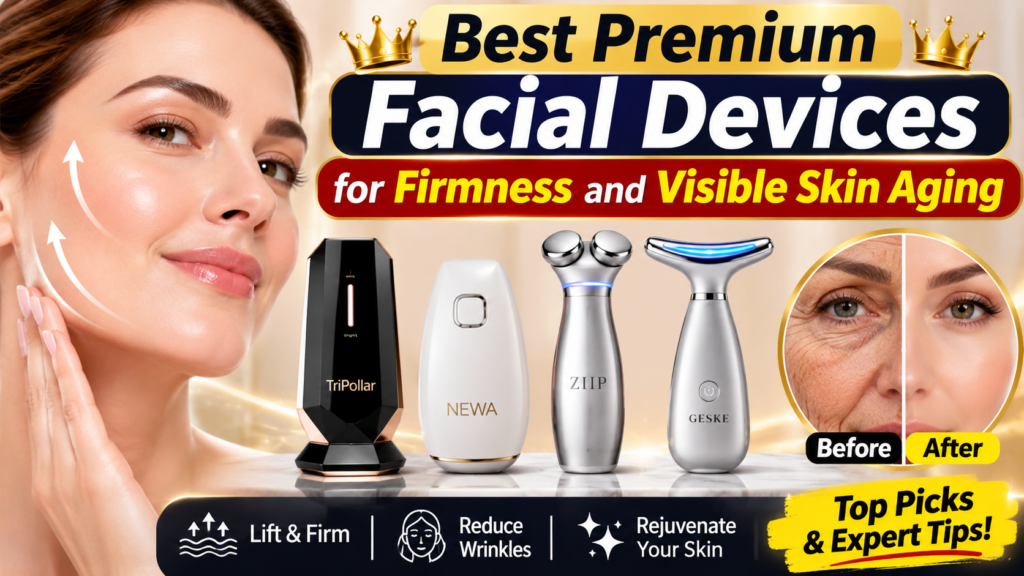
Noticeable changes in your face — deepening nasolabial folds, softer jawline definition, crepey skin around the eyes — can make you feel like your skincare routine has stopped working. Topical products have real limits when it comes to structural concerns like collagen loss and muscle laxity. That gap is exactly why the best premium facial devices for firmness are drawing serious attention from women who want measurable, at-home results beyond what serums alone can deliver.
This guide cuts through marketing hype to compare the technologies that actually matter — radiofrequency, microcurrent, and LED light therapy — and match them to specific aging concerns. You will find realistic timelines, honest limitations, and practical buying advice so you can invest confidently.
This article contains affiliate links. We may earn a commission at no extra cost to you. All opinions are editorially independent.
Quick Comparison Table
| Device | Technology | Best For | Approx. US Price | Main Advantage | Main Limitation |
|---|---|---|---|---|---|
| TriPollar STOP Vx2 | Multi-RF + DMA | Sagging, deep wrinkles | $549 | Dual RF and muscle stimulation | Requires gel; learning curve |
| ZIIP HALO | Microcurrent + Nanocurrent | Overall firmness, tone | $495 | Dual-waveform versatility | Higher price point |
| NuFACE Trinity+ | Microcurrent | Facial contouring, lift | $325 | Proven track record; easy to use | Results are gradual and cumulative |
| NEWA Classic | 3DEEP RF | Fine lines, collagen rebuilding | $349 | Strong clinical data for RF | Smaller treatment head |
| CurrentBody LED Mask | Red + Near-Infrared LED | Texture, fine lines, photoaging | $395 | Hands-free; minimal effort | Does not address muscle laxity |
| Omnilux Contour Face | Red + Near-Infrared LED | Overall rejuvenation | $395 | Flexible medical-grade design | No active tightening mechanism |
| Therabody TheraFace Mask | LED + Vibration | Texture, relaxation, mild firming | $599 | Multi-function; premium build | Heavier; highest LED price |
| LYMA Laser | Near-Infrared Laser (808nm) | Cellular regeneration | $2,695 | True laser technology | Very high cost; limited independent data |
Prices are approximate and may vary by retailer and promotions.
What Makes a Premium Facial Device Worth Buying?
A higher price tag does not automatically mean better results. What separates a genuinely premium device from a mid-range option is the combination of technology quality, clinical evidence, build durability, and long-term ownership costs.
Look for devices that disclose their energy output specifications, wavelength ranges, or waveform details rather than relying on vague marketing terms like “advanced” or “professional-grade.” Check whether the device has received FDA 510(k) clearance, which indicates the FDA has reviewed it as substantially equivalent to an existing legally marketed device. Importantly, 510(k) clearance is not the same as FDA approval — it does not require the same level of independent clinical trial data.
Also factor in ongoing costs. Microcurrent and RF devices require conductive gels, which can add $15–$30 every few months. LED masks have virtually no consumable costs, which changes the long-term value calculation significantly.
Best Premium Facial Devices for Firmness and Visible Skin Aging
TriPollar STOP Vx2 — Best for Sagging Skin and Deep Wrinkles

- AIDS IN COLLAGEN PRODUCTION: new Triple-Wave Multi-RF Technology delivers interchanging RF waves that comb the dermis la…
- PERSONALIZED TREATMENT: 2nd Generation Thermal Mapping provides the skin with the most accurate temperature for effectiv…
- PLEASANT TREATMENT & SUPERIOR RESULTS: the 3rd Generation features automatically adjusts in real-time to ensure a pleasa…
Technology: Multi-polar radiofrequency combined with DMA (Dynamic Muscle Activation), which delivers low-level electrical stimulation to facial muscles.
The TriPollar STOP Vx2 stands out because it addresses both the dermal and muscular layers of aging. The RF component heats the deeper dermis to stimulate collagen remodeling, while DMA provides a toning effect on the muscles beneath. This dual approach makes it one of the most comprehensive at-home radiofrequency skin tightening devices currently available.
Best for: Sagging cheeks, loss of jawline definition, deep wrinkles.
Pros: Dual technology in one device; noticeable warmth during treatment indicates active energy delivery; compact design.
Cons: Requires consistent gel application; treatment takes 12–15 minutes per session; not suitable for very sensitive or rosacea-prone skin.
Realistic expectations: Most users report visible firming after 6–8 weeks of consistent use (2–3 times per week). Results are gradual and cumulative, not immediate.
Who should buy it: Women with moderate to advanced sagging who want an active tightening device.
Who should avoid it: Anyone with metal implants in the face, active skin infections, or a pacemaker.
ZIIP HALO — Best Microcurrent Device for Overall Firmness

- This hard carrying traveling case is designed for ZIIP Halo, ZIIP OX, ZIIP GX Facial Toning Device / for Gillette Venus …
- High-quality Material: The storage case is made of high quality EVA material, very durable and sturdy, shockproof and wa…
- Function: Storage & Protective. Preventing any damages or scratches caused by accidentally. Protect the device in good c…
Technology: Combines microcurrent (for immediate facial toning) with nanocurrent (a lower-frequency waveform designed to stimulate cellular ATP production over time).
The ZIIP HALO differentiates itself from competitors by offering both waveforms in a single device. Microcurrent provides a temporary lifting effect by stimulating facial muscles, while nanocurrent targets longer-term skin quality improvements. The accompanying app guides treatment protocols, which helps beginners navigate the different modes.
Best for: Overall facial firmness, early sagging, skin tone and texture.
Pros: Dual-waveform technology; app-guided treatments; sleek, ergonomic design.
Cons: Premium price; requires proprietary conductive gel; nanocurrent results take several months.
Realistic expectations: Microcurrent effects can be visible immediately but are temporary. Lasting structural improvements require 8–12 weeks of regular use.
Who should buy it: Women in their 40s and 50s looking for a versatile microcurrent device. If you are exploring beauty devices for women over 40, the ZIIP HALO offers strong versatility.
Who should avoid it: Those with epilepsy, pacemakers, or active facial skin conditions.
NuFACE Trinity+ — Best Entry-Level Premium Microcurrent
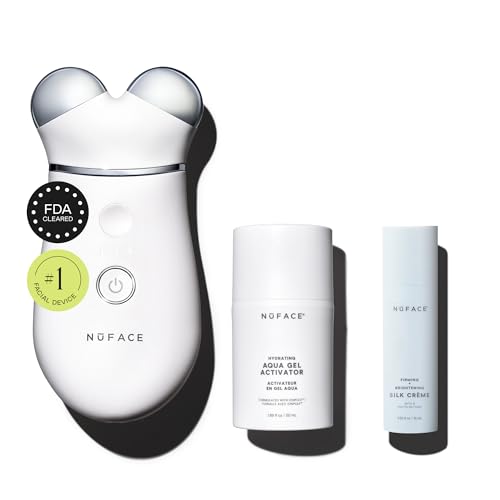
- The Original Lift Authority: TRINITY+ is the most advanced FDA-cleared microcurrent facial device, delivering 3 customiz…
- Face Lift Device & Skin Tightening: Microcurrent supports collagen and elastin production. Sculpts cheeks, lifts brows, …
- 3 Frequencies, 3 Intensities: Targets sagging jowls, tech neck, and sagging skin. Improves skin firmness, contour, and r…
Technology: Microcurrent stimulation with three depth modes (Instant-Lift, Pro-Toning, and Pro-Toning+).
The NuFACE Trinity+ is the most recognized name in at-home microcurrent. Its strength lies in simplicity and consistency. The device delivers low-level electrical currents that mimic the body’s natural bioelectric signals, encouraging facial muscle contraction and temporary toning.
Best for: Mild to moderate loss of facial contour, brow lifting, jawline definition.
Pros: Easy to learn; widely available replacement gels; strong user community and clinical backing.
Cons: Results are primarily temporary toning rather than deep structural change; requires daily or near-daily use for maintenance.
Realistic expectations: Expect a subtle lift after each session that fades within 24–72 hours without continued use. Cumulative improvements in muscle tone may become apparent after 60 days.
Who should buy it: First-time microcurrent buyers who want a proven, straightforward device.
Who should avoid it: Anyone seeking dramatic tightening comparable to professional RF or ultrasound treatments.
CurrentBody Skin LED Light Therapy Mask — Best LED for Fine Lines and Photoaging

- FITS TO YOU – Unlike many other wearable LED devices, the CurrentBody Light Therapy Mask is made from patented flexible …
- LIGHT THERAPY – The device combines Red (633nm) and near Infra-Red Light (830nm). Harnessed at the perfect measurement t…
- REAL RESULTS – You can expect to see visible results in just 4 weeks when used consistently 10 minutes a day, 3 to 5 tim…
Technology: Red light (633nm) and near-infrared light (830nm) delivered through flexible silicone.
LED therapy works through photobiomodulation — light energy is absorbed by mitochondria in skin cells, which can increase ATP production and support collagen synthesis. A 2024 review published in PubMed confirmed that LED photobiomodulation shows measurable improvements in skin elasticity and wrinkle depth with consistent use over several weeks.
Best for: Fine lines, uneven texture, overall photoaging, post-procedure recovery.
Pros: Completely hands-free; no gels or consumables; gentle enough for sensitive skin; 10-minute sessions.
Cons: Does not address muscle laxity or significant sagging; results are subtle and slow.
Realistic expectations: Visible improvements in skin texture and fine lines typically appear after 4–8 weeks of use 3–5 times per week. LED is a long-game technology. For a deeper look at LED options, see our guide to the best LED face masks for mature skin and fine lines.
Who should buy it: Women who want a low-effort, low-risk addition to their anti-aging routine.
Who should avoid it: Those taking photosensitizing medications (consult your dermatologist).
NEWA Classic — Best RF Device for Collagen Rebuilding
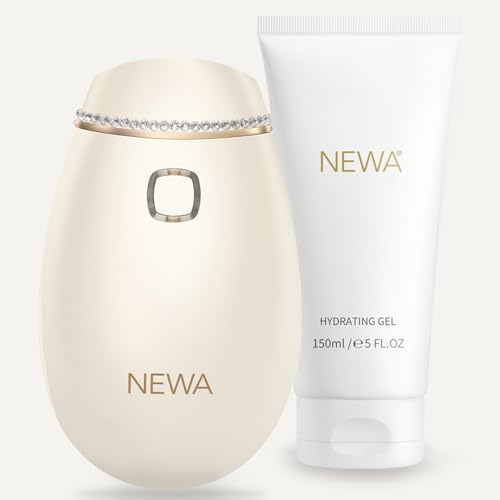
- SKIN TIGHTENING DEVICE: NEWA uses the power of radio frequency to: ✔️Boost the skin’s collagen production ✔️Visibly redu…
- FDA CLEARED – BACKED BY CLINICAL STUDIES: The NEWA device and gel were clinically tested on various skin types aged 37 t…
- TRUSTED TECHNOLOGY: One of the most clinically validated skin tightening technologies around today, radio frequency mach…
Technology: 3DEEP radiofrequency, which delivers controlled heat to the mid-dermis through multiple electrodes.
NEWA’s 3DEEP technology was originally developed for professional clinical use. The device heats dermal tissue to approximately 52°C at depth while keeping the skin surface comfortable, which triggers a wound-healing response that stimulates new collagen production. Research published in Dermatologic Surgery has documented the efficacy of fractional and multipolar RF systems for improving skin laxity and rhytides in controlled clinical settings.
Best for: Fine lines around the eyes and mouth, mild to moderate skin laxity.
Pros: Strong clinical heritage; relatively affordable for RF; built-in skin temperature sensor for safety.
Cons: Small treatment head makes full-face sessions time-consuming; requires gel.
Realistic expectations: Collagen remodeling takes time. Most clinical protocols suggest 8–12 weeks before visible firming becomes apparent.
Who should buy it: Women focused on wrinkle reduction and collagen support rather than muscle lifting.
Who should avoid it: Those with very thin or fragile skin, active acne, or metal implants in the treatment area.
LED vs Microcurrent vs Radiofrequency
Understanding the differences between these three technologies is essential before investing in any premium device.
| Factor | LED Light Therapy | Microcurrent | Radiofrequency |
|---|---|---|---|
| How it works | Light energy stimulates cellular activity | Low-level electrical current tones facial muscles | Controlled heat stimulates collagen production |
| Targets | Fine lines, texture, pigmentation, inflammation | Muscle laxity, contour, temporary lift | Deep wrinkles, sagging, dermal firmness |
| Sensation | None (warmth at most) | Mild tingling | Noticeable warmth |
| Time to results | 4–8 weeks | Immediate (temporary); 8–12 weeks (cumulative) | 6–12 weeks |
| Evidence strength | Moderate and growing | Moderate for toning; limited for structural change | Strong for collagen remodeling |
| Maintenance | Ongoing, 3–5x/week | Ongoing, 3–5x/week | Ongoing, 1–3x/week after initial phase |
| Consumable costs | None | Conductive gel | Conductive gel |
LED is the gentlest and easiest to maintain. Microcurrent excels at facial contouring but delivers primarily temporary toning. RF offers the most direct path to dermal firming and collagen rebuilding, making it the strongest choice for sagging skin and loss of firmness.
Which Premium Facial Device Is Best for Your Skin Concern?
- Fine lines and wrinkles: CurrentBody LED Mask or NEWA Classic. LED addresses surface-level photoaging, while RF targets deeper dermal wrinkles.
- Sagging cheeks and jawline: TriPollar STOP Vx2 or ZIIP HALO. RF with DMA provides the most active tightening; microcurrent offers supplementary muscle toning.
- Loss of firmness (overall): TriPollar STOP Vx2 for dermal firmness; ZIIP HALO for combined toning and cellular support.
- Mature skin over 50: A combination approach works best. Pair an RF device for collagen with LED for texture. See our dedicated guide to beauty devices for mature skin over 50 for detailed recommendations.
- Overall texture and photoaging: CurrentBody or Omnilux LED masks.
- First-time premium device buyers: NuFACE Trinity+ for microcurrent or CurrentBody LED Mask for the lowest learning curve.
Are Premium Facial Devices Better Than Affordable Devices?
Sometimes, but not always. Premium devices typically offer more precise energy delivery, better safety sensors, and more robust clinical data. However, the difference between a $300 and a $500 microcurrent device is often smaller than the difference between microcurrent and RF technology itself.
The real value of premium devices lies in consistency and durability. A well-built device you use regularly will outperform a cheaper device that breaks or feels unpleasant to use. That said, diminishing returns are real — a $2,695 laser does not deliver ten times the results of a $350 RF device. For a broader look at the premium category, explore our roundup of the best luxury skincare devices at home.
At-Home Devices vs Professional Treatments
At-home devices operate at significantly lower energy levels than in-office procedures. A professional RF treatment like Thermage delivers far more heat to deeper tissue layers in a single session than any home device can safely replicate. Similarly, professional microcurrent facials use higher amperage and targeted probe placement.
The trade-off is clear: professional treatments produce faster, more dramatic results at a higher per-session cost ($300–$2,000+), while home devices offer gradual, cumulative improvements at a fraction of the long-term cost. For a detailed comparison, read our analysis of at-home RF devices versus professional treatments.
Home devices do not replace medical procedures. They are best understood as maintenance tools that can extend the results of professional treatments or slow visible aging between appointments.
How to Build a Premium At-Home Anti-Aging Routine
More devices do not mean better results. Overusing active technologies can cause irritation, barrier disruption, and inflammation — which accelerates aging rather than reversing it.
A practical approach:
- Choose one primary device based on your top concern (RF for firmness, microcurrent for contour, LED for texture).
- Follow the manufacturer’s recommended frequency — typically 3–5 sessions per week for LED, 2–3 for RF, and 3–5 for microcurrent.
- Do not layer RF and microcurrent on the same day during the first few weeks. Allow your skin to adapt.
- LED can generally be combined with either RF or microcurrent on alternating days, as it is non-thermal and non-invasive.
- Always use the recommended conductive gel for RF and microcurrent devices to ensure proper energy delivery and prevent burns.
Safety and Important Precautions
- Microcurrent: Contraindicated for individuals with pacemakers, epilepsy, metal implants in the face, or active cancer. Do not use over the thyroid area.
- Radiofrequency: Avoid if you have active skin infections, open wounds, severe rosacea, or metal implants. RF generates heat, so those with very thin or compromised skin should proceed cautiously.
- LED: Generally the safest technology, but avoid if you are taking photosensitizing medications (certain antibiotics, retinoids, or St. John’s Wort). Eye protection is recommended for high-intensity devices.
- All devices: The ASA’s guidance on beauty device claims reminds consumers that marketing language around “lifting” and “tightening” should be interpreted cautiously, as results vary significantly between individuals.
- When in doubt, consult a board-certified dermatologist before starting any energy-based device, especially if you have a history of keloid scarring, autoimmune skin conditions, or recent cosmetic procedures.
Frequently Asked Questions
1. What is the best premium facial device for skin firmness?
The TriPollar STOP Vx2 offers the most comprehensive firming approach by combining RF collagen stimulation with muscle activation. For microcurrent-based firming, the ZIIP HALO is the strongest option.
2. Do expensive facial devices really work?
Yes, but with realistic expectations. Devices with FDA 510(k) clearance and published clinical data can produce measurable improvements in skin texture, firmness, and wrinkle depth over 8–12 weeks of consistent use. They do not replicate surgical or high-energy professional results.
3. Is RF better than microcurrent for sagging skin?
For structural sagging caused by collagen loss, RF is generally more effective because it directly stimulates dermal remodeling. Microcurrent primarily tones facial muscles, which can improve contour but does not rebuild collagen.
4. Which facial device is best for wrinkles and fine lines?
For fine lines and surface wrinkles, LED devices like the CurrentBody mask are effective and gentle. For deeper wrinkles, RF devices like NEWA or TriPollar deliver heat to the dermis where collagen remodeling occurs.
5. Are LED devices effective for visible skin aging?
Yes. Research in aesthetic medicine supports the use of red and near-infrared LED for improving skin elasticity, reducing fine lines, and supporting overall rejuvenation with consistent use.
6. How long does it take to see results?
LED: 4–8 weeks. Microcurrent: immediate temporary lift; 8–12 weeks for cumulative tone. RF: 6–12 weeks for visible firming. All technologies require ongoing maintenance.
7. Can I combine LED, RF and microcurrent devices?
Yes, but introduce them gradually. LED pairs well with either RF or microcurrent on alternating days. Avoid using RF and microcurrent simultaneously until your skin has adapted to each individually.
8. Are at-home facial devices worth the investment?
For women committed to consistent use, yes. The long-term cost of a $350–$550 device is significantly lower than repeated professional treatments, and results are cumulative. The key variable is adherence to the treatment schedule.
9. Are premium facial devices safe for mature skin?
Generally yes, when used according to manufacturer instructions. Mature skin can be thinner and more reactive, so start with lower intensity settings and shorter sessions. LED is the gentlest option for fragile skin.
10. Do facial devices replace professional treatments?
No. At-home devices operate at lower energy levels and produce gradual results. They are best used as maintenance tools between professional treatments or as a standalone option for those who prefer to avoid clinical procedures. For deeper wrinkles and significant laxity, see our guide to the best LED face masks for wrinkles and firm skin for complementary options.
Final Verdict
There is no single “best” device for every woman. The right choice depends on your primary concern, budget, and willingness to maintain a routine.
- Best for sagging and deep firmness: TriPollar STOP Vx2
- Best for versatile microcurrent toning: ZIIP HALO
- Best for beginners: NuFACE Trinity+ or CurrentBody LED Mask
- Best for collagen rebuilding: NEWA Classic
- Best for low-effort anti-aging: CurrentBody or Omnilux LED Mask
Invest in the technology that matches your most pressing skin concern, commit to the recommended treatment schedule, and give your skin at least 8–12 weeks before evaluating results. Premium devices reward patience and consistency far more than they reward price alone.
SEO Deliverables
1. SEO Title: Best Premium Facial Devices for Firmness & Aging (2026)
2. Meta Description: Compare the best premium facial devices for firmness, sagging, and wrinkles. Expert RF, microcurrent, and LED reviews with realistic results and buying advice.
3. URL Slug: /best-premium-facial-devices-firmness/
4. Primary Focus Keyword: Best Premium Facial Devices for Firmness
5. Secondary Keywords: Best facial devices for aging skin, premium anti-aging facial devices, best at-home skin firming devices, best facial devices for wrinkles, professional facial devices for home use, at-home skin tightening devices, best RF facial devices, best microcurrent devices for mature skin, best LED devices for skin aging, facial devices for sagging skin, advanced skincare devices for firmness
6. Suggested WordPress Category: Skincare Devices
7. Image Alt-Text Suggestions:
- “Woman using premium RF facial device for skin firmness at home”
- “Comparison of LED microcurrent and RF facial devices on white background”
- “Close-up of microcurrent facial device on jawline for sagging skin”
- “LED light therapy face mask for fine lines and skin aging”
8. Additional FAQ Schema Questions:
- How often should I use a premium facial device for firmness?
- What is the difference between FDA clearance and FDA approval for facial devices?
- Can I use facial devices if I have sensitive or reactive skin?
- How do conductive gels affect microcurrent and RF device performance?
- Are premium facial devices safe to use after Botox or fillers?