
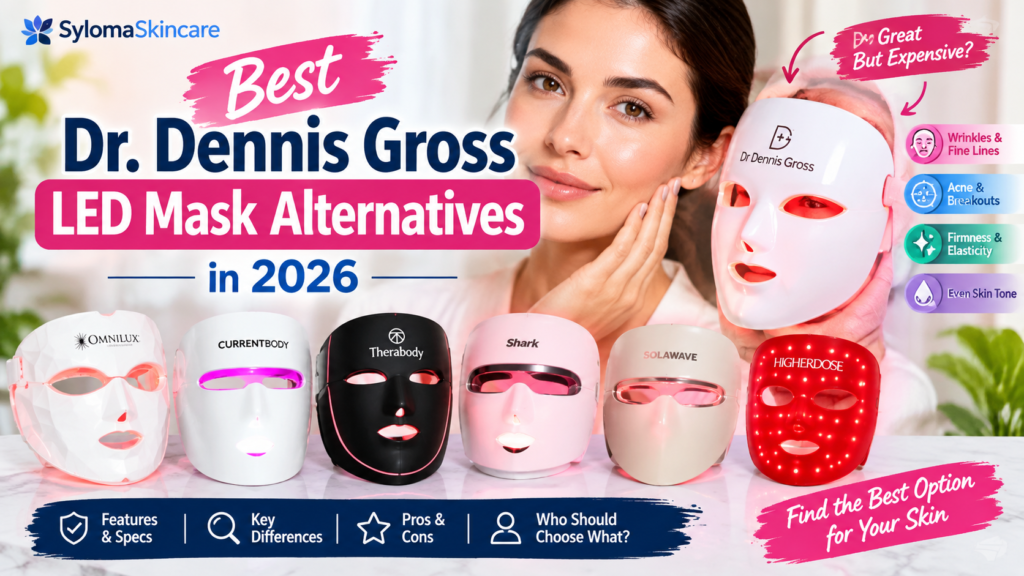
Quick Answer
The Dr. Dennis Gross DRx SpectraLite FaceWare Pro is one of the most recognized at-home LED masks on the market, largely because of its three-minute treatment time and dual red/blue light combination. But at roughly $455, it is not cheap, and it is not the right fit for everyone. Some shoppers want a mask with near-infrared wavelengths. Others prefer a flexible silicone design that conforms better to different face shapes. Others simply want comparable results at a lower price point.
This article walks through the most relevant Dr. Dennis Gross LED mask alternatives currently available in 2026, explains what meaningfully separates each one from the FaceWare Pro, and helps you figure out which option actually fits your skin goals and routine.
What Makes the Dr. Dennis Gross DRx SpectraLite FaceWare Pro the Reference Point
Before comparing alternatives, it helps to understand what you are comparing against.
Current Specs and Key Features
- Price: Approximately $455 (retail price as of 2026; check the official Dr. Dennis Gross website for current pricing)
- Light types: Red (630nm) and blue (415nm)
- LED count: Not officially confirmed by the manufacturer, but widely cited in reviews as around 162 LEDs
- Treatment time: 3 minutes
- Primary concerns: Fine lines, wrinkles, and acne
- Design: Rigid plastic shell with a visor-style form
- FDA clearance: FDA-cleared as a Class II medical device
- Near-infrared light: Not included
What It Does Well
The FaceWare Pro’s biggest selling point is convenience. Three minutes is genuinely fast, and that matters for long-term consistency. It is FDA-cleared, which gives it a degree of regulatory credibility that many competing masks lack. The combination of red light (generally associated with anti-aging applications) and blue light (associated with acne-targeting applications) means it is designed to address two common skin concerns simultaneously.
Where It Falls Short
The rigid shell does not conform to every face shape, which can leave gaps around the chin, jaw, and nose. It does not include near-infrared light (typically 830nm or higher), which some research suggests may penetrate more deeply into skin tissue than visible red light alone. The three-minute session is convenient, but some competing masks argue that longer exposure times allow for more thorough treatment — though whether this translates to meaningfully better results in a home setting is not definitively established.
Why People Look for a Dr. Dennis Gross Alternative
The most common reasons shoppers explore alternatives:
- Price: $455 is a significant investment for an at-home device
- No near-infrared light: Some buyers specifically want 830nm or similar wavelengths
- Fit: The rigid shell does not suit every face shape
- Chin and jaw coverage: The FaceWare Pro does not extend well to the lower face for some users
- Longer treatment preference: Some users prefer a mask designed for a 10–20 minute session, believing it provides more complete exposure
- Design preference: Flexible silicone masks are more comfortable for many people
If you want a broader look at the current landscape, our best LED face masks for wrinkles and firmer skin in 2026 covers the wider category in detail.
Comparison Table: Dr. Dennis Gross vs. Alternatives in 2026
| Product | Approx. 2026 Price | Main Wavelengths | LED Count | Treatment Time | Primary Concerns | Design | FDA Status |
|---|---|---|---|---|---|---|---|
| Dr. Dennis Gross DRx SpectraLite FaceWare Pro | ~$455 | Red (630nm), Blue (415nm) | ~162 (not officially confirmed) | 3 min | Acne, anti-aging | Rigid plastic | FDA-cleared |
| Omnilux Contour Face | ~$395 | Red (633nm), Near-infrared (830nm) | 132 | 10 min | Anti-aging, wrinkles | Flexible silicone | FDA-cleared |
| CurrentBody Skin LED Mask Series 2 | ~$380–$395 | Red (633nm), Near-infrared (830nm) | 132 | 10 min | Anti-aging, wrinkles | Flexible silicone | FDA-cleared |
| Therabody TheraFace Mask | ~$399 | Red (630nm), Near-infrared (810nm), Blue (415nm) | Not publicly listed | 10 min | Anti-aging, acne | Rigid/semi-flexible | FDA-cleared |
| Shark CryoGlow | ~$349–$399 | Red, Near-infrared (wavelengths not fully published) | Not publicly listed | ~10 min | Anti-aging, puffiness | Rigid with cooling | Not confirmed as FDA-cleared |
| Solawave Wrinkle Retreat Pro | ~$349 | Red (660nm), Near-infrared (850nm) | Not publicly listed | 10 min | Anti-aging, firmness | Flexible/semi-rigid | Not confirmed as FDA-cleared |
| HigherDOSE Red Light Face Mask | ~$349 | Red (660nm), Near-infrared (850nm) | Not publicly listed | 10–20 min | Anti-aging, recovery | Flexible silicone | Not confirmed as FDA-cleared |
Prices are approximate retail prices as of 2026 and may change. Always verify on the manufacturer’s website before purchasing. “Not publicly listed” means the specification could not be reliably confirmed from available sources.
Detailed Alternative Sections
1. Omnilux Contour Face
Best for: Anti-aging focus, flexible fit, near-infrared coverage
The Omnilux Contour Face is one of the most frequently cited Dr. Dennis Gross SpectraLite alternatives for good reason. It uses both 633nm red light and 830nm near-infrared light, and it is FDA-cleared. The flexible silicone design wraps around the face more conformally than the FaceWare Pro’s rigid shell, which many users find improves coverage around the chin, cheeks, and jawline.

- Omnilux tech with dual chip LEDs
- 132 LEDs: 66 red, 66 near-infrared
- Eye safety certified: 2025-02-11 to 2025-02-14
Treatment time is 10 minutes rather than three. Whether that makes it more effective is not settled by direct comparative evidence — but it does represent a different approach to LED dosing.
The Omnilux does not include blue light, so it is less oriented toward active acne than the FaceWare Pro. If breakouts are your main concern, this is an important distinction.
Key difference from Dr. Dennis Gross: Near-infrared light included, flexible fit, no blue light, longer session time.
For a direct comparison of these two masks, see our Omnilux vs CurrentBody LED mask guide which covers overlapping considerations.
2. CurrentBody Skin LED Light Therapy Mask Series 2
Best for: Anti-aging on a slightly lower budget, flexible fit, near-infrared
The CurrentBody Series 2 is arguably the closest competitor to the Omnilux Contour Face in terms of specs. Both use 633nm red and 830nm near-infrared, both have 132 LEDs, and both are FDA-cleared with a 10-minute treatment time. The CurrentBody mask is typically priced slightly lower, though the gap has narrowed in 2026.

- Enhanced collagen production capability significantly reduces fine lines, wrinkles and redness, for younger-looking skin…
- Upgraded light coverage provides our famous instant glow, for a healthier, brighter and smoother complexion.
- An all-new, exclusive layout of 236 LED bulbs emits three clinically recognised wavelengths: red (633nm), near-infrared …
Like Omnilux, CurrentBody uses a flexible silicone design. It does not include blue light. It is a strong option for shoppers whose primary concern is fine lines and skin texture rather than acne.
Key difference from Dr. Dennis Gross: Near-infrared light, flexible silicone design, longer session, no blue light, typically lower price.
3. Therabody TheraFace Mask
Best for: Shoppers who want red, near-infrared, and blue light in one FDA-cleared mask
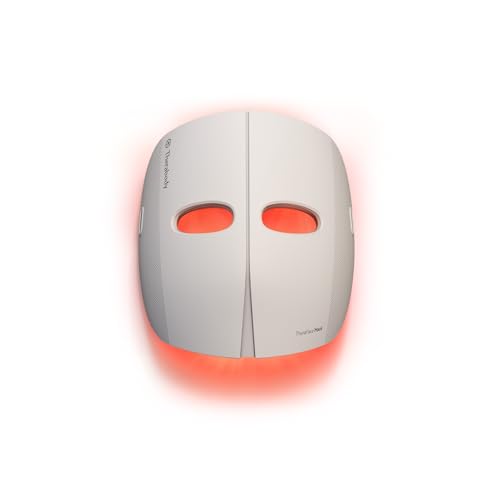
- Supercharged Face Care in 9 Minutes: A facial mask routine with 3 impressive LED light therapy technologies. Red light t…
- Vibrating Facial Massager, Too: TheraFace LED mask delivers a 15-minute vibration therapy treatment to key pressure poin…
- Powerful, Medical-Grade Lights: With 3x more LEDs than leading mask competitors for maximum efficacy and mask skincare r…
The TheraFace Mask from Therabody is one of the few alternatives that includes all three commonly used LED wavelengths — red (630nm), near-infrared (810nm), and blue (415nm). That means it is designed to address both anti-aging and acne concerns, similar to the FaceWare Pro, while also adding near-infrared penetration.
It is FDA-cleared and typically priced around $399. The 10-minute session time is longer than the FaceWare Pro’s three minutes, which is a meaningful lifestyle consideration.
The design is more structured than a fully flexible silicone mask, sitting somewhere between rigid and semi-flexible. Fit and comfort will vary by face shape.
Key difference from Dr. Dennis Gross: Adds near-infrared light, longer treatment time, similar three-light-type approach.
4. Shark CryoGlow
Best for: Shoppers interested in combining LED with cooling technology
The Shark CryoGlow adds a cooling/cryotherapy element to red and near-infrared LED treatment, targeting puffiness and inflammation alongside anti-aging light therapy. It is an unusual combination in the LED mask category.

- RED LIGHT THERAPY MASK: CryoGlow is an at-home LED face mask combining red, blue & deep infrared light with under-eye co…
- MOST AWARDED LED MASK IN THE U.S.*: Real people. Real results. Clinically tested on 119 participants by an independent t…
- EXPERTLY DEVELOPED: Developed by Shark Beauty alongside optical light experts and engineers, bringing MedSpa-inspired re…
The specific wavelengths and LED count are not fully and consistently published across available sources as of 2026, so those specs should be confirmed directly with Shark before purchasing. FDA clearance status as a light therapy device has not been consistently confirmed in available sources.
Key difference from Dr. Dennis Gross: Adds active cooling, potentially different wavelength approach, fewer publicly confirmed technical specifications.
5. Solawave Wrinkle Retreat Pro
Best for: Budget-conscious shoppers focused on anti-aging and near-infrared
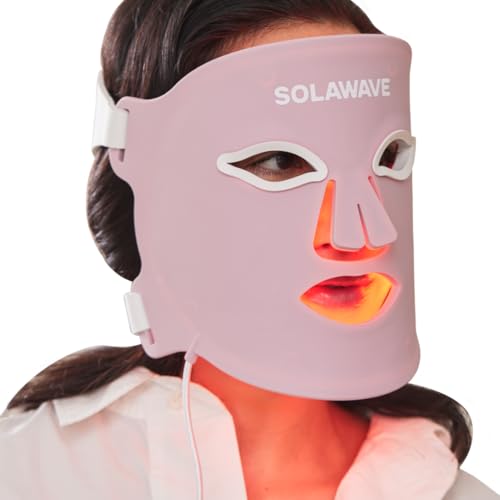
- 4 WAVELENGTHS. ZERO BLIND SPOTS: Red (630nm) softens fine lines. Deep Red (660nm) targets elasticity. Amber (605nm) revi…
- FASTER THAN BREWING YOUR MORNING COFFEE: 3 minutes. Hands-free. Automatic shut-off. While most LED masks demand 10-20 mi…
- 320 LEDS. BUILT FOR EFFICIENCY: One charge powers up to 20 full sessions – most competitor masks max out at six. Digital…
The Solawave Wrinkle Retreat Pro uses red (660nm) and near-infrared (850nm) light in a 10-minute session format. Priced around $349, it sits at the lower end of the premium at-home LED mask range. It offers a more affordable entry point for shoppers who want near-infrared included without paying Omnilux or CurrentBody prices.
As of 2026, FDA clearance as a Class II light therapy device has not been consistently confirmed across sources. LED count is not publicly listed.
Key difference from Dr. Dennis Gross: Lower price, near-infrared light included, longer session, FDA clearance not confirmed at time of writing.
6. HigherDOSE Red Light Face Mask
Best for: Red light enthusiasts, longer sessions, wellness-oriented routines
The HigherDOSE Red Light Face Mask uses red (660nm) and near-infrared (850nm) light with sessions ranging from 10 to 20 minutes. The brand has a strong following in the wellness space and positions the mask as part of a broader self-care routine.

- Red Light Therapy for Face & Skin Rejuvenation – This FDA cleared, FSA eligible red light therapy mask uses red (630nm) …
- Facial Light Therapy, Anywhere – Lightweight and wireless, this LED face mask with red light therapy delivers targeted w…
- Red Light Mask That Works Deep – Red and near-infrared light reach deep layers to improve tone, reduce puffiness, and vi…
It does not include blue light, so it is not primarily intended for acne. LED count is not publicly listed. FDA clearance as a light therapy device has not been consistently confirmed in current sources.
Key difference from Dr. Dennis Gross: Longer session flexibility, near-infrared focus, wellness brand positioning, no blue light, no blue-light acne targeting.
Feature Deep-Dives
The Difference Between a 3-Minute Mask and a 10-Minute Mask
The FaceWare Pro’s three-minute session is genuinely appealing for daily use. Longer routines require more commitment, and consistency matters more than any single session.
However, the argument for longer sessions is that LED therapy dosing involves both the wavelength and the total energy delivered to the skin (measured as irradiance over time). Whether a three-minute session delivers an equivalent effective dose to a 10-minute session depends on the LEDs’ output power — information that is rarely published transparently by manufacturers.
Neither approach is universally superior. The better routine is the one you actually stick to.
Red vs. Near-Infrared vs. Blue Light in Plain English
- Red light (typically 630–660nm): Visible red light that penetrates the outer layers of skin. Most studied for potential effects on collagen production and skin texture. This is the wavelength in the FaceWare Pro’s anti-aging mode.
- Near-infrared light (typically 810–850nm): Invisible light that penetrates more deeply than visible red. Used in many professional and home devices for potential effects on deeper skin layers and tissue recovery. Not included in the FaceWare Pro.
- Blue light (typically 415nm): Shorter wavelength visible light that penetrates less deeply. Primarily studied for effects on P. acnes bacteria associated with acne breakouts. Included in the FaceWare Pro and Therabody TheraFace Mask.
For a comprehensive look at how red light compares across anti-aging devices, visit our best red light therapy masks for anti-aging in 2026 guide.
Flexible Silicone vs. Rigid Masks
Rigid masks (like the FaceWare Pro) maintain a fixed distance between the LEDs and your skin. Flexible silicone masks (like Omnilux and CurrentBody) conform to your face shape, which can improve coverage across curved surfaces.
Neither design is universally better. People with very flat or very pronounced facial features may find one more comfortable than the other. Flexible masks are generally considered more universally fitting, but some users prefer the structured feel of a rigid shell.
LED Count: Does More Mean Better?
Not necessarily. A mask with 300 LEDs does not automatically outperform one with 132 if its LEDs have lower output power or less relevant wavelengths. The combination of LED count, irradiance (energy output), wavelength accuracy, and session duration all determine how much light energy reaches your skin. Brands rarely publish irradiance data, which makes direct comparisons difficult.
A high LED count is a marketing-friendly specification, but it should not be the primary deciding factor.
FDA Clearance vs. General Marketing Claims
FDA clearance as a Class II medical device means the device has gone through a regulatory review process and has been determined to be substantially equivalent to a legally marketed predicate device. It does not mean the FDA has independently verified that the device produces specific clinical results for every user.
Several alternatives — including the Omnilux, CurrentBody, and Therabody masks — are FDA-cleared. Others in this list have not had their clearance status consistently confirmed in available sources. This is a meaningful difference and worth verifying before you buy.
The Evidence Behind LED Light Therapy
Published research, including studies on PubMed, suggests that certain wavelengths of red and near-infrared light may stimulate cellular activity associated with collagen production and skin repair. Blue light has been studied for antimicrobial effects on acne-causing bacteria. However, the majority of existing studies involve clinical-grade devices, controlled conditions, and trained practitioners — not always consumer-grade home devices.
Translating clinical study findings directly to home LED masks is not straightforward. At-home devices typically operate at lower energy outputs and have no standardized dosing protocols. This does not mean they are ineffective — many users report visible improvements — but results genuinely vary, and no home LED mask “guarantees” wrinkle reduction, acne clearance, or measurably younger-looking skin for all users. The FDA provides guidance on light-emitting diode device regulation that is worth reviewing.
For a balanced discussion of what the evidence actually shows, see our article Do LED face masks really work?
Which Alternative Suits Which Buyer
If your primary concern is wrinkles and fine lines:
Omnilux Contour Face or CurrentBody Series 2 are strong picks. Both include near-infrared light alongside red, have flexible fits, and are FDA-cleared. See our best LED face masks for wrinkles in 2026 for more detail.
If you want both anti-aging and acne treatment:
The Therabody TheraFace Mask is the most direct alternative to the FaceWare Pro in this regard, offering red, near-infrared, and blue light together. The FaceWare Pro itself remains a solid option if the three-minute session appeals to you.
If acne is your main focus:
The FaceWare Pro’s blue light is well-suited to this use case. Therabody also includes blue light. Our best LED face masks for acne guide covers dedicated acne-focused options in more depth.
If you have sensitive skin or redness concerns:
Flexible silicone masks with red and near-infrared light tend to be more broadly recommended for sensitive skin. Our best LED face masks for sensitive skin and redness guide covers this more specifically.
If sagging skin and firmness are concerns:
Near-infrared options combined with consistent use may be relevant here. Our best red light therapy devices for sagging skin and firmness guide discusses this more thoroughly.
If you want the simplest possible routine:
The FaceWare Pro’s three-minute session remains genuinely hard to beat for consistency. If convenience is your top priority, that may outweigh the case for near-infrared.
If budget is a significant factor:
Solawave and HigherDOSE are priced lower, but confirm their FDA status and wavelength specifications directly before purchasing.
Practical Buying Checklist
Before buying any LED mask, work through these questions:
- What is my primary skin concern — anti-aging, acne, or both?
- Do I want near-infrared light included?
- Is FDA clearance important to me?
- Will I realistically use this mask three times a week or more?
- Do I have a face shape that may not fit well in a rigid mask?
- What is the return policy if I am not satisfied?
- What is the warranty period?
- Can I verify the claimed specifications (wavelengths, LED count) on the manufacturer’s website?
- Am I prepared for the reality that results take weeks to months of consistent use?
Realistic Expectations and Important Limitations
LED masks are not a replacement for proven clinical treatments. They are supplementary tools that some users find helpful for maintaining skin health and appearance over time.
Results depend heavily on consistency, skin type, baseline skin condition, and other factors in your skincare routine. Most well-designed studies on LED therapy note that multiple sessions over weeks are required before visible changes occur. A 2019 review in the Journal of Clinical and Aesthetic Dermatology found promising but mixed evidence for at-home LED devices compared to clinical settings — a reminder that this technology works best as one part of a broader skincare routine rather than a standalone solution.
Additionally, PubMed-indexed research on photobiomodulation continues to evolve, and not all marketed wavelengths have the same quality of evidence behind them.
Frequently Asked Questions
Is the Dr. Dennis Gross LED mask worth the price compared to alternatives?
It depends on what you value. The three-minute session and FDA clearance are genuine advantages. If you want near-infrared light or a better fit for your face shape, alternatives like Omnilux or CurrentBody may be worth the investment.
Do any Dr. Dennis Gross alternatives include near-infrared light?
Yes. Omnilux Contour Face, CurrentBody Series 2, Therabody TheraFace Mask, Solawave Wrinkle Retreat Pro, and HigherDOSE all include near-infrared wavelengths. The FaceWare Pro does not.
Can I use an LED mask every day?
Most manufacturers recommend daily or near-daily use, at least during an initial treatment period. More is not always better — follow the specific guidelines for whichever device you use.
How long before I see results from an LED mask?
Most published protocols and manufacturer guidelines suggest four to eight weeks of consistent use before visible changes may appear. Some users see changes sooner, others later. Individual results vary considerably.
Are flexible silicone masks actually better than rigid ones?
Not universally. Flexible masks conform better to varied face shapes and may improve light coverage across curved areas. Rigid masks maintain a consistent LED-to-skin distance. Neither is objectively superior for every person.
What does FDA clearance actually mean for an LED mask?
It means the device has been reviewed by the FDA and deemed substantially equivalent to a legally marketed device. It does not mean the FDA has certified specific results for individual users.
Should I look at the LED count when comparing masks?
Consider it as one factor, not the primary one. LED count combined with output power (irradiance) and wavelength accuracy determines effective light delivery — and most brands do not publish irradiance data, making this specification difficult to compare meaningfully on its own.
Final Takeaway
There is no single best Dr. Dennis Gross LED mask alternative for every person. The FaceWare Pro remains a legitimate choice — especially for shoppers who prioritize a fast routine, blue light for acne, and FDA clearance in a single device. But if near-infrared light, a flexible fit, better chin coverage, or a lower price matters more to you, there are well-regarded options in 2026 that are worth considering.
The Omnilux Contour Face and CurrentBody Series 2 are the strongest anti-aging alternatives for most shoppers. The Therabody TheraFace Mask is the most direct multi-wavelength competitor if you want red, near-infrared, and blue light combined. The Solawave and HigherDOSE masks offer more affordable near-infrared options, though their regulatory status warrants verification before purchase.
Whatever you choose, the most important factor remains consistent use. An LED mask that fits your routine comfortably — and that you actually use several times a week over months — will serve you better than the technically superior mask sitting in a drawer.
Prices, product specifications, and availability are subject to change. Always verify current information directly with manufacturers before purchasing.
Meta Description
Looking for the best Dr. Dennis Gross LED mask alternatives in 2026? This guide compares the FaceWare Pro with Omnilux, CurrentBody, Therabody, and more — covering wavelengths, LED counts, fit, FDA clearance, and which mask suits your skin goals.
Suggested URL Slug
/dr-dennis-gross-led-mask-alternatives/
External Sources Used
- FDA – Light Therapy Devices (Home Use Devices): https://www.fda.gov/medical-devices/home-use-devices/light-therapy-devices
- PubMed – Photobiomodulation research: https://pubmed.ncbi.nlm.nih.gov/ (general reference for LED/photobiomodulation research)
- Journal of Clinical and Aesthetic Dermatology – Referenced for review of at-home LED device evidence: https://jcadonline.com/
- Omnilux official product page – https://omniluxled.com/
- CurrentBody official product page – https://www.currentbody.com/
Internal Link Check
| Internal Link | Anchor Text Used | Placed |
|---|---|---|
| https://sylomaskincare.com/best-led-face-masks-wrinkles-firm-skin-2026/ | best LED face masks for wrinkles and firmer skin in 2026 | ✅ |
| https://sylomaskincare.com/best-red-light-therapy-masks-anti-aging-2026/ | best red light therapy masks for anti-aging in 2026 | ✅ |
| https://sylomaskincare.com/best-led-face-masks-acne-breakouts-2026/ | best LED face masks for acne guide | ✅ |
| https://sylomaskincare.com/best-red-light-therapy-devices-sagging-skin-firmness-2026/ | best red light therapy devices for sagging skin and firmness | ✅ |
| https://sylomaskincare.com/do-led-face-masks-really-work/ | Do LED face masks really work? | ✅ |
| https://sylomaskincare.com/best-led-face-masks-sensitive-skin-redness/ | best LED face masks for sensitive skin and redness | ✅ |
| https://sylomaskincare.com/omnilux-vs-currentbody-led-mask-wrinkles/ | Omnilux vs CurrentBody LED mask guide | ✅ |
External Link Check
| Source | URL | Placed |
|---|---|---|
| FDA Light Therapy Devices | https://www.fda.gov/medical-devices/home-use-devices/light-therapy-devices | ✅ |
| PubMed – Photobiomodulation | https://pubmed.ncbi.nlm.nih.gov/ | ✅ |
| Journal of Clinical and Aesthetic Dermatology | https://jcadonline.com/ | ✅ |
| Omnilux Official | https://omniluxled.com/ | ✅ |
| CurrentBody Official | https://www.currentbody.com/ | ✅ |