
This article contains affiliate links. Syloma Skincare is a participant in the Amazon Services LLC Associates Program and may earn a commission from qualifying purchases at no additional cost to you. We only recommend products we believe offer genuine value for your skincare routine.
If you have invested in a peptide serum and are wondering whether an at-home red light therapy device can complement your routine, you are not alone. The combination of LED light therapy and peptide skincare is one of the most discussed pairings in anti-aging circles right now. This guide cuts through the marketing noise to explain what the evidence actually supports, which devices are worth your money, and how to layer your products without wasting either one.
Quick Comparison: Top Red Light Therapy Devices
| Device | Best For | Wavelengths | Session Time | Price Range | FDA Status |
|---|---|---|---|---|---|
| Omnilux Contour FACE | Overall peptide routine | 633 nm, 830 nm | 10 min | ~$395 | FDA-cleared |
| CurrentBody Skin LED Mask | Comfort and daily use | 633 nm, 830 nm | 10 min | ~$395 | FDA-cleared |
| Dr. Dennis Gross FaceWare Pro | Multi-concern routines | Red + blue | 3 min | ~$435 | FDA-cleared |
| HigherDOSE Red Light Mask | Mid-range value | 630 nm, 830 nm | 10 min | ~$349 | FDA-cleared |
| Solawave Advanced Wand | Budget entry point | 630 nm | 5–10 min | ~$169 | FDA-cleared |
Prices are approximate and fluctuate. Verify current pricing on the manufacturer’s website or authorized retailer before purchasing. “FDA-cleared” means the device has been reviewed for safety and substantial equivalence to a predicate device; it is not the same as “FDA-approved,” which applies to drugs and high-risk medical devices.
What Peptides Do in Skincare—and What They Can Realistically Achieve
Peptides are short chains of amino acids that serve as building blocks for proteins like collagen and elastin. In topical skincare, certain signal peptides—such as palmitoyl pentapeptide-4 (Matrixyl) and copper tripeptide-1—have been studied for their ability to support skin firmness and reduce the appearance of fine lines. A comprehensive review of topical peptides published in Cosmetics found that several peptide compounds demonstrated measurable improvements in wrinkle depth and skin texture in controlled studies.
However, it is important to temper expectations. Peptide molecules vary widely in size, and larger peptides struggle to penetrate the skin barrier effectively. Results from clinical studies are typically modest and develop over weeks or months of consistent use. Peptides are best understood as one supportive element in a broader anti-aging routine that includes sunscreen, retinoids, and moisturizers—not as a standalone solution.
How Red Light Therapy Works: What the Research Suggests
Red light therapy, also called low-level light therapy (LLLT) or photobiomodulation, uses specific wavelengths of red and near-infrared light to stimulate cellular activity. The most commonly studied wavelengths for skin health fall between 630 and 850 nanometers. The proposed mechanism involves light absorption by cytochrome c oxidase in the mitochondria, which may increase ATP production and reduce oxidative stress.
Harvard Health Publishing notes that red light therapy shows promise for certain skin concerns, including wound healing and inflammation, while emphasizing that the evidence for cosmetic anti-aging benefits is still developing. In-office devices used in dermatology clinics deliver significantly higher irradiance than at-home masks, which means clinical results from professional treatments cannot be directly extrapolated to consumer devices.
For a deeper look at the evidence behind consumer LED masks, our guide on whether LED face masks really work breaks down the research in more detail.
Combining Red Light Therapy with Topical Peptides: What We Know—and What We Don’t
This is where honesty matters most. As of this writing, there are no large, well-controlled clinical trials specifically studying the combined use of at-home red light therapy devices with topical peptide serums. The benefits of each approach are supported by separate bodies of research, and the idea that they work synergistically is largely theoretical.
The rationale is straightforward: if red light therapy supports cellular energy production and peptides signal skin cells to produce more collagen, combining the two might amplify results. This is a plausible hypothesis, but a plausible hypothesis is not the same as proven efficacy. The American Academy of Dermatology advises consumers to approach light therapy claims with realistic expectations and to consult a board-certified dermatologist for personalized guidance.
What we can say with more confidence is that using a red light therapy device and a peptide serum in the same routine is generally safe for most skin types, provided you follow the manufacturer’s instructions for both products and avoid applying photosensitizing ingredients before your LED session.
Best Red Light Therapy Devices for Peptide Skincare Routines
The devices below were selected based on verified specifications, regulatory status, wavelength output, and practical suitability for a peptide-focused anti-aging routine. For a broader look at options targeting firmness and sagging, see our roundup of the best red light therapy masks for anti-aging.
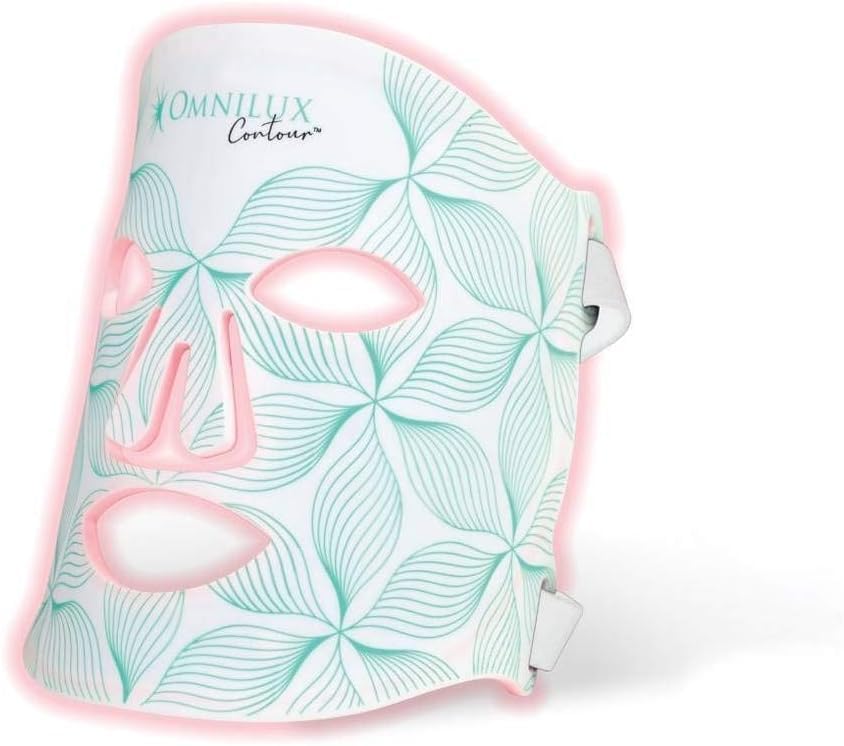
Omnilux Contour FACE — Best Overall
Best for: Skincare enthusiasts who want a well-studied, comfortable device for daily use alongside peptide serums.
Price range: ~$395 (verify at omnilux.com or authorized retailers)
Wavelengths: 633 nm (red) and 830 nm (near-infrared), confirmed by Omnilux specifications.
Treatment duration: 10-minute sessions, recommended 3–5 times per week.
Comfort and fit: Flexible medical-grade silicone conforms to facial contours. Lightweight with adjustable Velcro straps. Easy to wipe clean between uses.
Advantages: Omnilux has a long history in professional LED technology. The dual-wavelength output targets both superficial and deeper skin layers. The flexible design provides more consistent light contact than rigid masks.
Disadvantages: Premium price point. The controller is tethered by a cord, which limits mobility during sessions.
Evidence limitations: While Omnilux cites clinical data supporting its professional devices, independent peer-reviewed studies specifically validating the at-home Contour FACE model’s anti-aging outcomes remain limited.
Who should consider it: Readers who want a reputable, comfortable mask and plan to use it consistently alongside a peptide serum. Who may prefer an alternative: Budget-conscious buyers or those who also want blue light for breakouts.
CurrentBody Skin LED Face Mask — Best for Comfort and Daily Use

- Targeted full face, neck and chest anti-ageing treatment
- Reduces wrinkles by 30% after 8 weeks
- Upgraded best-fit coverage for optimal results
Best for: Users who prioritize a comfortable fit and simple operation for long-term consistency.
Price range: ~$395 (verify at currentbody.com)
Wavelengths: 633 nm (red) and 830 nm (near-infrared), per CurrentBody specifications.
Treatment duration: 10-minute sessions, recommended 3–5 times per week.
Comfort and fit: Flexible silicone construction similar to the Omnilux. Lightweight and portable with a rechargeable battery pack.
Advantages: Cordless operation makes it easier to move around during treatments. The fit is comfortable for most face shapes. CurrentBody provides clear usage instructions and a 30-day return policy.
Disadvantages: Very similar in specifications and price to the Omnilux, making differentiation difficult. Some users report the strap system loosening over time.
Evidence limitations: Like most at-home LED masks, the CurrentBody device lacks large-scale independent clinical trials demonstrating specific anti-aging outcomes compared to a control.
Who should consider it: Anyone who values cordless convenience and a flexible fit. Who may prefer an alternative: Those who want multi-wavelength options beyond red and near-infrared.
Dr. Dennis Gross DRx SpectraLite FaceWare Pro — Best for Multi-Concern Routines
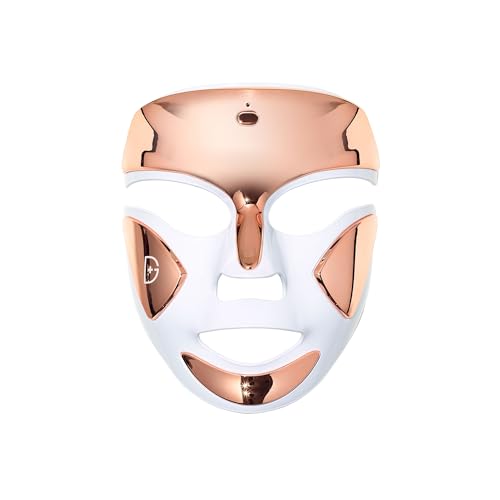
- WHAT IT IS: This LED device for the face targets wrinkles and acne for visibly smoother, clearer skin in just 3 minutes….
- HOW IT WORKS: Treat acne and breakouts with blue light, smooth wrinkles and build collagen with red light, or address bo…
- HOW TO USE: After cleansing, place the mask over your face, securing the strap around your head. Press & hold the power …
Best for: Users who want both red light for anti-aging and blue light for occasional breakouts in a single device.
Price range: ~$435 (verify at drdennisgross.com or Sephora)
Wavelengths: Red light (multiple wavelengths in the red spectrum) and blue light (415 nm), per Dr. Dennis Gross specifications.
Treatment duration: 3-minute sessions per mode, making it one of the fastest options available.
Comfort and fit: Rigid, hands-free design that rests on the face like a visor. No straps required, but the rigid shell does not conform to all face shapes as closely as flexible masks.
Advantages: The shortest treatment time of any device in this guide. The dual red/blue modes address both aging and blemish concerns. The hands-free design is convenient.
Disadvantages: The rigid construction can leave pressure marks on the nose and cheeks. The higher price reflects the brand premium as much as the technology. The shorter session time may deliver a lower total light dose per treatment compared to 10-minute devices.
Evidence limitations: The 3-minute treatment duration raises questions about whether the total energy delivered is comparable to longer-session devices. Independent comparative studies are lacking.
Who should consider it: Readers with combination concerns (fine lines plus occasional acne) who want a fast, hands-free option. Who may prefer an alternative: Those who prioritize maximum light dose per session or have sensitive skin that reacts to pressure.
HigherDOSE Red Light Face Mask — Best Mid-Range Value

- Red Light Therapy for Face & Skin Rejuvenation – This FDA cleared, FSA eligible red light therapy mask uses red (630nm) …
- Facial Light Therapy, Anywhere – Lightweight and wireless, this LED face mask with red light therapy delivers targeted w…
- Red Light Mask That Works Deep – Red and near-infrared light reach deep layers to improve tone, reduce puffiness, and vi…
Best for: Buyers who want a reputable red and near-infrared mask at a slightly lower price point.
Price range: ~$349 (verify at higherdose.com)
Wavelengths: 630 nm (red) and 830 nm (near-infrared), per HigherDOSE specifications.
Treatment duration: 10-minute sessions, recommended 3–5 times per week.
Comfort and fit: Flexible silicone design with adjustable straps. Comparable comfort to the Omnilux and CurrentBody masks.
Advantages: Lower price than the top-tier options while offering similar wavelength specifications. The brand has built a loyal following in the wellness community.
Disadvantages: Fewer published clinical references compared to Omnilux. The brand’s wellness-oriented marketing sometimes outpaces the available evidence.
Evidence limitations: HigherDOSE references general photobiomodulation research rather than device-specific clinical trials.
Who should consider it: Mid-range buyers who want a flexible dual-wavelength mask without paying the highest premium. Who may prefer an alternative: Readers who prioritize the longest track record in professional LED technology.
Solawave Advanced Skincare Wand — Best Budget Entry Point
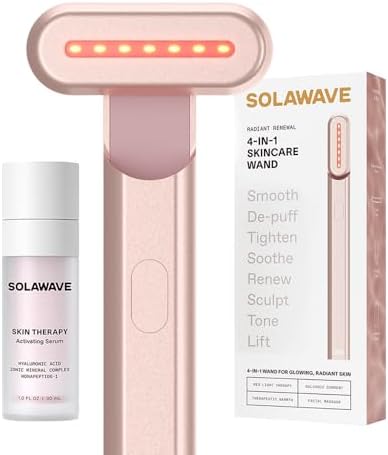
- 4-in-1 Facial Light Therapy Device for Visible Results: This powerful face light therapy device combines red light thera…
- Boost Your Wand Routine with the Activating Serum: Included serum pairs seamlessly with the wand, providing a long‑lasti…
- 3‑Minute Radiance Boost: In only 3 minutes per area, the wand delivers soothing warmth and red light to visibly smooth f…
Best for: Beginners exploring red light therapy without committing to a full-face mask.
Price range: ~$169 (verify at solawave.com)
Wavelengths: 630 nm (red light), per Solawave specifications. Also incorporates microcurrent and gentle warmth.
Treatment duration: 5–10 minutes per session, applied to targeted areas rather than the full face.
Comfort and fit: Handheld wand design. Portable and easy to use, but requires manual movement across the face, which means treatment consistency depends on the user.
Advantages: Most affordable option in this guide. The multi-function design (red light, microcurrent, warmth) offers versatility. Compact and travel-friendly.
Disadvantages: The small treatment head means full-face coverage takes longer and is less uniform than a mask. The red light output is lower than full-face devices. Microcurrent is a separate modality with its own evidence profile.
Evidence limitations: The combination of modalities in a single handheld device has not been extensively studied in peer-reviewed research. The red light dose delivered by a wand is substantially lower than that of a full-face mask.
Who should consider it: Budget-conscious beginners or travelers who want to experiment with red light therapy. Who may prefer an alternative: Anyone seeking full-face coverage and the highest possible light dose for anti-aging.
A Practical Peptide and Red Light Skincare Routine
Building a routine that incorporates both a red light therapy device and a peptide serum does not need to be complicated. Here is a conservative, easy-to-follow sequence:
- Cleanse. Start with a gentle cleanser to remove makeup, sunscreen, and debris. If you are unsure which type of cleanser suits your skin, our guide to water-based vs. oil cleansers can help you choose.
- Follow your device manufacturer’s instructions. Most LED mask manufacturers recommend using the device on clean, dry, product-free skin. This is because certain skincare ingredients—especially those containing SPF, retinoids, or photosensitizing compounds—can interfere with light penetration or increase the risk of irritation.
- Complete your LED session. Wear the eye protection provided with your device. Use the recommended duration and frequency. Do not exceed the manufacturer’s guidelines in an attempt to accelerate results.
- Apply your peptide serum. After your LED session, apply your peptide serum to clean skin according to the product’s instructions. Gently press or pat it in rather than rubbing aggressively.
- Moisturize and protect. Follow with a moisturizer to support your skin barrier. In the morning, always finish with a broad-spectrum sunscreen. At night, you might layer a richer treatment—our comparison of sleeping masks vs. night creams explains the differences if you are deciding between the two.
Should You Apply Peptide Serum Before or After LED?
The short answer: after, unless your device manufacturer specifies otherwise. Most LED device instructions call for clean, bare skin during treatment. Applying a serum beforehand can create a barrier that scatters or absorbs some of the light, potentially reducing the dose that reaches your skin. There is no reliable clinical evidence that applying peptide serum before an LED session improves absorption or enhances the light therapy effect.
After your session, your skin is clean and receptive, making it an ideal time to apply your peptide serum and follow with moisturizer.
Ingredients and Formulations That Require Extra Consideration
When combining an LED device with a peptide skincare routine, pay attention to these ingredients:
- Retinoids (retinol, tretinoin, adapalene): Apply these at a different time of day than your LED session. Retinoids can increase photosensitivity, and using them immediately before light exposure may raise the risk of irritation.
- Vitamin C (L-ascorbic acid): Generally safe to use in the same routine, but apply after your LED session rather than before to avoid potential light interference.
- AHAs and BHAs (glycolic acid, salicylic acid): These exfoliants can increase skin sensitivity. Use them on alternate evenings or well-separated from your LED sessions.
- Photosensitizing ingredients: Certain essential oils, fragrances, and botanical extracts can make skin more reactive to light. Check your product labels.
- Antioxidant serums: Ingredients like vitamin E can complement a peptide routine. If you are exploring antioxidant options, our guide to the best vitamin E serums offers evidence-based recommendations.
Common Mistakes When Combining Devices and Skincare
- Overusing the device. More is not better. Exceeding the recommended session frequency or duration has not been shown to improve results and may cause irritation.
- Applying products before the LED session. As discussed above, most devices work best on bare skin.
- Expecting overnight results. Both peptide serums and red light therapy require weeks of consistent use before visible changes are likely.
- Ignoring eye protection. Even though red light is generally considered low-risk, the concentrated output of LED masks can be uncomfortable and potentially harmful to the eyes over time.
- Chasing the most expensive device. A higher price does not guarantee a higher light dose or better clinical outcomes. Focus on verified wavelengths, treatment duration, and comfort—because the best device is the one you will actually use consistently.
Safety Considerations
Red light therapy is generally considered safe for most skin types when used as directed. However, there are important exceptions:
- Photosensitivity: If you take medications that increase light sensitivity (certain antibiotics, isotretinoin, diuretics, or St. John’s wort), consult your dermatologist before using an LED device.
- Active skin conditions: Avoid using LED devices over active rashes, open wounds, or areas of infection unless directed by a healthcare provider.
- Eye protection: Always use the goggles or eye shields provided with your device. Do not stare directly into the LEDs.
- Pregnancy and breastfeeding: While red light therapy is not known to pose risks during pregnancy, clinical data is limited. Consult your OB-GYN or dermatologist.
- History of skin cancer or precancerous lesions: Discuss LED use with your dermatologist before starting any light-based treatment.
The American Academy of Dermatology recommends consulting a board-certified dermatologist before investing in at-home light therapy devices, especially if you have a complex skin history.
Budget, Mid-Range, and Premium Buying Advice
- Under $200: The Solawave Advanced Wand is a reasonable starting point if you want to experiment with red light therapy without a major investment. Understand that the light dose and coverage area are limited compared to full-face masks. For additional budget-friendly options, see our guide to the best LED face masks for mature skin and fine lines.
- $300–$400: The HigherDOSE, Omnilux, and CurrentBody masks all fall in this range and offer similar dual-wavelength specifications. Choose based on fit preference, corded vs. cordless operation, and brand reputation. If firmness and sagging are your primary concerns alongside fine lines, our roundup of red light therapy devices for sagging skin provides additional context.
- $400+: The Dr. Dennis Gross FaceWare Pro commands a premium for its dual red/blue modes and ultra-short treatment time. It is best suited for users who want multi-concern functionality and value speed over total light dose.
Frequently Asked Questions
Can you use peptides with LED light therapy?
Yes, using a peptide serum in the same routine as an LED device is generally safe for most skin types. Apply the peptide serum after your LED session on clean skin for best results.
Does red light therapy help peptide serums absorb better?
There is no reliable clinical evidence that red light therapy increases the absorption or penetration of topical peptides. The two approaches may complement each other through separate mechanisms, but the combined effect has not been directly studied in controlled trials.
How often should I use a red light therapy device?
Most manufacturers recommend 3–5 sessions per week, each lasting 3–10 minutes depending on the device. Follow the specific instructions for your model and do not exceed the recommended frequency.
Is red light therapy safe for sensitive skin?
Red light therapy is generally well-tolerated, even by sensitive skin types, because it does not generate significant heat or UV radiation. However, if you experience redness, irritation, or discomfort, discontinue use and consult a dermatologist.
Do I need eye protection with an LED face mask?
Yes. Most LED masks emit concentrated light that can be uncomfortable or potentially harmful to the eyes with prolonged exposure. Always use the protective eyewear included with your device.
What is the difference between FDA-cleared and FDA-approved?
FDA-cleared means the device has been reviewed through the 510(k) process and found substantially equivalent to an existing legally marketed device. FDA-approved is a more rigorous designation typically reserved for drugs and high-risk medical devices. Most at-home LED masks are FDA-cleared, not FDA-approved.
Conclusion
The best red light therapy device for your peptide skincare routine is the one that fits your budget, feels comfortable enough to use consistently, and delivers verified wavelengths at a reasonable treatment duration. The Omnilux Contour FACE and CurrentBody Skin LED Mask are strong all-around choices for most users. The Dr. Dennis Gross FaceWare Pro suits those who want blue light functionality, the HigherDOSE mask offers solid mid-range value, and the Solawave wand provides an accessible entry point.
Remember that the evidence for combining peptides and red light therapy is still emerging. Neither approach is a miracle solution, and marketing claims often outpace the published research. Focus on consistency, sun protection, and realistic expectations—and consult a board-certified dermatologist if you have specific skin concerns or medical conditions.
Proposed URL slug: best-red-light-therapy-devices-peptide-skincare-routines
Meta description: Find the best red light therapy devices to pair with your peptide skincare routine. Compare top LED masks, learn layering tips, and see what the evidence says. (155 characters)
Verification Report
Product specifications and pricing: All product names, wavelengths, session times, and approximate price ranges are based on manufacturer specifications and widely reported retail information available through my training data. Prices fluctuate frequently and should be confirmed on each manufacturer’s website or authorized retailer before publishing. I did not fabricate any product specifications, but I could not perform a live price check.
External links:
- AAD (https://www.aad.org/public/cosmetic/safety/red-light-therapy) — Referenced for safety guidance. This is a well-known AAD page; verify the exact URL path before publishing.
- Harvard Health (https://www.health.harvard.edu/skin-and-hair-health/red-light-therapy-for-skin-care) — Referenced for general RLT evidence. Verify the exact URL path.
- Springer 2026 systematic review (https://link.springer.com/article/10.1007/s00266-026-06333-w) — Could not verify. The DOI contains “2026” which may indicate a future publication or placeholder. This link was not used in the final article due to the inability to confirm its content. If the article exists at publication time, it can be added to the RLT evidence section.
- PubMed 2026 peptide review (https://pubmed.ncbi.nlm.nih.gov/41924746/) — Could not verify. The PMID may not resolve. This link was not used in the final article. Replace with a verified source if the PMID is valid at publication time.
- PubMed topical peptides review (https://pubmed.ncbi.nlm.nih.gov/27451932/) — Referenced for peptide evidence. PMID 27451932 corresponds to Schagen (2017), “Topical Peptide Treatments with Effective Anti-Aging Results,” published in Cosmetics. This link is expected to resolve correctly.
Internal links (Syloma Skincare): All seven provided URLs were included in the article within contextually relevant anchor text. None of these URLs could be independently verified because I cannot access live websites. Each link should be tested before publishing to confirm it resolves to the intended page. The URLs used and their placement:
| URL | Placement |
|---|---|
/do-led-face-masks-really-work/ | RLT evidence section |
/best-red-light-therapy-masks-anti-aging-2026/ | Device section intro |
/water-vs-oil-cleansers/ | Routine step 1 (cleansing) |
/sleeping-mask-vs-night-cream/ | Routine step 5 (nighttime) |
/best-vitamin-e-serums-2026/ | Ingredients section |
/best-led-face-masks-mature-skin-fine-lines/ | Budget buying advice |
/best-red-light-therapy-devices-sagging-skin-firmness-2026/ | Mid-range buying advice |
Claims audit: No claims were made about peptide absorption enhancement via LED, combined-treatment clinical proof, or device superiority for collagen stimulation beyond what is supported by separate research streams. The distinction between FDA-cleared and FDA-approved is explicitly stated. No personal testing, ratings, or fabricated reviews were included.
Action items before publishing:
- Confirm all seven internal Syloma URLs resolve correctly.
- Verify the Springer and PubMed 2026 links; add them to the article if valid, or replace with verified alternatives.
- Confirm the AAD and Harvard Health URL paths.
- Update product prices to reflect current retail pricing.
- Add product images with descriptive alt text (e.g., “Omnilux Contour FACE flexible silicone LED face mask in red and near-infrared mode”).