
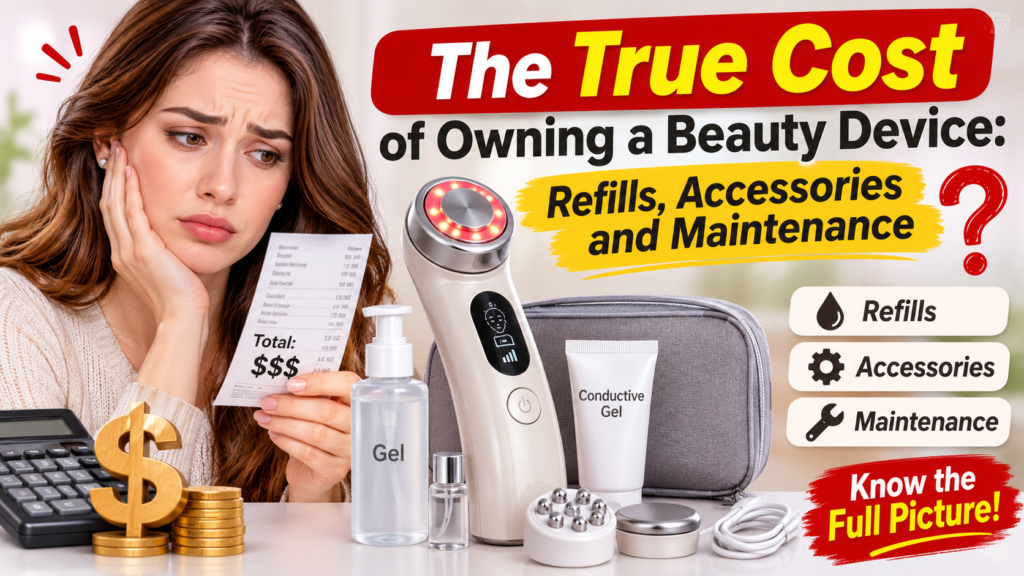
The price tag on the box tells only part of the story. You unbox a sleek microcurrent wand or a glowing LED face mask, plug it in, and start your first treatment. It feels like a one-time investment. Six months later, you are ordering your third bottle of conductive gel, browsing for replacement brush heads, or wondering whether the warranty covers a battery that no longer holds a charge.
Understanding the true cost of owning a beauty device means looking well beyond the initial purchase. Consumables, replacement accessories, maintenance, and potential repairs all add up over time — and the totals vary dramatically from one device category to the next. This guide breaks down every recurring expense so you can budget accurately and choose a device whose long-term costs actually fit your routine.
Why the Purchase Price Is Only the Beginning
At-home beauty devices have surged in popularity, and the market now spans microcurrent toning tools, LED light therapy masks, radiofrequency skin tighteners, IPL hair removal handsets, and sonic cleansing brushes. Retail prices range from roughly $50 to over $600, which already represents a significant commitment.
Yet the purchase price is a starting point, not a finish line. Many devices require proprietary gels, serums, or cartridges to function safely and effectively. Others rely on rechargeable batteries that degrade over several years. The FDA classifies many of these products as home-use medical devices, which means manufacturers often specify particular consumables to maintain safety compliance — and those consumables carry their own recurring price tags.
When you factor in at-home beauty device hidden costs over a realistic ownership period of two to five years, the total expenditure can equal or even exceed the original device price. The good news is that not every device category is equally expensive to maintain. Some require almost nothing after the initial purchase, while others demand a steady stream of refills.
The Hidden Costs of Owning Different Beauty Devices
Microcurrent Devices – Conductive Gels and Replacement Accessories

- ENERGIZING FACIAL WORKOUT – Experience a targeted facial workout with this compact facial firming device that targets in…
- MICROCURRENT FACIAL TONING – Two microcurrent spheres channel energy directly into the skin. While signs of aging are er…
- T-SONIC PULSATIONS – Help to relax facial muscle tension points and smooth the appearance of fine lines and wrinkles. Th…
Microcurrent devices such as the NuFACE Trinity+, FOREO BEAR 2, and ZIIP HALO deliver low-level electrical currents to facial muscles. For the current to conduct safely through your skin, a water-based conductive medium is required — not optional.
This is where conductive gel cost becomes the single largest ongoing expense for microcurrent owners. Brand-name gels typically retail between $25 and $55 per bottle. Depending on how frequently you treat your face and neck, a single bottle may last anywhere from four to ten weeks. If you use your device three to five times per week, plan on purchasing roughly six to twelve bottles per year.

- Suitable for all skin types: Generally safe and suitable for all skin types.
- Soothes and observes: Contains hyaluronic acid to hydrate and soothe skin, with a water-based clear gel for easy observa…
- Fragrance Free and Paraben Free: Natural ingredients that can help reduce the risk of irritation and allergic reactions.
NuFACE, for example, recommends its own conductive gel primers for optimal performance and safety with its devices. While some users experiment with affordable aloe vera gels or third-party conductive serums, manufacturers generally advise against substitutes that have not been tested with their specific current output. If you are exploring microcurrent options and want to compare alternatives to popular compact wands, our guide to the best Solawave alternatives for anti-aging and glow covers several devices with different ongoing cost profiles.
Beyond gel, microcurrent beauty device replacement accessories may include interchangeable treatment attachments. The NuFACE Trinity+ system, for instance, supports separate eye and lip attachments sold individually. These are optional upgrades rather than recurring consumables, but they add to the total investment if you want full-face coverage.
LED Face Masks – Batteries, Chargers, and Replacement Parts

- Enhanced collagen production capability significantly reduces fine lines, wrinkles and redness, for younger-looking skin…
- Upgraded light coverage provides our famous instant glow, for a healthier, brighter and smoother complexion.
- An all-new, exclusive layout of 236 LED bulbs emits three clinically recognised wavelengths: red (633nm), near-infrared …
LED light therapy masks are among the lowest-maintenance devices you can own. Models like the CurrentBody Skin LED Mask and Omnilux Contour Face use medical-grade LEDs that are rated for tens of thousands of hours of use — far longer than most consumers will keep the device.
Critically, most premium LED masks feature sealed, non-replaceable internal batteries and integrated light arrays. There are no bulbs to swap and no cartridges to refill. LED mask maintenance is largely limited to wiping the silicone or plastic surface clean after each session and storing the mask away from extreme heat.
The main long-term risk is battery degradation after several years of regular charging. Because the battery is sealed inside the housing, a dead battery typically means replacing the entire unit rather than servicing a single component. Some manufacturers offer out-of-warranty replacements at a discount, but this is not universal. If you are researching your first LED device, our ultimate LED face mask buying guide walks through the features and build quality that influence longevity.
For those specifically targeting dullness or uneven tone, comparing the best red light therapy masks for dull and uneven skin can help you find a model whose construction quality justifies its upfront cost over many years of use.
Radiofrequency Devices – Conductive Products and Maintenance
Radiofrequency (RF) devices like the TriPollar STOP VX2 heat the deeper layers of skin to stimulate collagen. Like microcurrent tools, they require a conductive gel or cream to transmit energy evenly and prevent surface burns.

- TECHNOLOGY: Clinically validated as a safe and effective over-the-counter (OTC) aesthetic electrosurgical device for the…
- ADVANCED 1MHz MULTI-POLAR RF: Utilizing a professional-grade 1.0 MHz Radio Frequency sine wave, this device delivers con…
- DUAL-REDUNDANT THERMAL SAFETY: Your safety is our priority. Built with two independent internal thermistors, the system …
RF conductive products are functionally similar to microcurrent gels in both purpose and price range. Expect to spend roughly $25 to $50 per tube, with a replacement cycle of approximately six to ten weeks for regular users. Some RF brands formulate thicker, glycerin-based gels that last slightly longer per application than the thinner gels used with microcurrent.
If you are building a short daily routine that combines red light therapy with other modalities, our breakdown of the best red light therapy devices for a 10-minute routine can help you decide whether an RF device or an LED mask better suits your schedule and budget.
IPL Hair Removal Devices – Flash Cartridges and Accessories
IPL (intense pulsed light) hair removal is one area where IPL replacement accessories vary enormously by brand. Older or budget-friendly IPL handsets sometimes use replaceable flash cartridges that need swapping every 50,000 to 100,000 pulses.
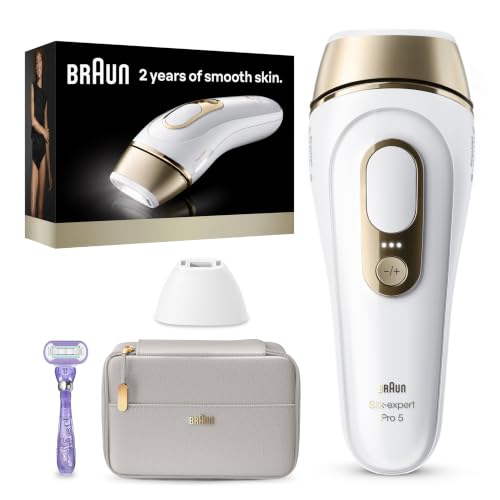
- AT-HOME IPL HAIR REMOVAL: Braun IPL hair removal is an at home laser hair removal alternative for women and men, with pe…
- SALON RESULTS WITHOUT SALON COSTS: Up to 95% hair reduction in 1 month**. With Braun at-home lPL device, you INVEST ONLY…
- EASY TO USE: Visible results from 2nd use***, with full-body treatment in only 10 MINUTES****. Requires ONLY 2 SESSIONS …
However, most modern premium IPL devices — including the Braun Silk-expert Pro 5 and the Philips Lumea Prestige — feature built-in flash lamps rated for 250,000 to 400,000 flashes. At typical usage rates, that is enough for 15 to 20 years of full-body treatments, effectively eliminating cartridge replacement as a recurring cost.
Before purchasing any IPL device, verify whether the flash lamp is sealed or replaceable. A sealed lamp with a high flash count usually results in a lower long-term beauty device ownership cost, even if the initial price is higher.
Facial Cleansing Devices – Replacement Brush Heads and Attachments

- Distinctive Facial Cleansing Brush: The exterior of the silicone face scrubber is made of Ultra Hygienic Soft Silicone R…
- Glowing Skin: Gain vibrant confidence in your face with a deeper, cleaner, younger, more beautiful complexion by using t…
- Portable & Induction Charging- Shaped as a oval, handy design makes the facial cleansing brush easier to hold and conven…
Sonic cleansing brushes fall into two camps. Silicone-based devices like the FOREO LUNA series use non-porous silicone touchpoints that do not require replacement heads, keeping ongoing costs near zero.
Traditional nylon-bristle cleansing brushes, by contrast, need new brush heads every three months for hygiene reasons. Replacement heads typically cost $10 to $30 each, adding $40 to $120 per year. It is worth noting that the once-dominant Clarisonic brand was discontinued in 2020, leaving some loyal users unable to source compatible heads — a cautionary example of why beauty device refills availability matters over the long haul.
How Much Do Beauty Device Refills and Accessories Cost?
The table below summarizes typical ongoing expenses across major device categories. All cost ranges reflect publicly available US retail pricing at the time of writing and represent common, not universal, figures.
| Device Category | Common Ongoing Expenses | Required vs. Optional | Replacement Frequency | Estimated 3-Year Ongoing Cost |
|---|---|---|---|---|
| Microcurrent | Conductive gel, treatment attachments | Gel: Required. Attachments: Optional | Gel every 1–3 months | $200–$600 |
| LED Face Mask | Cleaning supplies only | None required | N/A | $0–$30 |
| Radiofrequency | Conductive gel or cream | Required | Gel every 1–3 months | $200–$500 |
| IPL Hair Removal | Flash cartridges (select models) | Model-dependent | Cartridge every 1–3 years (if applicable) | $0–$100 |
| Sonic Cleansing Brush | Replacement brush heads (nylon models) | Required for nylon; N/A for silicone | Every 3 months (nylon) | $0–$150 |
Estimated costs assume moderate use (3–5 sessions per week for facial devices, biweekly for IPL). Actual expenses vary by brand, usage frequency, and individual skin needs.
First-Year vs. Three-Year Beauty Device Ownership Costs
To understand the beauty device cost per use, it helps to calculate total expenditure over a realistic ownership window. Use this straightforward formula:
Total Ownership Cost = Initial Device Price + Consumables + Replacement Parts + Maintenance + Repair Costs
Here is a practical example using a hypothetical microcurrent routine:
- Device price: $225 (mid-range microcurrent tool)
- Conductive gel: $30 per bottle, one bottle every two months = $180/year
- Replacement attachments: $0 (using the standard head only)
- Maintenance/repairs: $0 (device remains under warranty)
Year 1 total: $225 + $180 = $405
Year 3 total: $225 + ($180 × 3) = $765
If you perform roughly 150 sessions per year (about three per week), the three-year cost per session works out to approximately $1.70. Compared to a single in-office microcurrent facial that can cost $150 to $300, the at-home route delivers significant savings — but only if you account for the gel from the start.
Note: The figures above are illustrative estimates based on typical US retail pricing and moderate usage. Your actual costs will depend on the specific device, gel brand, and treatment frequency you choose.
Warranty, Repairs, and Maintenance – What Buyers Should Know
Beauty device warranty and repairs can significantly affect your long-term costs. Most premium devices ship with a one- to two-year manufacturer warranty that covers defects in materials and workmanship. Under the FTC’s federal warranty guidelines, manufacturers must clearly disclose what is and is not covered before you buy.
Key points to investigate before purchasing:
- Battery replacement: Sealed-battery devices cannot be user-serviced. Ask whether the manufacturer offers a battery replacement program once the warranty expires.
- Accidental damage: Drops, water exposure, and cracked screens are almost universally excluded from standard warranties.
- Out-of-warranty repairs: Some brands offer flat-rate repair fees; others do not service older models at all.
- Authorized replacement parts: Using third-party chargers or unapproved accessories may void your warranty.
- Cleaning and storage: Failing to follow the manufacturer’s cleaning instructions can accelerate wear and invalidate warranty claims.
How to Reduce the Long-Term Cost of Beauty Devices
You do not have to sacrifice safety to save money. These practical strategies can lower your at-home skincare device expenses without cutting corners:
- Buy gel in bundles or subscribe. Many brands offer 10–20% discounts on subscription orders or multi-packs.
- Apply gel sparingly. A thin, even layer is usually sufficient. Over-applying wastes product without improving conductivity.
- Choose devices with sealed, long-life components. LED masks and IPL handsets with built-in lamps eliminate the biggest recurring costs.
- Register your warranty immediately. Missing the registration window can cost you a free repair down the road.
- Store devices properly. Keep them in a cool, dry place and use the included charging cable to preserve battery health.
- Compare cost per session, not sticker price. A $400 device with zero refills may be cheaper over three years than a $150 device that requires $200 in annual consumables.
Is an Expensive Beauty Device Cheaper in the Long Run?
Counterintuitively, yes — in many cases. A budget microcurrent wand priced at $80 might seem like a bargain until you discover it requires a proprietary gel that costs $40 per bottle and ships only from an overseas retailer. Over three years, the gel alone could cost $600 or more, dwarfing the savings on the device itself.
Conversely, a premium LED mask that costs $450 upfront but requires no consumables whatsoever will likely remain the less expensive option by the end of year two. The lesson is clear: evaluate the beauty device maintenance costs over a multi-year horizon, not just the checkout total.
What to Check Before Buying a Beauty Device
Use this quick checklist before committing to any at-home device:
- ✅ What consumables does this device require, and how much do they cost per unit?
- ✅ Are consumables readily available in the US, or do they require international shipping?
- ✅ Is the battery sealed or replaceable?
- ✅ What is the warranty length, and what does it exclude?
- ✅ Does the manufacturer still produce replacement parts for older models?
- ✅ How many sessions per week does the brand recommend, and what does that mean for refill frequency?
- ✅ Are there compatible third-party alternatives for required gels or serums?
- ✅ What is the estimated beauty device cost per use over two to three years?
For LED-specific guidance, our guide to the best LED face masks for beginners over 40 addresses durability and ease of use for first-time buyers. If acne is your primary concern, we also compare the best LED face masks for acne and breakouts with an eye on long-term value. And if you are weighing premium red light options, our review of HigherDose red light mask alternatives covers several models with different maintenance profiles.
Frequently Asked Questions
1. Do beauty devices require regular maintenance?
Most require basic cleaning after each use and periodic charging. Devices that use conductive gels, brush heads, or flash cartridges also need regular consumable replacements.
2. Are replacement gels and serums expensive?
Brand-name conductive gels typically cost $25 to $55 per bottle and last one to three months depending on usage. Annual gel expenses for a regular microcurrent user can reach $150 to $400.
3. How much does it cost to maintain a microcurrent device?
Beyond the device itself, plan for $150 to $400 per year in conductive gel. Optional treatment attachments may add $50 to $150 as a one-time expense.
4. Do LED face masks need replacement parts?
Most premium LED masks have sealed batteries and integrated LEDs rated for tens of thousands of hours. There are no user-replaceable bulbs or cartridges under normal conditions.
5. Do IPL devices require replacement cartridges?
Some budget models do. However, most modern premium IPL devices feature built-in flash lamps rated for 250,000 to 400,000 pulses, which typically last 15 or more years.
6. How long should an at-home beauty device last?
With proper care, most quality devices last three to seven years. LED masks and sealed-lamp IPL devices often reach the upper end of that range, while devices with replaceable batteries may need servicing sooner.
7. Does a beauty device warranty cover repairs?
Standard warranties cover manufacturing defects for one to two years. Accidental damage, battery degradation from normal aging, and cosmetic wear are typically excluded.
8. How can I calculate the true cost of owning a beauty device?
Add the purchase price to the estimated cost of all consumables, replacement parts, and potential repairs over your expected ownership period. Divide by the total number of sessions to find your cost per use.
Final Verdict
The sticker price of a beauty device is a headline, not the full article. Microcurrent device ongoing costs can add hundreds of dollars in conductive gel over a few years, while a well-built LED mask may cost almost nothing to maintain after the initial purchase. IPL devices with sealed flash lamps eliminate cartridge expenses entirely, and silicone cleansing brushes remove the need for replacement heads altogether.
Before you click “add to cart,” run the numbers. Estimate your beauty device cost per use over a realistic two- to three-year window, factor in every required refill, and compare the total against competing devices in the same category. The cheapest device at checkout is not always the most affordable to own — and the most expensive one may save you money in the long run.
Make your decision based on the complete financial picture, and your beauty device investment will pay dividends for years to come.
SEO Deliverables Summary
H1: The True Cost of Owning a Beauty Device: Refills, Accessories, and Maintenance
Primary Focus Keyword: True cost of owning a beauty device
Secondary Keywords Used: Beauty device maintenance costs, at-home beauty device hidden costs, beauty device replacement accessories, conductive gel cost, microcurrent device ongoing costs, LED mask maintenance, IPL replacement accessories, beauty device cost per use, beauty device refills, beauty device warranty and repairs, long-term beauty device ownership cost, at-home skincare device expenses
SEO Title: True Cost of Owning a Beauty Device: Hidden Fees & Refills
Meta Description: Discover the true cost of owning a beauty device beyond the sticker price. Compare refills, maintenance, and long-term expenses across top device types.
URL Slug: /true-cost-owning-beauty-device/
Internal Links Used
| Anchor Text | URL |
|---|---|
| best Solawave alternatives for anti-aging and glow | https://sylomaskincare.com/best-solawave-alternatives-anti-aging-glow/ |
| ultimate LED face mask buying guide | https://sylomaskincare.com/ultimate-led-face-mask-buying-guide/ |
| best red light therapy masks for dull and uneven skin | https://sylomaskincare.com/best-red-light-therapy-masks-dull-skin-uneven/ |
| best red light therapy devices for a 10-minute routine | https://sylomaskincare.com/best-red-light-therapy-devices-10-minute-routine/ |
| best LED face masks for beginners over 40 | https://sylomaskincare.com/best-led-face-masks-for-beginners-over-40/ |
| best LED face masks for acne and breakouts | https://sylomaskincare.com/best-led-face-masks-acne-breakouts-2026/ |
| HigherDose red light mask alternatives | https://sylomaskincare.com/higherdose-red-light-mask-alternatives/ |
External Links Used
| Anchor Text | URL |
|---|---|
| FDA classifies many of these products as home-use medical devices | https://www.fda.gov/medical-devices/consumer-products/home-use-devices |
| conductive gel primers (NuFACE) | https://www.nuface.com/collections/conductive-gels |
| FOREO LUNA series | https://www.foreo.com/collections/bear |
| Braun Silk-expert Pro 5 | https://us.braun.com/en-us/ipl-hair-removal |
| FTC’s federal warranty guidelines | https://www.ftc.gov/business-guidance/resources/businesspersons-guide-federal-warranty-law |
Factual Details That Could Not Be Independently Verified
- Exact gel longevity per bottle varies significantly by individual usage patterns, application thickness, and treatment area size. The “one to three months” range is an estimate based on typical manufacturer guidance and user reports, not a verified universal standard.
- Out-of-warranty repair pricing for specific brands (NuFACE, ZIIP, TriPollar) is not consistently published on manufacturer websites and may change without notice.
- LED lifespan claims (tens of thousands of hours) are based on manufacturer specifications and LED industry standards, but real-world degradation rates depend on charging habits, storage conditions, and thermal management in each specific device.
- Exact flash counts for IPL devices were sourced from publicly available product pages at the time of writing; manufacturers may update specifications for newer production batches.
- Third-party gel compatibility claims are based on general user community discussions rather than manufacturer testing; using non-approved gels may affect device performance and warranty status.